


Ties That Bind: Cultural Identity, Class, and Law in Vietnam's Labor Resistance
-
Vietnamese news accounts of labor-management conflicts, including strikes, and even reports of owners fleeing their factories raise potent questions about labor activism in light of this self-proclaimed socialist country’s engagement in the global market system since the late 1980s. In explaining Vietnamese labor resistance, how important are matters of cultural identity (such as native-place, gender, ethnicity, and religion) in different historical contexts? How does labor mobilization occur and develop? How does it foster “class moments” in times of crisis? What types of "flexible protests" have been used by workers to fight for their rights and dignity, and how effective are they?
Based on her just-published book, Ties that Bind: Cultural Identity, Class, and Law in Vietnam's Labor Resistance, Prof. Trần will highlight labor activism since French colonial rule in order to understand labor issues and actions in Vietnam today. Her analysis will focus on labor-management-state relations, especially with key foreign investors/managers (such as from Korea, Taiwan, and Hong Kong) and ethnic Chinese born and raised in Vietnam. She will convey the voices and ideas of workers, organizers, journalists, and officials and explain how migrant workers seek to empower themselves using cultural resources and appeals to state media and the rule of law. Copies of her book will be available for sale at her talk.
Prof. Trần's current research on global south-south labor migration focuses on Vietnamese migrants working in Malaysia and returning to Vietnam. In 2008 she was a Lee Kong Chian NUS-Stanford Distinguished Fellow on Southeast Asia. Her co-authored 2012 book, Corporate Social Responsibility and Competitiveness for SMEs in Developing Countries: South Africa and Vietnam, compared the experiences of small-and-medium enterprises in these two countries. Her many other writings include (as co-editor and author) Reaching for the Dream: Challenges of Sustainable Development in Vietnam (2004). She earned her PhD in Political Economy and Public Policy at the University of Southern California in 1996 and an MA in Developmental Economics at USC in 1991.
Copies of Ties that Bind: Cultural Identity, Class, and Law in Vietnam's Labor Resistance will be available for signing and sale by the author following her talk.
Daniel and Nancy Okimoto Conference Room
Angie Ngoc Trần
Shorenstein APARC
Stanford University
Encina Hall E301
Stanford, CA 94305-6055
0
angie_tran@csumb.edu
Lee Kong Chian NUS-Stanford Distinguished Fellow on Southeast Asia
Angie Ngoc Trần is a professor in the Division of Social and Behavioral Sciences and Global Studies at California State University, Monterey Bay (CSUMB). Her plan as the 2008 Lee Kong Chian National University of Singapore-Stanford University Distinguished Fellow is to complete a book manuscript on labor-capital relations in Vietnam that highlights how different identities of investors and owners—shaped by government policies, ethnicity, characteristics of investment, and the role they played in global flexible production—affect workers’ conditions, consciousness, and collective action differently.
Tran spent May-July 2008 at Stanford and will return to campus for the second half of November 2008. She will share the results of her project in a public seminar at Stanford under SEAF auspices on November 17 2008.
Prof. Trần’s many publications include “Contesting ‘Flexibility’: Networks of Place, Gender, and Class in Vietnamese Workers’ Resistance,” in Taking Southeast Asia to Market (2008); “Alternatives to ‘Race to the Bottom’ in Vietnam: Minimum Wage Strikes and Their Aftermath,” Labor Studies Journal (December 2007); “The Third Sleeve: Emerging Labor Newspapers and the Response of Labor Unions and the State to Workers’ Resistance in Vietnam,” Labor Studies Journal (September 2007); and (as co-editor and author) Reaching for the Dream: Challenges of Sustainable Development in Vietnam (2004). She received her Ph.D. in Political Economy and Public Policy at the University of Southern California in 1996 and an M.A. in Developmental Economics at USC in 1991.
Seminars
The Stabilizing State: State Capitalism as a Response to Financial Globalization in East Asia
-
One of the most important developments in the modern global economy is financial globalization. This has raised threats to the stability of political regimes in two ways: (1) by enhancing the possibility of a financial crisis that could cause political turmoil; and (2) by easing access to foreign sources of financing for opposition political groups. I argue that state capitalism – defined as state-owned publicly listed corporations -- has risen disproportionately among single party regimes as a way to address these dual threats. Single party regimes have both the motivation and a greater institutional capacity for addressing these threats in comparison to other regimes. Tests are conducted on 607 firms in 1996 and 856 firms in 2008 across seven East Asian economies, and are supplemented with case studies of Malaysia and South Korea. The evidence suggests that financial globalization is contributing to the rise of the state as a counter reaction.
Richard W. Carney is a Fellow in the Department of International Relations located in the College of Asia and the Pacific at the Australian National University. His research and teaching are in the areas of international and comparative political economy with a focus on corporate governance and finance in East Asia. He has published articles in many academic journals including the Journal of Financial Economics, the Journal of East Asian Studies, and Business and Politics. He is also the author of the book Contested Capitalism: The Political Origins of Financial Institutions, and editor of the book Lessons from the Asian Financial Crisis. He was a Jean Monnet Fellow at the European University Institute in Fiesole, Italy (2003-04), and has held visiting positions at INSEAD. He holds a Ph.D. in Political Science (UCSD 2003). Before joining the ANU in 2011, he was an Assistant Professor in Singapore.
Daniel and Nancy Okimoto Conference Room
Richard W. Carney
Fellow, Department of International Relations
Speaker
Australian National University
Seminars
Toward a More Open Japan? TPP, RCEP, and Abenomics
-
Prime Minister Abe's economic policy, called Abenomics, places policies to open up Japan as a key component. The government argues that reducing the barriers for international trade and capital flows will revitalize the Japanese economy and restore the growth in Japan. At the core of the opening up policy are efforts to establish free trade agreements (FTAs) with major trading partners. Japan joined the negotiation for TPP (Trans-Pacific Partnership), which includes the U.S., Japan's second largest trading partner, in July this year. Japan has also started negotiation for RCEP (Regional Comprehensive Economic Partnership), which includes China, Japan's largest trading partner. Will these efforts really succeed in making the Japanese economy more open? Do they lead to the recovery of Japan from two decades of stagnation? Experts from both sides of the Pacific discuss these issues.
Participants:
Glen S.
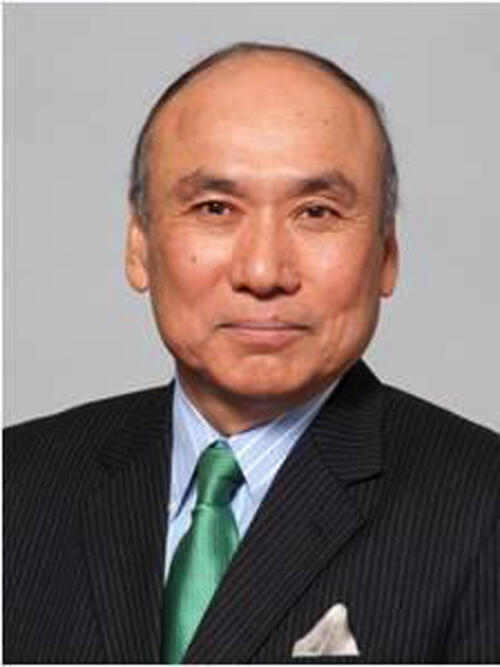
Fukushima is Senior Fellow at the Center for American Progress, a prominent public policy think tank headquartered in Washington, D.C. From 1990 to 2012, Mr. Fukushima was based in Tokyo as a senior executive with one European and four American multinational corporations: Vice President, AT&T Japan Ltd.; President, Arthur D. Little Japan; President & CEO, Cadence Design Systems Japan; President & CEO, NCR Japan; and President & CEO, Airbus Japan. Before embarking on his business career in 1990, he was based in Washington, D.C. as Director for Japanese Affairs (1985-1988) and Deputy Assistant United States Trade Representative for Japan and China (1988-1990) at the Office of the United States Trade Representative (USTR), Executive Office of the President. Mr. Fukushima served two terms as President of the American Chamber of Commerce in Japan, 1998-1999, and Vice President, 1993-1997. A native of California, Mr. Fukushima was educated at Deep Springs College, Stanford University, Harvard University Graduate School of Arts and Sciences, Harvard Business School, and Harvard Law School. At Harvard, he was awarded a National Science Foundation Fellowship. He has studied and worked in Japan for over 25 years, including at Keio University, a daily newspaper, an international law firm, and as a Fulbright Fellow and a Japan Foundation Fellow at the Faculty of Law, University of Tokyo.Image
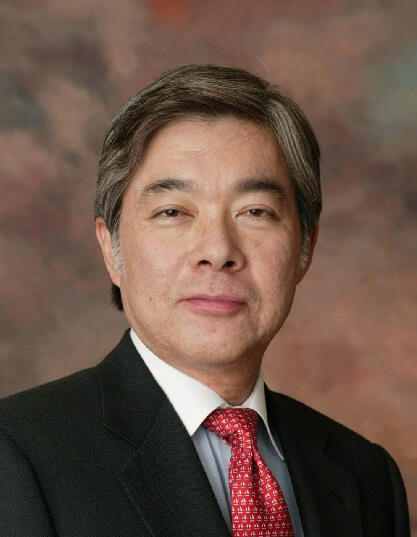
Hideichi Okada joins the Walter H. Shorenstein Asia-Pacific Research Center (Shorenstein APARC) from September, 2013 until March, 2014 as Sasakawa Peace Fellow with the Japan Studies Program (JSP). His research interests encompass energy policies and trade policies in the context of possible cooperation between Japan and the U.S. During his time at Shorenstein APARC, Okada will be working to launch New Dialogue Program for future cooperation on various areas between Japan and the U.S., and other Asia Pacific countries. Okada served as Vice Minister for International Affairs, Ministry of Economy, Trade and Industry (METI) from 2010 to 2012, where he promoted international trade and investment, and expanded industrial cooperation with various countries. He also served as Director General of Trade Policy Bureau (2008-2010) and Director General of Commerce and Information Policy Bureau of METI (2007-2008). He worked for Prime Minister Junichiro Koizumi as his executive assistant, where he dealt with policies on economy, industry, energy, science and technology, and environment, and with public relations (2001-2006). He was a professor at GRIPS (2006-2007) and a visiting scholar at Harvard Law School and IR/PS, University of California, San Diego in 2007. Okada was born in Tokyo in 1951. He received LL.M. degree from Harvard Law School (1981) and graduated from the University of Tokyo with a LL.B. (1976). Currently, he is Senior Advisor, NTT Data Institute of Management and Consulting.Image
Image
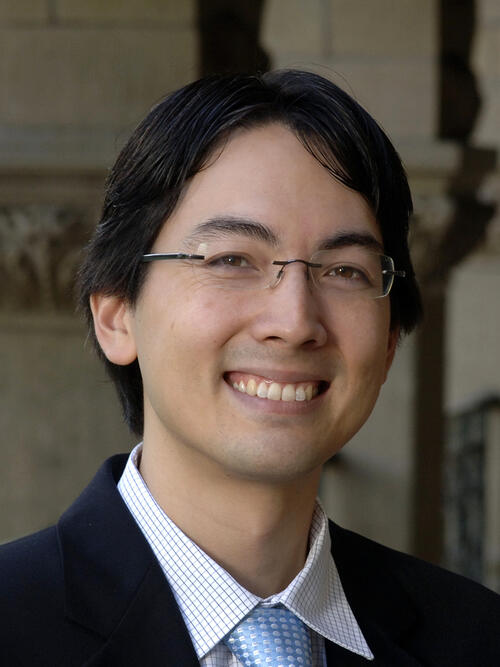
Takeo Hoshi is the Henri and Tomoye Takahashi Senior Fellow at the Walter H. Shorenstein Asia-Pacific Research Center at Stanford University, and professor of finance (by courtesy), Stanford Graduate School of Business. Prior to joining S/APARC, he was Pacific Economic Cooperation Professor in International Economic Relations at the Graduate School of International Relations and Pacific Studies (IR/PS) at the University of California, San Diego (UCSD). Hoshi also serves on the Board of Directors at Union BanCal Corporation. He is also a research associate at the National Bureau of Economic Research (NBER) and at the Tokyo Center for Economic Research (TCER). His main research interests include the study of the financial aspects of the Japanese economy, especially corporate finance, banking, and monetary policy. He received numerous awards for his publications including Corporate Financing and Governance in Japan: The Road to the Future (MIT Press, 2001), co-authored with Anil Kashyap (Graduate School of Business, University of Chicago), and his other publications include, “Japanese Government Debt and Sustainability of Fiscal Policy” (with Takero Doi and Tatsuyoshi Okimoto), Journal of the Japanese and International Economies,2011; “Corporate Restructuring in Japan during the Lost Decade” (with Satoshi Koibuchi and Ulrike Schaede), Japan’s Bubble, Deflation, and Long-term Stagnation, MIT Press, 2011 (Koichi Hamada, Anil K Kashyap, and David E. Weinstein, eds.) He has been the editor-in-chief of the Journal of the Japanese and International Economies since 1999. Hoshi received his BA in social sciences from the University of Tokyo in 1983, and a PhD in economics from the Massachusetts Institute of Technology in 1988.Image
Philippines Conference Room
Glen S. Fukushima
Senior Fellow, Center for American Progress; Former President, American Chamber of Commerce in Japan and Former Deputy Assistant U.S. Trade Representative for Japan and China
Panelist
Hideichi Okada
Shorenstein APARC
Encina Hall E317
616 Serra Street
Stanford, CA 94305-6055
0
hokada@stanford.edu
Sasakawa Peace Fellow
Hideichi Okada joins the Walter H. Shorenstein Asia-Pacific Research Center (Shorenstein APARC) from September, 2013 until March, 2014 as Sasakawa Peace Fellow with the Japan Studies Program (JSP).
His research interests encompass energy policies and trade policies in the context of possible cooperation between Japan and the U.S. During his time at Shorenstein APARC, Okada will be working to launch New Dialogue Program for future cooperation on various areas between Japan and the U.S., and other Asia Pacific countries.
Okada served as Vice Minister for International Affairs, Ministry of Economy, Trade and Industry (METI) from 2010 to 2012, where he promoted international trade and investment, and expanded industrial cooperation with various countries. He also served as Director General of Trade Policy Bureau (2008-2010) and Director General of Commerce and Information Policy Bureau of METI (2007-2008). He worked for Prime Minister Junichiro Koizumi as his executive assistant, where he dealt with policies on economy, industry, energy, science and technology, and environment, and with public relations (2001-2006). He was a professor at GRIPS (2006-2007) and a visiting scholar at Harvard Law School and IR/PS, University of California, San Diego in 2007.
Okada was born in Tokyo in 1951. He received LL.M. degree from Harvard Law School (1981) and graduated from the University of Tokyo with a LL.B. (1976). Currently, he is Senior Adviser, NTT Data Institute of Management and Consulting.
Phillip Lipscy
0
Former Thomas Rohlen Center Fellow at the Freeman Spogli Institute for International Studies
Former Assistant Professor of Political Science
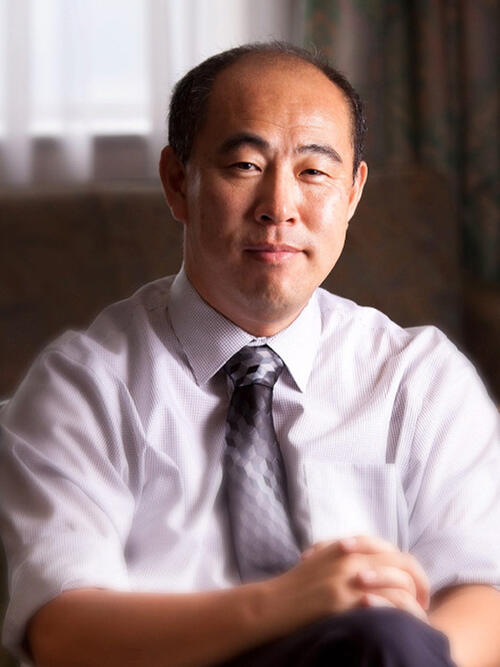
Phillip Y. Lipscy was the Thomas Rohlen Center Fellow at the Freeman Spogli Institute for International Studies and Assistant Professor of Political Science at Stanford University until August 2019. His fields of research include international and comparative political economy, international security, and the politics of East Asia, particularly Japan.
Lipscy’s book from Cambridge University Press, Renegotiating the World Order: Institutional Change in International Relations, examines how countries seek greater international influence by reforming or creating international organizations. His research addresses a wide range of substantive topics such as international cooperation, the politics of energy, the politics of financial crises, the use of secrecy in international policy making, and the effect of domestic politics on trade. He has also published extensively on Japanese politics and foreign policy.
Lipscy obtained his PhD in political science at Harvard University. He received his MA in international policy studies and BA in economics and political science at Stanford University. Lipscy has been affiliated with the Reischauer Institute of Japanese Studies and Weatherhead Center for International Affairs at Harvard University, the Institute of Social Science at the University of Tokyo, the Institute for Global and International Studies at George Washington University, the RAND Corporation, and the Institute for International Policy Studies.
For additional information such as C.V., publications, and working papers, please visit Phillip Lipscy's homepage.
Takeo Hoshi
0
Former Henri H. and Tomoye Takahashi Senior Fellow in Japanese Studies at the Freeman Spogli Institute for International Studies
Former Professor, by courtesy, of Finance at the Graduate School of Business
Takeo Hoshi was Henri and Tomoye Takahashi Senior Fellow at the Freeman Spogli Institute for International Studies (FSI), Professor of Finance (by courtesy) at the Graduate School of Business, and Director of the Japan Program at the Shorenstein Asia-Pacific Research Center (APARC), all at Stanford University. He served in these roles until August 2019.
Before he joined Stanford in 2012, he was Pacific Economic Cooperation Professor in International Economic Relations at the Graduate School of International Relations and Pacific Studies (IR/PS) at University of California, San Diego (UCSD), where he conducted research and taught since 1988.
Hoshi is also Visiting Scholar at Federal Reserve Bank of San Francisco, Research Associate at the National Bureau of Economic Research (NBER) and at the Tokyo Center for Economic Research (TCER), and Senior Fellow at the Asian Bureau of Finance and Economic Research (ABFER). His main research interest includes corporate finance, banking, monetary policy and the Japanese economy.
He received 2015 Japanese Bankers Academic Research Promotion Foundation Award, 2011 Reischauer International Education Award of Japan Society of San Diego and Tijuana, 2006 Enjoji Jiro Memorial Prize of Nihon Keizai Shimbun-sha, and 2005 Japan Economic Association-Nakahara Prize. His book titled Corporate Financing and Governance in Japan: The Road to the Future (MIT Press, 2001) co-authored with Anil Kashyap (Booth School of Business, University of Chicago) received the Nikkei Award for the Best Economics Books in 2002. Other publications include “Will the U.S. and Europe Avoid a Lost Decade? Lessons from Japan’s Post Crisis Experience” (Joint with Anil K Kashyap), IMF Economic Review, 2015, “Japan’s Financial Regulatory Responses to the Global Financial Crisis” (Joint with Kimie Harada, Masami Imai, Satoshi Koibuchi, and Ayako Yasuda), Journal of Financial Economic Policy, 2015, “Defying Gravity: Can Japanese sovereign debt continue to increase without a crisis?” (Joint with Takatoshi Ito) Economic Policy, 2014, “Will the U.S. Bank Recapitalization Succeed? Eight Lessons from Japan” (with Anil Kashyap), Journal of Financial Economics, 2010, and “Zombie Lending and Depressed Restructuring in Japan” (Joint with Ricardo Caballero and Anil Kashyap), American Economic Review, December 2008.
Hoshi received his B.A. in Social Sciences from the University of Tokyo in 1983, and a Ph.D. in Economics from the Massachusetts Institute of Technology in 1988.
Former Director of the Japan Program at the Shorenstein Asia-Pacific Research Center
CV
Document
hoshicv2016.pdf
(183.49 KB)
File title
hoshicv2016.pdf
Panel Discussions
Inaugural Issue of the Japan Newsletter
News Type
News
Date
Paragraphs
Japan Program at Shorenstein APARC monthly newsletter presents an insightful glimpse of our latest research, publications, events, and more.
Hero Image

All News button
1