-

This talk will examine the phenomenon of anti-Americanism in the Republic of Korea (South Korea).  Contrary to widespread perception, the speaker argues that anti-Americanism in South Korea has a deep-rooted history, the expression of which was suppressed during decades of authoritarian rule.  Anti-Americanism in South Korea involves a sophisticated ideology, constituting a kind of belief system.  Kim will trace the history of such anti-Americanism from 1945 until the present.

Hakjoon Kim is a Distinguished Practitioner at Center for East Asian Studies at Stanford.  He is Chairman of the Dong-A Ilbo, one of South Korea's largest and most influential newspapers with a circulation of over two million.  He has served as President of the University of Inchon, the Korean Political Science Association, and the Korean Federation of Teachers' Associations.  He was a scholar at the Alexander-von-Humboldt Foundation in Germany and a guest scholar at the Woodrow Wilson International Center for Scholars in Washington, D.C.  He received his B.A. from Seoul National Univeristy, M.A. from Kent State Universiy, and Ph.D. from University of Pittsburgh.


This event is supported by the generous grant from Academy of Korean Studies in Korea.

Philippines Conference Room

No longer in residence.

0
Distinguished Practitioner, 2008-09

Hakjoon Kim was a Distinguished Practitioner at Center for East Asian Studies at Stanford. He is chairman of the Dong-A Ilbo, one of South Korea's largest and most influential newspapers with a circulation of over two million. He has served as president of the University of Inchon, the Korean Political Science Association, and the Korean Federation of Teachers' Associations. He was a scholar at the Alexander-von-Humboldt Foundation in Germany and a guest scholar at the Woodrow Wilson International Center for Scholars in Washington, D.C.
Hakjoon Kim Distinguished Practitioner Speaker Center for East Asian Studies, Stanford University
Seminars
-

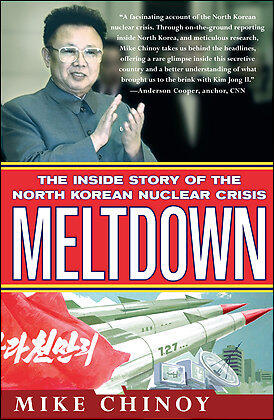
Mike Chinoy, the Pacific Council’s Edgerton Senior Fellow for Asia and author of the just-published and critically-received book, Meltdown: The Inside Story of the North Korean Nuclear Crisis will discuss the main themes in his book, update us on the recent developments in the Bush administration’s policy toward North Korea and assess what other policy options the next U.S. president might pursue.

Image
MELTDOWN The Inside Story of the North Korean Nuclear Crisis
Drawing on over 200 interviews conducted in Washington, Seoul, Tokyo and other Asian capitals – as well as insights gained from Mr. Chinoy’s 14 trips to Pyongyang – Meltdown provides a detailed account of the behind-the-scenes policy debates within the Bush administration and other governments that drove the recent confrontation over North Korea’s nuclear weapons program.  It also offers important new details of the impact the crisis had on U.S. relations with its key regional allies – Japan and South Korea – and on Washington’s fraught relationship with Beijing. 

» Washington Post’s review of the "Meltdown: The Inside Story of the North Korean Nuclear Crisis"

Mike Chinoy is one of America’s keenest observers of Asian affairs, having reported on the most important events in the region for almost thirty years. He previously served as CNN’s senior Asia correspondent (2000-06), its Hong Kong bureau chief (1996-2000), and Beijing bureau chief (1987-95).  Earlier, he spent four years as a reporter with NBC’s Hong Kong Bureau, and from 1975-78 he was a Hong Kong-based freelance reporter, contributing to CBS News as well as Newsday, The Far Eastern Economic Review and other publications.

Mr. Chinoy received an Emmy Award, an ACE Award, a Dupont Award and a Peabody Award for his coverage of the 1989 Tiananmen Square crisis.  His critically-acclaimed reporting during those weeks has been credited with strengthening CNN as an authoritative force in international news coverage. Mr. Chinoy has also covered North Korea extensively, traveling there 14 times since 1989.  In April 1994, he became the first broadcaster to file live TV reports from North Korea, and was the only journalist to travel with former U.S. President Jimmy Carter on his historic trip to Pyongyang in June of that year.

Philippines Conference Room

Mike Chinoy Edgerton Senior Fellow Speaker Pacific Council on International Policy
Seminars
-

Dr. Shea will talk with us about her research on menopause and aging among Chinese women and issues surrounding romance, sex, and marriage in later life in mainland China, as part three of the colloquium series on "The Implications of Demographic Change in China," co-sponsored by the Stanford China Program and the Asia Health Policy Program. 

A sociocultural anthropologist who specializes in medical and psychological anthropology and Chinese culture, Dr. Shea's research interests include gender issues, health and healing, aging and the lifecycle, and intergenerational issues. She has spent three cumulative years living, studying, and doing research in the People's Republic of China.

Dr. Shea earned a B.A. in Asian Studies from Dartmouth College in 1989, followed by an M.A. and Ph.D. in Anthropology from Harvard University in 1994 and 1998.

Philippines Conference Room

Jeanne Shea Associate Professor, Department of Anthropology Speaker University of Vermont
Seminars
-

The election of a new American president is an event of great importance to the entire world, not just the United States. From Japan to Afghanistan, the United States plays a crucial role in the security, political, and economic affairs of the region. America's 44th president will face many challenges once in office including rebuilding trust in America, reviving the American economy without protectionism, and how to combat terrorism. Ultimately, the United States must effectively utilize and support multilateral institutions to uphold international law and foster the common interests such as international justice. Future relations with Northeast, Southeast, and South Asia depend on how these efforts unfold. 

Levinthal Hall

The Honorable Karl F. Inderfurth Former Assistant Secretary of State for South Asian Affairs and U.S. Representative for Special Political Affairs to the United Nations Speaker
The Honorable Teresita Schaffer Former U.S. Ambassador to Sri Lanka and Former Deputy Assistant Secretary of State for South Asian Affairs Speaker
The Honorable Theodore L. Eliot, Jr. Former U.S. Ambassador to Afghanistan and Former Executive Secretary and Inspector General of the State Department Speaker
Seminars
Authors
News Type
News
Date
Paragraphs
Shorenstein APARC director Gi-Wook Shin offered his analysis of the possible scenarios for succession of power in North Korea in an interview with the New York Times. Shin told The Times that he thought the Kim dynasty would continue to play a role, even if symbolic in the structure, of power in North Korea. "My guess is like this: they will keep the Kim family as a social and political institution like the emperor system in Japan, offering symbolic and moral power for North Koreans, but are likely to establish a collective leadership system in which the military will play a key role. We may, then, witness some political instability in the North."
All News button
1

Kim argues anti-Americanism belongs to a category of political opposition which may be divided into orthodox dissent and unorthodox dissent: the former involving "efforts to improve the existing system in keeping with its underlying ideological values," while the latter is mainly concerned with the change in political and socioeconomic structures.

In the South Korean context, orthodox dissent is the conservative-rightist whereas unorthodox dissent the progressive-leftist. While sometimes criticizing the U.S. on selected issues, the conservative-rightist accounts cooperation with the U.S. crucial for keeping North Korea from provoking military actions against the South. On the other hand, the progressive-leftist regards the North Korean regime a partner to live together and unification with the North most valuable, transcending ideologies and systems. The progressive-leftist naturally regards "dependence" on the U.S. being against its national autonomy, and in the extreme, the U.S. an obstacle to its unification with the North.

This talk brings its focus on anti-Americanism derived from the progressive-leftist or unorthodox dissenting argument, and its influence on the ROK-U.S relations.

Hakjoon Kim is a visiting scholar at Center for East Asian Studies at Stanford and is the Chairman of Dong-a Il Bo, South Korean newspaper.  He was the President of Korea Political Science Association and Korean Federation of Teachers' Associations.  Kim was Scholar at the Alexander-von-Humboldt Foundation in Germany, and Guest Scholar at the Woodrow Wilson International Center for Scholars in Washington, D.C.

Philippines Conference Room

Hakjoon Kim Visiting Scholar, CEAS Speaker
Seminars

Shorenstein APARC
Stanford University
Encina Hall E301
Stanford, CA 94305-6055

(650) 725-2703 (650) 723-6530
0
Pantech Fellow, 2008-09
Keyser,_Don.jpg

Donald W. Keyser retired from the U.S. Department of State in September 2004 after a 32-year career.  He had been a member of the Senior Foreign Service since 1990, and held Washington-based ambassadorial-level assignments 1998-2004.  Throughout his career he focused on U.S. policy toward East Asia, particularly China, Taiwan, Hong Kong, Japan and the Korean Peninsula. Fluent in Chinese and professionally conversant in Japanese, Russian and French, he served three tours at the American Embassy in Beijing, two tours at the American Embassy in Tokyo, and almost a dozen years in relevant domestic assignments.  In the course of his career, Keyser logged extensive domestic and foreign experience in senior management operations, conflict resolution, intelligence operations and analysis, and law enforcement programs and operations.  A Russian language major in college and a Soviet/Russian area studies specialist through M.A. work, Keyser served 1998-99 as Special Negotiator and Ambassador for Regional Conflicts in the Former USSR.   He sought to develop policy initiatives and strategies to resolve three principal conflicts, leading the U.S. delegation in negotiations with four national leaders and three separatist leaders in the Caucasus region.

Keyser earned his B.A. degree, Summa Cum Laude, with a dual major in Political Science and Russian Area Studies, from the University of Maryland.  He pursued graduate studies at The George Washington University, Washington, D.C., from 1965-67 (Russian area and language focus) and 1970-72 (Chinese area and language focus).   He attended the National War College, Fort McNair, Washington (1988-89), earning a certificate equivalent to an M.S., Military Science; and the National Defense University Capstone Program (summer 1995) for flag-rank military officers and civilians.

Shorenstein APARC
Stanford University
Encina Hall E301
Stanford, CA 94305-6055

(650) 723-6530
0
Visiting Scholar, 2008-09
Jong-Seok_Lee.JPG

Dr. Jong Seok Lee was the Minister of Unification, and the Chairman of the Standing Committee of the National Security Council in Korea. He is currently a Senior Fellow at Sejong Institute in Korea. He has published books on North Korea-China relations, contemporary North Korea, and Korea unification.

Shorenstein APARC
Stanford University
Encina Hall E301
Stanford, CA 94305-6055

(650) 724-5648 (650) 723-6530
0
POSCO NGO Fellow, 2008-09
Hye-Jeong_Kim.JPG

Hey-jeong Kim joined Korea Federation for Environment Movement in 1989 and worked for 18 years in establing the grass root environmental NGO in South Korea. She became the Secretary General of the organization, and has been working as a committee member of the Ministry of Environment in Korea.

Authors
News Type
News
Date
Paragraphs
Pyongyang suspends its dismantling plans. Is North Korea hoping to push the Bush administration into reconsidering its verification policies or "playing for time in hopes of winning a better deal from" the next administration? Shorenstein APARC's associate director for research, Daniel C. Sneider, suggests they could be doing both.
All News button
1
Subscribe to Northeast Asia