News Type
News
Date
Paragraphs


When U.S. Vice President Michael Pence recently met with Japanese Prime Minister Shinzo Abe in Tokyo ahead of the Pyeongchang Winter Olympics, he declared that “The United States-Japan alliance is the cornerstone of peace, prosperity, and freedom in the Indo-Pacific.” Examining U.S.-Japan security relations is a priority of Stanford’s U.S.-Asia Security Initiative (USASI) at the Shorenstein Asia-Pacific Research Center. Just days prior to the Vice President’s remarks, USASI and the Sasakawa Peace Foundation (SPF) co-hosted the 2018 the U.S.-Japan Security and Defense Dialogue Series, where a key theme was coordination and cooperation in the long-standing U.S.-Japan security relationship.

Held in Tokyo from January 31 through February 2, this workshop convened senior Japanese and American policymakers, military leaders, scholars, and regional experts to discuss Japan's security strategy and the alliance between Japan and the United States. It is part of a dialogue series that deepens a discourse on contemporary Asia-Pacific security issues, while building bridges between American and Asian academics, government and military officials, and other defense and security policy specialists. Over the course of three days, core participants held frank discussions with scholars, government officials, and military leaders from both countries about the status of the U.S.-Japan security alliance given the present array of challenges in the region; met in private with key members of the Japanese government and the United States Embassy; and also engaged in candid conversations with military leaders that analyzed Japanese and American combined military planning and operations.

“This year’s workshop was the second meeting of the US-Japan Security and Defense Dialogue Series,” said USASI Director, Ambassador Karl Eikenberry. “It continues to be an excellent venue for the exchange of views between government and military officials, academics, and those with policy experience on U.S.-Japan security relations.”

Workshop Co-Host, Lieutenant General Noboru Yamaguchi, Japanese Ground Self Defense Force (Retired) and Special Advisor to the Sasakawa Peace Foundation, commented: "The issues we discussed were timely and important as the security environment surrounding the alliance is serious and cooperation among Japan, the United States, the Republic of Korea, and other partners, while improving, has a long way to go."

Solidifying the U.S. Alliance with Japan

General Vincent Brooks, Commander, UNC/CFC/USFK; Ambassador David Shear; Ambassador Michael Armacost; and Workshop Co-Hosts Ambassador Karl Eikenberry and Lieutenant General, (Retired) Noboru Yamaguchi (From left to right: General Vincent Brooks, Commander, UNC/CFC/USFK; Ambassador David Shear; Ambassador Michael Armacost; and Workshop Co-Hosts Ambassador Karl Eikenberry and Lieutenant General, (Retired) Noboru Yamaguchi)

(From left to right: General Vincent Brooks, Commander, UNC/CFC/USFK; Ambassador David Shear; Ambassador Michael Armacost; and Workshop Co-Hosts Ambassador Karl Eikenberry and Lieutenant General, (Retired) Noboru Yamaguchi)

Day One of the dialogue saw participants engage in a series of frank discussions on many of the challenges facing the U.S.-Japan security alliance, including American and Japanese assessments of security trends in East Asia; training, operations, and strategic planning between the U.S. and Japan armed forces; and security cooperation and instability on the Korean Peninsula.

“The Workshop is an unique opportunity for participants to share their views on political, economic, and security developments in the Indo-Pacific area,” reflected Ambassador Eikenberry. “It provides a way for the United States and Japan to explore ways to achieve the shared goal of maintaining peace and prosperity in the region.”

Visits with U.S. Mission and Japan Foreign Minister

Highlights for Day Two included a meeting between core dialogue participants and key officials at the U.S. Embassy in Japan, including Ambassador William Hagerty. The day ended with a consultation with Japan Foreign Minister Taro Kono. APARC faculty and affiliates at that meeting included Ambassador Eikenberry, Ambassador Michael Armacost, USASI Associate Director Dr. Belinda Yeomans, and visiting scholar Dan Sneider.

“The diversity of the participants made the dialogue especially interesting,” said Ambassador Armacost. “The presentations and comments were both thoughtful and practical.” The frank and open dialogue about the operation of the U.S.-Japan security alliance, noted Sneider, covered topics ranging “from the broad strategic level to the nitty gritty issues of alliance coordination and cooperation. Both Japanese and American participants have found this to be refreshing and revealing.”

Fleet Activities Yokosuka

Commander of the Japanese Self-Defense Fleet, Vice Admiral Kazuki Yamashita (Meeting with Commander of the Japanese Self-Defense Fleet, Vice Admiral Kazuki Yamashita)

(Meeting with Commander of the Japanese Self-Defense Fleet, Vice Admiral Kazuki Yamashita)


The 2018 U.S.-Japan Security and Defense Dialogue Series closed with a group of the U.S. and Japanese participants visiting United States Fleet Activities Yokosuka. There, they met with the Commander of the U.S. 7th Fleet, Vice Admiral Phil Sawyer, and had a working lunch aboard USS Chancellorsville. They subsequently toured the Memorial Ship Mikasa (famous for serving as Admiral Togo’s flagship during the Russo-Japanese War) and met with the Commander of the Self-Defense Fleet, Vice Admiral Suzuki Yamashita at his headquarters. The conversations throughout the day focused on the importance of the alliance and the challenges of conducting combined U.S.-Japanese naval and joint operations.

Chatham House Rule applied to the dialogue, but a workshop report with no direct attribution or remarks will soon be made available to the public.

June 2018 Update: the 2018 workshop report is now published. Read it now.

A Japanese version of the workshop report is also available.

The report from the inaugural U.S.-Japan Security workshop of May 2016 is also available. 

The U.S.-Asia Security Initiative is part of Stanford University’s Walter H. Shorenstein Asia-Pacific Research Center (APARC). Led by former U.S. Ambassador and Lieutenant General (Retired) Karl Eikenberry, USASI seeks to further research, education, and policy relevant dialogues at Stanford University on contemporary Asia-Pacific security issues.

Hero Image
Japan Foreign Minister Taro Kono, Ambassador Michael Armacost, Ambassador Karl Eikenberry, and Ambassador David Shear
(Seated at table, from left to right: Japan Foreign Minister Taro Kono, Ambassador Michael Armacost, Ambassador Karl Eikenberry, and Ambassador David Shear)
All News button
1
Date Label
-

Transferring knowledge and skills through skilled labor has become a critical topic in contemporary migration studies. Countries that are traditionally non-immigrant destinations often turn to their diaspora communities to increase the chances of return flows and knowledge transfer. It has been almost twenty years since South Korea enacted the ‘Overseas Korean Act’ in 1999, which attracted a large number of overseas Koreans back to its shore. Yet there has been very little discussion over the policy implications and what particular ‘skills’ or contributions the returnees have brought to Korean society.

In this seminar, Jane Yeonjae Lee describes some of the research findings from her forthcoming book Quest for home: Transnational return migration of 1.5 generation Korean New Zealanders (Lexington Press, 2018). This book project, which has been based on a life-history and transnational ethnographic research with 49 Korean return migrants, partly investigates the implications for global knowledge transfer through skilled mobilities. Lee will discuss a number of different pathways of returnees’ particular influences on Korean society, and how their certain knowledge and skills can be transferred, hindered, or mutated.

Image
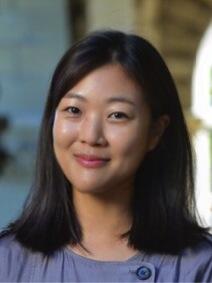
yeonjae lee
Jane Yeonjae Lee is an interdisciplinary qualitative researcher and her research revolves around transnationalism, migrant communities, mobilities, health, and urban environmental politics. In particular, she is interested in understanding the migratory experiences of highly skilled immigrants and how their mobile lives connect and shape the places of migration they move through. Her work has been featured in academic journals such as Health and Place; New Zealand Geographer; and Journal of Ethnic and Migration Studies. She has also contributed to key texts in the field of geography including Elgar Handbook on Medical Tourism and Patient Mobility; Researching the Lifecourse: Critical reflections from the social sciences; and Contemporary Ethnic Geographies in America. Lee holds a PhD in Geography from the University of Auckland. Dr. Lee is currently a visiting scholar at Shorenstein Asia-Pacific Research Center at Stanford University. 

616 Serra StreetEncina Hall E301Stanford, CA94305-6055
(650) 723-6530
0
yeonjae_lee.jpg Ph.D.

Jane Lee joins the Walter H. Shorenstein Asia-Pacific Research Center as a Visiting Scholar during the 2017-18 academic year. Prior to joining Shorenstein APARC, she was a Postdoctoral Research Fellow at Northeastern University working in a global comparative project on exploring sustainable mobilities policies.

Jane is an interdisciplinary qualitative researcher and her research revolves around transnationalism and migration, skilled mobilities, and social policies. In particular, she is interested in understanding the mobile (and marginalized) experiences of migratory groups, and how the particular mobilities of people and ideas may affect the places that are involved. Her work has been featured in academic journals such as Health and Place, and New Zealand Geographer. She has also contributed to key texts in the field of Geography including Elgar Handbook on Medical Tourism and Patient Mobility, Researching the Lifecourse: Critical reflections from the social sciences, and Contemporary Ethnic Geographies in America. During her time at Shorenstein APARC, Jane will participate as a paper author in the Koret Workshop and other center activities.

Jane holds a PhD and BA(Hons) in Geography from the University of Auckland. She also currently serves as an Honorary Research Associate at the University of Auckland. 


Recent Publications:

Lee, J.Y. (2017) ‘Being non-Christian in a Christian community: Experiences of Belonging and Identity among Korean Americans’, Institute of Asian American Studies Publications. 43.

Lee, J.Y., Friesen, W. and Kearns, R. (2015) ‘Return migration of 1.5 generation Korean New Zealanders: Long term and Short term reasons’, NZ Geographer, 71, 34-44.

Lee, J.Y., Kearns, R. and Friesen, W. (2015) ‘Diasporic medical return’, In Lunt, N., Hanefeld, J. and Horsfall, D. (Eds) Elgar Handbook on Medical Tourism and Patient Mobility. London: Elgar, (p.207-216).

Lee, J.Y. (2015) ‘Narratives of the Korean New Zealanders’ return migration: Taking a life history approach’, In Worth, N. and Hardill, I. (Eds) Researching the Lifecourse: Critical reflections from the social sciences. Bristol: Policy Press, (p.183-198). (Invited Contribution)

Lee, J.Y. (2015) ‘Korean Americans: Entrepreneurship and religion’, In Miyares, I. and Airriess, C. (Eds) Contemporary Ethnic Geographies in America (2nd Edition). Rowan & Littlefield Publishing Group, (p.285-302) (Invited Contribution)

Lee, J.Y. (2015) ‘Returning Diasporas: Korean New Zealander returnees’ journeys of searching ‘home’ and identity’ In Christou, A. and Mavroudi, E. (Eds) Dismantling diasporas: rethinking the geographies of diasporic identity, connection and development. London: Ashgate, (p.161-174).

Lee, J.Y. (2011) ‘A trajectory perspective towards return migration and development: The case of young Korean New Zealander returnees’, In Frank, R., Hoare, J., Kollner, P. and Pares, S. (Eds) Korea: Politics, Economy and Society. Danvers: Brill, (p.233-256).

Lee, J.Y., Kearns, R. and Friesen, W. (2010), ‘Seeking affective health care: Korean immigrants’ use of homeland medical services’, Health and Place, 16 (1), 108-115.

Visiting Scholar
<i>Visiting Scholar, APARC, Stanford University</i>
Seminars
News Type
Commentary
Date
Paragraphs

“I don't think [young South Koreans] necessarily want reunification,” APARC director Gi-Wook Shin tells an audience during the World Affairs panel, “Responding to North Korea: South Korea’s Olympic Olive Branch and US Cyber Warfare Options." Joined by Ambassador Kathleen Stephens, the two spoke with World Affars CEO Jane Wales about many of the issues facing the Korean peninsula as it prepares for the start of the Pyeongchang Winter Olympics

The conversation is also available as a downloadable podcast

Hero Image
Wrold Affairs CEO Jane Wales, APARC Director Gi-Wook Shin, and Kathleen Stephens
All News button
1
616 Serra StreetEncina Hall E301Stanford, CA94305-6055
0
hitoshi_sato.jpg Ph.D.
Dr. Hitoshi Sato joins the Walter H. Shorenstein Asia-Pacific Research Center (APARC) for the 2018 year from the Institute of Developing Economies (IDE-JETRO) in Japan, where he serves as Senior Chief Research Fellow.  He will be working on the internationalization of firms, management practices, and development.  Dr. Sato received his Ph.D. from the University of Wisconsin, Madison. 
Visiting Scholar at APARC
News Type
News
Date
Paragraphs

In October 2017, twenty-two scholars from eight countries attended a workshop titled “ASEAN @ 50, Southeast Asia @ Risk: What should be done?” The workshop was designed to facilitate a frank and creative discussion of policy recommendations, with the intention of providing the resulting proposals to ASEAN member states and other regional powers. Following two days of discussion and debate, the attendees produced a series of specific policy recommendations (SPRs).

Four sets of Southeast Asia-related topics were covered during the workshop: regional security, regional infrastructure, regional economy, and improving ASEAN. The attending scholars—which included Director of the U.S.-Asia Security Initiative Karl Eikenberry and Director of the Southeast Asia Program Donald Emmerson—submitted 24 SPRs for discussion.

Over two-and-a-half days, the group evaluated each SPR for its effectiveness, significance, specificity, and feasibility. The intention was to produce specific proposals addressing some of the main challenges facing Southeast Asia. So as to encourage openness in the dialogue, the workshop was held under the Chatham House Rule.

The Southeast Asia Program and the U.S.-Asia Security Initiative in the Walter H. Shorenstein Asia-Pacific Research Center prepared this program and final publication in cooperation with multiple partners. Their final recommendations have been included in the 20-page report which is now available online.

Hero Image
asean 50 group photo overlay custom resize crop
All News button
1
News Type
News
Date
Paragraphs

Interventions designed to improve primary care management of diabetes and reduce avoidable hospital admissions show promise for saving healthcare resources without compromising quality of care. These are the findings made by an international research team’s study of four East Asian sites.

With a fourfold increase in global diabetes prevalence over the past thirty-five years (2016 Lancet report), countries are increasingly experiencing the dual health challenges of chronic noncommunicable diseases and aging populations. An estimated 12 percent of global health expenditures in 2015 was for diabetes-related services.

The study, published in the November issue of Health Affairs, examined policy interventions in Japan, Singapore, Hong Kong, and rural and peri-urban Beijing; by increasing access and adherence to effective outpatient management, the interventions potentially improved health outcomes while realizing cost savings from reduced avoidable hospital admissions.

“This article represents the first publication in a series of research collaborations under the Stanford AHPP-led comparative diabetes net value project,” said Karen Eggleston, Asia Health Policy Program Director and one of the article’s authors.  “We are assembling and analyzing rich patient-level datasets, using diabetes as a lens to explore ‘value for money’ in chronic disease management. “

Eggleston also noted that additional research teams have joined since the publication. The authors look forward to contributing evidence for improved health policy in different institutional contexts and for health systems adapting to rapidly aging populations. 

Read the study (may require subscription)

Hero Image
Photo of Stethescope Photo by Hush Naidoo on Unsplash
All News button
1
Paragraphs

Improving the quality of primary care may reduce avoidable hospital admissions. Avoidable admissions for conditions such as diabetes are used as a quality metric in the Health Care Quality Indicators of the Organization for Economic Cooperation and Development (OECD). Using the OECD indicators, we compared avoidable admission rates and spending for diabetes-related complications in Japan, Singapore, Hong Kong, and rural and peri-urban Beijing, China, in the period 2008–14. We found that spending on diabetes-related avoidable hospital admissions was substantial and increased from 2006 to 2014. Annual medical expenditures for people with an avoidable admission were six to twenty times those for people without an avoidable admission. In all of our study sites, when we controlled for severity, we found that people with more outpatient visits in a given year were less likely to experience an avoidable admission in the following year, which implies that primary care management of diabetes has the potential to improve quality and achieve cost savings. Effective policies to reduce avoidable admissions merit investigation.


All Publications button
1
Publication Type
Journal Articles
Publication Date
Journal Publisher
Health Affairs
Authors
Karen Eggleston
-

Image
keunlee 2012
Keun Lee, winner of the 2014 Schumpeter Prize and a professor of economics at Seoul National University, will explore the Schumpeterian hypothesis that the effectiveness of the national innovation system (NIS) of a country determines its long term economic performance, using the case of South Korea as an example. Professor Lee will present an overview of South Korea’s NIS during the “catch-up” and “post-catch-up” stages; and will compare the Korean case with the NIS of European economies to derive comparative lessons. He will also address specific innovation issues in Korea, such as commercializing knowledge in the public sector.

Professor Lee authored Economic Catch-up and Technological Leapfrogging: Path to Development & Macroeconomic Stability in Korea (2016, E Elgar); and Schumpeterian analysis of Economic catch-up (Cambridge University Press, 2013: awarded Schumpeter Prize). He is currently president of the International Schumpeter Society, a member of the Committee for Development Policy of the UN, an editor of Research Policy, an associate editor of Industrial and Corporate Change, and a council member of the World Economic Forum. He obtained a PhD in economics from the University of California, Berkeley, and worked at the World Bank, University of Aberdeen, and the East West Center, Hawaii. One of his most cited articles is a paper on Korea’s Technological Catch-up published in Research Policy, with 1,000 citations (Google Scholar). His H-index is now 35, with 85 papers with more than 10 citations.

Keun Lee <i>Professor of Economics, Seoul National University</i>
Seminars
-

China has pivoted away from export-oriented development towards a strategy of domestic urban and infrastructural construction.  This pivot is especially visible in rural China, where migrant laborers withstand uniquely low wages by relying on subsistence farming practices.  Yet, at the same time, this low-waged labor system is disrupted by an ongoing urbanization boom which terminates rural land-use rights.  I argue that two political institutions prop up contradictory developmental dynamics.  First, China’s localized welfare policies strip rural workers of social rights in cities, which compel them to maintain rural households to supplement their low urban wages.  China’s decentralized fiscal system, however, simultaneously requires rural governments to fund social expenditures for a labor force employed elsewhere, which they do by commoditizing and acquiring financing through rural land sales.  Such land commoditization disrupts rural-urban labor migration, however, because it removes the rural wage supplement that enables migrants to withstand low wages.


[[{"fid":"229452","view_mode":"crop_870xauto","fields":{"format":"crop_870xauto","field_file_image_description[und][0][value]":"","field_file_image_alt_text[und][0][value]":false,"field_file_image_title_text[und][0][value]":false,"field_credit[und][0][value]":"","field_caption[und][0][value]":"","thumbnails":"crop_870xauto","alt":"","title":""},"type":"media","field_deltas":{"3":{"format":"crop_870xauto","field_file_image_description[und][0][value]":"","field_file_image_alt_text[und][0][value]":false,"field_file_image_title_text[und][0][value]":false,"field_credit[und][0][value]":"","field_caption[und][0][value]":"","thumbnails":"crop_870xauto","alt":"","title":""}},"link_text":null,"attributes":{"style":"margin-left: 0px; margin-right: 15px; padding: 0px; float: left; width: 300px; height: 281px;","class":"media-element file-crop-870xauto","data-delta":"3"}}]]Julia Chuang is Assistant Professor in the Department of Sociology at Boston College. Her research uses ethnography to show how the movement of people shapes global economic processes. Her book manuscript, The Changing Foundations of Chinese Development, applies this method to the Chinese economy. It follows labor brokers and migrant workers as they move between the villages where they live and the cities where they work. Her book shows how their migrations reflect ongoing tensions and changes in the way Chinese markets – and their reliance on labor and land in particular – operate today. Publications from this project have appeared in Gender & Society, Journal of Peasant Studies and The China Quarterly.

Professor Chuang received a PhD in 2014 from the Department of Sociology at the University of California, Berkeley. From 2014 to 2016 she was a Postdoctoral Fellow at the Watson Institute for International and Public Affairs at Brown University.


Image
China Toolkit
This event is part of the 2018 Winter Colloquia; An Expanding Toolkit: The Evolution of Governance in China

China has undergone historic economic, social and cultural transformations since its Opening and Reform. Leading scholars explore expanding repertoires of control that this authoritarian regime – both central and local – are using to manage social fissures, dislocation and demands. What new strategies of governance has the Chinese state devised to manage its increasingly fractious and dynamic society? What novel mechanisms has the state innovated to pre-empt, control and de-escalate contention? China Program’s 2018 Winter Colloquia Series highlights cutting-edge research on contemporary means that various levels of the Chinese state are deploying to manage both current and potential discontent from below.

Julia Chuang <i>Assistant Professor, Department of Sociology, Boston College, Morrissey College of Arts and Sciences</i>
Seminars
News Type
News
Date
Paragraphs

Commenting on President Trump's twelve-day trip to Asia, FSI senior fellow and director of the Southeast Asia Program at Shorenstein Asia-Pacific Research Center Donald K. Emmerson noted that Trump "failed . . . to significantly alter the calculus brings to bear on North Korea."

Trump's approach to foreign policy, one based on forming personal relationships, might have caused him to get the mistaken idea "that he had made a real impact and everybody was getting along," Emmerson suggested.

Emmerson likewise questioned any substantial trade-related results coming out of the trip, saying that many touted achievements were either "already on the table" or were non-binding memoranda of understanding.

That said, Emmerson stressed that if in time President Trump were to realize the dearth of interest in bilateral trade deals, and that the "U.S. is making China great again," he could shift U.S. policy.

The full article is available from the Sinclair Broadcast Group.

Hero Image
xi and trump
Presidents Trump and Xi take part in a business event in Beijing during Trump's twelve-day Asia tour.
WhiteHouse.gov
All News button
1
Subscribe to Northeast Asia