News Type
News
Date
Paragraphs

Image
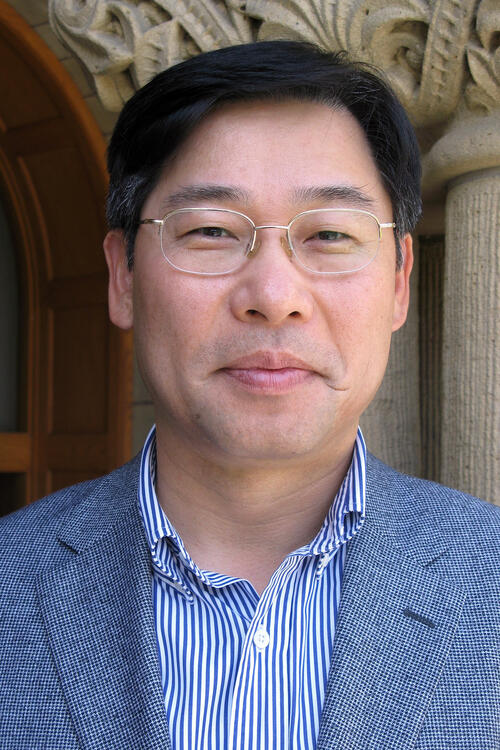
Earn Key Joo, a vice president with the Human Resources Development Center of Samsung Electronics, is a current fellow with the Corporate Affiliates Program of the Walter H. Shorenstein Asia-Pacific Research Center (Shorenstein APARC) at Stanford University. Joo, who has worked with Samsung for 25 years, is based at the company's headquarters in Seoul, South Korea. He has extensive auditing experience, including evaluating the management and operational business units and investigating the illegal activities of employees.

While Samsung's headquarters are based in Seoul, the larger research and development and operational offices are located in Suwon, a city in close proximity to Seoul. Samsung is the current leader of the global electronics market, manufacturing everything from televisions to refrigerators, and semiconductors to mobile phones. It is especially strong in the LED television, color monitor, memory chip, and LCD panel product sectors. Samsung is now trying to advance in the mobile phone market with the introduction of its Galaxy S smartphone, which is available in the United States.

Joo is currently researching ways for Samsung to maintain its market lead. Even as the current leader, he said, market changes could affect the company's success. Joo is studying the case of Sony, a previous electronics market leader, and the factors that led to the loss of its position. His advisor for the project is Gi-Wook Shin, director of Shorenstein APARC and the Korean Studies Program.

In addition to his research project, Joo is taking advantage of his time at Stanford University to improve his English-language skills. He is proficient at reading English, and is using the opportunity to strengthen his speaking ability. He also hopes in the coming months to attend more events, especially in order to learn about the systems of other companies. Joo has already participated in site visits to Cisco, the Federal Reserve Bank of San Francisco, and Palo Alto Utilities.

Joo, who has previously not had the experience of living abroad and has had few opportunities to engage with people from other countries, says, "This is a very good time for me to widen my global perspective." He wants to interact as much as possible with the other fellows-who come from diverse work sectors and different countries in Asia-to exchange information, including best practices, based on each fellow's unique professional experience.

After he returns to Korea, Joo plans to take some of the information he has gained from his research and his exchange of knowledge with other fellows and share it with different development and marketing teams at Samsung, in addition to applying it in his own job. Samsung, Joo believes, is in need of creativity now and he is exploring ways it can develop this in its employees.

In between research and company visits, Joo has been able to spend valuable time with his family, which has traveled with him from Korea. They are planning to visit as many places as possible in the United States and have already visited Yellowstone National Park and are planning a trip to Alaska.


Hero Image
JooEarnKey2
All News button
1
News Type
News
Date
Paragraphs

As the new academic year is about to get underway, the Corporate Affiliates Program of Shorenstein APARC welcomes its new class of fellows for the 2010-2011 academic year:

  • Minoru Aosaki, Ministry of Finance, Japan; 
  • Wataru Ishii, Shizuoka Prefecture, Japan; 
  • Earn Key Joo, Samsung Electronics, Republic of Korea; 
  • Toshifumi Kadowaki, Sumitomo Corporation, Japan; 
  • Takeshi Kondo, Mitsubishi Electric, Japan; 
  • Yuichi Moronaga, Ministry of Economy, Trade and Industry, Japan; 
  • Makoto Murata, Kansai Electric Power Company, Japan; 
  • Pradnya Palande, Reliance Industries, India; 
  • Seung Gun Park, Samsung Electronics, Republic of Korea; 
  • Puangthong Pawakapan, the Asia Foundation / Chulalongkorn University, Thailand; 
  • Oshie Sato, Sumitomo Corporation, Japan; 
  • Naoki Takeuchi, Development Bank of Japan, Japan; 
  • Hirofumi Takinami, Ministry of Finance, Japan; 
  • Sonya Vasudeva, Reliance Industries, India; and 
  • Eiichi Yamamoto, Japan Patent Office, Japan.

During their stay at Stanford University, the fellows will audit classes, study English, and conduct individual research projects, which they will then present about at the end of the year. They will have the opportunity to consult with Shorenstein APARC's scholars and attend events featuring visiting experts from around the world. The fellows will also participate in special events and site visits to gain a first-hand understanding of business, society, and culture in the United States.

The Corporate Affiliates website will feature interviews with of each of the 2010-2011 fellows throughout the coming year.

Hero Image
Encina1Logo
All News button
1
-

How will population aging impact the economies and social protection systems of Japan, South Korea, China, and India? This colloquium showcases research addressing that question by contributors to a new Shorenstein APARC book, Aging Asia, co-edited by Karen Eggleston and Shripad Tuljapurkar. Dr. Bloom discusses how aging of the baby boom generation, declines in fertility rates, and an increase in life expectancy imply several changes for the economies of the region. Notwithstanding the potential challenges, Bloom argues that population aging may have less of a negative effect on economic growth than some have predicted. Bloom will also discuss the longitudinal aging study in India.

David Bloom is Clarence James Gamble Professor of Economics and Demography at Harvard University, Chair of the Department of Global Health and Population at the Harvard School of Public Health, and Director of Harvard University’s Program on the Global Demography of Aging (funded by the National Institute of Aging). He is Research Associate at the National Bureau of Economic Research, where he serves as a member of three research programs: Labor Studies, Aging, and Health Economics. He co-chairs the Public Policy Committee of the American Foundation for AIDS Research. Bloom received a B.S. in Industrial and Labor Relations from Cornell University in 1976, an M.A. in Economics from Princeton University in 1978, and a Ph.D. in Economics and Demography from Princeton University in 1981.

Philippines Conference Room

David Bloom Clarence James Gamble Professor of Economics and Demography Speaker Harvard University
Seminars
News Type
News
Date
Paragraphs

A new issue brief by Scott Rozelle and fellow researchers Jinxia Wang and Jikun Huang concludes that climate change will have a significant effect on China's crop yields and impact its economy, including the grain trade. It concludes that China's government is responsible for responding in ways that will help the country adapt to and mitigate the effects of climate change. The issue brief was jointly published by the International Centre for Trade and Sustainable Development and the International Food and Agricultural Trade Policy Council.

Hero Image
rozelle rice
All News button
1
News Type
News
Date
Paragraphs
John Roos, U.S. Ambassador to Japan, attended the 65th anniversary ceremony of the World War II atomic bombing of Hiroshima. To date, Ambassador Roos is the only U.S. government representative to attend the annual ceremony that commemorates this event. Gi-Wook Shin commented on the possible interpretation of his visit and the human side of the bombing.
Hero Image
roos jsdf flickr us dos
U.S. Ambassador to Japan John Roos discusses relief efforts with Japan Self Defense Forces leaders in Sendai, Japan, on March 23, 2011.
Flickr/U.S. Department of State
All News button
1

中文版--Chinese version available here

China 2.0 Beijing Overview Videos Now Online!

Image
Image

China 2.0 Beijing Introduction

China's First Internet Connection 

The Stanford Program on Regions of Innovation and Entrepreneurship (SPRIE) will host China 2.0 in Beijing on October 18-19, 2010 at the Grand Millennium Hotel in Beijing's central business district. (This event builds on the successful inaugural China 2.0 conference in Silicon Valley at Stanford University on May 24-25

China 2.0 will focus on the leaders driving China's continued ascendance as a "digital superpower" and analyze the strategies they are adopting for success.

China 2.0 is the preeminent new media forum about the dynamic PRC digital landscape that combines the right mix of strategic thinking, practical application and networking.
Fritz Demopoulos, CEO, Qunar.com

The agenda is available here. Please note this event will utilize simultaneous Chinese-English interpretation for the convenience of all participants.

China 2.0 Beijing will feature Internet & e-commerce CEOs and senior executives from China and the US, including members of Stanford's alumni network.

The conference will open with a special session reuniting the two scientists who established the first connection between China and the Internet in 1993: Xu Rongsheng, Institute of High Energy Physics in Beijing and Les Cottrell, Stanford Linear Accelerator Center (SLAC).

Keynote addresses will be given by:

  • James Ding, Managing Director, GSR Ventures
  • Bill Huang, General Manager, China Mobile Research Institute
  • Victor Koo, CEO, YouKu
  • John Liu, Vice President, Google
  • Shen Haoyu, Senior Vice President--Operations, Baidu
  • Brian Wong, Global Head of Sales, Alibaba

The China 2.0 event was bang up-to-date with content and stimulating debate from key players in the Chinese market. The organization was very professional bringing together China players and interested parties from the Bay Area.
--Graham Kill, CEO, Irdeto and CTO, Naspers

Format

China 2.0 is a highly engaging and interactive forum, featuring extensive video material, dynamic panel presentations and Q&A. We also have developed a China 2.0 application which is available now at the Apple Application store, for both iPad and iPhone/iTouch devices.

Final agenda (printable version here):

Monday, October 18, 2010

8:30 - 9:00 Registration
9:00 - 9:15

Welcome Remarks from China 2.0 Co-Chairs
Short video of China 2.0 themes, with highlights from inaugural (May 2010) event at Stanford University
Marguerite Gong Hancock, Associate Director, Stanford Program on Regions of Innovation and Entrepreneurship (SPRIE)
Duncan Clark, Visiting Scholar, SPRIE at Stanford University/Chairman, BDA China

9:15 - 9:45 Special Feature: How the Internet Came to China—and China to the Internet
Short video and reunion (via Cisco TelePresence) of the two scientists who established the first connect between China & the Internet in 1993.

Les Cottrell, Stanford Linear Accelerator Center (SLAC), Stanford University
Xu Rongsheng, Institute of High Energy Physics (IHEP), Beijing
Moderated by Marguerite Gong Hancock, Associate Director, SPRIE

9:45 - 10:25 Keynote Speech: Victor Koo, CEO, Youku (Stanford MBA '94)
10:25 - 10:45 Break

10:45 - 12:00

Mobile 2.0: Apps & Ads
Bin Shen, Vice President for Product Development-Asia, Motorola
Ye Xin, CEO, CASEE
Bertrand Schmitt, CEO, AppAnnie
Justin Mallen, CEO, Silk Road Technologies
Moderated by Duncan Clark, Visiting Scholar, SPRIE at Stanford University/Chairman, BDA China

12:00 - 12:40 Keynote Speech: James Ding, Managing Director, GSR Ventures
12:40 - 1:45 Hosted Lunch: CBD International Restaurant (lobby level of Grand Millennium Hotel)
1:45 - 2:25 Keynote Speech: Bill Huang, General Manager, China Mobile Research Institute

2:25 - 3:45

Shopping 2.0: Consumer e-Commerce in China
Short Video Introduction
Brandon Lin, Partner, SAIF Partners (Stanford BA '91)
Chen Yu, Co-Founder, Yeepay
Alan Hellawell, Managing Director, Deutsche Bank (Stanford MA '97 MBA '97)
Moderated by Loretta Chao, Technology Correspondent, The Wall Street Journal Asia (Beijing)

3:45 - 4:05 Break
4:05 - 4:35 Global Media Industry Outlook: Joel Budd, Media Editor, The Economist (London)

4:35 - 5:55

Games Market Outlook
Short Video Introduction
Andy Tian, Head of China Studio, Zynga
Andy Lee, Managing Director–Asia, Watercooler
Jay Chang, CFO, Kongzhong
Moderated by Bill Bishop, Start-up Investor/Advisor & Co-Founder CBS MarketWatch

5:55 - 6:00 Wrap and Day 2 Outline by China 2.0 Co-chairs, Marguerite Gong Hancock and Duncan Clark
Tuesday, October 19, 2010
8:30 - 9:00 Registration
9:00 - 9:05 Welcome Remarks by China 2.0 Co-Chairs, Marguerite Gong Hancock and Duncan Clark
9:05 - 9:45 Keynote Speech: John Liu, Vice President, Google

9:45 - 10:45

The Outlook for Trans-Pacific Entrepreneurship and Innovation—Indigenous & International?
William Weinstein, Minister-Counselor for Economic Affairs, U.S. Embassy Beijing
Alex Lee, VP, Collaboration and UC, Greater China Region, Cisco Systems (China)
John Chiang, President & Managing Director, US Information Technology Office (USITO)
Mark Baldwin, CEO, Oxus China
Moderated by Duncan Clark, Visiting Scholar, SPRIE at Stanford University/Chairman, BDA China

10:45 - 11:00 Break

11:00 - 12:00

Marketing 2.0
Angel Chen, General Manager, OgilvyOne Beijing
Silvia Goh, Managing Director, LiquidThread China, Starcom MediaVest
Scarlett Li, CEO & Founder, Ourebo
Moderated by Thomas Crampton, Asia-Pacific Director, 360 Digital Influence, Ogilvy Public Relations Worldwide

12:00 - 12:40 Keynote Speech: Brian Wong, Head of Global Sales, Alibaba
12:40 - 1:45 Hosted Lunch: CBD International Restaurant (lobby level of Grand Millennium Hotel)

1:45 - 3:00

Social Networking
David Liu, Founder, Jiepang
Dan Brody, former VP of Tudou, first employee of Google China
Frank Yu, Chief Product Officer, Bokan; Advisor, TEDx Beijing
Gady Epstein, Beijing Bureau Chief, Forbes
Moderated by Jeremy Goldkorn, Founder, Danwei

3:00 - 3:40 Keynote Speech: Shen Haoyu, Senior Vice President-Operations, Baidu
3:40 - 4:00 Break

4:00 - 5:00

TV 2.0: The Future of TV & Three Network Convergence in China
Caroline Pan, Director-China Strategy, Intel
David Wolf, President & CEO, Wolf Group Asia
Shan Phillips, VP Greater China Practice, The Nielsen Company
Moderated by Jonathan Landreth, Senior China Correspondent, The Hollywood Reporter (Beijing)

5:00 -6:15

Fueling China 2.0
Hurst Lin, General Partner, Doll Capital Management, Co-Founder of Sina (Stanford MBA '93)
Daniel Quon, Managing Director, SVB Global, Asia, SVB Financial Group
Olivier Glauser, Managing Director, Steamboat Ventures
Richard Hsu, Managing Director, Intel Capital
Hans Tung, Partner, Qiming Ventures (Stanford BS '93)
Moderated by Kathrin Hille, Technology Correspondent, Financial Times Beijing

6:15 Apple iPad Lucky Draw & Close by China 2.0 Co-Chairs Marguerite Gong Hancock and Duncan Clark

The first China 2.0 provided a great selection of topics and speakers who knew their specialties and made focused presentations--with very little overlap and repetition among panels, always a challenge at such conferences. Well-organized, well-moderated, with a smart audience that asked good questions.
-Gady Epstein, Beijing Bureau Chief, Forbes Magazine

Sponsors

The China 2.0 Beijing conference is made possible by its generous sponsors:


Image

Media Participants

Image

Official PR Partner

Image

Image

Photos

Photos from the May event are available on SPRIE's Flickr page.

Videos

Image
Image

China 2.0 achieved the balance of giving a clear overview to the China newcomers but still bringing insights to market participants about other sectors. Great conference and surely the start of a successful series.
--Olivier Glauser, Managing Director, Steamboat Ventures

Overview videos for China 2.0 are available here. If you are trying to view the videos from within China, they are accessible on BDA's website

Videos from China 2.0 (May 2010) are now avallable at iTunes University (do a power search for "China 2.0" in the title field).

Grand Millennium Hotel, Beijing, China

Conferences
News Type
News
Date
Paragraphs
"Exposure to news can significantly influence public opinion on foreign policy issues as well as perceptions of other nations," said Dr. Gi-Wook Shin at a June 28 public policy forum in Seoul hosted by the Asia Foundation and cosponsored by the Korean-American Association and Friends of the Asia Foundation. The forum, entitled The Influence of Media on U.S.-Korea Relations and Future of the Korean Peninsula, examined the impact of the media on public views of bilateral relations and policy development toward North Korea. Prominent members of the local and international media, including Los Angeles Times Beijing correspondent Barbara Demick, also participated in the forum.
Hero Image
KoreaFoundationCover
All News button
1

Shorenstein APARC
Stanford University
Encina Hall, Room E301
Stanford, CA 94305-6055

(650) 725-6773 (650) 723-6530
0

Joyce Lee joined the Walter H. Shorensein Asia-Pacific Research Center (Shorenstein APARC) in June 2010. Her research currently focuses on the rethinking of Asian multiculturalism, as well as on the official development assistance (ODA) in education sector.
 
Prior to joining Shorenstein APARC, Lee gained several years of research experience at the United States Congress, the Asia Foundation's Center for U.S.-Korea Policy in Washington, DC, and the Ministry of Foreign Affairs and Trade of the Republic of Korea in Seoul. During the 2008 presidential election season, Lee worked as a political intern for Hillary Clinton's campaign at its headquarters in Arlington, VA.

During her four years of college, Lee studied political science at Seoul National University, Chinese language and literature at Peking University, and graduated from the University of Washington with a double bachelors degree in political science and psychology. Lee received a master's degree in public policy from Cornell University. She speaks fluent Korean and conversational Mandarin Chinese.

Research Project Manager

Michael Armacost recently gave a talk, examining the “rise” of China, at a gathering of international affairs experts. “How should we think of China,” asked Armacost, saying, “Some portray Beijing as a looming military threat; some regard it as our most promising global partner; some expect it to compete fiercely with us for global economic leadership.” Armacost looked at China’s military, trade, economics, and education in relation to the United States and shared thoughts for preparing the United States to become more competitive for the future.

0
Former Shorenstein APARC Fellow
Michael_Armacost.jpg PhD

Michael Armacost (April 15, 1937 – March 8, 2025) was a Shorenstein APARC Fellow at the Walter H. Shorenstein Asia-Pacific Research Center (Shorenstein APARC) from 2002 through 2021. In the interval between 1995 and 2002, Armacost served as president of Washington, D.C.'s Brookings Institution, the nation's oldest think tank and a leader in research on politics, government, international affairs, economics, and public policy. Previously, during his twenty-four-year government career, Armacost served, among other positions, as undersecretary of state for political affairs and as ambassador to Japan and the Philippines.

Armacost began his career in academia, as a professor of government at Pomona College. In 1969, he was awarded a White House Fellowship and was assigned to the Secretary and Deputy Secretary of State. Following a stint on the State Department's policy planning and coordination staff, he became a special assistant to the U.S. ambassador in Tokyo from 1972 to 74, his first foreign diplomatic post. Thereafter, he held senior Asian affairs and international security posts in the State Department, the Defense Department, and the National Security Council. From 1982 to 1984, he served as U.S. ambassador to the Philippines and was a key force in helping the country undergo a nonviolent transition to democracy. In 1989, President George Bush tapped him to become ambassador to Japan, considered one of the most important and sensitive U.S. diplomatic posts abroad.

Armacost authored four books, including, Friends or Rivals? The Insider's Account of U.S.–Japan Relations (1996), which draws on his tenure as ambassador, and Ballots, Bullets, and Bargains: American Foreign Policy and Presidential Elections (2015). He also co-edited, with Daniel Okimoto, the Future of America's Alliances in Northeast Asia, published in 2004 by Shorenstein APARC. Armacost served on numerous corporate and nonprofit boards, including TRW, AFLAC, Applied Materials, USEC, Inc., Cargill, Inc., and Carleton College, and he currently chairs the board of The Asia Foundation.  

A native of Ohio, Armacost graduated from Carleton College and earned his master's and doctorate degrees in public law and government from Columbia University. He received the President's Distinguished Service Award, the Defense Department's Distinguished Civilian Service Award, the Secretary of State's Distinguished Services Award, and the Japanese government’s Grand Cordon of the Order of the Rising Sun.

Date Label
Michael H. Armacost Shorenstein Distinguished Fellow Speaker
Lectures
Subscribe to Northeast Asia