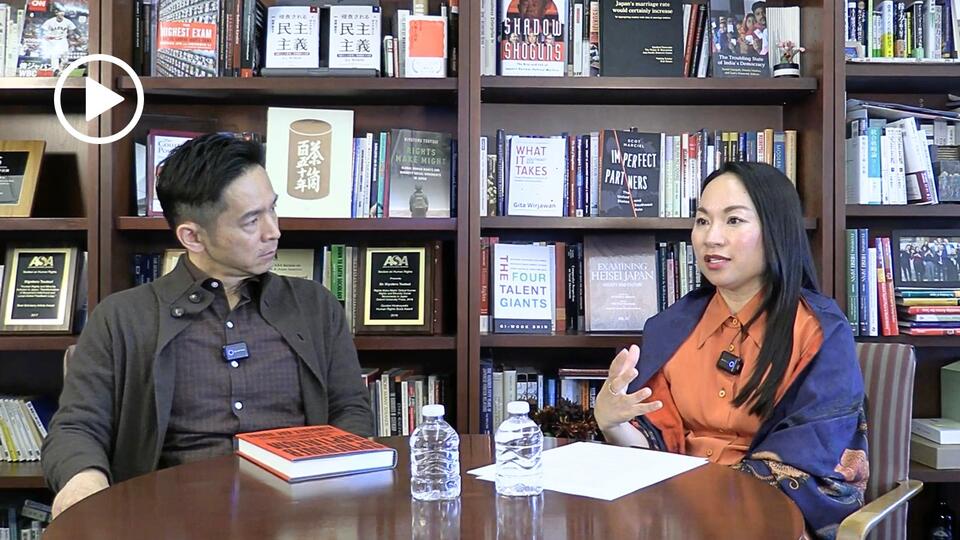
Kiyoteru Tsutsui is the Henri H. and Tomoye Takahashi Professor, Professor of Sociology, Senior Fellow at the Freeman Spogli Institute for International Studies, and Director of the Walter H. Shorenstein Asia-Pacific Research Center, where he is also the Director of the Japan Program and Co-Director of the Southeast Asia Program. Tsutsui’s research interests lie in political/comparative sociology, social movements, globalization, human rights, and Japanese society. His most recent publication, Human Rights and the State: The Power of Ideas and the Realities of International Politics (Iwanami Shinsho, 2022), was awarded the 2022 Ishibashi Tanzan Award and the 44th Suntory Prize for Arts and Sciences.
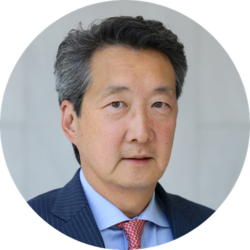
Victor Cha is Distinguished University Professor at Georgetown University and President of the Geopolitics and Foreign Policy Department at the Center for Strategic and International Studies in Washington, D.C. He previously served on the Defense Policy Board for the Biden administration and on the National Security Council for the George W. Bush administration. He is the award-winning author of nine books including The Black Box: Demystifying the Study of Korean Unification and North Korea (Columbia, 2025). His newest book is China’s Weaponization of Trade: Resistance Through Collective Resilience(Columbia, January 2026) with E. Kim and A. Lim. Dr. Cha received his PhD, MIA, and BA from Columbia University and a BA with honors from Oxford University.
Rui Matsukawa, after a 23-year diplomatic career in various positions at MOFA became a Senator.
Her diplomatic experience includes Asian regional cooperation, trade, security policy, international law, disarmament, intelligence, and women's empowerment.
Her overseas posts including the US (DC), Switzerland (Geneva), and Korea (Seoul). From 2011-2013, she served as the Deputy-Secretary General of the TCS (Japan-Korea-China trilateral cooperation) in Seoul.
As a Senator, she has engaged in foreign policy, security policy, and women's empowerment. She served as the Parliamentary Vice-Minister for Defense in the Ministry of Defense, and held related positions in the Liberal Democratic Party (LDP). She established "Parliamentary League for International Women's Empowerment" and "Parliamentary League for Promoting Defense Equipment Transfer."
Currently, she serves as Chair of the Cabinet Division II within the Liberal Democratic Party.
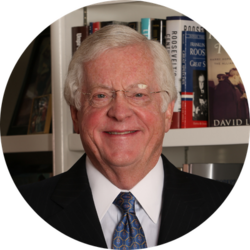
J. Thomas Schieffer is the founder and CEO of Envoy International LLC, a consulting firm that provides a wide range of advice to companies with international interests. He served as U.S. Ambassador to Japan from 2005-2009 and Ambassador to Australia from 2001-2005. Prior to his diplomatic service Ambassador Schieffer was an investor in the partnership that bought the Texas Rangers Baseball Club in 1989. He oversaw the building of the Club’s new home, The Ballpark in Arlington, and served as President of the franchise from 1991-1999.
Following his diplomatic service, Ambassador Schieffer was presented with the Order of Australia by the Governor General of Australia in 2006 and the Grand Cordon of the Order of the Rising Sun by the Emperor of Japan in 2013. He was also decorated by six agencies and departments of the United States government for his service.
Ambassador Schieffer attended the University of Texas, where he earned a B.A. in government, an M.A. in international relations, and studied law. He was admitted to the State Bar of Texas in 1979.

Katherine Monahan joined the Walter H. Shorenstein Asia-Pacific Research Center (APARC) as a visiting scholar, Japan Program Fellow, from September 2025 to March 2026. Ms. Monahan has completed 16 assignments on four continents in her 30 years as a Foreign Service Officer with the U.S. Department of State. She recently returned from Tokyo, where she was Deputy Chief of Mission at the U.S. Embassy in Japan, following roles as Charge d’affaires for Papua New Guinea, Solomon Islands, and Vanuatu, and Deputy Chief of Mission to New Zealand, Samoa, Cook Islands, and Niue. She was Director for East Asia at the National Security Council from 2022 to 2023. Previously, she worked for the U.S. Department of Treasury in Tokyo, as Economic, Trade and Labor Counselor in Mexico City, Privatization lead in Warsaw after the fall of the Berlin Wall, Advisor to the World Bank, and Deputy Executive Director of the Secretary of State’s Global Health Initiative, among other roles. As lead of UNICEF’s International Financial Institutions office, Ms. Monahan negotiated over $1 billion in funding for children. A member of the Bar in California and DC, Ms. Monahan began as an attorney in Los Angeles.

Michael Brown is a Partner at the venture firm of Shield Capital as well as a Distinguished Senior Fellow at the Institute for Security and Technology.
He serves on the Boards of Advisors for key national security and technology think tanks, including the Center for a New American Security (CNAS), the Center for Security and Emerging Technology (CSET) at Georgetown, the USAF Academy’s Cyber Board, and the Reagan Institute’s National Security Innovation Base project. He also serves on the Board of the Information Technology and Innovation Foundation (ITIF).
He is a member of the Council on Global Competition and Innovation, the Council on Foreign Relations, and a Senior Advisor to the Defense Panel at the Special Competitive Studies Project. He is also a former advisor to the U.S. Navy’s Science and Technology Board and a former visiting scholar at the Hoover Institution, Stanford University. He serves on the Boards of Strider Technologies, Asimily, Nexla, and Code Metal and is a contributing author at Forbes, War on the Rocks and Foreign Affairs.
Michael previously served as the Director of the Defense Innovation Unit (DIU) at the U.S. Department of Defense (2018-2022). During his tenure, DIU accelerated the adoption of 50 new, mission-critical capabilities by the U.S. military and spearheaded the creation of National Security Innovation Capital, the precursor to the Office of Strategic Capital.From 2016 to 2018, Michael was a White House Presidential Innovation Fellow, where he co-authored a seminal Pentagon study that served as a catalyst for the Foreign Investment Risk Review Modernization Act (FIRRMA), significantly strengthening CFIUS’s authorities.

Arthur Dubois is the founder and CEO of Grid Aero, a startup building resilient networks of low-cost, long-range autonomous aircraft for logistics and beyond. Arthur is an aerospace engineer and startup leader with deep expertise in the design, development, and manufacturing of autonomous aircraft. He holds an MS in Aerospace Engineering from Stanford University and has led multiple clean-sheet aircraft programs from concept through first flight across both commercial and military applications. He played a key role in scaling Joby Aviation from a 20-person startup to an 800-person organization, and later served as Head of Engineering at Xwing, where he led the development of advanced flight autonomy systems. Arthur is leveraging this combination of aerospace technical depth and business experience to field practical defense solutions to US Warfighters.
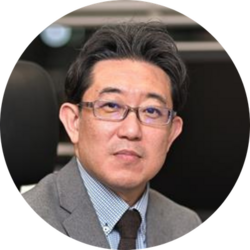
Jingo Kikukawa currently serves as Director-General, Innovation and Environment Policy Bureau at the Ministry of Economy Trade and Industry (METI). Appointed as head of this bureau on July 2024, Mr. Kikukawa leads Japan’s national innovation strategy and national research and development projects. He also oversees industrial standards and environmental policy, including key Japanese government initiatives to combat climate change.
Immediately prior to his current appointment, Mr. Kikukawa served as Counsellor, Cabinet Secretariat, and Counsellor to the Director-General of the Digital Agency. In these key roles, he helped refine a wide range of policy initiatives covering the whole government and the Prime Minister's Office. Specifically, policies addressing related measures for COVID-19, Green Transformation (GX), and AI strategies. While serving, as Deputy Director-General of the Economic and Industrial Policy Bureau, Mr. Kikukawa helped formulate a major amendment to the Act on Strengthening Industrial Competitiveness and contributed to the expansion of strategic domestic investments through budgetary and taxation measures. In addition, Mr. Kikukawa led efforts to promote innovation through measures such as M&A to support leading medium-sized enterprises.
Since joining METI in 1994, earlier in his career Mr. Kikukawa held a wide range of key positions, such as Deputy Director of the Environmental Policy Division (Policy Planning Committee Member) and served as a Member of the Policy Planning Committee for the Budget and Accounts Division, of the Minister's Secretariat.
While serving as Counselor, Permanent Mission of Japan to the International Organizations in Geneva, Mr. Kikukawa led the trade liberalization negotiations for information and communications equipment as chairperson, which succeeded in reaching agreement. The success of these negotiations resulted in Mr. Kikukawa’s selection as the first Japanese official to be elected chairperson of the WTO Committee on Technical Barriers to Trade (TBT Committee).

Suzanne Basalla is a Partner at Geodesic Capital, where she works on the Geodesic Alliance Fund, an early-stage venture fund focused on backing transformative technology companies and strengthening innovation collaboration among the United States and its allies, particularly Japan. Her work sits at the intersection of venture capital, geopolitics, and emerging technology, drawing on decades of leadership across government, industry, and nonprofit sectors.
Previously, Suzanne served as President & CEO of the U.S.-Japan Council, where she advanced flagship initiatives including the TOMODACHI Initiative and the Silicon Valley Japan Platform, deepening people-to-people and technology ties between the two countries. Earlier in her career, she was Chief of Staff at Toyota Research Institute and a Naval officer, with assignments in Japan, the Pentagon, and Diego Garcia. Following her naval service, she was Director for Japan in the Office of the Secretary of Defense in Washington, DC, and later served as Senior Advisor to John Roos, U.S. Ambassador to Japan, from 2010 to 2012.
Suzanne serves on the board of NTT Data, Inc. and as an advisor to Central Japan Railways. Her non-profit service includes board roles with the Japan Society of Northern California and the UCLA Terasaki Center for Japanese Studies, and an advisory role with U.S.-Japan Council and Career Girls.Suzanne holds a bachelor’s degree from the University of Virginia and a master’s degree from George Washington University. She also studied at the Naval War College and at Keio University as an Olmsted Scholar.
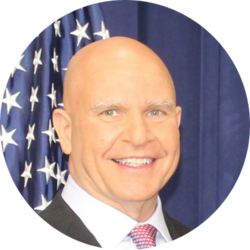
H. R. McMaster is the Fouad and Michelle Ajami Senior Fellow at the Hoover Institution, Stanford University. He is also the Bernard and Susan Liautaud Fellow at the Freeman Spogli Institute and lecturer at Stanford University’s Graduate School of Business. Upon graduation from the United States Military Academy in 1984, McMaster served as a commissioned officer in the United States Army for thirty-four years. He retired as a Lieutenant General in June 2018 after serving as the 25th assistant to the president for National Security Affairs. He holds a PhD in military history from the University of North Carolina at Chapel Hill. McMaster is the host of Today's Battlegrounds and is a regular on GoodFellows, both produced by the Hoover Institution. He is a Distinguished University Fellow at Arizona State University.
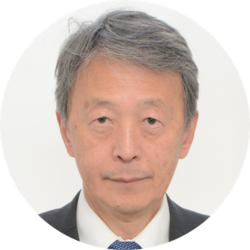
Masataka Okano most recently served as Japan’s National Security Advisor, where he advised the Prime Minister and oversaw national security policy across domains including economic security and cybersecurity. He has held several other senior positions, including Vice-Minister for Foreign Affairs: the highest-ranking Foreign Service officer, and Deputy National Security Advisor/Assistant Chief Cabinet Secretary in the Prime Minister’s Office, where he contributed to drafting the 2022 National Security Strategy and preparing for Active Cyber Defense legislation.
Mr. Okano has also served as Deputy Minister for Foreign Policy, responsible for UN policy, human rights, and policy planning, and as the Ministry’s Legal Advisor, overseeing international law interpretation and treaty negotiations.From 2015-2018, he served as Political Minister at the Japanese Embassy in Washington, D.C., and managed the Japan-U.S. alliance during the Obama and Trump administrations.
Other previous assignments include Director for Russian Affairs supervising Japan’s foreign policy towards Russia, as well as overseas postings in Washington, D.C. (2004-2008), Beijing (2001-2004), and Paris (1988-1992). Mr. Okano has taught international law at Japan’s most prestigious universities, including the University of Tokyo’s Graduate School of Public Policy, Waseda University’s Graduate School of Law, and Sophia University. He also taught Japanese law at Institut national des langues et civilisations orientales in Paris.
Mr. Okano holds a B.A. in Law from the University of Tokyo and an international diploma in public administration from France’s École nationale d’Administration. He has recently published “Japan’s National Security Reckoning: How Tokyo Is Adjusting to a More Dangerous World,” Foreign Affairs, February 26, 2026.
Colin Kahl is director of the Freeman Spogli Institute for International Studies and the Steven C. Házy Senior Fellow. He is also the faculty director of CISAC’s Program on Geopolitics, Technology, and Governance, and a professor of political science (by courtesy).
From April 2021-July 2023, Dr. Kahl served as the under secretary of defense for policy at the U.S. Department of Defense. In that role, he was the principal adviser to the secretary of defense for all matters related to national security and defense policy and represented the department as a standing member of the National Security Council Deputies’ Committee. He oversaw the writing of the 2022 National Defense Strategy, which focused the Pentagon’s efforts on the “pacing challenge” posed by the PRC, and he led the department’s response to Russia’s invasion of Ukraine and numerous other international crises. He also led several other major defense diplomacy initiatives, including an unprecedented strengthening of the NATO alliance; the negotiation of the AUKUS agreement with Australia and the United Kingdom; historic defense force posture enhancements in Australia, Japan, and the Philippines; and deepening defense and strategic ties with India. In June 2023, Secretary of Defense Lloyd Austin III awarded Dr. Kahl the Department of Defense Distinguished Public Service Medal, the highest civilian award presented by the secretary of defense.
During the Obama Administration, Dr. Kahl served as deputy assistant to President Obama and national security advisor to Vice President Biden from October 2014 to January 2017. He also served as deputy assistant secretary of defense for the Middle East from February 2009 to December 2011, for which he received the Outstanding Public Service Medal in July 2011.
Andrew Grotto is a research scholar at the Center for International Security and Cooperation at Stanford University.
Grotto’s research interests center on the national security and international economic dimensions of America’s global leadership in information technology innovation, and its growing reliance on this innovation for its economic and social life. He is particularly interested in the allocation of responsibility between the government and the private sector for defending against cyber threats, especially as it pertains to critical infrastructure; cyber-enabled information operations as both a threat to, and a tool of statecraft for, liberal democracies; opportunities and constraints facing offensive cyber operations as a tool of statecraft, especially those relating to norms of sovereignty in a digitally connected world; and governance of global trade in information technologies.
Before coming to Stanford, Grotto was the Senior Director for Cybersecurity Policy at the White House in both the Obama and Trump Administrations. His portfolio spanned a range of cyber policy issues, including defense of the financial services, energy, communications, transportation, health care, electoral infrastructure, and other vital critical infrastructure sectors; cybersecurity risk management policies for federal networks; consumer cybersecurity; and cyber incident response policy and incident management. He also coordinated development and execution of technology policy topics with a nexus to cyber policy, such as encryption, surveillance, privacy, and the national security dimensions of artificial intelligence and machine learning.

Mihoko Matsubara is Chief Cybersecurity Strategist of NTT, Inc., Tokyo, being responsible for cybersecurity thought leadership. Mihoko worked at the Japanese Ministry of Defense before completing her MA at the Johns Hopkins School of Advanced International Studies on Fulbright. Most recently, Mihoko was the Vice President and Public Sector Chief Security Officer for the Asia-Pacific region at Palo Alto Networks.
She was on the Cyber Security Advisory Panel of the Monetary Authority of Singapore between 2021 and 2023. She has been on the National Cybersecurity R&D Programme (NCRP) International Advisory Panel (IAP) since 2023.
She is an author of three awarded books on cybersecurity and resilience lessons from the ongoing war in Ukraine. Her chapter, “Japan’s 5G Security Strategy and Competition in Emerging Technologies,” is included CSIS Japan Chair’s book, Toward a U.S.-Japan Technology Alliance: Competition and Innovation in New Domains (Rowman & Littlefield, December 2022).
She is Associate Fellow for Cyber at the International Institute for Strategic Studies, London; Adjunct Fellow at the Pacific Forum, Honolulu; Non-resident Fellow at the National Bureau of Asian Research, Washington D.C.; and Non-resident Scholar at Sasakawa Peace Foundation USA, Washington D.C.
Michael Sulmeyer was the Assistant Secretary of Defense for Cyber Policy and the Principal Cyber Advisor to the Secretary of Defense. In these roles, he was responsible for overseeing the Department of Defense’s cyber policies and operations.
Prior to his appointment as Assistant Secretary, Dr. Sulmeyer served as the Principal Cyber Advisor to the Secretary of the Army. While with the Army, he led the service’s efforts to improve the cybersecurity of operational technology and control systems. Before his time with the Army, Dr. Sulmeyer served in multiple positions in the Office of the Secretary of Defense. He also served as Senior Advisor to the Commander of U.S. Cyber Command, as well as Special Assistant to the President and Senior Director for Cyber Policy on the National Security Council staff.
Outside of government, Dr. Sulmeyer was the Director of the Cybersecurity Project at the Harvard Kennedy School’s Belfer Center for Science and International Affairs. He also taught at the University of Texas School of Law and was a Senior Fellow at Georgetown University’s Center for Security and Emerging Technology. Dr. Sulmeyer was a Contributing Editor to the national security blog Lawfare and in the mid-1990s, he was the System Operator (SysOp) of The Summit BBS in Santa Barbara, California.
Dr. Sulmeyer earned his doctorate (DPhil) from Oxford University as a Marshall Scholar. He also earned a law degree (JD) from Stanford Law School, a master’s degree (MA) in War Studies from King’s College London, and his bachelor’s degree (BA) from Stanford University.
Sanjeev Khagram is a distinguished visiting fellow at the Hoover Institution in its Emerging Markets Working Group, where he leads the Global Resilience Index Platform and Partnership (GRIPP). Khagram was previously CEO, director-general, and dean (2018–24) and is currently Foundation Professor of Global Leadership and Global Futures at the Thunderbird School of Global Management, Arizona State University.
Khagram is a world-renowned leader, entrepreneur, scholar and professor across the academic, private, public and civic sectors. He has published widely, with books including the award-winning Dams and Development (Cornell University Press); The Transnational Studies Reader (Routledge Press); and Open Budgets (Brookings Press). His journal articles include "Inequality and Corruption" in the American Journal of Sociology; "Future Architectures of Global Governance" in Global Governance, “Environment and Security" in the Annual Review of Environment and Resources, “Towards a Platinum Standard for Evidence-Based Assessment” in Public Administration Review, “Social Balance Sheets” in Harvard Business Review, and “From Human Security and the Environment to Sustainable Security and Development,” in the Journal of Human Development.
Khagram was previously the inaugural John Parke Young Professor of Global Political Economy at Occidental College, Wyss Scholar at the Harvard Business School, Lindenberg Professor and founding director of the Lindenberg Center for International Development at the University of Washington, visiting professor at the Stanford Institute of International Studies, and associate professor at Harvard’s Kennedy School of Government.
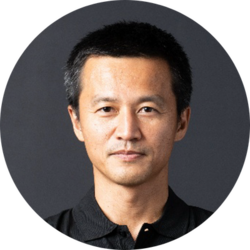
Hide Kamiya engaged in the aerospace business and new business development at Mitsubishi Corporation from 1997 to June 2025. He was stationed twice in Washington, D.C., where he actively promoted space and national security businesses on a global scale. He contributed to international partnerships, including serving as an outside director of Japan Space Imaging, a Japanese company, and Starlab Space, a U.S.-based company. In his final role at Mitsubishi Corporation, he led the restructuring and rebuilding of the company’s space business. He joined ispace in July 2025 as Executive Vice President, where he leads new business development and global corporate strategy. He graduated from the Department of Electrical Engineering, Faculty of Science and Technology, Keio University in March 1997, and completed the Business Leadership Program at IMD in Switzerland in 2012.
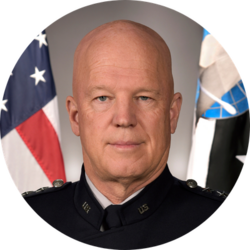
Gen. John W. "Jay" Raymond was the 1st Chief of Space Operations of the U.S. Space Force. As Chief, he served as the senior uniformed Space Force officer responsible for the organization, training and equipping of all organic and assigned space forces serving in the United States and overseas. As a member of the Joint Chiefs of Staff, the Chief of Space Operations and other service chiefs function as military advisers to the Secretary of Defense, National Security Council and the President.
Gen. Raymond was commissioned through the ROTC program at Clemson University in 1984. He commanded at squadron, group, wing, numbered air force, Major Command and Combatant Command levels. Notable staff assignments included serving in the Office of Force Transformation, Office of the Secretary of Defense; the Director of Plans, Programs and Analyses at Air Force Space Command; the Director of Plans and Policy (J5), U.S. Strategic Command; and the Deputy Chief of Staff for Operations, Headquarters U.S. Air Force.
Gen. Raymond deployed to Southwest Asia as Director of Space Forces in support of operations Enduring Freedom and Iraqi Freedom. Prior to leading establishment of the U.S. Space Force and serving as the 1st Chief of Space Operations, Gen. Raymond led the re-establishment of U.S. Space Command as the eleventh U.S. combatant command.
Jeff Thornburg is the CEO of Portal Space Systems. He started his career in the U.S. Air Force and earned his master’s in aeronautical engineering from the Air Force Institute of Technology. While stationed at the Air Force Research Laboratory, Thornburg contributed to groundbreaking programs, including performing the world’s first hydrogen full-flow staged combustion cycle engine demonstration.
Thornburg has held key roles in most of the private sector’s most prominent commercial space companies, including VP of propulsion engineering at SpaceX, director of mechanical engineering and manufacturing for Amazon’s project Kuiper, vice president of propulsion engineering at Stratolaunch, senior vice president of engineering at Agility Robotics, and chief of engineering at Commonwealth Fusion Systems.
As SpaceX’s second-ever head of propulsion engineering, he architected and developed the Raptor Engine for the Starship and Starship Booster programs. He also oversaw the successful launches of six Falcon 9s and streamlined certification processes with government agencies like NASA and the U.S. Air Force. Throughout his career, Thornburg has been recognized with awards from NASA and the Air Force, including a NASA Space Flight Awareness award, the NASA Made It Happen award, the NASA Stennis Space Center Propulsion Test Director’s Leadership Award, and an Air Force Research Laboratory Technical Program Manager of the Year.
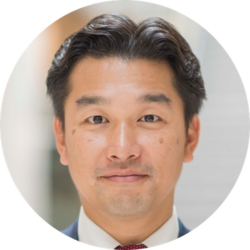
Naohiko Kohtake is a Visiting Professor at the Center for Design Research, Stanford University, and Professor at the Graduate School of System Design and Management, Keio University in Japan. His research interests lie in space systems engineering, intelligent systems, and the integration of design thinking and systems engineering for innovative social and space services. He is currently conducting research at Stanford University on enhancing data-driven decision-making systems through space-scale Internet of Things, which involves satellites, drones, ground-based sensors, and robots.
He began his career at the Japan Aerospace Exploration Agency (JAXA), where he worked on the H-IIA launch vehicle, onboard software for spacecraft, and international projects related to the International Space Station with European Space Agency (ESA) and NASA. He later served as a visiting researcher at the ESA. Since joining Keio University in 2009, he has led research on space service innovation, systems approaches to societal challenges, and education for multigenerational co-creation. He has served as the primary academic advisor for 13 doctoral degree recipients and 73 master’s degree recipients from Japan as well as other countries in Asia, Africa, and Europe. He concurrently held the position of Principal at Keio Yokohama Elementary School.