-

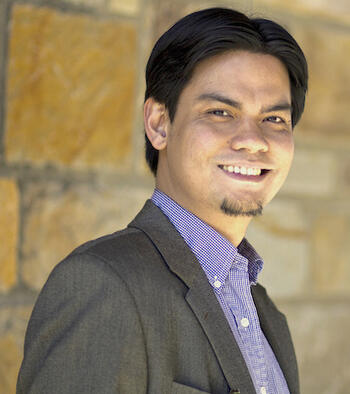
Much of the world today is preoccupied with threats to non-traditional security (NTS): border-spanning challenges such as terrorism, pandemic disease, and environmental damage that defy traditional approaches to security focused on military conflicts between states. Despite their arguable gravity, NTS threats elicit a baffling array of policy responses, ranging from full-scale securitization and institutionalized management to no response at all. Despite their scope, NTS problems are rarely managed holistically through regional organizations. Instead they are addressed mainly by efforts to alter and enlarge—“rescale”—the authority of the apparatus of the national state to cover specific NTS issues in a variety of locations. The resulting process of state expansion if not transformation is promoted and resisted by domestically competing coalitions of socioeconomic and political forces. Regionalist theory and rhetoric notwithstanding, it is the intra-national struggles among such groups that dictate how these nascent modes of NTS-focused governance operate in practice.  Prof. Jones will illustrate his argument with particular reference to Southeast Asia.

Lee Jones is a senior lecturer in international politics at Queen Mary, University of London, and a research associate at the Asia Research Centre, Murdoch University, Perth, Australia. His work features the interaction between social conflict, state transformation, and international relations, with a focus on Southeast Asia. His many publications include Governing Borderless Threats: Non-Traditional Security and the Politics of State Transformation (co-authored) and Societies Under Siege: Exploring How International Economic Sanctions (Do Not) Work (both forthcoming in 2015). Earlier work includes ASEAN, Sovereignty and Intervention in Southeast Asia (2012). He has advised governmental and non-governmental agencies in Europe and Asia and regularly appears in British and international media. His DPhil and MPhil are from Oxford. His website is www.leejones.tk and he tweets @DrLeeJones.

Philippines Conference Room

Encina Hall 3rd. Floor Central

616 Serra Street

Stanford, CA 94301

Lee Jones 2014-15 Lee Kong Chian NUS-Stanford Distinguished Fellow on Southeast Asia
Seminars
-

Stanford Summer Juku on Japanese Political Economy (SSJ-JPE)

August 11-14, 2014

Oksenberg Conference Room

Stanford Japan Program at Shorenstein Asia-Pacific Research Center

The Japan Program at the Walter H. Shorenstein Asia-Pacific Research Center (S-APARC) at Stanford University started Stanford Summer Juku (SSJ) in 2014.  In SSJ, researchers on Japanese politics and Japanese economy get together and discuss their research in a relaxed setting. The second annual meeting is held at Stanford on August 11-14, 2014.  The first two days again focus on research in political science/political economy and international relations, and the latter two days focus on research in economics and business.

Takeo Hoshi, Kenji E. Kushida, Phillip Lipscy


Program

8/11/2013

8:30-9:00    Breakfast

9:00-10:15  Session I:

"Japan's Abandoned Partisans: Realignment after Electoral Reform", Kenneth McElwain (University of Michigan)

Discussants:
Daniel M. Smith (Harvard University)
Karen Jusko (Stanford University)
 

10:15-10:45  Break

10:45-12:00  Session II:

"Political Dynasties and the Selection of Cabinet Ministers: The Legacy Advantage in Japan and Ireland" Daniel M. Smith (Harvard University), Shane Martin (University of Leicester)

Discussants:
Gary Cox (Stanford University)
Kenneth McElwain (University of Michigan)

12:00-1:00  Lunch

1:00-2:15    Session III:

"Running the Right Race: The Impact of Electoral Rules on Celebrity Candidate Entry", Justin Reeves (University of California, San Diego)

Discussants:
Ikuo Kume (Waseda University)
Kenneth McElwain (University of Michigan)
 

2:15- 3:30   Session IV:

"Chasing the Median Voter: A Legislator Experiment on Support for Agricultural Protectionism", Megumi Naoi (University of California, San Diego)

Discussants:
Kenneth Scheve (Stanford University)
Kay Shimizu (Columbia University)


8/12/2013

8:30-9:00   Breakfast

9:00-10:15 Session I:

"Inside the Castle Gates: The Political Strategies of Foreign Multinational Corporations and Institutional Change in Japan", Kenji E. Kushida (Stanford University)

Discussants:
William Grimes (Boston University)
Masahiko Aoki (Stanford University)

10:15-10:45  Break

10:45-12:00  Session II:

"Institions and Central Bank Norm Diffusion: Abenomics and the Delayed Break with the Monetary Orthodoxy", Gene Park (Loyola Marymount University), Saori Katada (University of Southern California), and Giacomo Chiozza (Vanderbilt University)

Discussants:
William Grimes
(Boston University)
Phillip Lipscy (Stanford University)

12:00-1:00  Lunch

1:00-2:15    Session III:

"Guns and Trades: How Realist Rhetoric Mobilizes Mass Support for Trade Agreements", Ikuo Kume (Waseda University)

Discussants:
Daniel M. Smith (Harvard University)
Steve Vogel (University of California, Berkeley)

2:15-3:30    Session IV:

"Japan Agriculture (JA) and the Institional Parameters of Local Agricultural Innovation", Patricia Maclachlan (University of Texas) and Kay Shimizu (Columbia University)

Discussants:
Megumi Naoi (University of California, San Diego)
Kenji E. Kushida (Stanford University)


6:30        Group Dinner


8/13/2013

8:30-9:00    Breakfast

9:00-10:15  Session I:

"The Impact of Japan on Western Management: Theory and Practice", Christina L. Ahmadjian (Hitotsubashi University) and Ulrike Schaede (University of California, San Diego)

Discussants:
Mariko Sakakibara (University of California, Los Angeles)
Robert Cole (University of California, Berkeley)

10:15-10:45  Break

10:45-12:00  Session II:

"Does Unconventional Monetary Policy Affect Inequality? Evidence from Japan", Ayako Saiki (De Nederlandsche Bank) and Jon Frost (De Nederlandsche Bank)

Discussants:
Helen Popper (Santa Clara University)
Brad DeLong (University of California, Berkeley)

12:00-1:00  Lunch

1:00-2:15    Session III:

"Do Risk Preferences Change? Evidence from Panel Data Before and After the Great East Japan Earthquake", Chie Hanaoka(Kyoto Sangyo University), Hitoshi Shigeoka (Simon Fraser University), Yasutora Watanabe (Northwestern University)

Discussants:
Chiaki Moriguchi (Hitotsubashi University)
Takeo Hoshi (Stanford University)

2:15-3:30    Session IV:

"The Economics of Attribute-Based Regulation: Theory and Evidence from Fuel-Economy Standards", Koichiro Ito (Boston University) and James M. Sallee (University of Chicago)

Discussants:
Hiroyuki Kasahara (University of British Columbia)
Junjie Zhang (University of California, San Diego)


8/14/2013

8:30-9:00    Breakfast

9:00-10:15  Session I:

"Abenomics: Preliminary Analysis and Outlook", Joshua K. Hausman (University of Michigan) and Johannes F. Wieland (University of California, San Diego)

Discussants:
Michael Hutchison (University of California, Santa Cruz)
Takatoshi Ito (University of Tokyo)

10:15-10:45  Break

10:45-12:00  Session II:

"The Effect of Bank Recapitalization Policy on Corporate Investment: Evidence from a Banking Crisis in Japan", Hiroyuki Kasahara (University of British Columbia), Yasuyuki Sawada (University of Tokyo), and Michio Suzuki (University of Tokyo)

Discussants:
David Vera (Fresno State University)
Mark Spiegel (Federal Reserve Bank of San Francisco)

12:00-1:00  Lunch

1:00-2:15    Session III:

"Lending to Unhealthy Firms in Japan during the Lost Decade: WTF", Suparna Chakraborty (University of San Francisco) and Joe Peek(Federal Reserve Board)

Discussants:
Ayako Yasuda (University of California, Davis)
Satoshi Koibuchi (Chuo University)


-

Stanford Summer Juku on Japanese Political Economy (SSJ-JPE)

August 19-22, 2013

Oksenberg Conference Room

Shorenstein Asia-Pacific Research Center, Stanford University

The Japan Studies Program at the Walter H. Shorenstein Asia-Pacific Research Center (S-APARC) at Stanford University is starting an exciting new program called Stanford Summer Juku (SSJ).  In SSJ, researchers on Japanese politics and Japanese economy get together and discuss their research in a relaxed setting.  In addition to presentation and discussion of research papers that is standard for any academic conference, SSJ is distinctive by setting aside ample time for informal discussions and interactions.  We believe you will find this an excellent opportunity to expand your network of researchers on Japan in both political science and economics.  We also hope that the interactions at SSJ will lead to some future collaboration among the participants.

Our inaugural meeting will be held at Stanford on August 19-22, 2013.  The first two days will focus on research in political science/political economy and international relations, and the latter two days will focus on research in business and economics. 

Finally, a little bit about the name of this program;  Juku here does not refer to modern Japanese cram schools.  What we have in mind is the private schools at the end of Edo period, which attracted young motivated students and ended up producing numerous leaders in the Meiji period.  Our goal is to attract many young researchers who will go on to become leaders in the studies of Japanese politics and Japanese economy in the near future.  We look forward to welcoming you to Stanford this summer.

Takeo Hoshi, Kenji E. Kushida, Phillip Lipscy


Report - Stanford Summer Juku 2013


Program


8/19/2013

8:30-9:00    Breakfast

9:00-9:15    Welcome: Gi-Wook Shin, (Director, Shorenstein APARC, Stanford University)

9:15-10:25  Session I:

"America's Role in Making Japan's Economic Miracle: New Evidence for a Landmark Case", Yusaku Horiuchi (Dartmouth College), Michael Beckley (Tufts University), and Jennifer M. Miller (Dartmouth College)

Discussants:
Amy Catalinac (Australian National University)
William Grimes (Boston University)
 

10:25-10:50  Break

10:50-12:00  Session II:

"The Electoral Politics of Energy", Phillip Lipscy (Stanford University)

Discussants:
Greg Noble (University of Tokyo)
Yusaku Horiuchi (Dartmouth College)

12:00-1:00  Lunch

1:00-2:10    Session III:

"Pork to Policy: The Rise of National Security in Elections in Japan", Amy Catalinac (Australian National University)

Discussants:
Saori Katada (University of Southern California)
Christiana Davis (Princeton University)


8/20/2013

8:30-9:15   Breakfast

9:15-10:25 Session I:

"The Politics of Commoditization in Information Communications Technology: Lessons from Japan's 'Galapagos' ICT Sector", Kenji E. Kushida (Stanford University)

Discussants:
Greg Noble (University of Tokyo)
Ulrike Schaede (University of California, San Diego)

10:25-10:50  Break

10:50-12:00  Session II:

"Private Money as Public Funds: Distributive Politics Under Austerity", Kay Shimizu (Columbia University)

Discussants:
Steve Vogel (University of California, Berkeley)
Jonathan Rodden (Stanford University)

12:00-1:00  Lunch

1:00-2:10    Session III:

"Asian Designs: Rising Powers and the Shaping of International Governance", Saadia Pekkanen (University of Washington)

Discussants:
William Grimes (Boston University)
Christina Davis (Princeotn University)

6:30        Group Dinner


8/21/2013

8:30-9:15    Breakfast

9:15-10:25  Session I:

"Trading Corporate Assets in Japan: An Event Study of Subsidiary Trades Among Listed Companies", Ulrike Schaede (University of California, San Diego) and Tatsuo Ushijima (Aoyama Gakuin University)

Discussants:
Robert Eberhart (Santa Clara University)
Ayako Yasuda (University of California, Davis)

10:25-10:50  Break

10:50-12:00  Session II:

"School Entry Cutoff Dates and the Timing of Births", Hitoshi Shigeoka (Simon Fraser University)

Discussants:
Karen Eggleston (Stanford University)
Toshiaki Iizuka (University of Tokyo)

12:00-1:00  Lunch

1:00-2:10    Session III:

"New Management at the Bank of Japan, End of the 'Independent' Bank of Japan and Implications for the Cencept of Central Bank Independence", Thomas F. Cargill (University of Nevada) and Jennifer Holt-Dwyer (Hunter College)

Discussants:
Helen Popper (Santa Clara University)
Ken Kuttner, (Williams College)


8/22/2013

8:30-9:15    Breakfast

9:15-10:25  Session I:

"Using Dynamic Electricity Pricing to Address Energy Crises: Evidence from Randomized Field Experiements", Koichiro Ito (Stanford University), Takanori Ida (Kyoto University), and Makoto Tanaka (GRIPS)

Discussants:
Masahiko Aoki (Stanford University)
Matthew Kahn (University of California, Los Angeles)

10:25-10:50  Break

10:50-12:00  Session II:

"Choice of Invoicing Currency: New evidence from a questionnaire survey of Japanese export firms", Satoshi Koibuchi (Chuo University), Takatoshi Ito (RIETI), Kiyotaka Sato (Yokohama National University), Junko Shimizu (Gakushuin University)

Discussants:
Katheryn Russ (University of California, Davis)
Mark Spiegel (Federal Reserve Bank of San Francisco)

12:00-1:00  Lunch

1:00-2:10    Session III:

"Banks restructuring sonata: How capital injection triggered labor force rejuvenation in Japanese banks", David Vera (California State University, Fresno), Kazuki Onji (Australian National University), Takeshi Osada (Bunri University of Hospitality)

Discussants:
Masami Imai (Wesleyan University)
Kelly Wang (Federal Reserve Board)

-

This paper studies intergenerational living arrangements in the presence of pre-school children. Two particular driving forces behind living arrangements are considered: intergenerational labor specialization in childcare and work on the job; and sharing the companionship of children as a household public good. The theoretical model yields implications for intergenerational co-residence, maternal labor supply, and investment in children. Using China Health and Nutrition Survey data, we …find that women are more likely to co-reside with their mothers-in-law if they have higher earning abilities, or if they have fi…rstborn sons, who are considered more valuable household public goods under the widespread son preference in China. We also fi…nd that among extended households with higher probability to co-reside, the mothers are likely to spend more time on the job and be less involved in family chores, and the male children, on average, receive better health insurance and medical services than the female children do.

Philippines Conference Room

Encina Hall 3rd. Floor Central

616 Serra Street

Stanford, CA 94305

Ang Sun Assistant Professor, Renmin University of China
Seminars
-

In the last decade, Chinese community health service institutions have experienced rapid development, so that 97 percent of Chinese citizens are covered under one form or another of social health insurance. Currently a comprehensive network of community health services in the cities of China has established and has gradually achieved full management integration and classification. Evaluating the performance of community health services is an important measure for a comprehensive review of the current situation of community health services, their processes and outcomes, and for improving the efficient allocation of health resources and service efficiency. This evaluation is also of great importance to improve the overall quality of health services. The main purpose of the present study was to establish a scientific, standardized community health service performance evaluation system, and to further promote the efficient and effective development of community health services. Using a variety of methods including literature research, expert discussion, expert consultation, and fuzzy evaluation, the established indicator system contains three levels of indicators across over thirty aspects of performance in providing basic health services to community residents. The application of this index could be integrated in different areas to evaluate and compare different community health service institutions scientifically.

Professor Yaping Du is the Deputy Director of Institute of Social and Family Medicine, Zhejiang University.  In 2005, Du received his doctor degree in Family Medicine from the University of Kiel, Germany. From 1979 to 1984, he studied clinical medicine at Zhejiang University School of Medicine and in 1993, he received a Master in Health Management from Peking Union Medical University. In 1997, Professor Du created the Department of Family Medicine in Zhejiang University and was awarded the the title of Associate Professor and Tutor for the Master program. For more than 10 years, Du has taken the lead in China for general practitioner residency training programs and has enriched the department to become the top academic institution awarding master’s and doctoral degrees in family medicine.   During Professor Du’s more than 27 years at Zhejiang University School of Medicine, he has established a laboratory of digital and information technology in primary healthcare, and was the Program Instructor of more than ten programs from the National Natural Science Foundation of China, Chinese Ministry of Science and Technology, International Cooperation and Zhejiang Province. Du has published more than 30 articles and 10 textbooks and has guided more than 30 postgraduates. Currently Professor Du is the senior expert of the MoH (Minister of Health) in exploring human resources for community health service, councilor of Family Medicine Educational Guide Committee of the MoE (Minister of Education), and Vice-Chairman and General Secretary of Zhejiang Provincial Society of Family Medicine.

Philippines Conference Room

Encina Hall 3rd Floor Central

616 Serra Street

Stanford, CA 95305

Yaping Du Institute of Social and Family Medicine, Zhejiang University, Hangzhou, China
Seminars
Paragraphs
Cover of the book "Crossing Heaven's Border," showing a defector looking at North Korea across the border with China.

From 2007 to 2011 South Korean filmmaker and newspaper reporter Hark Joon Lee lived among North Korean defectors in China, filming an award-winning documentary on their struggles. Crossing Heaven’s Border is the firsthand account of his experiences there, where he witnessed human trafficking, the smuggling of illicit drugs by North Korean soldiers, and a rare successful escape from North Korea by sea.

As Lee traces the often tragic lives of North Korean defectors who were willing to risk everything for their hopes, he journeys to Siberia in pursuit of hidden North Korean lumber mills; to Vietnam, where defectors make desperate charges into foreign embassies; and along the 10,000-kilometer escape route for defectors stretching from China to Laos and to Thailand. 
 

Desk, examination, or review copies can be requested through Stanford University Press.

All Publications button
1
Publication Type
Books
Publication Date
Authors
Book Publisher
Shorenstein APARC
-

In China’s and Vietnam’s latest party congresses, the candidates for promotion with the highest public profiles failed to advance. In China, neither the “populist” Bo Xilai nor the “liberal” Wang Yang won a seat in the Politburo Standing Committee. In Vietnam, the charismatic Da Nang party secretary Nguyen Ba Thanh also failed to win a new position. Dr. Schuler will present a theory with evidence showing that the link between these candidates’ visibility and non-promotion was not accidental. His finding that the public profile of a candidate has an independent effect on his or her chance of advancement improves an analytic debate hitherto focused mainly on loyalty and performance.

Paul Schuler will be an assistant professor in government and public policy at the University of Arizona starting this fall. His publications have appeared in the American Political Science Review, the Legislative Studies Quarterly, and the Journal of East Asian Studies among other places. His researches focuses on institutions, elite politics, and public opinion in authoritarian regimes, particularly Vietnam. His 2014 PhD in political science is from the University of California, San Diego.

Philippines Conference Room

Encina Hall 3rd Floor Central

616 Serra Street

Stanford, CA 94305

Paul Schuler 2014-15 Shorenstein Postdoctoral Fellow in Contemporary Asia, APARC
Seminars
-

Japanese Prime Minister Shinzo Abe has just won another landslide victory from snap election last December. After two years of governance, his cabinet is still popular and powerful. There are high chances for him to accomplish tax reform and win the LDP presidential election this fall. The current political situation is often reported as “Prime Minister’s Office’s dominance” or “Abe dominates.” This Abe cabinet is becoming a sharp contrast to past six cabinets, including his own first cabinet. All six cabinets were short tenured, serving just for around a year, and prime ministers’ leadership were weak. Before these six prime minister, however, Junichiro Koizumi commanded strong power and leadership, succeeding in a series of reforms. Why do we witness two totally different outcomes of Japanese prime ministers’ power in the last decade?

In this presentation, Professor Takenaka gives an institutionalist explanation to this puzzle by examining the Japanese parliamentary system. To highlight its nature, he will make a brief comparison with the British system.


Image
dsc 7211
Harukata Takenaka is a professor of political science at the National Graduate Institute for Policy Studies in Tokyo.  He specializes in comparative politics and international political economy, with a particular focus on Japanese political economy. His research interests include democracy in Japan, and Japan's political and economic stagnation since the 1990s. 

He received a B.A. from the Faculty of Law of the University of Tokyo and an M.A. and Ph.D. in political science from Stanford University.  He is the author of Failed Democratization in Prewar Japan: Breakdown of a Hybrid Regime, (Stanford University Press, 2014), and Sangiin to ha [What is House of Councillors], (Chuokoron Shinsha, 2010).

Philippines Conference Room
Encina Hall, 3rd Floor, Central


Harukata Takenaka Professor, the National Graduate Institute for Policy Studies
Seminars
-

Dr. Yeon-Cheon Oh2014-15 Koret Fellow and former president of Seoul National Univeristy, will discuss the leadership responsibilities of East Asian universities for implementing the internationalization of higher education. Dr. Oh's keynote speech is part of the Seventh Annual Koret Workshop, "The Internationalization of Korean Higher Education," and open to the public.

This event is made possible through the generous support of the Koret Foundation.

Oksenberg Conference Room

Encina Hall, 3rd floor

Stanford University

Yeon-Cheon Oh <i>Koret Fellow; former President of Seoul National University</i>
Lectures
Authors
Lisa Griswold
News Type
News
Date
Paragraphs

Tokyo-based reporter Jacob Schlesinger will receive award for his journalistic work and achievements spanning three decades

Stanford University’s Walter H. Shorenstein Asia-Pacific Research Center (APARC) is pleased to announce Wall Street Journal reporter Jacob Schlesinger as the 2014 recipient of the Shorenstein Journalism Award.

Schlesinger has been selected for his excellence in reporting on Japan’s economy, trade and politics, over a more than three-decade career in journalism. A Japan watcher since the late 1980s, Schlesinger incisively covered the nation at its economic height, the ‘boom’ period, through its ‘bust,’ as the financial system collapsed in the 1990s, and now, into an era that has seen signs of economic revival.

Commenting on the selection of Schlesinger for the award, Professor Daniel Okimoto, one of the leading American experts on Japanese political economy and a former director of Shorenstein APARC, said:

 “Through the years, followers of Japan have had the benefit of being kept informed by a succession of first-rate journalists based in Tokyo, such as Bill Emmott (The Economist), author of “The Sun Also Sets,” and Gillian Tett (Financial Times), author of “Saving the Sun.” No foreign journalist has covered Japan longer, or understood its political economy more deeply, than Jacob M. Schlesinger (Wall Street Journal), author of “Shadow Shoguns.”

The Shorenstein Journalism Award, launched in 2002, is given to journalists who are outstanding in their reporting on Asia, and who have contributed significantly to Western understanding of the region. The award was originally designed to honor distinguished American journalists for their work on Asia, but since 2011, Shorenstein APARC re-envisioned the award to encompass Asian journalists who pave the way for press freedom, and have aided in the growth of mutual understanding between Asia and the United States. The award alternates between Western and Asian journalists.

The most recent award recipients were Aung Zaw, the founder of Burmese publication the Irrawaddy, and a pioneer of press freedom in that country, and Barbara Demick, the Los Angeles Times correspondent in Beijing and the author of ground-breaking studies of life in North Korea.

Schlesinger has covered Japan for the Wall Street Journal for nearly a decade. He is currently the Senior Asia Economics Correspondent and Central Banks Editor – Asia for the Journal, based in Tokyo. He came first to Japan as a reporter in the late 1980s, covering tech, trade and politics, and then reporting on Japan’s stock market crash and financial crisis, and the fallout that carried on through the mid-1990s, a period known as “the lost decade.”

Schlesinger then worked for 13 years in the Journal’s bureau in Washington DC, covering politics and the U.S. economy. He was part of the Journal’s team that was awarded a Pulitzer Prize in 2003 for the “What’s Wrong” series about the causes and consequences of the late-1990s financial bubble.

Schlesinger returned to Japan as the Japan editor/Tokyo bureau chief in 2009, overseeing the coverage of the historic transfer of power to the Democratic Party of Japan, and the triple disaster of the massive earthquake of March 2011 and the tsunami and Fukushima nuclear disaster that resulted. He has since closely followed the return to power of the conservative Liberal Democratic Party, and its leader Shinzo Abe, and his administration’s economic stimulus policy, known as ‘Abenomics,’ as well as growing tensions within the region.

Schlesinger is the author of the book, “Shadow Shoguns: The Rise and Fall of Japan’s Postwar Political Machine,” widely recognized as one of the most important works on Japan’s politicians, parties and the dramatic changes in its political order. Published in 1997, the book was hailed by Foreign Affairs as “a fascinating and penetrating tale.” He wrote the book while a visiting fellow at Shorenstein APARC.

Schlesinger will receive the award at a special ceremony at Stanford’s Bechtel Conference Center on March 9. He will also lead a panel discussion earlier that day examining the coverage of Japan’s economy, from boom to bust and back again, with Susan Chira, a former Tokyo correspondent and now deputy executive editor of The New York Times and Professor Takeo Hoshi, a prominent economist and director of Stanford’s Japan Program.

Please click here for the full press release.

Contact: Lisa Griswold, communications coordinator at Shorenstein APARC, with any questions about the award or the March 9 events.

Hero Image
Wall Street Journal's Jacob Schlesinger (at Left) interviews World Bank President Jim Yong Kim at the 2012 Tokyo Annual Meetings of the International Monetary Fund and World Bank.
World Bank/Ryan Rayburn
All News button
1
Subscribe to Asia-Pacific