The Trans-Pacific Partnership (TPP) — A New Order for the Asia-Pacific?
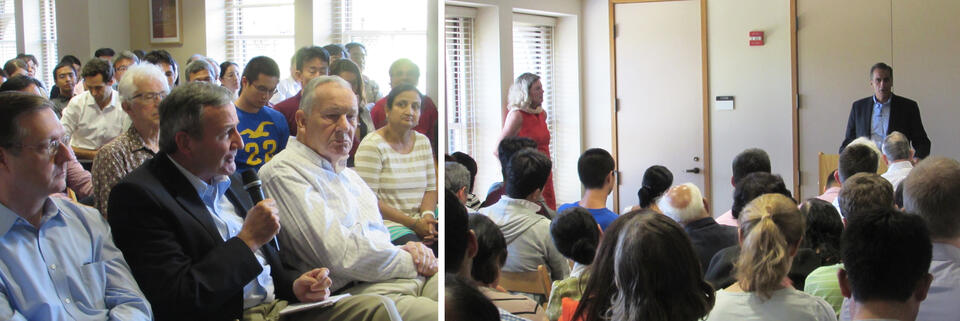
After several years of tough negotiations, agreement was reached this month among 12 nations, led by the United States and Japan, to form the Trans-Pacific Partnership, a multilateral trade and investment pact that promises to transform economic relations in the Asia-Pacific region and beyond. South Korea and China, the two largest economies in the region not involved in the TPP talks, now face the choice of opting to join the new pact, or remain outside. And approval of the pact also faces tough sledding in the U.S. Congress and elsewhere. A panel of experts from Shorenstein APARC will discuss these questions, and the strategic implications of the TPP for the region.
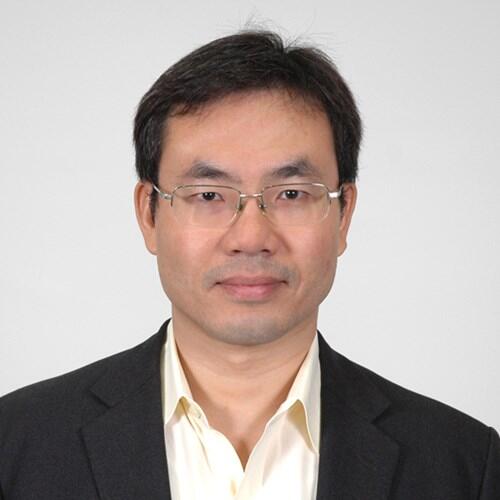
Thomas Fingar
Freeman Spogli Institute for International Studies
Stanford University
Encina Hall, C-327
Stanford, CA 94305-6055
Thomas Fingar is a Shorenstein APARC Fellow in the Freeman Spogli Institute for International Studies at Stanford University. He was the inaugural Oksenberg-Rohlen Distinguished Fellow from 2010 through 2015 and the Payne Distinguished Lecturer at Stanford in 2009.
From 2005 through 2008, he served as the first deputy director of national intelligence for analysis and, concurrently, as chairman of the National Intelligence Council. Fingar served previously as assistant secretary of the State Department’s Bureau of Intelligence and Research (2000-01 and 2004-05), principal deputy assistant secretary (2001-03), deputy assistant secretary for analysis (1994-2000), director of the Office of Analysis for East Asia and the Pacific (1989-94), and chief of the China Division (1986-89). Between 1975 and 1986 he held a number of positions at Stanford University, including senior research associate in the Center for International Security and Arms Control.
Fingar is a graduate of Cornell University (A.B. in Government and History, 1968), and Stanford University (M.A., 1969 and Ph.D., 1977 both in political science). His most recent books are From Mandate to Blueprint: Lessons from Intelligence Reform (Stanford University Press, 2021), Reducing Uncertainty: Intelligence Analysis and National Security (Stanford University Press, 2011), The New Great Game: China and South and Central Asia in the Era of Reform, editor (Stanford University Press, 2016), Uneasy Partnerships: China and Japan, the Koreas, and Russia in the Era of Reform (Stanford, 2017), and Fateful Decisions: Choices that will Shape China’s Future, co-edited with Jean Oi (Stanford, 2020). His most recent article is, "The Role of Intelligence in Countering Illicit Nuclear-Related Procurement,” in Matthew Bunn, Martin B. Malin, William C. Potter, and Leonard S Spector, eds., Preventing Black Market Trade in Nuclear Technology (Cambridge, 2018)."
China and the World
Learn more
Donald K. Emmerson
At Stanford, in addition to his work for the Southeast Asia Program and his affiliations with CDDRL and the Abbasi Program in Islamic Studies, Donald Emmerson has taught courses on Southeast Asia in East Asian Studies, International Policy Studies, and Political Science. He is active as an analyst of current policy issues involving Asia. In 2010 the National Bureau of Asian Research and the Woodrow Wilson International Center for Scholars awarded him a two-year Research Associateship given to “top scholars from across the United States” who “have successfully bridged the gap between the academy and policy.”
Emmerson’s research interests include Southeast Asia-China-US relations, the South China Sea, and the future of ASEAN. His publications, authored or edited, span more than a dozen books and monographs and some 200 articles, chapters, and shorter pieces. Recent writings include The Deer and the Dragon: Southeast Asia and China in the 21st Century (ed., 2020); “‘No Sole Control’ in the South China Sea,” in Asia Policy (2019); ASEAN @ 50, Southeast Asia @ Risk: What Should Be Done? (ed., 2018); “Singapore and Goliath?,” in Journal of Democracy (2018); “Mapping ASEAN’s Futures,” in Contemporary Southeast Asia (2017); and “ASEAN Between China and America: Is It Time to Try Horsing the Cow?,” in Trans-Regional and –National Studies of Southeast Asia (2017).
Earlier work includes “Sunnylands or Rancho Mirage? ASEAN and the South China Sea,” in YaleGlobal (2016); “The Spectrum of Comparisons: A Discussion,” in Pacific Affairs (2014); “Facts, Minds, and Formats: Scholarship and Political Change in Indonesia” in Indonesian Studies: The State of the Field (2013); “Is Indonesia Rising? It Depends” in Indonesia Rising (2012); “Southeast Asia: Minding the Gap between Democracy and Governance,” in Journal of Democracy (April 2012); “The Problem and Promise of Focality in World Affairs,” in Strategic Review (August 2011); An American Place at an Asian Table? Regionalism and Its Reasons (2011); Asian Regionalism and US Policy: The Case for Creative Adaptation (2010); “The Useful Diversity of ‘Islamism’” and “Islamism: Pros, Cons, and Contexts” in Islamism: Conflicting Perspectives on Political Islam (2009); “Crisis and Consensus: America and ASEAN in a New Global Context” in Refreshing U.S.-Thai Relations (2009); and Hard Choices: Security, Democracy, and Regionalism in Southeast Asia (edited, 2008).
Prior to moving to Stanford in 1999, Emmerson was a professor of political science at the University of Wisconsin-Madison, where he won a campus-wide teaching award. That same year he helped monitor voting in Indonesia and East Timor for the National Democratic Institute and the Carter Center. In the course of his career, he has taken part in numerous policy-related working groups focused on topics related to Southeast Asia; has testified before House and Senate committees on Asian affairs; and been a regular at gatherings such as the Asia Pacific Roundtable (Kuala Lumpur), the Bali Democracy Forum (Nusa Dua), and the Shangri-La Dialogue (Singapore). Places where he has held various visiting fellowships, including the Institute for Advanced Study and the Woodrow Wilson International Center for Scholars.
Emmerson has a Ph.D. in political science from Yale and a BA in international affairs from Princeton. He is fluent in Indonesian, was fluent in French, and has lectured and written in both languages. He has lesser competence in Dutch, Javanese, and Russian. A former slam poet in English, he enjoys the spoken word and reads occasionally under a nom de plume with the Not Yet Dead Poets Society in Redwood City, CA. He and his wife Carolyn met in high school in Lebanon. They have two children. He was born in Tokyo, the son of U.S. Foreign Service Officer John K. Emmerson, who wrote the Japanese Thread among other books.
China and the World
Learn morePolicy Perspectives on the South China Sea
Learn more
Kathleen Stephens
Kathleen Stephens was the William J. Perry Distinguished Fellow at Stanford University's Shorenstein Asia-Pacific Research Center from 2015 to 2017
Kathleen Stephens, a former U.S. ambassador to the Republic of Korea, is the William J. Perry Fellow in the Korea Program at the Walter H. Shorenstein Asia-Pacific Research Center (APARC). She has four decades of experience in Korean affairs, first as a Peace Corps volunteer in rural Korea in the 1970s, and in ensuing decades as a diplomat and as U.S. ambassador in Seoul.
Stephens came to Stanford previously as the 2013-14 Koret Fellow after 35 years as a U.S. Foreign Service officer. Her time at Stanford, though, was cut short when she was recalled to the diplomatic service to lead the U.S. mission in India as charge d'affaires during the first seven months of the new Indian administration led by Narendra Modi.
Stephens' diplomatic career included serving as acting under secretary of state for public diplomacy and public affairs in 2012; U.S. ambassador to the Republic of Korea from 2008 to 2011; principal deputy assistant secretary of state for East Asian and Pacific affairs from 2005 to 2007; and deputy assistant secretary of state for European and Eurasian affairs from 2003 to 2005, responsible for post-conflict issues in the Balkans, including Kosovo's future status and the transition from NATO to EU-led forces in Bosnia-Herzegovina.
She also served in numerous positions in Asia, Europe and Washington, D.C., including as U.S. consul general in Belfast, Northern Ireland, from 1995 to 1998, during the negotiation of the Good Friday Agreement, and as director for European affairs at the White House during the Clinton administration, and in China, following normalization of U.S.-PRC relations.
Stephens holds a bachelor’s degree in East Asian studies from Prescott College and a Master of Public Administration from Harvard University, in addition to honorary degrees from Chungnam National University and the University of Maryland. She studied at the University of Hong Kong and Oxford University, and was an Outward Bound instructor in Hong Kong. She was previously a senior fellow at Georgetown University's Institute for the Study of Diplomacy.
Stephens' awards include the Presidential Meritorious Service Award (2009), the Sejong Cultural Award, and Korea-America Friendship Association Award (2013). She is a trustee at The Asia Foundation, on the boards of The Korea Society and Pacific Century Institute, and a member of the American Academy of Diplomacy.
She tweets at @AmbStephens.