North Korea claimed it successfully tested a hydrogen bomb on Jan. 6, according to a broadcast from the nation’s Korean Central Television. Experts at the Freeman Spogli Institute for International Studies offered their analyses to media.
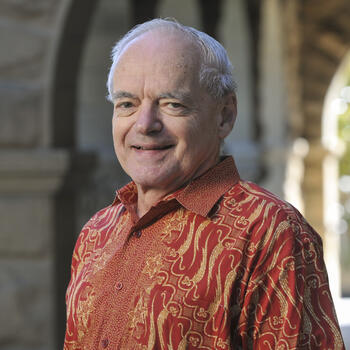
In a Q&A, Siegfried Hecker answered nine questions, offering perspective on the situation and how the United States should respond. Hecker, a CISAC senior fellow, is a former director of the Los Alamos National Laboratory and has visited North Korea seven times since 2004.
David Straub, associate director of the Korea Program, commented on the North Korean nuclear program in an NK News article. He said the timing of the nuclear test, now the nation’s fourth, was likely only marginally influenced by external factors such as Kim Jong-un’s birthday. The primary factor is technical, he said. Straub also spoke with Yonhap News on Feb. 12. In the interview, Straub said "although the United States and the People's Republic of China certainly have differences [in dealing with the North Korean nuclear issue], they pale in comparison to U.S.-Soviet differences."
Straub also offered, in an extended interview with South Korea's Segye Ilbo newspaper, his thoughts on Pyongyang's motivations for pursuing nuclear weapons. He argued that the appropriate policy response is to continue to increase pressure on the regime. Pressure applied by Washington is meant to convince Pyongyang that nuclear weapons will bring more cost than benefit, while holding open the door to good-faith negotiations to resolve peninsular issues.
Shorenstein APARC Associate Director for Research Daniel Sneider talked with Al Jazeera America and Slateabout the developments. He said the nuclear test signified North Korea’s uneasiness and was largely an accommodation of domestic politics.
In early February, South Korea announced temporary closure of Kaesong Industrial Complex (KIC), a jointly held project with North Korea. In Chosun Ilbo newspaper, Straub argued that South Korea's closure of KIC was a necessary response to North Korea's fourth nuclear test and latest satellite rocket launch. Two articles were published in Korean; the first is available here and the second here.
Hero Image
North Korean leader Kim Jong Un provides field guidance at the newly built National Space Development General Satellite Control and Command Centre in this undated photo released by North Korea's Korean Central News Agency (KCNA) in Pyongyang, May 3, 2015. | Reuters/KCNA
Less than four years after Mao Zedong’s death, Deng Xiaoping declared that China needed to move away from an “over-concentration of power” by an individual leader to establish a more institutionalized system of governance. Xi Jinping’s ascension to power in 2013 promised a new era of reform of the Communist Party of China (CCP), specifically intended to preserve the party’s power. Rather than addressing governance issues, however, Xi’s actions, such as the anti-corruption campaign, have served to concentrate power in his hands, showing the weakness of political institutionalization in China after decades of collective leadership. While decision-making processes continue to be a black box, by reclaiming the CCP’s authority over policy-making, and by chairing CCP small leading groups, Xi appears to have moved China back to Mao-style personalistic rule. The puzzles that remain are how personalistic authoritarian rule has returned to a country characterized by a growing middle class and a modern open market economy; and what this reversion to personalistic leadership tells us about the ambiguities of institutions in communist ruling parties.
Susan Shirk is the Chair of the 21st Century China Program and Research Professor at the School of Global Policy and Strategy at the University of California - San Diego. She is also director emeritus of the University of California’s Institute on Global Conflict and Cooperation (IGCC). Susan Shirk first visited China in 1971 and has been teaching, researching and engaging China diplomatically ever since.
From 1997-2000, Shirk served as Deputy Assistant Secretary of State in the Bureau of East Asia and Pacific Affairs, with responsibility for China, Taiwan, Hong Kong and Mongolia.
In 1993, she founded, and continues to lead, the Northeast Asia Cooperation Dialogue (NEACD), a Track II forum for discussions of security issues among defense and foreign ministry officials and academics from the U.S., Japan, China, Russia, South Korea and North Korea.
Shirk's publications include her books, China: Fragile Superpower; How China Opened Its Door: The Political Success of the PRC's Foreign Trade and Investment Reforms; The Political Logic of Economic Reform in China; Competitive Comrades: Career Incentives and Student Strategies in China; and her edited book, Changing Media, Changing China.
Shirk served as a member of the U.S. Defense Policy Board, the Board of Governors for the East-West Center (Hawaii), the Board of Trustees of the U.S.-Japan Foundation, and the Board of Directors of the National Committee on United States-China Relations. She is a member of the Trilateral Commission, the Council on Foreign Relations, and an emeritus member of the Aspen Strategy Group. Dr. Shirk received her BA in Political Science from Mount Holyoke College, her MA in Asian Studies from the University of California, Berkeley, and her PhD in Political Science from the Massachusetts Institute of Technology.
Please note this event has been moved to the Oksenberg Conference Room.
Thirty-five years after its nationwide implementation, China finally announced the end of the one-child policy in late 2015. How did this change come about? What are the demographic, economic, and social imperatives that have led to this much-delayed policy reversal? What are the historical legacies of this unprecedented birth control policy in human history, and what are the implications of this policy and China’s new demographics for China’s economy in the years to come? This presentation will address these questions and discuss in particular the roles of China’s changed demographics in its economic growth and political governance in the coming decades.
FengWANG is a professor of sociology at the University of California, Irvine and at Fudan University, China, and a non-resident senior fellow of the Brookings Institution. Wang Feng is the author of several books and many articles on contemporary social and demographic changes in China, on comparative historical demography and social organization in Eurasia, and on income and social inequalities in post-socialist China.
China’s leaders now acknowledge the reality of much slower growth, and refer to it as the “new normal”. But what does this mean, and what will be the consequences? Exports have slowed, but can domestic consumption pick up the slack? Will this slowdown lead to a rebalancing that will yield a more sustainable and robust growth? How does the end of the “one child policy” fit into this equation, and will this be sufficient to address the demographic challenges that China faces? What impact will Xi Jinping’s vigorous anti-corruption campaign have on this “new normal
Two leading economists on China will launch this year’s China Program Winter Colloquia Series, China's New Normal, by examining the slower growth and its implications. Barry Naughton proactively asks “why be normal”. Is slower growth what the economy needs to be stabilized?. Scott Rozelle asks whether there is a hidden demographic disaster that accentuate existing human capital inequality that derail a soft landing.
Barry Naughton is an economist and Professor at the School of Global Policy and Strategy, at the University of California, San Diego. Naughton has published extensively on the Chinese economy, with a focus on four interrelated areas: market transition; industry and technology; foreign trade; and Chinese political economy. His pioneering study of Chinese economic reform, Growing Out of the Plan: Chinese Economic Reform, 1978-1993 (Cambridge University Press, 1995) won the Masayoshi Ohira Memorial Prize. Dr. Naughton’s comprehensive survey, The Chinese Economy: Transitions and Growth, was published by MIT Press in 2007, and his most recent book (co-edited with Kellee Tsai), State Capitalism, Institutional Adaptation and the Chinese Miracle, has just appeared from Cambridge University Press (2015). Naughton also publishes regular quarterly analyses of China’s economic policy-making online at China Leadership Monitor. Dr. Naughton received his Ph.D. in Economics from Yale University in 1986, and is a non-resident fellow of the Brookings Institution in Washington, D.C.
Scott Rozelle is the Helen F. Farnsworth Senior Fellow and the co-director of the Rural Education Action Program in the Freeman Spogli Institute for International Studies at Stanford University. He received his BS from the University of California, Berkeley, and his MS and PhD from Cornell University. His research focuses almost exclusively on China and is concerned with: agriculture; the emergence and evolution of markets and other economic institutions and their implications for equity and efficiency; and the economics of poverty and inequality, with an emphasis on rural education, health and nutrition. In recognition of his outstanding achievements, Rozelle has received numerous honors and awards, including the Friendship Award in 2008, the highest award given to a non-Chinese by the Premier; and the National Science and Technology Collaboration Award in 2009 for scientific achievement in collaborative research.
Senior Military Fellow John Chu was promoted to the rank of colonel in the U.S. Army at Stanford last Friday, a position selectively afforded for distinguished service and leadership. Colleagues and Stanford affiliates attended the afternoon ceremony marking the occasion.
“We look over the course of John’s life and where he’s been, and it says so much good about him and the strengths of the United States of America,” Eikenberry said.
“As threats have changed, doctrine has changed and our national security has changed, John has continued to adapt. It says a great deal about him, our services and our country that he has been able to steadily make those shifts over the course of his career.”
Chu was born in Seoul, South Korea, and raised in the United States. He attended West Point and later achieved advanced degrees in environmental engineering and national security. Chu has had three tours of duty in Korea and served in Iraq as staff at the highest strategic level, among other posts.
At Stanford, Chu has been studying U.S. policy toward North Korea and strategic deterrence on the Korea Peninsula as a fellow at FSI’s Walter H. Shorenstein Asia-Pacific Research Center during the current academic year.
The fellowship program, supported by the U.S.-Asia Security Initiative and the Center for International Security and Cooperation, provides military officers an opportunity for self-directed study under the tutelage of Stanford scholars. The program started under former U.S. Secretary of Defense William Perry. Five fellows came to campus this year; their brief bios can be found here.
Chu thanked his wife of eighteen years, Tina, and expressed gratitude to everyone who guided him over the years.
“You are the real heroes – the people I’ve worked with throughout my career,” Chu said, addressing the audience. “It is you that really deserves all the recognition, for I would not be here today without the support of many.”
Chu expects to deploy to Afghanistan as his follow-on assignment.
Hero Image
Senior Military Fellow John Chu (right) is promoted to colonel in the U.S. Army in a ceremony at Stanford on Dec. 11, 2015. Lt. Gen. (Ret.) Karl Eikenberry (left) led the proceedings.
Myanmar (Burma) is undergoing a complex political and economic transformation, from a long civil war and military regime to a peace process and democratisation. Since 2011, the Myanmar Ministry of Health has started to rehabilitate the fragile health system, setting the goal of achieving universal health coverage by 2030. To achieve this target, Myanmar will have to face substantial challenges; arguably one of the most important difficulties is how to allocate limited health-care resources equitably and effectively.
Negotiators from 12 Pacific Rim countries recently reached an agreement on the Trans-Pacific Partnership (TPP), a sweeping trade pact that has been promoted by the Obama administration as a high-quality, next-generation deal that will set standards for international trade for years to come. While noting the agreement still requires ratification by each member state, Stanford scholars believe that the TPP will be approved and reshape not only trade but also security relations in the Asia-Pacific region and beyond.
The TPP negotiations originally began as an expansion of the Trans-Pacific Economic Partnership Agreement signed by Brunei, Chile, New Zealand and Singapore in 2005, and then took on broader significance in 2008 when the United States expressed interest. The number of members eventually grew to include the other North American Free Trade Agreement (NAFTA) economies of Canada and Mexico, as well as Australia, Peru, Vietnam, Malaysia and Japan. Even before the agreement was finalized, leaders of many other Asia-Pacific countries expressed interest in joining the next round of negotiations, including South Korea, Taiwan, the Philippines, Colombia, Thailand and most recently, Indonesia.
A summit with leaders of the member states of the Trans-Pacific Strategic Economic Partnership Agreement (TPP). Pictured, from left, are Naoto Kan (Japan), Nguyễn Minh Triết (Vietnam), Julia Gillard (Australia), Sebastián Piñera (Chile), Lee Hsien Loong (Singapore), Barack Obama (United States), John Key (New Zealand), Hassanal Bolkiah (Brunei), Alan García (Peru), and Muhyiddin Yassin (Malaysia). Six of these leaders represent countries that are currently negotiating to join the group.
The appeal of the TPP in the region is twofold. First, the repeated failure of new trade talks at the World Trade Organization (WTO) has forced countries seeking greater trade liberalization to pursue it through other bilateral or regional multilateral negotiations. Second, in the Asia-Pacific region, the number of these agreements has rapidly multiplied, creating myriad different standards, procedures and tariff rates that raise the costs of doing business across state borders and inhibit international trade and investment.
The TPP offers the prospect of a common set of rules governing investment, production and exchange across all member states, with significant improvements in economic efficiency. In addition, the danger of being excluded from a new trade regime that includes a huge share of the region’s economic activity has created a sense of urgency to seek membership from those countries not in the initial round of negotiations. By far the most conspicuous absence among the TPP members is China, which is now the world’s second-largest economy and a significant trading partner of all current member states.
The Trans-Pacific Partnership has been a research focus at the Freeman Spogli Institute for International Studies.
The Walter H. Shorenstein Asia-Pacific Research Center has organized several eventsexploring aspects of the TPP, and the Taiwan Democracy Project in the Center on Democracy, Development, and the Rule of Law held a conference in 2013 that examined the TPP from a Taiwanese perspective. The conference produced a comprehensive report on the topic, and an audio recording of an earlier Shorenstein APARC panel event was made available online. Now that negotiations have concluded, the Taiwan Democracy Project will revisit the topic in an upcoming conference on Feb. 9.
With the public release of the agreement in early October, three noted experts from Stanford University, Thomas Fingar, Michael Armacost, and Donald Emmerson, offered their analysis of the TPP’s prospects for ratification and its impact on the Asia-Pacific region.
Now that the agreement has been published, what is significant about the TPP? What does it mean for China?
Image
The TPP is a big deal for many reasons, perhaps the most important of which is that it will provide the impetus and the template for concluding the Trans-Atlantic Trade and Investment Partnership (TTIP) and myriad other regional and mini-lateral trade negotiations initiated in response to the failure of the Doha Round of WTO reform. As with all trade agreements, there will be winners and losers, pain will be local and benefits diffuse, and critics will find much to criticize. But the agreement is likely to be ratified and its provisions will affect corporate strategies, investment decisions and globalized production chains. The fact that North America (the United States, Canada and Mexico) are parties to the TPP virtually assures that the globally important NAFTA group will not accept terms in TTIP or other negotiations that are incompatible with the TPP because NAFTA governments and companies do not want to cope with multiple standards, requirements, and procedures. The same is true of other major trading states and international firms, so the TPP will quickly become the new standard for “everyone” wishing to take advantage of opportunities in a globalized world.
This means that the TPP will serve as a—the—decisive building block for beyond-WTO trade arrangements. Without success in the TPP (or TTIP, which also has the size and importance to have become the new global standard if it had been concluded before the TPP) negotiations, there was a danger that the advantages of an integrated global trading system would be degraded by adoption of multiple and partially incompatible sub-regional agreements. Now those negotiating bilateral and mini-lateral agreements are likely to strive for consistency with the requirements adopted by key trading nations and the firms based in them.
The TPP is often but erroneously described as part of a U.S. effort to contain or constrain China. It isn’t. The United States should and will seek to bring China into the TPP, not to exclude it. I anticipate that Beijing will join together with South Korea, Indonesia, and possibly other states that are not yet members.
Thomas Fingar is a Shorenstein APARC Distinguished in the Freeman Spogli Institute for International Studies. He served previously as assistant secretary of the State Department’s Bureau of Intelligence and Research, principal deputy assistant secretary, deputy assistant secretary for analysis, director of the Office of Analysis for East Asia and the Pacific, and chief of the China Division.
Does the TPP carry security benefits? What are possible consequences for the U.S.-Japan relationship?
Image
The TPP is a trade agreement, not a security pact. Security is generally a predicate for growth and trade. It does not thrive amidst turmoil, let alone conflict. But with greater economic interdependence, the incentives for avoiding conflict increase. And fortuitously Asia remains an unusually peaceful region despite some growing tensions between China and its neighbors.
The TPP agreement is certainly an integral feature of the Obama administration’s effort to “rebalance” toward the Asia-Pacific region. It embeds the United States in a new institution whose membership, I believe, is destined to grow. America’s engagement in the region is a source of reassurance to our friends and allies there. The United States has been bolstering its alliance with Japan, and this agreement will add a broader framework to the U.S. alliance, which was established through the Treaty of Mutual Cooperation and Security, and which contains a specific clause encouraging expanded economic collaboration.
I regret that selling the agreement publicly has included some explicitly anti-Chinese features such as the claim that if the United States and others don’t write the rules of trade, China will. The TPP is and should be open to new members who are prepared to live up to its requirements and that includes China.
Michael H. Armacost is a Shorenstein APARC Distinguished Fellow in the Freeman Spogli Institute for International Studies. He held a 24-year career in the public service, including having served as U.S. ambassador to Japan and the Philippines.
How does the TPP fit into the context of Southeast Asia and its possible alternative arrangements for economic cooperation in the Asia-Pacific region?
Image
In strictly economic terms, there is no exact alternative to the distinctively comprehensive and intrusive TPP. In loosely economic but mainly geopolitical terms, however, a competitor does exist: the Regional Comprehensive Economic Partnership (RCEP). The United States is in the TPP. China is not. In the RCEP, the reverse is true. The United States has propelled the TPP. China and the Association of Southeast Asian Nations (ASEAN) are driving the formation of RCEP by all ten ASEAN states plus Australia, China, India, Japan, New Zealand and South Korea.
Compared with the TPP, RCEP is far less robust. RCEP is mainly about straightening the overlapping and sometimes inconsistent free trade agreements that already complicate Asian regionalism—the tangled contents of Asia’s “noodle bowl” of overlapping FTAs. (Trade agreements in the Asia-Pacific have burgeoned from around 60 ten years ago to some 300 today.) Under pressure from the more detailed and thoroughgoing TPP, RCEP’s would-be progenitors have been trying to expand their agenda to include more intrusive proposals. Partly for that reason, observers are pessimistic that RCEP’s negotiators will be able to proclaim its successful completion before the end of 2015.
ASEAN is divided. Myanmar, Cambodia, Indonesia, Laos, the Philippines, and Thailand are inside RCEP but outside the TPP. The other four ASEAN members—Brunei, Malaysia, Singapore, and Vietnam—enjoy the advantage of sitting at both negotiating tables. If only one of the two projected partnerships fails, these four states would still have the other arrangement to fall back on, and so much the better for them if both schemes succeed. It is partly for this reason that varying degrees of interest in joining the TPP have been expressed by five of the six non-TPP states in Southeast Asia. The exception is Myanmar, but once the structure and character of its new government have been clarified, its leaders too may wish to consider the TPP. Even China’s initially hostile view of the TPP has softened.
Given the market-favoring and regulation stipulations of the TPP, new entrants may be unwilling to accept its detailed, full-spectrum rules. But the Doha Round is dead, and the proposal to replace it with a scaled-down “Global Recovery Round” has gone nowhere. For the time being, the best one can hope for in the Asia-Pacific region is a successful TPP that China could eventually join, or a successful RCEP that could someday welcome the United States, or the birth of both arrangements followed by effective steps to render them complementary rather than competitive.
Donald K. Emmerson is director of the Southeast Asia Program at the Walter H. Shorenstein Asia-Pacific Research Center in the Freeman Spogli Institute for International Studies, where he is also affiliated with the Center for Democracy, Development, and the Rule of Law and the Abbasi Program in Islamic Studies.
Interested in joining the conversation? The Taiwan Democracy Project will revisit this topic on Feb. 9. The one-day symposium will bring together scholars and practitioners to reconsider Taiwan's prospects for entry into the Trans-Pacific Partnership. RSVP here today.
President Barack Obama participates in a trilateral meeting with Prime Minister Tony Abbott of Australia and Prime Minister Shinzo Abe of Japan, right, at the Brisbane Convention and Exhibition Center, Brisbane, Queensland, Australia, Nov. 16, 2014. | Official White House Photo by Pete Souza
The lecture aims to introduce the prevalence of Non-communicable Diseases (NCDs) in Zhejiang Province in China, and also share experience of Control and Prevention of NCDs. The lecture is composed by five parts. Firstly, NCDs surveillance system in Zhejiang will be introduced, including its establishment history and system coverage. Then, epidemiological characteristics of major NCDs (such as diabetes, cancer, stroke, and acute coronary heart disease events) will be presented, as well as NCDs related behavioral risk factors and hospital-based injury surveillance. Next, current work of NCDs prevention and control in Zhejiang Province will be described, including work network, human resources, community management and pilot programs for NCDs. Fourthly, economic cost of diabetes will be illustrated. Finally, countermeasures for NCDs Prevention and Control will be discussed.
Image
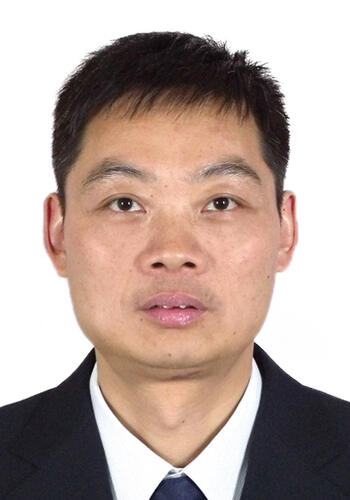
Min Yu is deputy director of Zhejiang Provincial Center for Disease Control and Prevention. He was awarded as New-Century 151 Talents of Zhejiang Province, China. He is a committee member of Epidemiology Branch of Chinese Preventive Medicine Association. He is the leader of key discipline of Non-Communicable Diseases epidemiology (NCDs), and led the establishing of NCDs and behavioral risk factor surveillance system in Zhejiang province.
Yu got Medical degree in Zhejiang University and Master degree of Public Health in Peking Medical University. Now his research focuses on epidemiology of NCDs, strategy for NCDs control and prevention, and disease burden.
Min Yu
Deputy director of Zhejiang Provincial Center for Disease Control and Prevention
Co-sponsored by the Asia Health Policy Program & the Southeast Asia Program
This paper analyzes the effects of an early-life shock in Indonesia on children’s human capital formation and parental responses to these shocks. We exploit the geographical variation of Indonesia’s forest fires during the El Nino phenomenon in 1997, as well as cohort variation in exposure. Children affected by these shocks in utero and in early years have worse health outcomes relative to children not exposed to these shocks. We find that the health effects persist, but other factors mitigate the initial effect on cognitive skills.
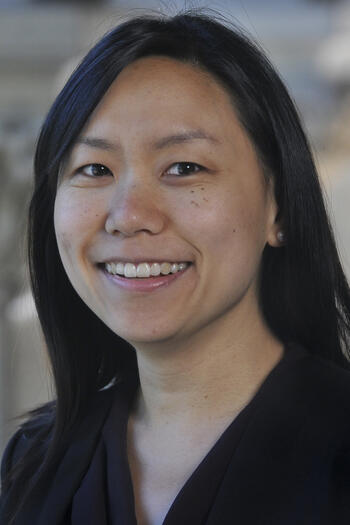
My main research interest lies at the intersection of development and health economics. I am particularly interested in how social policies affect health outcomes for the poor, early health investments, and health-seeking behavior in limited resource settings, focusing on the evaluation of different strategies that seek to promote health investments and the effects of these interventions. Specifically, I have analyzed the effects of Indonesia’s household conditional cash transfer program on health outcomes, local health care price, and quality of care. I have also analyzed the long-term effects of a large-scale midwifery program in Indonesia. Current projects study the effects of early life shocks on children’s human capital outcomes in Indonesia and the Philippines.


 A summit with leaders of the member states of the Trans-Pacific Strategic Economic Partnership Agreement (TPP). Pictured, from left, are Naoto Kan (Japan), Nguyễn Minh Triết (Vietnam), Julia Gillard (Australia), Sebastián Piñera (Chile), Lee Hsien Loong (Singapore), Barack Obama (United States), John Key (New Zealand), Hassanal Bolkiah (Brunei), Alan García (Peru), and Muhyiddin Yassin (Malaysia). Six of these leaders represent countries that are currently negotiating to join the group.