Paragraphs

Writing for YaleGlobal Online, Donald Emmerson examines outcomes of the U.S.-Association for Southeast Asian Nations (ASEAN) Summit that took place at Sunnylands in Rancho Mirage, California, between Feb. 15-16, 2016. He says that ASEAN, with its timid stance on the South China Sea, risks irrelevance and Chinese dominance in that area.

All Publications button
1
Publication Type
Commentary
Publication Date
Journal Publisher
YaleGlobal Online
Authors
Donald K. Emmerson
News Type
News
Date
Paragraphs

Seventeen faculty members and researchers from Stanford’s Freeman Spogli Institute for International Studies were hosted at U.S. Pacific Command (USPACOM) Headquarters in Hawaii for an intensive orientation on Feb. 4-5. The visit aimed to advance collaboration and to offer a deeper understanding of USPACOM’s operations to Stanford scholars who study international security and Asia.

Admiral Harry B. Harris, Jr., Commander of USPACOM, together with his commanders and staff, welcomed the delegation. Harris’s meeting with Stanford faculty is the second in recent months. The USPACOM visit and earlier speech at Stanford Center at Peking University are part of a series of activities driven by the U.S.-Asia Security Initiative. Led by Ambassador Karl Eikenberry, the Initiative seeks to provide constructive interaction between academic and governmental experts on the many and diverse security challenges facing the Asia-Pacific region.

“Engaging deeply in conversations with those who are on the frontlines is incredibly valuable,” said trip participant Coit Blacker, FSI senior fellow and professor of international studies. “This is especially true for academics who focus much of their attention thinking about the prospects for international peace and security but not necessarily considering their direct application on a military-level.”


[[{"fid":"222122","view_mode":"crop_870xauto","fields":{"format":"crop_870xauto","field_file_image_description[und][0][value]":"","field_file_image_alt_text[und][0][value]":"","field_file_image_title_text[und][0][value]":"","field_credit[und][0][value]":"","field_caption[und][0][value]":"","field_related_image_aspect[und][0][value]":"","thumbnails":"crop_870xauto"},"type":"media","attributes":{"width":"870","style":"line-height: 1.538em;","class":"media-element file-crop-870xauto"}}]]

Image
pacom 3

Top: (Left) The Stanford delegation watches a demonstration of a 2-minute drill. / (Right) Karen Eggleston boards a UH-60 Blackhawk helpcopter enroute to the Lightning Academy with her colleagues. Bottom: The delegation takes a group photo on-site.


On the first day, FSI scholars spoke with military officers about the command’s strategies and challenges it faces, such as population aging and sovereignty disputes over the South China Sea. Discussions were followed with a tour of USS Michael Murphy, a guided missile destroyer which routinely conducts operations in the Western Pacific including the South China Sea.

Karen Eggleston, FSI senior fellow and director of the Asia Health Policy Program, was one of the discussants on the USPACOM trip. Her research focuses on health policy in Asia, specifically the effects of demographic change and urbanization.

“As a health economist, the visit yielded for me a behind-the-scenes sense of how members of the military respond to pandemics and humanitarian situations, and of the ongoing dialogue with their counterparts in Asian nations,” Eggleston said. “I think that kind of military-to-military engagement provides an area rich with questions and best practices that could in some ways be shared as a model among other nations.”

Other activities on the first day included a briefing by the U.S. Pacific Fleet command, informal presentations and dialogue between the Stanford participants and the USPACOM staff, and working with senior leaders of the U.S. Pacific Air Forces command.

On the second day, the group visited the U.S. Army’s installation at Schofield Barracks. There, they observed a command post simulation and field exercise including units of the 25th Infantry Division. Graduates from the U.S. Army’s jungle survival training school also shared their impressions of applying lessons in the field. Researchers from the Asia-Pacific Center for Strategic Studies (APCSS) joined the Stanford delegation later in the day. Both sides discussed research outcomes and avenues for future exchanges. The day concluded with an extensive tour of USS Mississippi, a Virginia-class attack submarine. FSI has long engaged military officers through a senior military fellows program. Started in 2009 by the Center for International Security and Cooperation, the program remains active today with five fellows conducting research at Stanford.

Lt. Col. Jose Sumangil, a 2015-16 U.S. Air Force Senior Military Fellow, participated in the Stanford delegation at USPACOM.

“The trip was an excellent opportunity to showcase how the U.S. ‘rebalance to Asia’ strategy is implemented on a day-to-day basis – for example, providing a look into the decision-making process that could occur should a situation arise in the South China Sea,” Sumangil said. “It’s incredibly important to build this kind of understanding among experts studying Asia, and I think we helped do that here.”

USPACOM is one of the largest U.S. military commands with four major service components (U.S. Pacific Fleet, U.S. Pacific Air Forces, U.S. Army Pacific, U.S. Marine Forces); it is tasked with protecting U.S. people and interests, and enhancing stability in the Asia-Pacific Region.

Hero Image
pacom headline
A Stanford delegation of 17 faculty members and researchers visited U.S. Pacific Command (USPACOM) Headquarters in Hawaii, Feb. 4-5, 2016.
All News button
1
-

The recent US-ASEAN summit at Sunnylands in California is just the latest high-profile instance of Washington's efforts to strengthen its relations with Asia. Through a MacArthur Foundation-supported project he is leading, Bates Gill has explored a range of old and new security ties between the US and its partners in the Asia-Pacific region, including Indonesia, Myanmar, Vietnam, and Australia. Each of these governments seeks to strike the right balance between Washington and Beijing, but the domestic and foreign policies they employ for that purpose differ greatly. Basing his findings and analysis on extensive field research in these countries, Prof. Gill will offer recommendations for Washington and its regional partners as they look to engage with and hedge against a rising China.

Image
bates4x6
Bates Gill has a 30-year international career as a China watcher, having held teaching, research, and executive leadership positions in the United States, China, Europe, and Australia. He is currently a board director of China Matters, a not-for-profit advisory based in Sydney, Australia. In 2012-15 he was CEO of the United States Studies Centre at the University of Sydney. He directed the Stockholm International Peace Research Institute from 2007 to 2012 and previously held the Freeman Chair in China Studies at the Center for Strategic and International Studies and served as the inaugural director of the Center for Northeast Asian Policy Studies at the Brookings Institution. 

Prof. Gill has authored or edited seven books including Rising Star: China's New Security Diplomacy and Asia's New Multilateralism: Cooperation, Conflict and the Search for Community (co-edited with Michael Green). His professional affiliations include service on the editorial boards of China Quarterly and the Journal of Contemporary China, the international advisory board of the Shanghai Institutes of International Studies, and the board of governors of the Rajaratnam School of International Studies (Singapore). His PhD is from the Woodrow Wilson Department of Government and Foreign Affairs at the University of Virginia.

The US, China and the Balance of Influence in and around Southeast Asia
Download pdf
Bates Gill Professor of Asia Pacific Strategic Studies, Australia National University
Seminars
Authors
Lisa Griswold
News Type
News
Date
Paragraphs

Globalization has lifted more than one billion people out of extreme poverty, but as inequality and barriers to trade remain worldwide, improved trade standards are needed and the Trans-Pacific Partnership promises to be a primary conduit of those standards, America’s top trade official told a Stanford audience on Tuesday.

Ambassador Michael Froman, the U.S. Trade Representative, spoke of the merits of the multilateral trade agreement, known as the ‘TPP,’ in a speech given at the Freeman Spogli Institute for International Studies (FSI).

The TPP seeks to liberalize trade and investment between 12 Pacific Rim countries. Signed earlier this month, the document now faces the path to ratification through its members.

“In today’s rapidly globalizing world, the alternative to the TPP is not the status quo,” Froman told nearly one hundred affiliates and guests at the Bechtel Conference Center.

Froman cited efforts by various countries to build up alternative frameworks that promote free trade, but said they miss some components of stability and longevity that the TPP offers. For example, China’s 'one belt, one road' initiative and the Regional Comprehensive Economic Partnership, a negotiation between 16 Asian countries.

The TPP would serve as an important benchmark for countries seeking to expand economic gains from trade and to level up on common “rules of the road.” He said increase in exports to the United States alone is estimated at $350 billion a year.

“Smart trade agreements like the TPP are how we shape globalization the right way,” Froman said with a call for continued U.S. leadership on the matter.

President Obama has been a strong advocate of the agreement, in line with the administration’s ‘rebalance to Asia’ strategy. The rebalance is a regional strategy that aims to recognize the growing importance of the Asia-Pacific region to U.S. national interests.

Successful passage of the TPP will reassure allies in the region of American staying power, he said.

Countries outside of the TPP have begun to express interest in becoming a party to the agreement. South Korea, Taiwan, the Philippines and Indonesia are among them. Application to join the TPP is now closed, but we can “expect over time” that its membership would grow, he said.

At a 2013 conference, FSI scholars examined the potential impact on Taiwan should it seek membership. Outcomes from the conference are published in this report.

Froman said the TPP supports “commerce without borders” among key sectors in the United States, in particular, those found in and around Silicon Valley.

“No state stands to benefit more from the TPP than California,” he said.

Froman announced the release of a report that details TPP provisions focused exclusively on technology and intellectual property.

The event was hosted by the U.S.-Asia Security Initiative in association with FSI, the Shorenstein Asia-Pacific Research Center and the Stanford Institute for Economic Policy Research. The Initiative aims to facilitate constructive interaction between academic and governmental experts on security challenges facing the Asia-Pacific region.

Video from the event including Froman’s speech and the Q&A is available here.

Hero Image
dsc 2025a
Ambassador Michael Froman, the U.S. Trade Representative, delivers remarks on the Trans-Pacific Partnership at Stanford on Feb. 16, 2016.
Rod Searcey
All News button
1
-

China implemented a Zero-markup Policy for Essential Drugs (ZPED) since 2009 and this study evaluated the impact of ZPED on patients, county hospital revenue, and government subsidy levels. Data from Ningshan and Zhenping county hospitals were collected. The primary method of analysis was difference-in-differences. The results showed that ZPED had significant effects on patients and county hospital revenue but limited impact on government subsidy levels.  With regard to patients, for outpatient services, the total expense per visit and the drug expense per visit reduced by 19.02 CNY (3.12 USD) and by 27.20 CNY (4.47 USD), respectively. Importantly, this implies that the non-drug expense increased by 8.18 CNY (1.34 USD) for outpatient services. For inpatient services, the total expense per admission reduced by 399.6 CNY (65.60 USD), with reduction in both drug and non-drug expenses. With regard to the impact on county hospital revenue, ZPED led to an increase in health care provision and a sustained total hospital income despite a decrease in drug revenue. Lastly, the research demonstrates that with minimal or no subsidy, the government can catalyze the zero-markup policy and generate positive outcomes for patients and county hospitals.

Image
yanfang su4x6
Yanfang’s research focuses primarily on health systems from a political economy perspective. She holds a BA in Economics from Dongbei University of Finance and Economics, China, a Master’s in Management from Tsinghua University, China, and a ScD in Global Health and Population from Harvard University, USA. As the first author or the corresponding author, Yanfang has published on evaluation of health policy, equity of healthcare utilization, and estimates of elasticity of demand for healthcare in Health Policy, International Journal for Equity in Health, PLOS ONE, Chinese Health Economics, Chinese Journal of Health Policy, and other academic journals. She has also published news articles in Harvard College Global Health Review, HSPH International Student Newsletter, Hong Kong Economic Journal and People's Daily Overseas Edition. Yanfang's other research interests include survey methodology and field experiments, with a particular interest in cognitive interviewing, list experiments and anchoring vignette methods. Besides research, Yanfang is committed to community service. She is the initiator and currently the project director of the pilot, “Free Prenatal Text Messages to Improve Newborn Health”. Her team has been supported by the UBS Optimus Foundation (with 160,000 USD) to serve 6,000 pregnant women in rural Shaanxi, China, from 2013 to 2016. Prior to Harvard, Yanfang was a Visiting Researcher with the Hong Kong Policy and Research Institute in 2005 and a Research Fellow at Tsinghua University in 2007. In 2009, she entered a training program on qualitative program evaluation at the Center for Disease Control (CDC) in Atlanta, Georgia. Following this, in 2010, she became a Desmond and Whitney Shum Fellow at Harvard's Fairbank Center for Chinese Studies. Currently, she is a Policy Consultant to Bill & Melinda Gates Foundation.

Yanfang Su, Sc.D Policy Consultant, Bill & Melinda Gates Foundation
Seminars
-

Background: Substance abuse has been an important social and public health problem in Thailand for decades. The National Household Survey on Substance and Alcohol Use in Thailand, which has been conducted 5 times, shows that substance abuse has steadily increased. Extrapolated country-wide in recent data, the estimated number of people who had ever used at least one addictive substance at some time in their life was 3,531,436 or 7.30% of the total population aged 12-65 years. Krathom, Methamphetamine, Ice, and cannabis were the most prevalent substances of abuse.

Methods: Historical documentation, policy reports, and group discussion with key professionals who work in the substance abuse community were used in this study. The objectives of this study were to complete a document review, determine the effectiveness of previous  Thai illegal substance measures, and consider options for the future.

Findings: Although the Thai government has dedicated human resources and an enormous budget to controlling drug use, substance abuse has become a more severe problem when compared with previous years. There are many organizations trying to create and develop programs, measures, and policies for dealing with substance abuse. These policies usually have had loopholes which resulted in corruption of officers, undercutting the public health value, creating dilemmas for impoverished families experiencing drug abuse, ignoring human rights, and creating a negative attitude among society toward drug users. Barriers to establishing successful drug abuse policies in Thailand include limited access to data and data management, a lack of efficiency and cost-benefit measures and policies, and limited use of evidence-based research.

Conclusion: To address illegal substance abuse in the future, the stakeholders should work to reduce the incidence of new sellers and the prevalence of new users. This would result in diminishing the health impact and criminal aspect of illegal substance use, increase social awareness, and motivate communities to participate in managing this issue. To reach these goals, the policy should concurrently aim at curtailing the supply of illicit drugs and reducing their demand. The strategies relevant to drug policy consist of primary prevention, services for chronic drug users, supply control and regulations, prescription regimes, and the use of criminal sanctions, especially consideration of decriminalization of krathom use.

Image
darika 4x6
Darika Saingam is a researcher from Thailand. Her research works have focused on patterns and consequences of alcohol, tobacco, and illegal substance use. Currently she joins the Walter H. Shorenstein Asia-Pacific Research Center as the Developing Asia Health Policy Postdoctoral Fellow for the 2015-16 year. She completed her doctorate in epidemiology at the Prince of Songkla University in 2012, and has worked as a researcher at the University’s epidemiology unit since, as well as a researcher at the Thailand Substance Abuse Academic Network since 2014.

Darika Saingam 2015-16 Developing Asia Health Policy Postdoctoral Fellow
Seminars
Authors
Lisa Griswold
News Type
News
Date
Paragraphs

Yoichi Funabashi, former editor-in-chief of the Asahi Shimbun, has been named the 2015 recipient of the Shorenstein Journalism Award. The award, given annually by Stanford University’s Walter H. Shorenstein Asia-Pacific Research Center (APARC), is conferred to a journalist who has produced outstanding reporting on Asia and has contributed significantly to Western understanding of the region.

“Both as a correspondent in Beijing, Washington and Tokyo, and fellow at the Council on Foreign Relations, and later as the editor of the Asahi Shimbun, Yoichi Funabashi set a standard for thoughtful, well-informed, excellent journalism,” said Orville Schell, a director at the Asia Society and member of the jury that selects the award. “In many ways, he was the heart and soul of what made the Asahi the great paper it is.

“But, even more impressive was the way that Yoichi became one of Japan’s most sophisticated and articulate cosmopolitan voices,” Schell continued. “Indeed, his linguistic ability and comfort in very diverse cultural contexts has made him one of Japan’s best and most persuasive international voices.”

“Yoichi Funabashi is one of the rare journalists whose deep knowledge of both sides of the Pacific have made him a recognized analyst and thinker in both Japan and the United States, and a valuable interpreter and interlocutor in both countries,” said Nayan Chanda, a jury member for the award and former editor of the Far Eastern Economic Review.

Thirteen journalists have received the Shorenstein award since its founding. Originally, the award was designed to honor distinguished American journalists, but since 2011, the award was re-envisioned to encompass Asian journalists who pave the way for press freedom, and have aided in the growth of mutual understanding between Asia and the United States. Among the award’s most recent recipients are Jacob Schlesinger, a senior foreign correspondent covering economics at the Wall Street Journal’s Tokyo bureau; Aung Zaw, the founder of Burmese publication the Irrawaddy; and Barbara Demick, the Los Angeles Times correspondent in Beijing and author of ground-breaking studies of life in North Korea.

Funabashi began his career as a correspondent for Japan’s leading newspaper the Asahi Shimbun in Beijing from 1980 to 1981 and later served for seven years in two stints in Washington, D.C. From 2007 to 2010, Funabashi served as the editor-in-chief of the Asahi.

Funabashi is the co-founder and chairman of the Rebuild Japan Initiative Foundation, a Tokyo-based think tank established in response to the Fukushima disaster of March 2011.

Funabashi is an acclaimed author/editor of many books on East Asia and the United States. Some of his English titles include: The Peninsula Question (Brooking Institution, 2007), Reconciliation in Asia-Pacific, ed. (U.S. Institute of Peace, 2003), and Alliance Adrift Council (Council on Foreign Relations Press, 1998). Funabashi received a bachelor's degree from the University of Tokyo in 1968 and a doctorate from Keio University in 1992. He has held fellowships at universities and think tanks, including Harvard University and the Institute for International Economics.

Funabashi is a frequent contributor to publications such as the Bulletin of the Atomic Scientists, New York Times, Washington Quarterly and Foreign Affairs. He is a contributing editor of Foreign Policy in Washington, D.C. In 1994, he won the Japan Press Award known as Japan’s “Pulitzer Prize” for his columns on international affairs.

Funabashi will receive the Shorenstein award at a special evening ceremony at Stanford’s Bechtel Conference Center on May 6. He will also lead a panel discussion earlier that day examining contemporary U.S.-Japan relations. The panel discussion is open to the public.

Please refer to the Shorenstein APARC website in the coming weeks for more detail about the upcoming events. Media related questions may be directed to Lisa Griswold, lisagris@stanford.edu or (650) 736-0656.
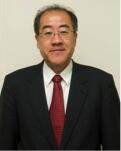
 

Hero Image
funabashi headshot
Yoichi Funabashi at the World Economic Forum in Davos, Switzerland, Jan. 2012.
Flickr/World Economic Forum
All News button
1
Paragraphs

Divided Lenses: Screen Memories of War in East Asia is the first attempt to explore how the tumultuous years between 1931 and 1953 have been recreated and renegotiated in cinema. This period saw traumatic conflicts such as the Sino-Japanese War, the Pacific War, and the Korean War, and pivotal events such as the Rape of Nanjing, Pearl Harbor, the Battle of Iwo Jima, and the bombings of Hiroshima and Nagasaki, all of which left a lasting imprint on East Asia and the world. By bringing together a variety of specialists in the cinemas of East Asia and offering divergent yet complementary perspectives, the book explores how the legacies of war have been reimagined through the lens of film.

This turbulent era opened with the Mukden Incident of 1931, which signaled a new page in Japanese militaristic aggression in East Asia, and culminated with the Korean War (1950–1953), a protracted conflict that broke out in the wake of Japan's post–World War II withdrawal from Korea. Divided Lenses explores how the intervening decades have continued to shape politics and popular culture throughout East Asia and the world. Essays in part I examine historical trends at work in various "national" cinemas, including China, Taiwan, Japan, Korea, and the United States. Those in part 2 focus on specific themes such as comfort women in Chinese film, the Nanjing Massacre, or nationalism, and how they have been depicted or renegotiated in contemporary films. Of particular interest are contributions drawing from other forms of screen culture, such as television and video games.

This book is an outcome of the conference, Divided Lenses: Film and War Memory in Asia, that the Shorenstein Asia-Pacific Research Center hosted in December 2008, part of the Divided Memories and Reconciliation research project.

All Publications button
1
Publication Type
Books
Publication Date
Journal Publisher
University of Hawai'i Press
Authors
-

Incompetent and dishonest politicians are common in developing countries. Scholars who write about corruption and poor governance tend to take the existence of bad politicians as a given and focus on the damage that they do. Few study the ways in which politicians are recruited in order to improve that process. Some scholars acknowledge the need to encourage the creation of a political class that is competent and honest. But none have gone further by conducting real-world experiments to evaluate the efficacy of screening and incentivizing competent and virtuous citizens to stand for public office, that is, how to nudge good people to become politicians in the first place.

Dr. Ravanilla will describe a policy intervention designed to attract able and ethical candidates to public service. Can a leadership-training workshop and non-monetary status rewards be used to screen and motivate good people to serve the public good? His answer is yes. The results of a randomized field experiment among youth running for an elective post in the Philippines show that such an intervention is indeed feasible and can be effective in motivating able and moral individuals to seek public office while at the same time discouraging candidates who do not meet these criteria.

Image
rnico
Nico Ravanilla will begin an assistant professorship in the School of Global Policy and Strategy at the University of California, San Diego, in September 2016.  The Southeast Asia Research Group named him a Young Southeast Asia Fellow for 2015-16.  He earned his PhD in political science and public policy at the University of Michigan in 2015.

Nico Ravanilla 2015-16 Shorenstein APARC Postdoctoral Fellow, Stanford University
Seminars
News Type
News
Date
Paragraphs

David Shear, assistant secretary of defense for Asian and Pacific security affairs, visited Stanford on Jan. 22 for a daylong series of discussions on the state of U.S. defense strategy in the Asia-Pacific region.

Shear facilitated a closed-door dialogue with Stanford-based senior military fellows studying national security issues at the Freeman Spogli Institute for International Studies and the Hoover Institution.

Shear also met with faculty members of the Walter H. Shorenstein Asia-Pacific Research Center and the Center for International Security and Cooperation, and delivered a lecture to a packed audience at Encina Hall.

The events were sponsored by the U.S.-Asia Security Initiative led by Ambassador Karl Eikenberry. The initiative seeks to produce research outcomes and constructive interaction between academic and governmental experts on security challenges facing the Asia-Pacific region. More information about the initiative can be found here.

Hero Image
ds events v2
(L) David Shear, assistant secretary of defense for Asian and Pacific security affairs, listens to a question posed by an audience member; (R) Shear facilitates a closed-door dialogue with a cohort of Senior Military Fellows at Stanford.
All News button
1
Subscribe to Asia-Pacific