-


Black Community Services Center

418 Santa Teresa Street

Stanford University

-

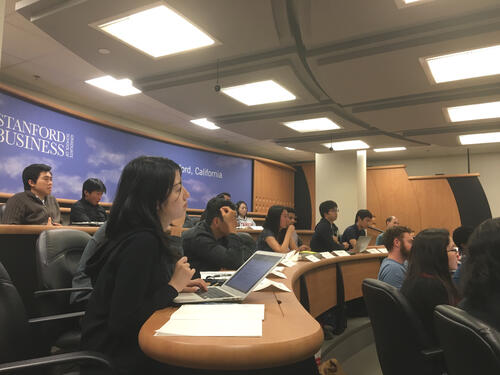
This forum will focus on the importance of community health services and primary health care reform in China and discuss the deepening efforts to establish a two-way referral system to help boost access and equality of high-quality medical resources and basic public health services.  At this year’s annual forum, distinguished experts will present research examining China’s emerging hierarchical medical system (including insurance payments, referral arrangements, and chronic and acute disease treatment initiatives). Policymakers, providers, and researchers will introduce China's overall policies towards this new system as well as describe the practice and challenges of primary care delivery and innovative approaches of internet-based and integrated medical care systems.

Presentation English
Download pdf
Xiaofang Han Former Director of Beijing Municipal Development and Reform Commission
Xinbo Liao Inspector of The Health and Family Planning Commission of Guangdong Province
Jifu Zhan Deputy Mayor of Sanming, Fujian province
Su Xu Deputy Director General of Shanghai Health and Family Planning Commission, Director of Shanghai health care reform office
"and other speakers; please see agenda"
Workshops
Authors
Lisa Griswold
News Type
News
Date
Paragraphs

China has historically been the “most divisive element” in the U.S.-Japan relationship, Yoichi Funabashi, a former editor-in-chief of the Asahi Shimbun, told a Stanford audience last Friday at a panel discussion hosted by the Shorenstein Asia-Pacific Research Center (APARC).

Funabashi said in his keynote speech that despite the past, “we are in a much, much better position now” as tensions between Japan and the United States have been contained lately. However, misperceptions between Washington and Tokyo over their approaches to China could challenge the positive trajectory we see now, Funabashi warned.

The discussion titled, “Continuity and Change in the U.S.-Japan Alliance,” was part of the Shorenstein Journalism Award ceremonies at the Freeman Spogli Institute, an annual honor that recognizes an accomplished journalist who is committed to critical reporting, and who has helped unravel the complexities of Asia through his or her writing. Fourteen journalists have received the prestigious award since its founding in 2002.

Funabashi, the 2015 award recipient, was joined by a distinguished panel of Japan experts. Susan Chira, a deputy executive editor at the New York Times, and Michael Armacost, a Stanford distinguished fellow and former U.S. ambassador to Japan, provided comments to Funabashi’s remarks, and Daniel Sneider, associate director for research at Shorenstein APARC, moderated the discussion.

The United States views Japan’s approach to China as “too balance-oriented,” while Japan thinks the U.S. administration under Barack Obama is “more engage-oriented,” Funabashi said. This disjuncture has caused some observers to describe China’s relationship with the West as having already entered a “new Cold War,” he said.

Funabashi quickly dismissed that idea, saying, “I do not think [we’ve] entered into a new Cold War,” and recognized that Japan, the United States and others around the world must identify ways of working with China despite differences.

Funabashi said Japan “can offset the prospect or danger of China and Russia ganging up against Japan” through its strategic engagement with both countries, but that the United States would require some reassurance and understanding of how Japan views its relationship with Moscow and Beijing.

“The approach to China will remain the most crucial factor to managing the U.S.-Japan relationship,” he said.

Chira later added that the U.S.-Japan alliance has been the beneficiary of the shift in focus to a “rising China.” She said it had both “diminished American concern” over the once-heightened economic friction between Japan and the United States in the 1980s, and “underlined the importance of the U.S.-Japan security relationship.”


Image
funabashi yoichi journalism headline


Funabashi also predicted that the U.S.-Japan alliance “could be very much affected by the U.S. presidential election.” Tendering another warning, he said that the 2016 presidential election cycle “may not be political business as usual.”

Candidates have adopted strong positions on foreign policy early on and have been coupling it with harsh rhetoric. “It will have ramifications beyond their actions” and could have a “long-term impact on the U.S. relationship with the Asia-Pacific,” he said.

Over the past eight years, the Obama administration has been leading its “rebalance” policy in Asia that has both symbolized a pulling-away from Europe and the Middle East, and carried a layer of economic and strategic reassurance for the region. Funabashi said Asian leaders are now “deeply concerned” about what will happen to America’s staying power under the next U.S. president.

Part of the success of the rebalance strategy hangs on the outcome of the Trans-Pacific Partnership’s passage through the U.S. Congress. Funabashi said it “will make or break issues,” and yet, each candidate currently running does not support the 12-nation trade pact. Funabashi characterized trade politics during campaign season as challenging. Armacost later said he agreed.

“The chance of ratifying something between now and the election is somewhere between negligible and nil,” said Armacost, who held a 24-year career in the U.S. government. Attempting approval during the lame duck session is very problematic, he said.

Funabashi also addressed whether President Obama should make a trip to the atomic bombing site at Hiroshima on the periphery of the G7 summit later this month.

He said he hoped that such a trip would not “backfire” on the U.S.-Japan relationship, and relations with China and Korea. A visit by Obama could create an expectation for a Japanese prime minister to visit Pearl Harbor, and for Japanese political leaders to make a trip to the site of the Nanjing Massacre in China.

Funabashi also emphasized that a reconciliation process between Japan and the United States already exists and harkened back to the San Francisco Peace Treaty. Ratified in 1952, the treaty reset Allied powers and Japan on a path toward friendly relations and to settle questions of war.

“We have proved [our ability] to reconcile on a working level, on a day-to-day level, so we don’t necessarily have to convince the public on both sides.

“Nonetheless, I think that this visit could be seen as a furthering of the reconciliation process,” Funabashi said.

“I hope the president does visit,” Sneider added. Acknowledgement of the bombing by the United States is “long overdue” and could set “a certain moral example,” he said.

Following the panel discussion, later that evening, Funabashi received the journalism award among many colleagues and friends.

Orville Schell, a director at the Asia Society New York and a member of the jury that selects the award recipient, described Funabashi as a leading “exemplar” of someone who “thinks clearly and writes extremely well.”

Related links:

Shorenstein Journalism Award 2015 Acceptance Speech: Yoichi Funabashi

Former editor-in-chief of the Asahi Shimbun to receive 2015 Shorenstein Journalism Award

Stanford scholar explores how the US election system shapes foreign policy

Should President Obama visit Hiroshima?

Divided Memories and Reconciliation research project

Hero Image
funabashi yoichi journalism headline top
Yoichi Funabashi speaks on the U.S.-Japan alliance at a panel discussion in conjunction with the Shorenstein Journalism Award ceremonies, May 6.
Rod Searcey
All News button
1
Date Label
-

Japanese political science community has generally been slow in adopting an experimental approach in the study of Japanese politics. In the areas of public opinion research, however, there have been some new attempts that take advantages of the methodological merits of experiments in investigating the Japanese political attitudes and behaviors. In this presentation, Professor Kohno will introduce three studies that he and his colleagues have embarked on, which relate to three major issues that Japan faces: constitutional revision, national security policy, and people's attitudes under natural disasters.


Image
0000251710 he ye sheng
Professor Kohno received his Bachelor of Laws in 1985 from Sophia University, M.A. (International Relations) in 1987 from Yale University, Ph.D. (political science) in 1994 from Stanford University, and is currently Professor at School of Political Science and Economics, Waseda University. Before joining Waseda, he taught at University of British Columbia (1994-98) and at Aoyama Gakuin University (1998-2003), and he was a national fellow at the Hoover Institution (1996-97). Outside Waseda, Professor Kohno served as Senior Officer at Japan Society for the Promotion of Science (2013-16). He has published extensively in both English and Japanese on Japanese politics and Japan's foreign policy, including Japan's Postwar Party Politics (Princeton University Press, 1997) and Seido [Institutions] (University of Tokyo Press, 2002).

Masaru Kohno Professor, School of Political Science and Economics, Waseda University
Seminars
-

Gaurav Kataria is a Big Data leader at Google who is responsible for driving Production Adoption initiatives across various Google for Work product lines - Gmail, Drive, G+, Hangouts, Google Docs, Drive, Android and Chrome. His group employs sophisticated machine learning and data mining techniques to understand the usage patterns across different products, and based on that creates programs to improve user engagement.

Gaurav holds a guest lecturer appointment at Stanford Business School where he co-teaches a course on 'Data-Driven Decision Making.' He actively supports the startup community in the Bay Area and is an advisor to multiple startups in mobile space. Prior to Google, he was a senior manager at Booz Allen and a researcher at Cylab - Carnegie Mellon. He has a Masters and PhD in Information Security Risk Management from Carnegie Mellon University and Bachelors in Electrical and Computer Engineering from Indian Institute of Technology. He currently lives in Palo Alto, California and enjoys hiking the Bay Area mountain ranges in his spare time.

Gaurav will share his perspective on how to create a data-driven organization and the specific capabilities businesses need to develop to harness the power of machine intelligence.

AGENDA:

4:15pm: Doors open
4:30pm-5:30pm: Talk and Discussion
5:30pm-6:00pm: Networking

RSVP REQUIRED
 
For more information about the Silicon Valley-New Japan Project please visit: http://www.stanford-svnj.org/
Gaurav Kataria, Head of Product Adoption Google for Work
Seminars
-

Can Northeast Asia’s developmental sequence help explain – and even prescribe – economic development worldwide? Joe Studwell, former journalist for The Economist, the Economist Intelligence Unit, and the Financial Times, argues that the East Asian story holds the key to development for other countries. The sequential implementation of household farming to maximize agricultural yields; an acute focus on export-manufacturing; and financial repression and controlled capital accounts is key to promoting accelerated economic development. Emphasizing the role of politics to shape markets, Mr. Studwell notes that there are at least two kinds of economics: the “economics of development” and the “economics of efficiency,” which countries, after achieving a certain level of development, must pursue.


Joe Studwell has worked as a freelance writer and journalist in East Asia for over twenty years. He has written for the Economist Intelligence Unit, The Economist, the Financial Times, the Wall Street Journal, the Far Eastern Economic Review, the Observer Magazine and Asia Inc. From 1997 to 2007, Mr. Studwell was the founding editor of the China Economic Quarterly and also founder and director of the Asian research and advisory firm Dragonomics, now GaveKal Dragonomics. Joe Studwell’s previous books include Asian Godfathers: Money and Power in Hong Kong and South-East Asia (2007) named one of the year’s ten best books on Asia by the Wall Street Journal. His latest book is How Asia Works: Success and Failure in the World’s Most Dynamic Region, which was placed by both the Financial Times and The Economist on their “books of the year” lists. Mr. Studwell is currently completing his mid-career Ph.D. at Cambridge University, U.K.

Joe Studwell former journalist for The Economist, the Economist Intelligence Unit, and the Financial Times
Seminars
News Type
Commentary
Date
Paragraphs

In an editorial for The Asan Forum, Stanford scholar Donald Emmerson portrays China’s building of infrastructure on land features in the South China Sea as a strategy to gain control over the area incrementally, without triggering actual war. He says the strategy has, so far, succeeded in large part due to Beijing’s effective use of ambiguity and because fears of unwanted escalation have tended to outweigh fears of Chinese expansion. He argues in this context that a recent incident in Indonesian waters involving China’s coast guard is unlikely to cause a significant hardening of Jakarta’s posture toward Beijing.

The full editorial may be viewed by clicking here.

Hero Image
south china sea japansdf uspacificfleet
A small craft assigned to a Japan Maritime Self-Defense Force destroyer carries sailors to the guided-missile destroyer USS Mustin for training.
Flickr/U.S. Pacific Fleet
All News button
1
-

With the G-7 economies in the doldrums since 2008, the roller-coastal behavior of global commodity markets from 2010 to 2015 is convincing evidence of the huge impact that China’s economy now has on the prosperity of many regions, Southeast Asia notably included. The future course of the China’s economy will determine, among other things, the legitimacy of its government, the incentive to project force beyond its borders, and the ability to build an effective international coalition to advance its agenda in world affairs.  Prof. Woo will examine (a) the recent marked slowdown in China’s growth, distinguishing temporary factors from the medium-term trend and comparing the policy options, and (b) the domestic and external implications of two scenarios of Chinese growth for two settings­­­­­­­­ in Southeast Asia.

Image
wing tyewoo050216crop
Wing Thye Woo, in addition to the positions noted above, is a special-term professor in the Fudan University School of Economics (Shanghai). He is co-editing a forthcoming book on the global economy and its Asian component. His many previous publications include Ranking the Liveability of the World’s Major Cities (co-author, 2012); The Asian Financial Crisis: Lessons for a Resilient Asia (co-editor, 2000); and Fiscal Management and Economic Reform in the People's Republic of China (co-authored, 1997). He is the convener of the Asian Economic Panel (AEP), a network of leading scholars on Asian economies who meet tri-annually, and the chief editor of Asian Economic Papers, a journal co-sponsored by research institutes in Indonesia, Malaysia, South Korea, and the US. He has also served as a special advisor to Malaysian prime minister Abdullah Badawi (2005-08), US treasury secretary Robert Rubin (1997-98), and officials of other governments.


Wing Thye Woo President, Jeffrey Cheah Institute on Southeast Asia, Sunway University, Kuala Lumpur, and Professor of Economics, University of California, Davis
Seminars
News Type
Commentary
Date
Paragraphs

In the wake of this month’s G7 Summit in Japan, U.S. President Barack Obama has an opportunity to make a presidential visit to Hiroshima. Such a visit would reinforce his vision of a nuclear-free world and solidify an important legacy of his foreign policy, Shorenstein APARC Director Gi-Wook Shin and Associate Director for Research Daniel Sneider write in an editorial for The Diplomat. The co-authors argue that the visit be framed in a way that would contribute to historical reconciliation in Northeast Asia and not undermine progress made between Japan and South Korea. 

Sneider wrote in an earlier Toyo Keizei editorial that while the White House has not yet announced a decision, the momentum for such a visit exists. And while issues of divided historical memory cannot be ignored, the occasion would not include an apology. The editorial can be viewed online in English and Japanese.

Sneider also contributed to Public Radio International's podcast series "Whose Century Is It?" and two articles on the Huffington Post Japan website. The first article, written in Japanese, examines how the history of atomic bombings are taught in the United States, and the second article, written in English, explores the question of acceptability of President Obama's visit to Hiroshima by the Japanese people.

During the visit, Obama delivered a speech that outlined the threat of nuclear weapons and the need for a world free from them. Writing for Nippon.com, Sneider said the speech and overall visit was well-received by many, but also had its critics. "The best judgment of the impact of Obama's Hiroshima visit may be what follows in Northeast Asia, where the task of postwar reconciliation remains unfinished," he wrote. The editorial can be viewed online in English and Japanese.

Shin and Sneider lead a decade-long research project that examines historical reconciliation in Asia, and are co-authors of the forthcoming book, Divergent Memories, about elite opinion and wartime memory in Asia.

Hero Image
hiroshima visit
During a break in the G7 Ministerial Meetings in Japan, a delegation visits the Hiroshima Peace Memorial on April 11, 2016 with U.S. Secretary of State John Kerry.
Flickr/U.S. Department of State
All News button
1
Subscribe to Asia-Pacific