News Type
Commentary
Date
Paragraphs

Scholars and affiliates of Stanford’s Shorenstein Asia-Pacific Research Center (APARC) and experts in the Freeman Spogli Institute for International Studies have offered commentary to media about the U.S. presidential election and its impact on U.S.-Asia relations.

The next administration's policy directions were also the focus of Shorenstein APARC-sponsored events held in Seoul, Stanford and Tokyo. A select list of links to commentary and an article about the Stanford event are located below. The list will continue to be updated.


Post-election commentary

"Trump says he won't ratify the TPP, what are the implications?" cites Donald K. Emmerson, Talk Media News, Nov. 29, 2016

"U.S. economy and security under the new president," television segment with Takeo Hoshi, also cites symposium held in Tokyo, Nikkei CNBC (in Japanese), Nov. 18, 2016

"Our allies are afraid. Here's how Trump can reassure them.," by Michael McFaul, from Seoul, Washington Post, Nov. 17, 2016

"Trump unlikely to drastically change U.S. defense policy on South Korea," cites Shorenstein APARC affiliates and symposium held in Seoul, The Korea Herald, Nov. 15, 2016

"Int'l community needs realistic goal for N.K. nuke talks," interview with William J. Perry, Yonhap News (in English and Korean), Nov. 15, 2016

"The Repudiation of American Internationalism and What It Means for Japan," by Daniel SneiderToyo Keizai (in English and Japanese), Nov. 11, 2016

"S.Korea-U.S. alliance won't change because of the election," cites Kathleen Stephens, Yonhap News, Nov. 9, 2016

"U.S. Economic and Foreign Policy under the New Administration," includes video of the Tokyo panel discussion, Nov. 20, 2016

Pre-election commentary

"Stanford scholars analyze the next U.S. administration's Asia-Pacific policy," Caixin Media (in Chinese), Nov. 7, 2016

"Shorenstein APARC scholars explore Asia policy challenges facing next administration," Shorenstein APARC, Oct. 31, 2016


Cautious optimism in Asia toward Trump administration

By Lisa Griswold

U.S. President Barack Obama’s term will end in January 2017 and a new administration led by Donald Trump is expected to take office, so: what does this mean for U.S. policy toward Asia?

A panel discussion featuring scholars from the Shorenstein Asia-Pacific Research Center (APARC) in the Freeman Spogli Institute (FSI) convened at Stanford on Tuesday to discuss policy directions and to offer perspectives of reactions to the election in South Korea and Japan, having just returned from there.

“This election was contentious, divisive, and at many times, surprising. There were different opinions about the results, but in general, people expressed a lot of concern throughout Asia,” Stanford professor Gi-Wook Shin said in his introductory remarks.

Shin, who is also the director of Shorenstein APARC, moderated the event, which included remarks from Michael Armacost, a Shorenstein APARC fellow and former U.S. ambassador to Japan and the Philippines; Kathleen Stephens, the William J. Perry Distinguished Fellow and former U.S. ambassador to the Republic of Korea; and Takeo Hoshi, an FSI senior fellow and director of Shorenstein APARC’s Japan Program.

Unprecedented election

Trump, who has never before held a political role, has unique credentials compared to his predecessors and his views break from the Republican Party establishment, traditionally pro-free trade and active in foreign policy.

“It’s difficult to guess what Trump’s foreign policy reflexes will be,” said Armacost, a former National Security Council official, who emphasized that international relations are often prompted by unplanned occurrences.

Trump has said, for example, that he would withdraw the United States from the North American Free Trade Agreement, rescind its membership in the World Trade Organization, and scrap the Trans-Pacific Partnership (TPP), a 12-nation trade deal brokered by the Obama administration.

The president-elect, however, has amended some views communicated during the campaign, and is likely to rely on his national security advisors for guidance on foreign policy issues.

“Trump may well be a skillful bargainer, but I suspect that striking a real estate deal is a lot simpler than negotiating with foreign sovereign governments on issues that carry a lot of cultural and historical baggage,” said Armacost, who served as U.S. undersecretary of state for political affairs from 1984-89.

“Still his pragmatism, I think, is a virtue. Trump seems a smart fellow, and he sure has a steep learning curve ahead. We can only hope he will manage it well,” he added.

Uncertain path, opportunity

Echoing Armacost, Hoshi said Trump’s changed positions over the past few weeks have made it difficult to predict what’s ahead for U.S. economic and trade policy.

Trump, who campaigned with a message of restoring lost jobs in America, urged that the U.S. government reform several areas of economic policy and governance, such as its interaction with the Federal Reserve and implementation of the Dodd-Frank Act, a set of regulatory reform measures enacted in response to the 2008 financial crisis.

Hoshi, an economist, suggested Trump faces an uphill battle in his attempts to reconcile campaign rhetoric and political reality, especially in the midst of the president-elect’s break from the Republican Party establishment and promises made to voters.

The view of the election from Japan, Hoshi added, is that the United States is receding from its leadership role in the world, particularly in the area of trade.

Trump promised early on to nix the TPP and has remained steadfast, releasing a video message shortly after the election confirming his position. That decision is interpreted in Japan as a symbol of America’s withdrawal, said Hoshi, noting that a similar sentiment on trade would have been expected if Hillary Clinton were elected since she too promised to rollback the deal.

“The United States was the leader behind the TPP, but now it’s saying ‘we are out.’ For Asian people, this represents a really drastic change and a loss of credibility,” Hoshi said.

Asian countries, however, could use a void left by an American departure in trade policy to step in. “Maybe some countries will see it as an opportunity,” he said.

Unease over democratic processes

Stephens, who was in Seoul when the U.S. election results were called, said Koreans shared “a sense of unease about our [mutual] democratic processes.”

South Korea, like the United States, has a democratic system of government – a republic. The Asian country is currently embroiled in its own political upheaval as calls for the resignation of President Park Geun-hye continue following accusations of corruption.

Stephens, who served in the U.S. Foreign Service for 35 years before coming to Stanford, also noted that there was some trepidation about a Trump-led administration in Korean policy circles. It’s a known ambition of policy advisors to forge connections in anticipation of the new administration, but the Trump/Pence win was so unexpected that now there’s a “scramble to make those relations,” she said.

The president-elect’s phone calls and meetings with foreign leaders provided some reassurance though, particularly with South Korea and Japan, two countries with formal U.S. alliances that Trump had initially questioned over their nuclear policy and cost of local U.S. military presence, she said.

“The priority for the Trump administration should be to affirm the importance of U.S. alliances and to make very clear the commitment to securing them,” Stephens said.

A new U.S. administration also provides an opportunity to undertake a policy evaluation, which could carry implications for South Korea, in trade policy and its attempt to reengage North Korea, she said.

Hero Image
election trump obama
U.S. President Barack Obama speaks while meeting with President-elect Donald Trump at the White House, Nov. 10, 2016.
Win McNamee/Getty Images
All News button
1
Authors
Lisa Griswold
News Type
News
Date
Paragraphs

Japanese and American scholars and practitioners gathered at Stanford recently for “Womenomics, the Workplace, and Women,” a full-day conference seeking to find pathways to advance opportunity for women in society and the workplace.

Nearly 75 people attended the public conference, which included 20 speakers and was co-sponsored by Stanford’s Shorenstein Asia-Pacific Research Center and the Clayman Institute for Gender Research, as well as the United States-Japan Foundation and the Japan Society for the Promotion of Science.

Takeo Hoshi, director of the Japan Program at Shorenstein APARC, noted that women in Japan and the United States have long encountered obstacles related to gender. Currently, the United States and Japan rank 45th and 111th, respectively, on the Global Gender Gap Index.

“The conference is a unique opportunity for experts from Japan and Silicon Valley to learn from each other and their countries’ recent attempts to tackle gender diversity, particularly in the areas of business and technology,” Hoshi said.

The Japanese government’s inclusion of women’s advancement in its economic growth strategy 'Abenomics,' named after Prime Minister Shinzo Abe, is “one of the few good policies,” Hoshi said, yet complex cultural constraints and workplace policies need to change in order for it to work. Similarly, in Silicon Valley, while strides have been made, gender diversity still lags in corporate leadership and boards of directors especially in the areas of STEM (science, technology, engineering and mathematics).

Panelists shared perspectives on women’s status, leadership and work-life balance in both countries throughout four panel discussions led by Hoshi, and Shelley Correll, director of the Clayman Institute and professor of sociology; Kenji Kushida, Japan Program research scholar; and Mariko Yoshihara Yang, a visiting scholar at Shorenstein APARC.

One broad theme that emerged in the discussions: gender equity progress takes time. Closing the gender gap will come incrementally and a multidisciplinary approach could help the process. 

Areas highlighted by the panelists included a need to address unconscious bias and to improve programs that support women in the workplace as well as those seeking to re-enter the labor force after taking time off, such as increased access to childcare and elimination of “evening work” for those who hold full-time jobs.

Panelists suggested expanding educational opportunities, mentorship and peer-to-peer networks among women, as well as training centered on gender equity for all employees. Quotas and government incentives for organizations that adopt equity practices were also proposed to achieve greater female representation.

Additional discussions took place between the panelists in a closed-door workshop the following day. A report that details outcomes and a set of policy recommendations is expected in 2017; the full list of panelists, topics addressed and conference agenda can be viewed here.

Hero Image
womenomics conference headline
Japan Program visiting scholar Mariko Yoshihara Yang chairs a panel discussion at the conference "Womenomics, the Workplace, and Women" on Nov. 4, 2016, at the Bechtel Conference Center.
Rod Searcey
All News button
1
-

As the 21st century unfolds, some fundamentals remain the same including the abiding affinity between Australia and the United States. However as the world changes and evolves, so to must this relationship. The Asia-Pacific region continues to experience breakneck change including the emergence of China, the rapid economic development of the region and simmering security issues. How Australia and the U.S. relationship responds to these developments will help shape the relationship between our countries for decades to come.

Image

The Honorable Joe Hockey is Australia’s Ambassador to the United States, taking up his posting in Washington in January 2016.

Mr. Hockey has had a long and distinguished career in public service. He first entered Parliament in 1996 as the Member for North Sydney and spent more than seventeen years on the front bench.

Mr. Hockey served as a Minister in a number of different portfolios including Financial Services, Small Business and Tourism, Human Services and Employment and Workplace Relations.

In 2013 Mr. Hockey was appointed Treasurer of the Commonwealth and was responsible for all economic policy including fiscal policy. He served as Chair of the G20 Finance Ministers and Central Bank Governors in 2014 and a member of the leadership troika in 2015. As Treasurer he was a regular delegate to IMF, World Bank, Asian Development Bank and APEC meetings.

Previously Mr. Hockey served as a banking and finance lawyer with a major Australian law firm. He graduated from the University of Sydney with Bachelor degrees in Arts and Law.

This event is co-sponsored by the U.S. - Asia Security Initative and the Southeast Asia Program

His Excellency, the Honorable Joe Hockey <i>Australian Ambassador to the U.S. </i>
Seminars
News Type
News
Date
Paragraphs

An in memoriam event recognizing the legacy of Stephen W. “Steve” Bosworth was held last week. Organized by the Shorenstein Asia-Pacific Research Center (APARC), the event drew Stanford faculty, students and community members, paying tribute to the foreign affairs scholar and three-time U.S. ambassador.

Bosworth, who died in January 2016, was the Payne Distinguished Lecturer at the Freeman Spogli Institute for International Studies in 2014. During that time, he delivered three lectures at Stanford that highlighted lessons from his tenure in public service and in academia as dean of the Fletcher School of Law and Diplomacy and senior fellow at the Belfer Center for Science and International Affairs.

Bosworth had also been a key participant over the years at Shorenstein APARC. He was active with the New Beginnings project that sought to bolster the U.S.-South Korea alliance and the Koret Workshop series focused on dialogue about North Korea.

Shorenstein APARC Distinguished Fellow Michael Armacost described him as a “longtime friend and colleague” and a mentor, having both worked to lay groundwork for the restoration of democracy in the Philippines as U.S. ambassador there.

“I admired Steve as a consummate diplomat, but he was a lot more than that,” Armacost said. “He was a man of intellectual acuity. He was a man of moral fortitude. He had a wry sense of humor. And, he had that remarkable ability of being able to stand-up and speak thoughtfully about almost any subject.”

Armacost was followed by remarks from Kathleen Stephens, the William J. Perry Distinguished Fellow and former U.S. ambassador to South Korea, and Sung Kim, the U.S. special envoy for North Korea, and discussion with the audience.

The collection of Bosworth’s Payne lectures has been published as a booklet. The booklet can be viewed here.

Hero Image
bosworth Reuters
All News button
1
News Type
News
Date
Paragraphs

The Japan Program held the fourth annual Stanford Juku on Japanese Political Economy from September 29 – October 1. Over 40 scholars from various parts of the US and Japan participated in the conference, which took place at the Oksenberg Conference Center at Encina Hall. The first portion of the program (9/29 and morning of 9/30) focused on research in political science/political economy and international relations, and the latter portion of the program (afternoon of 9/30 and 10/1) focused on research in economics.

The main goal of the program is to attract young researchers who will go on to become leaders in the study of Japanese politics and Japanese economy in the near future.  Distinctive features of the Juku are the long times allotted to each paper to allow for two in-depth discussants and discussion among participants, as well as ample time for informal discussions and interactions among participants allowing for collaborations and expansion of the network of researchers on Japan in political science and economics. We received a large volume of quality paper submissions this year, which made the selection process very competitive. 

The first day included four papers in political science/political economy and international relations. Daniel Smith from Harvard University presented a paper co-authored by Yusaku Horiuchi (Dartmouth College) and Teppei Yamamoto (Massachusetts Institute Technology) entitled, "Identifying Voter Preferences for Politicians' Personal Attributes: A Conjoint Experiment in Japan," with discussants Ethan Scheiner (University of California, Davis) and Mike Tomz (Stanford University).

Amy Catalinac (New York University) presented a paper co-authored by Frances Rosenbluth (Yale University) and Hikaru Yamagishi (Yale University) entitled "Party Strategies and Foreign Policy in Post-Electoral Reform Japan." The Discussants for the paper were Gary Cox (Stanford) and Teppei Yamamoto (MIT).

Jacques Hymans from University of Southern California presented his paper on “The Limits of Japan's Energy Angst: The Case of Geothermal Power.” Mark Thurber (Stanford) and Steve Vogel (University of California, Berkeley) were the discussants.

The fourth paper was “Democratic Community and Its Consequences: Evidence from Japan” by Jonathan Chu (Stanford), discussed by Christina Davis (Princeton University) and Megumi Naoi (University of California, San Diego).

Christina Davis (Princeton) started off the second day by presenting her paper “Joining the Club: Accession to the GATT/WTO." Discussants were Jonathan Chu (Stanford) and Phillip Lipscy (Stanford).

The political science/political economy section ended with Megumi Naoi (UC, San Diego) presenting a paper co-authored by Chun-Fang Chiang (National Taiwan University), Jason Kuo (Post-doc, Georgetown University), Jing-tan Liu (National Taiwan University) entitled, "What Do Voters Learn from Foreign News? Experimental Evidence on PTA Diffusion in Japan and Taiwan." Discussants were Kenji Kushida (Stanford) and Yuki Takagi (Stanford). 

After lunch, two economics papers were presented.  Wataru Miyamoto (Bank of Canada) presented a paper co-authored by Thuy Lan Ngyuen (Santa Clara University) and Dmitriy Sergeyev (Bocconi University) entitled, "Government Spending Multipliers under the Zero Lower Bound: Evidence from Japan" with discussants Yuriy Gordonichenko (UC, Berkeley) and Johannes Wieland (UC, San Diego).

The second paper was “Government Spending Multipliers under the Zero Lower Bound: Evidence from Japan”, by Robert Dekle (USC), Nobuhiko Kiyotaki (Princeton) and Tsutomu Miyagawa (Gakushuin University).  Huiyu Li (Federal Bank of San Francisco) and Shuichiro Nishioka (West Virgina University) were the discussants.  A group dinner followed the second day.

The final day included four papers in economics.  The first was “Will the Sun Also Rise? Five Growth Strategies for Japan by Yoko Takeda (Mitsubishi Research Insitute).  Discussants were Michael Hutchison (US, Santa Cruz) and Ryo Kambayashi (Hitotsubashi University).

The second paper was "Natural Disaster and Natural Selection" by Hirofumi Uchida (Kobe University), Daisuke Miyakawa (Hitotsubashi), Kaoru Hosono (Gakushuin), Arito Ono (Chuo University), Taisuke Uchino (Daito Bunka University) and Iichiro Uesugi (Hitotsubashi).  Discussants were Nobuhiko Hibara (Waseda University) and Johannes Wieland (UC, San Diego).

Koichiro Ito (University of Chicago) presented a paper co-authored by Takanori Ida (Kyoto University) and Makoto Tanaka (GRIPS) entitled “Information Frictions, Switching Costs, and Selection on Elasticity: A Field Experiment on Electricity Tariff Choice.”  Karen Eggleston (Stanford) and Hitoshi Shigeoka (Simon Fraser University) were the discussants.

The final paper was “Good Jobs and Bad Jobs in Japan: 1982-2007” by Ryo Kambayashi (Hitotsubashi) and Takao Kato (Colegate University), discussed by Takeo Hoshi (Stanford) and David Vera (California State University, Fresno).

Hero Image
photo juku 2016
All News button
1
-

Image
Click here to register

For more information contact Mr. Brian Graf

Sasakawa Peace Foundation USA, 202-296-6694, bgraf@spfusa.org

This event is free and open to the public.

Innovative new technologies, from components like batteries to systems such as airplanes, demand the specific properties of a growing number of rare metals used in complex combinations and in increasingly refined amounts. Technology now relies on an entirely new set of critical materials, namely rare metals, for products manufactured today that are very different from those produced just twenty years ago.

While the world is not running out of rare metals, developing new supply lines can take a decade or more. Advanced economies are approaching a point where the speed of development and number of new devices will outpace the ability to secure the materials this new industrial age requires. As new devices proliferate, advanced countries like the United States and Japan are linking their economic futures to rare metals, with production often dominated by one mine or one country.

On November 30, Sasakawa USA will partner with the Walter H. Shorenstein Asia-Pacific Research Cetner at Stanford University to hold a conference to discuss and lay out the challenges, opportunities, and limitations of creating resilient supplies of critical materials. This will be the first conference to bring together companies from the entire the rare metal supply chain, including experts and officials from both Japan and the United States, countries that both rely on the entire spectrum of these resources for manufacturing. 


Image


Conferences
-

Stanford Juku on Japanese Political Economy 2016

September 29 - October 1, 2016

Oksenberg Conference Room

Stanford Japan Program at Shorenstein Asia-Pacific Research Center

The Japan Program at the Walter H. Shorenstein Asia-Pacific Research Center (S-APARC) at Stanford University started Stanford Summer Juku (SSJ) in 2013.  In SSJ, researchers on Japanese politics and Japanese economy get together and discuss their research in a relaxed setting. The fourth annual meeting is held at Stanford on September 29 - October 1, 2016.  The first portion of the program focuses on research in political science/polilitcal economy and international relations, and the latter portion of the program focuses on research in economics.

Takeo Hoshi, Kenji E. Kushida, Phillip Lipscy


Report - Stanford Juku 2016


Program

9/29/2016

8:30-9:00    Breakfast

9:00-10:15  Session I:

"Identifying Voter Preferences for Politicians' Personal Attributes: A Conjoint Experiment in Japan", Yusaku Horiuchi (Dartmouth College), Daniel Smith (Harvard University) and Teppei Yamamoto (Massachusetts Institute of Technology)

Discussants:
Ethan Scheiner (University of California, Davis)
Mike Tomz (Stanford University)
 

10:15-10:45  Break

10:45-12:00  Session II:

Party Strategies and Foreign Policy in Post-Electoral Reform Japan, Amy Catalinac (New York University), Frances Rosenbluth (Yale University), Hikaru Yamagishi (Yale University)

Discussants:
Gary Cox (Stanford University)
Teppei Yamamoto (Massachusetts Institute of Technology)
 

12:00-1:00  Lunch

1:00-2:15    Session III:

The Limits of Japan's Energy Angst: The Case of Geothermal Power, Jacques Hymans (University of Southern Califorrnia) and Fumiya Uchikoshi, Ph.D. (University of Tokyo)

Discussants:
Mark Thurber (Stanford University)
Steve Vogel (University of California, Berkeley)
 

2:15- 3:30   Session IV:

Democratic Community and Its Consequences: Evidence from Japan, Jonathan Chu (Stanford University)

Discussants:
Christina Davis (Princeton University)
Megumi Naoi (University of California, San Diego)


9/30/2016

8:30-9:00   Breakfast

9:00-10:15 Session I:

“Joining the Club: Accession to the GATT/WTO”, Christina Davis (Princeton University) and Meredith Wilf (University of Pittsburgh)

Discussants:
Jonathan Chu (Stanford University)
Phillip Lipscy (Stanford University)
 

10:15-10:45  Break

10:45-12:00  Session II:

What Do Voters Learn from Foreign News? Experimental Evidence on PTA Diffusion in Japan and Taiwan”, Chun-Fang Chiang (National Taiwan University), Jason Kuo (Post-doc, Georgetown University), Jin-tan Liu (National Taiwan University), and Megumi Naoi (University of California, San Diego)

Discussants:
Kenji Kushida (Stanford University)
Yuki Takagi (Stanford University)
 

12:00-1:00  Lunch

1:00-2:15    Session III:

Government Spending Multipliers under the Zero Lower Bound: Evidence from Japan”, Wataru Miyamoto  (Bank of Canada), Thuy Lan Ngyuen (Santa Clara University) and Dmitriy Sergeyev (Bocconi University)

Discussants:
Yuriy Gordonichenko (University of California, Berkeley)
Johannes Wieland (University of California, San Diego)
 

2:15-3:30    Session IV:

Product Dynamics and Aggregate Shocks: Evidence from Japanese product and firm level data”, Robert Dekle (University of Southern California), Atsushi Kawakami (Teikyo University), Nobuhiro Kiyotaki (Princeton University) and Tsutomu Miyagawa (Gakushuin University)

Discussants:
Huiyu Li (Federal Reserve Bank of San Francisco)
Shuichiro Nishioka (West Virginia University)
 

6:30        Group Dinner at Tacolicious


10/1/2016

8:30-9:00    Breakfast

9:00-10:15  Session I:

Will the Sun Also Rise? Five Growth Strategies for Japan”, Yoko Takeda (Mitsubishi Research Institute)

Discussants:
Michael Hutchison (University of California, Santa Cruz)
Ryo Kambayashi (Hitotsubashi University)
 

10:15-10:45  Break

10:45-12:00  Session II:

Natural Disaster and Natural Selection”, Hirofumi Uchida (Kobe University), Daisuke Miyakawa (Hitotsubashi University), Kaoru Hosono (Gakushuin University), Arito Ono (Chuo University), Taisuke Uchino (Daito Bunka University) and Iichiro Uesugi (Hitotsubashi University)

Discussants:
Nobuhiko Hibara (Waseda University)
Johannes Wieland (University of California, San Diego)
 

12:00-1:00  Lunch

1:00-2:15    Session III:

Information Frictions, Switching Costs, and Selection on Elasticity: A Field Experiment on Electricity Tariff Choice”, Koichiro Ito (University of Chicago), Takanori Ida (Kyoto University) and Makoto Tanaka (GRIPS)

Discussants:
Karen Eggleston (Stanford University)
Hitoshi Shigeoka (Simon Fraser University)
 

2:15-3:30    Session IV:

Good Jobs and Bad Jobs in Japan: 1982-2007”, Ryo Kambayashi (Hitotsubashi University) and Takao Kato (Colegate University)

Discussants:
Takeo Hoshi (Stanford University)
David Vera (California State University, Fresno)


616 Serra StreetEncina Hall E301Stanford, CA 94305-6055
(650) 723-6530
0
young_ju_choi.jpg
Young-ju Choi joins the Walter H. Shorenstein Asia-Pacific Research Center as a visiting scholar during the 2016-2017 academic year.  Her research interests are focused on North Korea and Northeast Aisa regional dynamics and the prospective changes of Korea-US relationship post US presidential election this year. She is also currently researching how the Korean mass media is shaping views on Korea’s presidential scandal. Young-ju is an anchor and a journalist at YTN, the first 24-hour news agency in South Korea. In her trademark casual and confident style, Young-ju has anchored all the contemporary major breaking news that have unfolded across the globe. Young-ju also covered a number of stories ranging from domestic politics, international affairs, including the Korean Peninsula issues and Northeast Asia political dynamics.  Young-ju graduated with honors from Seoul National University where she obtained a bachelor's degree in Geography. She enjoys traveling all over the globe and enjoys swimming, scuba diving and golf.
Visiting Scholar
-

Singapore brandishes an unusual post-colonial identity. As several of its eminent voices have suggested, the country remembers its colonial past with “no hangups.” Meanwhile the visibility of Singapore’s cinema has surged at festivals and in film criticism. Prof. Sim will argue that the films reflect the city-state’s distinctive location between post-colonialism and globalization. He will show how the films evince a local preoccupation with space, which is desperately scarce on the island nation and thus intensely politicized. He will explore how the films map, organize, and understand Singapore as a place, and Singapore’s place in the world, while retaining the ideological inflections of its post-colonial status.

Existing scholarship on cinema in Singapore dwells on how the films, as texts, respond to social realities, political power, and state ideology. These readings are legitimate and illustrative. But they do not adequately account for Singapore’s postcolonial identity and how that identity is expressed in a mapping impulse. Prof. Sim will go beyond this literature to analyze key films, art and museum exhibits, and other cultural artifacts as symptoms of Singapore’s intriguing but understudied fixation on space and place.

Gerald Sim is associate professor of film and media studies at Florida Atlantic University, and the author of The Subject of Film and Race: Retheorizing Politics, Ideology, and Cinema (2014). His current book-in-progress, tentatively entitled Besides Hybridity: Postcolonial Poetics of Southeast Asian Cinema, is contracted with Indiana University Press. In 2016 and 2013 he was a visiting senior research fellow in the National University of Singapore’s Asia Research Institute.


Gerald Sim 2016-17 Lee Kong Chian NUS-Stanford Distinguished Fellow on Southeast Asia
Seminars
-

Wei Huang uses the experience of China's One Child Policy to examine how fertility restrictions affect economic and social outcomes over the lifetime. The One Child Policy imposed a birth quota and heavy penalties for “out-of-plan” births. Using variation in the fertility penalties across provinces over time, He examines how fertility restrictions imposed early in the lives of individuals affected their educational attainment, marriage and fertility decisions, and later life economic outcomes. Exposure to stricter fertility restrictions when young leads to higher education, more white-collar jobs, delayed marriage, and lower fertility. Further consequences include higher household income, consumption, and saving. Finally, exposure to stricter fertility restrictions in early life increases female empowerment as measured by an increase in the fraction of households headed by women, female-oriented consumption and gender-equal opinions. Overall, fertility restrictions imposed when agents are young have powerful effects throughout the life cycle.

Image
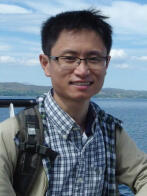
Wei Huang is a Post-doctoral Fellow in Aging and Health Economics at the National Bureau of Economic Research. His main research studies public economics, labor economics, and health economics. He is interested in the topics such as health, education, ethnicity, and China. Wei received his PhD in economics from Harvard University in 2016. He received an M.A in economics from National School of Development at Peking University in 2011, and a B.A. in physics from School of Physics at Peking University in 2008.


Wei Huang Post-doctoral Fellow in Aging and Health Economics, the National Bureau of Economic Research
Seminars
Subscribe to Asia-Pacific