Chairman of the American Institute in Taiwan’s Board of Trustees James Moriarty visited Shorenstein APARC on May 3rd for a seminar titled “The United States and Taiwan: An Enduring Friendship.” The former United States ambassador spoke about historical, contemporary and future U.S.-Taiwan relations and addressed the challenges and merits of democratic systems.
A recording of the event is avilabe below. A transcript of the proceedings is availabe below.
How does Southeast Asia incentivize a major power like China to exercise restraint, particularly in the ongoing dispute in the South China Sea (SCS)? Prof. Huang will argue that regional consensus, interactive deliberations, and insulated negotiation settings are most likely to induce China to shift its policy in the SCS toward supporting regional initiatives that it previously deflected, resisted, or opposed, and toward reevaluating the efficacy of using force. Conversely, regional disunity and fragmentation would render China more likely to practice power politics. Without joint influence, the states of Southeast Asia are unlikely to alter China’s preference for pursuing its interests in the SCS by coercive means intended to minimize the capabilities of other claimant states and thereby sustain its unilateral approach to maritime security.
A key question for this research is the extent to which confidence-building diplomacy based on voluntary cooperation between China and Southeast Asia can cultivate habits of avoiding conflict without the binding agreements and formal sanctioning mechanisms that have proven so hard to negotiate. Preliminary findings suggest the need for scholars and practitioners to be more creative, precise, and consistent in studying and suggesting how Southeast Asia can project and implement its security norms in ways that incentivize change in the foreign policy paradigm of an imposing external power.
Image
Chin-Hao Huang is an assistant professor of political science at Yale-NUS College in Singapore. His current book-in-progress, Power, Restraint, and China’s Rise, explains why and how China’s foreign policy might reflect restraint even as its material power increases at unprecedented rates. His latest publication is “China-Southeast Asia Relations: Xi Jinping Stresses Cooperation and Power—Enduring Contradiction?” (coauthored, Comparative Connections, May 2018). Earlier writings have appeared as monographs, in edited volumes, and in journals including The China Quarterly, The China Journal, and Contemporary Southeast Asia. Tri-lingual in Mandarin, Thai, and French, Prof. Huang lectures widely and has testified on Chinese foreign policy before the U.S.-China Economic and Security Review Commission. His PhD and BS are respectively from the University of Southern California and Georgetown University
Chin-Hao Huang
2017-2018 Lee Kong Chian NUS-Stanford Fellow on Contemporary Southeast Asia
Even as Indian officials watch the rise of China and recent changes to its foreign policy with apprehension, they prefer to avoid having to choose sides between the United States and China.
That sentiment marked the keynote address by veteran journalist Siddharth Varadarajan, winner of the 2017 Shorenstein Journalism Award. Speaking on April 16 at the Award’s sixteenth anniversary panel discussion titled “India, the United States, and China: The New Triangle in Asia,” Varadarajan described a triangle where all three parties were in flux.
The award recognizes Varadarajan’s exemplary record of excellence in reporting on India’s domestic and foreign affairs in both traditional and new media. As founding editor of The Wire, Varadarajan combines innovative digital strategies with quality reporting that advances positive social, economic, and political change.
“Today we can see, across Asia as well as the United States, that journalism has been somewhat reinvigorated by… the growth of authoritarianism,” said Daniel Sneider, Shorenstein APARC visiting scholar, who chaired the noon panel. “I think we feel even more vindicated in hosting this award…and giving some attention to people who are making this kind of contribution.”
Thomas Fingar, a China specialist and a Shorenstein APARC fellow at the Freeman Spogli Institute, and Nayan Chandra, the founder, former editor-in-chief, and current consulting editor of YaleGlobal Online magazine, joined Varadarajan on the panel.
The panelists addressed a host of questions related to Indian foreign policy under the geopolitical construct of a rising China and a retreating United States. Although the China-India-U.S. triangle has existed for some time, Varadarajan argued that present conditions make it an important topic for renewed discussion.
Pointing to recent internal changes by president Xi Jinping, India’s departure from the so-called Nehruvian consensus, as well as the unpredictability of U.S. foreign and trade polices under the Trump presidency, Varadarajan depicted a triangle comprised of shifting segment lengths and angles. He reviewed the India-U.S. and the India-China relationships and their evolution over the last decade-and-a-half; outlined significant changes in China’s foreign and economic policies over the last eight years; and elucidated the U.S.-India response to these changes.
Since 1998 and India’s declaration of its status as a nuclear power, U.S.-India relations have seen a succession of rises and falls under each presidency, with the present administration being no exception. “When the rest of the world was ambiguous, ambivalent, a bit worried about what the United States might do under Trump,” Varadarajan said, “Prime Minister Modi was one of the few world leaders to actually seek a doubling down of the relationship." Over the same period, India-China relations tended to follow a similar pattern of peaks and troughs, albeit in a reversed pattern. “If you look broadly at the India-China relationship,” Varadarajan summated, “it’s a textbook case of how improvements in economic relations and improvements in trade do not necessarily lead to improvements in political relations."
Image
Varadarajan closed his remarks by arguing against the existing viewpoint of the triangle as a zero-sum game. “You cannot, on the one hand, talk of the need for a free and open Indo-Pacific region and, on the other hand, create forums or architecture that in some ways are designed to keep the Chinese out… India's interests lie perhaps in an architecture that is genuinely inclusive.”
The Shorenstein Journalism Award, which carries a cash prize of $10,000, recognizes accomplished journalists committed to critical reporting on and exploring the complexities of Asia through their writing. It alternates between honoring recipients from the West, who mainly address American audiences, and recipients from Asia, who pave the way for freedom of the press in their countries. Established in 2002, the award honors the legacy of Mr. Walter H. Shorenstein. A visionary businessman, philanthropist, and champion of Asian-American relations, Shorenstein was dedicated to promoting excellence in journalism and deeper understanding of Asia.
Varadarajan called the award a “boost to those of us in India who are fighting the good fight of keeping independent journalism alive-and kicking under difficult circumstances.”
Watch Varadarajan’s keynote speech:
Hero Image
Siddharth Varadarajan, the 2017 Shorenstein Journalism Award winner, speaks to an audience of Stanford faculty, students and community members, part of the award's 16th anniversary, April 16, 2018. | Rod Searcey
We analyze the effects of early-life shocks with varying degrees of severity on mortality and human capital outcomes in the Philippines. We exploit variations in typhoon exposure and the introduction of a short-term post-disaster relief policy. Severe
typhoons are associated with increased mortality and adverse long-term outcomes. Before the disaster relief policy, mortality from in utero exposure to severe typhoons was 10 percent, and survivors exhibited similar levels of human capital as the unaffected.
Once implemented, the policy appears to have mitigated the mortality effect of severe typhoons, and survivors have lower human capital in the long term.
Although many public hospital physicians in Vietnam offer private service on the side, little is known about the magnitude and nature of the phenomenon of so-called dual practice, let alone the dynamics between the public and private health sectors. This study investigates how and to what degree public hospital physicians engage in private practice. It also examines the commitment of dual practitioners to the public sector. The analysis is based on a hospital-based survey of 483 physicians at 10 public hospitals in four provinces of Vietnam. Nearly half of the participants in the study sample reported themselves as dual practitioners. Various types of private practice were mentioned. Private practice at health facilities owned by the private sector was the most prevalent, followed by private practice delivered at health facilities owned by the dual practitioners themselves. Private practice inside public hospitals was also noted. Dual practitioners were likely to be senior and hold management positions inside their public hospitals. Substantial income differences were found between dual practitioners and those physicians practicing in only the public sector. The majority of dual practitioners, however, reported the willingness to give up private practice if certain conditions were met, such as a basic salary increase or non-pecuniary benefits. The main reasons dual practitioners gave for not leaving the public sector included a sense of public responsibility and opportunities to gain a broader professional network and more training. This study reiterates the significant challenges associated with dual practice, including its financial implications and possible effects on health care quality and access. The need for a high-quality workforce committed to the public sector is particularly critical, given the possibility of universal insurance coverage. Future research should address the need to improve data collection on physicians’ dual practice and incorporate the topic in policy debates on health reform.
Keywords: physician dual practice, public-private mix, Vietnam, human resources for health, hospital reform, health system research, low- and middle-income countries, universal health coverage.
High costs of precision medicine raise concerns about exacerbating income-related disparities in healthcare utilization and health outcomes. One approach to expanding coverage in Asia has been to cover the precision therapy but require the pharmaceutical firm to cover the costs of the companion diagnostic test. Taiwan’s National Health Insurance (NHI) adopted this approach for lung cancer, colorectal cancer and leukemia, but not for the first target therapy covered by NHI, trastuzumab for the treatment of HER2-positive breast cancer. Analyzing a unique dataset linking medical claims, cancer registry data and proxies for income between 2004 and 2015, we find that lower-income patients are more likely to be diagnosed with later stages of breast cancer, and this pattern renders NHI coverage of anti-HER2 therapy pro-poor even before full coverage of the diagnostic tests.
Moreover, the expansion of NHI coverage—including the FISH diagnostic test and trastuzumab for early-stage breast cancer—strengthened the pro-poor distribution of genetic testing and target treatment, albeit only marginally. The extent of pharmaceutical company coverage of testing and its impact on patient access are topics of our ongoing research, contrasting breast cancer with colorectal cancer.
Keywords: disparities, personalized medicine, income-related inequality, breast cancer, genetic testing, Taiwan, Asia
When Prime Minister Abe Shinzo and President Donald Trump meet again in the familiar surroundings of the President’s Mar-a-Lago estate, every effort will be made to convey the impression of a gathering of two old friends, united in common purpose.
But since their previous meetings, cracks have opened up over key issues, beginning with trade but including foreign policy problems from North Korea to Russia and Iran.
For Abe, desperately trying to keep his own premiership alive, the goal is simple – to look like a leader who must be kept in place for the benefit of Japan.
On April 13, the United States Institute of Peace hosted a panel discussion titled “Ending Civil Wars: How Can We Succeed with Limited Opportunities?” The session was moderated by the director of the U.S.-Asia Security Initiative, Ambassador Karl Eikenberry.
USIP recently posted video and audio-only recordings of the 90-minute session for public view. Watch/Listen here >>
The session focused on insights from “Civil Wars, Violence, and International Responses”, a project co-directed by Ambassador Eikenberry and FSI Senior Fellow Stephen Krasner. Through the efforts of 36 U.S. and international project participants (8 of whom were affiliated with FSI), the American Academy of Arts and Sciences dedicated two issues of its quarterly journal Daedalus to their writings (see below).
Joining Ambassador Eikenberry and Professor Krasner on the dais were Nancy Lidborg (President of USIP), Dr. Stephen Biddle (Professor, Georgetown University), Barry Posen (Professor, Massachusetts Institute of Technology), and Clear Lockhart (Director and Co-Founder of the Institute for State Effectiveness).
The major objectives of this paper are: 1) to investigate how local nutritional availability in early childhood and in adolescence affected health and human capital development; 2) to explore if improved nutrition in adolescence could mitigate the negative effects of early-life exposure to negative health shocks generated by the Korean War; and 3) to understand how increased nutritional supply contributed to the improvement in health in South Korea from 1946 to 1977.
Image
Chulhee Lee is professor of economics at Seoul National University. After receiving his doctoral degree from University of Chicago in 1996, he taught at SUNY Binghamton before he returned to Seoul in 1998. His major research topics are economic status and labor-market behaviors of older persons; and interactions of ecological environment, socioeconomic status, and health over the life course. Lee has been involved with the management of the NIH-funded Early Indicators project since 2001 as project leader and senior investigator, which constructed and analyzed longitudinal data on Union Army soldiers. He has also participated in various projects of creating and studying new data in Korea, such as the Korea Longitudinal Study of Aging (KLOSA), the panel data on the Korean Health Insurance, and the sample of military records in Korea. Lee’s research on the health and retirement of US Civil War soldiers has been published in American Economic Review (1998), Journal of Economic History (1998, 2002, 2005, 2008), Explorations in Economic History (1997, 1998, 2007, 2012), and Social Science History (1999, 2005, 2009, 2015). He has also published paper on retirement of Koreans in Economic Development and Cultural Change (2007) and Journal of Population Ageing (2013). His recent work on the effects of in-utero exposure to the Korean War, recessions, and the 1980 Kwangju uprising appeared in Journal of Health Economics (2014), Social Science and Medicine (2014), Health Economics (2017), and Asian Population Studies (2017).
The format of this presentation is each of the three speakers will have approximately 15 minutes to present their research. This will be followed by a short period of 5-10 minutes for any questions or comments from the audience.
In this session of the Corporate Affiliates Research Presentations, the following will be presented:
Hong Cao, PetroChina, "The Role of Large Enterprises in China's Innovation Economy"
Image
China's economy has made tremendous achievements in the past 20 years, and the number of patent applications has also ranked first since 2011. China is now trying to change its economic growth mode from investment-led infrastructure construction and manufacturing to an innovation-driven one. It is widely accepted that large enterprises should be main actors in this process of economic transformation. However, can Chinese large enterprises take on such responsibilities? In his research, Cao shows there is still a big gap between Chinese and international innovative enterprises both in innovation quality and transformation, and state-owned enterprises still have the problem of insufficient innovation capacity. In this presentation, Cao argues that increasing the R&D investment to double the current level, establishing innovation accelerators, and implementing institutional reforms are the top priorities for creating an innovative China.
Kazumasa Ito, Mitsubishi Electric, "How Can Mitsubishi Electric Play a Role in Urban Air Transportation Business?"
New disruptors that change the way of traveling may be arising from airspace, in addition to existing ride- and car-sharing, that have changed people's minds and will have an effect on car sales. Many start-ups and aircraft manufacturers are tackling the challenge to realize the urban air transportation business and have begun to improve the level of technology. In his research, Ito focused on the technologies used in the urban air transportation ecosystem and concluded that Mitsubishi Electric could provide some of these technologies. He suggests that Mitsubishi Electric should find the partners by leveraging its U.S. offices and other group companies, which could become a lesson for other Japanese companies.
Yoshihiro Kato, Future Architect, Inc., "How Can Companies Adopt Artificial Intelligence in Business?"
Deep learning has received a great deal of attention since it broke a conventional method at an image recognition competition in 2012. Since then, almost every industry is exploring the use of Artificial Intelligence (AI) to improve productivity and make innovation. Tech giants such as Google, Microsoft, Amazon, Baidu and others that have invested large amounts of resources to AI have become far more advanced than other companies. How can ordinary companies adopt AI in their business? In his presentation, Kato shares insights into the essential factors for companies to implement AI in business.


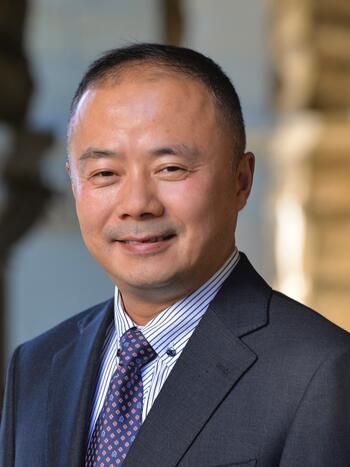
 New disruptors that change the way of traveling may be arising from airspace, in addition to existing ride- and car-sharing, that have changed people's minds and will have an effect on car sales. Many start-ups and aircraft manufacturers are tackling the challenge to realize the urban air transportation business and have begun to improve the level of technology. In his research, Ito focused on the technologies used in the urban air transportation ecosystem and concluded that Mitsubishi Electric could provide some of these technologies. He suggests that Mitsubishi Electric should find the partners by leveraging its U.S. offices and other group companies, which could become a lesson for other Japanese companies.
  Deep learning has received a great deal of attention since it broke a conventional method at an image recognition competition in 2012. Since then, almost every industry is exploring the use of Artificial Intelligence (AI) to improve productivity and make innovation. Tech giants such as Google, Microsoft, Amazon, Baidu and others that have invested large amounts of resources to AI have become far more advanced than other companies. How can ordinary companies adopt AI in their business? In his presentation, Kato shares insights into the essential factors for companies to implement AI in business.