Shorenstein APARC
Stanford University
Encina Hall E337
Stanford, CA 94305-6055

508-333-5934
0
kk_2.png

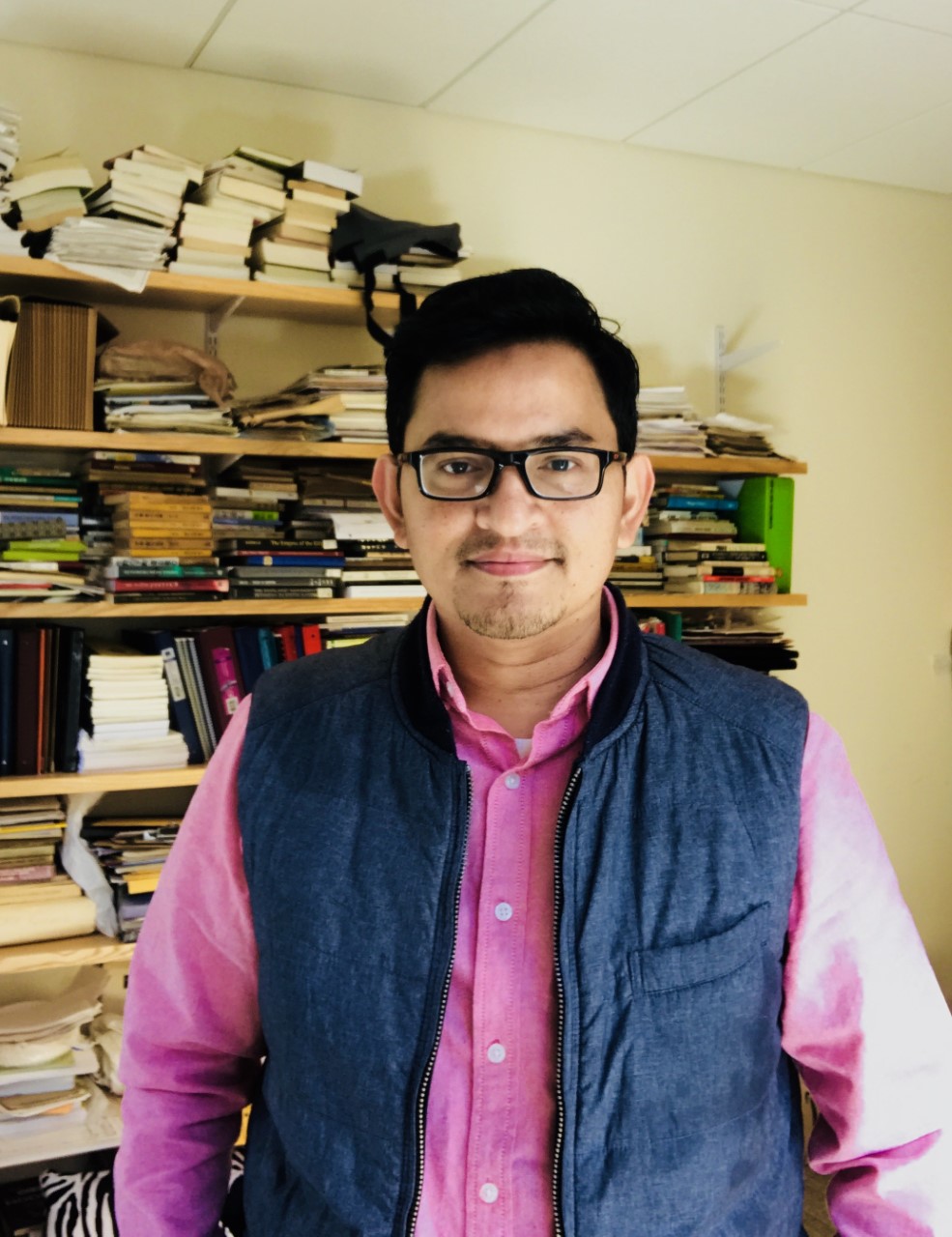
Kristian has been involved in the Chinese media industry since 1996, when he started his career at Claydon Gescher Associates, a China media-focused law firm and consultancy.

As a founder and managing director of China Media Management Inc, Kristian holds decades of experience building partnerships for international media companies in China and 20 years of bringing Chinese media companies to global film and TV markets in Cannes, Singapore, Hong Kong, Los Angeles, and Austin, TX. He is proficient in Mandarin and has lived in China for more than 25 years, mostly in Beijing.

He is a graduate of both The Ohio State University and the Beijing Languages Institute and was a 2020 Stanford DCI Fellow.

Associate Director, China Program
SCPKU Outreach Advisor
Date Label
Authors
Michael Breger
News Type
News
Date
Paragraphs

As populations age, societies must take into account the nuanced needs of different groups. This is the research domain of Cynthia Chen, who joined the Walter H. Shorenstein Asia-Pacific Research Center as visiting scholar with the Asia Health Policy Program during the 2022 winter and spring quarters. An Assistant Professor at the National University of Singapore (NUS), Chen’s current research focuses on the well-being of older adults, healthcare financing, and the economics of aging. 

Drawing on support from Singapore’s Ministry of Health, Ministry of Education, the U.S. National Institutes of Aging, and the Thai Health Promotion Foundation among others, Chen explores how demographic, economic and social changes affect the burden of care, financing needs, and optimal resource allocation in the future. 

Sign up for APARC newsletters to receive our experts' research updates.


In a recent talk at APARC, Chen presented findings on gender and socioeconomic differences in aging, exploring the ways in which such society-level characteristics can have major positive and negative effects on the health and well-being of older persons. 

“We must move beyond the archaic old-age dependency ratios and metrics, such as GDP, which neglect many of the critical factors that influence societal function”
Cynthia Chen
Visiting Scholar, Asia Health Policy Program

According to Chen, these effects are interconnected with factors including access to effective health care, support systems that enhance function and restrict dependency, and programs assuring financial security and opportunities for older persons to effectively engage in society. “We must move beyond the archaic old-age dependency ratios and metrics, such as GDP, which neglect many of the critical factors that influence societal function,” Chen argued.

Finding Better Metrics for Aging

Gender and socioeconomic differences affect a country's ability to support its older adult population. Specifically, the longevity risk associated with females' longer life expectancy entails different needs between genders in old age. Chen aims to quantify gender differences in the aging experience of Organization for Economic Co-operation and Development (OECD) countries and compare differences in projections of disability and chronic diseases among future cohorts of older adults, including disparities by educational attainment.

In order to gain a more nuanced perspective on aging data, Chen drew data from The Aging Society Index, composed of established and available social and economic measures. The Index provides a quantitative estimate of the degree to which a society is successfully adapting to demographic transformation.

Much of Chen’s time is spent focusing on how to address gender-specific needs when developing policies and programs for aging societies. Chen cites The Network on an Aging Society, which defines a successfully aging society as “one which provides for the general well-being of older adults, is cohesive with minimal tension between generations and major subgroups, productive with opportunities for engagement both within and outside the workforce, and is equitable and secure.” Such society-level characteristics are necessary to understand the difference between successful and unsuccessful policies. 

Chen identifies systemic gender differences across critical domains of successful social aging that favor males. Thus, Chen argues, for many wealth or income-based measures, such as security, equity and productivity, males experience an advantage, which suggests room for improving women’s standing in paid work, job opportunities, and retirement income. One aspect where women do have an advantage is life expectancy. However, they tend to live longer in poorer health, reflected in a lower well-being score. 

Likewise, the gender disparity in cohesion is significantly driven by differences in co-residence rates, which is attributable to women outliving their spouses. These findings suggest that gender-specific needs should be considered when engineering policies and programs for aging societies. 

Varying Rates of Functional Disabilities 

Gender is not the only society-level characteristic that Chen investigates in her resarch on aging. In a recent study, published in Asian Development Review, Chen and her co-authors, including AHPP Director and FSI Senior Fellow Karen Eggleston, shed light on the dynamic evolution of the health and functional disparities of the future elderly.

“Despite overall increases in educational attainment, all elderly, including those with a college degree, experience an increased burden of functional disability and chronic diseases because of survival to older ages.”
Cynthia Chen
Visiting Scholar, Asia Health Policy Program

In order to understand the differences in aging and its relationship with functional disabilities across multiple societies, Chen looked at data from Korea and Singapore. While the two nations have a similar pace of aging, they differ in the rate of increase in functional disability and chronic diseases. This may be due to many factors, including diet, lifestyle, and cultural differences, Chen suggests. Most notably, older adults with high educational attainment are projected to have a lower prevalence of functional disability and chronic diseases, and consistent across gender in both Korea and Singapore. 

The study employs a new model to compare projections of functional status and disability among future cohorts of older adults, including disparities in disability prevalence by educational attainment. These changes will have important implications for social protection systems, including the financing and delivery of long-term care and health care. The study highlights potential differences in the aging experience by gender and education in each country to inform social and healthcare policy and provides a common platform for international comparison to identify and compare challenges across countries.

Studying aging and effective medical care in late adulthood, especially with an eye for society-level characteristics, is an urgent task. Chen’s research complements the existing literature on life-protection activities, further underscoring the importance of investment in healthy aging and control of chronic disease so that the future elderly may receive appropriate care.

Cynthia Chen

Cynthia Chen

Visiting Scholar, Asia Health Policy Program
Full Biography

Read More

Two old men
News

Education Level Will Widen Disparity in Health Outcomes of the Future Elderly Population, New Study Projects

In the first study to compare the progression of educational disparities in disability across two rapidly aging Asian societies, APARC coauthors Cynthia Chen and Karen Eggleston project that from 2015 to 2050, elders with high educational attainment will have a lower prevalence of functional disability and chronic conditions compared to elderly with low educational attainment.
Education Level Will Widen Disparity in Health Outcomes of the Future Elderly Population, New Study Projects
A trio of elderly women in Japan
News

Japanese Population Projected to Live Longer Without Dementia

A new microsimulation projects that over the next 20 years, Japanese people will live longer without dementia, but older women with a less than high school education will benefit less than men.
Japanese Population Projected to Live Longer Without Dementia
 A woman at a desk in a village medical clinic in China.
News

Strengthening the Frontline: How Primary Health Care Improves Net Value in Chronic Disease Management

Empirical evidence by Karen Eggleston and colleagues suggests that better primary health care management of chronic disease in rural China can reduce spending while contributing to better health.
Strengthening the Frontline: How Primary Health Care Improves Net Value in Chronic Disease Management
Hero Image
Portrait of Cynthia Chen with background of Encina Hall colonade
All News button
1
Subtitle

Broadening the existing scholarship on aging and the needs of different societal groups, Cynthia Chen, Visiting Scholar at APARC’s Asia Health Policy Program, presents nuanced and comprehensive aging metrics that account for the critical factors that influence societal function.

Authors
Jean C. Oi
News Type
Commentary
Date
Paragraphs

This commentary was first published in The Hill.


The future sustainability of the Earth cannot do without the coordinated actions of its two largest carbon polluters — the United States and China.

The most recent highlight in that realm is the U.S.-China Joint Glasgow Declaration on Enhancing Climate Action in the 2020s at the UN climate change conference COP26 in November 2021. The joint statement, which came during a turbulent time in U.S.-China relations, was both surprising and valued. The declaration reaffirms both nations’ commitment to “tackling [climate change] through their respective accelerated actions in the critical decade of the 2020s, as well as through cooperation in multilateral processes.”

The declaration also calls for “concrete actions in the 2020s to reduce emissions aimed at keeping the Paris Agreement-aligned temperature limit within reach,” including in the areas of methane reduction, decarbonization and forest protection. 

While the declaration represents a promising step forward and offers reassurances about new momentum for sustained future cooperation, it offers few details regarding concrete plans, nor the opportunities and challenges to enact and implement those plans.

Last fall, we at Stanford University partnered with Peking University to convene a series of discussions on a broad range of themes around U.S.-China collaboration on climate change, such as global sustainable finance, corporate climate pledges, as well as opportunities and challenges for the acceleration of decarbonization in both countries in general — both nationally and by sector — with particular emphasis on power, transportation and industry. The outcomes and insights were synthesized in a report on how to accelerate decarbonization in China and the United States, in which we highlight two urgent recommendations to facilitate constructive cooperation between both nations as they tackle growing environmental challenges.


Sign up for APARC newsletters to receive our experts' commentary and analysis.

U.S.-China scientific collaboration in fundamental research can be an invaluable tool to build both nations’ capacity in addressing climate change, including protecting supply chains essential for meeting pledged goals, amid rising geopolitical tensions.

First, we need open-science research and development (R&D) collaboration.

This must be the case regardless of the politicized environment surrounding U.S.-China relations. Rigorous R&D programs are the foundation of innovative technologies, which can greatly accelerate the energy transition while minimizing disruptions if applied at scale.

Some promising areas for R&D include, but are not limited to, energy-efficient buildings utilizing heat pumps; low-carbon cement and construction; low-carbon agriculture, carbon capture, utilization, and storage (CCUS); power grid infrastructure upgrades; large-scale and long-duration energy storage; and methane leakage prevention and removal. 

Unfortunately, U.S.-China cooperation on R&D has been thwarted due to Chinese companies’ theft of proprietary U.S. intellectual property. According to estimates by the National Bureau of Asian Research, U.S. companies incur a loss of between U.S. $225 billion to $600 billion every year due to intellectual property infringement in China. Piracy of intellectual property is of grave concern and must be curbed. 

However, the two countries need to realize the crucial difference between fundamental research and proprietary research. Proprietary research, by definition, is owned and must receive its due protection. By contrast, fundamental or basic research is intended to be “out there” for all to learn and build on in advancing the understanding or prediction of phenomena. Therefore, fundamental research should be pursued under terms of academic freedom, especially within universities.

U.S.-China scientific collaboration in fundamental research can be an invaluable tool to build both nations’ capacity in addressing climate change, including protecting supply chains essential for meeting pledged goals, amid rising geopolitical tensions. 

Common terminology and standards will provide a basis for carbon legislation. Having clearly stipulated standards and procedures can also make implementation easier and more straightforward.

Second, we need to be explicitly cognizant of political and institutional constraints.

This is necessary in order to translate promises into progress while protecting social benefits and their equitable distribution amid the green energy transition. As noted in both the joint declaration and our report, bilateral dialogues so far remain very high-level. We need future discussions and workshops at the sectoral and local levels to develop concrete plans. In enacting and implementing concrete plans, political and institutional constraints can pose real obstacles, as demonstrated by China’s past and ongoing efforts to control air pollution.

Hence, strong support from both national and local governments will be critical. As a first step, we need to gain a good understanding of who the relevant actors are in both policymaking and implementation and the incentives they face.

In this period of transition when there are still regional mismatches between energy supply and demand, it is too easy to let short-term needs push climate mitigation goals to the bottom of the barrel to address regional energy shortages. In both countries policymakers and those charged with implementation face multiple and sometimes conflicting goals. The prioritization of goals is shaped by incentive structures. Fostering incentive structures conducive to decarbonization is particularly important during the transitional period when consensus around goals and priorities is less clear. 

Furthermore, it is time to standardize standards. A recurring theme across our discussions is the need for shared, clearly specified regulatory frameworks and standards across both nations. Harmonizing standards will expedite trade, validation, accounting, climate pledges and environmental, social and corporate governance (ESG) evaluation.

Only if there is standardization can organizations be required to follow unified disclosure practices for making available important information like the amount of carbon emitted. We need to make and implement more legislation to encourage a faster pace of decarbonization, and having unified terminology and standards is conducive to both effective carbon legislation and policy implementation. Common terminology and standards will provide a basis for carbon legislation. Having clearly stipulated standards and procedures can also make implementation easier and more straightforward. 

Last but not least, we are hopeful about the future of U.S.-China cooperation on climate change and believe that universities can play a significant role in the global energy transition. Universities are often the birthplaces of innovative technology, training grounds for talent from across the globe, as well as conveners of bilateral and multilateral dialogues. We hope the governments on both sides of the Pacific will work together to hammer out the needed details to build the momentum and make a real impact in the fight against global climate change. 


Shiran Victoria Shen is the W. Glenn Campbell and Rita Ricardo-Campbell national fellow at Stanford University’s  Hoover Institution, as well as an assistant professor of environmental politics at the University of Virginia. 

Jean C. Oi is the William Haas professor of Chinese politics, senior fellow at the Freeman Spogli Institute of International Studies, as well as the director of Stanford University’s China Program. She is also the Lee Shau Kee director of the Stanford Center at Peking University. 

Yi Cui is the director of Stanford University’s Precourt Institute for Energy, as well as professor of materials science and engineering. He is a senior fellow at the Woods Institute for the Environment, and professor, by courtesy, of Chemistry, Stanford University. 

Liang Min is managing director of the Bits & Watts Initiative of the Precourt Institute for Energy at Stanford University. 

Read More

Cover of the report 'Accelerating Decarbonization in China and USA through Bilateral Collaboration'
News

Collaborating Against Carbon: Stanford and Peking University Partner on Decarbonization Research

A report on China and the United States' decarbonization and carbon neutrality proposes areas of collaboration on climate change action, global sustainable finance, and corporate climate pledges. The report is the product of roundtables with participants from the Stanford Precourt Institute for Energy, SCPKU, APARC's China Program, and Peking University’s Institute of Energy.
Collaborating Against Carbon: Stanford and Peking University Partner on Decarbonization Research
Vladamir Putin and Xi Jinping shake hands.
Commentary

Beijing Is Used to Learning from Russian Failures

The invasion of Ukraine is offering useful lessons for the PLA.
Beijing Is Used to Learning from Russian Failures
Portrait of Emily Feng with text about her winning the 2022 Shorenstein Journalism Award.
News

NPR's Beijing Correspondent Emily Feng Wins 2022 Shorenstein Journalism Award

Feng, whose compelling and bold reporting has amplified the voices of Chinese citizens amid rapidly deteriorating press freedom in the country, is the recipient of the 21st Shorenstein Journalism Award.
NPR's Beijing Correspondent Emily Feng Wins 2022 Shorenstein Journalism Award
Hero Image
Benxi steel plant
Benxi steel plant in Liaoning Province, China.

Andreas Habich via Wikimedia Commons
All News button
1
Subtitle

There are multiple, concreate areas for constructive cooperation between the United States and China as they tackle growing environmental challenges.

-

Register: bit.ly/3xZIp2S

The Philippines is but one of eleven countries in Southeast Asia and Prof.  Ferrer is not the only woman in the region whose ascent has shattered the glass ceiling.  But rather than offer a broad but necessarily shallow overview of the gains and frustrations of female professionals across the region, this webinar features an in-depth conversation with one Southeast Asian woman who has risen to prominence and influence in national security and the resolution of violent conflicts between insurgents and governments—visceral policymaking fields that have long been dominated by men.

Image
Miriam Coronel Ferrer 051022
Miriam Coronel Ferrer is unique among high-achieving women worldwide.  She is the first female in any country to have led successful negotiations with a rebel group.  In 2014, on behalf of the Philippine government, she co-signed with the Moro Islamic Liberation Front a Comprehensive Agreement on the Bangsamoro (CAB).  The agreement led to a further step toward conflict resolution when a Bangsamoro Autonomous Region in Muslim Mindanao was finally established in 2019.  In 2020 she co-founded the Southeast Asian Network of Peace Negotiators and Mediators.  Professor Ferrer also advises the Global Network of Women Peacebuilders. As a member of the UN Standby Team of Senior Mediators from 2018-2021, she helped fashion mediation initiatives not only in Southeast Asia but in Afghanistan, Georgia, Kosovo, and other countries as well.  Her latest book, Region, Nation and Homeland (2020), examines discourses of resistance in Mindanao and Luzon.  Her degrees are from the University of Kent and UP Diliman.

Image
Spring 2022 Series - AHPP 051022
This event is part of the 2022 Spring webinar series, Negotiating Women's Rights and Gender Equality in Asia, sponsored by the Walter H. Shorenstein Asia-Pacific Research Center.

Donald K. Emmerson

Via Zoom Webinar.

Miriam Coronel Ferrer Professor of Political Science, University of the Philippines (UP) Diliman
Seminars
-

Image
Fu Jun May11 CP Banner


With a population of 1.4 billion people in the midst of industrialization and urbanization, the role of China in tackling climate change will be critical to the success of human species in facing up to the world's greatest existential challenge. Based on the newly published book -- Climate Mitigation and Adaptation in China: Policy, Technology and Market, FU Jun will discuss the parameters, policies and prospects of China's role in meeting the global crisis. In particular, in light of the country's regional heterogeneity and aided by simulation modeling, he will discern the philosophical nuances between particular justice and general justice in Chinese strategic thinking toward equitable, inclusive and sustainable growth, and focus on how different sets of technologies -- low carbon, zero carbon, negative carbon, as well as institutional technology -- will likely configure in an adaptive and dynamic fashion in China's pathways toward carbon peak prior to 2030 and carbon neutrality by 2060, and with implications for green financing and international cooperation.

FU Jun is Professor of Political Economy and Public Policy at Peking University. He has authored, co-authored, and edited five books, including Institutions and Investments (Studies in International Economics, The University of Michigan Press), Pathways to Prosperity: A China Narrative in Metaheuristic Growth Theory (in Chinese, Peking University Press), and Climate Mitigation and Adaptation in China: Policy, Technology, and Market (Springer Nature). Graduated with Ph.D. from Harvard University, he is the first Chinese national to have been elected as Foreign Academician in 2020, together with Anthony Giddens and Jurgen Harbermas, by the Bologna Academy of Sciences in its time-honored history.  Inter alia, he has been an invited reviewer for PNAS, served on the 11-Member Visiting Committee for Area Studies and International Programs across Harvard University, and on the Advisory Board of Economia Politica. Outside academia, he has served as Member of the Listing Committee of Shenzhen Stock Exchange, Executive Board Member of SOS Village (China), Vice Chair with A. Michael Spence as Chair of the World Economic Forum’s Global Agenda Council on New Growth Models, Board Member of Peking University Educational Foundation, and Advisor to the Chairman of the Executive Council of UNESCO.

This event is co-sponsored by Stanford Center at Peking University

Jean C. Oi
Fu Jun
Seminars
Date Label
-


Image
Event Banner card for APARC Japan Program webinar on May 9: "The New Landscape of Economic Security and the U.S. - Japan Alliance, featuring headshot photos (from left to right) of Kazuto Suzuki, Mireya Solís, and Kiyoteru Tsutsui

May 9, 5:00 p.m - 6:30 p.m. PT / May 10, 9:00 a.m. - 10:30 a.m. JT

Economic security has emerged as a key foreign policy issue in Japan in recent years. Arguably one of the most active players in this field, the Japanese government has developed a comprehensive policy on economic security that seeks to protect its economy from the vagaries of geopolitical disruptions. Recent legislative efforts have centered around supply chain risks, critical infrastructure, and sensitive technologies and patents. Prompted by risks associated with business with China and intensified further by Russia’s invasion of Ukraine, concerns about economic security require governments and businesses to adjust their reliance on market mechanisms in international trade and compel them to formulate new policies and frameworks that would address these concerns. Featuring two leading experts on economic security and trade in Japan and the United States, this panel will discuss what those new policies might look like and what roles the US-Japan alliance should play in building resilient economic frameworks that would mitigate the economic damages of geopolitical disruptions.

Panelists


Image
Photo portrait of Kazuto Suzuki

Kazuto Suzuki is a Professor of Science and Technology Policy at the Graduate School of Public Policy at the University of Tokyo, Japan, and senior fellow of Asia Pacific Initiative (API), an independent policy think tank. He graduated from the Department of International Relations at Ritsumeikan University and received a Ph.D. from Sussex European Institute, University of Sussex, England. He has worked in the Fondation pour la recherche stratégique in Paris, France, as an assistant researcher, Associate Professor at the University of Tsukuba from 2000 to 2008, and served as a Professor of International Politics at Hokkaido University until 2020. He served as an expert in the Panel of Experts for the Iranian Sanction Committee under the United Nations Security Council from 2013 to July 2015. 

Suzuki currently serves as the President of the Japan Association of International Security and Trade. His research focuses on the conjunction of science & technology and international relations; subjects including space policy, non-proliferation, export control, and sanctions.  His recent work includes Space and International Politics (2011, in Japanese, awarded Suntory Prize for Social Sciences and Humanities), Policy Logics and Institutions of European Space Collaboration (2003), and many others.


Image
Square photo portrait of Mireya Solís

Mireya Solís is director of the Center for East Asia Policy Studies, Philip Knight Chair in Japan Studies, and a senior fellow in the Foreign Policy program at Brookings. Prior to her arrival at Brookings, Solís was a tenured associate professor at American University’s School of International Service.

Solís is an expert on Japanese foreign economic policy, U.S.-Japan relations, international trade policy, and Asia-Pacific economic integration. She is the author of "Banking on Multinationals: Public Credit and the Export of Japanese Sunset Industries" (Stanford University Press, 2004) and co-editor of "Cross-Regional Trade Agreements: Understanding Permeated Regionalism in East Asia" (Springer, 2008) and "Competitive Regionalism: FTA Diffusion in the Pacific Rim" (Palgrave Macmillan, 2009). Her most recent book, “Dilemmas of a Trading Nation: Japan and the United States in the Evolving Asia-Pacific Order” (Brookings Press, 2017), offers a novel analysis of the complex tradeoffs Japan and the United States face in drafting trade policy that reconciles the goals of economic competitiveness, social legitimacy, and political viability. “Dilemmas of a Trading Nation” received the 2018 Masayoshi Ohira Memorial Award.


Moderator


Image
Square photo portrait of Kiyoteru Tsutsui

Kiyoteru Tsutsui is the Henri H. and Tomoye Takahashi Professor, Professor of Sociology, Senior Fellow at the Freeman Spogli Institute for International Studies, and Deputy Director of the Walter H. Shorenstein Asia-Pacific Research Center, where he is also Director of the Japan Program. He is the author of Rights Make Might: Global Human Rights and Minority Social Movements in Japan (Oxford University Press, 2018), co-editor of Corporate Responsibility in a Globalizing World (Oxford University Press, 2016) and co-editor of The Courteous Power: Japan and Southeast Asia in the Indo-Pacific Era (University of Michigan Press, 2021). 

Kiyoteru Tsutsui
Kiyoteru Tsutsui

via Zoom Webinar

Kazuto Suzuki Professor Graduate School of Public Policy, University of Tokyo
Mireya Solís Director and Senior Fellow – Center for East Asia Policy Studies, Philip Knight Chair in Japan Studies Brookings
Authors
Oriana Skylar Mastro
News Type
Commentary
Date
Paragraphs

This commentary first appeared in Foreign Policy.

Russia’s invasion of Ukraine has been a double disaster for President Vladimir Putin, as he faces a poorly performing military combined with an inability to shield his country from economic punishment. Both of these possibilities historically have also been sources of apprehension for the Chinese Communist Party (CCP). But China’s leadership turned its anxiety into action about 10 years ago, deliberately working to fix many of the problems and minimize the risks currently plaguing Russia in Ukraine.

One result is that the Chinese military is more likely to perform well even though it has not fought a war since 1979, when it lost thousands of troops in a punitive but brief invasion of Vietnam. Adding to that, China’s economy is both far larger and deliberately more diversified than Russia’s. A sanctions effort like the one presently aimed at Russia would be much harder to sustain against China. These two observations do not mean deterrence won’t hold, only that the unfolding events in Ukraine will likely do little to make Beijing more cautious.

Nearly everyone overestimated Russia’s military capabilities—including probably Putin himself. During its invasion of Ukraine, Russia’s air-ground coordination has been ineffective, and Russian forces have shown risk-adverse tendencies in the air. Russia has also struggled with logistics and keeping its military supplied. Notably, it appears that Russia acted on bad intelligence and therefore did not believe initial strikes that maxed out its firepower were necessary. Furthermore, many Russian weapons platforms are outdated (for example, its Cold War-era tanks), and modern Su-57 fighter jets and T-14 Armata tanks only exist in comparatively small numbers.

The Chinese military used to clearly exhibit the same deficiencies. But over the past decade, it has embraced significant reforms, creating a much more capable fighting force that should give even the United States pause.


Sign up for APARC newsletters to receive our experts' commentary and analysis.


Chinese President Xi Jinping identified similar training and competency issues [to the human element of Russia’s failures in Ukraine] in the PLA 10 years ago. But under his command, the PLA has been proactively implementing significant reforms to avoid similar pitfalls.

First, while Russia allowed its conventional capabilities to atrophy, Chinese military spending has exploded over the past three decades, increasing by 740 percent (in comparison to Russia’s 69 percent) from 1992 to 2017. According to data from the Stockholm International Peace Research Institute, China spent almost four times on its military in 2020 than Russia ($244.9 billion to $66.8 billion). In 1999, less than 2 percent of its fighter jets were fourth-generation, 4 percent of its attack submarines were modern, and none of its surface ships were. Twenty years later, not only did China have much more of everything, but the majority was the most advanced, modern versions available—with China exhibiting advantages over Russia, even in combat aircraft, a traditional area of weakness for China.

Indeed, People’s Liberation Army (PLA) commentators often refer to China’s economic might as one of the reasons their military would outperform Russia’s—Russia has been “stingy” with its military modernization and production of precision-guided munitions primarily because of a lack of resources. By contrast, China has more than 2,200 conventionally armed ballistic and cruise missiles, making the PLA Rocket Force the world’s largest ground-based missile force. Estimates place the number of missiles positioned against Taiwan alone at around 1,000.

Russia’s poor performance does remind us that it takes more than just a lot of fancy systems to win a war (though having more advanced systems and more of them surely would have helped). The human element of Russia’s failures is front and center. Putin probably did not have an open and honest communication channel with the military, which was fearful of providing unfavorable information to the erratic leader. Russian troops were largely considered incompetent, but Putin thought superior technology could overcome human deficiencies.

Chinese President Xi Jinping identified similar training and competency issues in the PLA 10 years ago. But under his command, the PLA has been proactively implementing significant reforms to avoid similar pitfalls. And unlike Putin, who apparently believed technology could overcome deficiencies in personnel, Xi came to the opposite conclusion. When he came to power, he took one look at the military and recognized that with all its fancy equipment, the PLA probably could not fight and win wars and perform the missions it had been assigned. Of particular importance, according to China’s national military strategy, was to fight local wars under informationalized conditions. This meant that the network between platforms and people—the ease of connectivity—was the main feature of modern warfare. China needed the best equipment; an advanced command, control, computers, communication, intelligence, surveillance, and reconnaissance (C4ISR) network; and tons of precision-guided munitions. But perhaps most importantly, it needed troops that could leverage these systems to conduct seamless operations across services and top-down through the chain of command.

The Chinese military is learning lessons from Ukraine, whether it is to stockpile more precision-guided munitions, ensure solid command and control, or cut off internet access [...], which will only serve to improve its warfighting capability in the future.

What followed was a series of slogans—the two incompatibles, two inabilities, two big gaps, the five incapables—all designed to point out the organizational and personnel issues of the military and focus leadership attention and resources on fixing the issue. A massive military reorganization followed with moves such as reorganizing effective combat units to be smaller so that they can mobilize more quickly and can remain self-sufficient for long periods of time. This means, in contrast with the Russian military, the PLA will likely have less reliance on generals at the front lines. China also established theater commands to facilitate joint operations and prioritized realism in its military exercises to help it prepare for real combat. Part of all of this was Xi’s demand that the military communicate its failures and weaknesses so that they could be addressed. Moreover, to improve command and control, China has moved toward engaging in multidomain joint operations all while standing up a new joint operations center that will ensure that, unlike with the Russian military, orders will be communicated and understood at the lowest levels. Indeed, the main reason that Xi has not yet made a play for Taiwan is likely his desire to hone this command and control structure and practice joint operations in realistic conditions for a few more years—a cautious and pragmatic approach that the situation in Ukraine only encourages further.

The PLA itself acknowledges that it still has some distance to go with training, particularly with regard to joint operations, but it looks as if the hard work is paying off. The complexity and scale of China’s national military exercises are eye-opening. It takes a great deal of planning, synchronization, and coordination to take service-level operations to the joint level. China appears to have made great strides in this area. The United States has observed, for example, China executing deep-attack air operations in its exercises that have combined intelligence, surveillance, and reconnaissance (ISR) with multi-domain strike; lift for rapid mobility and advanced fighter manuevers. Russia has relied heavily on artillery and tanks, now and historically, while the PLA is showing a more balanced approach to combined arms operations.

For all these reasons, we should not expect the Chinese military to perform as poorly in its first real military operation since 1979. The PLA is structurally superior to the Russian military. And the Chinese know it. Granted, it’s hard to know whether some of the outlandish claims in the Chinese media are true—that the PLA Air Force would actually “be able to take out the Ukrainian air force in one hour.” But one thing is for certain—the Chinese military is learning lessons from Ukraine, whether it is to stockpile more precision-guided munitions, ensure solid command and control, or cut off internet access to prevent the leaking of information to the West, which will only serve to improve its warfighting capability in the future.

That does not mean it’s perfect. China is still in the process of building its corps of noncommissioned officers, recruiting more college graduates and technical experts so as to be less reliant on conscripts and shift away from an officer-heavy structure. Also, there is always the possibility that Xi’s anti-corruption campaign, which has impacted even the highest levels of the military, may begin to impinge on these reforms. But to date, it seems that those against necessary reforms have been largely targeted. In other words, Xi has not had to choose yet between his goals of consolidating domestic power and the professionalization of the armed forces.

The economic side is less about what has happened in the past six weeks than what will happen in the next six months or even six years. As tempting as it is in the case of Russia’s invasion, the impact of economic sanctions cannot be properly evaluated over a short time period. The need for a longer time horizon also applies to Russia-China economic comparisons, as it will generally require more extensive and more durable sanctions to deter or compel China than it would Russia.

Russia is thought, at least, to be highly vulnerable to sanctions applied to date. And it is certainly the case that China can be harmed by sanctions. Beijing is more integrated in global trade and finance than Moscow and thus has more to lose. But integration cuts both ways—compared with Russia, more countries would be harmed to a greater extent by equivalent actions taken against China. Further, China has demonstrated greater capacity to weather extended economic blows. This combination of features reduces the willingness of the United States and others to enforce durable sanctions, a fact that Beijing well appreciates.

The CCP survived three decades of worse poverty than experienced by the Soviet Union at the time, a self-inflicted depression in 1989-90 paralleling in some respects the events that ended the Soviet Union, the global financial crisis, and another partly self-inflicted economic wound via China’s determination to maintain its zero-COVID policy in 2021-22.

During more recent events, Beijing has been able to mobilize first greater capital resources than Moscow and then far greater. In 2020, the World Bank put China’s gross fixed capital formation at 20 times Russia’s. Xi attacked some of China’s richest citizens, as well as other elements of the private sector, in part because he believed them too intertwined with foreign capital. These were voluntary steps by China that mirror how the world currently seeks to punish Russia. Whatever their wisdom, Xi knows China can afford them, while Russia’s capability is in doubt.

Some Russian foreign reserves have been effectively frozen and some financials excluded from the Society for Worldwide Interbank Financial Telecommunication (SWIFT), limiting international transactions. In the short term, these steps could have a similar impact on China, but they would be much harder to sustain.

Beijing has conducted currency swaps with dozens of countries that will want their renminbi to be useful. China also holds foreign government bonds in amounts that countries cannot ignore. U.S. Treasurys see the largest holdings, but there are also sizable quantities of Japanese government bonds, for instance. With official Chinese reserves upwards of $3 trillion, perhaps five times Russia’s, a partial freeze would quickly wear on governments and firms looking for bond buyers.

For any SWIFT restrictions that interfere with outbound U.S. portfolio investment, that volume stood at $85 billion in Russia and $1.15 trillion in China in 2020. The stock of U.S. direct investment was 10 times higher in China than Russia—companies willing to exit Russia would face leaving a lot more behind in a China contingency. Most broadly, the yuan can erode the role of the dollar; the ruble certainly cannot. Beijing lacks the will to allow free movement of the yuan and make it a true reserve currency, but heavy, durable sanctions might change that.

On the goods side, existing pressure to spare Russian vital exports would be more intense in China’s case. The loss of Russian oil and gas exports of $230 billion in 2021 threatens energy markets. Chinese exports are at least as important within chemicals, textiles, household appliances, industrial machinery, and consumer electronics. Would they all be exempted?

Certain Russian exports, such as palladium, play supply chain roles beyond their direct financial value. As expected from its manufacturing and export volumes, China’s supply chain participation is far larger than Russia’s, extending from inputs crucial to global pharmaceuticals to processed rare earths crucial to clean-energy applications. Russian ships have been banned from some ports. By tonnage, Russia accounts for a bit over 1 percent of the world’s commercial fleet, while China accounts for more than 11 percent. Banning Chinese ships would cause seaborne trade to noticeably contract, hitting supply chains that would already be strained by the diversion of Chinese goods.

Even an area of clear Russian advantage—lower import dependence—is double-edged. Inhibiting Chinese imports of iron ore or integrated circuits, for example, would hit the country hard. But China is such a huge purchaser that many producers would refuse to join a sustained embargo against it. As elsewhere, the barriers to Russian imports adopted thus far could hurt China only in the unlikely event that they are maintained for many months.

From how to remain in power to how to advance on the international stage, militarily and economically, the CCP has been learning what not to do from the Russian or Soviet experience for decades. Chinese strategists are unquestionably evaluating whether the nature of warfare has changed or if they failed to consider some critical factors necessary for success. Chinese economists are certainly looking to identify missed vulnerabilities based on how the economic dimension of the war in Ukraine plays out—and will work to address them to prevent exploitation by the United States and others.

Not that it will all be easy for Beijing. But China is already better prepared than Russia, economically and militarily. The steps to support Ukraine and punish Russia are immediately less potent in a China contingency. And an unfortunate side effect of the tragedy in Ukraine is that China has a relatively low-cost opportunity to learn—it may become a more formidable challenger than it would’ve been otherwise. The United States and its allies should realize that their effectiveness with regard to Russia is highly unlikely to translate. In a Taiwan contingency, the United States must be able to immediately implement both a stronger package of actions aimed at China and also a second package aimed at minimizing the long-term cost of the first.

Read More

Putin and Xi
Commentary

An Uncomfortable Friendship: Understanding China’s Position on the Russia-Ukraine War and Its Implications for Great Power Competition

On WBUR’s "On Point" and Fox 2 KTVU, Center Fellow Oriana Skylar Mastro shares insights about China's alignment with Russia and the worldwide implications of its calculus on Ukraine.
An Uncomfortable Friendship: Understanding China’s Position on the Russia-Ukraine War and Its Implications for Great Power Competition
Protesters display placards in front of the Representative Office of the Moscow-Taipei Coordination Commission to protest against Russia’s military invasion of Ukraine on February 25, 2022 in Taipei, Taiwan.
Commentary

Invasions Are Not Contagious

Russia’s War in Ukraine Doesn’t Presage a Chinese Assault on Taiwan
Invasions Are Not Contagious
millward
News

Unpacking the Crisis in Xinjiang: James Millward on China's Assimilationist Policies and U.S.-China Engagement

APARC Visiting Scholar James Millward discusses PRC ethnicity policy, China's crackdown on Uyghur Muslims and other minorities in Xinjiang province, and the implications of the Xinjiang crisis for U.S. China strategy and China's international relations.
Unpacking the Crisis in Xinjiang: James Millward on China's Assimilationist Policies and U.S.-China Engagement
Hero Image
Vladamir Putin and Xi Jinping shake hands.
All News button
1
Subtitle

The invasion of Ukraine is offering useful lessons for the PLA.

Date Label
Authors
Michael Breger
News Type
Q&As
Date
Paragraphs

Why would authoritarian regimes lacking electoral incentives invest in deliberative institutions designed to respond to citizen appeals? There are many reasons, according to APARC Predoctoral Fellow Tongtong Zhang, who argues that providing responses through such channels can incentivize citizens to conform to the regime and appease potential dissidents, while also informing them and the general public that organized opposition is not an effective way to pursue their interests.

Zhang is currently at work on her dissertation, entitled “Whose Voice Matters? Loyalists, Dissidents, and Responsiveness in China,” which examines this very question by looking at deliberative institutions as well as other political communications channels in China. After completing her predoctoral residency at APARC this summer and earning her PhD, she will join the Stanford Internet Observatory at FSI’s Cyber Policy Center as a Postdoctoral Scholar. While at Stanford Internet Observatory, she will collaborate with Dr. Shelby Grossman and other scholars on research projects studying authoritarian regimes’ online political communication.

In the following Q&A, Zhang discusses her research and fellowship experience at Stanford. The interview was slightly edited for length and clarity.


Sign up for APARC newsletters to receive research and commentary updates from our scholars


Your research centers on how authoritarian regimes (particularly the Chinese government) perpetuate their rule over societal actors and how preferences and behaviors of these societal actors are shaped as a result. How did you come to develop an interest in this topic?

I think it’s a combination of my life experience in China and the literature I read in the seminars on comparative politics in my first year of PhD. Those readings introduced me to differences in the logic of governance between democratic and authoritarian governments. In democracies, the behavior of officials is mainly shaped by the incentive to win elections. In non-democracies, the governance behavior of officials is largely shaped by the desire to secure citizen compliance and, by extension, to maintain social stability. Existing literature on how autocracies obtain citizen conformity has largely focused on two strategies — co-optation and repression. However, while growing up in China, I observed that the Chinese Communist Party (CCP) has more tools at its disposal to control the public. 

Among these tools, I am particularly interested in the fast-growing channels for public deliberation under authoritarian rule because, without free popular elections, authoritarian rulers should have little incentive to invest in these institutions designed for citizens to express grievances and make appeals to the government. So I am curious about what role these quasi-democratic, participatory institutions play in authoritarian control and how societal actors (e.g. citizens, firms) feel about and react to the regime thanks to these institutions.  

You are working on your first book project; can you tell us a bit about what to expect from it? 

The book is based on my dissertation and asks why dictators lacking electoral incentives invest in deliberative institutions that are designed to respond to citizen appeals. An overarching question is whether the government actually responds. If it does, do all citizen appeals receive equal consideration? Previous research on authoritarian responsiveness largely contends that autocrats prioritize the appeals of potential dissidents. However, my research leads me to argue that autocrats may respond to all appeals but with qualitatively different types of responses.

More specifically, I hypothesize that for autocrats, providing substantive responses — responses that resolve the appealed problems — to regime loyalists can incentivize more citizens to conform to the regime. On the other hand, providing symbolic responses — responses that are rhetorical without solving the problems — to potential participants of collective action can appease these potential dissidents while also informing them and the general public that organized opposition is not an effective way to pursue their interests. Taken together, I theorize that authoritarian officials would selectively provide substantive responses to citizens who show higher compliance with the regime’s control and that officials would selectively provide symbolic responses to citizen appeals that are more likely to elicit collective action. I support this argument using primary government documents, interviews with local officials, and original, large-scale datasets of online appeals and government responses in China.

My findings suggest the need to re-conceptualize accountability under autocracy not only as a reactive approach to appease opposition, but also as a proactive strategy to cultivate conformity.
Tongtong Zhang

You have mentioned your interest in political communication in non-democracies. What are some aspects of political communication that you find especially interesting? 

My research primarily focuses on deliberation and responsiveness in non-democracies. I am curious as to why dictators invest in deliberative institutions designed to answer citizen grievances, under what circumstances these institutions would help citizens resolve their problems, and perhaps more importantly, how these deliberative institutions shape citizen attitude towards the regime and their political behaviors.

Beyond deliberation and responsiveness, I’m also interested in other communication strategies (e.g. education, media) that authoritarian regimes use to secure citizen compliance. For example, I’m currently working on a paper studying the political behavior of teachers at Confucius Institutes (CI), the Chinese government’s overseas program for cultural and language promotion. The prevailing view in media and policy writings is that the Chinese regime prescribes specific actions that CI teachers must take (e.g. censorship) when encountering politically sensitive questions. However,  using interviews, a global survey, and experimental methods among CI teachers in over 70 countries, we find that the Chinese regime only prescribes broad goals to CI teachers, such as “defending China’s national interests,” without specifying how to pursue these goals behaviorally. We also find that under these ambiguous instructions, men and women CI teachers choose divergent behaviors to advance the regime's goals.​​

What do you see as some of the biggest challenges to development in non-democracies? 

Development is a huge topic. I’m only able to provide some observations based on my research about authoritarian responsiveness. In this area, the biggest challenge I observe is still the lack of institutional channels for citizens to hold the government accountable. It is a sign of development that authoritarian governments are investing increasingly in deliberation channels, online and offline, for citizens to express grievances and demand public service. While less than 10% of appeals in my sample receive a substantive response from the government, it also shows that some citizens do get their problems resolved through these participation channels. 

Yet, when authoritarian officials fail to provide substantive responses, citizens have no legal, formal channels to punish officials. In democracies, unsatisfied petitioners can vote for the opposing party in the next election, expose government unresponsiveness to media outlets, and even sue the government in court. However, in autocracies, these methods of punishment are weak or absent. Some citizens may use non-institutional methods to punish the government, such as protesting or exposing official misconduct on social media. But these behaviors, which aim to attract a lot of public attention, are often cracked down on if they achieve this goal. Without credible punishment from the bottom-up, authoritarian officials treat these deliberative institutions as a tool for their social control rather than a channel to serve the public.

My research also finds that the Chinese central government does conduct regular audits on government responsiveness at the local level. But this top-down monitoring is largely symbolic and focuses on the quantity rather than the quality of officials’ responses to citizens. Therefore, I think that to improve government responsiveness in non-democracies, it is still crucial that the customers of these deliberation channels, that is, citizens, have some formal, legal channels to punish officials when officials fail to resolve the appealed problems. 

Your robust research methodology includes qualitative interviews, archival research, computational methods with large-scale datasets, and survey and field experiments. How did you develop this approach?

My PhD department (Political Science) provides us with many training opportunities for both quantitative and qualitative methods since our first year in the program. Our course sequences in quantitative methods and formal theory introduced me to a variety of powerful analysis tools and causal inference designs. I’ve also received quantitative training from the departments of Statistics, Communication, and Computer Science. In particular, the methods courses taught by Prof. Jennifer Pan and Prof. Dan Jurafsky helped me lay a good foundation for skills in web-scraping and natural language processing. 

My qualitative training started from the Chinese politics course sequence taught by Prof. Jean Oi. Later on, I continuously learned from Prof. Oi every time I talked with her about doing fieldwork in China. She guided me to extract and focus on the “big question” from lots of seemingly unstructured details I collected in the field, and she also gave me many helpful suggestions on what homework I should do before going to the field, how to approach people in the field, and how to design my questions and learn to improvise during the interviews. 

This combination of quantitative and qualitative training has made me a strong believer in mixed-methods research. I think that quantitative methods are powerful in showing systematic patterns and qualitative methods are powerful in uncovering the mechanism underlying these patterns. Moreover, qualitative fieldwork has helped me a lot in understanding how things actually get done at the micro level (e.g. the step-by-step workflow of a specific bureau within a municipal government when handling a citizen appeal), which I think is useful for identifying important research questions and developing hypotheses before collecting data systematically. 

Thanks to the valuable resources provided by APARC, I was able to make progress on my dissertation and several related projects.
Tongtong Zhang

Beyond your book project, what are you working on while at APARC? How has your time here aided your research?

I very much appreciate APARC’s support in the 2021-22 academic year. I was applying for postdoctoral fellowships in the past fall, and the Center’s generous funding and supportive staff have greatly helped me concentrate on market preparation. I also enjoyed the office space provided by APARC. Due to the pandemic, we were not in the office all the time but while I was there, I had very interesting conversations with several other fellows at the Center. Chatting with them broadened my horizon about the Asia-Pacific region. They also offered me some fresh perspectives on my research, which I find helpful while revising my dissertation. 

Thanks to these valuable resources provided by APARC, I was able to make progress on my dissertation and several related projects. In one paper, I show that citizen petitioners can increase government responsiveness by using certain rhetoric to communicate with local officials in China. I find that compared to appeals using a “legal script”, which invokes citizens’ legal rights to obtain public service, appeals using a script of “performance legitimacy,” which invokes the CCP’s moral commitment to deliver socio-economic welfare to the public, have a significantly higher likelihood to obtain substantive responses from local governments. Another paper I’m working on investigates how the characteristics of petitioners, appeals, and government responses change over time in China by comparing the appeals under Hu Jintao’s rule vs. appeals under Xi Jinping’s rule.

Has the global pandemic affected your ability to travel and do research? How have you adapted?

I was planning to conduct field interviews in the Sichuan province of China in 2020 and had to cancel because of the pandemic. However, on the positive side, the travel restrictions provided me with a relatively long period of time to concentrate on the quantitative parts of my dissertation and enabled me to make substantial progress on some time-consuming work such as scraping Weibo and reading and coding the posts. 

What is on the horizon for you? What's next? 

I plan to graduate this summer and will join the Stanford Internet Observatory at FSI’s Cyber Policy Center as a Postdoctoral Scholar. While at Stanford Internet Observatory, I will collaborate with Dr. Shelby Grossman and other scholars on research projects studying authoritarian regimes’ online political communication. I will also go onto the tenure-track academic market and hopefully get a faculty position in a university.

Read More

Portrait of Mary-Collier Wilks
Q&As

Postdoc Fellow Spotlight: Mary-Collier Wilks Explores Power Dynamics and Development Imaginaries in International Organizations

Ethnographer and APARC Postdoctoral Fellow Mary-Collier Wilks unveils how distinct development narratives shape the dynamics of aid chains and international organizations’ delivery of services in Southeast Asia.
Postdoc Fellow Spotlight: Mary-Collier Wilks Explores Power Dynamics and Development Imaginaries in International Organizations
Kate Imy
Q&As

How Feminist Military History Sheds Light on Colonial Rule and Warfare

In this interview, Lee Kong Chian NUS-Stanford Fellow on Southeast Asia Kate Imy discusses her research into identity in the twentieth-century British imperial world and her current book project on the colonial roots of winning "hearts and minds" in war, specifically focusing on Malaya and Singapore.
How Feminist Military History Sheds Light on Colonial Rule and Warfare
[Left] Radhika Jain, [Right] Postdoc Spotlight, Radhika Jain, Asia Health Policy Program
Blogs

Postdoctoral Fellow Spotlight: Radhika Jain on Reducing Inequalities in Health Care and Outcomes

Radhika Jain, a postdoctoral fellow with the Asia Health Policy Program, shares insights on her research into India’s health care system and how it is responding to both the COVID-19 pandemic and standard healthcare needs of citizens.
Postdoctoral Fellow Spotlight: Radhika Jain on Reducing Inequalities in Health Care and Outcomes
Hero Image
Tongtong Zhang
All News button
1
Subtitle

Political Scientist and APARC Predoctoral Fellow Tongtong Zhang explores how the Chinese Communist Party maintains control through various forms of political communication.

-

The Korea Program at Stanford will mark its 20-year anniversary with a conference focused on North Korean issues and South Korea’s pop culture wave (Hallyu), two aspects of Korea that continue to intrigue the public, exploring how to translate this public attention into an increased academic interest in Korea.

This event is made possible by generous support from the Korea Foundation and other friends of the Korea Program.

Bukchon Hanok village and text about Stanford's Korea Program 20th anniversary conference on May 19-20, 2022.

Featuring a keynote address by
Ban Ki-moon, former Secretary-General of the United Nations


DAY 1: Thursday, May 19, 9:00 a.m. - 5:15 p.m.

9:00-9:15 a.m.
Opening and Welcome Remarks

Gi-Wook Shin, Director of Asia-Pacific Research Center and Korea Program, Stanford
Michael McFaul, Director of the Freeman Spogli Institute for International Studies, Stanford
Gabriella Safran, Senior Associate Dean of Humanities and Arts, Stanford


9:15-10:45 a.m.
Panel on North Korea

Moderated by Yumi Moon, Associate Professor of History, Stanford

Siegfried Hecker, Professor Emeritus, Management Science and Engineering; Senior Fellow Emeritus, FSI, Stanford
Kim Sook, former ROK Ambassador to UN; Executive Director, Ban Ki-moon Foundation for a Better Future
Joohee Cho, Seoul Bureau Chief, ABC News


11:00-11:50 a.m. 
Korea Program at Stanford: Past, Present, and Future 

Moderated by Kelsi Caywood, Research Associate, Korea Program, APARC, Stanford

Paul Chang, Associate Professor of Sociology, Harvard University
Joon-woo Park, former ROK Ambassador to EU and Singapore; 2011-12 Koret Fellow
Jong Chun Woo, former president of Stanford APARC-Seoul Forum; Professor Emeritus, Seoul National University
Megan Faircloth, Senior in East Asian Languages and Cultures, Stanford


11:50 a.m.-12:30 p.m.        Lunch Break


12:30-1:30 p.m.
Keynote Address by Ban Ki-moon, former Secretary-General of the United Nations

Image
portrait of UN Secretary General Ban Ki-moon

Introduction by H.R. McMaster, former National Security Advisor; Fouad and Michelle Ajami Senior Fellow, Hoover Institution, Stanford

Moderated by Gi-Wook Shin, Director of APARC and Korea Program, Stanford


2:00-3:30 p.m.
Panel on the Korean Wave

Moderated by Dafna Zur, Associate Professor of East Asian Languages and Cultures; Director of Center for East Asian Studies, Stanford

SUHO, Leader of EXO
Angela Killoren, CEO of CJ ENM America, Inc.
Marci Kwon, Assistant Professor of Art and Art History, Stanford


3:45-5:15 p.m.
Documentaries on K-pop
 and North Korean Human Rights (teaser)*

Moderated by Haley Gordon, Research Associate, Korea Program, APARC, Stanford

Introduction of the films by Director Hark Joon Lee and Director of Photography Byeon Jaegil 

Vivian Zhu, Junior in International Relations and East Asian Studies, Stanford
Youlim Kim, Third-year PhD student in Microbiology & Immunology, Stanford
*The documentaries will not be shown on the livestream


Conference speakers
Conference speakers include (from left to right) Ban Ki-moon, Kathryn Moler, SUHO, Soo-Man Lee, Marci Kwon, Michael McFaul, Siegfried Hecker, Kim Hyong-O, Dafna Zur, H.R. McMaster, Michelle Cho, Gabriella Safran.

Day 2: Friday, May 20, 9:00 a.m. - 12:00 p.m.

9:00-10:30 a.m.
How to Translate Interest in North Korea and K-pop into Korean Studies

Moderated by Gi-Wook Shin, Director of Asia-Pacific Research Center and Korea Program

David Kang, Professor of International Relations and Business, USC
Yumi Moon, Associate Professor of History, Stanford
Michelle Cho, Assistant Professor of East Asian Studies, University of Toronto
Dafna Zur, Associate Professor of East Asian Languages and Cultures; Director of Center for East Asian Studies, Stanford


10:45 a.m.-12:00 p.m.
Future Visions of K-pop

Image
Soo-Man Lee
Keynote speech by Soo-Man Lee, Founder and Chief Producer of SM Entertainment

Introduction by Gi-Wook Shin, Director of Asia-Pacific Research Center and Korea Program

Conversation with:
Dafna Zur, Associate Professor of East Asian Languages and Cultures; Director of Center for East Asian Studies, Stanford
SUHO, Leader of EXO

Conferences
-


Image
Shorenstein APARC Japan Program April 18 Webinar information card: Japan's Foreign Policy in the Aftermath of the Russian Invasion of Ukraine, including photo portraits of speakers Hiroyuki Akita, Yoko Iwama, and Kiyoteru Tsutsui

April 18, 5:00 p.m - 6:30 p.m. PT / April 19, 9:00 a.m. - 10:30 a.m. JT

Russia’s invasion in Ukraine has transformed the landscape of international security in a multitude of ways and reshaped foreign policy in many countries. How did it impact Japan’s foreign policy? From nuclear sharing to the Northern Territories, it sparked new debates in Japan about how to cope with Putin’s Russia and the revised international order. With NATO reenergized and the United States having to recommit some resources in Europe, how should Japan counter an expansionist China, an emboldened North Korea, and a potentially hamstrung Russia to realize its vision of Free and Open Indo-Pacific? What might be the endgame in Ukraine and how would it impact the clash of liberal and authoritarian forces in the Indo-Pacific region? Featuring two leading experts on world politics and Japan’s foreign policy, this panel tackles these questions and charts a way forward for Japan.

Square photo portrait of Yoko Iwama

Yoko Iwama is Professor of National Graduate Institute for Policy Studies (GRIPS). She is also the director of Security and Strategy Program and Maritime Safety and Security Program at GRIPS. 

She graduated from Kyoto University in 1986 and earned her PhD in Law. Having served as Research Assistant of Kyoto University (1994–97), Special Assistant of the Japanese Embassy in Germany (1998–2000), and Associate Professor at GRIPS (2000), she was appointed Professor at GRIPS in 2009. She was a student at the Free University of Berlin between 1989-1991, where she witnessed the end the reunification of the two Germanies. 

Her specialty is international security and European diplomatic history centering on NATO, Germany, and nuclear strategy. 

Her publications include John Baylis and Yoko Iwama (ed.) Joining the Non-Proliferation Treaty: Deterrence, Non-Proliferation and the American Alliance, (Routledge 2018); “Unified Germany and NATO,” (in Keiichi Hirose/ Tomonori Yoshizaki (eds.) International Relation of NATO, Minerva Shobo, 2012). 

Her newest book The 1968 Global Nuclear Order and West Germany appeared in August 2021 in Japanese. She is working on a co-authored book on the origins and evolution of the nuclear-sharing in NATO and a co-authored book on the Neutrals, the Non-aligned countries and the NPT.  

Square photo portrait of Hiroyuki Akita

Hiroyuki Akita is a Commentator of Nikkei. He regularly writes commentaries, columns, and analysis focusing on foreign and international security affairs. He joined Nikkei in 1987 and worked at the Political News Department from 1998 to 2002 where he covered Japanese foreign policy, security policy, and domestic politics. Akita served as Senior & Editorial Staff Writer from 2009 to 2017, and also worked at the “Leader Writing Team ” of the Financial Times in London in late 2017. 

 Akita graduated from Jiyu Gakuen College in 1987 and Boston University (M.A.). From 2006 to 2007, he was an associate of the US-Japan Program at Harvard University, where he conducted research on US-China-Japan relations. In March 2019, he won the Vaughn-Ueda International Journalist Award, a prize for outstanding reporting of international affairs. He is an author of two books in Japanese: “Anryu (Power Game of US-China-Japan)”(2008), and “Ranryu (Strategic Competition of US-Japan and China)”(2016). 

Square photo portrait of Kiyoteru Tsutsui

Kiyoteru Tsutsui is the Henri H. and Tomoye Takahashi Professor, Professor of Sociology, Senior Fellow at the Freeman Spogli Institute for International Studies, and Deputy Director of the Walter H. Shorenstein Asia-Pacific Research Center, where he is also Director of the Japan Program. He is the author of Rights Make Might: Global Human Rights and Minority Social Movements in Japan (Oxford University Press, 2018), co-editor of Corporate Responsibility in a Globalizing World (Oxford University Press, 2016) and co-editor of The Courteous Power: Japan and Southeast Asia in the Indo-Pacific Era (University of Michigan Press, 2021).  


Kiyoteru Tsutsui
Kiyoteru Tsutsui

Via Zoom Webinar

Yoko Iwama Professor & Center Director National Graduate Institute for Policy Studies (GRIPS)
Hiroyuki Akita Commentator Nikkei
Subscribe to Asia-Pacific