Culture
Authors
Lisa Griswold
News Type
News
Date
Paragraphs

Marking seventy years since the end of World War II, Japanese Prime Minister Shinzo Abe expressed “profound grief” on Friday for his country’s actions. While pointing to short comings in the statement, the Stanford scholars said the prime minister’s words represented a genuine effort to reflect on the past and provided opportunities to improve relations in the region.

The highly anticipated statement, issued on behalf of the Japanese cabinet, was closely followed by its East Asian neighbors who have raised concerns over Japan’s views of the wartime era.

Leaders of South Korea and China have said Japan has not apologized fully for crimes committed during WWII and each dispute historical narratives seen in the others’ textbooks, popular culture and other domains.

Advancing historical reconciliation in East Asia is a key research area of the Walter H. Shorenstein Asia-Pacific Research Center. The center leads a research project, Divided Memories and Reconciliation, which has produced numerous articles and books, including a ground breaking comparative study of high school history textbooks in China, Japan, South Korea, Taiwan and the United States.

In May 2014, the center convened an international conference “Pathways to Reconciliation” on historical issues, co-sponsored by the Trilateral Cooperation Secretariat, the governmental organization promoting Japan-China-South Korea trilateral cooperation.

Earlier this year, the Japan Program asked Stanford scholars to write their own version of the 70th anniversary statement as if they were the prime minister of Japan. The scholars’ statements were compiled into a report, published in May 2015.

Eight scholars contributed to the exercise in an effort “to understand the diversity of reasonable views on the issue of Japan’s responsibility for the cruel and violent war and Japan’s role in building a peaceful and prosperous world,” the introduction stated.

Themes that emerged in the report included a need for Abe to show heartfelt remorse about Japan’s actions during WWII and its desire to work toward a peaceful future.

Three noted Japan experts who contributed to that report offered their analysis of the prime minister’s statement issued yesterday in Tokyo.


Below are brief summaries of their analysis, you may click on each link to expand in full.
 

Image
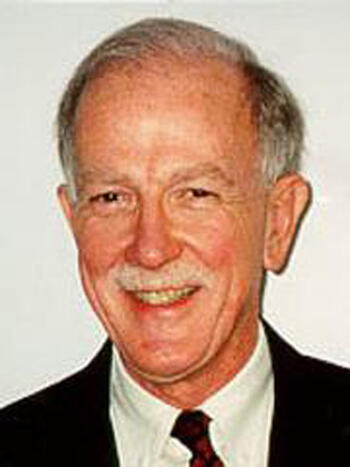
Response by Peter Duus

Duus recognizes that Abe’s statement offers a reiteration of the statements made by Prime Ministers Murayama and Koizumi by including four key words – aggression, colonial rule, apology and remorse. Unlike past statements, however, Abe’s begins by putting war in the historical context and offers a more explicit statement of the victims of the war, not only the three million Japanese but also citizens of China, Southeast Asia and the Pacific islands. The statement can be viewed as “a small but important step toward a truce in the history wars that have raged in East Asia for the last three decades,” he says. However, Abe's attempt at reconciliation will have little effect if he does not rein in contrary actions by neo-nationalists in his own party.

Peter Duus is the William H. Bonsall Professor of Japanese History, emeritus; and a senior fellow, by courtesy, Hoover Institution, Stanford University.
 

Image

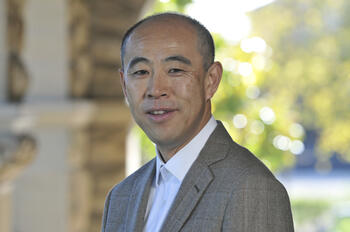
Response by Takeo Hoshi

Hoshi notes that Abe’s statement mentions past apologies expressed by the Japanese government, but has no explicit apology from the current administration. He says there are two surprising elements about the statement. The first is the length – it is much larger than predecessors Murayama and Koizumi at 1,664 words in English and 3,970 characters in Japanese. The second is the emphasis on history rather than on forward-looking components. He says it is commendable that Abe provided an expanded view of history. Hoshi notes that it is nearly impossible to satisfy everyone’s views in such a statement, as scholars witnessed firsthand when working on the Japan Program project.

Takeo Hoshi is the Henri H. and Tomoye Takahashi Senior Fellow in Japanese Studies in the Freeman Spogli Institute for International Studies; a professor (by courtesy) of finance at the Graduate School of Business; and director of the Japan Program at the Shorenstein Asia-Pacific Research Center, Stanford University.


Image
Response by Daniel Sneider

Sneider says Abe’s statement must be judged on following criteria: that it is a valid effort to draw lessons from Japan’s wartime past and that it contributes to the improvement of relations in Northeast Asia. He says the statement advances these goals, but there remain a few caveats. Sneider says the version of history communicated “will not satisfy many people, including many historians,” but that it does move away from the idea that revisionist Japan was in a war of self-defense not aggression. To move Japan, China and South Korea toward reconciliation, the prime minister and his cabinet must embrace the spirit of the statement in full and open the door to convening a long-delayed trilateral summit.

A version of this essay was also published by Nippon in Japanese and English.

Daniel Sneider is the associate director for research at the Shorenstein Asia-Pacific Research Center, Stanford University.

Hero Image
abe flickr csis
Shinzo Abe, Prime Minister of Japan.
Flickr/CSIS
All News button
1
0
Corporate Affiliate Visiting Fellow, 2015-16
an_ma.jpg eMBA

An Ma is a corporate affiliate visiting fellow at the Walter H. Shorenstein Asia-Pacific Research Center (Shorenstein APARC) for 2015-16.

Date Label
News Type
Commentary
Date
Paragraphs

Two key challenges facing Northeast Asia are how to tame the power of nationalism and create shared memories of history, Stanford professor Gi-Wook Shin wrote in The Diplomat

Shin, director of the Shorenstein Asia-Pacific Research Center (APARC), urged action on the 70th anniversary of the end of World War II. Northeast Asians should use the commemoration as an “opportune occasion to reflect on their unfortunate past to learn lessons,” only then can the region become more peaceful and prosperous.

Shin and Daniel Sneider, Shorenstein APARC’s associate director for research, lead the Divided Memories and Reconciliation research project which examines memories of the wartime experience in Northeast Asia and what steps can be taken to reconcile disputes over history.

One of their latest outcomes is the book Confronting Memories of World War II: European and Asian Legacies (April 2015), edited with University of Washington professor Daniel Chirot, that studies how wartime narratives are interpreted, memorialized and used in Europe and Asia.

The full article in The Diplomat can be accessed by clicking here.

Hero Image
yasukuni reuters
Men dressed as Japanese imperial army soldiers march at the Yasukuni Shrine in August 2011, on the anniversary of the end of World War II.
Reuters/Issei Kato
All News button
1
Authors
Gi-Wook Shin
News Type
News
Date
Paragraphs

Japan has been actively pursuing internationalization of its higher education, and recruiting foreign students has been a major part of this endeavor. In 1983, Japan announced its plan to recruit 100,000 foreign students by the year 2000, and in 2008 instituted a plan to recruit 300,000 foreign students by 2020. Subsequent government-led projects such as the Global 30 (2009-2014) and the Top Global University (2014-2023) projects have also stipulated international student recruitment as a major requirement.

As a result, the number of foreign students in Japanese universities has increased significantly from 10,428 in 1983 to 139,185 in 2014. Likewise, foreign faculty numbers have grown from just 418 (0.8% of total faculty) in 1994 to 6,034 (6.8%) in 2014. Although the figures are still relatively low compared with those in Europe and North America, they bring a potentially powerful force for social change to a country marked by high ethnic homogeneity.

In particular, the influx of foreign students and faculty to Japanese universities creates more culturally diverse campuses, often cited as a desirable result of and a key motive for pursuing internationalization. In the U.S. and Europe, such changes have led to significant discursive and programmatic efforts to create a culture of respect for diversity and inclusion. For example, Europe has, despite its critics, consistently articulated the value of "interculturality," diversity, and respect for cultural differences as a broader discourse for European higher education.

However, this is not the case with Japan and most other Asian nations. One major reason is that Japanese universities primarily attract foreign students as a means to particular ends, such as enhancing university prestige, creating "education hubs," filling the gap in the declining college student population and improving international higher education rankings. As a result, Japanese campuses have become much more diverse than in the past. However, appreciation of the intrinsic educational value of a culturally diverse student and faculty body has not been embraced.

Our study shows a noticeable disjuncture between structural, educational and interpersonal levels of diversity. That is, Japanese universities have accepted more and more students of varying racial and ethnic backgrounds (structural diversity), but the curriculum still offers limited opportunities for students to think more deeply about assumptions concerning race, ethnicity and other individual/group differences (educational diversity).

In particular, our interviews with more than 50 students at top Japanese institutions, including the University of Tokyo, Waseda University and Kyushu University, reveal low levels of cross-cultural interaction between Japanese and foreign students (interpersonal diversity). Foreign students often report that Japanese students are very friendly and polite to them but nonetheless find it very difficult to become friends with them. One male undergraduate student from Nepal we interviewed said, "Japanese students are very nice. If I need help finding a building on campus, for example, I can just stop any Japanese student and they will be very polite and try to help me." Another student from Sri Lanka agreed, saying, "Everybody is very polite. I mean, sometimes they are overwhelmingly polite."
 

However, despite the politeness of the Japanese, many of the respondents indicated that making friends with Japanese students is difficult, with some pointing this out to be "the hardest part about being in Japan." One foreign student seemed puzzled: "Making real friends is hard. But I don't know why." One South Korean student we interviewed provided a clue: "People here are very individualistic and very independent, I think. In my laboratory, I will be the one who will approach my lab mates, especially the Japanese. They are very helpful but I have to be the one who starts the conversation."

The Japanese government and universities have worked closely to attract foreign students but due to the lack of interpersonal interaction between Japanese and foreign students, Japan is missing out on crucial opportunities in its higher education internationalization efforts.

First, international students gain many opportunities to interact with each other and learn intercultural skills for global citizenship while Japanese students much less so. As one foreign student said, "It's a very diverse environment because we all come from different countries. We can communicate different ways of thinking and share different ideas." Yet, most Japanese students are hesitant to interact with foreign students, missing the chance to learn intercultural skills. As the number of young Japanese going abroad to study has been on the decline in recent years (82,945 in 2004 to 60,138 in 2012), the contribution of foreign students to global education in Japanese colleges will be all the more important.

Second, diversity is instrumental in promoting innovation, and Japan should take advantage of the diversity that foreign students bring to its society. Much research demonstrates the positive effects of diversity on various academic and social outcomes (ability to form out-group friendship networks, increased cultural awareness, acquiring global citizenship skills, improving the campus climate, innovation, etc.). Facilitating diversity and recognizing their long-term effects for innovation and development should be a major goal of higher education in Japan.

Finally, foreign students can be valuable social capital for Japan, especially playing the role of transnational bridges between Japan and their home countries. Many come to Japan to learn about Japanese society and economy, with plans to become a bridge between Japan and their home countries after graduation. However, due to the lack of interpersonal interaction with Japanese students, foreign students often end up interacting primarily among themselves. Thus, they are also likely to bridge among themselves, rather than with Japanese, and that is a loss, given that Japan has invested so much in attracting foreign students.

Japan wants to make its top universities "super global," but they should first realize that this requires more than simply recruiting foreigners. What is most urgent is producing "global citizens" with inter-cultural skills and that can be achieved through the creation of a campus environment and culture that appreciates and respects diversity. It should also better appreciate the value of foreign students as transnational bridges with Japan.

To achieve such goals, Japanese universities need to establish institutional frameworks or programs to promote interaction between Japanese and foreign students. For example, they should offer more courses that both Japanese and foreign students can take together. Rather than just focusing on teaching Japanese languages and cultures to foreign students, Japanese students should be encouraged to take more courses in English and also those on other cultures and societies, ideally together with foreign students. These courses can instill values of cultural diversity in higher education in Japan. Japanese universities also need to ensure that structural segregation, either between programs, courses, dormitories and campuses, isn't an obstacle for promoting greater interaction between foreign and local students.

Our focus group interviews with Japanese students show that foreign and Japanese students misunderstand each other to a great extent. Foreign students are disappointed that not many Japanese are willing to approach them, but Japanese students are afraid to inconvenience their foreign visitors with their "poor" English. Foreign students are tired from guessing what their Japanese counterparts really feel and think, or their honne, but Japanese students think it is impolite to be too frank and direct even with other Japanese, let alone towards foreign students. To reduce these and other misgivings and gaps in cultural understanding, Japanese universities need to put in place more cross-cultural programs and opportunities for both sides to come into natural contact.

In short, internationalization efforts by Japanese universities should not stop at recruiting foreigners to their campuses. Rather, fostering a tolerant, inclusive university culture where foreigners are considered full, valued members should be considered an important step toward making Japanese universities truly international.

Stanford professor Gi-Wook Shin and Yonsei University professor Rennie J. Moon lead the research project, Diversity and Tolerance in Korea and Asia. This Nikkei Asian Review article was originally carried on July 16 and reposted with permission.

Hero Image
rennie 2
Japanese university students are interviewed by Rennie Moon (front), a lead researcher on cultural diversity in Asian higher education.
Rennie Moon
All News button
1
News Type
News
Date
Paragraphs

Joon Nak Choi will be the 2015-16 Koret Fellow in the Korea Program at Stanford University’s Walter H. Shorenstein Asia-Pacific Research Center (APARC), effective Jan. 1, 2016.

A sociologist by training, Choi is an assistant professor at Hong Kong University of Science and Technology. His research and teaching areas include economic development, social networks, organizational theory, and global and transnational sociology, within the Korean context.

Choi, a Stanford graduate, has worked jointly with Stanford professor Gi-Wook Shin to analyze the transnational bridges linking Asia and the United States. The research project explores how economic development links to foreign skilled workers and diaspora communities.

Most recently, Choi coauthored Global Talent: Skilled Labor as Social Capital in Korea with Shin, who is also the director of the Korea Program. From 2010-11, Choi developed the manuscript while he was a postdoctoral fellow at Shorenstein APARC.

Mark Granovetter, a professor and chair of Stanford’s sociology department, praised Choi for his work in academia.

“Joon Nak’s dissertation on social influences on hedge fund managers’ success broke important ground in our understanding of financial markets. His recent book Global Talent sheds critical new light on the challenges of Korea and other economies facing high-level labor shortages, and the potential of foreign workers to meet them. As the 2015-16 Koret Fellow, he will bring his considerable talents to bear on the study of Korean society,” Granovetter said.

During his fellowship, Choi will study the challenges of diversity in South Korea and teach a class for Stanford students. Choi’s research will buttress efforts to understand the shifting social and economic patterns in Korea, a now democratic nation seeking to join the ranks of the world’s most advanced countries.

Supported by the Koret Foundation, the fellowship brings leading professionals to Stanford to conduct research on contemporary Korean affairs with the broad aim of strengthening ties between the United States and Korea. The fellowship has expanded its focus to include social, cultural and educational issues in Korea, and aims to identify young promising scholars working on these areas.

“It will be my pleasure and honor to spend the next year at Shorenstein APARC, and have the opportunity to engage in the vibrant research community there," Choi said.

Choi holds a bachelor’s degree in economics, international relations and urban studies from Brown University, and a master’s degree and doctorate in sociology from Stanford University.

Hero Image
joon nak choi Rod Searcey
All News button
1
Authors
News Type
News
Date
Paragraphs

For Matthew Kohrman and his students, the war against tobacco needs a new communications strategy.

After all, he noted, three times as many cigarettes are currently manufactured and sold worldwide than were in the 1960s. And the global cigarette industry is the greatest cause of preventable death on the planet today.

That’s why the Stanford associate professor of anthropology decided to teach an introductory seminar this spring, Anthro 182N, titled Smoke and Mirrors in Global Health. Kohrman led his 10 students on a journey into the “strange optics” that the global tobacco industry uses – and what to do about them.

As noted in the syllabus, “entrenched challenges” to global health require society to develop “new methods” to communicate the real truth about tobacco.

Just what are those “new methods?” At the culmination of the class, the students presented some variations on that theme. Their end-of-the-quarter projects were web-based efforts profiling various features of global tobacco. They included exposés on how academicians in China assist the industry in that country, humorous parodies and critiques of Philip Morris, and flawed approaches to tobacco control in South Korea.

They tackled big-picture questions, Kohrman said. For example, they asked what exactly constitutes cigarette manufacturing and how new strategies could help slow the spread of tobacco-related diseases worldwide.

Kohrman, the director of Stanford’s Cigarette Citadels project, envisioned his class as a way for students to offer some thought-provoking and original ideas grounded in solid data. After viewing the student projects, he was astounded – and proud.

“My overall impression has been a feeling of awe,” he said. “Mostly freshmen and sophomores, the students who enrolled in this new course quickly synthesized complex intellectual concepts introduced early in the quarter, conceived their own innovative project ideas, collected relevant data, generously worked with each other, designed apt strategies for evocatively visualizing their messages, and chose and implemented strong interactive media tools – most of which were utterly new to me.”

One of those students was Minkee Sohn, a communication major, who created a video, “Fresh Recruits,” to highlight what he believes is the hypocrisy in the language of some cigarette manufacturers’ recruitment efforts.

“While cigarette manufacturers,” Sohn said, “often frame smoking as an act of free choice, that choice is just an illusion. Free choice is denied to people in all stages of cigarette manufacturing and consumption.”

For example, he explained that children in the African country of Malawi are coerced to work with their families in tobacco fields. “It’s deeply disturbing to hear companies associate freedom with high-paying jobs in cigarette manufacturing.”

For biology major Annabel Chen, the most important thing she learned was to analyze information skeptically. “Industries like big tobacco have influences in unexpected places, so you always need to do sleuthing to find out the truth,” she said.

She chose to examine the links between tobacco and academic research in China. “Seeing as China is the biggest tobacco market in the world, this was a problem we needed to address.”

Kohrman appreciates how students like Sohn and Chen were willing to try an experimental course, never taught before, and which for many was outside of their comfort zone. He said the course will be taught again in 2015-16.

“Looking back, it was the perfect-size group for all the work and one-on-one teaching we did,” he said.

The course was a classic collaboration, according to Kohrman, who also credits Claudia Engel, a lecturer in the Anthropology Department who helped with the technology and his own experiences mentoring undergraduate research, all of which proved instrumental to designing Smoke and Mirrors in Global Health.

“It was a great success today,” he said after seeing the student projects on the last day of class. Tom Glynn, a top adviser to the American Cancer Society, was on hand to see the presentations.

Kohrman added, “Students got tremendous feedback, and there was lots of enthusiasm about how this experimental course unfolded.”

Clifton Parker is a writer for the Stanford News Service.

Hero Image
flickr shizhao smokingarea
Smoking area sign.
Flickr/Shizhao
All News button
1
Paragraphs
anti americanism cover

Americans think of South Korea as one of the most pro-American of countries, but in fact many Koreans hold harsh and conspiratorial views of the United States. If not, why did a single U.S. military traffic accident in 2002 cause hundreds of thousands of Koreans to take to the streets for weeks, shredding and burning American flags, cursing the United States, and harassing Americans? Why, too, the death threats against American athlete Apolo Ohno and massive cyberattacks against the United States for a sports call made at the Utah Winter Olympics by an Australian referee? 

These are just two of the incidents detailed in David Straub’s book, the story of an explosion of anti-Americanism in South Korea from 1999 to 2002. Straub, a Korean-speaking senior American diplomat in Seoul at the time, reviews the complicated history of the United States’ relationship with Korea and offers case studies of Korean anti-American incidents during the period that make clear why the outburst occurred, how close it came to undermining the United States’ alliance with Korea, and whether it could happen again.   

Anti-Americanism in Democratizing South Korea is recommended reading for officials, military personnel, scholars, students, and business people interested in anti-Americanism, U.S.-Korean relations, and U.S. foreign policy and military alliances.

David Straub has been associate director of the Korea Program at Stanford University’s Walter H. Shorenstein Asia-Pacific Research Center since 2008, following a thirty-year diplomatic career focused on U.S. relations with Korea and Japan.

Desk, examination, or review copies can be requested through Stanford University Press.

All Publications button
1
Publication Type
Books
Publication Date
Authors
David Straub
Book Publisher
Shorenstein APARC
Authors
Lisa Griswold
News Type
Q&As
Date
Paragraphs

This week the World Education Forum convenes in Incheon, South Korea. Drawing leaders from UNESCO member states and heads of international organizations and NGOs, the 4-day gathering will examine global education priorities and discuss a framework for action and implementation of shared goals and targets.

The Forum, which last met in Dakar in 2000, will explore five major themes: equity, inclusion, quality education and lifelong learning, and also set out an agenda on global citizenship education—how to cultivate in youth the attitudes, values and skills needed in today’s world.

As the Forum approaches, the Walter H. Shorenstein Asia-Pacific Research Center asked Stanford professor Gi-Wook Shin to offer his perspectives on global education and his vision for South Korea. He is Korean and an expert on South Korea’s higher-education system, politics and society. He also advises some universities in Asia such as the Center for Asia-Pacific Future Studies at Kyushu University in Japan.

Shin leads two multi-year research projects—one focused on diversity and tolerance in Asia, and another on global social capital, delving into the linkages between innovation, economic globalization and diaspora communities. He recently published key findings in Global Talent with coauthor Joon Nak Choi, a Stanford graduate now professor at Hong Kong University of Science and Technology.

Education has played an important role in the social and economic development of South Korea. Can you explain?

Over the past fifty years, South Korea has gone from being one of the least developed countries to one of the most developed—an “economic miracle,” as it is often referred. The country rose from periods of wartime, poverty and social unrest to become a stable high-income developed country, all in an incredibly short time span. Education has played a substantial role in South Korea’s emergence. Nearly 70 percent of Koreans between the ages of 25 and 34 years of age hold an equivalent of a bachelors degree. This is the highest ranking in all Organization for Economic Co-operation and Development (OECD) countries. Investment in its own people, as well as areas of technology and the sciences, catapulted South Korea toward such success. Its education system is lauded globally. President Obama has referred to its system on multiple occasions, saying the respect and level of support given to teachers there helps to empower student learning. Teaching is a very highly respected profession in South Korea.

In pursuit of the “creative economy,” South Korea has sought to capitalize on the knowledge value of its population. How does diversity fit into this context?

South Korea, like many advanced nations, is driving toward a “creative economy,” a policy objective that President Park Geun-hye set out in Feb. 2013. It’s a strategy to move South Korea away from its manufacturing past toward a future of a service-oriented economy. The latter requires greater creative thinking, and human and social capital are necessary ingredients in that process. Many people look to Silicon Valley as a model of success, a place that continues to harness ideas and investment in those ideas. As I say, there is one known “secret” that has contributed to Silicon Valley’s success, and that’s cultural diversity. In fact Japanese Prime Minister Shinzo Abe visited Stanford recently on his state visit to the United States in a bid to underscore his commitment to building a creative economy in Japan. He convened with leaders of major technology firms like Apple and Twitter, and one of the main messages shared with Abe was the scale to which immigrants contributed to the workforce here. So, South Korea, like many Asian nations, would benefit from recognizing the connection between diversity and the economy, and take it one step further and actively encourage a society who accepts foreigners—this, of course, comes with inherent hurdles in any ethnically homogeneous country like South Korea.

How can a society cultivate globally responsible citizens?

Shifting a society to truly respect and value diversity can be an especially difficult task for countries steeped in nationalism and traditional values. In the case of South Korea, policies supporting values of diversity are just starting to appear, but full social integration of minorities remains a distant future. If the government acts to support diversity over the long-term, though, hopefully change is in the closer future. The challenge is for South Korea to strike the right balance between embracing the nation’s historical legacy, while also recognizing what it means to be a “global citizen” in today’s world. I’ve been working with Rennie Moon, a professor at Yonsei University, on this research question. Teachers play a definitive role in the development of students. Providing curriculum that is balanced is an important factor. This means teaching materials—from textbooks to videos—must provide a neutral stance, or even better, show information in a comparative perspective. Teachers themselves must also commit to being facilitators. Encouraging pride in one’s own country, while also showing respect and value toward others’ is a key message that teachers can help reinforce.

Why do foreign students in Korea matter? And, what role can Korean students have when abroad?

Foreign students in Korea represent a positive-sum game. For one, foreign students diversify Korea, and also help fill the national labor shortfall. In my study with Choi, we found that three groups of students prove to be more beneficial to Korean society. “Focused instrumentalists,” students who are pursuing advanced degrees in technical subjects, “focused Koreaphiles,” students who view Korea as special but focus mainly on their studies, and “youthful Koreaphiles,” students who view Korea as special but focus mainly on exploring their social environments. Instrumentalists grow an affinity to Korea by likely working for a firm in Korea upon graduation. Someone who is a Koreaphile will show affinity for Korea because of an admiration for pop culture and other aspects of Korean society—K-pop, hallyu, Korean dramas and so forth.

Increasingly, Korean students are choosing to study abroad. Just over 123,000 Korean students pursued an undergraduate degree abroad in year 2011; 29% of whom studied in the United States. We see chogi yuhak, a trend of Koreans sending their children overseas to avoid the secondary education system, which is often cited for its rigor and stressful entrance exams. Yet, even if Korean students do not return home, they still have an opportunity to contribute back to South Korea. They form a global network and serve as “transnational bridges” between South Korea and their host countries. As a result, information, innovation and other opportunities bounce between and among people on both sides. This same lesson could be applied to any country really.

What policy implications will transnational bridges have in South Korea?

The affects on policy are largely two-fold. First, South Korean universities, companies and the government must seek to promote values of diversity. The Korean government has taken steps to recognize the strategic value of recruiting foreigners. But, the push isn’t big enough yet. For example, we hosted former Seoul National University President Yeon-Cheon Oh as a visiting fellow this year. He voiced that while Korean universities are orienting some of their policies toward ‘internationalization,’ they still aren’t totally committed to the idea. Better support systems should be developed for foreign students, and tenure should be more accessible to foreign faculty members. Second, for Koreans overseas, diaspora networks could be strengthened. About 10 percent of all ethnic Koreans live outside the Korean Peninsula. Creating codified social and cultural forums for diasporans will help instill a sense of the homeland, so that they want to stay engaged.

Are aspects of South Korea’s model translatable in neighboring countries in Asia and elsewhere?

The Korean model is relevant in other developed, nonimmigrant societies. Different from settler societies like the United States or Canada, for instance, who have heterogeneous populations. Germany and Japan provide the closest comparison study; both their national identities are based on shared ethnicity. Japan has in many ways successfully leveraged its diaspora. Ethnic Japanese who left have been recruited back, and foreign unskilled workers, particularly from Asia, infuse the labor market. A large number of foreign students study in Japan. Germany also sees an substantial amount of foreign students each year. Japan now allows students to stay up to one year to search for a job after graduation, and in Germany, the same for six months. But both countries have trouble retaining graduates. Applying the case of South Korea, seeking benefits from transnational bridges could also benefit both societies. Assimilation of diasporans—like ethnic Koreans in Japan and Turkish people in Germany—should be a long-term goal.

Gi-Wook Shin wrote in Nikkei Asian Review about aspects of Silicon Valley that Asian countries should consider adopting to emulate its success, and how foreign skilled workers can provide social capital. He also contributed a post to Stanford University Press blog about steps South Korea could take to counter the "brain drain" phenomenon. Later, Shin and Rennie Moon wrote a piece for The Conversation, expanding upon the challenges that foreign faculty and students face in South Korea and other Asian nations.

All News button
1
Paragraphs

Global Talent seeks to examine the utility of skilled foreigners beyond their human capital value by focusing on their social capital potential, especially their role as transnational bridges between host and home countries. Gi-Wook Shin (Stanford University) and Joon Nak Choi (Hong Kong University of Science and Technology) build on an emerging stream of research that conceptualizes global labor mobility as a positive-sum game in which countries and businesses benefit from building ties across geographic space, rather than the zero-sum game implied by the "global war for talent" and "brain drain" metaphors.

"Advanced economies like Korea face a growing mismatch between low birth rates and increasing demand for skilled labor. Shin and Choi use original, comprehensive data and a global outlook to provide careful, accessible and persuasive analysis. Their prescriptions for Korea and other economies challenged by high-level labor shortages will amply reward readers of this landmark study."  —Mark Granovetter, Professor of Sociology, Stanford University

The book empirically demonstrates its thesis by examination of the case of Korea: a state archetypical of those that have been embracing economic globalization while facing a demographic crisis—and one where the dominant narrative on the recruitment of skilled foreigners is largely negative. It reveals the unique benefits that foreign students and professionals can provide to Korea, by enhancing Korean firms' competitiveness in the global marketplace and by generating new jobs for Korean citizens rather than taking them away. As this research and its key findings are relevant to other advanced societies that seek to utilize skilled foreigners for economic development, the arguments made in this book offer insights that extend well beyond the Korean experience.

Media coverage related to the research project:  

Dong-A Ilbo, January 27, 2016

Interiew with Arirang TV, March 10, 2016 (Upfront Ep101 - "Significance of attacting global talent," interview with Arirang)

All Publications button
1
Publication Type
Books
Publication Date
Journal Publisher
Stanford University Press
Authors
Gi-Wook Shin
Paragraphs

Since 1999, South Korean films have dominated roughly 40 to 60 percent of the Korean domestic box-office, matching or even surpassing Hollywood films in popularity. Why is this, and how did it come about? In Unexpected Alliances, Young-a Park seeks to answer these questions by exploring the cultural and institutional roots of the Korean film industry's phenomenal success in the context of Korea's political transition in the late 1990s and early 2000s. The book investigates the unprecedented interplay between independent filmmakers, the state, and the mainstream film industry under the post-authoritarian administrations of Kim Dae Jung (1998–2003) and Roh Moo Hyun (2003–2008), and shows how these alliances were critical in the making of today's Korean film industry.

During South Korea's post-authoritarian reform era, independent filmmakers with activist backgrounds were able to mobilize and transform themselves into important players in state cultural institutions and in negotiations with the purveyors of capital. Instead of simply labeling the alliances "selling out" or "co-optation," this book explores the new spaces, institutions, and conversations which emerged and shows how independent filmmakers played a key role in national protests against trade liberalization, actively contributing to the creation of the very idea of a "Korean national cinema" worthy of protection. Independent filmmakers changed not only the film institutions and policies but the ways in which people produce, consume, and think about film in South Korea.
 
Unexpected Alliances is one of several books produced by the Stanford Korea Democracy Project at Shorenstein APARC's Korea Program.
 
About the author
Young-a Park is an assistant professor of the Asian Studies Program at University of Hawai'i at Manoa.

All Publications button
1
Publication Type
Books
Publication Date
Journal Publisher
Stanford University Press
Authors
Number
978-0-804783-6-13
Subscribe to Culture