
"Global Talent" praised in migration studies journal
News Type
Commentary
Date
Paragraphs
A recent review published in International Migration Review (IMR) lauded “Global Talent: Skilled Labor as Social Capital in Korea,” by Stanford professor Gi-Wook Shin and Joon Nak Choi. IMR reviewer Keumjae Park said the book makes an important contribution to the literature on foreign skilled workers and the problems that countries like South Korea face with demographic and economic change.
Park said the book “offers provocative policy questions” about how South Korea can encourage the development of social and cultural ties in its highly skilled labor markets, which in turn, support local and transnational markets through spread of information, innovation and trust.
Park also highlights the book’s approachability, saying it “offers theoretical lessons for general research” while it “invites attention of policy makers and business strategists.”
“Global Talent” is a part of Korea’s Global Talent, an ongoing research project at the Shorenstein Asia-Pacific Research Center. The project analyzes the potential benefits of transnational bridges between South Korea and the United States, and aims to provide insights that could be applied to other Asian countries.
Read the full review below and on the IMR website.
Hero Image

All News button
1
Global talent and diversity imperative to South Korea’s success, Stanford scholar says
News Type
News
Date
Paragraphs
A variety of media outlets have recently highlighted Stanford research efforts focused on the value of global talent and diversity policy in South Korea led by Professor Gi-Wook Shin, director of the Walter H. Shorenstein Asia-Pacific Research Center (APARC).
On Arirang, Shin discussed why South Korea should seek to recruit and retain foreign skilled workers in a moderated conversation with Rennie Moon, an assistant professor at Yonsei University. Together, the scholars work on a research project that examines diversity programs and policies of universities and companies in South Korea.
Shin and Moon wrote an editorial for Conversation UK that recognizes Korea’s failure to embrace diversity and says the country’s ethnic nationalism is largely to blame. They call upon Korean universities and the government to work closely together to tackle diversity issues. A similar message was relayed in a Q&A conducted by Shorenstein APARC and on a podcast episode recorded for "Korea and the World." Shin and Moon also wrote an editorial for the East Asia Forum that broadens the analysis to include the challenges of attracting foreign talent across Northeast Asia.
Shin also told Maeil Shinmun that South Korea needs concrete and strategic policies to compete globally in its recruitment of foreign skilled workers. One of his policy suggestions is to offer a 2-year visa period for foreign college graduates to encourage them to work and stay in South Korea.
Dong-a Ilbo also covered an event where Shin presented findings from his co-authored publication, Global Talent: Skilled Labor as Social Capital. He said South Korea must embrace the value of social capital and diasporas as seen in the United States example, or else the country risks losing global competitiveness. Shin leads a research project on this topic with Joon Nak Choi, 2015-16 Koret Fellow at Shorenstein APARC and an assistant professor at Hong Kong University of Science and Technology. An earlier Nikkei Asian Review editorial highlights some of their studies.
Related links will be added to this news item as they arrive.
Hero Image

All News button
1


Globalization, Innovation, and Culture in Korea
-
The 8th Annual Koret Workshop
South Korea has become an economic powerhouse, but faces multiple challenges. The conference will focus on four areas that South Korea needs to turn its attention to: 1) the higher education and development; 2) entrepreneurship and innovation; 3) global competitiveness; and 4) demographic changes and immigration policy.
During the conference, a keynote speech is open to the public. Please click here for more information about the public keynote.
The Koret Workshop is made possible through the generous support of the Koret Foundation.
Workshops
Does Money Matter? Education Enrollment and Attainment in Rural China
-
In 2006, the Chinese Government introduced a massive block grant program for rural compulsory education, similar to that of Title I grant in the United States. Central government provided block grants with add-on requirement to provincial governments based on total number of pupils, average per pupil spending in that province, and a cost-sharing plan that favors the economically backward provinces. Provincial governments then distributed the grants along with its own share to county government using a similar formula to cover school operating expenditures, free tuitions, and conditional cash transfers for boarding students.
While there have been plenty research on whether the program has buttressed the financing of rural education or crowded out local financing, little is known about its effects on the enrollment and education attainment of rural children after a decade (Shi, 2012; Chyi & Zhou, 2014; Lü, 2014). This paper fills this glaring gap by using matched household survey data and county school expenditure data between 2000-2011 that were made available to researchers for the first time.
Our identification strategies are composed of three parts. First, we take advantage of the exogenous variation in the rates of cost-sharing in the two-step allocation process of the block grants to estimate “Intention to Treatment” effects of the whole program. Secondly, we compare counties receiving different proportion of subsidies from central government in a difference-in-difference framework. Thirdly, we use the IV-DID strategy that instruments the county-level education spending with the exogenous variation in the planned allocation of the grants.
Dr. Wei HA is currently Research Professor in Education Policy and Leadership at the Graduate School of Education and a faculty associate at the Institute of Education Economics at Peking University. Prior to joining the Peking University, he worked as policy specialists at UNICEF and UNDP for seven years in the United States and Africa. During his doctoral study at the Harvard University, he also served as a consultant at the World Bank. He has conducted research in a wide-range of fields including education economics, public health, migration, and development economics. His current research focuses on the impact evaluation of key national education policies in China such as the Rural Compulsory Education Finance Reform, and China’s efforts to build “World Class Universities” through the 211 and 985 Projects. He also examines the interaction between education and major social transformations in China such as the massive labor retrenchments at State-Owned Enterprises in the late 1990s and rising housing prices in urban China. Dr. Ha received a dual BA in Economics and Political Science and MA in Education Economics from Peking University and his PhD in Public Policy from Harvard University.
This event is cosponsored by the Rural Education Action Program (REAP).
Does Money Matter? The Effects of Block Grants on Education Enrollment and Attainment in Rural China
Wei HA
Education Policy and Leadership at the Graduate School of Education and Institute of Education Economics at Peking University
Seminars
Memorial conference celebrates life work of Masahiko Aoki
News Type
News
Date
Paragraphs
A conference that honored the life and scholarly contributions of Stanford economist Masahiko Aoki was held at Stanford. Dozens of friends, family and community members paid tribute to Aoki, the Henri and Tomoye Takahashi Professor of Japanese Studies and Professor of Economics, emeritus, who died in July at the age of 77.
Eleven renowned economists and social scientists gave talks on Aoki’s extensive fields of research in economic theory, institutional analysis, corporate governance, and the Japanese and Chinese economies at the Dec. 4 conference, which was followed by a memorial ceremony the next day.
“When we contacted people to speak at this conference, few people turned us down,” said Stanford professor Takeo Hoshi. “The reason for this is Masa. It shows how much Masa was respected and how much his work is valued.”
The events were hosted by the Japan Program at the Walter H. Shorenstein Asia-Pacific Research Center, the Freeman Spogli Institute for International Studies (FSI), Graduate School of Business, Department of Economics and the Stanford Institute for Economic Policy Research (SIEPR).
Image

Aoki came to Stanford in 1967 as an assistant professor, held faculty appointments at Kyoto University and Harvard, and returned to Stanford in 1984. He retired to emeritus status at Stanford in 2005.
Throughout the conference, Aoki was described as an astute professor and colleague, valuable mentor and loyal friend by the many speakers and participants who shared works, stories and multimedia featuring their interactions with Aoki.
Aoki pioneered the field of comparative institutional analysis (CIA) with a team of scholars at Stanford: Avner Greif, John Litwack, Paul Milgrom and Yingyi Qian, among others. CIA analyzes and compares different institutions that evolve to regulate different societies.
| Masahiko Aoki (far left) is pictured with colleagues on the Stanford campus in the late 1960s. |
“Masa had a good background in looking at the economy as a whole, financial institutions as a whole – not just how numbers or actors economically interact – but also the people who interact within a given institutional framework,” said Koichi Hamada, a professor emeritus at Yale University.
“Masa had a good background in looking at the economy as a whole, financial institutions as a whole – not just how numbers or actors economically interact…” -Koichi Hamada, Yale University |
Aoki applied a systematic lens to everything he studied, a “take society as a total entity” approach, Hamada said.
Aoki grew up in Japan, and developed a deep interest in Japanese politics at an early age. He was actively involved in student movements in the early 1960s, at the heart of which was a campaign against a controversial U.S.-Japan security treaty. China became another great interest of his as the country began to undergo economic transformation and modernization.
Throughout his career, Aoki traveled to Japan and China often, and sought to better inform policy debates by engaging scholars, government leaders and journalists there.
He believed in sharing lessons learned from his own scholarly analyses on what constitute institutions, particularly the “people” aspects – the employees, their cognitive abilities and levels of participation.
[Continues below]
 Caption TBD.
 Caption TBD.
Top left to right: Yingyi Qian of Tsinghau University talks with Avner Greif of Stanford University and Hugh Patrick of Columbia University. / Koichi Hamada of Yale University delivers his remarks titled "Masahiko Aoki: A Social Scientist." Bottom: Reiko Aoki, the wife of Masahiko Aoki, listens in to Kenneth Arrow, a professor emeritus at Stanford University. Credit: Rod Searcey
Aoki was not only a scholar of institutions but also a builder of them.
In 2005, Aoki helped oversee the development of the Center for Industrial Development and Environmental Governance at Tsinghua University in Beijing, which held numerous roundtables in its first decade of existence, and continues to this day.
“Amid a time of diplomatic tensions between China and Japan…Masa was able to bring Japanese, Chinese and American economists together to study and do research,” said Yingyi Qian, dean and professor at the school of economics and management at Tsinghua.
At Stanford, Aoki played a leading role in the creation of the Stanford Japan Center and a multi-day conference that convened annually in Kyoto on issues of mutual concern between Asia-Pacific countries and the United States.
“Masa Aoki’s legacy will serve as an integral guidepost for many years to come. May his soul rest in peace.” -Kotaro Suzumura, Hitotsubashi University |
Earlier this year, Aoki was hospitalized for lung disease. Even at that stage, he worked tirelessly to revise a paper that examines the institutional development of China and Japan in the late 19th to early 20th centuries.
That paper titled, “Three-person game of institutional resilience versus transition: A model and China-Japan comparative history,” was presented at the conference by Jiahua Che, one of two scholars that Aoki asked to finish and publish the work.
Aoki was also fondly remembered for his mentorship of students at Stanford and other universities he taught at.
“He was an original and unique professor – quite different from others that I’ve met in many respects. He was generous with his time, not hierarchical,” said Miguel Angel Garcia Cestona, who studied for a doctorate at Stanford and now teaches at the Universitat Autonoma de Barcelona.
Garcia Cestona, among other former students, spoke of Aoki as a friend and shared memories of their former professor hosting them at his home.
Image

Masahiko Aoki in Northern California, 2014.
Related Links:
Hero Image

All News button
1
Stanford scholars weigh in on Shinzo Abe's WWII statement
News Type
News
Date
Paragraphs
Marking seventy years since the end of World War II, Japanese Prime Minister Shinzo Abe expressed “profound grief” on Friday for his country’s actions. While pointing to short comings in the statement, the Stanford scholars said the prime minister’s words represented a genuine effort to reflect on the past and provided opportunities to improve relations in the region.
The highly anticipated statement, issued on behalf of the Japanese cabinet, was closely followed by its East Asian neighbors who have raised concerns over Japan’s views of the wartime era.
Leaders of South Korea and China have said Japan has not apologized fully for crimes committed during WWII and each dispute historical narratives seen in the others’ textbooks, popular culture and other domains.
Advancing historical reconciliation in East Asia is a key research area of the Walter H. Shorenstein Asia-Pacific Research Center. The center leads a research project, Divided Memories and Reconciliation, which has produced numerous articles and books, including a ground breaking comparative study of high school history textbooks in China, Japan, South Korea, Taiwan and the United States.
In May 2014, the center convened an international conference “Pathways to Reconciliation” on historical issues, co-sponsored by the Trilateral Cooperation Secretariat, the governmental organization promoting Japan-China-South Korea trilateral cooperation.
Earlier this year, the Japan Program asked Stanford scholars to write their own version of the 70th anniversary statement as if they were the prime minister of Japan. The scholars’ statements were compiled into a report, published in May 2015.
Eight scholars contributed to the exercise in an effort “to understand the diversity of reasonable views on the issue of Japan’s responsibility for the cruel and violent war and Japan’s role in building a peaceful and prosperous world,” the introduction stated.
Themes that emerged in the report included a need for Abe to show heartfelt remorse about Japan’s actions during WWII and its desire to work toward a peaceful future.
Three noted Japan experts who contributed to that report offered their analysis of the prime minister’s statement issued yesterday in Tokyo.
Below are brief summaries of their analysis, you may click on each link to expand in full.
Image
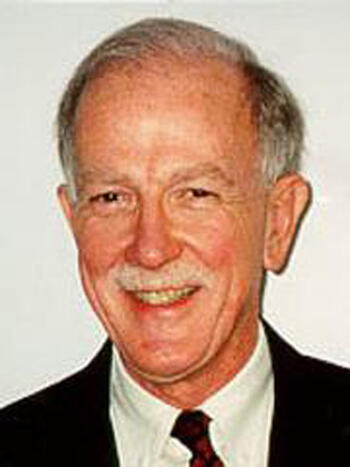
Duus recognizes that Abe’s statement offers a reiteration of the statements made by Prime Ministers Murayama and Koizumi by including four key words – aggression, colonial rule, apology and remorse. Unlike past statements, however, Abe’s begins by putting war in the historical context and offers a more explicit statement of the victims of the war, not only the three million Japanese but also citizens of China, Southeast Asia and the Pacific islands. The statement can be viewed as “a small but important step toward a truce in the history wars that have raged in East Asia for the last three decades,” he says. However, Abe's attempt at reconciliation will have little effect if he does not rein in contrary actions by neo-nationalists in his own party.
Peter Duus is the William H. Bonsall Professor of Japanese History, emeritus; and a senior fellow, by courtesy, Hoover Institution, Stanford University.
Image
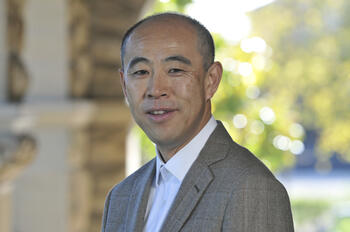
Hoshi notes that Abe’s statement mentions past apologies expressed by the Japanese government, but has no explicit apology from the current administration. He says there are two surprising elements about the statement. The first is the length – it is much larger than predecessors Murayama and Koizumi at 1,664 words in English and 3,970 characters in Japanese. The second is the emphasis on history rather than on forward-looking components. He says it is commendable that Abe provided an expanded view of history. Hoshi notes that it is nearly impossible to satisfy everyone’s views in such a statement, as scholars witnessed firsthand when working on the Japan Program project.
Takeo Hoshi is the Henri H. and Tomoye Takahashi Senior Fellow in Japanese Studies in the Freeman Spogli Institute for International Studies; a professor (by courtesy) of finance at the Graduate School of Business; and director of the Japan Program at the Shorenstein Asia-Pacific Research Center, Stanford University.
Image
 Response by Daniel Sneider
Image
Sneider says Abe’s statement must be judged on following criteria: that it is a valid effort to draw lessons from Japan’s wartime past and that it contributes to the improvement of relations in Northeast Asia. He says the statement advances these goals, but there remain a few caveats. Sneider says the version of history communicated “will not satisfy many people, including many historians,” but that it does move away from the idea that revisionist Japan was in a war of self-defense not aggression. To move Japan, China and South Korea toward reconciliation, the prime minister and his cabinet must embrace the spirit of the statement in full and open the door to convening a long-delayed trilateral summit.
A version of this essay was also published by Nippon in Japanese and English.
Daniel Sneider is the associate director for research at the Shorenstein Asia-Pacific Research Center, Stanford University.
Hero Image

All News button
1
Li Shanyou (Kevin)
Encina Hall E301616 Serra StreetStanford, CA94305-6055
(650) 723-6530
0
kevinlsy@stanford.edu
Li Shanyou joins the Walter H. Shorenstein Asia-Pacific Research Center (APARC) as a visiting scholar for the 2015-16 year. He is an Adjunct Professor of Entrepreneurship and Executive Director of the Centre for Entrepreneurship and Investment at CEIBS. He joined CEIBS on September 1, 2011. Prior to that, in 2006, he founded Ku6.com Inc. In June of 2010, he led the company to be the first China video site independently listed on NASDAQ. Before starting his own business, he was the Senior Vice President and Editor-in-Chief of Sohu.com Inc.
Mr. Li, who graduated from Nan Kai University with a Bachelor’s degree in Mathematics, enrolled in CEIBS EMBA programme in 2004. He is striving to combine traditional Chinese philosophy – of which he has a deep understanding – with modern enterprise management theories to form a unique Chinese style modern leadership model. His past practices and theoretical thoughts are outlined in the book Lectures on Management – Attaining Accomplishment in Both Self-Cultivation and Leadership Positions.
Mr. Li’s rich and dynamic business and management experience began as early as 1994. He has, at different times, held various Human Resources executive positions in companies like Motorola (Tianjin) Inc., Alcoa Inc., Bausch & Lomb Inc., Sohu.com Inc., etc. In 2001, he transferred to a new position in Sohu.com Inc: Editor-in-Chief. In that role he successfully helped Sohu News recover from rough times, and he was later promoted to Senior Vice President. In 2006, he resigned from Sohu.com Inc. after reaching a new peak in his career, and founded Ku6.com Inc. Under his management, Ku6.com Inc. became the first Chinese media video site to be listed on overseas stock markets. In March 2011, Mr. Li decided to leave Ku6.com Inc. to pursue a new chapter of his career as an educator; he joined CEIBS as an Entrepreneurial Studies Professor. Over the past 18 years, he has accumulated various experiences and lessons in HR Management, Internet and Media Management, Venture Development as well as the Mergers and Acquisition fields.
Mr. Li is a seasoned public speaker and trainer. He has lectured more than ten management courses, and was named among “Beijing’s Top 10 Trainers.” His outstanding public speaking and training skills have been well received by many students. He is among those conferred with the Award of 2010 China’s Top Ten CEOs, One Hundred Most Influential Celebrities in Chinese Online Media in the Past Decade, 2010 Most Influential Leader of New Media Era in China etc.
Visiting Scholar
When can Asians celebrate a shared history?
News Type
Commentary
Date
Paragraphs
Two key challenges facing Northeast Asia are how to tame the power of nationalism and create shared memories of history, Stanford professor Gi-Wook Shin wrote in The Diplomat.
Shin, director of the Shorenstein Asia-Pacific Research Center (APARC), urged action on the 70th anniversary of the end of World War II. Northeast Asians should use the commemoration as an “opportune occasion to reflect on their unfortunate past to learn lessons,” only then can the region become more peaceful and prosperous.
Shin and Daniel Sneider, Shorenstein APARC’s associate director for research, lead the Divided Memories and Reconciliation research project which examines memories of the wartime experience in Northeast Asia and what steps can be taken to reconcile disputes over history.
One of their latest outcomes is the book Confronting Memories of World War II: European and Asian Legacies (April 2015), edited with University of Washington professor Daniel Chirot, that studies how wartime narratives are interpreted, memorialized and used in Europe and Asia.
The full article in The Diplomat can be accessed by clicking here.
Hero Image

All News button
1