Information Technology
-

Image
keunlee 2012
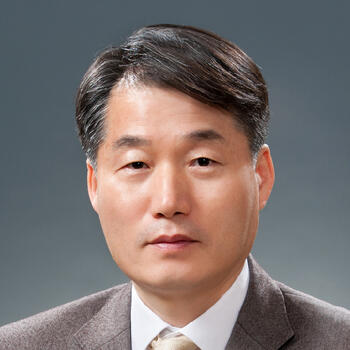
Keun Lee, winner of the 2014 Schumpeter Prize and a professor of economics at Seoul National University, will explore the Schumpeterian hypothesis that the effectiveness of the national innovation system (NIS) of a country determines its long term economic performance, using the case of South Korea as an example. Professor Lee will present an overview of South Korea’s NIS during the “catch-up” and “post-catch-up” stages; and will compare the Korean case with the NIS of European economies to derive comparative lessons. He will also address specific innovation issues in Korea, such as commercializing knowledge in the public sector.

Professor Lee authored Economic Catch-up and Technological Leapfrogging: Path to Development & Macroeconomic Stability in Korea (2016, E Elgar); and Schumpeterian analysis of Economic catch-up (Cambridge University Press, 2013: awarded Schumpeter Prize). He is currently president of the International Schumpeter Society, a member of the Committee for Development Policy of the UN, an editor of Research Policy, an associate editor of Industrial and Corporate Change, and a council member of the World Economic Forum. He obtained a PhD in economics from the University of California, Berkeley, and worked at the World Bank, University of Aberdeen, and the East West Center, Hawaii. One of his most cited articles is a paper on Korea’s Technological Catch-up published in Research Policy, with 1,000 citations (Google Scholar). His H-index is now 35, with 85 papers with more than 10 citations.

Keun Lee <i>Professor of Economics, Seoul National University</i>
Seminars
-

The conference is brought to you by the Shorenstein Asia-Pacific Research Center Japan Program's Stanford Silicon Valley-New Japan Project and Mistletoe, Inc.

This event is at full capacity. Please contact Amanda Stoeckicht at amst@stanford.edu if you have any questions.

As we enter the coming age of universal automation, this conference seeks to spark a discussion among thought leaders, technologists, and social entrepreneurs about the replacement of human labor by artificial intelligence and robotics and what that might mean for the future of human welfare and labor opportunities. There is increasing debate regarding the possibility of a new underclass of 'zero economic citizens.' How shall we address these challenges? Does the answer lie in lowering the cost of living? Is it the Universal Basic Income? Or something else? What might be the role of technologies for geographic mobility, sustainability, and community platforms.

Along with keynote presentations and panel discussions, the conference will also feature a startup showcase and participatory world-building exercise.

*The below program is subject to change.

Conference Program

8:30-9:00                  Registration and Breakfast

9:00-9:05                  Welcome

9:05-10:45                Keynote Presentations

Taizo Son (Mistletoe)

Marina Gorbis (Institute for the future)

Sam Altman (Y Combinator)

10:45-11:00              Coffee Break

11:00-12:15                Startup Showcase

Afero

Alesca Life

AstroScale

Binded

Cocoa Motors

Homma

Leomo

ModuleQ

Vivita

Wota

12:15-12:30              Break

12:30-13:00              Mistletoe Fellows Program Announcement

13:00-14:00              Lunch

14:00-15:15              Panel & Debate Sessions: Technology and Social Change in 2045                          

Panel 1: 

Cities of the Future: Removing Barriers to New Ideas with Innovation Districts and Regulatory Sandboxes

Moderator: Ashkan Soltani

Panelists:   Neal Gorenflo (Sheareable)

Taizo Son (Mistletoe)

           Joe Quirk (Seasteading Institute)

           Kaidi Ruusalepp (Funderbeam)           

Panel 2:

The Autonomous Lifestyle: Can Tech-Enabled Mobility Improve Welfare and Opportunity?

Moderator: Kenji Kushida (Stanford University)

Panelists:   Frances Colon (Cenadores Puerto Rico)

Steve Cousins (Savioke)

            Toshi Hoo (IFTF)        


Panel 3:

Reimagining Social Entrepreneurship: Designing Collaboration and Community

                                       Moderator:     Ernestine Fu (Alsop Louie Partners)

Panelists:    Anh Bui (Benetech)

  Chuck Eesley (Stanford University)   

  Daniel Goldman (Ignition Angels)

             Luan Niu (Enviu)


15:15-15:30             Break

15:30-17:30             Zero Economic Citizen in 2045: A World Building Exercise                  

Joshua McVeigh-Schultz (University of Southern California)

Karl Baumann (Univeristy of Southern California)

Elena Marquez Segura (UC Santa Cruz)                         

17:30-17:35             Closing Remarks

17:35-18:35             Cocktail Reception


Conferences
-
This event is co-sponsored by the Stanford Silicon Valley-New Japan Project and the Japan Society of Northern California.

When the Fukushima Daiichi Nuclear Power Plant experienced a meltdown after the Great East Japan Earthquake in March 2011, people scrambled to get accurate data on radiation. Geiger counters were suddenly a hot commodity. In that moment of crisis, a group of global citizens rose to the occasion to launch Safecast, an open data platform to track, monitor and share data on the radiation levels in Fukushima and throughout Japan. Safecast, a Japan Earthquake Relief Fund grantee, enlisted the help of volunteers who collected the data from all over Japan, and even built its own DIY Geiger counter kit. The Japan Society of Northern California and the Stanford Silicon Valley-New Japan Project are proud to present a program with Pieter Franken, the Co-Founder of Safecast, will look back at Safecast’s evolution—a prime example of citizen science embracing open data and open source—over the last six years and their plans to expand their data gathering efforts to take on new environmental challenges. 

Bio

Image
Pieter Franken's career spans over 25 years in Financial Services, specializing in O&T, Fintech, innovation and large-scale transformations. He has held C-level and executive positions with industry leaders such as Citigroup, Shinsei Bank, Aplus, Monex Securities and Monex Group. His hallmark is pioneering innovative services by implementing bleeding edge technologies while minimizing time-to-market and dramatically reducing costs. Versed in large scale IT transformation, bi-modal management, innovation, software development, datacenter operations, financial operations and FinTech, he is a much looked after advisor and speaker on a wide range of topics and is known for providing deep insights pulling from is wide experience in IT, financial services and innovation management. 

Pieter currently is Senior Advisor at Monex Group (a leading online securities and financial services company in Japan) where he focuses on the Future of Financial Services, Group IT Strategy, Fintech, and Blockchain. 

He is also a member of Monetary Authority of Singapore (MAS) International Technology Advisory Panel (ITAP) where he contributes in the transformation of Singapore as a leading Fintech Hub. In 2011 Pieter co-founded Safecast.org - a global volunteer initiative to collect citizen sourced environmental data. Pieter also advises startups, such as ModuleQ, an AI startup based in Silicon Valley. Pieter holds a MSc in Computer Science from Delft University (The Netherlands) and currently is a researcher with MIT Media Lab (US) and Keio University (Japan) where he contributes to the advancement in IoT, Digital Currencies, Block-chain technologies and Citizen Science. Pieter is based in Japan and frequently travels across Asia, North America and Europe.

Agenda

4:15pm: Doors open
4:30pm-5:30pm: Talk and Discussion
5:30pm-6:00pm: Networking

RSVP Required

 
For more information about the Silicon Valley-New Japan Project please visit: http://www.stanford-svnj.org/


Pieter Franken, Senior Advisor, Monex Group
Seminars
0
Corporate Affiliate Visiting Fellow, 2017-18
kazushi_nomura.jpg


Kazushi Nomura is a corporate affiliate visiting fellow at the Walter H. Shorenstein Asia-Pacific Research Center (Shorenstein APARC) for 2017-18.  Prior to joining Shorenstein APARC, he served as a Patent Examiner at the Japan Patent Office, where he was in charge of human computer interfaces.    

0
Global Affiliate Visiting Scholar, 2017-19
Ishin Co. Ltd.
hiro_nishinaka.jpg

Hiroshi Nishinaka is a global affiliate visiting scholar at the Walter H. Shorenstein Asia-Pacific Research Center (Shorenstein APARC) for 2017-19.  Nishinaka is a VP of business development for Ishin Co., Ltd. a Japanese tech media firm featuring startups and entrepreneurs.  Prior to joining Ishin Co. Ltd., he served as a corporate sales representative for mid- to large-sized firms at Sumitomo Mitsui Banking Corporation (SMBC) in Tokyo.  Nishinaka graduated from Waseda University with a BA in social science.  

0
Corporate Affiliate Visiting Fellow, 2017-18
yoshihiro_kato.jpg

Yoshihiro Kato is a corporate affiliate visiting fellow at the Walter H. Shorenstein Asia-Pacific Research Center (Shorenstein APARC) for 2017-18.  Kato is a senior software architect of Future Architect, Inc., an IT consulting firm in Japan.  Kato has 16 years of experience in software engineering, specifically a distributed system design.  Prior to joining Shorenstein APARC, Kato was a visiting researching of Blockchain and Fintech at Nippon Institute for Research Advancement.  Kato graduated from Shizuoka University and received a masters degree in computer science.

0
Corporate Affiliate Visiting Fellow, 2017-18
kazumasa_ito.jpg

Kazumasa Ito is a corporate affiliate visiting fellow at the Walter H. Shorenstein Asia-Pacific Research Center (Shorenstein APARC) for 2017-18.  He is a research of Mitsubishi Electric Corp., an electric and electronic manufacturer in Japan.  Ito has 15 years of experience in electric motors, especially electro magnetic design and their driving technologies.  He graduated from Nagoya University and received a masters degree in engineering.  During his fellowship at Shorenstein APARC, his research will focus on management of development.

0
Corporate Affiliate Visiting Fellow, 2017-18
takahito_inoshita.jpg

Takahito Inoshita is a corporate affiliate visiting fellow at the Walter H. Shorenstein Asia-Pacific Research Center (Shorenstein APARC) for 2017-18.  Inoshita is a marketing specialist in the Business Development Department, Kozo Keikaku Engineering Inc. (KKE), Japan.  In KKE, Inoshita was engaged in the development of network simulators for several years.  As a manager of the Corporate Planning Section, he has been engaged in data analysis for the corporate strategy.

-

Chile, being positioned on the Pacific-facing rim of South America, has a natural tendency toward Asia, not only geographically, but also politically, culturally and economically. Mr. Maruicio Rodriguez from the Chile Pacific Foundation, a public-private partnership established by the Chilean government that seeks to deepen Chile’s ties with Asia, will discuss the country’s innovation and entrepreneurship ecosystem, including an analysis of promotion strategies, financing conditions and policy challenges.


Mauricio Rodriguez has been the head of projects and content at Chile Pacific Foundation since August 2016. He is responsible for managing contents produced by the Foundation, including research, digital strategy and conferences and events, overseeing both planning and production. He also serves as an ABAC-Chile staffer and often represents the Foundation as conference speaker/moderator. As a journalist and a communications professional, he has accumulated vast experience in the media industry and in the public relations/affairs industry, where he represented private interests before moving to public administration, the legislature and the judiciary. He has significant experience in the financial industry after working in the investment banking sector and being a financial journalist for almost two decades.


Mauricio Rodriguez <i>Chile Pacific Foundation</i>
Seminars
Paragraphs

Through the 1980s, Japan was significant in global competition largely by shaping global technological trajectories, transforming major global industries, and contributing to fundamental innovations in industrial production processes, creating enough wealth along the way to propel Japan to the world’s second largest economy. After the economic bubble burst in the early 1990s, however, other places such as Silicon Valley in the United States, moved to the forefront of transforming technology, industries, and production, creating vast wealth along the way. While Japan’s role in global competition seemingly became largely irrelevant from the 1990s onward, careful analyses reveal that Japan was in fact transforming quietly and gradually, but significantly. In a pattern of “syncretism,” Japan’s economic transformation was characterized by the coexistence of new, traditional, and hybrid forms of strategy and organization. This paper examines core areas of the “new” and emerging “hybrid” areas — the startup ecosystem and the efforts of select large firms to harness new forms of innovation from outside their corporate borders. Japan’s startup ecosystem, though still small compared to Silicon Valley, as is everywhere else, has dramatically transformed over the past twenty years through a combination of regulatory shifts, corporate transformations, and technological breakthroughs that have opened up vast new opportunities. Some large corporations such as Komatsu, Honda, Toyota, and Yamaha are undertaking innovative efforts of sorts unseen in Japan’s recent history to harness Silicon Valley and other startup ecosystems into their core business areas.

All Publications button
1
Publication Type
Working Papers
Publication Date
Authors
Kenji E. Kushida
Subscribe to Information Technology