History
-

As the U.S. presidential election campaign moves into full bore, what role will foreign policy play in the national debate and the presidential election? Does foreign policy matter to voters or do international issues take a back seat to domestic concerns?  How does the election affect the conduct of foreign policy?

Here to shed light on the presidential election and U.S. foreign policy are three prominent commentators, with moderator Coit Blacker.

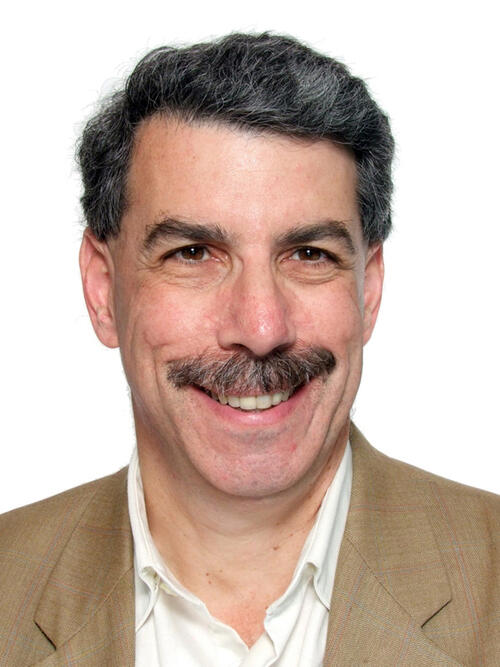
Michael H. Armacost is the Shorenstein Distinguished Fellow at FSI’s Walter H. Shorenstein Asia-Pacific Research Center, a position he has held since 2002. He is the former president of the Brookings Institution, former under secretary of state for political affairs and former U.S. ambassador to Japan and the Philippines. 

David Brady is deputy director and Davies Family Senior Fellow at the Hoover Institution. He is the Bowen and Janice Arthur McCoy Professor of Political Science and Leadership Values in Stanford's Graduate School of Business, a professor of political science in the School of Humanities and Sciences, and a senior fellow at the Freeman Spogli Institute and the Stanford Institute for Economic Policy Research. He is a specialist on U.S. national elections. 

David M. Kennedy is the Donald J. McLachlan Professor of History, Emeritus at Stanford and Faculty Co-Director of the Bill Lane Center for the American West. Most famously, Professor Kennedy won the 2000 Pulitzer Prize for History for his book  Freedom from Fear: The American People in Depression and War, 1929-1945 (1999). 

Moderator: Coit D. Blacker is director and senior fellow at the Freeman Spogli Institute for International Studies, the Olivier Nomellini Professor in International Studies in the School of Humanities and Sciences, and the Olivier Nomellini Family University Fellow in Undergraduate Education. During the first Clinton administration, Blacker served as special assistant to the president for National Security Affairs and senior director for Russian, Ukrainian, and Eurasian affairs at the National Security Council (NSC). 

Bechtel Conference Center

Coit D. Blacker director and senior fellow, FSI, the Olivier Nomellini Professor in International Studies and Olivier Nomellini Family University Fellow in Undergraduate Education Moderator
0
Former Shorenstein APARC Fellow
Michael_Armacost.jpg PhD

Michael Armacost (April 15, 1937 – March 8, 2025) was a Shorenstein APARC Fellow at the Walter H. Shorenstein Asia-Pacific Research Center (Shorenstein APARC) from 2002 through 2021. In the interval between 1995 and 2002, Armacost served as president of Washington, D.C.'s Brookings Institution, the nation's oldest think tank and a leader in research on politics, government, international affairs, economics, and public policy. Previously, during his twenty-four-year government career, Armacost served, among other positions, as undersecretary of state for political affairs and as ambassador to Japan and the Philippines.

Armacost began his career in academia, as a professor of government at Pomona College. In 1969, he was awarded a White House Fellowship and was assigned to the Secretary and Deputy Secretary of State. Following a stint on the State Department's policy planning and coordination staff, he became a special assistant to the U.S. ambassador in Tokyo from 1972 to 74, his first foreign diplomatic post. Thereafter, he held senior Asian affairs and international security posts in the State Department, the Defense Department, and the National Security Council. From 1982 to 1984, he served as U.S. ambassador to the Philippines and was a key force in helping the country undergo a nonviolent transition to democracy. In 1989, President George Bush tapped him to become ambassador to Japan, considered one of the most important and sensitive U.S. diplomatic posts abroad.

Armacost authored four books, including, Friends or Rivals? The Insider's Account of U.S.–Japan Relations (1996), which draws on his tenure as ambassador, and Ballots, Bullets, and Bargains: American Foreign Policy and Presidential Elections (2015). He also co-edited, with Daniel Okimoto, the Future of America's Alliances in Northeast Asia, published in 2004 by Shorenstein APARC. Armacost served on numerous corporate and nonprofit boards, including TRW, AFLAC, Applied Materials, USEC, Inc., Cargill, Inc., and Carleton College, and he currently chairs the board of The Asia Foundation.  

A native of Ohio, Armacost graduated from Carleton College and earned his master's and doctorate degrees in public law and government from Columbia University. He received the President's Distinguished Service Award, the Defense Department's Distinguished Civilian Service Award, the Secretary of State's Distinguished Services Award, and the Japanese government’s Grand Cordon of the Order of the Rising Sun.

Date Label
Michael H. Armacost Shorenstein Distinguished Fellow at FSI’s Walter H. Shorenstein Asia-Pacific Research Center Speaker
David Brady deputy director and Davies Family Senior Fellow at the Hoover Institution Speaker
David Kennedy Donald J. McLachlan Professor of History Emeritus at Stanford and Faculty Co-Director of the Bill Lane Center for the American West Speaker
Conferences

China’s “rise” has elicited envy, admiration, and fear among its neighbors and more distant countries. Much of what has been written about the modalities and impact of China’s increased activism on the world stage comes close to depicting what has happened (and what presumably will happen in the future) as determined almost entirely by goals, approaches, and instruments conceived in Beijing and implemented as designed by their Chinese authors. Such descriptions and explanations minimize or ignore the other side of the equation, namely, what individuals, corporate actors, and governments in other countries do to attract, shape, exploit, or deflect Chinese involvement. The "China and the World" project will redress the imbalance by examining the actions of China’s partners and ways in which initiatives and reactions from partners have shaped Chinese policy and the outcome of engagements with other countries.

The ultimate objective of this study is to understand and anticipate China’s behavior on the world stage. But China’s objectives, methods, and impacts vary from one region to another, and differences between regions are as interesting and as important as are practices and patterns common to all parts of the globe. Describing and explaining regional differences (as well as differences among countries in the same region) is therefore a useful, if not necessary, prerequisite for examining behavior and interactions at the global level.

North America, to be sure, is arguably the most important partner and shaper of China’s international behavior in the decades since Deng Xiaoping launched the policy of “reform and opening” that has transformed China. The reason for not focusing specifically on the United States in this study is that U.S.-China relations have been studied more extensively than any other Chinese relationship. However, the extent and nature of U.S. relations with countries in all regions make it imperative to consider U.S.-China relations in each region and their role, if any, in shaping China’s relationships with other countries.

The “China and the World” project will focus initially on Northeast Asia and Southeast Asia.  China has a long history and deeply varied relationship with these two regions. At the next stage, the project will examine China’s relationship with South Asia. Additional regions, such as Central Asia, may be added.

The project will begin with a one-and-a-half day workshop on March 19–20, 2012, convened in Beijing at the new Stanford Center at Peking University. It will focus on China’s relationships with Japan, Korea, and Russia in Northeast Asia. The participation of scholars from Southeast Asia and North America will help ensure that the core questions developed at the workshop are broadly applicable to other regions as well.

Stanford Center at Peking University

Workshops
Authors
News Type
News
Date
Paragraphs

Newly printed “no smoking” signs went up across China when the government rolled out a nationwide public indoor smoking ban in May 2011. A sticky gray layer of smoke residue now coats many signs, representing the challenges China’s growing tobacco-control movement faces against a multibillion-dollar government-run industry and deeply embedded social practices.

How has the cigarette become so integrated into the fabric of everyday life across the People’s Republic of China (PRC)?

To get to the heart of this question, historians, health policy specialists, sociologists, anthropologists, business scholars, and other experts met Mar. 26 and 27 in Beijing for a conference organized by Stanford’s Asia Health Policy Program. They examined connections intricately woven over the past 60 years between marketing and cigarette gifting, production and consumer demand, government policy and economic profit, and many other dimensions of China’s cigarette culture.

Anthropologist Matthew Kohrman, a specialist on tobacco in China, led the conference, which was held at the new Stanford Center at Peking University. In an interview, he spoke about the history of China’s cigarette industry, cigarettes and society, and the tobacco-control movement.

The early years

Tobacco first entered China through missionary contact in the 1600s, says Kohrman, but it was not until the early 20th century when cigarettes began gaining popularity. The first cigarette advertising was a “confused tapestry” of messages as marketers figured out what spoke to the public. “There were just as many images of neo-Confucian filial piety as there were of cosmopolitan ‘modern women,’” says Kohrman.

Through improved marketing and aggressive factory building, British American Tobacco and Nanyang Brothers, China’s two largest pre-war firms, helped increase the demand for cigarettes. The Sino-Japanese War (1937–1945) disrupted the cigarette supply, but their popularity had taken hold. Some cigarette firms shifted during the war to the relative safety of southwest China, where tobacco production has remained concentrated ever since.

Post-1949

After the founding of the PRC in 1949, the tobacco industry was nationalized and strong relationships between the central government and cigarette manufacturers in the provinces were formed. Cigarettes also began to be viewed as a part of everyday life. “Ration coupons for cigarettes were issued alongside grain, sugar, and bicycle coupons,” says Kohman. “The Maoist regime legitimized cigarettes as the right of every citizen."

During the Deng Xiaoping era (1978–1997), China’s cigarette industry really took off as manufacturers competed with one another for foreign currency to purchase cutting-edge European equipment and newer varieties of tobacco seed stock. Increased production and the return of full-scale advertising fueled greater consumer demand, and manufacturers began producing more and more varieties of cigarette. Vendors displayed glass cases filled with a colorful patchwork of cigarette packs bearing names like Panda, Double Happiness, and Red Pagoda.

The tobacco industry remained under government control as other industries privatized in the 1980s and 1990s. Party-state management of the cigarette became even more centralized in the early 1980s with the creation of the China Tobacco Monopoly Administration and its parallel external counterpart, the China Tobacco Corporation.

Since 1949, provincial protectionism has marked the cigarette market. It is now possible to purchase Beijing cigarettes in Kunming, Chengdu brands in Shanghai, and so on, but to distribute cigarettes in another province, a manufacturer must cut a deal with provincial government officials. Provincial administrations are loath to cut such deals because central government policy dictates that the portion of cigarette sales tax which does not go to the central government always is channeled to the finance bureau of the province of original production. China’s 2001 entry into the World Trade Organization opened the market ever so slightly to international brands like Marlboro and Kent, but domestic brands continue to dominate because of fierce protectionism.

...If it chooses to do so, China is in a position to lead and change the landscape in a very profound way.
-Matthew Kohrman, Professor of Anthropology, Stanford

A new era

In 2003, the World Health Organization established the first global health treaty, the Framework Convention on Tobacco Control (FCTC). Although the United States still has not yet ratified the FCTC, China signed the treaty in 2003 and ratified it in 2005. Kohrman says China’s tobacco industry giants fear competition from international cigarette brands more than they worry about tobacco-control measures related to the FCTC.

Nonetheless, the FCTC ushered in a new era of public health research about tobacco and has helped increase public awareness about the dangers of smoking. New restrictions have been imposed on print and television advertising for cigarettes, and international organizations, such as the Bloomberg Family Foundation, have begun funding anti-tobacco work in China.

A big challenge to tobacco-control campaigns, says Kohrman, is the sheer amount of money that tobacco companies have available for marketing. “In 2010, China’s tobacco industry posted profits in excess of U.S. $90 billion—that’s huge. Tobacco control research and advocacy now annually receive a few million dollars, and much of that is coming through outside funders, which have very specific projects in mind.”

China’s tobacco advertisers have adapted to the new restrictions that prevent them from openly promoting cigarettes in the media. They have instead moved to point-of-sale and soft-marketing tactics, including misinformation campaigns about the “dangers” of quitting smoking. “The actual expenditure on marketing probably hasn’t dropped very much,” says Kohrman.

Cigarettes and society

Strong marketing and the legitimization of cigarettes as a part of everyday life have led to the deep integration of cigarettes into Chinese society. While only 3 to 4 percent of women in China smoke, cigarettes are an important part of male identity and social mobility. The wide range of cigarette brands has led to the growth of high-end varieties favored by businessmen and politicians, with some brands costing as much as $50 a pack. The custom of cigarette gifting has existed in China for decades, and it is difficult for a young man to turn down a package of cigarettes from a senior colleague or supervisor.

There is also the fact that nicotine is highly addictive, and quitting is difficult in an environment where smoking cigarettes is socially sanctioned. Kohrman says, “When you take an incredibly addictive substance like nicotine and throw it into the mix of all of these norms and customs, it creates a pretty toxic brew.”

The future?

Tobacco control presents a formidable challenge in China, one that requires understanding the historical context and complex dimensions of the cigarette industry. “Cigarettes have been insinuated into so many aspects of daily life across China, and the market for this product has now become so closely enmeshed with matters of government finance and operations,” says Kohrman.

What happens in China could have implications for the entire world. “There’s a tobacco-induced human annihilation unfolding right now in almost every country and questions about how society and Big Tobacco are enmeshed, and how cigarette culture and government finance have become mutually supportive are pivotal,” says Kohrman. “Every country except Bhutan has legalized cigarette sales and is subject to many of the same general issues as China—only in China they’re on a much larger scale. But if it chooses to do so, China is in a position to lead and change the landscape in a very profound way.”   

Hero Image
PandaCigarettes NEWSFEED
Premium Chinese cigarette brand Panda for sale in a duty-free shop at Dubai's airport.
Flickr/Bernard Oh
All News button
1
Authors
News Type
Q&As
Date
Paragraphs

Riding around on the back of a motorcycle in 2009, Jeremy Menchik snapped photos of hundreds of Indonesian campaign posters. That number has now grown to over 5000 images, which Menchik and Colm Fox have painstakingly coded and analyzed to better understand the politics of identity in Indonesia. The initial results of their research reveal similarities between the United States and Indonesia, and shed light on the transitional democracies of the Arab Spring.

Menchik is a 2011–12 Shorenstein Fellow at Stanford University, and will take up a position as an assistant professor in international relations at Boston University in 2013.

Fox is a doctoral student at the George Washington University’s Department of Political Science.

How important is political identity in Indonesia? Why?

Indonesia is the largest Muslim-majority country in the world, and one of the most diverse. But what we found was that rather than being unique, Indonesian politicians behave remarkably similar to American politicians in using a variety of regional, religious, and ethnic identity symbols to court voters.

Image
For example, just recently on NPR, I heard Mitt Romney and Newt Gingrich using broken Spanish to appeal to Latino voters in Florida. That is no different than candidates for mayor in northern Sumatra, who often print one poster with them wearing Islamic clothing for one neighborhood, and another poster with them wearing Batak clothing for a different neighborhood. And a third where they are draped in the Indonesian flag.

Our research suggests that despite the obvious differences between a developed, Western country like the United States, and a developing, Muslim-majority country like Indonesia, politicians often act similarly when they are trying to win elections.

What is an important factor in determining a candidate’s use of identity symbols?

What we found is that the election rules matter, a lot. Candidates are far more likely to use religious and ethnic symbols in a plurality (“winner-take-all”) system like the United States than in a proportional representation system (PR) like Indonesia. This is an important finding, because tinkering with election rules is one of the tools that international relations practitioners can use to reduce ethnic and sectarian violence. And what we are saying is that it works. Changing election rules can change the types and levels of identities that are politicized. And that is an important lesson for conflict resolution.

What are some of the most surprising results to come out of your research?

The first is how badly the dominant explanations for identity politics—modernization theory and secularization theory—fared when they were tested on a large dataset. We are at an interesting juncture in time, where our theories of religion and politics have not caught up with the way the world works.

Image
A second surprising finding is how much electoral rules shape the use of identity symbols. Indonesia is a Muslim-majority country, but you would not know it in many of the PR elections. Having strong party backing is so crucial to winning seats in the legislature that it overrides candidates’ religious identity. This points to a similarity between a developed, consolidated Western democracy like the United States, and a developing, unconsolidated Muslim-majority country like Indonesia. The rules are really important for understanding "how politics works" in the Muslim world.

Finally, it was interesting to see the continued importance of history for understanding contemporary political behavior. Regional rebellions that happened in the 1950s continue to echo in politics today. There are certainly ways that changing electoral rules and economic development can result in a shift in political identity, but without understanding the specific Indonesian context, a lot of our results do not make sense. That is an important lesson that for understanding how people in a Muslim country vote; the regionally specific history of that country is very important.      

During last year’s Arab Spring, the ideal of democracy was celebrated throughout the world. How might your research shed light on understanding the complexities of these transitioning democracies?

Well this research has clear implications for the Arab Spring, particularly for understanding the future of Egypt. Just because religious parties like the Muslim Brotherhood or the Salafist Nour party come into office does not mean that democracy is doomed, or that religious minorities are going to suffer. As long as secular Muslims, Christians, liberals, and other groups have a stake in elections, we are likely to see cross-ethnic and cross-religious coalitions emerge. This is a very good thing. One obvious difference, however, is that we did not see a lot of overt military participation in politics in Indonesia after 1999. The military was largely absent. And that is one way that Egypt is very different from Indonesia. If there is a big threat to democracy in Egypt, it is not coming from the politicization of identity—it is coming from the suppression of the people's voice by the military.

Hero Image
menchik jeremy indonesia politics religion islam 07 NEWSFEED
Indonesian election posters often contain a complex mix of religious, ethnic, and political party symbolism.
Courtesy Jeremy Menchik
All News button
1

Walter H. Shorenstein
Asia-Pacific Research Center
616 Serra St., Encina Hall E301
Stanford University
Stanford, CA 94305-6055

(650) 725-2507 (650) 723-6530
0
Visiting Scholar
Heeyoung_Kwon_WEB.jpg MA

Heeyoung Kwon is a visiting scholar with the Korean Studies Program, and she is also currently a program officer in the Public Diplomacy Department at the Korea Foundation. She has been responsible for organizing bilateral forums such as the Seoul-Washington Forum and the Korea-Japan Forum, as well as KF Global Seminars at the Korea Foundation.

Her recent interests are South Korea-U.S. foreign policy toward North Korea and the Nuclear Nonproliferation Treaty, including the possible resumption of the Six Party Talks.  

Kwon received a BA in history from Hanyang University in Seoul, and an MA in Korean studies from the Graduate School of International Studies at Seoul National University. The topic of her MA thesis was about the South Korea-U.S. relationship, focusing on the dispatch of Korean soldiers to the Vietnam War.

Paragraphs

For the past two decades China has been a poster child of successful globalization, integrating with the world and in the process lifting millions of citizens out of poverty. But China’s integration into the world economy and global trends drive and constrain Beijing’s ability to manage growing social, economic and political challenges. 

Global trends affect all nations, but China may be uniquely vulnerable to developments beyond its borders and beyond its control. Chinese leaders recognize the diversity and complexity of the challenges they face but appear determined to confront them individually and incrementally. How – and how well – they respond to those challenges will have significant consequences of China and the world. 

Many of these challenges center on rising expectations in the face of increasing competition.

Thanks to a fortuitous combination of wise decisions and good timing, China has made phenomenal progress in the three decades since Deng Xiaoping launched the policy of reform and opening to the outside world in 1978. More Chinese citizens live better today than ever before and many more expect to join the privileged ranks of the middle class. Aspirations and expectations have never been higher. That’s a very good situation to be in, but it also entails enormous challenges for China’s leaders because several trends indicate that meeting expectations could become increasingly difficult.

Chinese aspirations have never been higher, but meeting expectations could get increasingly difficult.

Specifically, China will find it increasingly difficult to sustain past rates of growth and improvements in living standards.

One visible trend results from the strategic decision to take on the easiest tasks first in order to produce an “early harvest” of tangible benefits that build experience and confidence to tackle the next set of challenges. By design, each successive set of challenges is more difficult than the ones that preceded it. There are many different manifestations of this phenomenon, including the decision to focus on the more developed coastal areas and move inward to less-developed regions characterized by less infrastructure, poorer nutrition and less education. Other manifestations include the consequences of joining international production chains as low-cost assemblers of goods that are designed, manufactured and marketed elsewhere. Sustained success requires moving up technical and managerial ladders to perform more demanding and better paying tasks. Other daunting challenges result from policies that have deliberately constrained domestic demand with predictable consequences that include increasing inflationary pressures and a nationwide property bubble.

A second category of challenges results from the fact that China now has, and will continue to have, more competition than in the past. When Deng announced the decision to pursue the longstanding goal of self-strengthening by following the model of Japan, Taiwan and other rapid modernizers, he was responding to a de facto invitation from the Carter administration for China to take advantage of “free world” economic opportunities without becoming an ally or having to change its political system. This gave China a 10-year head start with virtually no competition until the Soviet Union collapsed and the Cold War ended. China made good use of this opportunity and has since taken advantage of experience and ties forged with foreign partners before Central European states and the states of the former Soviet Union joined the game. 

India, Brazil, Indonesia and other “non-aligned” states stayed out of the game for a few years longer, thereby increasing China’s advantages. Now there are more players and potential competitors climbing the learning curve more rapidly than they otherwise might have done because they can learn from China’s experience. Foreign investors and international production chains now have far more options than they did when China was essentially the only large developing country in the game.

China now has, and will continue to have, more competition than in the past from other emerging economies.

A third set of challenges centers on demographic trends and implications. One is the oft-cited but nonetheless extraordinary challenge of being the first country in history to have a population that becomes old before it becomes rich. Many countries have graying populations – Japan and South Korea in Northeast Asia and most of Western Europe – but the others are much more highly developed than China and have extensive social safety nets to meet the needs of their senior citizens. China’s one-child-per-couple-policy has accelerated a demographic shift that normally occurs in response to higher standards of living, greater educational and employment opportunities for women, and the independent choices of millions of people. 

China must put in place an extensive and costly system to support its elderly – reducing the amount of money and other resources available for other goals – or live with the consequences of making individuals and couples responsible for the wellbeing of parents and grandparents. This challenge is compounded by the broader consequences of becoming a society in which there are few siblings, cousins, aunts, uncles or other relatives beyond the nuclear family.

A fourth challenge derives from the highly centralized character of China’s political system. For three decades, China arguably has been able to develop as quickly as it has because it is a unitary state – not a federal system in which the provinces have significant independent authority – with a single-party regime. This facilitates timely and decisive action in response to perceived needs and opportunities and makes it easier to coordinate multiple components of an increasingly complex system. There are advantages to this type of system, but also risks and costs. One set of risks results from the fact that “all” key decisions must be made at the apex of the system by a relatively small number of officials who have only finite time, attention and knowledge. As China has become more modern and prosperous, it has also become more diverse. Different locales, sectors of the economy, interest groups and other constituencies have diverse expectations of the political system. Keeping the many concerns and requirements straight, and successfully juggling and balancing competing demands, will continue to become more complex and difficult.

Looming challenges are under study, increasing the likelihood of avoiding the most negative consequences.

As this happens, it will intensify another challenge, namely, the challenge of being “right” most of the time with little to no cushion for error. Systems with distributed authority are more cumbersome, but they avoid single points of failure. The danger of single-point failure increases as the complexity of issues, number of competing viewpoints and volume of information increases. Logically, the chance of mistakes increases as decisions become more demanding. Theoretically, there exists a point in any system at which the system can be overwhelmed by the magnitude of the task. The eurozone crisis may be a cautionary example.

Recognizing these challenges should not be read as a pessimistic prediction of inevitable failure. Indeed, the fact that looming but not yet imminent challenges are already the subject of study, deliberation and debate around the world increases the likelihood of avoiding the most negative or disruptive consequences; mitigating those that cannot be avoided entirely; and capitalizing on the many positive trends toward greater cooperation, acceptance of interdependencies and ability to learn from others’ experiences. 

Clearly discernible trends point to common interests and opportunities for cooperation as well as to challenges of unprecedented complexity. Whether China continues to eschew active engagement to address challenges at the global level in order to concentrate on domestic problems will shape possibilities for international cooperation. So, too, will actions of other nations that help or hinder China’s ability to solve its problems.
All Publications button
1
Publication Type
Journal Articles
Publication Date
Journal Publisher
YaleGlobal Online
Authors
Thomas Fingar
-

Richard Nixon’s visit to China in Feb. 1972 reshaped the global balance of power and opened the door to the establishment of relations between China and the United States.

It was also a milestone in the history of journalism. Since the communist revolution of 1949, Beijing had barred virtually all U.S. reporters from China. For the Nixon trip, however, it agreed to accept nearly 100 journalists, and to allow the most dramatic events—Nixon’s arrival in Beijing, Zhou Enlai’s welcoming banquet, and visits to the Great Wall and the Forbidden City—to be televised live.

The coverage was arguably as important as the details of the diplomacy. It profoundly transformed American and international perceptions of a long-isolated China, generated the public support Nixon needed to change U.S. policy, and laid the groundwork for Beijing’s gradual move to open China to greater international media coverage.

While the outlines of the Nixon trip are familiar, the behind-the-scenes story of how that momentous event was covered is much less well known. The U.S.-China Institute at the University of Southern California has produced a new documentary film: Assignment: China—The Week that Changed the World.

The Walter H. Shorenstein Asia-Pacific Research Center will present a special screening of Assignment: China, followed by commentary from the film’s reporter and narrator Mike Chinoy, who is currently a senior fellow at the U.S.-China Institute and formerly CNN’s senior Asia correspondent and Beijing bureau chief. Shorenstein Distinguished Fellow Michael Armacost will provide insight into the historical significance of Nixon’s 1972 visit.

About the Film

Assignment: China—The Week that Changed the World contains remarkable and previously unreleased footage of the Nixon visit, interviews with Chinese officials, people who worked for Nixon, as well as many of the journalistic luminaries who accompanied the president. These include Dan Rather and Bernard Kalb of CBS, Ted Koppel and Tom Jarriel of ABC, Barbara Walters of NBC, Max Frankel of the New York Times, Stanley Karnow of the Washington Post, photographer Dirck Halstead of UPI, and many others.

Reported and narrated by Mike Chinoy, the film offers a fascinating and previously untold perspective on one of the most important historical moments of the 20th century.

Speakers

Mike Chinoy Mike Chinoy

Mike Chinoy
Senior Fellow, U.S.-China Institute, University of Southern California

Image

Michael H. Armacost
Shorenstein Distinguished Fellow, Shorenstein Asia-Pacific Research Center, Stanford University

Philippines Conference Room

Mike Chinoy Speaker U.S.-China Institute, University of Southern California
0
Former Shorenstein APARC Fellow
Michael_Armacost.jpg PhD

Michael Armacost (April 15, 1937 – March 8, 2025) was a Shorenstein APARC Fellow at the Walter H. Shorenstein Asia-Pacific Research Center (Shorenstein APARC) from 2002 through 2021. In the interval between 1995 and 2002, Armacost served as president of Washington, D.C.'s Brookings Institution, the nation's oldest think tank and a leader in research on politics, government, international affairs, economics, and public policy. Previously, during his twenty-four-year government career, Armacost served, among other positions, as undersecretary of state for political affairs and as ambassador to Japan and the Philippines.

Armacost began his career in academia, as a professor of government at Pomona College. In 1969, he was awarded a White House Fellowship and was assigned to the Secretary and Deputy Secretary of State. Following a stint on the State Department's policy planning and coordination staff, he became a special assistant to the U.S. ambassador in Tokyo from 1972 to 74, his first foreign diplomatic post. Thereafter, he held senior Asian affairs and international security posts in the State Department, the Defense Department, and the National Security Council. From 1982 to 1984, he served as U.S. ambassador to the Philippines and was a key force in helping the country undergo a nonviolent transition to democracy. In 1989, President George Bush tapped him to become ambassador to Japan, considered one of the most important and sensitive U.S. diplomatic posts abroad.

Armacost authored four books, including, Friends or Rivals? The Insider's Account of U.S.–Japan Relations (1996), which draws on his tenure as ambassador, and Ballots, Bullets, and Bargains: American Foreign Policy and Presidential Elections (2015). He also co-edited, with Daniel Okimoto, the Future of America's Alliances in Northeast Asia, published in 2004 by Shorenstein APARC. Armacost served on numerous corporate and nonprofit boards, including TRW, AFLAC, Applied Materials, USEC, Inc., Cargill, Inc., and Carleton College, and he currently chairs the board of The Asia Foundation.  

A native of Ohio, Armacost graduated from Carleton College and earned his master's and doctorate degrees in public law and government from Columbia University. He received the President's Distinguished Service Award, the Defense Department's Distinguished Civilian Service Award, the Secretary of State's Distinguished Services Award, and the Japanese government’s Grand Cordon of the Order of the Rising Sun.

Date Label
Michael H. Armacost Speaker Shorenstein APARC, Stanford University
Seminars
Date Label
-

While Chernobyl, and now Fukushima, are household words, far fewer people have heard of Maiak in the southern Urals and Hanford in eastern Washington State where Soviet and American engineers built plutonium plants to fuel the Cold War nuclear arsenal. Within nuclear "buffer zones," plant managers, who were pushed to produce as much plutonium as quickly as possible, polluted freely, liberally and disastrously. During the plutonium disasters that ensued, each plant issued over 200 million curies of radioactive isotopes into the surrounding environment, at least twice the amount released at Chernobyl. Under cover of nuclear security and powered by generous corporate welfare, plant managers employed influential public relations campaigns, restricted medical research, deployed temporary, migrant workers as ‘"jumpers" for the dirtiest work, and generally denied the existence and hazards of radioactive contamination. This was the house plutonium built. Kate Brown argues these histories are important because they supplied models, staff, blueprints and subsequent ready-made disasters for Chernobyl and Fukushima.

Kate Brown is an associate professor of history at the University of Maryland, Baltimore County. She is the author of a Biography of No Place: From Ethnic Borderland to Soviet Heartland (Harvard 2004), which won the American Historical Association’s George Louis Beer Prize for the Best Book in International European History. Brown is a 2009 Guggenheim Fellow and is working on a book called Plutopolia, a tandem history of the world’s first plutonium cities, to be published by Oxford University Press in 2012.

---------

Special Japan Studies Program and CEAS Series: Winter-Spring 2011-12

Looking Back, Looking Forward: Japan's March 11 Disasters One Year Later

The earthquake, tsunami, and nuclear disaster that hit Japan in March 2011 had both immediate catastrophic consequences and long term repercussions. Fundamental areas of Japan’s environment, economy, society, and collective national psyche were deeply affected, giving rise to a broad range of urgent issues. These include economic debates about how to meet the country’s energy demands with nuclear power plants offline, and what path to take for the country’s energy future; political crises, including criticism of the government’s disaster response; the psychological challenges of coping with trauma and grief; a daunting environmental clean-up; and social developments, including a new wave of civil society activism. This series brings together scholars and activists from a wide range of specialties to take stock of how the Japanese have been affected by the disasters, and to assess the efforts of residents, volunteers, and policy makers to recover and move forward.

Philippines Conference Room

Kate Brown Associate Professor of History Speaker University of Maryland, Baltimore County (UMBC)
Seminars
Subscribe to History