Society

FSI researchers work to understand continuity and change in societies as they confront their problems and opportunities. This includes the implications of migration and human trafficking. What happens to a society when young girls exit the sex trade? How do groups moving between locations impact societies, economies, self-identity and citizenship? What are the ethnic challenges faced by an increasingly diverse European Union? From a policy perspective, scholars also work to investigate the consequences of security-related measures for society and its values.

The Europe Center reflects much of FSI’s agenda of investigating societies, serving as a forum for experts to research the cultures, religions and people of Europe. The Center sponsors several seminars and lectures, as well as visiting scholars.

Societal research also addresses issues of demography and aging, such as the social and economic challenges of providing health care for an aging population. How do older adults make decisions, and what societal tools need to be in place to ensure the resulting decisions are well-informed? FSI regularly brings in international scholars to look at these issues. They discuss how adults care for their older parents in rural China as well as the economic aspects of aging populations in China and India.

Walter H. Shorenstein
Asia-Pacific Research Center
616 Serra St., Encina Hall C302-23
Stanford University
Stanford, CA 94305-6055

(650) 723-3368 (650) 723-6530
0
Visiting Professor
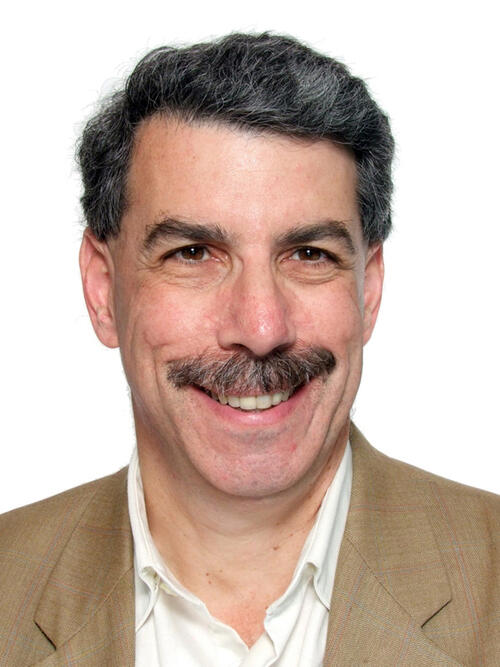
ChengJosephWEB.jpg PhD

Research Interests

Asia-Pacific and global competitiveness; national innovation and technology policies; foreign R&D investment; strategy and organization design for transnational firms.

Professional Biography

Joseph L. C. Cheng joins the Walter H. Shorenstein Asia-Pacific Research Center (Shorenstein APARC) in 2012 from the University of Illinois at Urbana-Champaign where he is currently professor of international business and director of the CIC Center for Advanced Study in International Competitiveness. CIC (Committee on Institutional Cooperation) is the nation’s primer consortium of top-tier research universities in the Midwest, including the Big Ten Conference members and the University of Chicago. 

During his time at Shorenstein APARC, Cheng will conduct research on the international competitiveness of multinational firms from the Asia-Pacific, with a focus on the JACKS countries (Japan, Australia, China, Korea, and Singapore). The project has two main objectives:  (1) to identify the key competitive advantages of the JACKS countries both individually and collectively as a cluster of economies; and (2) to investigate how indigenous firms from the JACKS countries internationalize and leverage home-based advantages to enhance their competitiveness overseas. The research findings will be reported in a forthcoming book that Cheng is currently writing: Asia-Pacific and the JACKS Multinationals: Economics, Culture, and International Competitiveness.

Cheng is a consulting editor for the Journal of International Business Studies and senior editorial consultant to the European Journal of International Management. He is also a guest editor for an upcoming special issue of Long Range Planning on “China Business and International Competitiveness: Economics, Politics, and Technology.” Additionally, he currently serves or has served on the editorial boards of several other journals, including Management International Review, Journal of World Business, Organizational Dynamics, and Journal of Engineering and Technology Management.

Cheng holds a PhD in business administration from the University of Michigan and a BS (with honors) in industrial engineering from the University of Wisconsin-Madison.

Paragraphs

Emerging infectious diseases (EIDs) pose international security threats because of their potential to inflict harm upon humans, crops, livestock, health infrastructure, and economies. The following questions stimulated the research described in this paper: What infrastructure is necessary to enable EID surveillance in developing countries? What cultural, political, and economic challenges stand in the way of setting up such infrastructure? And are there general principles that might guide engagement with developing countries and support EID surveillance infrastructure?

Using the U.S. Naval Area Medical Research Unit No. 2 as a common denominator, this paper compares barriers to EID surveillance in Cambodia and Indonesia and presents key factors—uncovered through extensive interviews—that constrain disease surveillance systems. In Cambodia, the key factors that emerged were low salaries; poor staff and human resources management; the effect of patronage networks; a culture of donor dependence; contrasting priorities between the government and international donors; and a lack of compensation for animal culling. The Cambodian military has also played a part. The government ceased a merit-based salary supplement scheme for civil servants after the military is alleged to have demanded similar pay incentives that donors had no interest in funding.

In Indonesia the key issues emerging as barriers to effective surveillance include poor host-donor relationships, including differing host-donor priorities and a misunderstanding of NAMRU-2 by Indonesian authorities; low salaries; a decline in the qualifications of personnel in the Ministry of Health; poor compensation for animal culling; and difficulties incentivizing local-level reporting in an era of decentralization.

As the interviews with in-country practitioners revealed, low levels of development in general are the main impediments to building EID surveillance infrastructure and are perhaps beyond the scope of health and scientific agencies at this point. Nevertheless, promoting greater understanding of these issues is a critical first step in mitigating negative outcomes.

Published: Ear, Sophal. "Emerging Infectious Disease Surveillance in Southeast Asia: Cambodia, Indonesia, and the US Naval Area Medical Research Unit 2." Asian Security 8.2 (2012): 164-187.

All Publications button
1
Publication Type
Working Papers
Publication Date
Journal Publisher
Asia Health Policy Program working paper #27
Authors

Walter H. Shorenstein
Asia-Pacific Research Center
616 Serra St., Encina Hall E301
Stanford University
Stanford, CA 94305-6055

(650) 725-2507 (650) 723-6530
0
Visiting Scholar
Heeyoung_Kwon_WEB.jpg MA

Heeyoung Kwon is a visiting scholar with the Korean Studies Program, and she is also currently a program officer in the Public Diplomacy Department at the Korea Foundation. She has been responsible for organizing bilateral forums such as the Seoul-Washington Forum and the Korea-Japan Forum, as well as KF Global Seminars at the Korea Foundation.

Her recent interests are South Korea-U.S. foreign policy toward North Korea and the Nuclear Nonproliferation Treaty, including the possible resumption of the Six Party Talks.  

Kwon received a BA in history from Hanyang University in Seoul, and an MA in Korean studies from the Graduate School of International Studies at Seoul National University. The topic of her MA thesis was about the South Korea-U.S. relationship, focusing on the dispatch of Korean soldiers to the Vietnam War.

Authors
News Type
News
Date
Paragraphs

China possesses vast coal reserves, and coal accounts for 70 percent of the country’s total energy consumption—3 billion tons per year. But China also consumes oil, natural gas, and an increasing amount of renewable energy.

Xuteng HuXuteng Hu, a Corporate Affiliates Visiting Fellow Program alumnus (2007–08), manages energy and materials development projects at PetroChina’s Petrochemical Research Institute in Beijing, where he serves as vice president.

Hu received his master’s and doctorate degrees in chemical engineering from Tsinghua University. 

PetroChina, one of China’s largest energy companies, has recently developed its own biojet fuel. The company is also researching other renewable energy technologies, including biofuel made from plant fiber.

During his year at Stanford University, Hu conducted research on the governance of China’s state-owned enterprises, focusing on energy companies like PetroChina, Sinopec, and China National Offshore Oil Corporation. He also studied strategies for the development and promotion of different forms of energy, ranging from coal to chemicals and oil to natural gas. Jean C. Oi, a political science professor and director of the Stanford China Program, served as Hu’s research advisor.

Since returning to China three years ago, Hu has managed the research and development of synthetic petroleum-based materials, and the construction of major pilot petrochemical plants. Perhaps most exciting of all, the biojet fuel project he led conducted a successful demonstration flight in October.

Of his time at Stanford, Hu says: “My experiences helped me think about corporate governance structure, energy development, and other issues related closely to my work from different perspectives, such as culture and society. It also enhanced my understanding of cultural and business exchanges between China and the West.”

Hero Image
DalianJet NEWSFEED
A China Southern jet takes off over Dalian apartment buildings, Oct. 2009. Corporate Affiliates alumnus Xuteng Hu has recently led a successful biojet fuel project in Beijing.
Flickr/Dmitry Klimenko
All News button
1
Paragraphs

For the past two decades China has been a poster child of successful globalization, integrating with the world and in the process lifting millions of citizens out of poverty. But China’s integration into the world economy and global trends drive and constrain Beijing’s ability to manage growing social, economic and political challenges. 

Global trends affect all nations, but China may be uniquely vulnerable to developments beyond its borders and beyond its control. Chinese leaders recognize the diversity and complexity of the challenges they face but appear determined to confront them individually and incrementally. How – and how well – they respond to those challenges will have significant consequences of China and the world. 

Many of these challenges center on rising expectations in the face of increasing competition.

Thanks to a fortuitous combination of wise decisions and good timing, China has made phenomenal progress in the three decades since Deng Xiaoping launched the policy of reform and opening to the outside world in 1978. More Chinese citizens live better today than ever before and many more expect to join the privileged ranks of the middle class. Aspirations and expectations have never been higher. That’s a very good situation to be in, but it also entails enormous challenges for China’s leaders because several trends indicate that meeting expectations could become increasingly difficult.

Chinese aspirations have never been higher, but meeting expectations could get increasingly difficult.

Specifically, China will find it increasingly difficult to sustain past rates of growth and improvements in living standards.

One visible trend results from the strategic decision to take on the easiest tasks first in order to produce an “early harvest” of tangible benefits that build experience and confidence to tackle the next set of challenges. By design, each successive set of challenges is more difficult than the ones that preceded it. There are many different manifestations of this phenomenon, including the decision to focus on the more developed coastal areas and move inward to less-developed regions characterized by less infrastructure, poorer nutrition and less education. Other manifestations include the consequences of joining international production chains as low-cost assemblers of goods that are designed, manufactured and marketed elsewhere. Sustained success requires moving up technical and managerial ladders to perform more demanding and better paying tasks. Other daunting challenges result from policies that have deliberately constrained domestic demand with predictable consequences that include increasing inflationary pressures and a nationwide property bubble.

A second category of challenges results from the fact that China now has, and will continue to have, more competition than in the past. When Deng announced the decision to pursue the longstanding goal of self-strengthening by following the model of Japan, Taiwan and other rapid modernizers, he was responding to a de facto invitation from the Carter administration for China to take advantage of “free world” economic opportunities without becoming an ally or having to change its political system. This gave China a 10-year head start with virtually no competition until the Soviet Union collapsed and the Cold War ended. China made good use of this opportunity and has since taken advantage of experience and ties forged with foreign partners before Central European states and the states of the former Soviet Union joined the game. 

India, Brazil, Indonesia and other “non-aligned” states stayed out of the game for a few years longer, thereby increasing China’s advantages. Now there are more players and potential competitors climbing the learning curve more rapidly than they otherwise might have done because they can learn from China’s experience. Foreign investors and international production chains now have far more options than they did when China was essentially the only large developing country in the game.

China now has, and will continue to have, more competition than in the past from other emerging economies.

A third set of challenges centers on demographic trends and implications. One is the oft-cited but nonetheless extraordinary challenge of being the first country in history to have a population that becomes old before it becomes rich. Many countries have graying populations – Japan and South Korea in Northeast Asia and most of Western Europe – but the others are much more highly developed than China and have extensive social safety nets to meet the needs of their senior citizens. China’s one-child-per-couple-policy has accelerated a demographic shift that normally occurs in response to higher standards of living, greater educational and employment opportunities for women, and the independent choices of millions of people. 

China must put in place an extensive and costly system to support its elderly – reducing the amount of money and other resources available for other goals – or live with the consequences of making individuals and couples responsible for the wellbeing of parents and grandparents. This challenge is compounded by the broader consequences of becoming a society in which there are few siblings, cousins, aunts, uncles or other relatives beyond the nuclear family.

A fourth challenge derives from the highly centralized character of China’s political system. For three decades, China arguably has been able to develop as quickly as it has because it is a unitary state – not a federal system in which the provinces have significant independent authority – with a single-party regime. This facilitates timely and decisive action in response to perceived needs and opportunities and makes it easier to coordinate multiple components of an increasingly complex system. There are advantages to this type of system, but also risks and costs. One set of risks results from the fact that “all” key decisions must be made at the apex of the system by a relatively small number of officials who have only finite time, attention and knowledge. As China has become more modern and prosperous, it has also become more diverse. Different locales, sectors of the economy, interest groups and other constituencies have diverse expectations of the political system. Keeping the many concerns and requirements straight, and successfully juggling and balancing competing demands, will continue to become more complex and difficult.

Looming challenges are under study, increasing the likelihood of avoiding the most negative consequences.

As this happens, it will intensify another challenge, namely, the challenge of being “right” most of the time with little to no cushion for error. Systems with distributed authority are more cumbersome, but they avoid single points of failure. The danger of single-point failure increases as the complexity of issues, number of competing viewpoints and volume of information increases. Logically, the chance of mistakes increases as decisions become more demanding. Theoretically, there exists a point in any system at which the system can be overwhelmed by the magnitude of the task. The eurozone crisis may be a cautionary example.

Recognizing these challenges should not be read as a pessimistic prediction of inevitable failure. Indeed, the fact that looming but not yet imminent challenges are already the subject of study, deliberation and debate around the world increases the likelihood of avoiding the most negative or disruptive consequences; mitigating those that cannot be avoided entirely; and capitalizing on the many positive trends toward greater cooperation, acceptance of interdependencies and ability to learn from others’ experiences. 

Clearly discernible trends point to common interests and opportunities for cooperation as well as to challenges of unprecedented complexity. Whether China continues to eschew active engagement to address challenges at the global level in order to concentrate on domestic problems will shape possibilities for international cooperation. So, too, will actions of other nations that help or hinder China’s ability to solve its problems.
All Publications button
1
Publication Type
Journal Articles
Publication Date
Journal Publisher
YaleGlobal Online
Authors
Thomas Fingar
Paragraphs

What kind of a health care system do China’s 1.3 billion turn to when ill, injured, or in need of care? This article provides a brief overview of how China’s health system has transformed alongside China’s society and economy since the Mao era, including how the current system is financed, organized, regulated, and being reformed. It first provides a brief description of the Mao-era health system and China’s demographic and epidemiologic transitions. Then it gives an overview of China’s contemporary health care system, including the dramatic expansion of health insurance over the last eight years and the progress of national health system reforms initiated in 2009.

A condensed and revised version of this paper is published in The Milken Institute Review 2012 second quarter: 16-27. 

Published: Eggleston, Karen. "Health care for 1.3 billion: An overview of China’s health system." (2012).

All Publications button
1
Publication Type
Working Papers
Publication Date
Journal Publisher
Asia Health Policy Program working paper # 28
Authors
Karen Eggleston
-

At present, the tobacco industry produces some six trillion cigarettes worldwide every year. Six trillion cigarettes per annum, each ready to release smoke filled with highly addictive nicotine and powerful carcinogens. A third of all these sticks were produced in China last year. In 2011, the world’s largest cigarette maker by volume, the China National Tobacco Corporation, contributed an all-time high of U.S. $214 billion in profits and taxes to the Chinese government, up 22 percent year-on-year. Currently the greatest cause of preventable death in the world, the cigarette is likely to kill ten times as many people in the 21st century as it did in the 20th century, epidemiologists tell us, with China bearing the largest burden. Until now, much global health research and intervention has focused with limited success on the cigarette consumer—addressing how one or another variable prompts people to take up or quit smoking, whether the cue for the consumer is biological, psychological, spatial, financial or symbolic. What though of the industrial sources of tobacco-related diseases? Where are the six trillion cigarettes that are released into circulation each year manufactured? Where are they rolled, wrapped, and boxed for shipment? This presentation will introduce the Cigarette Citadels Project, an innovative application of participatory GIS. With special attention given to China’s network of cigarette factories, Matthew Kohrman will explain how the Cigarette Citadels Project not only reveals conceptual roadblocks in public health policy but also lacuna in social theory pertaining to the state and the politics of life.


Matthew Kohrman joined Stanford’s faculty in 1999. His research and writing bring multiple methods to bear on the ways health, culture, and politics are interrelated. Focusing on the People's Republic of China, he engages various intellectual terrains such as governmentality, gender theory, political economy, critical science studies, and embodiment. His first monograph, Bodies of Difference: Experiences of Disability and Institutional Advocacy in the Making of Modern China, examines links between the emergence of a state-sponsored disability-advocacy organization and the lives of Chinese men who have trouble walking. In recent years, Kohrman has been conducting research projects aimed at analyzing and intervening in the biopolitics of cigarette smoking and production. These projects expand upon analytical themes of Kohrman’s disability research and engage in novel ways techniques of public health.

This event is part of the China's Looming Challenges series

Philippines Conference Room

Stanford University
Department of Anthropology
Building 50, Central Quad
Stanford, California 94305-2034

(650) 723-3421 (650) 725-0605
0
Associate Professor of Anthropology
Senior Fellow, by courtesy, at the Freeman Spogli Institute for International Studies
Faculty Affiliate at the Walter H. Shorenstein Asia-Pacific Research Center
Faculty Affiliate at the Stanford Center on China's Economy and Institutions
matthewkohrman-vert.jpeg

Matthew Kohrman joined Stanford’s faculty in 1999. His research and writing bring multiple methods to bear on the ways health, culture, and politics are interrelated. Focusing on the People's Republic of China, he engages various intellectual terrains such as governmentality, gender theory, political economy, critical science studies, and embodiment. His first monograph, Bodies of Difference: Experiences of Disability and Institutional Advocacy in the Making of Modern China, examines links between the emergence of a state-sponsored disability-advocacy organization and the lives of Chinese men who have trouble walking. In recent years, Kohrman has been conducting research projects aimed at analyzing and intervening in the biopolitics of cigarette smoking and production. These projects expand upon analytical themes of Kohrman’s disability research and engage in novel ways techniques of public health.

Date Label
Matthew Kohrman Associate Professor of Anthropology and Senior Fellow Speaker FSI
Seminars
-

Richard Nixon’s visit to China in Feb. 1972 reshaped the global balance of power and opened the door to the establishment of relations between China and the United States.

It was also a milestone in the history of journalism. Since the communist revolution of 1949, Beijing had barred virtually all U.S. reporters from China. For the Nixon trip, however, it agreed to accept nearly 100 journalists, and to allow the most dramatic events—Nixon’s arrival in Beijing, Zhou Enlai’s welcoming banquet, and visits to the Great Wall and the Forbidden City—to be televised live.

The coverage was arguably as important as the details of the diplomacy. It profoundly transformed American and international perceptions of a long-isolated China, generated the public support Nixon needed to change U.S. policy, and laid the groundwork for Beijing’s gradual move to open China to greater international media coverage.

While the outlines of the Nixon trip are familiar, the behind-the-scenes story of how that momentous event was covered is much less well known. The U.S.-China Institute at the University of Southern California has produced a new documentary film: Assignment: China—The Week that Changed the World.

The Walter H. Shorenstein Asia-Pacific Research Center will present a special screening of Assignment: China, followed by commentary from the film’s reporter and narrator Mike Chinoy, who is currently a senior fellow at the U.S.-China Institute and formerly CNN’s senior Asia correspondent and Beijing bureau chief. Shorenstein Distinguished Fellow Michael Armacost will provide insight into the historical significance of Nixon’s 1972 visit.

About the Film

Assignment: China—The Week that Changed the World contains remarkable and previously unreleased footage of the Nixon visit, interviews with Chinese officials, people who worked for Nixon, as well as many of the journalistic luminaries who accompanied the president. These include Dan Rather and Bernard Kalb of CBS, Ted Koppel and Tom Jarriel of ABC, Barbara Walters of NBC, Max Frankel of the New York Times, Stanley Karnow of the Washington Post, photographer Dirck Halstead of UPI, and many others.

Reported and narrated by Mike Chinoy, the film offers a fascinating and previously untold perspective on one of the most important historical moments of the 20th century.

Speakers

Mike Chinoy Mike Chinoy

Mike Chinoy
Senior Fellow, U.S.-China Institute, University of Southern California

Image

Michael H. Armacost
Shorenstein Distinguished Fellow, Shorenstein Asia-Pacific Research Center, Stanford University

Philippines Conference Room

Mike Chinoy Speaker U.S.-China Institute, University of Southern California
0
Former Shorenstein APARC Fellow
Michael_Armacost.jpg PhD

Michael Armacost (April 15, 1937 – March 8, 2025) was a Shorenstein APARC Fellow at the Walter H. Shorenstein Asia-Pacific Research Center (Shorenstein APARC) from 2002 through 2021. In the interval between 1995 and 2002, Armacost served as president of Washington, D.C.'s Brookings Institution, the nation's oldest think tank and a leader in research on politics, government, international affairs, economics, and public policy. Previously, during his twenty-four-year government career, Armacost served, among other positions, as undersecretary of state for political affairs and as ambassador to Japan and the Philippines.

Armacost began his career in academia, as a professor of government at Pomona College. In 1969, he was awarded a White House Fellowship and was assigned to the Secretary and Deputy Secretary of State. Following a stint on the State Department's policy planning and coordination staff, he became a special assistant to the U.S. ambassador in Tokyo from 1972 to 74, his first foreign diplomatic post. Thereafter, he held senior Asian affairs and international security posts in the State Department, the Defense Department, and the National Security Council. From 1982 to 1984, he served as U.S. ambassador to the Philippines and was a key force in helping the country undergo a nonviolent transition to democracy. In 1989, President George Bush tapped him to become ambassador to Japan, considered one of the most important and sensitive U.S. diplomatic posts abroad.

Armacost authored four books, including, Friends or Rivals? The Insider's Account of U.S.–Japan Relations (1996), which draws on his tenure as ambassador, and Ballots, Bullets, and Bargains: American Foreign Policy and Presidential Elections (2015). He also co-edited, with Daniel Okimoto, the Future of America's Alliances in Northeast Asia, published in 2004 by Shorenstein APARC. Armacost served on numerous corporate and nonprofit boards, including TRW, AFLAC, Applied Materials, USEC, Inc., Cargill, Inc., and Carleton College, and he currently chairs the board of The Asia Foundation.  

A native of Ohio, Armacost graduated from Carleton College and earned his master's and doctorate degrees in public law and government from Columbia University. He received the President's Distinguished Service Award, the Defense Department's Distinguished Civilian Service Award, the Secretary of State's Distinguished Services Award, and the Japanese government’s Grand Cordon of the Order of the Rising Sun.

Date Label
Michael H. Armacost Speaker Shorenstein APARC, Stanford University
Seminars
Date Label
-

While Chernobyl, and now Fukushima, are household words, far fewer people have heard of Maiak in the southern Urals and Hanford in eastern Washington State where Soviet and American engineers built plutonium plants to fuel the Cold War nuclear arsenal. Within nuclear "buffer zones," plant managers, who were pushed to produce as much plutonium as quickly as possible, polluted freely, liberally and disastrously. During the plutonium disasters that ensued, each plant issued over 200 million curies of radioactive isotopes into the surrounding environment, at least twice the amount released at Chernobyl. Under cover of nuclear security and powered by generous corporate welfare, plant managers employed influential public relations campaigns, restricted medical research, deployed temporary, migrant workers as ‘"jumpers" for the dirtiest work, and generally denied the existence and hazards of radioactive contamination. This was the house plutonium built. Kate Brown argues these histories are important because they supplied models, staff, blueprints and subsequent ready-made disasters for Chernobyl and Fukushima.

Kate Brown is an associate professor of history at the University of Maryland, Baltimore County. She is the author of a Biography of No Place: From Ethnic Borderland to Soviet Heartland (Harvard 2004), which won the American Historical Association’s George Louis Beer Prize for the Best Book in International European History. Brown is a 2009 Guggenheim Fellow and is working on a book called Plutopolia, a tandem history of the world’s first plutonium cities, to be published by Oxford University Press in 2012.

---------

Special Japan Studies Program and CEAS Series: Winter-Spring 2011-12

Looking Back, Looking Forward: Japan's March 11 Disasters One Year Later

The earthquake, tsunami, and nuclear disaster that hit Japan in March 2011 had both immediate catastrophic consequences and long term repercussions. Fundamental areas of Japan’s environment, economy, society, and collective national psyche were deeply affected, giving rise to a broad range of urgent issues. These include economic debates about how to meet the country’s energy demands with nuclear power plants offline, and what path to take for the country’s energy future; political crises, including criticism of the government’s disaster response; the psychological challenges of coping with trauma and grief; a daunting environmental clean-up; and social developments, including a new wave of civil society activism. This series brings together scholars and activists from a wide range of specialties to take stock of how the Japanese have been affected by the disasters, and to assess the efforts of residents, volunteers, and policy makers to recover and move forward.

Philippines Conference Room

Kate Brown Associate Professor of History Speaker University of Maryland, Baltimore County (UMBC)
Seminars
Subscribe to Society