Society

FSI researchers work to understand continuity and change in societies as they confront their problems and opportunities. This includes the implications of migration and human trafficking. What happens to a society when young girls exit the sex trade? How do groups moving between locations impact societies, economies, self-identity and citizenship? What are the ethnic challenges faced by an increasingly diverse European Union? From a policy perspective, scholars also work to investigate the consequences of security-related measures for society and its values.

The Europe Center reflects much of FSI’s agenda of investigating societies, serving as a forum for experts to research the cultures, religions and people of Europe. The Center sponsors several seminars and lectures, as well as visiting scholars.

Societal research also addresses issues of demography and aging, such as the social and economic challenges of providing health care for an aging population. How do older adults make decisions, and what societal tools need to be in place to ensure the resulting decisions are well-informed? FSI regularly brings in international scholars to look at these issues. They discuss how adults care for their older parents in rural China as well as the economic aspects of aging populations in China and India.

Paragraphs

In tropical settings, malaria education at school is potentially useful, but textbook content related to malaria education has so far received little attention. This study aimed to examine whether school textbooks contain sufficient knowledge and skills to help children in primary and lower secondary schools and their family members to cope with malaria.

All Publications button
1
Publication Type
Journal Articles
Publication Date
Journal Publisher
PLoS ONE
Authors
Siyan Yi
Paragraphs

Japanese textbooks, long a subject of controversy, tend to actually present a dry, unpatriotic account of World War Two, says Daniel C. Sneider in a May 2012 Nippon.com article. A comparative understanding of different textbook descriptions of the war is one way to move toward reconciling this painful historical era.

English-language version

Japanese-language version

All Publications button
1
Publication Type
Journal Articles
Publication Date
Journal Publisher
Nippon.com
Authors
Paragraphs
DemocracyAfterDemocratization 34

Half a century since the adoption of democracy in South Korea, the Korean people's high hopes for popular governance have not been met. There is widespread skepticism about what Korea's implementation of democracy has brought to the nation and whether it will be able to respond effectively in the future to the demands of an evolving society and world. What accounts for the conservative complacency of Korea's democratic system? Why do democratic administrations in Korea seem so incompetent? Do political parties in Korea legitimately represent the voice of civil society in legislating and policymaking on issues with a direct impact on the freedom and welfare of the people?

Taking an issue-oriented approach, renowned Korean political scientist Jang-Jip Choi endeavors to answer such questions as he examines the origins, structures, and conflicts of conservative democracy in South Korea as well as democratization's impact on the state, economy, and civil society.

Desk, examination, or review copies can be requested through Stanford University Press.

All Publications button
1
Publication Type
Books
Publication Date
Subtitle

The Korean Experience

Authors
Book Publisher
Shorenstein APARC
Paragraphs
Peacemaker 02B

More than two decades after the cold war ended elsewhere, it continues undiminished on the Korean Peninsula. The division of the Korean nation into competing North and South Korean states and the destructive war that followed constitute one of the great, and still unresolved, tragedies of the twentieth century. Peacemaker is the memoir of Lim Dong-won, former South Korean unification minister and architect of Nobel Peace Prize winner Kim Dae-jung's Sunshine policy toward North Korea.

As both witness and participant, Lim traces the process of twenty years of diplomatic negotiations with North Korea, from the earliest rounds of inter-Korean talks through the historic inter-Korean summit of June 2000 and beyond. Peacemaker offers a fascinating inside look into the recent history of North-South Korea relations and provides important lessons for policymakers and citizens who seek to understand and resolve the tragic--and increasingly dangerous--situation on the Korean Peninsula.

Desk, examination, or review copies can be requested through Stanford University Press.

All Publications button
1
Publication Type
Books
Publication Date
Subtitle

Twenty Years of Inter-Korean Relations and the North Korean Nuclear Issue

Authors
Book Publisher
Shorenstein APARC
-

Abstract:

The Chinese bureaucracy presents a set of anomalies that need to be explained: In the presence of a strong central authority, why do we observe widespread collusive behaviors at the local level? Why are violations and problems uncovered in the inspection processes are left unaddressed? Why is performance evaluation conducted by the higher authorities is subsequently ignored by the local authorities? We develop a theoretical model on authority relationships in the Chinese bureaucracy by conceptualizing the allocation of control rights in goal setting, inspection and incentive provision among the principal, supervisor and agent. Variations in the allocation of control rights give rise to different modes of governance and entail distinct behavioral implications among the parties involved. The proposed model provides a unified framework and a set of analytical concepts to examine different governance structures, varying authority relationships, and behavioral patterns in the Chinese bureaucracy. We illustrate the proposed model in a case study of authority relationships and the ensuing behavioral patterns in the environmental protection arena over a 5-year policy cycle.


About the speaker:

Xueguang Zhou is the Kwoh-Ting Li Professor in Economic Development, a professor of sociology, and a Freeman Spogli Institute for International Studies senior fellow. His main area of research is on institutional changes in contemporary Chinese society, focusing on Chinese organizations and management, social inequality, and state-society relationships. Zhou's research topics are related to the making of markets, village elections, and local government behaviors. His recent publications examine the role of bureaucracy in public goods provision in rural China (Modern China, 2011); interactions among peasants, markets, and capital (China Quarterly, 2011); access to financial resources in Chinese enterprises (Chinese Sociological Review, 2011, with Lulu Li); multiple logics in village elections (Social Sciences in China, 2010, with Ai Yun); and collusion among local governments in policy implementation (Research in the Sociology of Organizations, 2011, with Ai Yun and Lian Hong; and Modern China, 2010) .

Philippines Conference Room

Shorenstein APARC
Stanford University
Encina Hall, E301
Stanford, CA 94305-6055

(650) 725-6392 (650) 723-6530
0
Senior Fellow at the Freeman Spogli Institute for International Studies
Kwoh-Ting Li Professor in Economic Development
Professor of Sociology
Graduate Seminar Professor at the Stanford Center at Peking University, June and July of 2014
Faculty Affiliate at the Stanford Center on China's Economy and Institutions
Xueguang Zhou_0.jpg PhD

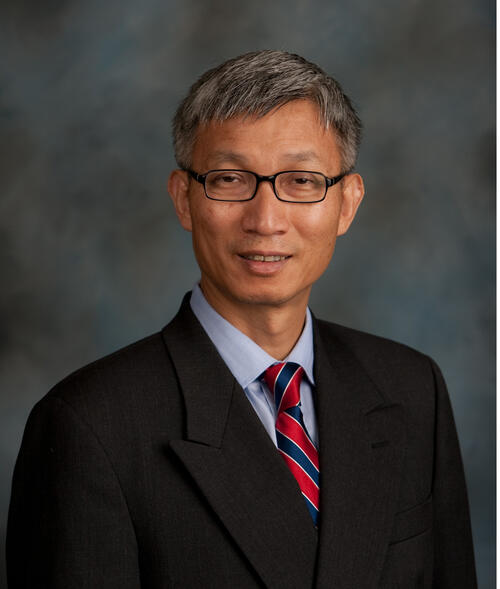
Xueguang Zhou is the Kwoh-Ting Li Professor in Economic Development, a professor of sociology, and a Freeman Spogli Institute for International Studies senior fellow. His main area of research is on institutional changes in contemporary Chinese society, focusing on Chinese organizations and management, social inequality, and state-society relationships.

One of Zhou's current research projects is a study of the rise of the bureaucratic state in China. He works with students and colleagues to conduct participatory observations of government behaviors in the areas of environmental regulation enforcement, in policy implementation, in bureaucratic bargaining, and in incentive designs. He also studies patterns of career mobility and personnel flow among different government offices to understand intra-organizational relationships in the Chinese bureaucracy.

Another ongoing project is an ethnographic study of rural governance in China. Zhou adopts a microscopic approach to understand how peasants, village cadres, and local governments encounter and search for solutions to emerging problems and challenges in their everyday lives, and how institutions are created, reinforced, altered, and recombined in response to these problems. Research topics are related to the making of markets, village elections, and local government behaviors.

His recent publications examine the role of bureaucracy in public goods provision in rural China (Modern China, 2011); interactions among peasants, markets, and capital (China Quarterly, 2011); access to financial resources in Chinese enterprises (Chinese Sociological Review, 2011, with Lulu Li); multiple logics in village elections (Social Sciences in China, 2010, with Ai Yun); and collusion among local governments in policy implementation (Research in the Sociology of Organizations, 2011, with Ai Yun and Lian Hong; and Modern China, 2010).

Before joining Stanford in 2006, Zhou taught at Cornell University, Duke University, and Hong Kong University of Science and Technology. He is a guest professor at Peking University, Tsinghua University, and the People's University of China. Zhou received his Ph.D. in sociology from Stanford University in 1991.

CV
Date Label
Xueguang Zhou Kwoh-Ting Li Professor in Economic Development; Professor of Sociology; FSI Senior Fellow Speaker
Francis Fukuyama Olivier Nomellini Senior Fellow Moderator Stanford University
Seminars
-

The fall of Bo Xilai is the most serious political crisis in China since Tiananmen in 1989. The leadership succession process was nearly derailed and a deep rift has opened up at the top of the Communist Party. While many critical details of this power struggle remain unknown, the effects of this incident are certain to be far-reaching. Many key questions have been raised, including: How will the fall of Bo affect the new leadership line-up and its policies? How will the rift affect the party's ability to maintain control over a society showing growing signs of defiance and tensions? What does the incident tell us about the systemic corruption at the core of the party's leadership? Professor Minxin Pei will address these and other issues during this timely seminar.

About the Speaker

Image
Minxin Pei
Minxin Pei joined Claremont McKenna College in 2009. Prior to that he was a senior associate and the director of the China Program at the Carnegie Endowment for International Peace in Washington, DC.

Pei's research focuses on democratization in developing countries, economic reform and governance in China, and U.S.-China relations. He is the author of From Reform to Revolution: The Demise of Communism in China and the Soviet Union (Harvard University Press, 1994) and China’s Trapped Transition: The Limits of Developmental Autocracy (Harvard University Press, 2006). Pei’s research has been published in Foreign Policy, Foreign Affairs, The National Interest, Modern China, China Quarterly, Journal of Democracy, and many edited books.

He is a frequent commentator for BBC World News, Voice of America, and National Public Radio; his op-eds have appeared in the Financial Times, the New York Times, the Washington Post, Newsweek International, the International Herald Tribune, and other major newspapers.

Pei received his PhD in political science from Harvard University. He was on the faculty at Princeton University from 1992 to 1998, and he has received numerous prestigious fellowships, including the National Fellowship at the Hoover Institution at Stanford University, the McNamara Fellowship at the World Bank, and the Olin Faculty Fellowship of the Olin Foundation.


Philippines Conference Room

Minxin Pei Tom and Margot Pritzker ’72 Professor of Government and Director of the Keck Center for International and Strategic Studies Speaker Claremont McKenna College

Shorenstein APARC
Stanford University
Encina Hall, E301
Stanford, CA 94305-6055

(650) 725-6392 (650) 723-6530
0
Senior Fellow at the Freeman Spogli Institute for International Studies
Kwoh-Ting Li Professor in Economic Development
Professor of Sociology
Graduate Seminar Professor at the Stanford Center at Peking University, June and July of 2014
Faculty Affiliate at the Stanford Center on China's Economy and Institutions
Xueguang Zhou_0.jpg PhD

Xueguang Zhou is the Kwoh-Ting Li Professor in Economic Development, a professor of sociology, and a Freeman Spogli Institute for International Studies senior fellow. His main area of research is on institutional changes in contemporary Chinese society, focusing on Chinese organizations and management, social inequality, and state-society relationships.

One of Zhou's current research projects is a study of the rise of the bureaucratic state in China. He works with students and colleagues to conduct participatory observations of government behaviors in the areas of environmental regulation enforcement, in policy implementation, in bureaucratic bargaining, and in incentive designs. He also studies patterns of career mobility and personnel flow among different government offices to understand intra-organizational relationships in the Chinese bureaucracy.

Another ongoing project is an ethnographic study of rural governance in China. Zhou adopts a microscopic approach to understand how peasants, village cadres, and local governments encounter and search for solutions to emerging problems and challenges in their everyday lives, and how institutions are created, reinforced, altered, and recombined in response to these problems. Research topics are related to the making of markets, village elections, and local government behaviors.

His recent publications examine the role of bureaucracy in public goods provision in rural China (Modern China, 2011); interactions among peasants, markets, and capital (China Quarterly, 2011); access to financial resources in Chinese enterprises (Chinese Sociological Review, 2011, with Lulu Li); multiple logics in village elections (Social Sciences in China, 2010, with Ai Yun); and collusion among local governments in policy implementation (Research in the Sociology of Organizations, 2011, with Ai Yun and Lian Hong; and Modern China, 2010).

Before joining Stanford in 2006, Zhou taught at Cornell University, Duke University, and Hong Kong University of Science and Technology. He is a guest professor at Peking University, Tsinghua University, and the People's University of China. Zhou received his Ph.D. in sociology from Stanford University in 1991.

CV
Date Label
Xueguang Zhou Kwoh-Ting Li Professor in Economic Development; Professor of Sociology; and Freeman Spogli Institute for International Studies Senior Fellow Commentator Stanford University
Seminars
Date Label
Subscribe to Society