Society

FSI researchers work to understand continuity and change in societies as they confront their problems and opportunities. This includes the implications of migration and human trafficking. What happens to a society when young girls exit the sex trade? How do groups moving between locations impact societies, economies, self-identity and citizenship? What are the ethnic challenges faced by an increasingly diverse European Union? From a policy perspective, scholars also work to investigate the consequences of security-related measures for society and its values.

The Europe Center reflects much of FSI’s agenda of investigating societies, serving as a forum for experts to research the cultures, religions and people of Europe. The Center sponsors several seminars and lectures, as well as visiting scholars.

Societal research also addresses issues of demography and aging, such as the social and economic challenges of providing health care for an aging population. How do older adults make decisions, and what societal tools need to be in place to ensure the resulting decisions are well-informed? FSI regularly brings in international scholars to look at these issues. They discuss how adults care for their older parents in rural China as well as the economic aspects of aging populations in China and India.

Authors
Denise Masumoto
News Type
News
Date
Paragraphs

As the new academic year gets underway, the Walter H. Shorenstein Asia-Pacific Research Center’s Corporate Affiliates Program is excited to welcome its new class of fellows to Stanford University:

  • Yuta AikawaMinistry of Economy, Trade & Industry, Japan
  • Wataru FukudaShizuoka Prefectural Government
  • Huang (Catherine) HuangBeijing Shanghe Shiji Investment Company
  • Avni JethwaReliance Life Sciences
  • Satoshi Koyanagi, Ministry of Economy, Trade & Industry, Japan
  • An Ma, PetroChina
  • Huaxiang Ma, Peking University
  • Yuichiro Muramatsu, Mitsubishi Electric
  • Tsuzuri Sakamaki, Ministry of Finance, Japan
  • Tsuneo SasaiThe Asahi Shimbun
  • Ravishankar Shivani, Reliance Life Sciences
  • Aki Takahashi, Nissoken
  • Mariko Takeuchi, Sumitomo Corporation
  • Hideaki Tamori, The Asahi Shimbun
  • Ryo Washizaki, Japan Patent Office
  • Hung-Jen (Fred) Yang, MissionCare

During their stay at Stanford University, the fellows will audit classes, work on English skills, and conduct individual research projects; at the end of the year they will make a formal presentation on the findings from their research. During their stay at the center, they will have the opportunity to consult with Shorenstein APARC's scholars and attend events featuring visiting experts from around the world. The fellows will also participate in special events and site visits to gain a firsthand understanding of business, society and culture in the United States.

 

Hero Image
rsd15 070 0045a Rod Searcey
All News button
1
-

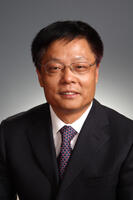
Professor MENG Qingyue, Dean of the Peking University School of Public Health and Director of the China Center for Health Development Studies at Peking University, will share his deep experience with research and policy advising about health and healthcare in the PRC. In the colloquium, Professor Meng will summarize the achievements of China’s health system reforms as well as the formidable challenges remaining -- strengthening primary care, reforming payment incentives, and multiple other reform priorities.

Professor Meng is lead author of the first-ever comprehensive overview of the PRC health system [http://www.wpro.who.int/asia_pacific_observatory/hits/series/chn/en/], which documents that the PRC has made great strides in raising health status and improving access to medical care, in large part thanks to emphasis on cost- effective public health programs, renewed commitments of government financing, expansion of social health insurance and other forms of financial protection, and investments in the healthcare delivery system. However, challenges remain in the form of large and in some cases growing inequalities in health and healthcare – across regions, urban-rural areas, or involving migrants and other vulnerable groups– as well as in improving the quality of healthcare, reforming public hospitals, and making expenditure growth sustainable through payment reforms and improved strategic purchasing.

Image
meng qing yue
Professor Meng Qingyue (MD, PhD), is Professor in Health Economics and Policy, Dean of Peking University School of Public Health, and Executive Director of Peking University China Center for Health Development Studies.

He obtained his Bachelor degree in medicine from Shandong Medical University (now Shandong University), Masters in public health from Shanghai Medical University (now Fudan University), Masters in economics from University of the Philippines, and PhD in health economics and policy from Karolinska Institutet in Sweden.

Before taking the current position, he was the Dean of Shandong University School of Public Health and Director of Shandong University Center for Health Management and Policy. His research interests include health financing policy and health provider payment systems.

He has led a team doing dozens of research projects supported by both domestic and international funding sources. He has been Member of the Expert Committee on Health Policy and Management to China Ministry of Health over the past decade. He is the Board Member of Health Systems Global elected from the Asia and Pacific Region.


China's health system
Download pdf
Meng Qingyue Professor in Health Economics and Policy, Dean of Peking University School of Public Health, and Executive Director of Peking University China Center for Health Development Studies
Seminars
-

This event has moved from the 4:30pm talk to a noon talk.

Nonprofit organizations are engaged in public sector management as service deliverers, and more recently, as governance partners. Such a role shift of nonprofits can be explained by a couple of spontaneous mechanisms that link service contracting to collaborative governance. The evolving elderly service contracting in Shanghai discloses that contracting may induce power sharing, consolidate mutual trust, reshape community governance networks, and spur nonprofit development. Contracting nonprofits thus may make decisions, enforce regulatory functions, set rules, and influence community governance. An evolutionary perspective provides a new angle on the changing government-nonprofit relations in China.

Image
dr jing yijia4x6
Dr. Yijia Jing is a professor in Public Administration and associate director of foreign affairs at Fudan University. He is the editor-in-chief of Fudan Public Administration Review, and serves as the vice president of International Research Society for Public Management. He is associate editor of Public Administration Review and Co-editor of International Public Management Journal. He is also the founding co-editor of a Palgrave book series---Governing China in the 21 Century.

Yijia Jing Professor in Public Administration and Associate Director of Foreign Affairs, Fudan University
Seminars
Encina Hall E301616 Serra StreetStanford, CA94305-6055
(650) 723-6530
0
huijun_gu.jpg Ph.D.

Huijun Gu joins the Walter H. Shorenstein Asia-Pacific Research Center (Shorenstein APARC) for the 2015-16 year as a visiting scholar from Jiangsu Administration Institute, where he serves as an associate professor.

His research interests include Planning (规划) and Governance, industrial upgrading and government behavior.

Huijun Gu obtained his Ph.D. at Nanjing University in 2013, focusing on organizational behavior.

Visiting Scholar
-

While Prime Minister Abe Shinzo has emerged as the strongest Japanese leader in a decade, the dark underside of his administration has been widespread accusations of heavy-handed intimidation of the press. Especially in the last year, there have been numerous high-profile cases in which major media organizations have appeared to capitulate to such pressure, often engaging in a preemptive self-censorship known in Japan as jishuku, or “self-restraint.” A close examination of some of these cases reveals that the Abe administration has indeed engaged in an aggressive effort to shape press coverage using both the carrot of access, and the stick of political pressure and unbridled nationalist intimidation. However, much of the blame also belongs in the media organizations themselves, which have appeared unable, at least initially, to resist the administration’s pressure tactics. Indeed, the Abe government has appeared adept at exploiting weaknesses in Japan’s major media that include a competitive obsession with scoops, a heavy dependence on government sources seen in the so-called press club system and the lack of a shared sense of professional ethics and identity. The collapse of political opposition parties, and the strengthening of state secrecy laws during the second Abe administration also play roles. Deeper historical trends will also be considered, including weak notions of civil society and a moral centrality of the state that has its roots in the crash nation-building of the Meiji period.

Martin Fackler is currently Journalist-in-Residence at the Rebuild Japan Initiative Foundation, a Tokyo-based think tank. From 2009 to 2015, he covered Japan and the Korean peninsula as Tokyo bureau chief for the New York Times. In 2012, he was a finalist for the Pulitzer Prize in international reporting for his and his colleagues' investigative stories on the Fukushima Daiichi nuclear meltdown that the prize committee said offered a "powerful exploration of serious mistakes concealed by authorities in Japan." Martin is also the author (in Japanese) of the bestseller “Credibility Lost: The Crisis in Japanese Newspaper Journalism after Fukushima,” a critical look at Japanese media coverage of the 2011 earthquake and nuclear disaster. In total, he spent a decade in the Tokyo bureau of the New York Times, where he also served as economics correspondent. Before joining the Times in 2005, he worked in Tokyo for the Wall Street Journal, the Far Eastern Economic Review, the Associated Press and Bloomberg News, and in Beijing and Shanghai for AP. He has Masters degrees in journalism from the University of Illinois at Urbana and in East Asian history from the University of California, Berkeley.

Martin Fackler Journalist-in-Residence at the Rebuild Japan Initiative Foundation
Seminars
Date Label
Encina Hall E301616 Serra StreetStanford, CA94305-6055
(650) 724-5321 (650) 723-6530
0
darika_saingam.jpg Ph.D.

Darika Saingam joins the Walter H. Shorenstein Asia-Pacific Research Center as the Developing Asia Health Policy Postdoctoral Fellow for the 2015-16 year.  Saingam’s research interests are public health, substance abuse, drug policy and Southeast Asia. While at Shorenstein APARC, she will research the evolution of substance-abuse control measures and related policy in Thailand.  Saingam seeks to identify potentially effective policy directions suitable for Thailand, and other developing countries in Southeast and East Asia.

Saingam completed her doctorate in epidemiology at the Prince of Songkla University in 2012, and has served as a researcher at the University’s epidemiology unit since, as well as a researcher at the Thailand Substance Abuse Academic Network since 2014.

2015-16 Developing Asia Health Policy Postdoctoral Fellow
Encina Hall E301616 Serra StreetStanford, CA94305-6055
(650) 724-5579 (650) 723-6530
0
nico_ravanilla.jpg Ph.D.

Nico Ravanilla joins the Walter H. Shorenstein Asia-Pacific Research Center as Shorenstein Postdoctoral Fellow for the 2015-16 year.  His research interests are political economy and governance, comparative politics and Southeast Asia. While at Shorenstein APARC, Ravanilla will research how political selection impacts governance, and evaluate possible routes for incentivizing capable and virtuous citizens to run for public office.

His project titled “Nudging Good Politicians” looks at the case of the Sangguniang Kabataan, a governing body in the Philippines comprised of elected youth leaders. Ravanilla aims to apply his research to develop and scale up programs for politicians, especially those at the onset of their careers, which would include specialized leadership training and merit-based endorsement.

Ravanilla is also a Southeast Asia Research Group (SEAREG) Young Southeast Asia Fellow for 2015-16.  He received his Ph.D. in political science and public policy from the University of Michigan in summer 2015.

2015-16 Shorenstein Postdoctoral Fellow
-

Image
img mk park
Myoung-kyu Park is a professor of sociology and director of the Institute for Peace and Unification Studies (IPUS) at Seoul National University. Professor Park is one of South Korea's leading scholars of the North Korea problem, Korean identity and nationalism, and popular attitudes toward Korean unification. He is an FSI-Humanities Center International Visitor at Stanford for the fall 2015.

In this talk, Professor Park will examine South Koreans' perception of North Korea-related issues: denuclearization, human rights, security, cooperation, and unification. Based on data from annual surveys conducted by IPUS during 2007-2015, Professor Park will discuss South Korean psychological attitudes, the generational gap, and general trends and policy orientation regarding North Korea.
Myoung-kyu Park Professor of Sociology, Seoul National University
Seminars
-

Image
david straub 2014
Americans think of South Korea as one of the most pro-American of countries, but in fact many Koreans hold harsh and conspiratorial views of the United States. If not, why did a single U.S. military traffic accident in 2002 cause hundreds of thousands of Koreans to take to the streets for weeks, shredding and burning American flags, cursing the United States, and harassing Americans? Why, too, the death threats against American athlete Apolo Ohno and massive cyberattacks against the United States for a sports call made at the Utah Winter Olympics by an Australian referee? These are just two of the incidents detailed in David Straub’s recently published book, Anti-Americanism in Democratizing South Korea, the story of an explosion of anti-Americanism in South Korea from 1999 to 2002.

Straub, a Korean-speaking senior American diplomat in Seoul at the time, reviews the complicated history of the United States’ relationship with Korea and offers case studies of Korean anti-American incidents during the period that make clear why the outburst occurred, how close it came to undermining the United States’ alliance with Korea, and whether it could happen again.

David Straub has been associate director of the Korea Program at Stanford University’s Walter H. Shorenstein Asia-Pacific Research Center (APARC) since 2008, following a thirty-year diplomatic career focused on U.S. relations with Korea and Japan.

For more information about this topic, click here.

No longer in residence.

0
Associate Director of the Korea Program
david_straub_cropped.jpg

David Straub was named associate director of the Korea Program at the Walter H. Shorenstein Asia-Pacific Research Center (Shorenstein APARC) on July 1, 2008. Prior to that he was a 2007–08 Pantech Fellow at the Center. Straub is the author of the book, Anti-Americanism in Democratizing South Korea, published in 2015.

An educator and commentator on current Northeast Asian affairs, Straub retired in 2006 from his role as a U.S. Department of State senior foreign service officer after a 30-year career focused on Northeast Asian affairs. He worked over 12 years on Korean affairs, first arriving in Seoul in 1979.

Straub served as head of the political section at the U.S. embassy in Seoul from 1999 to 2002 during popular protests against the United States, and he played a key working-level role in the Six-Party Talks on North Korea's nuclear program as the State Department's Korea country desk director from 2002 to 2004. He also served eight years at the U.S. embassy in Japan. His final assignment was as the State Department's Japan country desk director from 2004 to 2006, when he was co-leader of the U.S. delegation to talks with Japan on the realignment of the U.S.-Japan alliance and of U.S. military bases in Japan.

After leaving the Department of State, Straub taught U.S.-Korean relations at the Johns Hopkins University's School of Advanced International Studies in the fall of 2006 and at the Graduate School of International Studies of Seoul National University in spring 2007. He has published a number of papers on U.S.-Korean relations. His foreign languages are Korean, Japanese, and German.

Associate Director of Korea Program, APARC, Stanford University
Kathleen Stephens Panelist <i>Panelist</i>; former US ambassador to South Korea; William J. Perry Distinguished Fellow, APARC, Stanford University
Daniel Sneider Moderator <i>Moderator</i>; Associate Director for Research, APARC, Stanford University
Seminars
Paragraphs

Writing for the National Bureau of Asian Research, Daniel Sneider examines Prime Minister Shinzo Abe’s recent attempts to revise Japan’s defense guidelines. He considers how these attempts may affect the Japanese domestic political landscape and the implications that Abe’s actions may have for key issues in the U.S.-Japan alliance, including the Trans-Pacific Partnership and U.S. military interests in Okinawa.

All Publications button
1
Publication Type
Policy Briefs
Publication Date
Journal Publisher
The National Bureau of Asian Research
Authors
Subscribe to Society