Society

FSI researchers work to understand continuity and change in societies as they confront their problems and opportunities. This includes the implications of migration and human trafficking. What happens to a society when young girls exit the sex trade? How do groups moving between locations impact societies, economies, self-identity and citizenship? What are the ethnic challenges faced by an increasingly diverse European Union? From a policy perspective, scholars also work to investigate the consequences of security-related measures for society and its values.

The Europe Center reflects much of FSI’s agenda of investigating societies, serving as a forum for experts to research the cultures, religions and people of Europe. The Center sponsors several seminars and lectures, as well as visiting scholars.

Societal research also addresses issues of demography and aging, such as the social and economic challenges of providing health care for an aging population. How do older adults make decisions, and what societal tools need to be in place to ensure the resulting decisions are well-informed? FSI regularly brings in international scholars to look at these issues. They discuss how adults care for their older parents in rural China as well as the economic aspects of aging populations in China and India.

Authors
Lisa Griswold
News Type
News
Date
Paragraphs

China has historically been the “most divisive element” in the U.S.-Japan relationship, Yoichi Funabashi, a former editor-in-chief of the Asahi Shimbun, told a Stanford audience last Friday at a panel discussion hosted by the Shorenstein Asia-Pacific Research Center (APARC).

Funabashi said in his keynote speech that despite the past, “we are in a much, much better position now” as tensions between Japan and the United States have been contained lately. However, misperceptions between Washington and Tokyo over their approaches to China could challenge the positive trajectory we see now, Funabashi warned.

The discussion titled, “Continuity and Change in the U.S.-Japan Alliance,” was part of the Shorenstein Journalism Award ceremonies at the Freeman Spogli Institute, an annual honor that recognizes an accomplished journalist who is committed to critical reporting, and who has helped unravel the complexities of Asia through his or her writing. Fourteen journalists have received the prestigious award since its founding in 2002.

Funabashi, the 2015 award recipient, was joined by a distinguished panel of Japan experts. Susan Chira, a deputy executive editor at the New York Times, and Michael Armacost, a Stanford distinguished fellow and former U.S. ambassador to Japan, provided comments to Funabashi’s remarks, and Daniel Sneider, associate director for research at Shorenstein APARC, moderated the discussion.

The United States views Japan’s approach to China as “too balance-oriented,” while Japan thinks the U.S. administration under Barack Obama is “more engage-oriented,” Funabashi said. This disjuncture has caused some observers to describe China’s relationship with the West as having already entered a “new Cold War,” he said.

Funabashi quickly dismissed that idea, saying, “I do not think [we’ve] entered into a new Cold War,” and recognized that Japan, the United States and others around the world must identify ways of working with China despite differences.

Funabashi said Japan “can offset the prospect or danger of China and Russia ganging up against Japan” through its strategic engagement with both countries, but that the United States would require some reassurance and understanding of how Japan views its relationship with Moscow and Beijing.

“The approach to China will remain the most crucial factor to managing the U.S.-Japan relationship,” he said.

Chira later added that the U.S.-Japan alliance has been the beneficiary of the shift in focus to a “rising China.” She said it had both “diminished American concern” over the once-heightened economic friction between Japan and the United States in the 1980s, and “underlined the importance of the U.S.-Japan security relationship.”


Image
funabashi yoichi journalism headline


Funabashi also predicted that the U.S.-Japan alliance “could be very much affected by the U.S. presidential election.” Tendering another warning, he said that the 2016 presidential election cycle “may not be political business as usual.”

Candidates have adopted strong positions on foreign policy early on and have been coupling it with harsh rhetoric. “It will have ramifications beyond their actions” and could have a “long-term impact on the U.S. relationship with the Asia-Pacific,” he said.

Over the past eight years, the Obama administration has been leading its “rebalance” policy in Asia that has both symbolized a pulling-away from Europe and the Middle East, and carried a layer of economic and strategic reassurance for the region. Funabashi said Asian leaders are now “deeply concerned” about what will happen to America’s staying power under the next U.S. president.

Part of the success of the rebalance strategy hangs on the outcome of the Trans-Pacific Partnership’s passage through the U.S. Congress. Funabashi said it “will make or break issues,” and yet, each candidate currently running does not support the 12-nation trade pact. Funabashi characterized trade politics during campaign season as challenging. Armacost later said he agreed.

“The chance of ratifying something between now and the election is somewhere between negligible and nil,” said Armacost, who held a 24-year career in the U.S. government. Attempting approval during the lame duck session is very problematic, he said.

Funabashi also addressed whether President Obama should make a trip to the atomic bombing site at Hiroshima on the periphery of the G7 summit later this month.

He said he hoped that such a trip would not “backfire” on the U.S.-Japan relationship, and relations with China and Korea. A visit by Obama could create an expectation for a Japanese prime minister to visit Pearl Harbor, and for Japanese political leaders to make a trip to the site of the Nanjing Massacre in China.

Funabashi also emphasized that a reconciliation process between Japan and the United States already exists and harkened back to the San Francisco Peace Treaty. Ratified in 1952, the treaty reset Allied powers and Japan on a path toward friendly relations and to settle questions of war.

“We have proved [our ability] to reconcile on a working level, on a day-to-day level, so we don’t necessarily have to convince the public on both sides.

“Nonetheless, I think that this visit could be seen as a furthering of the reconciliation process,” Funabashi said.

“I hope the president does visit,” Sneider added. Acknowledgement of the bombing by the United States is “long overdue” and could set “a certain moral example,” he said.

Following the panel discussion, later that evening, Funabashi received the journalism award among many colleagues and friends.

Orville Schell, a director at the Asia Society New York and a member of the jury that selects the award recipient, described Funabashi as a leading “exemplar” of someone who “thinks clearly and writes extremely well.”

Related links:

Shorenstein Journalism Award 2015 Acceptance Speech: Yoichi Funabashi

Former editor-in-chief of the Asahi Shimbun to receive 2015 Shorenstein Journalism Award

Stanford scholar explores how the US election system shapes foreign policy

Should President Obama visit Hiroshima?

Divided Memories and Reconciliation research project

Hero Image
funabashi yoichi journalism headline top
Yoichi Funabashi speaks on the U.S.-Japan alliance at a panel discussion in conjunction with the Shorenstein Journalism Award ceremonies, May 6.
Rod Searcey
All News button
1
Date Label
-

South Korea has relied on its export-oriented development model to become an economic powerhouse, but has now reached the limits of this model. Indeed, Korea’s phenomenal growth has incubated the seeds of its own destruction. Learning from the Korean developmental experience, China has adopted key elements of the Korean development model and has become a potent competitor in electronics and the heavy industries. Meanwhile, the organizational and institutional legacies of late industrialization have constrained Korean efforts to move into technology entrepreneurship and the service sector. These strategic challenges are compounded by a demographic bomb, as social development has led to collapsing birthrates in Korea, much like other developed countries in Europe and Asia. Within the next few years, the Korean workforce will start diminishing in size and aging rapidly, straining the country’s resources and curtailing its growth. In this seminar, Joon Nak Choi, 2015-16 Koret Fellow at Stanford's Shorenstein Asia-Pacific Reserach Center, will discuss innovations in business strategy, educational policy and social structure that are directly relevant to these problems, and that would alleviate or perhaps even reverse Korea’s economic malaise.

Image
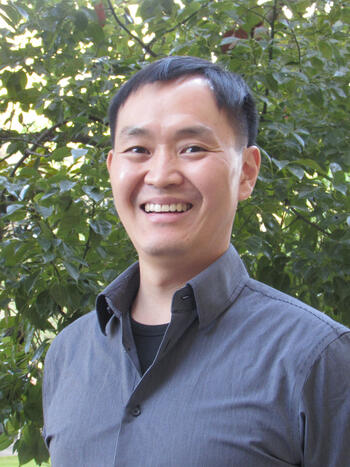
joon nak choi 7 cropped
A Stanford graduate and sociologist by training, Choi is an assistant professor of management at the School of Business and Management, Hong Kong University of Science and Technology. His research and teaching areas include economic development, social networks, organizational theory, and global and transnational sociology, within the Korean context. He coauthored Global Talent: Skilled Labor as Social Capital in Korea (Stanford University Press, 2015).

This public event is made possible through the generous support of the Koret Foundation.

Shorenstein APARC
Encina Hall
Stanford University
Stanford, CA 94305-6055

0
joon_nak_choi_7_cropped.jpg

Joon Nak Choi is the 2015-2016 Koret Fellow in the Korea Program at Stanford University's Walter H. Shorenstein Asia-Pacific Research Center (Shorenstein APARC). A sociologist by training, Choi is an assistant professor at Hong Kong University of Science and Technology. His research and teaching areas include economic development, social networks, organizational theory, and global and transnational sociology, within the Korean context.

Choi, a Stanford graduate, has worked jointly with professor Gi-Wook Shin to analyze the transnational bridges linking Asia and the United States. The research project explores how economic development links to foreign skilled workers and diaspora communities.

Most recently, Choi coauthored Global Talent: Skilled Labor as Social Capital in Korea with Shin, who is also the director of the Korea Program. From 2010-11, Choi developed the manuscript while he was a William Perry postdoctoral fellow at Shorenstein APARC.

During his fellowship, Choi will study the challenges of diversity in South Korea and teach a class for Stanford students. Choi’s research will buttress efforts to understand the shifting social and economic patterns in Korea, a now democratic nation seeking to join the ranks of the world’s most advanced countries.
 
Supported by the Koret Foundation, the Koret Fellowship brings leading professionals to Stanford to conduct research on contemporary Korean affairs with the broad aim of strengthening ties between the United States and Korea. The fellowship has expanded its focus to include social, cultural and educational issues in Korea, and aims to identify young promising scholars working on these areas.


2015-2016 Koret Fellow
Visiting Scholar
<i>2015-16 Koret Fellow, Shorenstein APARC, Stanford University</i>
Seminars
Paragraphs

This article examines how different organizational structures in disaster aid delivery affect house aid quality. We analyze three waves of survey data on fishermen and fishing villages in Aceh, Indonesia, following the 2004 tsunami. We categorize four organizational structures based on whether and to whom donors contract aid implementation. Compared to bilateral contracting between donors and implementers, donors that vertically integrate and do their own implementation offer the highest-quality housing as rated by village heads and have fewer counts of faults, such as leaky roofs and cracked walls, as reported by fishermen. However, they shade in quality as they lose dominance as the leading aid agency in a village. Domestic implementers and the government agency that was responsible for significant portions of aid delivery provide significantly lower-quality aid. We also examine how the imposition of shared ownership, the primary social agenda for boat aid agencies, affects boat aid quality. We find that village and fishing leaders steer poor-quality boats toward those whom shared ownership was imposed upon, often lower-status fishermen.

All Publications button
1
Publication Type
Journal Articles
Publication Date
Journal Publisher
Economic Development and Cultural Change
Authors
Yong Suk Lee
Number
4
-

Please note the venue is now the Bechtel Conference Center at Encina Hall.

This event is jointly sponsored by the China Program at at the Walter H. Shorenstein Asia-Pacific Research Center (APARC) and the Center on Democracy, Development, and the Rule of Law (CDDRL).


Geostrategic rivalry and economic interdependence coexist in uneasy balance between the U.S. and China. Ambassador Fu will identify key strands in U.S. perceptions of China, frequently marked by confusion and anxiety, and China’s perceptions of the U.S., riddled by the desire for closer cooperation and suspicions over U.S.’s exclusion of China. The speech will highlight the South China Sea issue and emphasize the harmful effects of negative perceptions and the importance of cooperation. Commentary will be provided by Dr. Thomas Fingar, the Shorenstein Asia-Pacific Research Center Distinguished Fellow in the Freeman Spogli Institute for International Studies, Stanford University, after the speech.


Ambassador Fu Ying has been the Chairperson of the Foreign Affairs Committee of the National People’s Congress of China since March 2013. She is also the Chairperson of the Academic Committee for China’s Institute of International Strategy, Chinese Academy of Social Sciences. From 1993 to 2000, she served successively as the Director, Counselor of the Foreign Ministry’s Asian Department and the Minister Counselor of the Chinese Embassy in Indonesia (1997). While serving as the head of the Asian Department at the Ministry of Foreign Affairs in 2000, she was instrumental in crafting China’s comprehensive strategic partnership with ASEAN and for launching the Six Party Talks with North Korea. She has served as China’s Ambassador to the Philippines (1998), Australia (2004) and to the United Kingdom (2007). From 2009 to 2013, she served as the Vice Minister of Foreign Affairs for the P.R.C.


Dr. Thomas Fingar is the inaugural Oksenberg-Rohlen Distinguished Fellow in the Freeman Spogli Institute for International Studies at Stanford University. From 2005 to 2008, he served concurrently as the first deputy director of national intelligence for analysis and as chairman of the National Intelligence Council. He served previously as assistant secretary of the State Department’s Bureau of Intelligence and Research (2004–2005), principal deputy assistant secretary (2001–2003), deputy assistant secretary for analysis (1994–2000), director of the Office of Analysis for East Asia and the Pacific (1989–1994), and chief of the China Division (1986–1989).

Chairperson, Foreign Affairs Committee of the National People’s Congress, China; former PRC Ambassador to the Philippines, Australia, and the U.K.
Fu Ying <i>Chairperson, Foreign Affairs Committee of the National People’s Congress, China; former PRC Ambassador to the Philippines, Australia, and the U.K.</i> <i>Chairperson, Foreign Affairs Committee of the National People’s Congress, China; former PRC Ambassador to the Philippines, Australia, and the U.K.</i> <i>Chairperson, Foreign Affairs Committee of the National People’s Congress, China; former PRC Ambassador to the Philippines, Australia, and the U.K.</i>
Dr. Thomas Fingar <i>Shorenstein Asia-Pacific Research Center Distinguished Fellow, Freeman Spogli Institute for International Studies, Stanford Universit</i>
Seminars
News Type
News
Date
Paragraphs

More than fifty experts met in Xi’an, China, for an international academic conference on demographic change and social development last week. Several scholars from the Freeman Spogli Institute for International Studies (FSI) spoke at the conference, including Karen Eggleston, Marcus Feldman, Jean Oi and Scott Rozelle.

The conference marked the 120th anniversary of Xi’an Jiaotong University’s founding and more than three decades of collaboration with Stanford scholars. Researchers at Xi’an Jiaotong University’s Institute for Population and Development Studies collaborate on policy-relevant research and educational activities with Stanford faculty at FSI as well as the Morrison Institute and Woods Institute.

For more information on FSI’s work in the areas of global health and medicine, please visit this page and the Asia Health Policy Program website.

Image
xian group

Hero Image
xian summit logo
All News button
1
News Type
Commentary
Date
Paragraphs

In the wake of this month’s G7 Summit in Japan, U.S. President Barack Obama has an opportunity to make a presidential visit to Hiroshima. Such a visit would reinforce his vision of a nuclear-free world and solidify an important legacy of his foreign policy, Shorenstein APARC Director Gi-Wook Shin and Associate Director for Research Daniel Sneider write in an editorial for The Diplomat. The co-authors argue that the visit be framed in a way that would contribute to historical reconciliation in Northeast Asia and not undermine progress made between Japan and South Korea. 

Sneider wrote in an earlier Toyo Keizei editorial that while the White House has not yet announced a decision, the momentum for such a visit exists. And while issues of divided historical memory cannot be ignored, the occasion would not include an apology. The editorial can be viewed online in English and Japanese.

Sneider also contributed to Public Radio International's podcast series "Whose Century Is It?" and two articles on the Huffington Post Japan website. The first article, written in Japanese, examines how the history of atomic bombings are taught in the United States, and the second article, written in English, explores the question of acceptability of President Obama's visit to Hiroshima by the Japanese people.

During the visit, Obama delivered a speech that outlined the threat of nuclear weapons and the need for a world free from them. Writing for Nippon.com, Sneider said the speech and overall visit was well-received by many, but also had its critics. "The best judgment of the impact of Obama's Hiroshima visit may be what follows in Northeast Asia, where the task of postwar reconciliation remains unfinished," he wrote. The editorial can be viewed online in English and Japanese.

Shin and Sneider lead a decade-long research project that examines historical reconciliation in Asia, and are co-authors of the forthcoming book, Divergent Memories, about elite opinion and wartime memory in Asia.

Hero Image
hiroshima visit
During a break in the G7 Ministerial Meetings in Japan, a delegation visits the Hiroshima Peace Memorial on April 11, 2016 with U.S. Secretary of State John Kerry.
Flickr/U.S. Department of State
All News button
1
-

We have reached venue capacity and can no longer accept RSVPs.


Half the world is on the Internet. By the end of June 2015, China recorded a total of 667 million Internet users. Taobao and Tmall, Alibaba Group’s giant e-commerce platforms, posted a record-breaking RMB 91.2 billion on Singles' Day, 2015; and Alibaba Group with its annual sales volume of RMB 3 trillion, has surpassed Walmart to become the world’s largest retail platform. Dr. Ming Zeng, Chief Strategy Officer of Alibaba Group, will first give an insider’s account of how Alibaba was able to scale up its operations from Jack Ma’s humble operations into one of the world’s largest companies. He will further discuss how the Web technology is transforming China’s consumer and production economy.


Dr. Ming ZENG currently serves as Executive Vice President of Alibaba Group Holding Limited and Chief Strategy Officer of Alibaba Group. Dr. Zeng is also the founding Dean of Hupan University of Entrepreneurship, an educational institution founded in 2015 by Jack Ma and other business leaders in China. He is a frequent contributor to leading management journals and is the author of Dragons at Your Door: How Chinese Cost Innovation Is Disrupting Global Competition (2007). Dr. Zeng previously served as a faculty member at INSEAD from 1998 to 2002 then helped to found the Cheung Kong Graduate School of Business in Beijing, the first private business school in China. Dr. Zeng obtained his Ph.D. in International Business and Strategy from University of Illinois at Urbana-Champaign in 1998, and his Bachelor's degree in International Economics from Fudan University, China, in 1991.


Duncan Clark is the Chairman of BDA China, a consultancy he founded in Beijing in 1994 after four years as an investment banker with Morgan Stanley in London and Hong Kong. BDA China is an advisory firm serving investors in China’s technology and consumer sectors, employing over 100 mainland Chinese professionals in Beijing. An early advisor to leading Chinese Internet entrepreneurs, Mr. Clark is also the author of Alibaba: The House that Jack Ma Built (2016), an insider’s look at China’s e-commerce and technology giant and its founder Jack Ma.


This event is off the record.


Ming Zeng Chief Strategy Officer, Alibaba Group
Duncan Clark (moderator) Moderator BDA China, Author of Alibaba: The House that Jack Ma Built
Seminars
Authors
Gi-Wook Shin
News Type
News
Date
Paragraphs

A variety of media outlets have recently highlighted Stanford research efforts focused on the value of global talent and diversity policy in South Korea led by Professor Gi-Wook Shin, director of the Walter H. Shorenstein Asia-Pacific Research Center (APARC).

On Arirang, Shin discussed why South Korea should seek to recruit and retain foreign skilled workers in a moderated conversation with Rennie Moon, an assistant professor at Yonsei University. Together, the scholars work on a research project that examines diversity programs and policies of universities and companies in South Korea.

Shin and Moon wrote an editorial for Conversation UK that recognizes Korea’s failure to embrace diversity and says the country’s ethnic nationalism is largely to blame. They call upon Korean universities and the government to work closely together to tackle diversity issues. A similar message was relayed in a Q&A conducted by Shorenstein APARC and on a podcast episode recorded for "Korea and the World." Shin and Moon also wrote an editorial for the East Asia Forum that broadens the analysis to include the challenges of attracting foreign talent across Northeast Asia. 

Shin also told Maeil Shinmun that South Korea needs concrete and strategic policies to compete globally in its recruitment of foreign skilled workers. One of his policy suggestions is to offer a 2-year visa period for foreign college graduates to encourage them to work and stay in South Korea.

Dong-a Ilbo also covered an event where Shin presented findings from his co-authored publication, Global Talent: Skilled Labor as Social Capital. He said South Korea must embrace the value of social capital and diasporas as seen in the United States example, or else the country risks losing global competitiveness. Shin leads a research project on this topic with Joon Nak Choi, 2015-16 Koret Fellow at Shorenstein APARC and an assistant professor at Hong Kong University of Science and Technology. An earlier Nikkei Asian Review editorial highlights some of their studies.

Related links will be added to this news item as they arrive.

Hero Image
gettyimages 187172376
Students prepare to take an exam at a high school in Seoul.
AFP/Getty Images - Jung Yeon-Je
All News button
1
Date Label
-

Image
thedivinegod

The New York Times has described The Divine Grace of Islam Nusantara as “a 90-minute film that amounts to a relentless, religious repudiation of the [self-styled] Islamic State and the opening salvo in a global campaign by the world’s largest Muslim group [Nahdlatul Ulama] to challenge [IS’s] ideology head-on.” The film documents the enthusiasm with which Indonesian Muslims have commemorated the historic role of the 15th-16th century Walisongo (“Nine Saints”) movement—a movement that precipitated the development in the East Indies (now Indonesia) of a great Islamic civilization rooted in the principle of universal love and compassion (rahmah).

The film and a panel discussion the following day will unpack a perspective that has been historically central to Muslim cultures stretching from North Africa to Southeast Asia. The essence and mission of Islam Nusantara is to build civilization, not to destroy it. Yahya Staquf has described the film as an invitation to Muslims everywhere to reject radicalism and theological straight-jackets and stand up for their own cultural adaptation of Islam.

Kyai Haji Yahya Cholil Staquf is a leader of what is widely regarded as the largest Muslim organization in the world. Located in Indonesia, Nahdlatul Ulama adheres to the traditions of Sunni Islam. Yahya has primary responsibility for the expansion of NU’s activities to include North America, Europe, and the Middle East. Earlier positions included service as spokesperson for Indonesia’s 1999-2001 president Abdurrahman Wahid, the country’s first democratically elected head of state.

C. Holland Taylor’s leadership of the LibForAll Foundation dates from its co-founding in 2003 by Taylor and former Indonesian president Wahid. The Wall Street Journal has called LibForAll “a model of what a competent public diplomacy effort in the Muslim world should look like.” An expert on Islam and Islamization in Southeast Asia, Taylor has lived, studied, and worked in Muslim societies from Iran to Indonesia. He was educated at the University of North Carolina at Chapel Hill and Princeton University.

Note:  Although the panel will reference the film, the panelists will range beyond the film to present and discuss the role and relevance of the concept of Islam Nusantara in Indonesia and the larger Muslim world. Viewing the film is thus not a prerequisite to understanding the panel.

Film screening and brief discussion:  Wednesday, April 6, 2016 (screening: 4:00 – 5:30 pm; discussion: 5:30 – 6:00 pm)

RSVP: http://aparc.fsi.stanford.edu/southeastasia/events/registration/220800

Philippines Conference Room

Encina Hall, Third Floor, Central

616 Serra Street, Stanford University


Panel:  Thursday, April 7, 2016, noon – 1:30 pm

RSVP:  http://aparc.fsi.stanford.edu/southeastasia/events/registration/220799

Philippines Conference Room

Encina Hall, Third Floor, Central

616 Serra Street, Stanford University

Free and open to the public

Lunch will be served.

This event is co-sponsored by the Southeast Asia Program, the Abbasi Program in Islamic Studies and the Department of Religious Studies.

Yahya Cholil Staquf Secretary General, Supreme Council, Nahdlatul Ulama, Indonesia
C. Holland Taylor Chairman and CEO, LibForAll Foundation
Moderated by Donald K. Emmerson Southeast Asia Program, Shorenstein APARC Stanford University
Film Screenings
Subscribe to Society