Society

FSI researchers work to understand continuity and change in societies as they confront their problems and opportunities. This includes the implications of migration and human trafficking. What happens to a society when young girls exit the sex trade? How do groups moving between locations impact societies, economies, self-identity and citizenship? What are the ethnic challenges faced by an increasingly diverse European Union? From a policy perspective, scholars also work to investigate the consequences of security-related measures for society and its values.

The Europe Center reflects much of FSI’s agenda of investigating societies, serving as a forum for experts to research the cultures, religions and people of Europe. The Center sponsors several seminars and lectures, as well as visiting scholars.

Societal research also addresses issues of demography and aging, such as the social and economic challenges of providing health care for an aging population. How do older adults make decisions, and what societal tools need to be in place to ensure the resulting decisions are well-informed? FSI regularly brings in international scholars to look at these issues. They discuss how adults care for their older parents in rural China as well as the economic aspects of aging populations in China and India.

-

Professor Tetsuji Okazaki will present his research which examines the difference between the regime transition phase and consolidation phase, dividing government elites into the pre-Meiji-Restoration-born group and the post-Meiji-Restoration-born group. Using the newly constructed government elites’ data after the Meiji Restoration in Japan, his research shows that reformers’ strategies to recruit government elites and establish a new intra-elite hierarchy changed from the regime transition phase to its consolidation phase. Initially, in order to contend against the incumbent elites, reformers recruited talented activists from the non-elite strata and assigned them to higher-level positions based on their abilities. On achieving a transfer of power, however, reformers’ primary concern shifted to alleviating the dissatisfaction of the masses and the former elites. Therefore, while the barrier preventing access to the elite group keep lowering, which opened the way for non-elites to gain elite status, former elites are reintegrated into the elite group and the intra-elite hierarchy again comes to reflect the social stratum of the former regime.

Image
okazaki
Tetsuji Okazaki is Professor of Economics at the University of Tokyo. He has been the President of International Economic History Association (IEHA) since 2015. His recent publications include “The expanding empire and spatial distribution of economic activities: The case of Japan’s colonization of Korea during the pre-war period” (with Kentaro Nakajima) forthcoming in Economic History Review, 2017, “Measuring the extent and implications of corporate political connections in prewar Japan” (with Michiru Sawada) forthcoming in Explorations in Economic History, 2017, and “Acquisitions, productivity, and profitability: Evidence from the Japanese cotton spinning industry” (with Serguey, Braguinsky, Atsushi Ohyama,and Chad Syverson) American Economic Review, 105(7): 2086-2119, 2015

Tetsuji Okazaki Professor of Economics, University of Tokyo
Seminars
Paragraphs

The Japan Program at Stanford’s Shorenstein Asia-Pacific Research Center (APARC), with the generous support of the United States-Japan Foundation and Japan Society for the Promotion of Science, held a conference in November 2016 titled “Womenomics, the Workplace, and Women.” The report, which is an outcome of the conference, offers an analysis of the state of women’s leadership and work-life balance in Japan and the United States, and specific actions that Japanese government stakeholders, corporations, start-ups, and educational institutions can take to address gender inequality in Japan.

All Publications button
1
Publication Type
Brochures
Publication Date
Journal Publisher
Japan Program at the Shorenstein Asia-Pacific Research Center
-

One prominent feature of South Korea, as well as other countries in East Asia, is citizens’ strong preference to work for large conglomerates or the government, as opposed to startups or small and medium enterprises (SMEs). Relative to the United States, choosing entrepreneurship or working for a young firm are less desired in Korea, especially among highly skilled individuals. This talk will examine how beliefs about corruption and trust in institutions affect an individual’s occupational preferences. A main challenge of examining personal beliefs and their impact on occupational preference is their relation to a host of other individual characteristics such as willingness to accept risk, optimism, patience, education level and family background. Center Fellow Yong Suk Lee will discuss his research on this area, including his focus on the events surrounding the impeachment of South Korea's previous president, Park Geun Hye, and his surveys of South Koreans before the impeachment rulings by the constitutional court and after impeachment. He will talk about (1) whether the impeachment process changed beliefs in the rule of law and societal trust; and (2) whether and how any change in beliefs and trust affect occupational preference. 

 
Yong Suk Lee <i>Deputy Director of Korea Program, APARC; Center Fellow, FSI, Stanford University</i>
Seminars
-

South Korea's persistent economic growth combined with a democratic political system has transformed the country into a developed nation. While research has often highlighted the role of industrial policies, technological growth and international trade as imperative to Korea’s developmental success, this talk will instead focus on the role that human capital has played. Professor Ju-Ho Lee will discuss how the accumulation of human capital has aided Korea’s transformation and examine the policies, strategies and challenges that the country faces into the future.

Image
ju ho lee
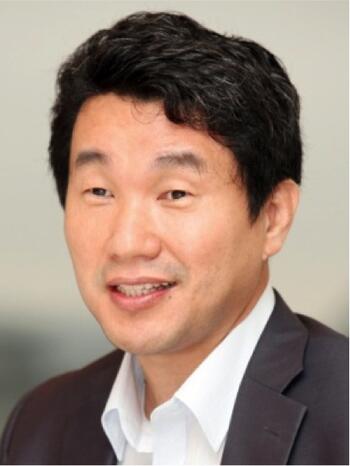
Before returning to the KDI School of Public Policy and Management in 2013, Professor Lee served as Minister of Education, Science and Technology (2010-13) where he had previously served as Vice Minister (2009). He has been noted for his endeavor to reform education, and for active lawmaking as a member of the National Assembly (2004-08). Utilizing his nine years of experience as a policy maker, he actively resumed his academic research on human capital and innovation policies at KDI. Professor Lee's  recent research has covered a wide range of issues including the measurement of 21st century skills, changes in pedagogies, opening-up strategies in education reforms, and innovation ecosystems. Currently he is also working for the international community as a Commissioner of the International Commission on Financing the Global Educational Opportunities.

Professor Lee received his BA and MA from Seoul National University, and PhD from Cornell University, all in economics.

This lunch time keynote address is part of the ninth annual Koret Workshop, "Korea's Migrants: From Homogeneity to Diversity," and open to the general public.

This event is made possible through the generous support of the Koret Foundation.

Ju-Ho Lee <i>Professor, KDI School of Public Policy and Management; former Minister of Education, Science and Technology, South Korea </i>
Seminars
News Type
News
Date
Paragraphs

The Japan Program at the Shorenstein Asia-Pacific Research Center (APARC), in collaboration with the United States-Japan Foundation and Japan Society for the Promotion of Science, has published a report with findings from the inaugural conference, Womenomics, the Workplace, and Women, held in November 2016.

The two-day conference, which gathered 20 speakers and a substantial audience at Stanford, initiated dialogue about women’s leadership and work-life balance in Japan and the United States and encouraged the formation of a cross-sector network of experts seeking to build pathways to advance opportunity for women in both countries.

“The conference provided a unique opportunity for a diverse group of individuals to come together and explore how to tackle challenges that women continue to face on both sides of the Pacific,” said Mariko Yoshihara Yang, a visiting scholar and Japan Program Fellow at Shorenstein APARC, who organized the conference. “I believe the knowledge, perspectives and networks shared will go far beyond the two days we convened at Stanford, and make a valuable contribution to the movement to achieve gender equality and revitalize the Japanese economy.”

The conference report includes a set of actions that Japanese and American policy researchers and practitioners can pursue to promote women's leadership. A statement with the actions is arranged by organization type and published directly below.

Download the statement and full report.


Ten Actions Japan can take to Promote Women’s Leadership

Authors: Shelley Correll, Diane Flynn, Ari Horie, Atsuko Horie, Takeo Hoshi, Rie Kijima, Chiyo Kobayashi, Sachiko Kuno, Mitsue Kurihara, Kenji Kushida, Yoky Matsuoka, Emily Murase, Nobuko Nagase, Akiko Naka, Mana Nakagawa, Yuko Osaki, Machiko Osawa, Myra Strober, Kenta Takamori, Kazuo Tase, Mariko Yoshihara Yang

Government

The Japanese government should establish concrete measures to achieve targets stipulated in the Fourth Basic Plan for Gender Equality, which was approved by the Japanese Cabinet on December 25, 2015, and went into effect in April 2016. The following reforms will help promote this process and distribute benefits to all workers equally. A special emphasis was placed on ensuring versatility across many sectors.

1. Abolish the income tax deduction and social security premium exemption for dependent spouses and increase family care allowance. The spousal exemptions that allow income tax breaks and social security premiums discourage many married women from seeking full-time employment. The Japanese government has recently proposed to scale back the spousal tax break by raising the annual threshold from ¥1.03 to ¥1.5 million or less starting in 2018. However, this incremental measure will act only as a short-term solution. Japan needs a conclusive solution to best utilize women as the workforce. By completely eliminating the spousal exemption and providing family care allowance, more women will be incentivized to take on full-time and leadership positions in the workplace. Families with young children and aging parents will be compensated with family care allowance.

2. Expand the scope of corporate disclosure on gender equality and establish a “Women’s Empowerment Index.” The public database on gender equality, launched by the Cabinet Office in 2014 and administered by the Ministry of Health, Labor and Welfare since 2016, remains limited in its scope and scale. The government should add more substantial measures in the rubric such as hours of overtime work and “re-entry/on-ramping” rate of women, and mandate the reporting requirement. Based on the expanded database, the government should calculate a Women’s Empowerment Index and issue certifications to people with high ratings. The index would be embedded in the parameters for stakeholder decision-making and provide financial incentives for corporations to sustain a more diverse work environment.

Large Corporations

To increase women’s participation in the workplace, companies need to eliminate gender-based stereotypes in hiring and promotion practices, encourage more women to pursue full-time positions, and support women who seek to re-enter the labor force after temporary leave. Large corporations in Japan can take the following actions to lead these changes:

3. Scrutinize the yardsticks used for recruitment and promotion, and eliminate evaluation criteria that systematically sorts out certain candidates. Companies need to provide training to mid-career managers and top leaders to address unconscious biases in the workplace. It is critical to ensure a level-playing field for women and men.

4. Introduce a legal ceiling and penalties for overtime work and lift compulsory job transfers that disrupt family life. This will help change the prevailing work culture of devotion and self-sacrifice. Companies should consider decentralizing personnel administration so local offices will more closely monitor individual needs and preferences of employees’ and reflect them into their career trajectories. Such reforms will encourage more women to apply for full-time employment and leadership opportunities while reducing premature resignations of women with families.

5. Create a mandate for departments to establish and provide clear job descriptions for each position to ensure consistency across departments. This would allow employees to better articulate their skill sets when seeking new job opportunities within organizations or when they re-enter the labor market after taking breaks in their careers. In the long term, this will help Japan develop a more robust external labor market that promotes mobility between organizations and across sectors, not just within companies.

6. Create clear evaluation criteria for women with specialized careers and raise their visibility within and outside the organization. Visibility of an employee’s technical skills is known to influence her or his prospect for advancement. When women propose ideas based on their specialization, they should employ “amplification” techniques, where they repeat each other’s ideas to increase their credibility during meetings and brainstorming sessions. Corporate leaders should also make a point of acknowledging their expertise and vouch for their competence. Large corporations should facilitate their promotion to manager and board member positions.

Start-ups

Although women are still underrepresented in entrepreneurial leadership positions, the gender gap is less severe in the startup sector than in large corporations. Thus, promotion of entrepreneurship in general will increase the chances for women’s empowerment and leadership.

7. Create platforms to catalyze startups led by women and raise the visibility of successful female entrepreneurs. There should be a platform where novice and experienced entrepreneurs can interact. Routine exchange among successful female founders and aspiring entrepreneurs will help build a community that catalyzes women-led startups as they try to turn ideas into full-time businesses. Similarly, there should be a platform where female leaders in small startups and large corporations meet regularly to provide mutual mentorship. Corporate executives could learn the latest business trends while female entrepreneurs expand their professional networks.

8. Expand policies to encourage a culture of entrepreneurship with specific incentives for female entrepreneurs. The government should consider increasing the public funding for startups led by women and provide robust legal support for female entrepreneurs. Increased assistance to incubators and accelerators, specializing in supporting female founders, would also contribute to women’s empowerment.

Educational Institutions

Educational institutions play a key role in creating knowledge to ensure gender equality, promoting awareness and nurturing a bias-free mindset among young people. Furthermore, women’s advancement in education generally yields greater participation in the economy and society. Recent advancements have created a reversal among the OECD countries. More than half of all students graduating from secondary and higher education are female; however, Japan is still behind. The following two initiatives will help close the gap:

9. Strengthen gender equality promotion office at educational institutions. This includes hiring a dedicated diversity officer, who will help universities conduct gender analyses of leadership posts and monitor women in academic leadership positions. Furthermore, universities should introduce family friendly policies to support young faculty members. When faculty members take parental leave, universities should provide funding for temporary staff to lay the groundwork for their return. In addition, academic conferences held at universities should provide childcare services for out-of-town participants.

10. Create continuing education centers to offer certificate programs to provide skills and training for women and men looking to re-enter the workforce. The programs could provide specialized knowledge as well as skill development including self-assessment, counseling, resume-building, practice interviewing, and unconscious bias training. This will allow workers access to education and support throughout their onboarding process and transition into the workplace. These centers should also provide career services to match qualified workers with potential employers.

Hero Image
womenomics conference report headline Rod Searcey
All News button
1
-

Expected dramatic shifts of foreign policy by leading democracies, including the U.S. and U.K., would shake a future of liberal international order, which has underpinned the stability even after the end of the Cold War. Since Mr. Donald Trump was elected as the 45th President of the U.S., abovementioned discourse is heard everywhere in Europe and Asia today.

It is not clear, if American leadership and military presence would in fact retreat, how American allies behave and whether they can work together to sustain the order. Among others, Japan has been the exceptionally strong believer of such postwar American leadership. It is doubtful that all American allies and friends share same views, having their own historical context with the U.S. and own ideas on order and principles. Hence, naturally they shall differ in losing the confidence on the durability of American leadership.

A new order will be shaped by many factors, but American allies’ perspectives should not be overlooked. Hegemon’s own reluctance for ruling is surely significant. So is other great power’s revisionism, making use of such strategic opportunities. However, American allies has the potential to shape the fate of the order: if they succeed in acting collectively, it shall underpin the global governance for a while, and ensue the order transformation process in rather slow and peaceful pace. 

Image
unknown

If they fail, it shall not only accelerate the U.S. retrenchment, but invite an emergence of divisive and competitive order. Sahashi shares the findings from the international study project which he leads, and argues the difficulty for US allies to unite themselves and the potential order transformation in the long term.

Ryo Sahashi is Associate Professor of International Politics and Director, Faculty of Law, Kanagawa University, Yokohama, and is leading the newly-launched international joint study “Worldviews on the United States.” From 2014-2015, he served as Visiting Associate Professor, Shorenstein APARC, Stanford University.


Ryo Sahashi Associate Professor, Kanagawa University
Seminars
-

Image
dsc 0004 bai jing sayuri
Dr. Sayuri SHIRAI is currently a professor of Keio University and is also a visiting scholar at the Asian Development Bank Institute. She was a Member of the Policy Board of the Bank of Japan (BOJ) from April 2011 to March 2016, who is responsible for making policy decisions. She also taught at Sciences Po in Paris in 2007–2008 and was an economist at the International Monetary Fund (IMF) from 1993 to 1998.

She is the author of numerous books on a variety of subjects including the People’s Republic of China’s exchange rate system, Japan’s macroeconomic policy, IMF policy, and the European debt crisis. Her most recent book (translated title: Unwinding Super-Easy Monetary Policy), published in August 2016, is about the monetary policies of the BOJ, the European Central Bank, and the Federal Reserve System. She regularly appears on CNBC, Bloomberg, Reuters, BBC, and features in many Japanese TV programs and newspapers, commenting on the Japanese economy and monetary policy. URL: http://www.sayurishirai.jp

Her most recent book in English is Mission Incomplete: Reflating Japan’s Economy published by the Asian Development Bank Institute in February 2017. It is a complete analysis of BOJ’s unconventional monetary easing from the late 1990s to the present. Free Download is available at https://www.adb.org/publications/mission-incomplete-reflating-japan-economy.

Sayuri Shirai Professor at Keio University and Visiting Scholar at Asian Development Bank Institute
Seminars
-

The Asia Health Policy Program at Stanford’s Shorenstein Asia-Pacific Research Center (APARC), in collaboration with scholars from Stanford Health Policy's Center on Demography and Economics of Health and Aging, the Stanford Institute for Economic Policy Research, and the Next World Program, is holding its third annual conference on the economics of ageing. The conference is one of several activities planned in 2017 to mark the 10th anniversary of the Asia Health Policy Program.

The triumph of longevity can pose a challenge to the fiscal integrity of public and private pension systems and other social support programs disproportionately used by older adults. High-income countries offer lessons – frequently cautionary tales – for low- and middle-income countries about how to design social protection programs to be sustainable in the face of population ageing. Technological change and income inequality interact with population ageing to threaten the sustainability and perceived fairness of conventional financing for many social programs. Promoting longer working lives and savings for retirement are obvious policy priorities; but in many cases the fiscal challenges are even more acute for other social programs, such as insurance systems for medical care, long-term care, and disability. Reform of entitlement programs is also often politically difficult, further highlighting how important it is for developing countries putting in place comprehensive social security systems to take account of the macroeconomic implications of population ageing.

The objective of the conference is to explore the economics of ageing from the perspective of sustainable financing for longer lives. The conference will bring together researchers to present recent empirical and theoretical research on a range of topics in this area.

The first full day of the conference – April 24 – is open to the public. The lunchtime keynote speech on the second day of the conference – April 25 – is also open to the public; the remaining portions of that day are reserved for panelists only to encourage candid conversation in a closed-door setting.

Conference Agenda

April 24

7:45                             Breakfast

8:25                             Welcome         Gi-Wook Shin, Stanford University

                                                           Karen Eggleston, Stanford University


Session I: Long-term Care and Intergenerational Support

Chair: Gopi Shah Goda, Stanford University

8:30 – 9:30                   “Housing Assets and Access to Long Term Care Services and Supports: Evidence from the Housing Bubble Burst”

                                                            Richard Frank, Harvard University

                                                            Discussant: Tom Davidoff, University of British Columbia

9:30 – 10:30               “The Demand for Long-Term Care Insurance in Canada”

                                                            Pierre-Carl Michaud, HEC Montréal and RAND

                                                            Discussant: Chris Tonetti, Stanford Graduate School of Business

10:30 – 10:45              Coffee break

10:45 – 11:45             “The Price of the East Asian Miracle: Generational Cultural Shift and Elderly Suicide”

                                                            Hyejin Ku, University College London

                                                            Discussant: Hongbin Li, Tsinghua University and Stanford University

Session II:

Co-Chairs: John Shoven and Karen Eggleston, Stanford University

11:45 – 13:45              Lunch

Keynote panel: "The policy challenges of financing longevity: Perspectives from Japan and the US"

Hirotaka Unami, Senior Director for Policy Planning and Research, Minister's Secretariat, Ministry of Finance, Japan

Olivia S. Mitchell, International Foundation of Employee Benefit Plans Professor, as well as Professor of Insurance/Risk Management and Business Economics/Policy, Wharton School, University of Pennsylvania

Session III: Financial Planning and Health

Chair: David Canning, Harvard University

14:00 – 15:00              “Cognitive Decline and Household Financial Outcomes at Older Ages”

                                                            Marco Angrisani, University of Southern California

                                                            Discussant: Kathleen McGarry, UCLA

15:00 – 15:15              Break

15:15 – 16:15             “From Compression to Expansion of Morbidity: Upcoming Challenges for Health Care and Long Term Care in China”

                                                            Bei Lu, University of New South Wales

                        Discussant: Wang Feng, Fudan University and UC Irvine

16:40                           Closing


Apri1 25

11:45 – 13:00              Lunch

                                    Policy challenges of financing longevity: Perspectives from Singapore

Kelvin Bryan Tan, Ministry of Health, Singapore


Conferences
News Type
News
Date
Paragraphs

Emerging technologies, stemming from the heart of Silicon Valley and extending to Asia and beyond, have pushed the bounds of how stories are told by journalists and the way in which readers interact with them. The Shorenstein Journalism Award, an annual prize given by the Shorenstein Asia-Pacific Research Center (APARC), celebrates 15 years of recognizing distinguished journalists for their innovative and responsible journalism amid social and technological change.

The prize began with “the idea of a media award for a person who has the most significant impact on the relationship with Asia-Pacific nations in the United States,” according to Walter H. Shorenstein, who spoke about his twin interests of Asia and the press in a 2010 oral history project interview and was the benefactor after whom the center is named.

Shorenstein APARC and Harvard’s Shorenstein Center on Media, Politics and Public Policy jointly presented the award for six years. Shorenstein APARC has continued the initiative, and each year, brings the award winner to Stanford to talk with the broader campus community, and since 2011, has alternated between a recipient from the West, who has mainly addressed an American audience, and a recipient from Asia.

The prize seeks to inspire the next generation of U.S. journalists focused on Asia, as well as Asian journalists, who pave the way for press freedom in their countries.

Award winners have explored a multitude of topics over the years, from human rights in North Korea to the rise of democracy in Indonesia and from the U.S.-Japan alliance to gender equality in India. And this year adds an additional view on China; veteran journalist Ian Johnson will address religion and value systems in a panel discussion on May 1 with Xueguang Zhou, Stanford professor of sociology, and Orville Schell, director of the Asia Society's Center on U.S.-China Relations, moderated by Daniel C. Sneider, Shorenstein APARC associate director for research.

To mark the award’s tenure, Shorenstein APARC asked award alumni to answer the question, “What do you think the future holds for journalism in/about Asia?” Their responses are below.


Image
crossette 3x4 bw
Asia is big, with 60 percent of the world's people and a third of its land. The conditions in which journalists work go to the extremes, from the longstanding establishment press of Japan or India to the blanket repression of it in Laos or China. But if there is one word to describe Asian journalism of the future, it is Youth. Creative, energetic young people, armed with connectivity, pack Internet cafes and journalism classes, where they can find them. Their interests are broad, they are open-minded and well informed. Western reporters will benefit from their guidance as colleagues.

Barbara Crossette is the U.N. correspondent for The Nation and a columnist for India Abroad. She received the Shorenstein Journalism Award in 2010.


Image
funabashi 3x4 bw

Journalism in Asia has had a long history of covering revolutions and wars. However, peace has reigned over Asia for near on 40 years. Yet, the peace and stability in Asia looks increasingly precarious. Asia too is not immune to populist nationalism. In this climate, Asia could yet again become the battleground for dislocation, revolution and war. Journalism, on top of reacting to potential crises, will be critical for proactively finding ways to prevent and defuse crises in the region.

Yoichi Funabashi is the chairman of the Rebuild Japan Initiative Foundation. He received the Shorenstein Journalism Award in 2015.


Image
buruma 3x4 bw
The scope for independent journalism, checking the powers that be, is shrinking everywhere, not least in Asia. China's rise as a major political and commercial power will be a growing challenge to the freedom of the press. The best thing journalists writing about Asian affairs can do, especially those who are lucky enough to work for free and independent media, is to continue to write as honestly as they can, without bowing to political or commercial pressures. This very much includes pressures at home, in countries that still have liberal democratic institutions. Good journalism on Asia, or anywhere else, will continue to be produced as long as the critical spirit remains undaunted.

Ian Buruma is a writer and the Paul W. Williams Professor of Democracy, Human Rights, and Journalism at Bard College. He received the Shorenstein Journalism Award in 2008.


Image
mydans 3x4 bw
The frontier in the battle for press freedom in Southeast Asia has moved into cyberspace, where independent voices have presented a new challenge to government control of information. In Vietnam, Malaysia, Thailand, Singapore, Indonesia and newly open Myanmar, upstart websites and blogs have proliferated. But it hasn't taken long for those in charge to gain the upper hand, and following the example of China, all have found ways to bring these open forums under varying degrees of control, from censorship to harassment to prison terms. The flamboyant Philippines remains the exception, and the future there too has become uncertain.

Seth Mydans is a contributing writer for the New York Times. He received the Shorenstein Journalism Award in 2009.


Image
demick 3x4 bw
The United States tends to export its best and worst fashions elsewhere in the world. An example of the latter is President Trump’s tendency to denounce any media coverage he dislikes as “fake news.” The Chinese Communist Party has picked up on that trick, earlier this month using the “fake news” defense to deny a story that a human rights lawyer was tortured, a practice all too common in China. The implications are chilling for the Chinese domestic press and for foreign correspondents covering China. While our own president is denouncing us as “enemies of the people,” we can hardly expect the U.S. government to stand up for us when the intolerant regime in Beijing tries to muzzle our reporting.

Barbara Demick is the Los Angeles Times’ bureau chief in New York and was formerly bureau chief in Beijing and in Seoul. She is the author of Nothing to Envy: Ordinary Lives in North Korea and Logavina Street: Life and death in a Sarajevo Neighborhood. She received the Shorenstein Journalism Award in 2012.


Image
zaw 3x4 bw
In some parts of Asia, the space for freedom of expression has shrunk immensely and there are challenges for all of us covering sensitive issues in countries where journalists increasingly face the Computer Crime Act, censorship, tight space, intimidation and threats – moreover, they also continue to face authoritarian rulers’ unjustified clampdown and high-handed attitudes. Asia is complex – in some corners of our region, many diverse ethnic minorities live in conflict zones and in war without peace – for decades journalists travel there to report stories. But it is our job – isn’t it? Journalists here ought to tell stories and unearth many untold news to readers across Asia. While facing prison walls, threats and lawsuits, journalists also face media tycoons and cronies who want them to be a mouthpiece of commercial conglomerates – they must resist them. Commercial media kills independent journalism. Long before journalists in Asia realized that objectivity alone doesn’t work in Asia but courage, independent reporting and searching the truth are more important than ever before. Last but not least, Asia has the fastest growing economies in the world thus an independent media is needed to keep voices from Asia alive.

Aung Zaw is the founder and editor-in-chief of The Irrawaddy. He received the Shorenstein Journalism Award in 2013.


Image
schlesinger 3x4 bw
Donald Trump is challenging many long-held, American consensus policies – including those toward Asia. Trade, diplomacy and security relationships between the United States and Asia – and among Asian nations – are now all in flux. The challenge for journalists on both sides of the Pacific will be sorting out the noise, understanding the concrete actions and reactions, and explaining the implications for a global audience. That mission will be made more difficult – and more vital – by the growing hostility toward journalism from many of the leaders unleashing this transformation.

Jacob Schlesinger is a senior Washington correspondent for the Wall Street Journal. He received the Shorenstein Journalism Award in 2014.


Image
schell 3x4 bw
I am very pessimistic about the ability of thoughtful and informative journalism to survive anywhere in the world given the gale force winds of state propaganda, commercial market pressure and "fake news" that now buffet it. And no where is such reporting more urgently needed than in regard to Asia where China's different value and political pose a stark challenge. To keep a well-informed public, we may well have to finally recognize here in the United States that good and independent reporting cannot be entirely a purely commercial process any more than are our great universities.

Orville Schell is the Arthur Ross Director of the Center on U.S.-China Relations at the Asia Society in New York, and former dean of the School of Journalism at the University of California, Berkeley. He received the Shorenstein Journalism Award in 2003.


Image
pomfret 3x4
I am very optimistic about the future of journalism in Asia because I am optimistic about the future of Asia writ large. I am especially optimistic about the future of journalism in China. Despite the dark days that my Chinese colleagues face today, there is no shortage of well-trained, hungry reporters in China who will ultimately help push China in a more positive direction. I think this is, to use the Chinese Communist Party's verbiage, "the historical trend." Just think about the scoops to be had when China begins to open the vast archives of the Chinese Communist Party? Obviously, this won't happen tomorrow, but I am confident that this day is less far off than it sometimes seems.

John Pomfret was a foreign correspondent with the Washington Post for many years. He is the author of The Beautiful Country and the Middle Kingdom: America and China from 1776 to the Present. He received the Shorenstein Journalism Award in 2007.


Hero Image
journalism award headline
A pair of people read newspapers outside in Seoul, South Korea.
Chung Sung-Jun/Getty Images
All News button
1
-

Reducing long working hours has been a high priority in the agenda to improve work conditions in Japan.  Towards this aim, the government has introduced legislation and policy measures, and corporations have modified their human resource policies to help employees strike better work-life balance.  Yet, working hours in Japan have remained virtually unchanged since the 1990s.  In this talk, I argue that the true causes of long working hours lie not in the “observable” barriers such as compensation schemes, public policy and law, but rather are embedded in “unobservable” or “unmeasurable” attributes such as social norms and work conventions.  Understanding this problem better requires an approach that accounts for both economic principles (which focus on monetary rewards and incentives) and sociological perspectives which pay closer attention to the social-institutional context.  I argue that long working hours in Japan stem from the institutional complementarities of the Japanese employment system and the cultural particularities underlying it.  I discuss the role of the input-driven society, work conventions that rely on signaling, internal labor market structure, group consciousness and hierarchy, ambiguous job functions, and the traditional gender division of labor.  I close by proposing measures to reduce working hours that follow from my analysis.


Image
b 145sq
Hiroshi Ono (Ph.D. Sociology, University of Chicago) is Professor of Human Resource Management at the Graduate School of International Corporate Strategy, Hitotsubashi University and Affiliated Professor of Sociology at Texas A&M University.  His research interests include economic sociology, work and labor markets, and happiness.  He has extensive international experience, having held professional and academic positions in the U.S., Japan and Sweden.  His work has won a number of awards such as the Best Paper Award from the Labor and Employment Relations Association, and Rosabeth Moss Kanter Top 20 Paper Award for Excellence in Work-Family Research.  He is the author of the book, Redistributing Happiness:  How Social Policies Shape Life Satisfaction (with Kristen Schultz Lee, 2016).  His papers have appeared in the American Sociological Review, Journal of Japanese and International Economies, Social Forces, Social Science Quarterly and Social Science Research, among others.

Hiroshi Ono Professor of Human Resource Management, Graduate School of International Corporate Strategy, Hitotsubashi University
Seminars
Subscribe to Society