


(Un)Covering North Korea
-
North Korea, arguably the most isolated country in the world, poses unique challenges for journalists. Access to the country is severely limited and even when a journalist is able to gain entry, the secretive and repressive nature of the state significantly limits what can be learned. Still, despite these difficult conditions, the realities of North Korean life are increasingly finding their way into various media, from newspaper reporting and on-line media to thinly fictionalized accounts.
This panel will take a multi-faceted look at the coverage of North Korea through the journalist (represented by 2012 Shorenstein Journalism Award winner Barbara Demick), the editor, the development/relief worker, and the novelist.
Panelists include:
Barbara Demick, has been Beijing bureau chief for the Los Angeles Times since 2008. She has focused on human trafficking, corruption, and minorities, as well as North Korea. Demick is the author of two books -- Nothing to Envy: Ordinary Lives in North Korea and Logavina Street: Life and Death in a Sarajevo Neighborhood. Her work has won awards from the Asia Society, the Overseas Press Club, the American Academy of Diplomacy, among others. Her North Korea book, which has been translated into more than 20 languages, recently won the International Book Award on Human Rights. She is a graduate of Yale and taught a seminar on coverage of repressive regimes at Princeton University. She lives in Beijing with her son Nicholas.Image
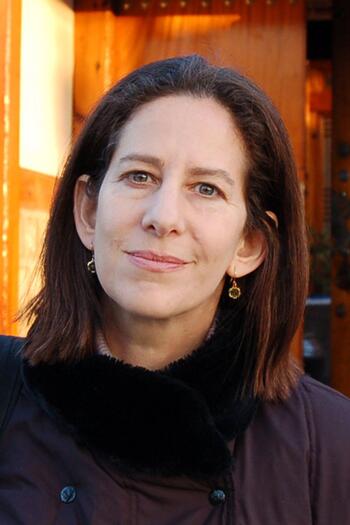
Susan Chira, was named assistant managing editor for news for the New York Times in September 2011. Previously, she had served as foreign editor (since January 2004), and as editorial director of book development (since September 2002). Before that, Chira was the editor of the "Week in Review" section at the Times (since October 1999), after having served as deputy foreign editor of the newspaper (since February 1997). Earlier, she served in a variety of reporting positions including national education correspondent, Tokyo correspondent (from October 1984 until February 1989), metropolitan reporter in the Albany and Stamford bureaus, and reporter for the "Business Day" section.Image

Image

Image
Bechtel Conference Center
Conferences
The United Nations and a World in Transition
-
United Nations Secretary-General Ban Ki-moon presented a free public talk at Stanford on Thursday, Jan. 17.
Ban, who is the eighth secretary-general of the UN, will speak about the UN's role in creating opportunities out of the challenges posed by today's rapidly transitioning world.
"Times of transition are times of profound opportunity," he recently said during his acceptance speech for the Seoul Peace Prize. "The decisions we make in this period will have an impact for generations to come.”
Ban's initiatives as UN secretary-general have focused on promoting sustainable development; empowering women; supporting countries in crisis or instability; generating new momentum on disarmament, arms control, and nonproliferation; and strengthening the UN. Among his many activities as secretary-general, he has successfully raised major pledges and financing packages for aid and crisis response, established the agency UN Women, and introduced new measures to promote UN transparency and efficiency.
Ban was born in the Republic of Korea in 1944, and he served for 37 years with the ROK Foreign Ministry, in roles including that of minister of foreign affairs and trade, foreign policy adviser to the president, and chief national security adviser to the president. He took office as UN secretary-general in January 2007, and was re-elected for a second term by the UN General Assembly in June 2011. Ban will serve as secretary-general until December 2016.
The Walter H. Shorenstein Asia-Pacific Research Center (Shorenstein APARC) and the Freeman Spogli Institute for International Studies are co-sponsoring the event. Ban's talk, part of the Asia-Pacific Leaders Forum, will kick off a series of activities commemorating Shorenstein APARC's thirtieth anniversary.
Founded in 2005, Shorenstein APARC's Asia-Pacific Leaders Forum regularly convenes senior leaders from across Asia and the Pacific to exchange ideas on current political, economic, and social dynamics in the region.
RELATED Resources
Dinkelspiel Auditorium
471 Lagunita Drive
Stanford Campus
Ban Ki-moon
Secretary-General of the United Nations
Speaker
Conferences
Extremism and Double Standards: "Terrorists," "Rebels," and the State in Indonesia
-
How do jihadists and militant Papuan pro-independence groups in Indonesia analyze each other's behavior? How do government policies toward the two groups differ? Why does the murder of a policeman warrant a murder charge when committed by a Papuan guerrilla but a terrorism charge when committed by a jihadist? Why is speech in favor of independence banned but speech exhorting the killing of deviants allowed? Why are "deradicalisation" programs, such as they are, aimed only at jihadists and not at Papuan militants? Why is the Papuan independence flag banned while flags that promise an Islamic caliphate are allowed? Some inconsistencies may be unavoidable, but when "terrorists" are not producing mass casualties and some "rebels" are beginning to target civilians, it may be time to rethink policies toward both. Sidney Jones will address these disparities using evidence drawn from interviews and from these groups’ own statements and actions.
Sidney Jones is a globally acclaimed expert on inter-group conflict in Southeast Asia. Topics she has covered for ICG include radical Islamism and communal violence in Indonesia and the Philippines. Previously she held positions with Human Rights Watch, Amnesty International, and the Ford Foundation. Her writings in 2011–12 have appeared in Southeast Asian Affairs 2011, The Straits Times, and Strategic Review among other outlets. Her earlier work includes Making Money Off Migrants: The Indonesian Exodus to Malaysia (2000). A frequent media interviewee, she also lectures widely—most recently in Sydney on extremism and democracy in Indonesia at the Australian Institute of International Affairs. Based in Jakarta, she has spent Fall 2012 as a visiting scholar at the University of California, Berkeley.
Daniel and Nancy Okimoto Conference Room
Sidney Jones
Senior Adviser, Asia Program
Speaker
International Crisis Group (ICG)
Seminars
Regional Efforts to Advance Democracy and Human Rights in Asia: APID, the PG20, and a Possible GGAIN
Paragraphs
In a November 2012 issue brief published by the ASAN Institute for Policy Studies, Donald K. Emmerson examines Asia-Pacific organizations working to promote democracy and human rights in Asia.
He concludes with a discussion about what sort of Asian regional organization would be worth innovating to extend or deepen the reach of democracy in Asia.
All Publications button
1
Publication Type
Policy Briefs
Publication Date
Journal Publisher
The ASAN Institute for Policy Studies Issue Brief Series, No. 32
Five foreign policy questions for Obama and Romney
News Type
Q&As
Date
Paragraphs
President Obama and Mitt Romney meet for their third debate to discuss foreign policy on Monday, when moderator Bob Schieffer is sure to ask them about last month's terrorist attack in Libya and the nuclear capabilities of Iran.
In anticipation of the final match between the presidential candidates, researchers from five centers at Stanford’s Freeman Spogli Institute for International Studies ask the additional questions they want answered and explain what voters should keep in mind.
What can we learn from the Arab Spring about how to balance our values and our interests when people in authoritarian regimes rise up to demand freedom?
What to listen for: First, the candidates should address whether they believe the U.S. has a moral obligation to support other peoples’ aspirations for freedom and democracy. Second, they need to say how we should respond when longtime allies like Egypt’s Hosni Mubarak confront movements for democratic change.
And that leads to more specific questions pertaining to Arab states that the candidates need to answer: What price have we paid in terms of our moral standing in the region by tacitly accepting the savage repression by the monarchy in Bahrain of that country's movement for democracy and human rights? How much would they risk in terms of our strategic relationship with Bahrain and Saudi Arabia by denouncing and seeking to restrain this repression? What human rights and humanitarian obligations do we have in the Syrian crisis? And do we have a national interest in taking more concrete steps to assist the Syrian resistance? On the other hand, how can we assist the resistance in a way that does not empower Islamist extremists or draw us into another regional war?
Look for how the candidates will wrestle with difficult trade-offs, and whether either will rise above the partisan debate to recognize the enduring bipartisan commitment in the Congress to supporting democratic development abroad. And watch for some sign of where they stand on the spectrum between “idealism” and “realism” in American foreign policy. Will they see that pressing Arab states to move in the direction of democracy, and supporting other efforts around the world to build and sustain democracy, is positioning the United States on “the right side of history”?
~Larry Diamond, director of the Center on Democracy, Development, and the Rule of Law
What do you consider to be the greatest threats our country faces, and how would you address them in an environment of profound partisan divisions and tightly constrained budgets?
What to listen for: History teaches that some of the most effective presidential administrations understand America's external challenges but also recognize the interdependence between America's place in the world and its domestic situation.
Accordingly, Americans should expect their president to be deeply knowledgeable about the United States and its larger global context, but also possessed of the vision and determination to build the country's domestic strength.
The president should understand the threats posed by nuclear proliferation and terrorist organizations. The president should be ready to lead in managing the complex risks Americans face from potential pandemics, global warming, possible cyber attacks on a vulnerable infrastructure, and failing states.
Just as important, the president needs to be capable of leading an often-polarized legislative process and effectively addressing fiscal challenges such as the looming sequestration of budgets for the Department of Defense and other key agencies. The president needs to recognize that America's place in the world is at risk when the vast bulk of middle class students are performing at levels comparable to students in Estonia, Latvia and Bulgaria, and needs to be capable of engaging American citizens fully in addressing these shared domestic and international challenges.
~Mariano-Florentino Cuéllar, co-director of the Center for International Security and Cooperation
Should our government help American farmers cope with climate impacts on food production, and should this assistance be extended to other countries – particularly poor countries – whose food production is also threatened by climate variability and climate change?
What to listen for: Most representatives in Congress would like to eliminate government handouts, and many would also like to turn away from any discussion of climate change. Yet this year, U.S. taxpayers are set to pay up to $20 billion to farmers for crop insurance after extreme drought and heat conditions damaged yields in the Midwest.
With the 2012 farm bill stalled in Congress, the candidates need to be clear about whether they support government subsidized crop insurance for American farmers. They should also articulate their views on climate threats to food production in the U.S. and abroad.
Without a substantial crop insurance program, American farmers will face serious risks of income losses and loan defaults. And without foreign assistance for climate adaptation, the number of people going hungry could well exceed 15 percent of the world's population.
~Rosamond L. Naylor, director of the Center on Food Security and the Environment
What is your vision for the United States’ future relationship with Europe?
What to listen for: Between the end of World War II and the end of the Cold War, it was the United States and Europe that ensured world peace. But in recent years, it seems that “Europe” and “European” have become pejoratives in American political discourse. There’s been an uneasiness over whether we’re still friends and whether we still need each other. But of course we do.
Europe and the European Union share with the United States of America the most fundamental values, such as individual freedom, freedom of speech, freedom to live and work where you choose. There’s a shared respect of basic human rights. There are big differences with the Chinese, and big differences with the Russians. When you look around, it’s really the U.S. and Europe together with robust democracies such as Canada and Australia that have the strongest sense of shared values.
So the candidates should talk about what they would do as president to make sure those values are preserved and protected and how they would make the cooperation between the U.S. and Europe more effective and substantive as the world is confronting so many challenges like international terrorism, cyber security threats, human rights abuses, underdevelopment and bad governance.
~Amir Eshel, director of The Europe Center
Historical and territorial issues are bedeviling relations in East Asia, particularly among Japan, China, South Korea, and Southeast Asian countries. What should the United States do to try to reduce tensions and resolve these issues?
What to listen for: Far from easing as time passes, unresolved historical, territorial, and maritime issues in East Asia have worsened over the past few years. There have been naval clashes, major demonstrations, assaults on individuals, economic boycotts, and harsh diplomatic exchanges. If the present trend continues, military clashes – possibly involving American allies – are possible.
All of the issues are rooted in history. Many stem from Imperial Japan’s aggression a century ago, and some derive from China’s more assertive behavior toward its neighbors as it continues its dramatic economic and military growth. But almost all of problems are related in some way or another to decisions that the United States took—or did not take—in its leadership of the postwar settlement with Japan.
The United States’ response to the worsening situation so far has been to declare a strategic “rebalancing” toward East Asia, aimed largely at maintaining its military presence in the region during a time of increasing fiscal constraint at home. Meanwhile, the historic roots of the controversies go unaddressed.
The United States should no longer assume that the regional tensions will ease by themselves and rely on its military presence to manage the situation. It should conduct a major policy review, aimed at using its influence creatively and to the maximum to resolve the historical issues that threaten peace in the present day.
~David Straub, associate director of the Korea Studies Program at the Walter H. Shorentein Asia-Pacific Research Center
Compiled by Adam Gorlick.
Hero Image

All News button
1
U.S. role resolving in contemporary territorial disputes
News Type
News
Date
Paragraphs
As a result of the conclusion of the San Francisco Peace Treaty, the United States bears a historic responsibility for helping resolve contemporary territorial disputes in Northeast Asia, said Daniel C. Sneider in a recent Jiji Press interview.
Hero Image

All News button
1
Textbooks offer differing accounts of wartime events
News Type
News
Date
Paragraphs
Japanese textbooks, long a subject of controversy, tend to actually present a dry, unpatriotic account of World War Two, says Daniel C. Sneider in a recent Nippon.com article. A comparative understanding of different textbook descriptions of the war, a focus of the Center's Divided Memories project, is one way to move toward lasting reconciliation in East Asia.
Hero Image

All News button
1
History Textbooks and the Wars in Asia: Divided Memories
Paragraphs
Over the past fifteen years Northeast Asia has witnessed growing intraregional exchanges and interactions, especially in the realms of culture and economy. Still, the region cannot escape from the burden of history.
This book examines the formation of historical memory in four Northeast Asian societies (China, Japan, South Korea, and Taiwan) and the United States focusing on the period from the beginning of the Sino-Japanese war in 1931 until the formal conclusion of the Pacific War with the San Francisco Peace Treaty of 1951.
The contributors analyse the recent efforts of Korean, Japanese, and Chinese scholars to write a ‘common history' of Northeast Asia and question the underlying motivations for their efforts and subsequent achievements. In doing so, they contend that the greatest obstacle to reconciliation in Northeast Asia lies in the existence of divided, and often conflicting, historical memories. The book argues that a more fruitful approach lies in understanding how historical memory has evolved in each country and been incorporated into respective master narratives. Through uncovering the existence of different master narratives, it is hoped, citizens will develop a more self-critical, self-reflective approach to their own history and that such an introspective effort has the potential to lay the foundation for greater self- and mutual understanding and eventual historical reconciliation in the region.
This book will be essential reading for students and scholars of Asian history, Asian education and international relations in East Asia.
All Publications button
1
Publication Type
Books
Publication Date
Journal Publisher
Routledge
Number
978-0-415-60303-4