
When Children Stop Going to School in Japan: Rethinking Compulsory Education and the Role of Journalism
When Children Stop Going to School in Japan: Rethinking Compulsory Education and the Role of Journalism
Monday, March 30, 20262:00 PM - 3:30 PM (Pacific)
Encina Hall, Third Floor, Central, C330
616 Jane Stanford Way, Stanford, CA 94305
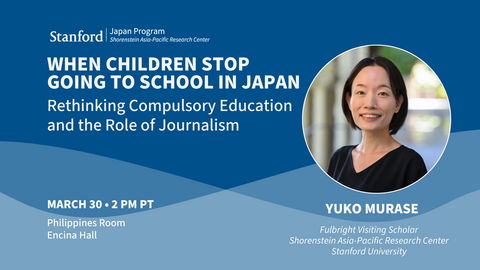
In this roundtable, Yuko Murase, a Fulbright Visiting Scholar at the Shorenstein Asia-Pacific Research Center (APARC) and a journalist at The Mainichi, one of Japan’s leading national newspapers, will share insights from more than 15 years of reporting on education in Japan.
Her reporting has covered issues such as school nonattendance (futoko), bullying, school consolidation in depopulating regions, and the growing demand for diverse educational options. In recent years, the number of children classified as futoko has reached record highs in Japan. At the same time, alternative “free schools” have drawn increasing attention, raising important questions about compulsory education, equity, and parental choice.
Murase will introduce these debates and reflect on how definitions of school nonattendance differ between Japan and the United States. The conversation will also touch on broader challenges facing journalism in Japan, including the impact of digital media on local reporting and public discourse.
Katherine (Kemy) Monahan, Visiting Scholar at APARC and U.S. diplomat, will join the discussion, offering comparative and policy perspectives.
Rather than a formal lecture, the session is designed as an open conversation, inviting participants to share their perspectives and reflect on how similar issues are addressed in different contexts.
Refreshments will be served on a first-come, first-served basis.
Speaker
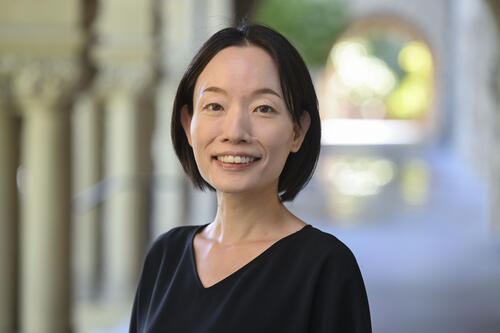
Yuko Murase is a Fulbright Visiting Scholar at the Shorenstein Asia-Pacific Research Center (APARC) for the fall and winter quarters of the 2025–2026 academic year. She is a journalist with more than 15 years of experience at The Mainichi Shimbun, one of Japan’s leading national newspapers, which also operates an English-language news site. Murase received the Fulbright Scholar Award in Journalism in 2025, becoming the only Japanese journalist selected that year.
Under the Fulbright program, Murase conducts comparative research at APARC on educational systems and practices in the United States and Japan. Drawing on her reporting on education in Japan, including “Preference for ‘Free Schools’ over Compulsory Education Stirs Controversy in Japan,” she examines diverse educational models in the United States — such as charter schools, homeschooling, and innovative learning initiatives in Silicon Valley — and their implications for expanding educational opportunities in Japan. Her work also aims to contribute to ongoing conversations about education in both countries.
Murase has written extensively in both English and Japanese, with a focus on education, social issues, and culture. Her reporting includes school nonattendance (futoko), bullying, school consolidation in depopulating regions, and the growing demand for more educational options in Japan. She was among the journalists who reported on the case of a 13-year-old student who died by suicide in Shiga Prefecture, which drew national attention and led to the enactment of Japan’s Anti-Bullying Act (2013). Her investigative series on harassment within a fire department in Shiga Prefecture during and after the COVID-19 pandemic received the 19th Hikita Keiichiro Award (2025) from the Japan Federation of Newspaper Workers’ Unions, which honors journalism that protects human rights and promotes trust in the press.
Having spent many years reporting in Shiga Prefecture near Kyoto, Murase developed a deep appreciation for local journalism and a strong interest in its future in the digital age. Her work reflects a belief that investigating local issues can yield lessons of global relevance.
Murase has also covered major international events, including the historic visit of President Barack Obama to Hiroshima, and interviewed filmmaker Oliver Stone during his first visit to Hiroshima. She has reported on global perspectives on the legacy of the atomic bombings and nuclear weapons.
Her interest in education has been shaped by studying in several countries. After graduating from high school in Australia, she earned a BA in International Relations from Ritsumeikan University in Kyoto. While there, she studied journalism at Rutgers University in the United States and sociology at the University of the Philippines as an exchange student. She was selected for the Japanese University Student Delegation to Korea by the Japan–Korea Cultural Foundation (2004).
Moderator
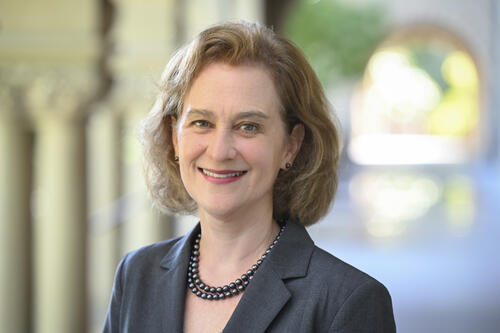
Katherine (Kemy) Monahan joins the Walter H. Shorenstein Asia-Pacific Research Center (APARC) as a visiting scholar, Japan Program Fellow, for the 2025-2026 academic year. Ms. Monahan has completed 16 assignments on four continents in her 30 years as a Foreign Service Officer with the U.S. Department of State. She recently returned from Tokyo, where she was Deputy Chief of Mission at the U.S. Embassy in Japan, following roles as Charge d’affaires for Papua New Guinea, Solomon Islands, and Vanuatu, and Deputy Chief of Mission to New Zealand, Samoa, Cook Islands, and Niue. She was Director for East Asia at the National Security Council from 2022 to 2023. Previously, she worked for the U.S. Department of Treasury in Tokyo, as Economic, Trade and Labor Counselor in Mexico City, Privatization lead in Warsaw after the fall of the Berlin Wall, Advisor to the World Bank, and Deputy Executive Director of the Secretary of State’s Global Health Initiative, among other roles. As lead of UNICEF’s International Financial Institutions office, Ms. Monahan negotiated over $1 billion in funding for children. A member of the Bar in California and DC, Ms. Monahan began as an attorney in Los Angeles.