
Reckoning the Urban: Cold War Legacies and Contemporary Urban Politics in Southeast Asia
Reckoning the Urban: Cold War Legacies and Contemporary Urban Politics in Southeast Asia
Wednesday, January 7, 202612:00 PM - 1:30 PM (Pacific)
Encina Hall, Third Floor, Central, C330
616 Jane Stanford Way, Stanford, CA 94305

Most scholarship on contemporary urban politics in Southeast Asia focuses on the post–mid-1980s period of accelerated integration into global supply chains and finance, when rapid urban expansion generated displacement, ecological damage, and stark distributional conflicts. This presentation asks how shifting the temporal frame to the turbulent era of Southeast Asia’s “hot Cold War” might reshape our understanding of today’s urban planning and development politics.
Between roughly 1965 and 1975, the Vietnam War and the “China scare” prompted an intensive U.S. military and political effort to secure influence in the region. In these years, Indonesia, the Philippines, and Thailand each saw the rise of U.S.-supported authoritarian governments that consolidated power through legal and institutional manipulation, control of knowledge production, and selective—sometimes extreme—violence that was rationalized in the name of anti-communism. Shatkin argues that the explosive urbanization beginning in the mid-1980s must be read through this earlier period, as planning agendas were already being molded by regimes seeking to exploit the immense value produced by urban transformation to entrench political and economic control.
The presentation traces the Cold War’s political and institutional legacies for contemporary urban politics in these three countries, particularly the enduring dominance of oligarchic interests and the relative weakness of technocratic bureaucracies. It concludes that today’s urban social movements in Indonesia, the Philippines, and Thailand often frame their critiques not primarily around anti-globalization, but around the entrenched oligarchy, state paternalism, and economic inequality rooted in these Cold War formations.
Speaker
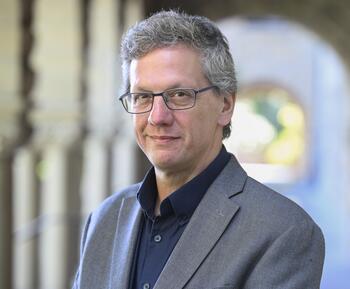
Gavin Shatkin is APARC's visiting scholar and Lee Kong Chian NUS-Stanford Fellow on Southeast Asia for the fall quarter of 2025. A professor of public policy and architecture at Northeastern University, he is an urban planner focused on the political economy of urbanization and urban planning and policy in Southeast Asia. His recent research has addressed: the role of state actors in the emergence across Asia of very large, developer-built ‘urban real estate megaprojects’; the implications of climate change-induced flood risk for questions of property rights in coastal cities; and the geopolitical dynamics shaping the ‘infrastructure turn’ in urban policy in large Southeast Asian cities. His articles have been published in the International Journal of Urban and Regional Research, Urban Studies, Annals of the Association of American Geographers, and numerous other journals in urban studies, planning, geography, and Asian studies. His most recent book is Cities for Profit: The Real Estate Turn in Asia’s Urban Politics (Cornell, 2017).
While at APARC, Gavin primarily focuses on a book manuscript examining the implications of Cold War political legacies for contemporary urban development and planning in Southeast Asia. The book focuses on three megalopolises—Jakarta, Bangkok, and Metro Manila—that were the capital cities of nations that saw the consolidation (with American support) of authoritarian regimes during the period of Southeast Asia’s ‘hot Cold War’ during the 1960s and 1970s. The book examines the legacies of Cold War era law, policy, and political discourse in three areas: property rights and land management; the production of knowledge about urbanization; and definitions of urban citizenship and belonging.