
Korea’s Remaking of U.S. Public Administration Knowledge
Korea’s Remaking of U.S. Public Administration Knowledge
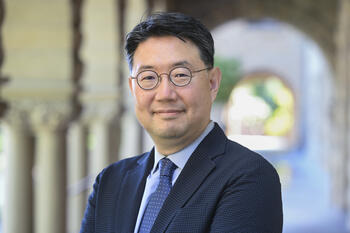
APARC Visiting Scholar Seok-Jin Eom, professor of public administration at Seoul National University, offers a history of Korean public administration, arguing that PA knowledge was not simply transplanted from the United States but was actively indigenized by Korean scholars who adapted foreign theories to meet the country’s evolving historical and political demands. Rather than accepting the prevailing “blank slate” narrative, Eom reveals a dynamic intellectual history shaped by colonial legacies, geopolitics, and the agency of Korean academics.

At a seminar on the evolution of public administration (PA) knowledge in South Korea, APARC Visiting Scholar Seok-Jin Eom, a Seoul National University public administration professor, challenged the assumption that Korean PA is little more than a copy of American public administration imported through the Minnesota Project in the 1950s and 60s. Instead, he argued that Korean scholars continuously synthesized and transformed influences from Japanese colonial administration, American theory, and developmentalist thought into something distinctly their own.
From Colonial Legacy to Democratic Public Administration
Eom traced the origins of Korean PA to the Japanese colonial era, in which administration was defined primarily as legal control and enforcement. After liberation in 1945, Korean scholars turned to American democratic PA theory, not only to build state capacity but also as an intellectual resource for resisting the authoritarian tendencies of the Rhee administration. Translated textbooks from the West, lectures from leading PA scholars, and pluralist political science all circulated new PA ideas in Korea during this period, providing scholars with new frameworks for thinking about governance.
A key figure in this early synthesis was Professor In Heung Jung, who had studied at Kyoto Imperial University and later introduced PA as a regular subject at Seoul National University. He replaced the authoritarian logic of colonial administration with democratic control and pluralism, while preserving the Japanese and German emphasis on a strong, guiding state role in national planning.
The Minnesota Project and the Import of American Managerialism
The Minnesota Project (1957-1962), a Truman-era technical cooperation program linking the University of Minnesota and Seoul National University, became the largest program of its kind in Asia. Its goals were twofold: to exchange knowledge and skills to hasten economic and social progress in developing countries, and to strengthen core administrative functions – including personnel management, finance, planning, and tax administration – by applying the best practices of more advanced nations. During this program, fourteen American advisors spent roughly twenty months in Korea, helping build curriculum, research programs, and a PA library stocked with American materials. Additionally, nineteen Korean professors traveled to Minnesota, completing master’s coursework and returning to take up faculty positions at SNU and major private universities.
Eom described the American PA introduced through this program as deeply managerialist – centered on efficiency, classical organizational principles such as division of labor and span of control, and a strict politics-administration dichotomy. American advisors were confident their models would transfer seamlessly to developing countries, having seen them succeed elsewhere. However, Eom argued this confidence would prove unfounded, as static and functionalist frameworks struggled to address the realities of rapid national development.
From Managerialism to Developmentalism
After Minnesota, Korean scholars increasingly found that an emphasis on managerial efficiency alone could not address the demands of modernization under the Park Chung Hee administration. Internationally, modernization theory was gaining traction, and development administration, associated with scholars like Fred Riggs, called for more dynamic, policy-oriented, and normative research that could serve as a practical guide for change agents in developing countries.
In Korea, this shift aligned with Park’s nationalist modernization agenda. PA scholars redefined their field as the “social dynamics” of modernization, recasting public officials not merely as managers but as change agents responsible for policymaking, goal-setting, and national development. This developmentalist turn provided the ideological foundation for Park’s state-led economic model, and graduates of SNU’s Graduate School of Public Administration moved into core government ministries, including the Economic Planning Board, as the trained elite behind Korea’s economic miracle. Eom also noted the darker side of this alignment in which scholars became politically mobilized by the state, drawing criticism as “polifessors” (politician-professors) who served the regime rather than maintaining academic independence.
Key Takeaways
The “blank slate” myth obscures a rich intellectual history: Korean public administration was not simply imported from America but was indigenized through successive waves of synthesis, adaptation, and transformation.
Colonial legacies persisted: pre-liberation Japanese administrative traditions shaped early Korean PA, even as scholars replaced authoritarian control with democratic and pluralist frameworks after independence.
The Minnesota Project introduced American managerialism to Korea, but its static and efficiency-focused frameworks were ultimately insufficient for the demands of national development, prompting a shift toward developmentalist PA in the 1960s.
The developmentalist DNA embedded during the Park era has lasting consequences, continuing to shape Korea’s state-led governance model through democratization, globalization, and into the current era of digital government and AI government-initiated policy.
Kerstin Norris is a research associate at APARC’s Korea Program and managerial editor of The Journal of Korean Studies.


