Governance

FSI's research on the origins, character and consequences of government institutions spans continents and academic disciplines. The institute’s senior fellows and their colleagues across Stanford examine the principles of public administration and implementation. Their work focuses on how maternal health care is delivered in rural China, how public action can create wealth and eliminate poverty, and why U.S. immigration reform keeps stalling. 

FSI’s work includes comparative studies of how institutions help resolve policy and societal issues. Scholars aim to clearly define and make sense of the rule of law, examining how it is invoked and applied around the world. 

FSI researchers also investigate government services – trying to understand and measure how they work, whom they serve and how good they are. They assess energy services aimed at helping the poorest people around the world and explore public opinion on torture policies. The Children in Crisis project addresses how child health interventions interact with political reform. Specific research on governance, organizations and security capitalizes on FSI's longstanding interests and looks at how governance and organizational issues affect a nation’s ability to address security and international cooperation.

News Type
News
Date
Paragraphs

The Korea Program invites junior faculty, post-doctoral fellows, and graduate students to apply for travel awards to attend an upcoming two-day conference organized by the Korea Program at Stanford' Asia-Pacific Research Center. The workshop titled "Future Visions: Challanges and Possibilities of Korean Studies in North America" will be held on November 1st and 2nd, 2018 at Stanford University.

The awards will cover accepted applicants' lodging, domestic airfares, and/or ground transportation. To apply for the travel awards, please submit your CV and 2-page statement as a single file by July 15 here.

About the conference:

“Future Visions: Challenges and Possibilities of Korean Studies in North America,” is designed to bring together leading scholars in the fields of language education, literature, history, social sciences, and library studies. Each panel will consist of three-four scholars who will be tasked with presenting a report on the state of the field. The purpose of the panels is to generate discussion around some of the following questions: 

  • What are the research trends in each field?
  • What kinds of directions can we expect in the near future?
  • What are some of the disciplinary or other challenges in each field?
  • How does each field interact with related fields?
  • What are some of the limitations and possibilities around graduate student training?
  • How can faculty with graduate students cultivate supportive and critical scholarly communities?
  • ​How are junior faculty encouraged, and what institutional structures may offer better support?

Accepted applicants are expected to actively participate in discussion sessions and to engage in networking with other scholars during the 2-day conference.

Please direct questions on the conference to hjahn@stanford.edu.

Hero Image
encina columns
All News button
1
News Type
Commentary
Date
Paragraphs

The recent developments in North Korea's summit diplomacy and the feasibility of CVID (complete, verifiable and irreversible dismantlement) of the nuclear program have received unprecedented responses, both optimistic and pessimistic, from the international community.

Please stay tuned to this page for APARC researchers' commentary and analysis on the CVID of the North Korean nuclear program through articles published in various news media.

Latest Commentaries:

How to Keep the Ball Rolling on North Korean Negotiations (East Asia Forum, May 2, 2019)

Why Walking Away from Kim's Deal May Have Been the Right Move (Axios, February 28, 2019)

Success of Second Trump-Kim Summit Will Lie in the Details (Axios, February 26, 2019)

The Second Trump-Kim Summit Must Settle the Big Questions (The National Interest, February 19, 2019)

Normalising, Not Denuclearising, North Korea (East Asia Forum, October 3, 2018)

Moon-Kim Summit in Pyongyang Was Promising, But No Game Changer (Axios.com, September 19, 2018)

Towards Normality: What's Next with North Korea? (East Asia Forum Quarterly, September 2018)


The Singapore Summit Empowers South Korean Chaebols (The New Republic, June 26, 2018)

Korean Elections Give Moon Momentum, But Could Shift U.S. Alliance (Axios, June 14, 2018)

Despite Lack of Plan, North Korea Denuclearization Could Still Happen (Axios, June 12, 2018)

Ambassador Kathleen Stephens shares reactions following the Trump-Kim summit, including her thoughts on President Trump's pledge to cancel military exercises on the Korean Peninsula (KQED's Forum, 06/12/18)

With North Korea, Let's Not Forget the Big Picture (The Diplomat, June 8, 2018)

"[T]he mere prospect of the June summit has already enhanced Kim's status on the international stage," observes APARC Director Gi-Wook Shin, Trump needs leadership and allies to salvage the North Korea summit (Axios, May 25, 2018)

Stanford Scholars Discuss Diplomacy’s Future after U.S.-North Korea Summit Is Canceled (May 24, 2018)

Dan Sneider understands Japanese skepticism of North Korea's conversion to disarmament in Japan, China and South Korea Get Together (The Economist, May 10, 2018)

Future of U.S. troops in South Korea uncertian (Los Angeles Times, May 4, 2018)

Related articles:

A new start or a rerun on the Korean Peninsula? (East Asia Forum, May 6, 2018)

Stanford Panel Discusses North-South Summit and What Happens Next (APARC News, April 28, 2018)

North Korea Summit Diplomacy (The Diplomat, March 30, 2018)

Moon's Bet on the Olympics: What Comes Next? (East Asia Forum, February 18, 2018)


Hero Image
panmunjom april 27 2018
Panmunjom Declaration on April 27, 2018
Cheong Wa Dae
All News button
1
-

RSVP required: Click here to register.

This is a book talk with Carter Eckert, the author of Park Chung Hee and Modern Korea: The Roots of Militarism, 1866-1945

Discussants:
Barak Kushner: Reader in Japanese History, University of Cambridge
Yumi Moon, Associate Professor of History, Stanford University

About the book:
For South Koreans, the twenty years from the early 1960s to late 1970s were the best and worst of times—a period of unprecedented economic growth and of political oppression that deepened as prosperity spread. In this masterly account, Carter J. Eckert finds the roots of South Korea’s dramatic socioeconomic transformation in the country’s long history of militarization—a history personified in South Korea’s paramount leader, Park Chung Hee.

For more information about this event, please visit CEAS event website.

This event is sponsored by the Center for East Asian Studies, APARC Korea Program, Department of History, Stanford Humanities Center, and the FSI Japan Fund.

Carter Eckert <i> Professor of Korean History, Harvard University</i>
Seminars
-

Public procurement accounts for a substantial portion of the taxpayers' money: approximately 12% of GDP and 29% of government expenditure in OECD countries. Governments are expected to carry it out efficiently and with high standards of conduct to ensure sustainable growth. In this talk, Lee will explain the unique auction system in South Korea's public procurement market, and discuss how government purchases can lead firms and the economy to grow. Firms that obtain short term public procurement contracts experience increased growth and activity, above the effects of the activity associated with the public contract, and this is observed especially among small, young and financially-constrained firms. Lee will also draw policy implications from those findings.

Image
lee
Munseob Lee is an assistant professor of economics at the UC San Diego School of Global Policy and Strategy. He is also a core faculty member at the UC San Diego Transnational Korean Studies. His research focuses on macroeconomics, firm dynamics, and Korea. Prior to joining UC San Diego, Professor Lee was a visiting scholar at the Federal Reserve Bank of St. Louis, a research intern at the International Monetary Fund, and a sergeant in the Republic of Korea Army.

Munseob Lee <i>Assistant Professor of economics, UCSD School of Global Policy and Strategy</i>
Seminars
Paragraphs

This paper examines the impact of government guaranteed small business loans on regional growth. I construct a metro-level panel of the Small Business Administration's guaranteed loans and examine economic growth between 1993 and 2002, across 316 metro areas in the US. A simple OLS regression finds a significant positive relationship between small business loans and regional growth. However, first-difference and instrumental variable regressions that mitigate endogeneity find no significant employment or income growth effects from small business loans. At least from an efficiency perspective, there seems to be no net gains to the regional economy from guaranteed small business loans.

All Publications button
1
Publication Type
Journal Articles
Publication Date
Authors
Yong Suk Lee
Paragraphs

This paper examines how the spatial distribution of economic activity evolved within North Korea during a period of economic sanctions. Countries have used economic sanctions to isolate North Korea from the benefits of international trade and finance. China, however, has not imposed the sanctions, and consequentially has offset the trade restrictions imposed by other countries. I hypothesize three channels by which North Korea could have responded in this context: regional favoritism by the ruling elites, reallocation of commerce that reflects the trade diversion to China, and import substitution. Using nighttime lights from North Korea, I find that the capital city, trade hubs near China, and manufacturing cities become relatively brighter when sanctions increase. However, production shifts away from capital-intensive goods, potentially deterring industrial development. The results imply that despite the intention to target the ruling elites, sanctions may increase regional inequality at a cost to the already marginalized hinterlands.

All Publications button
1
Publication Type
Journal Articles
Publication Date
Authors
Yong Suk Lee
-

Transferring knowledge and skills through skilled labor has become a critical topic in contemporary migration studies. Countries that are traditionally non-immigrant destinations often turn to their diaspora communities to increase the chances of return flows and knowledge transfer. It has been almost twenty years since South Korea enacted the ‘Overseas Korean Act’ in 1999, which attracted a large number of overseas Koreans back to its shore. Yet there has been very little discussion over the policy implications and what particular ‘skills’ or contributions the returnees have brought to Korean society.

In this seminar, Jane Yeonjae Lee describes some of the research findings from her forthcoming book Quest for home: Transnational return migration of 1.5 generation Korean New Zealanders (Lexington Press, 2018). This book project, which has been based on a life-history and transnational ethnographic research with 49 Korean return migrants, partly investigates the implications for global knowledge transfer through skilled mobilities. Lee will discuss a number of different pathways of returnees’ particular influences on Korean society, and how their certain knowledge and skills can be transferred, hindered, or mutated.

Image
yeonjae lee
Jane Yeonjae Lee is an interdisciplinary qualitative researcher and her research revolves around transnationalism, migrant communities, mobilities, health, and urban environmental politics. In particular, she is interested in understanding the migratory experiences of highly skilled immigrants and how their mobile lives connect and shape the places of migration they move through. Her work has been featured in academic journals such as Health and Place; New Zealand Geographer; and Journal of Ethnic and Migration Studies. She has also contributed to key texts in the field of geography including Elgar Handbook on Medical Tourism and Patient Mobility; Researching the Lifecourse: Critical reflections from the social sciences; and Contemporary Ethnic Geographies in America. Lee holds a PhD in Geography from the University of Auckland. Dr. Lee is currently a visiting scholar at Shorenstein Asia-Pacific Research Center at Stanford University. 

616 Serra StreetEncina Hall E301Stanford, CA94305-6055
(650) 723-6530
0
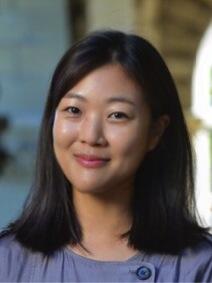
yeonjae_lee.jpg Ph.D.

Jane Lee joins the Walter H. Shorenstein Asia-Pacific Research Center as a Visiting Scholar during the 2017-18 academic year. Prior to joining Shorenstein APARC, she was a Postdoctoral Research Fellow at Northeastern University working in a global comparative project on exploring sustainable mobilities policies.

Jane is an interdisciplinary qualitative researcher and her research revolves around transnationalism and migration, skilled mobilities, and social policies. In particular, she is interested in understanding the mobile (and marginalized) experiences of migratory groups, and how the particular mobilities of people and ideas may affect the places that are involved. Her work has been featured in academic journals such as Health and Place, and New Zealand Geographer. She has also contributed to key texts in the field of Geography including Elgar Handbook on Medical Tourism and Patient Mobility, Researching the Lifecourse: Critical reflections from the social sciences, and Contemporary Ethnic Geographies in America. During her time at Shorenstein APARC, Jane will participate as a paper author in the Koret Workshop and other center activities.

Jane holds a PhD and BA(Hons) in Geography from the University of Auckland. She also currently serves as an Honorary Research Associate at the University of Auckland. 


Recent Publications:

Lee, J.Y. (2017) ‘Being non-Christian in a Christian community: Experiences of Belonging and Identity among Korean Americans’, Institute of Asian American Studies Publications. 43.

Lee, J.Y., Friesen, W. and Kearns, R. (2015) ‘Return migration of 1.5 generation Korean New Zealanders: Long term and Short term reasons’, NZ Geographer, 71, 34-44.

Lee, J.Y., Kearns, R. and Friesen, W. (2015) ‘Diasporic medical return’, In Lunt, N., Hanefeld, J. and Horsfall, D. (Eds) Elgar Handbook on Medical Tourism and Patient Mobility. London: Elgar, (p.207-216).

Lee, J.Y. (2015) ‘Narratives of the Korean New Zealanders’ return migration: Taking a life history approach’, In Worth, N. and Hardill, I. (Eds) Researching the Lifecourse: Critical reflections from the social sciences. Bristol: Policy Press, (p.183-198). (Invited Contribution)

Lee, J.Y. (2015) ‘Korean Americans: Entrepreneurship and religion’, In Miyares, I. and Airriess, C. (Eds) Contemporary Ethnic Geographies in America (2nd Edition). Rowan & Littlefield Publishing Group, (p.285-302) (Invited Contribution)

Lee, J.Y. (2015) ‘Returning Diasporas: Korean New Zealander returnees’ journeys of searching ‘home’ and identity’ In Christou, A. and Mavroudi, E. (Eds) Dismantling diasporas: rethinking the geographies of diasporic identity, connection and development. London: Ashgate, (p.161-174).

Lee, J.Y. (2011) ‘A trajectory perspective towards return migration and development: The case of young Korean New Zealander returnees’, In Frank, R., Hoare, J., Kollner, P. and Pares, S. (Eds) Korea: Politics, Economy and Society. Danvers: Brill, (p.233-256).

Lee, J.Y., Kearns, R. and Friesen, W. (2010), ‘Seeking affective health care: Korean immigrants’ use of homeland medical services’, Health and Place, 16 (1), 108-115.

Visiting Scholar
<i>Visiting Scholar, APARC, Stanford University</i>
Seminars
News Type
Commentary
Date
Paragraphs

“I don't think [young South Koreans] necessarily want reunification,” APARC director Gi-Wook Shin tells an audience during the World Affairs panel, “Responding to North Korea: South Korea’s Olympic Olive Branch and US Cyber Warfare Options." Joined by Ambassador Kathleen Stephens, the two spoke with World Affars CEO Jane Wales about many of the issues facing the Korean peninsula as it prepares for the start of the Pyeongchang Winter Olympics

The conversation is also available as a downloadable podcast

Hero Image
Wrold Affairs CEO Jane Wales, APARC Director Gi-Wook Shin, and Kathleen Stephens
All News button
1
Paragraphs
Book cover of "Peace on a Knife's Edge" showing South Korean president Roh Moo-hyun alongside George W. Bush and Kim Jong-il

Lee Jong-Seok served as vice-secretary of South Korea’s National Security Council and as its unification minister under the Roh Moo-Hyun administration (2003–08). After Roh’s tragic death in 2009, Lee resolved to present a record of the so-called participatory government’s achievements and failures in the realm of unification, foreign affairs, and national security.

Peace on a Knife’s Edge is the translation of Lee’s 2014 account of Roh’s efforts to bring peace to the Korean Peninsula in the face of opposition at home from conservative forces and abroad from the Bush administration’s hard stances of “tailored containment” and its declaration of the North as part of the “axis of evil.” Lee’s narrative will give American readers rare insights into critical moments of Roh’s incumbency, including the tumultuous Six-Party Talks; the delicate process of negotiating the relocation and reduction of United States Forces Korea; Roh’s pursuit of South Korea’s “autonomous defense”; conflicts with Japan over history issues; and the North’s first nuclear weapons test.

Desk, examination, or review copies can be requested through Stanford University Press.

All Publications button
1
Publication Type
Books
Publication Date
Subtitle

The Inside Story of Roh Moo-hyun's North Korea Policy

Book Publisher
Shorenstein APARC
-

[[{"fid":"228881","view_mode":"crop_870xauto","fields":{"format":"crop_870xauto","field_file_image_description[und][0][value]":"","field_file_image_alt_text[und][0][value]":false,"field_file_image_title_text[und][0][value]":false,"field_credit[und][0][value]":"","field_caption[und][0][value]":"","thumbnails":"crop_870xauto","alt":"","title":""},"type":"media","field_deltas":{"1":{"format":"crop_870xauto","field_file_image_description[und][0][value]":"","field_file_image_alt_text[und][0][value]":false,"field_file_image_title_text[und][0][value]":false,"field_credit[und][0][value]":"","field_caption[und][0][value]":"","thumbnails":"crop_870xauto","alt":"","title":""}},"link_text":null,"attributes":{"style":"margin-left: 0px; margin-right: 15px; padding: 0px; float: left; width: 140px; height: 187px;","class":"media-element file-crop-870xauto","data-delta":"1"}}]]Hak-kyu Sohn, a career politician and the former chairman of the South Korea's Democratic Party, will share his insights into Korean democracy based on his decades of experience in politics.

As a student activist, Sohn participated in Korea's democratization movement, which rose up against the nation's military dictatorship, and he also led labor and human rights movements. As a result of his activities under South Korea's oppresive military rule, Sohn was imprisoned. Later, he went on to be appointed minister of health and welfare, became governor of Gyonggi Province, and served four terms as a member of the National Assembly.

Sohn received a PhD in politics from University of Oxford, England, and BA in political science from Seoul National University.

Philippines Conference Room
Encina Hall, 3rd floor
616 Serra Street
Stanford University
Directions

Hak-kyu Sohn <i>Visiting Scholar, Shorenstein APARC; former Chairman of Democratic Party, South Korea</i>
Seminars
Subscribe to Governance