Governance

FSI's research on the origins, character and consequences of government institutions spans continents and academic disciplines. The institute’s senior fellows and their colleagues across Stanford examine the principles of public administration and implementation. Their work focuses on how maternal health care is delivered in rural China, how public action can create wealth and eliminate poverty, and why U.S. immigration reform keeps stalling. 

FSI’s work includes comparative studies of how institutions help resolve policy and societal issues. Scholars aim to clearly define and make sense of the rule of law, examining how it is invoked and applied around the world. 

FSI researchers also investigate government services – trying to understand and measure how they work, whom they serve and how good they are. They assess energy services aimed at helping the poorest people around the world and explore public opinion on torture policies. The Children in Crisis project addresses how child health interventions interact with political reform. Specific research on governance, organizations and security capitalizes on FSI's longstanding interests and looks at how governance and organizational issues affect a nation’s ability to address security and international cooperation.

-

Presidential impeachment is becoming increasingly common in democracies around the world; however, the public’s understanding of impeachment both as a legal and a political process and how it fits into the overall political picture is relatively low.

In February this year, the United States Senate voted to acquit President Donald Trump on both articles of impeachment, bringing the three-week long impeachment trial to an end. Three years earlier in March 2017, the South Korean Constitutional Court made a unanimous decision to remove then President Park Geun-hye from office, putting an end to its three-month long trial. The fate of the two impeached presidents was in part influenced by the different political systems and impeachment mechanisms in the U.S. and South Korea.

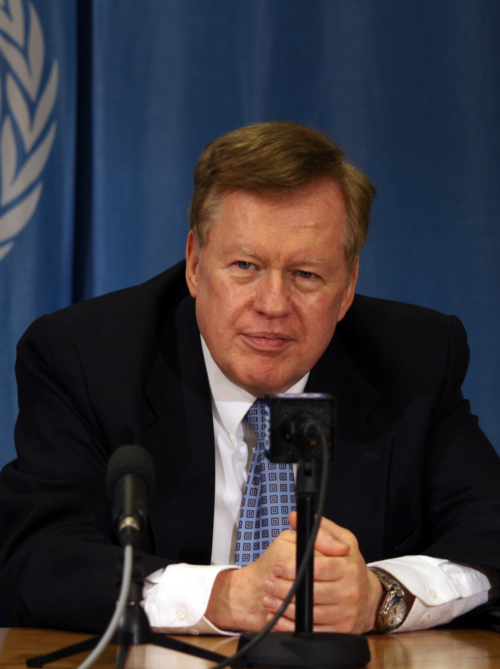
Mira Yoo, a senior rapporteur judge, served as a spokesperson during the impeachment inquiry and trial in South Korea. In this talk, Yoo will share her assessment of the two impeachment cases in the U.S. and South Korea by discussing both the legal and the political factors that helped shape how the impeachment process and proceedings played out in the two impeachment regimes. Drawing on the similarities and differences in several important dimensions, she will discuss the broader implications of presidential impeachment, both the process and its legacy, to promote a better understanding of the historical gravity of the issue.

Image
Mira Yoo joined the Walter H. Shorenstein Asia-Pacific Research Center (APARC) as a visiting scholar for the winter and spring quarters of 2020 from the Constitutional Court of the Republic of Korea, where she serves as rapporteur judge, as well as director of the Basic Rights Research Team at the Constitutional Court's Research Institute.  At APARC, she is conducting research on Korea's international relations in politics through the lens of the constitutional adjudication.

Via Zoom

Mira Yoo <i>Visiting Scholar</i>, APARC, Stanford University
Seminars
News Type
News
Date
Paragraphs

To support Stanford students working in the area of contemporary Asia, the Shorenstein Asia-Pacific Research Center is offering up to ten research assistant internships for summer 2020 and up to three predoctoral fellowships for the 2020-21 academic year. The Center will review applications starting April 15 and expects to fill the positions by April 30, 2020. 

Amid the fallout of the COVID-19 pandemic, students are facing summer internship cancelations and hiring freezes. They are left wondering about the long-term implications of the current crisis for their academic careers and their access to future jobs and valuable work experience.

At Shorenstein APARC, we want to do all we can to support Stanford students. That’s why we are announcing new internship and fellowship opportunities for current students working in the area of contemporary Asia: research assistant internships for the summer quarter of 2020 and predoctoral fellowships for the 2020-21 academic year.

The summer internships are all remote: research assistants will work as telecommuters. Regarding the predoctoral fellowships, we hope we can all have a normal 2020-21 academic year, in which case we expect the fellows to be in residence, but we will reassess the evolving COVID-19 situation closer to the appointment start dates and shift to flexible, online options as needed.

APARC will review applications for both opportunities on a rolling basis starting April 15, 2020. The Center will select up to ten research assistants and up to three predoctoral fellows by April 30, 2020.

Read on to learn more about these offerings and the application requirements, and follow the guidelines below to submit your candidacy.

Summer 2020 APARC Research Assistant Internships

Shorenstein APARC is seeking highly motivated and dedicated undergraduate and graduate students to join our team as paid research assistant interns for the summer quarter of 2020. Research assistants will work with assigned APARC faculty members on projects focused on contemporary Asia, studying varied issues related to the politics, economies, populations, security, foreign policies, and international relations of the countries of the Asia-Pacific region.

All positions will be for eight weeks starting late June or early July 2020. The hourly pay rate is $17 for undergraduate students, $25 for graduate students.

Research assistant positions are open to current Stanford students only. Undergraduate- and graduate-level students are eligible to apply.

Apply Now

  • Complete the application form and submit it along with these two (2) required attachments:
    • CV;
    • A cover letter (up to 1 page).
  • Arrange for a letter of recommendation from a faculty to be sent directly to APARC. Please note: the faculty members should email their letters directly to Kristen Lee at kllee@stanford.edu.

We will consider only complete applications that include all the abovementioned supporting documents.  

2020-21 Shorenstein APARC Predoctoral Fellowships

APARC is inviting applications from current Stanford students for the 2020-21 Shorenstein APARC Predoctoral Fellowship. The fellowship supports predoctoral students working within a broad range of topics related to contemporary Asia. 

Up to three fellowships are available to Ph.D. candidates who have completed all fieldwork and are nearing the completion of their dissertation. The Center will give priority to candidates who are prepared to finish their degree by the end of the 2020-21 academic year.

Shorenstein APARC offers a stipend of $36,075 for the 2020-21 academic year, plus Stanford's Terminal Graduate Registration (TGR) fee for three quarters. We expect fellows to remain in residence at the Center throughout the year and to participate in Center activities.

Apply Now

  • Complete the application form and submit it along with these three (3) required attachments:
    • CV;
    • A cover letter including a brief description of your dissertation (up to 5 double-spaced pages);
    • A copy of your transcripts. Transcripts should cover all graduate work and include evidence of recently-completed work.
  • Arrange for two (2) letters of recommendation from members of your dissertation committee to be sent directly to Shorenstein APARC. Please note: the faculty/advisors should email their letters directly to Kristen Lee at kllee@stanford.edu.

We will consider only complete applications that include all the abovementioned supporting documents. 

Hero Image
Architectural detail on Stanford colonnade with palm trees in the background L.A. Cicero
All News button
1
Authors
Gi-Wook Shin
News Type
Commentary
Date
Paragraphs

There is a Korean expression that means “to become soaked by a drizzle without noticing.” This metaphor is a timely warning against the gradual decline of democratic norms. Though some of the changes underlying this global phenomenon are subtle, they are producing creeping, piecemeal erosions of democracy and pluralism. The signs of democratic backsliding are now emerging everywhere in South Korean society, and a failure to recognize and robustly counter their effects may create future costs that prove unbearable. 

My new article, “Korean Democracy Is Sinking Under the Guise of the Rule of Law,” published in the April 2020 issue of the South Korean magazine Shindonga (New East Asia, the oldest monthly in Korea), examines how the Moon administration is sinking into a democratic recession and considers its actions as a case study with lessons for averting broader, global trends in democratic decline.

In all corners of the world, we witness freely elected leaders gradually dismantle democratic institutional safeguards, fuse political polarization with chauvinistic populism, and focus on narrow interpretations of the national interest just as China and Russia expand their scope of influence via “sharp power,” subversive means.

Image
Chairman of the South Korean National Assembly Moon Hee-sang (second from the left of the chairman's seat) enacts a draft amendment to the election law amid vigorous resistance by members of the opposition –December 23, 2019.&nbsp;
South Korea is no exception to these currents. A politics of extreme confrontation and polarizing rhetoric of "us" and "them" are becoming the country’s new normal. The Moon administration’s aggressive assertion of a Manichean logic of good and evil that justifies their vitriolic attacks on perceived opposition is evidenced in its campaign of “eradicating deep-rooted evils” from Korean society and politics.

As my analysis shows, this crusading mindset has insinuated itself into more concrete actions by the Moon government, such as the calculated blurring of the separation of powers through political interference in the courts, deliberate changes to longstanding election laws that damage the spirit of democracy, and the blatant use of double standards and ideological loyalty in the execution of national policies. Similar patterns are taking hold in populist governments the world over, and – perhaps most disconcertingly – they transpire not through the strong-arming of a military coup or violent political disruption but through the legal procedures and policies meant to keep such canker in check.

To overcome its wave of democratic recession South Korea must cast away political polarization and demonstrate a firm resolve to act in accordance with democratic norms. The upcoming April 15 legislative election must sound a clear alarm against all actors who damage these core principles, regardless of their party affiliation and irrespective of their ideology. 

Read the complete English translation of my article or the original Korean version here:

Hero Image
Opposing political rallies converge in South Korea
Pro- and anti-Moon protests in Seocho-dong, South Korea – October 5, 2019.
Dong-a Ilbo, Shindonga
All News button
1
-

THIS EVENT HAS BEEN CANCELED
In keeping with Stanford University's guidance to event hosts


Over the last three years, the United States has done an about-face in terms of engaging North Korea on human rights. Some have argued that if we are to make progress on denuclearization with North Korea, we cannot press Pyongyang on human rights issues because we must develop a cooperative relationship. Raising human rights abuses will only make it more difficult to deal with security issues they argue. On the other hand, Ambassador King believes that human rights are not an issue that we raise after we have achieved our security goals. It is not just the right thing to do, it is an important and critical part of achieving real progress with North Korea on security issues and it is key to a better relationship between Washington and Pyongyang. Internal pressure from the North Korean elites and the public is necessary for positive change on security issues by the North, and this will only come about if there is progress on human rights.  Furthermore, North Korea, like all UN member states, has agreed to observe UN human rights obligations. If the North fails to carry out its commitments on human rights, what assurance do we have that it will fulfill security obligations it accepts?

Image
robert king
Ambassador Robert King is former Special Envoy for North Korean human rights issues at the Department of State (2009-2017).  Since leaving that position, he has been senior advisor to the Korea Chair at the Center for Strategic and International Studies (CSIS), a senior fellow at the Korea Economic Institute (KEI), and a board member of the Committee for Human Rights in North Korea (HRNK) in Washington, D.C.  Previously, Ambassador King served for 25 years on Capitol Hill (1983-2008) as chief of staff to Congressman Tom Lantos (D-California), and staff director of the House Foreign Affairs Committee (2001-2008). Most recently, he was a 2019-20 Koret Fellow for the fall quarter at Stanford University.

This public event is part of the 12th annual Koret Workshop, "The Role of Human Rights in Policy Toward North Korea," and open to the general public with registration.

The event is made possible through the generous support of the Koret Foundation.

Advisory on Novel Coronavirus (COVID-19)

In accordance with university guidelines, if you (or a spouse/housemate) have returned from travel to mainland China or South Korea in the last 14 days, we ask that you DO NOT come to campus until 14 days have passed since your return date and you remain symptom-free. For more information and updates, please refer to Stanford's Environmental Health & Safety website.


Robert R. King Former Special Envoy for North Korean Human Right Issues
Seminars
News Type
News
Date
Paragraphs

Shorenstein APARC is pleased to announce the selection of two scholars as postdoctoral fellows for the 2019-20 academic year. They will begin their appointments at Stanford in the coming Autumn quarter.

The Center offers the Shorenstein Postdoctoral Fellowship on Contemporary Asia to recent doctoral graduates dedicated to research and writing on contemporary Asia, primarily in the areas of political, economic, or social change in the Asia-Pacific region, or international relations and international political economy in the region. The Center’s Asia Health Policy Program sponsors the Asia Health Policy Postdoctoral Fellowship, supporting young scholars who pursue original research on contemporary health or healthcare policy of high relevance to low- and middle-income countries in the Asia-Pacific region

Fellows develop their dissertations and other projects for publication, present their research, and participate in the intellectual life at the Center and at Stanford at large. Our postdoctoral fellows often go on to pursue careers at top universities and research organizations around the world and continue to contribute to APARC research and publications.

Meet our new postdoctoral scholars:


Image
Portrait of Radhika Jain
Radhika Jain
Asia Health Policy Postdoctoral Fellow

What are the conditions necessary to ensure the effectiveness of public health insurance programs?

Radhika Jain is completing her doctorate in the Department of Global Health at Harvard University. She studies the role of the private sector in the health system, frictions in health care markets, and the incidence of public health policy benefits.

Radhika’s dissertation examines the extent to which government subsidies for health care under insurance are captured by private hospitals instead of being passed through to patients, and whether accountability measures can help patients claim their entitlements. Radhika’s research has been supported by grants from the Weiss Family Fund and the Jameel Poverty Action Lab (JPAL). She has worked on impact evaluations of health programs in India and on the implementation of HIV programs across several countries in sub-Saharan Africa. She also held a doctoral fellowship at the Center for Global Development.

At Shorenstein APARC, Radhika will refine her dissertation research for publication in academic journals and start new work on the structure of health care markets in India and the impacts of measures to increase the effectiveness of public health insurance.  


Image
Portrait of Hannah June Kim
Hannah June Kim
Shorenstein Postdoctoral Fellow on Contemporary Asia

How does modernization influence cultural democratization in East Asia?

Hannah June Kim is completing her doctorate in the Department of Political Science at the University of California, Irvine. She researches public opinion, political behavior, theories of modernization, economic development, and democratic citizenship, focusing on East Asia.

Hannah’s dissertation examines how and why people view democracy in systematically different ways in six countries: China, Japan, Korea, Singapore, Taiwan, and Vietnam. Developing unique categories of democratic citizenship that measure the cognitive, affective, and behavioral patterns of individuals, she finds that state-led economic development limited the growth of cultural democratization among middle class groups in all three dimensions. The results imply that the classic causality between modernization and democratization may not be universally applicable to different cultural contexts.

At Shorenstein APARC, Hannah will work on developing her dissertation into a book manuscript and make progress on her next project that explores democratization and gender empowerment in East Asia. Hannah received an MA in International Studies from Korea University and a BA from UCLA. Her work has been published, or is forthcoming, in The Journal of Politics, PS: Political Science & Politics, and the Japanese Journal of Political Science.


Hero Image
encina hall
All News button
1
-

Image
andray book cover

The stories of North Korea and Myanmar (Burma) are two of Asia’s most difficult. For decades they were infamous as the region’s most militarized and repressed, self-isolated and under sanctions by the international community while, from Singapore to Japan, the rest of Asia saw historic wealth creation. Andray Abrahamian, author of the recent book North Korea and Myanmar: Divergent Paths (McFarland, 2018), examines and compares the recent histories of North Korea and Myanmar, asking how both became pariahs and why Myanmar has been able to find a path out of isolation while North Korea has not. 

Abrahamian finds that both countries were faced with severe security threats following decolonization. Myanmar was able to largely take care of its main threats in the 1990s and 2000s, allowing it the space to address the reasons for its pariah status. North Korea's response to its security threat has been to develop nuclear weapons, which in turn perpetuates and exacerbates its isolation and pariah status. In addition, Pyongyang has developed a state ideology and a coercive apparatus unmatched by Myanmar, insulating its decision makers from political pressures and issues of legitimacy to a greater degree.

Dr. Andray Abrahamian is currently the 2018-19 Koret Fellow in Korea Program at Stanford. He is a member of the US National Committee on North Korea and an Adjunct Fellow at Pacific Forum and at Griffith University. Working for a non-profit, Choson Exchange, has taken him to the DPRK nearly 30 times; he has also lived in Myanmar.

Philippines Conference Room Encina Hall, 3rd Floor 616 Serra Mall, Stanford, CA 94305
0
Lecturer
Koret Fellow, 2018-19
andray_abrahamian.jpg Ph.D.
Andray Abrahamian was the 2018-19 Koret Fellow at Stanford University. He is also an Honorary Fellow at Macquarie University, Sydney and an Adjunct Fellow at the Griffith Asia Institute. He is an advisor to Choson Exchange, a non-profit that trains North Koreans in economic policy and entrepreneurship. He was previously Executive Director and Research Director for Choson Exchange. That work, along with supporting sporting exchanges and a TB project, has taken him to the DPRK nearly 30 times. He has also lived in Myanmar, where he taught at Yangon University and consulted for a risk management company. He has conducted research comparing the two countries, resulting in the publication of "North Korea and Myanmar: Divergent Paths" (McFarland, 2018). Andray has published extensively and offers expert commentary on Korea and Myanmar, including for US News, Reuters, the New York Times, Washington Post, Lowy Interpreter and 38 North.  He has a PhD in International Relations from the University of Ulsan, South Korea and an M.A. from the University of Sussex where he studied media discourse on North Korea and the U.S.-ROK alliance, respectively. Andray speaks Korean, sometimes with a Pyongyang accent.
<i>2018-19 Koret Fellow, APARC, Stanford University</i>
Seminars
News Type
News
Date
Paragraphs

Sungmoon Lim (BA '18 Urban Studies) has won the 7th annual Korea Program Prize for Writing in Korean Studies for her paper, "Urban Design in the Age of Globalization: An Analysis of the Global Reception of Seoul’s Cheonggyecheon Stream Restoration Project." Gi-Wook Shin, director of the Korea Program at Shorenstein APARC, says, "Sungmoon's paper is superb. Her work is original and ambitious and her thesis will make an excellent contribution to various fields and sub-fields, including urban studies, globalization, and Korean studies." The award announcement may be viewed here.

Sponsored by the Korea Program and the Center for East Asian Studies, the writing prize recognizes and rewards outstanding examples of writing by Stanford students in an essay, term paper or thesis produced during the current academic year in any discipline within the area of Korean studies, broadly defined. The competition is open to both undergraduate and graduate students.

Past Recipients:

6th Annual Prize (2017)


All News button
1
-

Asia has achieved remarkable progress on economic development and poverty reduction over the past decades. It is now considered as the main driver of global economic growth and we are witnessing the shift of economic center of gravity toward Asia. Continued success is, however, not preordained or guaranteed. More specifically, the region has to manage several mega-challenges to realize the "Asian Century." These include remaining poverty incidence and increasing inequality, demographic changes, growing environmental pressure, climate change and disaster risk, rapid urbanization, and governance and institutional capacity concern. These increasingly complex challenges pressure Asian countries to take a more sustainable development path, moving away from more traditional development patterns. 

The world is experiencing various technological advancement —including digital and cloud technologies, big data, robotics, artificial intelligence, the internet of things, 3-D printing, blockchain, energy storage, and autonomous vehicles. These technologies will significantly change the way people live and also bring very broad and deep impact on economic and social development landscape. The progress and impacts of technological advancement may be different between developed and developing countries. Will disruptive technologies help developing countries in Asia and the Pacific to solve development challenges or harm their catch-up momentum? What are opportunities and risks posed by emerging technological changes to developing countries in that region? How will developing countries and the international development community prepare to fully harness technological advancements for sustainable development? These are some of the areas to be explored in this seminar.

Image
gilhong kim
Gilhong Kim is currently a visiting scholar in the Korea Program at Shorenstein APARC for the 2018 calendar year. Previously, he was Senior Director concurrently Chief Sector Officer of the Sustainable Development and Climate Change Department in Asian Development Bank (ADB). His research interests encompass technological development and impact on developing countries in Asia and the Pacific. Dr. Kim has more than 33 years of research and operational experience in country and regional development, sectoral strategies and operations covering clean energy, transport, water supply and sanitation, urban development, education, health and finance. Since 1996, Dr. Kim has worked for ADB in the areas of country economic assessment and country operational program development, corporate strategy and policy development, country field office head (in Lao PDR), sector operational strategy development, operational knowledge management, and promoted technology application and innovative approach.  Before joining ADB, he worked for Ministry of Finance in Korea for about 12 years in the areas of economic cooperation and international finance. He holds a PhD in economics from the University of Texas, Austin, and a BA in economics from Korea University in Korea. 

Philippines Conference Room Encina Hall, 3rd Floor 616 Serra Mall, Stanford, CA 94305


616 Serra StreetEncina Hall E301Stanford, CA94305-6055
0
gilhong_kim.jpg Ph.D.

Dr. Gilhong Kim joins the Walter H. Shorenstein Asia-Pacific Research Center for the 2018 year as visiting scholar.  He currently serves as the Senior Director and Chief Sector Officer of the Sustainable Development and Climate Change Department at the Asian Development Bank.  He will be conducting research on technological development and impact in the Asia-Pacific.

Visiting Scholar at APARC
<i>Visiting Scholar, Shorenstein APARC, Stanford University</i>
Seminars
News Type
News
Date
Paragraphs

Andray Abrahamian will be the 2018-19 Koret Fellow in the Korea Program at Stanford’s Walter H. Shorenstein Asia-Pacific Research Center (APARC). Abrahamian has been Executive Director and Director of Research for Choson Exchange, a non-profit that has trained over 2000 North Koreans in entrepreneurship and economic policy since 2010. His work for Choson Exchange and other projects has taken him to North Korea 30 times. He has also lived in Myanmar, allowing him the ability to conduct field research for his new book, North Korea and Myanmar: Divergent Paths (2018, McFarland). Divergent Paths asks how Myanmar came to end its isolation, while North Korea has yet not. 

“When it comes to North Korea, Dr. Abrahamian has been very active both as an academic and on the ground. He has genuine hands-on experience of working with North Koreans from his numerous trips to the country. In this important period of flux for North Korea’s place on the world stage, we welcome Dr. Abrahamian as 2018-19 Koret Fellow, and look forward to his meaningful contributions to our activities.” “His experience and understanding of North Korea will be a great asset to our program,” Gi-Wook Shin, director of APARC said.

Image
andray abrahamian koret fellow pic
As the 2018-19 Koret Fellow, Abrahamian will research the economic relations of North Korea during changing geopolitical conditions as well as entrepreneurship in North Korea as it relates to communities of Koreans abroad. He also plans to write a general readership book that explains contemporary North Korean society. While at Stanford, he will teach a course on contemporary North Korean society and engage in public talks and conferences on Korea issues. During his fellowship, Abrahamian will also help organize the Koret Workshop, an international conference held annually at Stanford University.

Abrahamian is an Honorary Fellow at Macquarie University, Sydney, and an Adjunct Fellow at the Griffith Asia Institute. He is a frequent contributor to 38North.org, a website focused on North Korea analysis, and is a member of the US National Committee on North Korea. Andray holds a PhD from the University of Ulsan and an MA from the University of Sussex in International Relations. He has taught courses at Yangon University and Ulsan University. 

Supported by the Koret Foundation, the fellowship brings leading professionals to Stanford to conduct research on contemporary Korean affairs with the broad aim of strengthening ties between the United States and Korea.

Hero Image
andray abrahamian koret fellow pic
All News button
1
News Type
Commentary
Date
Paragraphs
All News button
1
Subscribe to Governance