Governance

FSI's research on the origins, character and consequences of government institutions spans continents and academic disciplines. The institute’s senior fellows and their colleagues across Stanford examine the principles of public administration and implementation. Their work focuses on how maternal health care is delivered in rural China, how public action can create wealth and eliminate poverty, and why U.S. immigration reform keeps stalling. 

FSI’s work includes comparative studies of how institutions help resolve policy and societal issues. Scholars aim to clearly define and make sense of the rule of law, examining how it is invoked and applied around the world. 

FSI researchers also investigate government services – trying to understand and measure how they work, whom they serve and how good they are. They assess energy services aimed at helping the poorest people around the world and explore public opinion on torture policies. The Children in Crisis project addresses how child health interventions interact with political reform. Specific research on governance, organizations and security capitalizes on FSI's longstanding interests and looks at how governance and organizational issues affect a nation’s ability to address security and international cooperation.

-

"South Korea's 'Creative Economy' Initiative"

Speaker: Kyeongsik Cho, 2014-15 Visiting Scholar from Ministry of Science, ICT and Future Planning

In recent years South Korea, home of the economic "miracle on the Han River," has been suffering from low growth. A rapidly aging population means that the potential growth rate is falling, and the country has encountered difficulties adapting to new globally integrated markets. Concerned that low growth and jobless growth might become a permanent fixture, the Korean government has come up with a new vision to develop a "Creative Economy." Visiting scholar Kyeongsik Cho, a senior official in Korea's Ministry of Science, ICT and Future Planning, will explain the origin, content, and implementation of this critically important initiative.


"Is South Korea Ready for Internet of Things?"

Speaker: Seunghoon Lee, 2014-15 Visiting Scholar from Maeil Business Newspaper

Visiting scholar Seunghoon Lee will examine the current Internet of Things (IoT) trends and discuss how South Korea can benefit from emerging opportunities of the next technology wave of IoT.

Mr. Lee is a staff reporter at the Maeil Business Newspaper in Korea.


Philippines Conference Room

Encina Hall, 3rd floor

Shorenstein APARCStanford UniversityEncina Hall E301Stanford,  CA  94305-6055
(650) 723-6530
0
Visiting Scholar
kyeongsik_cho.jpg MS

Kyeongsik Cho joins the Shorenstein APARC during the 2014-2015 academic year from the Ministry of Science, ICT and Future Planning (MSIP) in Korea where he serves as a director general. His research interests encompass how the US is currently solving national issues that involve slow growth, unemployment and how scientific technologies and ICT are used in solving those problems. Kyeongsik Cho holds an MS in finance from the Michigan State University, and a BA in Business Administration from the Korea University.

Shorenstein APARC616 Serra StreetEncina Hall, E301Stanford, CA 94305-6055
(650) 723-6530
0
Visiting Scholar
seung-hoon_lee.jpg
Seung-Hoon Lee joins the Walter H. Shorenstein Asia-Pacific Research Center during the 2014-15 academic year from Maeil Business Newspaper (leading economic daily in South Korea) where he serves as an economics and industry reporter.  His research interests encompass IoT (Internet of Things) impact on the future of Korea. Since 2007, more 'things or objects' have been connected to the internet than people have. In 2015, world population would be 7.2 billion, and connected devices four times larger than that. In the era of IoT, he will analyze the collision of big data and machine-to-machine connected information.  He was awarded two major media related prizes in Korea: the Grand Prize by CITIGROUP for articles on Korea's economic reform and another Grand Prize by Korea Financial Investment Association for articles on capital market crisis.  He co-authored Great Decision (2012) and Mobile Economy (2010). Lee holds an MBA from KDI School of Public Policy and Management, and a BA in business from Korea University.  He also took a special course from Columbia University's Graduate School of Journalism.
Paragraphs

"'Critical Engagement': British Policy toward the DPRK" examines the United Kingdom's policy toward the Democratic People's Republic of Korea (DPRK). The policy known as "critical engagement" has been applied for over 14 years. 

"UK efforts are not going to have the immediate result we all want. However, they do show...that it is possible to carry out engagement and hopefully reduce the chasm between DPRK thinking and the rest of the world," author Mike Cowin writes. He suggests that the British approach is similar to that advised by a Stanford research team in Tailored Engagement.

Cowin wrote an earlier policy paper on relations between the DPRK and the European Union in March 2015.

Mike Cowin is the 2014-15 Pantech Fellow in the Korea Program at the Walter H. Shorenstein Asia-Pacific Research Center. Before coming to Stanford, he served as the deputy head of mission at the British Embassy in Pyongyang, North Korea. He has also served in the British embassies in Seoul from 2003 to 2007, and in Tokyo from 1992 to 1997.

All Publications button
1
Publication Type
Policy Briefs
Publication Date
Authors
Mike Cowin
News Type
News
Date
Paragraphs

North Korea fired off short-range missiles last Tuesday close to the arrival of U.S. Secretary of Defense Ashton Carter to the region. Carter, who was on his inaugural trip to Asia as the newly confirmed Secretary of Defense, said the launch was a sign of the region’s continued tensions.

The United States consistently expresses concern over North Korea’s nuclear and missile capabilities, yet attempts to resume the Six-Party Talks, the negotiations to denuclearize North Korea which began in 2003, have been unsuccessful. The United Kingdom, although not an official participant in the Talks, has had diplomatic relations with North Korea since 2000, setting itself apart from many in the West, and from Japan which do not have formal diplomatic ties with the country. 

In a new policy brief, Mike Cowin, the 2014-15 Pantech Fellow at the Walter H. Shorenstein Asia-Pacific Research Center (APARC), discusses lesser-known channels of engagement between the United Kingdom and North Korea. 

Image

Cowin is the former deputy head of mission at the British Embassy Pyongyang, and implemented many of the programs he describes in the paper, "Critical Engagement": British Policy Towards the DPRK.

Typically small-scale and led largely in collaboration with European NGOs, the Embassy’s initiatives span from humanitarian aid – providing water supplies and sewage systems – to exchanges – hosting visiting delegations of North Korean paralympic athletes and English teachers.

The Embassy also works to build a stronger understanding of modern Britain in North Korea. They have shown films such as Wallace and Grommit and Philomena at the Pyongyang International Film Festival, and supplemented reading materials in the Grand People’s Study House, a central library in Pyongyang.

Cowin says that it’s not easy to construct these exchanges, but if established, they provide small steps in the right direction, and help set the stage for critical engagement in the future. The United Kingdom’s approach shares commonalities with the suggestions made by a Stanford research team in Tailored Engagement, he says.

“The United Kingdom’s efforts are not going to have the immediate result we all want. However, they do show that the DPRK is not completely isolated from the Western world and that it is possible to carry out engagement,” he says.

Cowin is also the author of an earlier policy brief on relations between North Korea and the European Union.

Hero Image
pyongyang international film festival
Presenters on stage at the 13th annual Pyongyang International Film Festival in North Korea.
Mike Cowin
All News button
1
-

Koret Distinguished Lecture Series: Lecture VI

Image
hyong o kim square
Facing increasingly daunting challenges at home and abroad, South Korea will hold its next presidential election in December 2017. At home, South Koreans are concerned about a rapidly aging society, imminent population decline, economic slowdown, and an inadequate social welfare net. Abroad, they worry about the strength of their alliance with the United States, confrontation among the countries of Northeast Asia over history and territorial issues, and military buildups in the region, including North Korea’s continuing pursuit of nuclear weapons. Thus, the 19th presidential election may prove to be the most important in Korea’s history. Yet problems with Korea’s current presidential system and candidate selection process are all too apparent. The Honorable Hyong O Kim, a former Speaker of Korea’s National Assembly who has been heavily engaged in many past presidential elections, will analyze the outlook for the 2017 presidential election and recommend ways of dealing with the weighty issues it entails.


The Koret Distinguished Lecture Series is made possible through the generous support of the Koret Foundation.

Philippines Conference Room

Encina Hall, 3rd floor

Hyong O Kim <i>former Speaker of the National Assembly, South Korea</i>
Lectures
Paragraphs

"North Korean Human Rights: A Long Journey with Little Progress" examines human rights in the Democratic People's Republic of Korea (DPRK, or North Korea) and the approaches that the European Union has taken to address the situation. In this paper, Mike Cowin provides perspective on EU-DPRK engagement; the two sides officially established diplomatic relations in May 2001. The EU and its members have continued to raise the human rights issue during bilateral meetings. But, North Korea says it will continue to refuse dialogue if the EU continues to sponsor resolutions against North Korea at the UN Human Rights Commission/Council. The EU has rejected this as a precondition. "The EU has had no incentive or justifiable reason to take the initiative to break out of this chicken-and-egg dilemma...The DPRK has also maintained its position. The gap between the two sides has therefore widened," he writes. Cowin suggests the EU could take additional steps to restart EU-DPRK engagement.

Mike Cowin is the 2014-15 Pantech Fellow in the Korea Program at the Walter H. Shorenstein Asia-Pacific Research Center. Before coming to Stanford, he served as the deputy head of mission at the British Embassy in Pyongyang, North Korea. He has also served in the British embassies in Seoul from 2003 to 2007, and in Tokyo from 1992 to 1997.

All Publications button
1
Publication Type
Policy Briefs
Publication Date
Journal Publisher
Shorenstein Asia-Pacific Research Center
Authors
Mike Cowin
-


Image
img 0049 lankov
Now beginning his fourth year as North Korea’s leader, Kim Jong-un is putting his own stamp on the country, including an emerging policy of economic reform. Andrei Lankov, one of the world’s foremost experts on North Korea, will analyze Kim’s motivations, the obstacles he faces, and the likely evolution of his economic and security policies in the coming months and years. Lankov will also suggest how the international community should respond.

Andrei Lankov was born in Leningrad (now Petersburg) and completed his undergraduate and graduate studies at Leningrad State University, obtaining a PhD in 1989. He taught Korean history at the Australian National University from 1996 to 2004. Since 2004 he has been teaching at Kookmin University in Seoul where he is currently a professor at the college of social science. His major research interest is in North Korean history and society. Professor Lankov's English-language publications on North Korea include From Stalin to Kim Il Sung: The Formation of North Korea, 1945-1960 (Rutgers University Press, 2003); Crisis in North Korea: the Failure of De-Stalinization, 1956 (Universiy of Hawaii Press, 2004); North of the DMZ: Essays on Daily Life in North Korea (McFarland and Company, 2007); and The Real North Korea (Oxford University Press, 2013). He has published numerous academic articles, and contributed to major international media including the Wall Street Journal, New York Times, Financial Times, and Newsweek.

Philippines Conference Room

Encina Hall, 3rd Floor

Stanford University

Andrei Lankov <i>Professor, Kookmin University, Korea</i>
Seminars
News Type
Commentary
Date
Paragraphs

Writing for Democratization, Kyong Jun Choi at the University of Washington reviewed New Challenges for Maturing Democracies in Korea and Taiwan (Stanford University Press, 2014), a co-edited book by Stanford professors Larry Diamond and Gi-Wook Shin.

“Among the most notable strengths of this volume is its analysis of new phenomena that have rarely been addressed in existing literature,” Choi writes.

The book seeks to illustrate different characteristics of the evolution of democracy in Taiwan and South Korea. The two countries share similar economic and political directions since industrialization took place in the 1960s and transition toward democracy began in the 1980s.

Choi says that the book “certainly stands as a stepping stone for research on new democracies struggling to consolidate democracy.”

“New Challenges” is one outcome of a multiyear research project at the Walter H. Shorenstein Asia-Pacific Research Center, and a conference co-hosted with the Center on Democracy, Development and the Rule of Law in 2011.

The review is featured in Democratization’s vol. 21, issue 7. Information about accessing the review can found by clicking here.

Hero Image
rtx6qo4
Demonstrators in Seoul commemorate the historic June 10 mass pro-democracy movement of 1987.
Reuters/Jo Yong-Hak
All News button
1
Paragraphs

The thirteenth session of the Korea-U.S. West Coast Strategic Forum, held in Seoul on December 11, 2014, convened senior South Korean and American policymakers, scholars and regional experts to discuss North Korea policy and recent developments in the Korean peninsula. Hosted by the Korea Program at the Walter H. Shorenstein Asia-Pacific Research Center at Stanford University, the Forum is also supported by the Korea National Diplomatic Academy.

All Publications button
1
Publication Type
Policy Briefs
Publication Date
News Type
Q&As
Date
Paragraphs

A unified Korea is likely but it won’t come easily, said Stanford professor Gi-Wook Shin, in a recent interview with NK News. The most plausible scenario is reunification following a breakdown of the North Korean regime and eventual South Korean absorption of the North.

“Of course, I cannot predict the timing of such an occurrence, but it is likely that it will happen in the not-too-distant future,” said Shin, director of the Walter H. Shorenstein Asia-Pacific Research Center, in a Q&A among a panel of experts on inter-Korean relations.

In the event of unification, Shin says he is convinced it will be on South Korean terms. He said he doubts that the North Korean government, led by leader Kim Jong-Un and the ruling Worker’s Party of Korea, would find a role in South Korea’s democratic system.

Shin heads a multiyear research project focused on understanding the domestic and global implications of North Korea’s future. Earlier this year, he coauthored a policy brief assessing the situation and policy context on the Korean Peninsula. The report recommends steps that the South Korean government can take to engage North Korea toward the ultimate goal of Korean unification and a sustainable security environment in Northeast Asia.

The full Q&A can be accessed on NK News online.

Hero Image
arch of reunification flickr davidstanley
The Arch of Reunification, located outside Pyongyang, the capital of North Korea.
Flickr/David Stanley
All News button
1
News Type
News
Date
Paragraphs

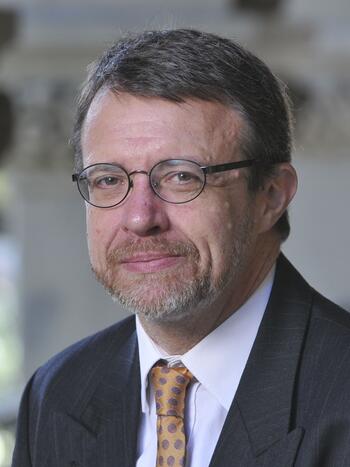
In conversation with Shorenstein APARC, Yong Lee, the SK Center Fellow, discusses his initial draw to architecture and urbanism, and the nexus of public policy and economics. Lee highlights some of his recent research activities focused on international sanctions on North Korea and educational policy as it relates to migration and housing patterns in South Korea. 

Your background is quite multifaceted, including years working in architecture and a master’s of public policy in addition to a doctorate in economics. How do all of these areas fit together to inform your research?

It took a while for me to figure out what I wanted to pursue as a career. As a high school student in Korea I had to choose a track that focused on either the physical sciences or the humanities/social sciences. At that age, it’s hard to know what you want to be. Simply because my father was an engineer, I chose the physical sciences track. When it was time to apply for college (one actually had to determine a major when applying for college back then), I became interested in international relations and wanted to become a diplomat. But given my training in the hard sciences and the fact that one had to choose a major when applying, I had to decide on a science or engineering major. After browsing through the library a few architecture books caught my eye, and I opted for architectural engineering as my major. 

I truly enjoyed my six years of architectural training but after working for an architectural firm for several years in Seoul, I realized I was more interested in the abstract ideas of architecture and urbanism and less of the actual design process that goes on in an architectural firm. I searched for my next career, became interested in urban and development policy, and pursued a master’s of public policy at Duke University. However, then I realized that economics would allow me to rigorously analyze the policy questions I was interested in. Fortunately, Brown University accepted me as a Ph.D. student and I eventually became an economist. It was through this search process, that I developed an interdisciplinary interest in policy relevant questions. My personal choices constrained by education policy, comparatively experiencing Korea’s transition while living between Korea and the United States each decade since the 1980s, and my interest in architecture and cities have shaped my research interest in economic development and growth with a focus on education, firms and cities.  And now being at FSI, I can immerse myself in international studies, something I had wanted to pursue all along. By joining Stanford, I think I finally discovered what I had wanted to do.

One of your research streams looks at the effects of sanctions on domestic populations, looking at the case study of North Korea. How did you derive data about the closed-off regime? What are your key findings?

Research on North Korea is challenging because of the dearth of data. I had been interested in how sanctions impact the domestic population, but to examine this question one would need regional level data within in North Korea. I decided to use the satellite night-lights data, which in recent years has been used as an alternative means to measure economic activity. I found that sanctions actually increase urban-rural inequality. An additional sanctions index increases the urban-rural luminosity gap by about 1 percent. However, if I focus on the more central urban areas the gap increases to about 2.6 percent. Since urban areas are more than ten times brighter than rural areas, the results imply that the gap further increases by 1 to 2.6 percent with additional sanctions.  Furthermore, I find that the urban areas actually get brighter while the rural areas get darker.

Another of your research focuses on the impact of 1970s education policy in South Korea on intergenerational mobility and migration. Can you explain this phenomenon? Does the case of South Korea relate to reform experiences in other countries?

Students in South Korea traditionally had to take an entrance exam to enter high schools. After the exam, high schools would choose students based on the exam scores. Given the variation in school quality, a hierarchy of high schools had existed and students who performed well would enter the top tier high schools. This system was heavily criticized since wealthier families could tutor children to prepare for the entrance exam. Eventually in the mid-1970s, the South Korean government abolished the exam-based system and moved to a school district based system where students would attend high schools based on residential location. By moving away from an exam system to a district system, policymakers hoped that educational opportunities would alleviate the persistence of inequality. However, what I find is that, to the contrary, the district system generated substantial sorting of households by income. Now wealthier households could simply move to districts and cities with the prestigious high schools. Given that the purchase of housing is purely determined by income, school quality became even more segregated by income and actually exacerbated the persistence of inequality across generations. This transition is now happening in several Chinese cities and in the United States – the sorting across school districts by educational outcome has created highly segregated towns. The Korea experiment allowed me to examine not just an equilibrium outcome, but also the transition when the policy changed.

In the coming year, you’ll be teaching courses related to the economies of East Asia. Can you provide an outlook on this?

I’ll be teaching an International Policy Studies course titled, “Economic Growth, Development, and Challenges of East Asia,” in the spring. The course will focus on China, Japan, and Korea, but also draw on Southeast Asian countries, when relevant. I will cover the rapid economic growth in recent decades and development policies pursued. However, I will also cover the current major economic challenges these countries face, some of which are rising income inequality, entrepreneurship, and an aging workforce. I hope to add to our rich set of courses by providing an economics and empirical viewpoint.

Tell us something we don’t know about you.

I sometimes split my sleep. That is, I go to bed to sleep for a few hours and then wake up in the middle of the dark, do some reading or work, and then sleep for one or two hours before I start my morning routine. It started during my high school years and it has stuck with me for quite a while now. Don’t worry, though. I sleep fine most of the time. I just sometimes enjoy the dead of the night.

Hero Image
Portrait of Yong Suk Lee Rod Searcey
All News button
1
Subscribe to Governance