International Development

FSI researchers consider international development from a variety of angles. They analyze ideas such as how public action and good governance are cornerstones of economic prosperity in Mexico and how investments in high school education will improve China’s economy.

They are looking at novel technological interventions to improve rural livelihoods, like the development implications of solar power-generated crop growing in Northern Benin.

FSI academics also assess which political processes yield better access to public services, particularly in developing countries. With a focus on health care, researchers have studied the political incentives to embrace UNICEF’s child survival efforts and how a well-run anti-alcohol policy in Russia affected mortality rates.

FSI’s work on international development also includes training the next generation of leaders through pre- and post-doctoral fellowships as well as the Draper Hills Summer Fellows Program.

-

In addition to Iraq, Afghanistan, Pakistan, the financial crisis, and the housing crisis (as if that were not enough!), the next American president will have his hands full with matters on the Korean peninsula.  What will be the future of Six Party talks?  What is the status of the leadership in Pyongyang?  How do changes in leadership in Washington (and potentially in Pyongyang) affect outcomes?  What are the prospects for US-ROK relations?  And what of the KORUS FTA?  Victor Cha, former director of Asian affairs at the White House, will lead a discussion on these issues.

Professor Cha is director of Asian Studies and holds the D.S. Song Chair in the Department of Government and School of Foreign Service at Georgetown University.  He left the White House in May 2007 after serving since 2004 as Director for Asian Affairs at the National Security Council.  At the White House, he was responsible primarily for Japan, the Korean peninsula, Australia/New Zealand and Pacific Island nation affairs.   Dr. Cha was also the Deputy Head of Delegation for the United States at the Six Party Talks in Beijing, and received two Outstanding Service commendations during his tenure at the NSC.  

He is the award-winning author of Alignment Despite Antagonism: The United States-Korea-Japan Security Triangle (Stanford University Press) (winner of the 2000 Ohira Book Prize) and co-author of Nuclear North Korea: A Debate on Engagement Strategies (Columbia University Press, 2004).  He has written articles on international relations and East Asia in journals including Foreign Affairs, International Security, Political Science Quarterly, Survival, International Studies Quarterly, and Asian Survey.   Professor Cha is a former John M. Olin National Security Fellow at Harvard University, two-time Fulbright Scholar, and Hoover National Fellow,  CISAC Fellow, and William J. Perry Fellow at Stanford University.

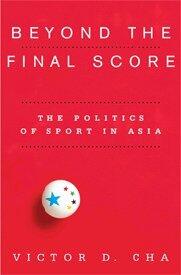
Image
beyond the final score
He serves as an independent consultant, and has testified before Congress on Asian security issues.  He has been a guest analyst for various media including CNN, ABC Nightline, NBC Today Show, CBS Morning Show, Fox News, MSNBC, CNBC, BBC, ESPN, Sports Illustrated, and National Public Radio.

His new book Beyond the Final Score: The Politics of Sport in Asia (Columbia University Press, 2008) looks at the politics of sports and the Beijing Olympics. Cha holds a BA and Ph.D. from Columbia University, MA from University of Oxford.

This event is sponsored by the Pantech Group in Korea.

Philippines Conference Room

Victor D. Cha Director of Asian Studies Speaker Georgetown University
Seminars
-

This talk will examine the phenomenon of anti-Americanism in the Republic of Korea (South Korea).  Contrary to widespread perception, the speaker argues that anti-Americanism in South Korea has a deep-rooted history, the expression of which was suppressed during decades of authoritarian rule.  Anti-Americanism in South Korea involves a sophisticated ideology, constituting a kind of belief system.  Kim will trace the history of such anti-Americanism from 1945 until the present.

Hakjoon Kim is a Distinguished Practitioner at Center for East Asian Studies at Stanford.  He is Chairman of the Dong-A Ilbo, one of South Korea's largest and most influential newspapers with a circulation of over two million.  He has served as President of the University of Inchon, the Korean Political Science Association, and the Korean Federation of Teachers' Associations.  He was a scholar at the Alexander-von-Humboldt Foundation in Germany and a guest scholar at the Woodrow Wilson International Center for Scholars in Washington, D.C.  He received his B.A. from Seoul National Univeristy, M.A. from Kent State Universiy, and Ph.D. from University of Pittsburgh.


This event is supported by the generous grant from Academy of Korean Studies in Korea.

Philippines Conference Room

No longer in residence.

0
Distinguished Practitioner, 2008-09

Hakjoon Kim was a Distinguished Practitioner at Center for East Asian Studies at Stanford. He is chairman of the Dong-A Ilbo, one of South Korea's largest and most influential newspapers with a circulation of over two million. He has served as president of the University of Inchon, the Korean Political Science Association, and the Korean Federation of Teachers' Associations. He was a scholar at the Alexander-von-Humboldt Foundation in Germany and a guest scholar at the Woodrow Wilson International Center for Scholars in Washington, D.C.

Hakjoon Kim Distinguished Practitioner Speaker Center for East Asian Studies, Stanford University
Seminars

Kim argues anti-Americanism belongs to a category of political opposition which may be divided into orthodox dissent and unorthodox dissent: the former involving "efforts to improve the existing system in keeping with its underlying ideological values," while the latter is mainly concerned with the change in political and socioeconomic structures.

In the South Korean context, orthodox dissent is the conservative-rightist whereas unorthodox dissent the progressive-leftist. While sometimes criticizing the U.S. on selected issues, the conservative-rightist accounts cooperation with the U.S. crucial for keeping North Korea from provoking military actions against the South. On the other hand, the progressive-leftist regards the North Korean regime a partner to live together and unification with the North most valuable, transcending ideologies and systems. The progressive-leftist naturally regards "dependence" on the U.S. being against its national autonomy, and in the extreme, the U.S. an obstacle to its unification with the North.

This talk brings its focus on anti-Americanism derived from the progressive-leftist or unorthodox dissenting argument, and its influence on the ROK-U.S relations.

Hakjoon Kim is a visiting scholar at Center for East Asian Studies at Stanford and is the Chairman of Dong-a Il Bo, South Korean newspaper.  He was the President of Korea Political Science Association and Korean Federation of Teachers' Associations.  Kim was Scholar at the Alexander-von-Humboldt Foundation in Germany, and Guest Scholar at the Woodrow Wilson International Center for Scholars in Washington, D.C.

Philippines Conference Room

Hakjoon Kim Visiting Scholar, CEAS Speaker
Seminars
-

This talk will examine the challenges and problems that South Korea faces on its way to full-fledged democracy. The ideological composition of Korean society, the role of political parties, civil society and media as well as the attitude of public intellectuals will be assessed.

Se Il Park is a 2008-09 visiting scholar at APARC’s Korean Studies Program, and a professor of law and economics in the Graduate School of International Studies at Seoul National University. He is the founder and the chairman of the board of Hansun Foundation for Freedom and Happiness, an independent, non-partisan think tank based in Seoul devoted to providing innovative and practical public policy recommendations to South Korean society at large.

Park is the author of many books, including Communitarian Liberalism (2008); National Strategy for Sunjinwha in Korea (National strategy to make Korea a world-class nation) (2006); Blueprint for Tertiary Education Reform in Korea (2003); Strategy for Presidential Success: Authority, Role, and Responsibility (2002); Growth, Productivity, and Vision for Korean Economy (2001); Reforming Labor Management Relations: lessons from the Korean experience: 1996-1997 (2000); and Law and Economics (2000).

Park served as Senior Secretary to the President for policy planning and social welfare in the Office of the President of the Republic of Korea from 1995 to 1998, and was a member of National Assembly of the Republic of Korea from 2004 to 2005. He also worked at the Korea Development Institute as a Senior Fellow from 1980 to 1985. Park received his B.A. from Seoul National University and his M.S. and Ph.D. from Cornell University.

This event is supported by the generous grant from Academy of Korean Studies in Korea.

Philippines Conference Room

Shorenstein APARC
Stanford University
Encina Hall,Room E301
Stanford, CA 94305-6055

(650) 724-5668 (650) 723-6530
0
Visiting Scholar, 2008-09
Seil_Park.JPG PhD

Park, Se-Il is a professor of law and economics in the Graduate School of International Studies at Seoul National University. He is the founder and chairman of the board of Hansun Foundation for Freedom and Happiness, which is an independent, non-partisan think tank based in Seoul devoted to high-quality public policy research. The Foundation works to provide innovative and practical policy recommendations to the South Korean government.

Dr. Park is the author of many books including Communitarian Liberalism (2008); National Strategy for Sunjinwha in Korea (National strategy to make Korea to become a world class nation)(2006); Blueprint for Tertiary Education Reform in Korea (2003); Strategy for Presidential Success: Authority, Role, and Responsibility (2002); Growth, Productivity, and Vision for Korean Economy (2001); Reforming Labor Management Relations: lessons from the Korean experience: 1996-1997 (2000); Law and Economics
(2000).

Park is currently writing a book on globalization in which he plans to research several important political, social, and economic challenges, stemming from globalization. Based on that research he hopes to make comprehensive strategic recommendations for Korea to become a successful advanced nation in the age of globalization. The tentative title is Creative Globalization: Korean strategy for globalization.

Park has taught for more than 20 years at Seoul National University, College of Law and Graduate School of International Studies. He served as Senior Secretary to the president for policy planning and social welfare in the Office of the President of the Republic of Korea
from 1995 to 1998, and was a member of National Assembly of the Republic of Korea from 2004 to 2005. He also worked at the Korea Development Institute as a Senior Fellow from 1980 to 1985. He received the Chung-Nam Award from the Korean Economic Association in 1987 for his outstanding publications in economics. He served as President of the Korean Labor Economic Association (2001-2002), President of the Korean Law and Economic Association (2000-2003), and President of the Korean Institutional Economic Association (2002-2003). Park received his BA from Seoul National University and his MS and PhD from Cornell University.

Se-Il Park Visiting Scholar, APARC Speaker
Seminars

Shorenstein APARC
Stanford University
Encina Hall,Room E301
Stanford, CA 94305-6055

(650) 724-5668 (650) 723-6530
0
Visiting Scholar, 2008-09
Seil_Park.JPG PhD

Park, Se-Il is a professor of law and economics in the Graduate School of International Studies at Seoul National University. He is the founder and chairman of the board of Hansun Foundation for Freedom and Happiness, which is an independent, non-partisan think tank based in Seoul devoted to high-quality public policy research. The Foundation works to provide innovative and practical policy recommendations to the South Korean government.

Dr. Park is the author of many books including Communitarian Liberalism (2008); National Strategy for Sunjinwha in Korea (National strategy to make Korea to become a world class nation)(2006); Blueprint for Tertiary Education Reform in Korea (2003); Strategy for Presidential Success: Authority, Role, and Responsibility (2002); Growth, Productivity, and Vision for Korean Economy (2001); Reforming Labor Management Relations: lessons from the Korean experience: 1996-1997 (2000); Law and Economics
(2000).

Park is currently writing a book on globalization in which he plans to research several important political, social, and economic challenges, stemming from globalization. Based on that research he hopes to make comprehensive strategic recommendations for Korea to become a successful advanced nation in the age of globalization. The tentative title is Creative Globalization: Korean strategy for globalization.

Park has taught for more than 20 years at Seoul National University, College of Law and Graduate School of International Studies. He served as Senior Secretary to the president for policy planning and social welfare in the Office of the President of the Republic of Korea
from 1995 to 1998, and was a member of National Assembly of the Republic of Korea from 2004 to 2005. He also worked at the Korea Development Institute as a Senior Fellow from 1980 to 1985. He received the Chung-Nam Award from the Korean Economic Association in 1987 for his outstanding publications in economics. He served as President of the Korean Labor Economic Association (2001-2002), President of the Korean Law and Economic Association (2000-2003), and President of the Korean Institutional Economic Association (2002-2003). Park received his BA from Seoul National University and his MS and PhD from Cornell University.

News Type
News
Date
Paragraphs

Pantech Fellow

  • Don Keyser: Former Deputy Assistant Secretary of State for East Asian and Pacific Affairs

Koret Fellow

  • Byung Kwan Kim: General (Ret.), former Deputy Commander of ROK-US Combined Forces Command

POSCO NGO Fellows

  • Hye-jeong Kim: Korea Federation for Environmental Movement
  • Hyun Gon Jung: Korean Council for Reconciliation and Cooperation

Visiting Scholars, Korean Studies Program

  • Seil Park: Professor of Law and Economics, Seoul National University
  • Jongsuk Lee: Former Deputy Secretary General, National Security Council, ROK
  • Hyung Joon Ahn: Reporter, MBC, Korea
  • Gug-Hyeon Cho: Director, Public Relations, Northeast Asia History Foundation, Korea
  • Oh Eul Kwon: Policy deputy-chairman, Grand National Party, Korea

Visiting Scholars, Center for East Asian Studies

  • Hakjoon Kim: President, Dong-a Ilbo, Korea
  • Hyung Chan Kim: Assistant Professor of Philosophy, Korea University
All News button
1
-

With the collapse of Soviet Union and a lack of internal energy resources, North Korea has been in economic hardships since early 1990s. Chung will discuss how the shortage of electric power has affected not only the operations of factories but the daily lives of North Koreans. He will also examine how North Korea has attempted to rehabilitate its energy sector internally and in external relations with neighboring countries as well as in the Six-Party Talks.

Lee will evaluate North Korean nuclear technology based on his analysis of North Korea’s National Science and Technology Development Plan and of its historical background. He
will examine the priorities in disabling of North Korea’s nuclear capacity.

Joon Young Chung is a reporter at Yonhap News, a Korean news wire service, and has worked in various departments including the national desk, business desk and the North Korea desk for the past 14 years. Recently he has covered Inter-Korean Dialogue and the Six-Party Talks.

Choongeun Lee is a Research Fellow at the Science & Technology Policy Institute (STEPI) in Korea. Before joining STEPI, he worked at the Yanbian University of Science & Technology, Chinese Academy of Science, and Peking University in China. He received his B.A. and Ph.D. in engineering from Seoul National University in Korea, and Ph.D. in education from Beijing Normal University in China.

Daniel and Nancy Okimoto Conference Room

Shorenstein APARC
Stanford University
Encina Hall E301
Stanford, CA 94305-6055

(650) 736-0771 (650) 723-6530
0
Chung,_Joon_Young_.jpg

Joon Young Chung is a reporter at Yonhap News, a Korean news wire service, and has worked in various departments including the national desk, business desk and the North Korea desk for the past 14 years. Recently he has covered Inter-Korean dialogue and the Six-Party talks.

Joon Young Chung Visiting Scholar, Asia-Pacific Research Center, Stanford University Panelist

Shorenstein APARC
Encina Hall, Room E301
Stanford University
Stanford, CA 94305-6055

(650) 723-2408 (650) 723-6530
1
Choongeun_Lee_1.jpg PhD

Choongeun Lee is a Research Fellow at the Science & Technology Policy Institute(STEPI, Korea). Before joining STEPI, he worked at the Yanbian University of Science & Technology, Chinese Academy of Science, and Peking University in China. He received his B.A. and Ph. D in engineering from Seoul National University in Korea, and Ph.D. in education from Beijing Normal University in China.

His research has concentrated on science and technology systems (S&T) and policy of North Korea, China, and other transition countries. His recent publications include Linking strategy of military and civil innovation system based on recent change in security posture on Korean peninsula (2007, STEPI), Education and S&T System in North Korea (2006, Kyongin Publishing Co.), Nuclear Bomb and Technology in North Korea (2005, Itreebook), The S&T System and Policy of North Korea (2005, Hanulbooks), The S&T Cooperation of North Korea-China and its Implication (2005, North Korean Studies Review).

Choongeun Lee Visiting Scholar, Asia-Pacific Research Center, Stanford University Panelist
Seminars
Authors
News Type
Commentary
Date
Paragraphs
Shorenstein APARC Distinguished Fellow Michael H. Armacost discusses U.S.-South Korea ties and points out challenges ahead. "From free trade to North Korea's nuclear threat," writes Armacost in the Christian Science Monitor, "both sides must move past years of missteps."

Stanford, Calif. - The visit this week of South Korea's new president, Lee Myung Bak, offers a rare opportunity to put the American-Korean relationship back on a more solid footing. President Lee, who won a decisive victory in last December's election, has expressed views on the security alliance, a bilateral free trade agreement, and policy toward North Korea that are thoroughly compatible with US interests. And Mr. Lee's authority was bolstered by his party's substantial victory in legislative elections April 9.

The question is whether Washington is poised to take advantage of this convergence of views.

For the past eight years, a major perception gap between Seoul and Washington has been painfully evident. Our governments often worked at cross-purposes in the six-party talks to denuclearize North Korea. Progressive governments in South Korea encouraged peaceful coexistence with the North through a pattern of unreciprocated engagement. For much of that time, the Bush administration sought to isolate and pressure Pyongyang into relinquishing its nuclear ambitions, and it made little effort to conceal its hopes for a regime change in Pyongyang.

When Washington decided to move its military headquarters out of Seoul in 2003, many Korean officials suspected that the Americans were just eager to get troops out of North Korean artillery range. President Roh Moo Hyun at times seemed interested in carving out a role as a balance wheel between the major powers in Northeast Asia. Meanwhile, the US was preoccupied by problems in the Middle East, and some American officials wondered if the US-Republic of Korea (ROK) alliance could long survive when one party dismissed the North Korean threat while the other viewed it as increasingly menacing.

Now comes Lee, a former mayor of Seoul and Hyundai construction executive with a reputation for tough-minded, pragmatic conservatism, eager to correct what he described as the misguided priorities of past ROK administrations. In a recent meeting with New Beginnings, a group of American policy experts on Korea, Lee appeared determined to accord priority to the alliance with the United States, exact a measure of reciprocity from the North, forestall major economic concessions to the North until it abandons its nuclear activities, and design a more ambitious global role for his country.

Surely Washington welcomes Lee's priorities. The tougher question is whether it can work effectively with him to translate shared aims into concrete results. This will pose three particular challenges.

First, on the nuclear issue, undeniably, bilateral talks with Pyongyang can facilitate diplomatic progress. There are dangers as well. Disconnects with the Japanese have deepened, and their officials occasionally complain about American "betrayals" in the discussions with Pyongyang. The North has consistently sought to use the negotiations to split the US and its allies. Success in the talks requires coordinated diplomacy between the US and the North's neighbors – especially with South Korea. In the past it often appeared that South Korean presidents worried less about Pyongyang's nuclear activities than Washington's possible reactions to them.

Today, there is the danger that South Korean conservatives may fear that Washington will ultimately acquiesce in North Korea's nascent nuclear status. No attempt to contain, let alone eliminate, the North Korean nuclear program can succeed unless the US and ROK governments work closely together. This will require a higher standard of candor and mutual trust in bilateral consultations than has been typical in recent years.

Second, the ratification of the Korea-US free-trade agreement (FTA) is a vital piece of unfinished business. Lee appears prepared to resume imports of US beef (halted due to mad cow disease concerns), essential to moving the FTA forward in Congress. Unfortunately, the Democratic presidential contenders are pandering to special interests on trade issues in a way they will probably later regret. Both sides have strategic and commercial interests at stake. The US stands to gain much more in increased exports from the FTA, while the Koreans hope that liberalizing foreign access to their economy will make them more competitive. So there is much to gain by nailing down this deal. A failure to complete it would be a significant strategic setback for our partnership.

Third, there is the question as to whether our political cycles will again diverge. For the past eight years, the US has been led by one of its most conservative administrations, while South Korea was headed by its most liberal president. Missteps were, perhaps, inevitable. And they have persisted, even though some effective work was done behind the scenes to forge cooperative arrangements on trade and force-deployment issues.

Lee's election signifies a conservative swing in South Korea's politics, while polls suggest the US may be moving in the opposite direction. Thus, a felicitous convergence of US and ROK official perspectives could prove fleeting. Yet the interests we share in expanded commerce, in modernizing our alliance, and in approaching the North with a joint strategy for "denuclearization" are compelling. They transcend partisan politics. They serve our respective national interests. The time to capitalize on them is now.

All News button
1
-

"Sunshine" policy, named after one of Aesop's fables, has been the catch phrase of South Korea's appeasement policy toward North Korea to stimulate and restructure the already collapsed North Korean economy and eventually to convert North Korea to a more conciliatory and cooperative state.

After 10 years of shining the sunlight on North Korea, however, evidences that those self-imposed goals have been achieved are rather scarce. This suggests that, from the beginning, the basic premises of Sunshine policy must have been fatally incongruous with the reality: North Korea should not have been portrayed as an innocent traveler leisurely walking down the street. Or, perhaps, the policy toward North Korea should have pursued more serious goals than just stripping a man of his coat.

In this talk, Dr. Park proposes an alternative to the "Sunshine vs North Wind", and discusses the policy implications of his proposal.

For the past 14 years, Dr. Jongkyu Park has worked on various macroeconomic policy issues of Korean economy including economic forecasts, monetary policy, inflation, budget deficit, exchange rate, savings rate, population aging, real estate bubble, and Japan's economic slowdown and revival. He received B.A. in Economics from Seoul National University in Korea, M.S. in Statistics from University of North Carolina at Chapel Hill, and Ph.D. in Economics from Princeton University.

Philippines Conference Room

Shorenstein APARC
Stanford University
Encina Hall, Room E301
Stanford, CA 94305-6055

(650) 723-2408
0
DPP_0003.JPG PhD

For the past 14 years, Jongkyu Park has worked on various macroeconomic policy issues of Korean economy including economic forecasts, monetary policy, inflation, budget deficit, exchange rate, savings rate, population aging, realestate bubble, Japan's economic slowdown and revival, etc. He received B.A. in Economics from Seoul National University in Korea, M.S. in Statistics from University of North Carolina at Chapel Hill and Ph. D. in Economics from Princeton University.

Jongkyu Park Visiting Scholar Speaker Shorenstein Asia-Pacific Research Center
Seminars
Authors
News Type
Commentary
Date
Paragraphs
%people1%, associate director for research at Shorenstein APARC, gives a few cautionary lessons on U.S.-Korea relations.
Earlier this month I visited Seoul as a member of “New Beginnings,” a study group of former American policymakers and experts on Korea, co-organized by the Shorenstein Asia-Pacific Research Center at Stanford, and The Korea Society. We formed this group last year, anticipating that the upcoming Korean elections and the American presidential elections afterwards would offer an opportunity to embark upon a “new beginning” in our alliance.

After several days of meetings in Seoul, most importantly with President-elect Lee Myeong-bak and his senior advisors, we came away convinced that our hopes for a “new beginning” were more than justified. As President Lee takes office, it is clear that his administration is deeply committed to restoring the alliance to its previous place as the foundation of Korean foreign and security policy. Equally important, the new government is focused on the need to boost economic growth based on the free flow of trade and investment, and sees the conclusion of the Free Trade Agreement with the United States as central to that goal.

For those of us who have long argued that a vibrant Korea is vital to America’s interests, these were welcome words. It is no secret that there was a perception in the United States that President Roh Moo-hyun, backed by a significant portion of the Korean people, no longer saw the alliance as a strategic imperative for Korea. Unfortunately, many Americans, particularly in Congress, had begun to share this view of the alliance, fueled by a mistaken belief that Koreans were “anti-American.”

This view of President Roh and of Korea was unfair and even distorted. President Roh deserves credit, particularly in the last two years, for taking important steps to improve alliance relations, not least his promotion of the negotiation of the FTA. He made unpopular decisions, such as the dispatch of troops to Iraq, in order to preserve a cooperative atmosphere. And as we saw demonstrated in the election, public opinion in Korea regarding the United States has shifted dramatically since the emotional days of 2002.

The Lee administration can anticipate a warm greeting in Washington, as is already clear in the preparations for his visit next month. The new President has sounded all the right notes – seeking closer cooperation on North Korea policy, restoring positive ties with Japan, America’s other vital ally in Northeast Asia, and building a broader strategic partnership with the U.S. beyond the Korean peninsula.

Amidst the renewed embrace of the alliance, it is worth however keeping a few cautionary lessons from the past in mind:

1. Not everything will be Smooth Sailing

Despite the welcome official rhetoric, it is no secret that the relationship between the United States and the Republic of Korea has never been entirely smooth. From its earliest days, born out of Korea’s liberation and the trials of the Korean War, the alliance has been marked by both close cooperation and by clashes over key policy goals. While bound together by strategic necessity, the national interests of Korea and the United States have not always been identical.

There is nothing unusual about such differences among allies. Look for example at the tensions that plagued U.S.-European relations over the disastrous decision to invade Iraq. Even with the best of intentions, there will be moments of conflict between Seoul and Washington. What is important is how governments manage those differences to protect the underlying relationship. Both Koreans and Americans need to remember the virtues of quiet diplomacy, trying to avoid negotiating their differences through the media.

2. All politics is local

Alliance relations can no longer be managed solely by diplomats or by friends meeting behind closed doors. Those ties are crucial but both Korea and the United States are democracies in which the issues that are at the core of the relationship – from trade to the alignment of military forces – are matters of public discussion. Domestic politics shapes policy decisions but both Koreans and Americans sometimes forget the pressures operating on the other side.

This is particularly important in an election year. The Korean National Assembly election in April is already having an impact, delaying ratification of the FTA. The U.S. election will mean FTA ratification by the U.S. Congress this year may be impossible. Presidential candidates are taking positions that they may adjust after gaining power. On another level, the new government in Seoul needs to remember that the Bush administration is a lame duck affair and begin to prepare for a new government in Washington.

3. Expect the Unexpected, particularly with North Korea

The limited progress on the nuclear negotiations with North Korea has temporarily brought closer coordination between Korea and the US. But it would be foolish to assume that this trend will necessarily continue. The negotiations are already facing a slowdown as negotiators grapple with much tougher problems. If they break down, both Seoul and Washington, along with their other partners in the 6-party talks, will face some hard questions about how to respond. Any attempt to pressure Pyongyang is likely to bring an escalatory response, not least to test the new government in Seoul.

It is possible that Seoul and Washington will once again be somewhat out of synch. Ironically, the Bush administration – and whatever follows it -- may favor greater concessions than the new administration in Seoul would prefer to make.

These differences are manageable. The key is real policy coordination between the US and Korea – and the inclusion of Japan in a revived trilateral coordination mechanism. If both sides keep that commitment, we will indeed have made a “new beginning” in our alliance.

Daniel Sneider is the Associate Director for Research at Stanford University’s Walter H. Shorenstein Asia-Pacific Research Center. A former foreign correspondent, Sneider covered Korea for the Christian Science Monitor.
All News button
1
Subscribe to International Development