Security

FSI scholars produce research aimed at creating a safer world and examing the consequences of security policies on institutions and society. They look at longstanding issues including nuclear nonproliferation and the conflicts between countries like North and South Korea. But their research also examines new and emerging areas that transcend traditional borders – the drug war in Mexico and expanding terrorism networks. FSI researchers look at the changing methods of warfare with a focus on biosecurity and nuclear risk. They tackle cybersecurity with an eye toward privacy concerns and explore the implications of new actors like hackers.

Along with the changing face of conflict, terrorism and crime, FSI researchers study food security. They tackle the global problems of hunger, poverty and environmental degradation by generating knowledge and policy-relevant solutions. 

-

President Trump has stopped even mentioning North Korea’s abysmal human rights record in order to secure meetings with Leader Kim Jong-un ostensibly to make progress on serious security issues with North Korea.  After 18 months of White House effort and two and a half summits, however, there has been little progress on denuclearization.  Ambassador King argues that we must push North Korea on human rights in order to encourage the government in Pyongyang to respond positively the wishes of its own citizens.  Unless we do this, we are unlikely to see real progress on shifting North Korea’s focus from nuclear weapons and missiles to the wellbeing of its own people.

Image
robert r king 3x2
Ambassador Robert R. King is former Special Envoy for North Korean human rights issues at the Department of State (2009-2017).  Since leaving that position, he has been senior advisor to the Korea Chair at the Center for Strategic and International Studies (CSIS), a senior fellow at the Korea Economic Institute (KEI), and a board member of the Committee for Human Rights in North Korea (HRNK) in Washington, D.C.  Previously, Ambassador King served for 25 years on Capitol Hill (1983-2008) as chief of staff to Congressman Tom Lantos (D-California), and staff director of the House Foreign Affairs Committee (2001-2008).


Robert R. King <i>2019-20 Koret Fellow, Shorenstein APARC, Stanford University</i>
Seminars
Authors
News Type
Commentary
Date
Paragraphs

South Korea's decision to end its military agreement with Japan will damage the prospect of continued close security ties among Seoul, Washington and Tokyo because the pact has been a symbol of smooth trilateral military cooperation between them and regarded as a key deterrent against North Korea.

"It is a big mistake," Shin Gi-wook, a Korea studies expert at Stanford University, said in a recent interview adding Seoul's withdrawal from the General Security of Military Information Agreement (GSOMIA) puts the "trilateral security framework at risk."

"The Japan-South Korea relationship may not have hit rock bottom, but it could further deteriorate in the coming months," Shin said. "This is all the more important with the continuing threat of North Korean WMD and the escalating conflict between the U.S. and China in the region. I am concerned that South Korea could be further isolated in the Northeast Asian region—the Moon administration should see the big picture," the professor said…

Read the full article in The Korea Times.

Hero Image
Abe Jae in Getty Logo im Kyung-Hoon - Pool/Getty Images
All News button
1
-

Image
sagan 3x2 copy
The volatile relationship between the United States and North Korea has left the American public questioning whether North Korea is a threat or not. Existing polls suffer from poor design and, thus, provide a confusing and often contradictory narrative of U.S. public opinion on North Korea. As a result, a number of critical questions remain unanswered: Are Americans willing to live with the North Korean nuclear threat? Under what conditions would the public support using military force to accomplish what sanctions and diplomacy have not? What are the characteristics of the individuals willing to risk war against North Korea today? Professor Scott D. Sagan will discuss the findings of a recent survey experiment and offer a unique perspective to the ongoing public debate.

Scott D. Sagan is the Caroline S.G. Munro Professor of Political Science, the Mimi and Peter Haas University Fellow in Undergraduate Education, and Senior Fellow at the Center for International Security and Cooperation and the Freeman Spogli Institute at Stanford University. Before joining the Stanford faculty, Sagan was a lecturer in the Department of Government at Harvard University. From 1984 to 1985, he served as special assistant to the director of the Organization of the Joint Chiefs of Staff in the Pentagon. Sagan has also served as a consultant to the office of the Secretary of Defense and at the Sandia National Laboratory and the Los Alamos National Laboratory. In 2017, he received the International Studies Association’s Susan Strange Award which recognizes the scholar whose “singular intellect, assertiveness, and insight most challenge conventional wisdom and intellectual and organizational complacency" in the international studies community. Sagan was also the recipient of the National Academy of Sciences William and Katherine Estes Award in 2015, for his pioneering work addressing the risks of nuclear weapons accidents and the causes of nuclear proliferation.     


Okimoto Conference Room
Encina Hall, 3rd Floor
616 Serra Street, Stanford

Scott D. Sagan <i>Caroline S.G. Munro Professor of Political Science, Stanford University</i>
Seminars
News Type
News
Date
Paragraphs

On the heels of the abrupt ending of the Hanoi summit between President Trump and North Korean leader Kim Jong Un, with the future of the diplomacy of denuclearization in question, the Korea Program at Shorenstein APARC convened the 11th Koret Workshop, appropriately titled this year “North Korea and the World in Flux.”

The workshop, an annual gathering made possible through generous funding from the Koret Foundation, brought together international experts in Korean affairs for a full day of panel discussions. Participants assessed the U.S.-DPRK summit diplomacy, examined the challenges and opportunities in media coverage related to the negotiations between the two countries, and considered the prospects and pitfalls for summitry with North Korea in the near term. A report on the workshop proceedings is forthcoming.

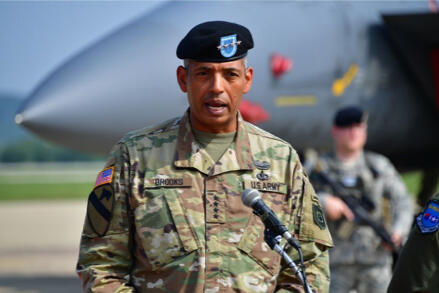
At a midday public keynote, General Vincent Brooks, U.S. Army (Ret.), spoke before a packed audience about the challenges and opportunities in Korea. Brooks, who recently retired from active duty as the four-star general in command of all U.S. Forces in Korea, provided his unique and very-timely assessment of the situation on the Korean peninsula, and offered his insights on where the diplomacy of denuclearization may go next.

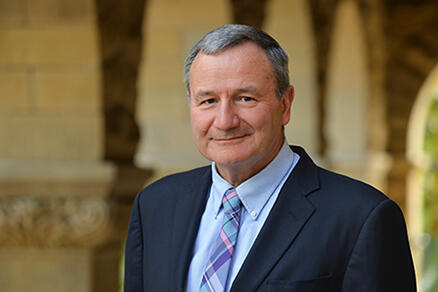
Gen. Brooks’ public address was followed by a conversation with Karl Eikenberry, director of APARC’s U.S.-Asia Security Initative.

Watch the video recording of Gen. Brooks’ remarks:


Hero Image
U.S.-Asia Security Initiative Director Karl Eikenberry, left, questions General Vincent Brooks during 2019 Koret Workshop
Thom Holme, APARC
All News button
1
-

North Korea is the land of punditry, controversy and bad intelligence.  Policy debates swirl in Washington over how U.S. policy should address this foreign policy challenge.  Much of these debates is informed by a mix of opinion, ideology and politics.   How do we make sense of it all? Victor Cha and his Beyond Parallel microsite at CSIS try to cut through the noise to bring data to the study of North Korea and foreign policy.  He will discuss five data points that are critical to an understanding of the North Korea problem today and its policy challenges.

Image
victor cha small
Victor Cha holds the D.S. Song-KF Professorship in Government and International Affairs at Georgetown University. In 2009, he was also named as Senior Adviser for Asia and Korea Chair at the Center for Strategic and International Studies in Washington, D.C. He left the White House in 2007 after serving since 2004 as Director for Asian Affairs at the National Security Council.  At the White House, he was responsible primarily for Japan, the Korean peninsula, Australia/New Zealand and Pacific Island nation affairs.  Dr. Cha was also the Deputy Head of Delegation for the United States at the Six Party Talks in Beijing, and received two Outstanding Service commendations during his tenure at the NSC.  He is the author of five books, including the award-winning Alignment Despite Antagonism: The United States-Korea-Japan Security Triangle (Stanford University Press) (winner of the 2000 Ohira Book Prize), and The Impossible State: North Korea, Past and Future (Harper Collins Ecco, 2012) which was selected by Foreign Affairs as a “Best Book on the Asia-Pacific for 2012.” His newest book is Powerplay: Origins of the American Alliance System in Asia (Princeton University Press, 2016). He has testified before Congress numerous times on Asian security issues.  In 2018, he joined NBC and MSNBC as a News Contributor.  Prior to joining NBC, he had been a guest analyst for various media including CNN, ABC, NBC, CBS, The Colbert Report, Sports Illustrated, ESPN, Fox News, PBS, Huffington Post, Wall Street Journal, MSNBC, CNBC, BBC, and National Public Radio.  His op-eds have appeared in the Washington Post, New York Times, Los Angeles Times, USA Today, Foreign Policy, Japan Times, and Financial Times. He holds a B.A., an M.I.A., and a Ph.D. from Columbia University, as well as an M.A. from Oxford University.


Philippines Conference Room
Encina Hall, 3rd Floor
616 Serra Mall, Stanford, CA 94305

Victor Cha <i>Professor of Government, Georgetown University</i>
Seminars
Authors
News Type
Q&As
Date
Paragraphs

Following the abrupt ending of the highly anticipated second bilateral summit between President Donald Trump and North Korean leader Kim Jong-un in Hanoi, APARC and CISAC scholars evaluate the result of the summit, its implications for regional relations in Northeast Asia, and the opportunities moving forward towards the goal of denuclearization of the Korean peninsula.

This Q&A with Noa Ronkin features Andray Abrahamian, the 2018-19 Koret Fellow in Korean Studies at APARC, whose work with the nonprofit Choson Exchange has taken him to the DPRK nearly 30 times; Siegfried S. Hecker, top nuclear security expert, former Director of the Los Alamos National Laboratory, Research Professor of Management Science and Engineering, Emeritus, and Senior Fellow at CISAC/FSI, Emeritus; and Gi-Wook Shin, Professor of Sociology, William J. Perry Professor of Contemporary Korea, Director of APARC, and founding Director of the Korea Program.

Q: What is your assessment of the summit outcome? Considering Trump's decision to end the summit early, do you support that “no deal is better than a bad deal?” Do you think the summit would have been better off with even a small deal just significant enough to keep the momentum going? 
 
Abrahamian: It's a disappointment, but we don't know yet if it is a catastrophe. I think that, ideally, once it was clear that both sides were escalating towards a grand bargain no one was ready for, the U.S. and DPRK teams could have taken a break and reconvened to attempt something less ambitious. For both sides it is better domestically to go back and be able to look tough rather than concede too much, but I do wonder why there was no intermediary position available between no deal and something too big.
 
Hecker: I am disappointed, but still optimistic. Disappointed because the opportunity to take concrete steps toward denuclearization and normalization was missed. Optimistic, because Trump and Kim did not return to the ‘fire and fury’ days of 2017. They left Hanoi on good terms. I don’t believe it was a question of bad deal or no deal. Rather, it appears the two sides were actually quite close to taking important steps, but couldn’t quite get there this time. It is not clear whether time just ran out or if President Trump’s challenge to Kim Jong-un to “go bigger” moved the goal posts at the last minute. 
 
Shin: Trump made the right move. No deal is better than a small or pointless deal that could hamper future negotiations. His decision sent a warning signal to North Korea that he wouldn’t let the country continue to set the tone and pace for the negotiations. Also, he gained more domestic political slack than the alternative would have gained him. The misfortune in Hanoi may impart a new, different kind of momentum to what is destined to be a fluctuating, arduous diplomatic process.
 
Q: So what's next? What do you expect from the US and DPRK given this new dynamic? What do you think needs to be done at the working level and at the leadership level? And what do you think will be the biggest hurdle in future negotiations? 
 
Abrahamian: Both sides carefully left future talks open through their statements after the summit. If one is searching for a positive outcome, it's that the leaders perhaps now realize that much, much more will have to be agreed upon before they meet again. This should help empower working-level talks. But time is short: a U.S. election looms next year and Donald Trump faces political challenges at home. This was a missed opportunity to consolidate a relationship-building process.
 
Hecker: The American and North Korean statements following the summit paint different pictures of the final bargaining positions, but both were positive and committed to return to the bargaining table. These differences should be surmountable at the bargaining table, but it will take time and a more concerted effort. So long as North Korea ends nuclear and missile testing, we have time to come to a proper compromise, but it must clearly involve some sanctions relief for the North Korean economy. One of the biggest hurdles on the American side is to overcome internal political divisions.
 
Shin: A return to hostility is unlikely. Both sides have refrained from escalating tension and are still committed to a diplomatic solution. The negotiations will resume. The Hanoi summit served as an opportunity for a much-needed reality check, for both sides, of the lingering divergences. The biggest hurdle continues to be how to define the terms and scope of denuclearization and the U.S. corresponding measures (simultaneous and parallel actions). Now that the discrepancies have become more apparent and starker, the working-level discussions need to agree on basic yet fundamental concepts and principles, while Trump and Kim should continue the process of trust-building; confidence and trust are a must in a top-down setting.
 
Q: Are there some roles that other key players can play, such as South Korea and China? Are there any impacts of this outcome on regional relations in Northeast Asia, such as inter-Korean and China-DPRK relations? 
 
Abrahamian: Perhaps South Korea can play a bridging role again, the way it did before the Singapore summit, when Trump "pre-emptively pulled out." In that case, President Moon's intervention helped get things back on track. It is unclear if he has the political capital with either side to make that happen again, but I suspect he will try. The collapse impacts a Kim Jong-un visit to Seoul, as now it would seem to be pressure on the US, rather than operating in space the US created. China is relatively marginalized, but happy to see no secondary sanctions threats or additional testing of missiles. Japan is perhaps the most pleased of all, given how isolated it has become on North Korea issues.
 
Hecker: The Moon Jae-in administration was hoping for a more positive outcome to allow it to promote economic cooperation with the North, which I consider to be one of the most important elements of achieving a peaceful Korean Peninsula. The Hanoi outcome may require an intensified North-South dialogue to assist the North-U.S. deliberations. I am not sure how all of this will affect China-DPRK relations. I would have preferred an outcome that allows DPRK to move closer to South Korea through some sanctions relief, than to have it depend more on China through continued maximum pressure. 
 
Shin: The outcome is clearly a major setback for South Korea, as it was anticipating progress on core issues that could jumpstart inter-Korean projects. It also became unclear whether Kim would make the planned visit to Seoul anytime soon. At the same time, this might be a perfect time for South Korea to play a meaningful role. So far, the country has been seen as advocating North Korea’s position with regards to an end-of-war declaration and to a lifting or easing of sanctions. This time around, President Moon needs to convince Chairman Kim that North Korea’s bold move toward denuclearization cannot be delayed if he wishes not to lose this rare opportunity with a U.S. president who is eager to make a “big” deal.
 
###
For more U.S.-DPRK diplomacy analysis and commentarty by APARC scholars, see our recent media coverage.
 
Hero Image
South Koreans watch TV screen reporting on the U.S. President Donald Trump press conference at Seoul Railway Station on February 28, 2019 in Seoul, South Korea
South Koreans watch TV screen reporting on the U.S. President Donald Trump press conference at Seoul Railway Station on February 28, 2019 in Seoul, South Korea.
Chung Sung-Jun/Getty Images
All News button
1
News Type
Q&As
Date
Paragraphs

We sat down with our 2018-19 Koret Fellow in Korean Studies Andray Abrahamian to discuss North Korea denuclearization and the approaching Trump-Kim second summit in Hanoi; Abrahamian's work with the nonprofit organization Choson Exchange that took him to North Korea nearly thirty times; his book that compares North Korea and Myanmar; and his fellowship experience. Watch: 


Hero Image
Andray Abrahamian sitting down for an interview at Stanford.
All News button
1
Authors
Gi-Wook Shin
News Type
Commentary
Date
Paragraphs

This post was originally published on Axios.

While President Trump and North Korean leader Kim Jong-un’s June 2018 meeting ended with a broad statement — committing to “establish new U.S.-DPRK relations” for “a lasting and stable peace regime on the Korean Peninsula” — they will aim to take more concrete steps forward at their second summit in Hanoi this week.

Between the lines: To keep up the diplomatic momentum, Trump and Kim will need to minimize existing ambiguities and divergences on key issues — including the definition of denuclearization — and produce a comprehensive road map that lays out the specifics of their proclaimed shared vision. Without these agreements, the Hanoi summit could be easily denigrated as “just another show.”

Where it stands: Trump and Kim each face immense pressure, both international and domestic, to make progress.

  • Trump needs to earn political trust back in Washington to continue negotiating with North Korea. His strategy so far has been to convince Kim that North Korea’s denuclearization would bring the country a “bright future.”
  • At the same time, Trump must address Kim’s concerns about whether any agreement reached with his administration will withstand the Democrat-controlled House and survive the post-Trump era.

Between the lines: Successful diplomacy sometimes entails purposeful ambiguities, and the ambiguities of the first Trump-Kim summit might indeed have been strategic. At this critical juncture, however, a failure on Trump’s and Kim’s part to commit to defined objectives could hurt the bilateral relationship.

The bottom line: Trump and Kim need support more than ever to advance their diplomatic endeavors. While spectators have good reason to be skeptical, and one can only be cautiously hopeful with North Korea, a return to confrontation or "strategic patience" is in no one’s interest.

Gi-Wook Shin is the William J. Perry Professor of Contemporary Korea and director of the Walter H. Shorenstein Asia-Pacific Research Center at Stanford University.

Hero Image
Banner welcoming Kim and Trump to Vietnam
A banner hung opposite the Marriott Hotel in Hanoi, Vietnam, where President Trump is expected to stay during his summit with Kim Jong-un, on Feb. 25.
Carl Court via Getty Images
All News button
1
-

Image
vincent brooks 2x3
About the speaker: Vincent K. Brooks is a career Army officer who recently retired from active duty as the four-star general in command of all U.S. Forces in Korea, where he concurrently commanded United Nations Command – continuously serving since 1950 and initially commanded by General of the Army Douglas MacArthur; and the Republic of Korea-U.S. Combined  Forces Command comprising over 625,000 Koreans and Americans under arms.

General Brooks, who goes by “Vince,” is a 1980 graduate of the United States Military Academy at West Point, the first class to include women, and he led the 4,000 cadets as the cadet brigade commander or “First Captain.”  He is the first African American to have been chosen for this position, and he was also the first cadet to lead the student body when women were in all four classes (freshman or “plebe” to senior or “first classman”).

General Brooks is from a career military family and claims Alexandria, Virginia as home given the long roots in maternal and paternal branches of the family tree. His areas of expertise are national security, policy, strategy, international relations, military operations, combating terrorism and countering the proliferation of weapons of mass destruction, diversity and inclusion, leadership in complex organizations, crisis leadership, and building cohesive trust-based teams. He is a combat veteran and a member of the Council on Foreign Relations.

Image
karl eikenberry 3x2 crop
Ambassador Karl Eikenberry, currently director of U.S.-Asia Security Initiative at Stanford's Shorenstein Asia-Pacific Research Center, will moderate the discussion. He served as the U.S. Ambassador to Afghanistan from 2009 until 2011. Before appointment as Chief of Mission on Kabul, Ambassador Eikenberry had a thirty-five year career in the United States Army, retiring in April 2009 with the rank of Lieutenant General.
 

This keynote event is part of the 11th annual Koret Workshop, "North Korea and the World in Flux," and open to the general public with registration.

The event is made possible through the generous support of the Koret Foundation


Oksenberg Conference Room
Encina Hall, 3rd floor
616 Serra Mall, Stanford University
 

General Vincent Brooks <i>former Commander of U.S. Forces Korea</i>
Moderated by Ambassador Karl Eikenberry
Seminars
-

Note:

  • Members of the media interested in covering this event should contact Noa Ronkin at noa.ronkin@stanford.edu by 5:00 pm, Wednesday, February 20, to register. They will also need to present their press credentials for admission. 
  • No recording allowed.
Image
sung andrew kim2

About the speaker: Andrew Kim recently retired as a senior intelligence officer from the Central Intelligence Agency after 28 years of service. He established the CIA's Korea Mission Center in April 2017 in response to a presidential initiative to address North Korea's longstanding threat to global security. As part of his role as head of the Mission Center, he managed and guided CIA Korean analysts in providing strategic and tactical analytic products for a range of policymakers. He accompanied CIA Director and then Secretary of State Mike Pompeo to Pyongyang in meeting with the North Korean leader Kim Jong Un several times. Formerly he served as the Agency's associate deputy director for operations and technology, leading all efforts to update operational technology and incorporate a state-of-the-art doctrine into CIA training curricula.

Earlier in his career, Kim served as the CIA's chief of station in three major East Asian cities, while also managing the intelligence relationship with politically and militarily complicated foreign countries and advancing U.S. interests. He speaks fluent Korean, Japanese, and Mandarin Chinese.


Philippines Conference Room Encina Hall, 3rd Floor 616 Serra Mall, Stanford, CA 94305
0
andrew_kim.jpg

Sung Hyun "Andrew" Kim was a visiting scholar at the Walter H. Shorenstein Asia-Pacific Research Center (APARC) through December 2019. Previously he was William J. Perry visiting scholar at APARC. Kim, who retired from the Central Intelligence Agency in 2018 as a senior intelligence officer after 28 years of service, was assistant director of the CIA's Korea Mission Center, where he helped secure the foundation for the Trump-Kim summit of June 2018.  At Stanford, he will contribute to studies of current North Korea diplomacy in comparison to previous negotiations with the DPRK, a research scope that he refers to as "U.S.-DPRK summit of the century and the tide of history."  Kim will also participate in policy engagement regarding North Korea issues through Shorenstein APARC and its Korea Program.

Kim established the CIA's Korea Mission Center in April 2017 in response to a presidential initiative to address North Korea's longstanding threat to global security. As part of his role as head of the Mission Center, he managed and guided CIA Korean analysts in providing strategic and tactical analytic products for a range of policymakers. He accompanied CIA Director and then Secretary of State Mike Pompeo to Pyongyang in meeting with the North Korean leader Kim Jong Un several times. Formerly he served as the Agency's associate deputy director for operations and technology, leading all efforts to update operational technology and incorporate a state-of-the-art doctrine into CIA training curricula.

Earlier in his career, Kim served as the CIA's chief of station in three major East Asian cities, while also managing the intelligence relationship with politically and militarily complicated foreign countries and advancing U.S. interests. In recognition of his many contributions, Kim was honored by the Agency with the Director's Award (2018), Presidential Rank Award (2012), and the Donovan Award (1990). He speaks fluent Korean, Japanese, and Mandarin Chinese.

Visiting Scholar at APARC
<i>William J. Perry Visiting Scholar, APARC, Stanford University </i>
Seminars
Subscribe to Security