FSI scholars produce research aimed at creating a safer world and examing the consequences of security policies on institutions and society. They look at longstanding issues including nuclear nonproliferation and the conflicts between countries like North and South Korea. But their research also examines new and emerging areas that transcend traditional borders – the drug war in Mexico and expanding terrorism networks. FSI researchers look at the changing methods of warfare with a focus on biosecurity and nuclear risk. They tackle cybersecurity with an eye toward privacy concerns and explore the implications of new actors like hackers.
Along with the changing face of conflict, terrorism and crime, FSI researchers study food security. They tackle the global problems of hunger, poverty and environmental degradation by generating knowledge and policy-relevant solutions.
The stories of North Korea and Myanmar (Burma) are two of Asia’s most difficult. For decades they were infamous as the region’s most militarized and repressed, self-isolated and under sanctions by the international community while, from Singapore to Japan, the rest of Asia saw historic wealth creation. Andray Abrahamian, author of the recent book North Korea and Myanmar: Divergent Paths (McFarland, 2018), examines and compares the recent histories of North Korea and Myanmar, asking how both became pariahs and why Myanmar has been able to find a path out of isolation while North Korea has not.
Abrahamian finds that both countries were faced with severe security threats following decolonization. Myanmar was able to largely take care of its main threats in the 1990s and 2000s, allowing it the space to address the reasons for its pariah status. North Korea's response to its security threat has been to develop nuclear weapons, which in turn perpetuates and exacerbates its isolation and pariah status. In addition, Pyongyang has developed a state ideology and a coercive apparatus unmatched by Myanmar, insulating its decision makers from political pressures and issues of legitimacy to a greater degree.
Dr. Andray Abrahamian is currently the 2018-19 Koret Fellow in Korea Program at Stanford. He is a member of the US National Committee on North Korea and an Adjunct Fellow at Pacific Forum and at Griffith University. Working for a non-profit, Choson Exchange, has taken him to the DPRK nearly 30 times; he has also lived in Myanmar.
Andray Abrahamian was the 2018-19 Koret Fellow at Stanford University. He is also an Honorary Fellow at Macquarie University, Sydney and an Adjunct Fellow at the Griffith Asia Institute. He is an advisor to Choson Exchange, a non-profit that trains North Koreans in economic policy and entrepreneurship. He was previously Executive Director and Research Director for Choson Exchange. That work, along with supporting sporting exchanges and a TB project, has taken him to the DPRK nearly 30 times. He has also lived in Myanmar, where he taught at Yangon University and consulted for a risk management company. He has conducted research comparing the two countries, resulting in the publication of "North Korea and Myanmar: Divergent Paths" (McFarland, 2018). Andray has published extensively and offers expert commentary on Korea and Myanmar, including for US News, Reuters, the New York Times, Washington Post, Lowy Interpreter and 38 North. He has a PhD in International Relations from the University of Ulsan, South Korea and an M.A. from the University of Sussex where he studied media discourse on North Korea and the U.S.-ROK alliance, respectively. Andray speaks Korean, sometimes with a Pyongyang accent.
Former head of the CIA’s Korea Mission Center Andrew Kim will bring rich perspectives and experiences on North Korea. Kim joins the Walter H. Shorenstein Asia-Pacific Research Center at the Freeman Spogli Institute for International Studies.
January 7, 2019 FOR IMMEDIATE RELEASE
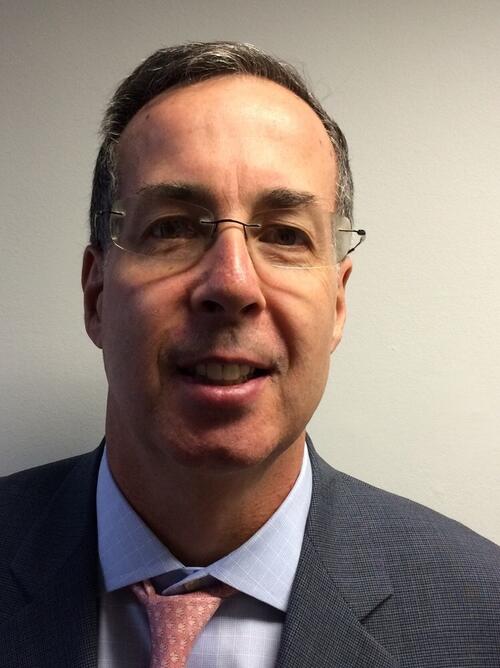
STANFORD, CA — Stanford University’s Walter H. Shorenstein Asia-Pacific Research Center (Shorenstein APARC) announced today the appointment of Sung Hyun “Andrew” Kim as a William J. Perry visiting scholar through the winter quarter of 2019.
Image
Kim, who recently retired as a senior intelligence officer from the Central Intelligence Agency after 28 years of service, is the outgoing assistant director of the CIA’s Korea Mission Center, where he helped secure the foundation for the Trump-Kim summit of June 2018. At Stanford, he will contribute to studies of current North Korea diplomacy in comparison to previous negotiations with the DPRK, a research scope that he refers to as “U.S.-DPRK summit of the century and the tide of history.” Kim will also participate in policy engagement regarding North Korea issues through Shorenstein APARC and its Korea Program, which are part of the Freeman Spogli Institute for International Studies (FSI).
“I am delighted to welcome Andrew to Stanford,” said Gi-Wook Shin, director of Shorenstein APARC and of the Korea Program. “I have known him for many years, and his extraordinary expertise and rich experiences in Korean affairs are an invaluable addition to FSI’s and APARC’s community of scholars and practitioners. I look forward to Andrew’s contributions to our explorations of ways to promote sustainable reengagement of North Korea, which reflect our mission of producing policy-relevant research and strengthening dialogue and cooperation between counterparts in the Asia-Pacific and the United States.”
Kim established the CIA’s Korea Mission Center in April 2017 in response to a presidential initiative to address North Korea’s longstanding threat to global security. As part of his role as head of the Mission Center, he managed and guided CIA Korea analysts in providing strategic and tactical analytic products for a range of policymakers. He accompanied CIA Director and then Secretary of State Mike Pompeo to Pyongyang in meeting with the North Korean leader Kim Jong Un several times. Formerly he served as the Agency’s associate deputy director for operations and technology, leading all efforts to update operational technology and incorporate a state-of-the-art doctrine into CIA training curricula.
Earlier in his career, Kim served as the CIA’s chief of station in three major East Asian cities, while also managing the intelligence relationship with politically and militarily complicated foreign countries and advancing U.S. interests. In recognition of his many contributions, Kim was honored by the Agency with the Director’s Award (2018), Presidential Rank Award (2012), and the Donovan Award (1990). He speaks fluent Korean, Japanese, and Mandarin Chinese.
###
About the Walter H. Shorenstein Asia-Pacific Research Center The Walter H. Shorenstein Asia-Pacific Research Center (Shorenstein APARC) addresses critical issues affecting the countries of Asia, their regional and global affairs, and U.S.-Asia relations. As Stanford University’s hub for the interdisciplinary study of contemporary Asia, APARC produces policy-relevant research, provides education and training to students, scholars, and practitioners, and strengthens dialogue and cooperation between counterparts in the Asia-Pacific and the United States. Founded in 1983, APARC today is home to a scholar community of distinguished academics and practitioners in government, business, and civil society, who specialize in trends that cut across the entire Asia-Pacific region.
Media contact: Noa Ronkin, Associate Director for Communications and External Relations Walter H. Shorenstein Asia-Pacific Research Center noa.ronkin@stanford.edu
Dr. Kenneth Dekleva's talk is one of the first times that a leadership analysis/political psychology profile of North Korea's Kim Jong Un has been presented in an academic setting. He will discuss how such a profile can be useful to academic scholars, policy makers, and the national security community.
Image
Dr. Dekleva is McKenzie Foundation Chair in Psychiatry I, Director of Psychiatry-Medicine Integration, and Associate Professor in the Dept. of Psychiatry, Peter J. O’Donnell Brain Institute, University of Texas Southwestern Medical School, Dallas, TX. He is board-certified in adult psychiatry, with additional qualification in forensic psychiatry. Dr. Dekleva received his BA in History at UC Berkeley, and later undertook post-baccalaureate pre-medical studies at Columbia University, NY; he subsequently received his MD at UT Southwestern Medical School, Dallas, TX, and also completed post-graduate/residency training in psychiatry therein. After working in a variety of academic, clinical and forensic psychiatric settings in the DFW area, he served as a Regional Medical Officer/Psychiatrist and senior US diplomat during 2002-2016, largely overseas (Moscow; Vienna; London; New Delhi; Mexico City), except for a 2-year assignment as Director of Mental Health Services, US Dept. of State, Washington, DC during 2013-2015. He retired from the US Dept. of State in 2016 with the rank of Minister-Counselor. Dr. Dekleva has published and/or presented (at local, regional, national, and international conferences) political psychology/leadership profiles of various world leaders since the mid-90s, including Radovan Karadzic, Slobodan Milosevic, Kim Jong Il, Vladimir Putin, Xi Jinping, and Kim Jong Un. His work has been published in the Journal of the American Academy of Psychiatry and the Law, 38 North, The Diplomat, and the Cipher Brief; he has also given various interviews to media outlets such as NPR, Background Briefing, Smerconish/Sirius XM, and CNN.
Andray Abrahamian will be the 2018-19 Koret Fellow in the Korea Program at Stanford’s Walter H. Shorenstein Asia-Pacific Research Center (APARC). Abrahamian has been Executive Director and Director of Research for Choson Exchange, a non-profit that has trained over 2000 North Koreans in entrepreneurship and economic policy since 2010. His work for Choson Exchange and other projects has taken him to North Korea 30 times. He has also lived in Myanmar, allowing him the ability to conduct field research for his new book, North Korea and Myanmar: Divergent Paths (2018, McFarland). Divergent Paths asks how Myanmar came to end its isolation, while North Korea has yet not.
“When it comes to North Korea, Dr. Abrahamian has been very active both as an academic and on the ground. He has genuine hands-on experience of working with North Koreans from his numerous trips to the country. In this important period of flux for North Korea’s place on the world stage, we welcome Dr. Abrahamian as 2018-19 Koret Fellow, and look forward to his meaningful contributions to our activities.” “His experience and understanding of North Korea will be a great asset to our program,” Gi-Wook Shin, director of APARC said.
Image
As the 2018-19 Koret Fellow, Abrahamian will research the economic relations of North Korea during changing geopolitical conditions as well as entrepreneurship in North Korea as it relates to communities of Koreans abroad. He also plans to write a general readership book that explains contemporary North Korean society. While at Stanford, he will teach a course on contemporary North Korean society and engage in public talks and conferences on Korea issues. During his fellowship, Abrahamian will also help organize the Koret Workshop, an international conference held annually at Stanford University.
Abrahamian is an Honorary Fellow at Macquarie University, Sydney, and an Adjunct Fellow at the Griffith Asia Institute. He is a frequent contributor to 38North.org, a website focused on North Korea analysis, and is a member of the US National Committee on North Korea. Andray holds a PhD from the University of Ulsan and an MA from the University of Sussex in International Relations. He has taught courses at Yangon University and Ulsan University.
Supported by the Koret Foundation, the fellowship brings leading professionals to Stanford to conduct research on contemporary Korean affairs with the broad aim of strengthening ties between the United States and Korea.
Student Isabelle Foster asks Lieutenant Commander Daniel McShane about his time defending the DMZ as they stand on a platform overlooking North Korea. Photo by Nicole Feldman. | Nicole Feldman
Gi-Wook Shin, director of the Shorenstein Asia-Pacific Research Center and of the Korea Program, regularly writes on Korean affairs for Korean audience. His recent articles in Munhwa Ilbo, a South Korean daily newspaper, are listed below. Note: these articles are written in Korean.
The following article first appeared on The Diplomat.
With the historic U.S.-North Korea summit on the immediate horizon, we must recognize that denuclearization will not and cannot be permanent or irreversible as long as there is a desire to reverse it. U.S. President Donald Trump may strike a “grand deal” with North Korean leader Kim Jong-un to denuclearize North Korea, but Kim can — and most likely will — reverse course at his convenience to construct new nuclear weapons. By focusing solely on denuclearization, we risk losing sight of the bigger, more important picture — that is, transforming North Korea into a normal state that no longer sees the need to pursue nuclearization for deterrence, survival, or any other reason.
Much of debate has centered on why Kim suddenly emerged from long-held silence to take the world’s center stage through a series of summits. Was he pressured by toughened sanctions, as Trump credits himself for? Or was it an expression of Kim’s confidence as a leader of a now de facto nuclear power, with more leverage for negotiation? Or has he simply been trying to buy time to avoid war — to get through the unpredictable and ruthless Trump’s tenure as U.S. president? Yet, what really matters now is not so much the question of why Kim came to the table, but rather how we can make the latest détente sustainable without repeating the failures of the past. Will it be different this time?
With the Trump-Kim summit now back on the track after a 24-hour drama of cancellation then resumption, each side seems to have softened its stance by lowering the bar. Next week in Singapore, both leaders will be sorely tempted by clear political and economic interests to paint the meeting as a success. Real challenges, however, will arise as the logistical details of North Korea’s denuclearization are discussed following the summit. The Trump team is unlikely to abandon its goal of the CVID (complete, verifiable, and irreversible denuclearization) of North Korea, while Kim and his men will stand firmly against this all-out approach so as not to follow the footsteps of Libya, Iraq, or Ukraine. North Korea has reportedly demanded a CVIG (complete, verifiable, and irreversible guarantee) of the security of the current regime, but there is a great danger that these deals, if made, will be nothing more than another sheet of paper full of empty words. The deep mistrust between the two countries cannot be overcome overnight, especially considering that both leaders have pretty bad track records of reneging on previous commitments. Neither CVID nor CVIG has much chance of being realized in the current context, from either a technical or a practical perspective.
With all this skepticism, why should we still bother playing this game with North Korea again? It is because we see a window of opportunity to guide North Korea into the international community through processes of diplomatic communication, exchange, and engagement. North Korea’s summit diplomacy has revealed its desire to appear a normal state. Kim vigorously showcased four summit meetings — twice each with China’s Xi Jinping and South Korea’s Moon Jae-in — and numerous high-level meetings, within two months, all within the parameters of conventional “state-to-state” relationships, departing from past practices. Standing side-by-side with the South Korean president to read out a joint declaration, immediately releasing news of Kim’s summit meetings through its media, presenting Kim’s wife, Ri Sol-ju, as the state’s first lady — all of this would have been unthinkable in his father or grandfather’s generation.
North Korea’s latest efforts at international recognition as a normal state may be insincere and ill-intentioned, but even so, we should continue to allow North Korea and Kim to experience firsthand what it feels like and means to be treated as a normal state and a normal leader according to the ordinary conventions of international diplomacy. Although the goal seems so far away and unreachable, we should strive to normalize North Korea in all respects — its economy, its domestic and international politics, its integration into international institutions, and its adherence to international laws, norms, rights, duties, orders, etc.
CVID can still serve as a short- to mid-term goal, but not as a definitive solution to the long-standing North Korean threat. Whatever is decided at the upcoming summit, a more comprehensive roadmap should be set for enacting desirable transformations in security and economic relations with North Korea, putting the country on a path to become a stable and normal state increasingly integrated into the international community, where it would feel secure without a need for nuclear armament. As Trump says, he is starting a “process” of dealing with North Korea; the upcoming summit should be the beginning of an opportunity to advance this goal. After all, a normal North Korea can achieve CVID, but CVID cannot achieve a normal state.
Gi-Wook Shin is director of the Shorenstein Asia-Pacific Research Center at Stanford University, and Joyce Lee is a research professional in the Korea Program at the Shorenstein Asia-Pacific Research Center at Stanford University.
The recent developments in North Korea's summit diplomacy and the feasibility of CVID (complete, verifiable and irreversible dismantlement) of the nuclear program have received unprecedented responses, both optimistic and pessimistic, from the international community.
Please stay tuned to this page for APARC researchers' commentary and analysis on the CVID of the North Korean nuclear program through articles published in various news media.
Ambassador Kathleen Stephens shares reactions following the Trump-Kim summit, including her thoughts on President Trump's pledge to cancel military exercises on the Korean Peninsula (KQED's Forum, 06/12/18)
On April 27, 2018, the Shorenstein APARC Korea Program held a special public panel discussion following the dramatic summit that took place but hours earlier that day between North Korea’s Kim Jong-un and South Korean President Moon Jae-in at the village of Panmunjom. Titled “North Korea Summit Diplomacy: Round 2,” the panel featured Gi-Wook Shin, director of APARC; Kathleen Stephens, the William J. APARC fellow in the Korea Program and former ambassador to South Korea; Philip Yun, executive director and chief operating officer of Ploughshares Fund; and Yong Suk Lee, Korea Program deputy director, who moderated the discussion.
Same Movie, Different Actors?
Panelists admitted to feeling a sense of déjà vu. “We’re watching a replay of an old movie,” observed Professor Shin. “There are new actors, but will it be more than that?” They agreed, however, that the fact the summit happened at all was still a sign of progress. “It’s great that inter-Korean dialog is back after a decade of confrontation,” stated Professor Shin. “But is it really possible to achieve complete denuclearization?” he continued. “How far will the North go, and what will it get in return?”
Noting that similar optimism surrounded talks held by the Koreas in 2000—only for it to ultimately amount to little—the panel argued that a key difference between this summit and previous ones was the nature of the actors, particularly the North Korean representation.
“What has changed from past efforts?”, Shin asked the audience. “Kim Jong-un grew up; he was groomed to behave like a king, and we saw him [at the summit] acting like one.” Ambassador Stephens added that “Kim wants to present himself as a different kind of Korean leader, a respected leader of a normal state; the complete opposite style from his predecessors.”
Breaks from the past exist on the South Korean side as well. “This was a process driven by South Korea in a way we’ve never seen before,” said Stephens. “For South Koreans, it’s amazing to see that the leaders were not using interpreters, they were just speaking Korean; it underscores the nationalist issue underpinning this conflict, which the Americans need to be aware of.”
No seats at the Table
The U.S. administration’s reaction to the summit was swift, with President Trump tweeting both that the U.S. people should be proud and, perhaps more interestingly, praising President Xi of China for his support that has made the recent breakthrough possible.
However, Yun expressed concern about “Japan and China feel[ing] left out.” He noted that this might yet again prove to be another instance of a Kim dynasty member setting other actors against each other for North Korea’s benefit, and that regional actors have doubts about the American level of commitment. “I think the Japanese are afraid the United States is going to cut a deal on long range missiles and then go home.”
“What we’re going to see regionally is a competition or a battle for Trump’s word,” he continued. “Who can be the last person to talk and convince him that their perspective is the correct one.”
From left to right, Yong Suk Lee, Korea Program deputy director; Philip Yun, executive director and chief operating officer of Ploughshares Fund; Kathleen Stephens, the William J. APARC fellow in the Korea Program and former ambassador to South Korea; and Gi-Wook Shin, director of APARC.
(From left to right, Yong Suk Lee, Korea Program deputy director; Philip Yun, executive director and chief operating officer of Ploughshares Fund; Kathleen Stephens, the William J. APARC fellow in the Korea Program and former ambassador to South Korea; and Gi-Wook Shin, director of APARC.)
What Comes Next
Any optimism expressed by the panelists was further tempered with calls for patience on further progress. “Denuclearization of the North isn’t only difficult, it will take time,” said director Shin. “I want to be optimistic, but I must also be cautious.”
Additionally, change in the North will likely need to happen at a measured pace. “[I]n a place like the North, you can’t move from zero to 100,” said Yun.
Ambassador Stephens looked to the Good Friday Agreement in Northern Ireland as a hopeful precedence. While the sentiment of “we’ve tried this before” very much surrounded that process, it ultimately paved the opportunity for a final breakthrough, noted Stephens.
Time will only tell whether the summit is a true success or simply a repeat of the past. At the panel’s conclusion, Shin swapped out the earlier film analogy for one about sports. Comparing the recent diplomacy to a soccer game, Shin observed that “President Moon did a nice pass to Trump. But can Trump now score the goal?”
After his secret meeting with President Xi Jinping of China in March, North Korea’s Kim Jong-un is set to meet with President Moon Jae-in of South Korea on April 27 at Peace House, south of the military demarcation line. This would make Kim Jong-un the first North Korean leader to set foot in South Korea since the Korean War. A panel of Korea experts will engage in discussion about outcomes and implications of this historic summit.
Panelists:
Gi-Wook Shin, Director of Shorenstein APARC; Senior Fellow at FSI; Professor of Sociology, Stanford University
Kathleen Stephens, William J. Perry Fellow at Shorenstein APARC; former U.S. Ambassador to South Korea
Philip Yun, Executive Director and Chief Operation Officer of Ploughshares Fund; former vice president at The Asia Foundation
Yong Suk Lee (moderator), Deputy Director of Korea Program, Shorenstein APARC; SK Center Fellow at FSI, Stanford University




 From left to right, Yong Suk Lee, Korea Program deputy director; Philip Yun, executive director and chief operating officer of Ploughshares Fund; Kathleen Stephens, the William J. APARC fellow in the Korea Program and former ambassador to South Korea; and Gi-Wook Shin, director of APARC.
