Education
News Type
News
Date
Paragraphs

The Korea Program invites junior faculty, post-doctoral fellows, and graduate students to apply for travel awards to attend an upcoming two-day conference organized by the Korea Program at Stanford' Asia-Pacific Research Center. The workshop titled "Future Visions: Challanges and Possibilities of Korean Studies in North America" will be held on November 1st and 2nd, 2018 at Stanford University.

The awards will cover accepted applicants' lodging, domestic airfares, and/or ground transportation. To apply for the travel awards, please submit your CV and 2-page statement as a single file by July 15 here.

About the conference:

“Future Visions: Challenges and Possibilities of Korean Studies in North America,” is designed to bring together leading scholars in the fields of language education, literature, history, social sciences, and library studies. Each panel will consist of three-four scholars who will be tasked with presenting a report on the state of the field. The purpose of the panels is to generate discussion around some of the following questions: 

  • What are the research trends in each field?
  • What kinds of directions can we expect in the near future?
  • What are some of the disciplinary or other challenges in each field?
  • How does each field interact with related fields?
  • What are some of the limitations and possibilities around graduate student training?
  • How can faculty with graduate students cultivate supportive and critical scholarly communities?
  • ​How are junior faculty encouraged, and what institutional structures may offer better support?

Accepted applicants are expected to actively participate in discussion sessions and to engage in networking with other scholars during the 2-day conference.

Please direct questions on the conference to hjahn@stanford.edu.

Hero Image
encina columns
All News button
1
Paragraphs

The development community has increased its focus on higher education over the past two decades, recognizing that education can contribute to building up a country’s capacity for participation in an increasingly knowledge-based world economy and accelerate economic growth. The value added by higher education to economies—job creation, innovation, enhanced entrepreneurship, and research, a core higher education activity—has been highlighted by an important body of literature. 

Yet experts remain concerned that investing in higher education in less-developed countries may lead to a “brain drain”--highly educated students and professionals permanently leaving their home countries. In the 2016 Kauffman report on international science, technology, engineering, and math (STEM) students in the United States, for instance, 48 percent among a randomly sampled survey of 2,322 foreign doctoral students in the United States wished to stay there after graduation, with only 12 percent wanting to leave and 40.5 percent being undecided. In fact, high percentages of foreign students in the United States with doctorates in science and engineering continue to stay in the United States, creating a brain drain problem for the sending countries. 

Because students tend to move from developing to developed countries to study, brain drain is more problematic for developing countries. In addition, given accelerated talent flows around the world and the increasing integration of less-developed countries into global value chains, the negative impact of brain drain could be further amplified. As demonstrated by the studies reviewed in this paper, the migration of high-skilled professionals from developing countries may indeed create brain drain for them, but at the same time can significantly enhance the social and economic development of their home countries, regardless of whether or not they decide to return home, thus complicating what used to be seen as a straightforward case of brain drain. 

From Brain Drain to Brain Circulation and Linkage examines how brain drain can contribute to development for the sending countries through brain circulation and linkage. It provides an overview of the conceptual framework to map out high-skilled labor flows, identifies empirical cases and policies in Asia that demonstrate high-skilled migrant professionals actually make significant contributions to their home countries (beyond monetary remittances), summarizes key social and economic enabling factors that are important in attracting and motivating migrant high-skilled professionals to return or engage with their home countries, and concludes with policy implications and suggestions for further research based on these findings.

All Publications button
1
Publication Type
Working Papers
Publication Date
Authors
Gi-Wook Shin
Rennie Moon
Number
978-1-931368-49-0
News Type
News
Date
Paragraphs

Dafna Zur, assistant professor of East Asian Languages and Cultures at Stanford, discusses her current research on literary and scientific education in postwar North and South Korea.

The complete discussion is available on the Stanford News.


Hero Image
zur
Dafna Zur and a science fiction book "The Stars Will Return" by North Korean writer Pak Chong Ryol
Steve Casto (left); Book cover courtesy of Dafna Zur (right)
All News button
1
-

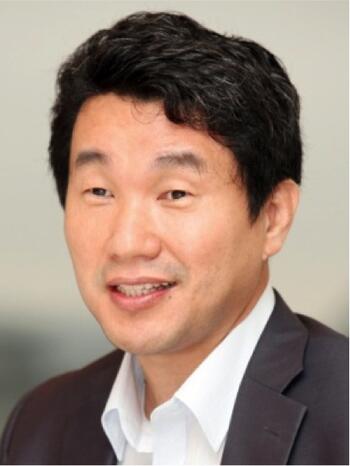
South Korea's persistent economic growth combined with a democratic political system has transformed the country into a developed nation. While research has often highlighted the role of industrial policies, technological growth and international trade as imperative to Korea’s developmental success, this talk will instead focus on the role that human capital has played. Professor Ju-Ho Lee will discuss how the accumulation of human capital has aided Korea’s transformation and examine the policies, strategies and challenges that the country faces into the future.

Image
ju ho lee
Before returning to the KDI School of Public Policy and Management in 2013, Professor Lee served as Minister of Education, Science and Technology (2010-13) where he had previously served as Vice Minister (2009). He has been noted for his endeavor to reform education, and for active lawmaking as a member of the National Assembly (2004-08). Utilizing his nine years of experience as a policy maker, he actively resumed his academic research on human capital and innovation policies at KDI. Professor Lee's  recent research has covered a wide range of issues including the measurement of 21st century skills, changes in pedagogies, opening-up strategies in education reforms, and innovation ecosystems. Currently he is also working for the international community as a Commissioner of the International Commission on Financing the Global Educational Opportunities.

Professor Lee received his BA and MA from Seoul National University, and PhD from Cornell University, all in economics.

This lunch time keynote address is part of the ninth annual Koret Workshop, "Korea's Migrants: From Homogeneity to Diversity," and open to the general public.

This event is made possible through the generous support of the Koret Foundation.

Ju-Ho Lee <i>Professor, KDI School of Public Policy and Management; former Minister of Education, Science and Technology, South Korea </i>
Seminars
616 Serra StreetEncina Hall E301Stanford, CA94305-6055
(650) 723-9404 (650) 723-6530
0
rennie_moon.jpg Ph.D.

Rennie J. Moon joins the Walter H. Shorenstein Asia-Pacific Research Center as the 2016-17 Koret Fellow in the Korea Program.  Moon is an associate professor at the Underwood International College at Yonsei University in Seoul, South Korea. Her research explores the interrelationships among globalization, migration and citizenship, and internationalization of higher education.

Moon, a graduate of Stanford’s Graduate School of Education, Ph.D. ‘09, has collaborated with Stanford professor Gi-Wook Shin on a multiyear research project that examines diversity in higher education in East Asia. She co-edited the book Internationalizing Higher Education in Korea: Challenges and Opportunities in Comparative Perspective published earlier this year. Her articles have appeared in academic journals including Comparative Education ReviewComparative EducationAustralian Journal of International Affairs, and Pacific Affairs.

As a Korean-American scholar, Moon has written editorials and columns in both English and Korean on higher education in Korea and Asia for the Nikkei Asian Review, The Conversation, East Asia Forum, Australian Outlook, Dong-A Daily, MK News, and other media outlets.

Supported by the Koret Foundation, the Koret Fellowship brings professionals to Stanford to conduct research on contemporary Korean affairs. In 2015, the fellowship expanded its focus to include social, cultural and educational issues in North and South Korea, and aims to identify emerging scholars working on those areas.

During her fellowship, Moon will also give public talks and be a lead organizer of the Koret Workshop, an international conference held annually at Stanford.

Moon holds a doctorate and master’s degree in international comparative education from Stanford and a bachelor’s degree in French from Wellesley College.

Visiting Associate Professor
2016-2017 Koret Fellow
News Type
News
Date
Paragraphs

Stanford students now can choose Korea track as a major. Dafna Zur, assistant professor of East Asian languages and cultures, says "the major we've created responds to the interest we've sensed on campus and gives students the opportunity to explore Korea in a truly interdisciplinary way."

The full article is available here.

Hero Image
Bukchon Hanok Village with modern buildings in the background in Seoul, South Korea GoranQ/ Getty Images
All News button
1
Paragraphs

In this paper, we explore a new framework for higher education official development assistance (ODA) with a focus on the transnational bridging benefits of social capital. We first explain why and how a transnational social capital approach can improve the current focus on human resources and local bridges in higher education development. We then illustrate its merits by examining, 1) the transnational bridging potential of social capital formed by foreign students currently studying in Korea; and 2) the actual transnational social capital contributions of foreign professionals who returned home after completing a Korean higher education ODA program. In doing so, we direct particular attention to the value of transnational social capital in promoting development cooperation and public diplomacy. We conclude by discussing how our approach has conceptual importance and practical implications for development cooperation in higher education.

All Publications button
1
Publication Type
Journal Articles
Publication Date
Journal Publisher
Pacific Affairs
Authors
Gi-Wook Shin
News Type
Commentary
Date
Paragraphs

Researchers in the Korea Program regularly contribute to Korean media on the Korean affairs ranging from education and economics to politics and North Korea nuclear issues. The articles are in Korean language.

Nationalist Populism in South Korea (Gi-Wook Shin, August 18, 2019)

The Ambiguous Boundary Between Korean Wave and the Anti-Korean Sentiment (Joyce Lee, May 2, 2019)

Restoring the Dignity of South Korea (Gi-Wook Shin, April 18, 2019)

Happiness and Productivity (Yong Suk Lee, March 21, 2019)

Softness Overcomes Hardness  (Joyce Lee, March 6, 2019)

What should the Hanoi Declaration lay out? (Gi-Wook Shin, February 20, 2019)

What Would an Aged Society Look Like? (Yong Suk Lee, January 23, 2019)

Confront the lure of populism or risk economic failures and the coming of a far-right extremist regime (Gi-Wook Shin, January 17, 2019)

Only a drastic measure towards denuclearization can resolve the current stalemate with North Korea (Gi-Wook Shin, interview with Korea Times, January 10, 2019)

Looking After Myself (Joyce Lee, January 9, 2019)

2018, The Moon Jae-In Government's Progress Report (Gi-Wook Shin, December 27, 2018)

Rethinking North Korean Economy? (Yong Suk Lee, November 29, 2018)

The Dark Side of the Korean Culture of Hierarchy (Joyce Lee, November 14, 2018)

Trump's Second Half (Gi-Wook Shin, November 7, 2018)

How Parents Can Help their Children with Career Planning (Yong Suk Lee, October 17, 2018)

Anticipation and Concerns Mount Ahead of the 3rd Inter-Korean Summit (Joyce Lee, September 19, 2018)

Spring on the Korean Peninsula Needs to be hard fought (Gi-Wook Shin, September 5, 2018)

Should we encourage kids to learn coding? (Yong Suk Lee, August 6, 2018)

Some Thoughts on the Korean Value of Saving Face (Joyce Lee, July 16, 2018)

Koreans abroad can play important roles in achieving peace on the Korean Peninsula (Gi-Wook Shin, July 2, 2018)

Withdrawal of US troops from South Korea now becomes an option (Gi-Wook Shin, June 20, 2018)

Trump in Face-Saving Action for Kim (Joyce Lee, June 18, 2018)

South Korea and the U.S. Differ on Priorities for North Korea Policy (Gi-Wook Shin, May 14, 2018)

Is CVID Possible? (Gi-Wook Shin, May 7, 2018)

CVID Faces Challenges (Gi-Wook Shin, May 3, 2018)

The April 27 Korea Summit and the Lingering Question of CVID+α (Gi-Wook Shin, April 30, 2018)

Choices for Your Happiness (Joyce Lee, April 23, 2018)

The Ambiguity of the Moon Government's Goal for the Inter-Korean Summit (Gi-Wook Shin, April 2, 2018)

Korea as a Pacemaker (Gi-Wook Shin, March 13, 2018)

MeToo Movement Should Create Lasting Social Change (Gi-Wook Shin, March 12, 2018)

What's Wrong with Being a Nobody? (Joyce Lee, February 26, 2018)

It's Time to Move Beyond the Political Deadlock of Comfort Women Issue (Gi-Wook Shin, January 15, 2018)

Can the Government Rouse Young Koreans from Their Dreams of Childless Comfort? (Joyce Lee, January 3, 2018)

A Grand Bargain between the US and China Seems More Likely than Ever (Yong Suk Lee, December 25, 2017)

Korea No Longer a Country of Koreans (Rennie Moon, December 11, 2017)

Moon Administration's Diplomatic and Securtiy Strategies (Gi-Wook Shin, November 27, 2017)

Making Little Mr. and Ms. Perfects, But for Whose Sake and at What Cost? (Joyce Lee, November 6, 2017)

Identifying Korea as a Developed Country (Joon Nak Choi, October 30, 2017)

Superficial Korea (Gi-Wook Shin, September 26, 2017)

What Comes After the War of Words Between Trump and Kim Jong-un (Gi-Wook Shin, September 25, 2017)

In the Midst of Rising Fears of War (Joyce Lee, September 12, 2017)

Broken English as the global language (Rennie Moon, August 28, 2017)

'Polifessors' of Moon administration (Gi-Wook Shin, July 24, 2017)

In Anticipation of the Era of Korean Studies (Joyce Lee, July 17, 2017)

Technological Change: Why Korea needs a longer-term perspective on job creation (Yong Suk Lee, June 27, 2017)

Global network of Koreans abroad (Gi-Wook Shin, June 6, 2017)

First summit meeting, not to hurry (Gi-Wook Shin, May 22, 2017)

Korean Americans' love for Korea (Rennie Moon, April 24, 2017)

Trump's anti-immigration stance to be an opportunity for Kore(Gi-Wook Shin, February 27, 2017)

A Labor market by the young, and for the young (Yong Suk Lee, January 30, 2017)

If Korean universities are to succeed with internationalization (Rennie Moon, November 21, 2016)

US presidential election and Korea (Gi-Wook Shin, October 24, 2016)

Political expediency should not block technology innovation (Joon Nak Choi, September 12, 2016)

Strategic policy on inter-Korean relations is essential (Gi-Wook Shin, August 1, 2016)

Is Korea ready to embrace risk and failure? (Yong Suk Lee, June 20, 2016)

Can Pankyo become Silicon Valley in Korea? (Gi-Wook Shin, May 9, 2016)

All News button
1
News Type
News
Date
Paragraphs

Rennie J. Moon has been selected as the 2016-17 Koret Fellow in the Korea Program at Stanford’s Shorenstein Asia-Pacific Research Center (APARC). She will join the center next January to study diversity in higher education and teach a student course.

Image
rennie moon

Moon is an associate professor at the Underwood International College at Yonsei University in Seoul, South Korea. Her research explores the interrelationships among globalization, migration and citizenship, and internationalization of higher education.

Moon, a graduate of Stanford’s Graduate School of Education, Ph.D. ‘09, has collaborated with Stanford professor Gi-Wook Shin on a multiyear research project that examines diversity in higher education in East Asia. She co-edited the book Internationalizing Higher Education in Korea: Challenges and Opportunities in Comparative Perspective published earlier this year.

Stanford professor Francisco O. Ramirez, an expert on international comparative education and sociology of education, recognized her scholarly contributions to the field.

“Moon is a creative contributor to the ‘world society perspective’ in the social sciences,” said Ramirez, noting that Moon's work has been published in leading journals of international comparative education, Comparative Education Review and Comparative Education.

Supported by the Koret Foundation, the Koret Fellowship brings professionals to Stanford to conduct research on contemporary Korean affairs. In 2015, the fellowship expanded its focus to include social, cultural and educational issues in North and South Korea, and aims to identify emerging scholars working on those areas.

During her fellowship, Moon will also give public talks and be a lead organizer of the Koret Workshop, an international conference held annually at Stanford.

“As an alum, I’m very pleased and excited to spend my sabbatical year at Stanford,” Moon said. “Over the last few years, I’ve been collaborating on various research projects with Professor Shin and other colleagues at APARC. I’m looking forward to a productive fellowship during which I hope to bring these evolving projects to fruition.”

Moon holds a doctorate and master’s degree in international comparative education from Stanford and a bachelor’s degree in French from Wellesley College.

Hero Image
rennie moon crop
All News button
1
Subscribe to Education