Economic Affairs
Paragraphs
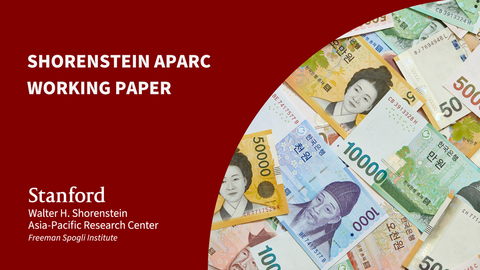
Image of Korean currency with banner "Shorenstein APARC Working Paper"


This paper examines the “Korea discount,” the chronic undervaluation of South Korean stocks compared to other developed markets. Despite Korea ranking 13th globally in market capitalization, its stock market has grown only 25% over the past decade, while the S&P 500 grew 186%. The author attributes this poor performance to weak corporate governance, particularly the dominance of family-controlled conglomerates (chaebols) that prioritize the interests of founding families over those of minority shareholders. An analysis of successful reforms in Japan, Taiwan, and the United States shows that the Korea discount could be successfully resolved by strengthening corporate disclosure requirements, resolving conflicts of interest among institutional investors, and making South Korea’s voluntary stewardship code more enforceable to encourage active shareholder engagement and improve market valuations. 

All Publications button
1
Publication Type
Working Papers
Publication Date
Subtitle

Institutional Investor–Driven Governance Reform and the Resolution of the Korea Discount

Authors
You Jung Lee
Authors
News Type
News
Date
Paragraphs

When Stanford sociologist Gi-Wook Shin left his home country of South Korea in 1983 to pursue graduate studies at the University of Washington, he was certain he would return to Korea upon graduation. More than 40 years later, Shin, the William J. Perry Professor of Contemporary Korea and a senior fellow at the Freeman Spogli Institute for International Studies, is still in the United States. 

Yet he does not consider himself a case of brain drain for Korea. Shin, who is also the founding director of the Korea Program at the Shorenstein Asia-Pacific Research Center (APARC) and APARC director, has continuously contributed to Korea by leading transnational collaborations, researching and publishing on pressing issues in Korean affairs, and otherwise engaging in diverse intellectual exchanges with the country.

Shin’s experiences sparked his interest in the sociological patterns of mobile talent and a central question: How do countries attract, develop, and retain talent in a globalized world? His new book, The Four Talent Giants (Stanford University Press, 2025), explores that question regarding transnational talent flows from a comparative lens by examining how four strikingly different Asia-Pacific nations – Japan, Australia, China, and India – have become economic powerhouses.

We interviewed Shin about his book – watch:

Sign up for APARC newsletters to receive our scholars’ research updates >


The book’s main idea, Shin explains, is that how countries manage talent is key to their strength and future success. He calls the four Asia-Pacific nations the book examines “talent giants” because each has used a distinct talent strategy that has proven critical to national development. Three of these nations – China, Japan, and India – are among the top five economies in the world in terms of GDP, and Australia, despite its relatively small population size, is third in terms of wealth per adult.

In The Four Talent Giants, Shin investigates how these four nations have become global powers and sustained momentum by responding to risks and challenges, such as demographic crises, brain drain, and geopolitical tensions, and what lessons their developmental paths hold for other countries.

There is no ‘one-size-fits-all’ path to development [...] Rather, the ‘talent giants’ have developed distinctive talent portfolios with different emphases on human versus social capital, domestic versus foreign talents, and homegrown versus foreign-educated talents.
Gi-Wook Shin

A New Framework for Studying Human Resource Development 


Asia’s robust economic growth over the past forty years is nothing short of a remarkable feat. The Asia-Pacific today continues to be the world's fastest-growing region, despite global economic uncertainty. How did this phenomenal ascendance come about?

The existing literature has emphasized common “recipes” of success among Asia-Pacific powers. Endeavoring to find one-size-fits-all formulas that could be replicated in other countries seeking rapid development, it has overlooked the distinct developmental journeys of Asian nations. “We need a new lens, or framework, to explain their successes, while also accounting for cross-national variation in development and sustainability,” writes Shin. 

In his book, Shin examines talent – the skilled occupations essential to a nation’s economy – as a key driver of economic development. While all countries rely on human resources for development, their talent strategies vary based on historical, cultural, and institutional factors. Shin introduces a new framework, talent portfolio theory (TPT), inspired by financial portfolio theory, to analyze and compare these national approaches.

“TPT views a nation’s talent development, like financial investment, as constructing a ‘talent portfolio’ that mixes multiple forms of talent – domestic, foreign, and diasporic – adjusting its portfolio over time to meet new risks and challenges,” he explains. Just as an investor may select different financial products in a mix of assets, countries can create talent portfolios by picking from various strategies.

Shin identifies four main strategies by which a country can harness talent – what he calls the four B's: 

  • Brain train” signifies efforts to develop and expand a country’s domestic talent or human capital.
  • Brain gain” refers to attracting foreign talent to strengthen the domestic workforce.
  • Brain circulation” involves bringing back nationals who have gone abroad for work or study.
  • Brain linkage” means leveraging the global networks and expertise of citizens living overseas through transnational collaboration.


Shin uses TPT as an analytical framework to examine how each of the four talent giants has constructed its distinct national talent portfolio and how this portfolio has evolved. As in an investment portfolio rebalancing, a nation can maintain diversification across the four B's and within each B. TPT therefore offers a holistic framework for understanding the overall picture of a country’s talent strategy, and how and why it may “rebalance” its talent portfolio.

Throughout the book, Shin shows that, while Japan has relied on the brain train strategy, Australia, whose population was too small for such an approach, emphasized brain gain. China used brain circulation: it first sent students and professionals abroad to learn, then implemented policies to encourage them to return. India, by contrast, established linkages among its diaspora and used them to develop its economy.

Immigrants have not just filled jobs. They have created new industries and helped the United States and their home countries alike. If the US makes it harder for talent to come in and stay, it risks hurting its long-term success.
Gi-Wook Shin

New Geopolitics of Global Talent: Lessons and Policy Implications


The case studies of the four talent giants reveal that there is no single path to talent-driven development. Each of the four Asia-Pacific countries has built its unique talent portfolio, balancing human and social capital, homegrown and foreign-educated individuals, and domestic and diasporic talents. While the talent giants use all four B's to some extent, each emphasizes them differently, reflecting diverse strategies and development paths. The core findings of these studies offer valuable insights for countries aiming to design effective talent policies. 

The four B's were instrumental in the economic rise of the four Asian nations, and they will be equally critical in addressing new challenges facing all economies, from demographic crises to emergent geopolitical tensions. For the United States, one such challenge is its sprawling competition with China, where the battle for talent is heating up in the race for technological supremacy.

Shin warns that the advantage the United States has long held in technological innovation, driven by its ability to attract skilled foreign talent, is now at risk from the Trump administration’s anti-immigration policies, pressures on universities, and cuts to research funding. “Immigrants have not just filled jobs,” he emphasizes. “They have created new industries and helped the US and their home countries. If the US makes it harder for talent to come in and stay, it risks hurting its long-term success.”

The Four Talent Giants is an outcome of Shin’s longstanding project investigating Talent Flows and Development, now one of the research tracks he leads at the Stanford Next Asia Policy Lab (SNAPL), which he launched in 2022. Housed at APARC, the lab is an interdisciplinary research initiative addressing Asia’s social, cultural, economic, and political challenges through comparative, policy-relevant studies. SNAPL’s education mission is to cultivate the next generation of researchers and policy leaders by offering mentorships and fellowship opportunities for students and emerging scholars.

Shin notes that the SNAPL team illustrates all four B’s in his talent portfolio theory, as some members are U.S.-born and trained, some come from Asia and, after working at the lab, return to their home countries, whereas some stay here, promoting linkages with their home countries. “In many ways, this project shows what is possible when we invest in talent and encourage international collaboration.”


In the Media


Stanford Scholar Reveals How Talent Development Strategies Shape National Futures
The Korean Daily, July 13, 2025 (interview)
- English version
- Korean version

Read More

College students wait in line to attend an information session at the Mynavi Shushoku MEGA EXPO in Tokyo, Japan.
News

A New Approach to Talent Development: Lessons from Japan and Singapore

Stanford researchers Gi-Wook Shin and Haley Gordon propose a novel framework for cross-national understanding of human resource development and a roadmap for countries to improve their talent development strategies.
A New Approach to Talent Development: Lessons from Japan and Singapore
Gi-Wook Shin, Evan Medeiros, and Xinru Ma in conversation at the Center for Strategic and International Studies.
News

Stanford Next Asia Policy Lab Engages Washington Stakeholders with Policy-Relevant Research on US-China Relations and Regional Issues in Asia

Lab members recently shared data-driven insights into U.S.-China tensions, public attitudes toward China, and racial dynamics in Asia, urging policy and academic communities in Washington, D.C. to rethink the Cold War analogy applied to China and views of race and racism in Asian nations.
Stanford Next Asia Policy Lab Engages Washington Stakeholders with Policy-Relevant Research on US-China Relations and Regional Issues in Asia
Lee Jae-myung, the presidential candidate of the Democratic Party, and his wife Kim Hea-Kyung celebrate in front of the National Assembly on June 4, 2025 in Seoul, South Korea.
Commentary

Is South Korea’s New President Good for Democracy?

South Koreans have elected Lee Jae-myung president. Will he be a pragmatic democratic reformer? Or will he continue the polarizing political warfare of recent South Korean leaders?
Is South Korea’s New President Good for Democracy?
All News button
1
Subtitle

In his new book, The Four Talent Giants, Shin offers a new framework for understanding the rise of economic powerhouses by examining the distinct human capital development strategies used by Japan, Australia, China, and India.

Date Label
Authors
News Type
News
Date
Paragraphs

Demographic shifts worldwide have increased the number of older workers, and many economies are facing a critical question: Are their labor markets ready to support older workers?

Researchers have found that, in the United States, the surge of older workers has gone hand–in-hand with an increase in the number of “age-friendly jobs” – roles with working conditions more suitable for aging employees, such as placing fewer physical demands or offering greater scheduling flexibility. Yet it remains unclear whether comparable trends have taken hold in other aging economies.

A new study, published in the Journal of the Economics of Ageing, helps fill in this gap by examining the evolution of age-friendly jobs in South Korea (hereafter Korea), where the number of workers aged 50 and over increased by 165 percent from 2000 to 2023. Korea is now officially considered a "super-aged" society, and the government is doubling down on its efforts to bolster the workforce.

The study, co-authored by Hyeongsuk Kim and Chulhee Lee, both of Seoul National University, and Stanford health economist Karen Eggleston, the director of APARC’s Asia Health Policy Program, examines Korea’s workforce and economy to determine whether the nation significantly expanded its 50+ workforce by creating job opportunities favorable for older workers or if some other mechanism is at play. 

The co-authors examined the job characteristics experienced by older Koreans relative to their younger counterparts and U.S. older workers. Second, they analyzed data collected in 2020 about Korean workers, evaluating their jobs based on various parameters in the Age-Friendliness Index (AFI), a tool that measures the degree to which jobs are more suitable for older workers. The researchers considered AFI factors such as the requirement for heavy physical activity, the pace of the job, and the possibility of telecommuting. They also examined how the number of age-friendly jobs changed from 2000 to 2020.

Our results underscore that 'age-friendly' jobs appeal to many kinds of workers, not just older adults; and that labor market frictions shape who benefits from age-friendly jobs.
Hyeongsuk Kim, Chulhee Lee, and Karen Eggleston


The study finds that, while age-friendly jobs have increased in Korea, the number grew more slowly than in the United States, indicating that the U.S. market responded more quickly to changes in workforce demographics. Furthermore, the study indicates that older Koreans were not the main beneficiaries of age-friendly jobs. Instead, women and college-educated workers benefited more from these jobs, while non-college-educated men have seen fewer gains. “These results highlight the uneven adaptation of Korea’s labor market to demographic change and suggest that social norms and labor market frictions shape age-friendly job creation and who benefits from those jobs,” the researchers write.

The study also unveils that, in Korea, the working conditions of employees aged 50–61 differ significantly from those aged 62 or older. Despite the nation's high employment rates for those aged 65 and older, the researchers discovered that a third of working Koreans over the age of 62 held jobs requiring heavy physical activity and earned lower wages. Additionally, only a little over one-fifth of them had jobs that allowed for “mostly sitting.”

Labor Market Frictions


The study’s authors propose several explanations for why Korea’s economy, despite a significant increase in older workers, has not adapted as quickly as the United States in placing these workers in age-friendly occupations. One reason is Korea's comparatively low level of pension support, which forces workers to fill a disproportionate number of low-skilled, temporary, and day jobs. It may be that many older workers are forced to work, regardless of whether the jobs are friendly to their needs. Another reason may be the rigidities of the labor market, including strong protections against employees being laid off. Such protections are beneficial for workers, but they restrict companies' ability to restructure their workforce. Moreover, the role of chaebol, or large corporations, may also be significant. Although chaebol are producing and selling more, they have also increased automation and resorted to outsourcing instead of hiring additional workers.

Older workers in Korea are also facing competition from women for age-friendly jobs. The researchers noted significant gender-related changes in the country's education and employment levels. In 2009, the percentage of women enrolling in college surpassed that of men, and the percentage of women in the workforce increased by 2.5% from 2000 to 2023. Korean women are likely to have an even stronger preference for the flexibility of age-friendly jobs than American women because of gendered responsibilities for household production.

The study’s results, researchers said, reinforce key findings from previous studies: "that 'age-friendly' jobs appeal to many kinds of workers, not just older adults; and that labor market frictions shape who benefits from age-friendly jobs."

As governments grapple with rising life expectancies and shrinking traditional working-age populations, ensuring that older adults can continue working safely and with dignity is key to sustaining economic growth and social stability. According to the study, South Korea has made impressive strides in keeping older people in the workforce, but the next challenge is ensuring work itself evolves to meet their needs.

Read More

All News button
1
Subtitle

Despite the nation’s rapidly aging demographics, South Korea's economy has not adapted as well as the United States, a new study finds. The researchers, including Stanford health economist and director of the Asia Health Policy Program at APARC Karen Eggleston, show that age-friendly jobs attract a broad range of workers and that structural barriers in the labor market influence which groups can access these roles.

Date Label
0
Visiting Scholar at APARC, 2025
ra_sungsup.jpg Ph.D.

Sungsup Ra joins the Walter H. Shorenstein Asia-Pacific Research Center (APARC) as visiting scholar for the 2025 calendar year. He is currently a Visiting Professor at the Korea Development Institute School of Public Policy and Management (KDI School) and also serves as an Advisor to the International Financing Facility for Education (IFFEd), an Advisory Board Member at the International Centre for Industrial Transformation (INCIT), and an Industry Fellow at the NTU Entrepreneurship Academy (NTUpreneur).

Before joining KDI School in April 2024, Sungsup was the Deputy Director General and Deputy Group Chief of the Sectors Group at the Asian Development Bank (ADB). In this role, he led ADB-wide strategies, knowledge innovation, and sovereign operations across multiple sectors including agriculture, education, energy, health, finance, transport, urban development, and water. He oversaw key ADB initiatives such as climate financing, energy transition, addressing the learning crisis, food security, the rollout of the new operating model, and the management of 29 trust funds.

With over 35 years of professional experience, including 23 years at ADB, Sungsup held leadership positions such as Chief Sector Officer for Sustainable Development and Climate Change, Director of the South Asia Human and Social Development Division, and Director of the Pacific Operations Division. He also chaired the Education Sector Group, driving strategic education initiatives across Asia and the Pacific.

Prior to ADB, Sungsup worked in both the public and private sectors, including roles at Samsung and the Korean National Pension. He has also taught at leading universities such as International Christian University in Tokyo, Korea University, and the University of Illinois at Urbana-Champaign. He holds a Doctorate in Economics from the University of Illinois at Urbana-Champaign. 

While at APARC, he will be conducting research on the future of skills development in Asia.

Date Label
1
Visiting Scholar at APARC, 2024-2025
you_jung_lee_2024_headshot.jpg

You Jung Lee joined the Walter H. Shorenstein Asia-Pacific Research Center (APARC) as visiting scholar for the 2024-2025 academic year. She is a journalist for the Korea Economic Daily, having spent over 10 years covering areas including international affairs and, most recently, construction and the real estate market. While at APARC, she conducted research examining Korea's housing and real estate market, its policies and financial structure, and comparing Korea's system to that of the U.S.

Date Label
-
Narratives of Inclusion: Evidence from South Korea’s Migration Challenge

How do formerly exclusive nations evolve to be more inclusive in the face of migration? Governmental officials and journalists have seen migrant integration as either a statist or social project. However, it is fundamentally a nation-building project that entails a redefinition of who "we" are. This talk presents three distinct national narratives: economic, political, and constitutive stories. A series of survey experiments with an embedded focus group analysis is used to test the three narratives' effectiveness in promoting migrant inclusion in South Korea. Contrary to statist narratives that have focused on economic or multicultural justifications for migrant integration, the democracy narrative has the most appeal in moving native attitudes, conditional on whether the narrator is a native or migrant.

About the Speaker:

portrait of Gidong Kim

Gidong Kim joined the Korea Program at Shorenstein APARC as a Postdoctoral Fellow in the fall 2023. He holds a PhD in Political Science from University of Missouri, an MA and a BA in Political Science from Hankuk University of Foreign Studies. He studies comparative political behavior and economy in East Asia, with a particular focus on nationalism and identity politics, inequality and redistribution, and migration in South Korea and East Asia. His work has been published or is forthcoming in journals including Journal of East Asian Studies, Journal of Ethnic and Migration Studies, Asian Perspective, Korea Observer, and Social Science Quarterly

Directions and Parking

Gidong Kim, Postdoctoral Fellow, Korea Program, APARC Postdoctoral Fellow, Korea Program, APARC Stanford University
Seminars
-
Flyer for the seminar "Confronting South Korea's Next Crisis: Rigidities, Polarization, and Fear of Japanification" with a headshot of speaker Jaejoon Woo.

South Korea transformed its economy within three decades to emerge as an industrial powerhouse. Its influence has expanded into culture, with K-pop a global phenomenon. However, long before the pandemic and the current stagflation concern worldwide, the country's economy was sputtering and socioeconomic fractures were widening. Today Korea is facing challenges on multiple fronts that are radically different from those seen in the past. If the country pushes forward with bold structural reforms, it could regain its erstwhile momentum. The alternative, more likely by the day, is something more akin to "Eurosclerosis," or worse, Japanification. This talk addresses key current issues and foreseeable challenges of the economy in hopes of finding constructive ways forward.

About the Speaker:

Jaejoon Woo headshot

Jaejoon Woo is an Associate Professor of Economics (with tenure) at DePaul University, Chicago and the author of Confronting South Korea's Next Crisis (Oxford University Press, 2022). Previously, Professor Woo served as Chief Korea Economist at Bank of America Merrill Lynch (2015-2017), Senior Economist at the IMF, Washington DC (2009-2014), and Economist at the OECD, Paris (2000-2002, 2009). Research areas are growth and productivity, public debt and fiscal policy, political economy, inequality, Korea and EM Asia. He has published 4 books and 37 articles (in addition to 145 market-oriented research notes published at BAML). His papers have been published in major economics journals such as Review of Economics and Statistics, European Economic Review, Economica, Journal of Public Economics, Journal of Development Economics, Economic Inquiry, and IMF Economic Review. Some were featured in The Economist (London-based weekly magazine) and Financial Times. He also taught at Harvard, Helsinki School of Economics (Finland), and Sciences Po (France). He received his B.A. in Economics from Yonsei University, Seoul, and Ph.D. in Economics from Harvard University.

Directions and Parking

Jaejoon Woo, Associate Professor of Economics, DePaul University
Seminars
Authors
Gi-Wook Shin
News Type
Commentary
Date
Paragraphs

This essay originally appeared in Korean on March 4 in Sindonga (New East Asia), Korea’s oldest monthly magazine (established 1931), as part of a monthly column, "Shin’s Reflections on Korea." Translated by Raymond Ha. A PDF version of this essay is also available to download. 

This winter, Koreans struggled with the bitter cold amidst a surge in heating costs. It has already been said many times, but climate change and the energy crisis are no longer abstract issues to be dealt with in the future. Northern California, where I live, was drenched and battered by intense storms this winter. The Midwest and the East Coast experienced brutal cold waves and heavy snow. Mount Washington in New Hampshire, close to the Canadian border, “recorded the coldest wind chill in the history of the United States” in early February at -108.4ºF.1 Europe was spared the worst due to an unusually warm winter, but the energy crisis sparked by the Russia-Ukraine War still poses a vexing challenge.

As the world emerges from the worst of the COVID-19 pandemic, it faces a series of interrelated challenges—climate change, wars, the energy crisis, inflation, Sino-U.S. tensions, a crisis of democracy, and a crisis of political leadership. Each one of these problems is formidable on its own, but they are inextricably bound together like a Gordian knot. It is hard to know where to begin. Untangling this knot will require not only cooperation between Washington and Beijing, but also broader multilateral coordination. Simply severing the knot is not a feasible solution. Reflecting this complex state of affairs, the theme of this year’s World Economic Forum at Davos, Switzerland was “Cooperation in a Fragmented World.”


The Yoon administration has put forth a vision of values-based diplomacy based on partnerships with liberal democracies, but it must also be more proactive in facilitating international cooperation on climate change and energy issues. There is no time to lose.
Gi-Wook Shin

Korea cannot afford to remain a bystander to climate change. Energy security is a critical issue for Seoul, as Korea is highly dependent on energy imports. Climate change and energy security are also at the heart of the United Nations’ emphasis on sustainability, and addressing them will require international cooperation based on coherent, consistent policies at the national level. It is encouraging to note that the Yoon Suk-Yeol administration has proclaimed carbon neutrality as a policy goal while also emphasizing Korea’s energy security. These issues transcend ideological divides and party lines. They are a matter of national survival. The Yoon administration has put forth a vision of values-based diplomacy based on partnerships with liberal democracies, but it must also be more proactive in facilitating international cooperation on climate change and energy issues. There is no time to lose, and Korea’s international stature demands that it play a greater role.

When It Rains on Greenland’s Glaciers

During a recent visit to a winery in Napa Valley, I asked the owner for his thoughts about the most serious threat or challenge that the winery would face in the next 20 to 30 years. I assumed he would mention fire, given the devastating fires the region has experienced in the past few years. Without any hesitation, however, he said it was climate change. Even a one-degree Celsius increase in the temperature would necessitate a substantial change in the variety of grapes he could grow. If current trends persist, he added, Oregon or Washington will become the center of wine production on the West Coast.

There are similar changes occurring in Europe. Grape-harvesting regions are gradually moving north, with one study concluding that the United Kingdom could have the best climate for grape production in 20 years.2 The UK currently has lower average temperatures and shorter summers than France or southern Europe, but this could change by 2040. According to Debbie Inglis, the director of the Cool Climate Oenology and Viticulture Institute in Canada, “a 2ºC global increase in temperature could remove 55% of wine growing regions worldwide and 4ºC could remove over 70% of these regions from production.”3

Coffee—beloved by many Koreans—will also be affected by climate change. A recent study by researchers at the University of Zürich reported that the regions suitable for coffee production “could be cut in half by 2050.”4 A study published by the National Academy of Sciences concluded that an increase in surface-level temperatures of 2ºC or greater could reduce coffee production in Latin America by up to 88%.5 In addition, the International Coffee Organization found that 70% of the land suitable for coffee production in Southeast Asia will disappear by 2050. Coffee beans, the most commonly traded item after oil, are presently cultivated in over 60 countries. If coffee production falls as a result of climate change, we may soon witness coffee rationing and even international disputes over coffee.

Climate change will disrupt every aspect of our daily lives, and the pace and intensity of this disruption only continues to grow. Fort Smith in Canada is located north of the 60th parallel and usually remains cool during the summer, but it reached nearly 104ºF in 2021, breaking an 80-year record.6 The Summit Station, located at the highest point of Greenland’s glaciers, saw rain for the first time in recorded history in August 2021.7 There were 97 tropical storms last year, including typhoons and hurricanes. Headlines about record flooding, unprecedented droughts, and extreme heatwaves are becoming a regular occurrence.

An annual global climate report published by the National Oceanic and Atmospheric Administration (NOAA) last year noted that atmospheric carbon dioxide levels in 2021 had reached the highest level “in at least the last million years.” Global surface temperatures were 0.21–0.28ºC higher than the 1991–2020 average, making 2021 one of the six warmest years since observation began in the 19th century. Moreover, 2015 to 2021 marked “the seven warmest years on record.”8 The latest research, utilizing artificial intelligence, concludes that temperatures will rise 1.5ºC above pre-industrial levels within the next 10 years even if action is taken to reduce emissions.9

In 2021, NOAA Administrator Rick Spinrad said at COP26 in Glasgow that the climate crisis “is not a challenge for future generations, but one we must confront today.”10 A few months later, he warned that “if we hope to have a prosperous society and economy tomorrow, it must begin with climate action and adaptation plans made today.”11 In his opening remarks to COP27 in Sharm El-Sheikh last November, UN Secretary-General António Guterres did not hold back. “We are on a highway to climate hell with our foot still on the accelerator,” he said, observing that “the deadly impacts of climate change are here and now.”12

A Global Energy Crisis

The energy problem is closely tied to climate change. Around 3 billion people, or 40% of the global population, still rely on wood, coal, charcoal, and animal waste for their energy needs. These materials are some of the main culprits of climate change, as they are responsible for approximately 60% of global greenhouse gas emissions. When the United Nations announced 17 sustainable development goals (SDGs) in 2015, the question of energy was discussed extensively. For instance, goal 7, “Affordable and clean energy,” notes that increasing the use of renewable energy and reducing greenhouse gas emissions will help address climate change and foster inclusive and sustainable communities.


International cooperation on clean and renewable energy is vital, but the Ukraine-Russia War has demonstrated how energy supplies can be weaponized for political purposes. This has exacerbated the energy crisis across the world.
Gi-Wook Shin

Despite such efforts, realizing this goal remains a distant prospect. International cooperation on clean and renewable energy is vital, but the Ukraine-Russia War has demonstrated how energy supplies can be weaponized for political purposes. This has exacerbated the energy crisis across the world. According to data from the European Commission, for instance, “in 2019 Europe relied on Russia for 41.1 percent of its gas imports, 46.7 percent of its solid fuels imports, and 26.9 percent of its crude oil imports.”13

In an October 2022 interview, Fatih Birol, the executive director of the International Energy Agency (IEA), noted that “in the 1970s, we had an oil crisis, but it was only oil. Now we have oil, natural gas, coal, [and] electricity.”14 The IEA was founded in 1974 by major energy consumers, including the United States, in response to price manipulation by oil producers in the Middle East. Its chief is now sounding the alarm about a wide-ranging energy crisis more serious than that of the 1970s.

Green Growth: The Lee Administration’s Lost Legacy

Korea experienced significant difficulties during the 1970s oil shock, even resorting to oil rationing. To this day, Korea’s economy suffers from a major vulnerability—it is completely dependent on oil and natural gas imports for its energy needs. Those in Korea should heed Birol’s warning. This summer, Koreans may have to deal with intense heat waves and a surge in electricity prices. If a conflict were to break out in East Asia, it could block the commercial sea lanes that are the lifeline of Korea’s economy. In such a scenario, Korea would be much more vulnerable than the EU is today following Russia’s invasion of Ukraine. It is vital to think ahead about how Korea can meet its energy requirements even if there is a geopolitical crisis in the region.

The Lee Myung-Bak administration (2008–13) was perhaps the first government to pay serious attention to climate change and the importance of the energy issue. Every administration has its successes and failures, but the Lee administration has not received due credit for its “green growth” agenda and its “resource diplomacy.” Worthy policy initiatives can run into errors as they are implemented, and such mistakes should be rectified. It is a great shame that the Lee administration’s policy vision on climate change and energy issues was not upheld by its successors. The Moon Jae-in administration even regarded resource diplomacy as a political target during its campaign to eradicate “deep-rooted evils.”15 In a welcome development, the current Yoon administration seems to be receptive to restoring the green growth agenda and resource diplomacy. That said, the question remains whether Korea could have done more on these issues in the past 10 years.

Green growth was at the heart of the Lee administration’s climate change policy. This is a concept that links and encompasses two issues: the green transition and economic growth. If a country seeks to achieve economic growth in a more environmentally friendly manner, this will give rise to new industries and technologies that are related to the environment and to the energy sector. To create jobs and find new sources of economic growth, the Lee administration sought to identify new industries and technologies with great economic potential and fuse them with existing industries. The Framework Act on Low Carbon, Green Growth was enacted in January 2010 as part of this effort.16 This law, commonly referred to as the “Green Growth Act,” was the first Korean law to address climate change. It provided the legal basis for setting emission reduction targets, and it catalyzed the Korean government’s response to climate change.

Furthermore, the Lee administration spurred international cooperation on these issues. For example, the Global Green Growth Institute (GGGI) was formed as a non-profit organization in Korea in June 2010. GGGI was then officially recognized as an international organization two years later, at the UN Conference on Sustainable Development in Rio de Janeiro. This institute, which has its headquarters in Seoul, is the first international organization that was created under Korea’s leadership. At COP21 in 2015, GGGI announced “the launch of the Inclusive Green Growth Partnership, a new collaboration with top multilateral development banks and United Nations regional economic and social commissions.”17 This partnership aimed to achieve “shared prosperity and equitable growth that creates employment and raises the income of the world’s poorest,” and “assist multilateral development banks and funds in identifying green growth opportunities and investments.”18 Major development banks, including the Asian Development Bank, the Inter-American Development Bank, and the African Development Bank, participated in this initiative.

Korea as a Resource-Poor Country

The Lee administration also expended great time and effort toward resource diplomacy. Korea is a resource-poor country, and its dependence on resource imports is the highest among OECD countries. Although it is a manufacturing powerhouse, Korea’s economy takes a hit whenever there is a spike in commodity prices. This is why the Lee administration—and its predecessors—sought to secure foreign resources. The Kim Dae-Jung administration (1998–2003) established a basic plan for developing overseas resources, and the Roh Moo-Hyun administration (2003–08) sought to grow Korea’s stake in mines in Mongolia and across Africa.19 However, the Lee administration was by far the most proactive on these issues. It worked through public sector companies to invest in and develop resources overseas. Recall, for example, that China has waged an aggressive campaign of its own to secure resources in Africa and Southern America.

Korea’s resource diplomacy fell behind in the 10 years following the Lee administration. According to the Ministry of Trade, Industry and Energy (MOTIE), there were 219 projects related to developing overseas mines in 2012. This number shrank to 94 in 2021.20 In many cases, the government’s stake in overseas mines was sold at a giveaway price. As mentioned above, these projects became the target of a political campaign under the Moon administration. By its very nature, resource diplomacy is a high-risk endeavor that seeks to achieve long-term strategic goals. As a resource-poor country, Korea has no choice but to assume this risk.

To date, only the negative elements of the Lee administration’s resource diplomacy have been highlighted by the press. However, there have been major successes. The Prelude floating liquefied natural gas (LNG) platform off the Australian coast is a good example. In 2012, the Korea Gas Corporation acquired a 10% stake in this project with an investment of $1.5 billion. It began production in 2019 and was in the red until 2020, but it began to turn a profit in 2021. LNG prices have skyrocketed due to Russia’s weaponization of fossil fuels, and Korea stands to benefit greatly from this investment.21

Resource nationalism is emerging once again around the globe. Korea must remember its position as a resource-poor country. Although investment in overseas resources should be spearheaded by the private sector, the government should do what it can to support these initiatives.
Gi-Wook Shin

Resource nationalism is emerging once again around the globe. Korea must remember its position as a resource-poor country. Although investment in overseas resources should be spearheaded by the private sector, the government should do what it can to support these initiatives with an eye toward achieving energy security. It is vital to maintain a long-term perspective, assuming appropriate risks when necessary. Once again, this is not a political nor an ideological issue.

Why Nuclear Energy Matters

“Sustainable development” and “ESG” (Environmental, Social, and Governance) are now widely known among the general public. The 70th Session of the UN General Assembly in 2015 adopted a resolution to achieve the SDGs by 2030. The SDGs articulate common goals for humanity as it seeks to achieve sustainable development for all. Under the slogan of “leave no one behind” and its five overarching themes of people, planet, prosperity, peace, and partnerships, the SDGs put forth 17 goals and 169 specific targets.22 Although the SDGs address broad issues, including poverty, food security, education, gender equality, socioeconomic inequality, and housing, they also propose specific goals for addressing these issues.

While stressing the need for highly developed countries, developing countries, and low-income countries to promote prosperity for all, the SDGs also call upon countries to protect the environment. To strengthen international cooperation on climate change, UN member states adopted the Paris Agreement at COP21 in December 2015. This agreement went into effect in November 2016. Under this accord, countries agreed to “substantially reduce global greenhouse gas emissions to limit the global temperature increase in this century to 2 degrees Celsius.”23 The Trump administration’s decision to withdraw from the agreement represented a setback. However, by April 2018, 175 countries had signed the agreement and ten developing countries had submitted their national adaptation plans for responding to climate change. COP27, held at Sharm El-Sheikh in 2022, added the question of “loss and damage” to its official agenda. There was also an agreement to “establish new funding arrangements, as well as a dedicated fund, to assist developing countries in responding to” damages resulting from climate disasters.24

Korea has been taking steps to align itself with these international developments. Though it was already far too late, Korea announced in October 2020 that it would achieve carbon neutrality by 2050. On September 24, 2021, it enacted the Framework Act on Carbon Neutrality and Green Growth for Coping with Climate Crisis.25 This act codified the goal of carbon neutrality by 2050 into law. Furthermore, it established the legal procedures for setting forth a national strategy, specifying medium- to long-term emission reduction targets, and formulating and monitoring the implementation of basic plans on addressing climate change. Specifically, the law codifies Korea’s nationally determined contribution (NDC) for greenhouse gas emission reduction as 35 percent relative to 2018 levels. This law went into effect on March 25, 2022, making Korea the 14th country to codify the goal of carbon neutrality by 2050 and establish a legal framework for relevant policy implementation. It took Korea 12 years to enact an enhanced version of the Framework Act on Low Carbon, Green Growth, which went into effect in April 2010.

Due to geographic factors, Korea cannot generate enough energy from renewable energy sources. Instead of phasing out nuclear power, Korea has to substantially increase its use of nuclear energy if it hopes to attain carbon neutrality.
Gi-Wook Shin

There is an important consideration on Korea’s journey toward carbon neutrality: nuclear energy. Although Korea should eventually phase out its nuclear power plants, carbon neutrality is virtually impossible without reliance on nuclear energy. Due to geographic factors, Korea cannot generate enough energy from renewable energy sources. Instead of phasing out nuclear power, Korea has to substantially increase its use of nuclear energy if it hopes to attain carbon neutrality.

Nonetheless, the Moon Jae-In administration abruptly pursued a nuclear phase-out policy for most of its term. It halted construction on nuclear power plants and prematurely shut down an operational power plant that had passed safety inspections. At the same time, it provided substantial subsidies for solar power installations. Shortly before leaving office, however, Moon stated on February 25, 2022, that Korea must “sufficiently utilize nuclear power plants as a major source of energy for the next 60 years.” He also urged relevant agencies to “take all necessary steps to hasten the operation” of four nuclear power plants whose construction had been delayed.26 In the end, Korea lost precious time due to incoherent and ill-advised policies.

The Yoon administration is right to proclaim carbon neutrality as a policy objective and emphasize the importance of energy security. It appears that the Russia-Ukraine War and global supply chain disruptions have influenced the administration’s thinking. At a June 2022 public hearing on the new administration’s energy policies, Director-General Cheon Yeong-Gil, the MOTIE official responsible for energy transition policy, stated that “it is becoming increasingly important to pursue both carbon neutrality and energy security, as Russia’s invasion of Ukraine is becoming protracted.”27 The United States, the United Kingdom, and other advanced economies are reconsidering the specifics of their energy policy, while maintaining the overarching goal of carbon neutrality. Korea must formulate a comprehensive policy that accounts for environmental concerns and energy security.

Fostering Scholarship and Leadership

Climate change and the energy crisis cannot and should not be addressed by governments alone. Academia and the private sector have important roles to play in convening groups of experts, calling upon citizens to act, and fostering international cooperation. Universities in the United States, Japan, and China are beginning to establish institutions that address climate change and energy issues. Prominent examples include Stanford’s Doerr School of Sustainability, which opened its doors last September; Tokyo University’s Center for Climate Solutions; and Tsinghua University’s Institute for Sustainable Development Goals. Several Korean universities, including Ewha Womans University and KAIST, have also taken steps in this direction. The government and the private sector should do everything they can to support these initiatives. Such institutions will prepare today’s youth to respond to the challenges posed by climate change and the energy crisis.

Korea’s companies must take a farsighted view in supporting institutions that discuss and address issues of global importance. Think tanks such as the Asan Institute for Policy Studies and the Chey Institute, both established with private support, are playing an active role in policy discussions. However, their budgets are relatively small, and they do not comprehensively engage with fundamental issues of global importance. It is hard to find Korean equivalents of the Gates Foundation or the Zuckerberg Initiative, in which a company’s founder donates a large part of their wealth toward addressing global issues—poverty, public health, education, climate change, and energy. While Samsung operates Samsung Global Research, it must do more to support research on long-term global issues in a way befitting of its status as a global company.

Moreover, Korea has Ban Ki-Moon, who oversaw the establishment of the SDGs during his tenure as UN secretary-general. He continues to actively engage with a variety of global issues abroad, but his experience and expertise are underappreciated at home. Korea can do more to play a leadership role on international issues, and climate change and energy issues present a valuable opportunity. Ban could play a meaningful role in advising, facilitating, or overseeing such efforts.

Last October, the Shorenstein Asia-Pacific Research Center partnered with the Ban Ki-Moon Foundation to launch the Trans-Pacific Sustainability Dialogue. This forum seeks to convene scientists, experts, and policy practitioners from across the Asia-Pacific for an annual discussion to identify avenues for cooperation and foster a new generation of leaders. The inaugural dialogue addressed climate change, and this year’s dialogue will be held in Seoul on the topic of energy security. It is my hope that Korea will host many such international conferences in the years to come, as a way for Korea to exercise leadership on the international stage.

Just Look Up!

A comet several miles wide is hurtling toward Earth. If nothing is done, humanity will go extinct. However, most people question or deny the existence of this comet. As the comet finally becomes visible in the sky, some begin to cry “just look up!” Anyone can look up and see the truth for themselves. Even so, others refuse to recognize this reality. They claim that this object is not a comet, and they shout “don’t look up” instead. This is the plot of the movie "Don’t Look Up," released in 2021.

The Earth will be destroyed in less than six months, but the wealthy collude with the powerful to profit from the impending extinction of humanity. They claim that the comet is full of valuable raw materials. Later on, they detonate the moon in an unsuccessful attempt to block the comet. As a means of last resort, they escape Earth to reach a faraway planet, where they die at the hands of the alien population. The vast majority of people on Earth have no choice but to hold each other’s hands and pray as they await their fate.

It cannot be emphasized enough: climate change and the energy crisis are beginning to disrupt our everyday lives in tangible ways. The truth is in front of our eyes, but we should question if we are telling ourselves to not look up. In addition, the movie reminds us of the dire consequences when politicians and the wealthy collude to pursue their narrow self-interest. There is not much time left to confront and respond to the crises that are unfolding in plain sight. Perhaps no one can undo the Gordian knot overnight, but we should—at the very least—just look up.


1 Amanda Pitts and Michael Bartiromo, “Mt. Washington Records Coldest Wind Chill in US History,” The Hill, February 6, 2023.

2 Alistair Nesbitt et al., “Climate Change Projections for UK Viticulture to 2040: A Focus on Improving Suitability for Pinot Noir,” OENO One 56, no. 3 (2022).

3 Clarissa Wei, “The Arctic Circle: A New Frontier for Sustainable Wine,” BBC Travel, September 1, 2022.

4 Roman Grüter, Tim Trachsel, Patrick Laube, and Isabel Jaisli, “Expected Global Suitability of Coffee, Cashew and Avocado Due to Climate Change,” PLOS ONE, January 26, 2022.

5 Justin Worland, “Your Morning Cup of Coffee Is in Danger. Can the Industry Adapt in Time?,” TIME, June 21, 2018.

6 Walter Strong, “Fort Smith Had Its Hottest Day in 80 Years: Preliminary Data,” CBC News, June 30, 2021.

7 Kasha Patel, “Rain Falls at the Summit of Greenland Ice Sheet for First Time on Record,” Washington Post, August 19, 2021, https://www.washingtonpost.com/weather/2021/08/19/greenland-melt-august….

8 National Oceanic and Atmospheric Administration, “BAMS Report: Record-High Greenhouse Gases, Sea Levels in 2021,” August 31, 2022.

9 Josie Garthwaite, “Earth Likely to Cross Critical Climate Thresholds Even if Emissions Decline, Stanford Study Finds,” Stanford University, January 30, 2023.

10 National Oceanic and Atmospheric Administration, “Dr. Rick Spinrad on COP26: Climate Crisis Not a Challenge for Future, but ‘One We Must Confront Today’,” November 1, 2021.

11 National Oceanic and Atmospheric Administration, “Statement from NOAA Administrator Dr. Rick Spinrad on the IPCC Climate Change 2022 Impacts Report,” February 28, 2022.

12 United Nations, “Secretary-General’s Remarks to High-Level Opening of COP27,” November 7, 2022.

13 Giulia Carbonaro, “EU has Paid Russia $16 Billion for Fossil Fuels Since Ukraine War Started,” Newsweek, March 18, 2022.

14 Sandor Zsiros and Jorge Liboreiro, “‘Russia Will Lose the Energy Battle,’ Says IEA Chief Fatih Birol,” Euronews, October 29, 2022.

15 Gi-Wook Shin, “In Troubled Waters: South Korea’s Democracy in Crisis,” Shorenstein APARC, May 3, 2022.

16 An English translation of the law by the Korea Legislation Research Institute is available at “Framework Act on Low Carbon, Green Growth,” Korea Law Translation Center.

17 Global Green Growth Institute, “New Global Initiative Launches at COP21 to Boost Green Growth Financing,” December 7, 2015.

18 Global Green Growth Institute, “New Global Initiative Launches.”

19 Kim Boo-Mi, “As the Global Resource Wars Resume, Will Korea Resume Resource Diplomacy?” [in Korean], Elec Times, February 19, 2022.

20 Jeong Ui-Jin, “The Government is Selling Overseas Mines” [in Korean], Korea Economic Daily, January 17, 2022.

21 Jeon Joon-Beom, “The Lee Administration’s Investment Pays Off Amidst LNG Crisis” [in Korean], Chosun BIZ, August 24, 2022.

22 A detailed overview of the SDGs can be found at “The 17 Goals,” United Nations Department of Social and Economic Affairs, Sustainable Development.

23 United Nations, “The Paris Agreement.”

24 United Nations Climate Change, “COP27 Reaches Breakthrough Agreement on New ‘Loss and Damage’ Fund for Vulnerable Countries,” November 20, 2022.

25 For an English translation of the law by the Korea Legislation Research Institute, see “Framework Act on Carbon Neutrality and Green Growth for Coping With Climate Crisis,” Korea Law Translation Center.

26 Im Hyung-Seop, “President Moon Convenes Meeting on Energy Supply” [in Korean], Yonhap News, February 25, 2022.

27 Jeong Sang-Pil, “New Administration’s Energy Policy to Focus on Security and Carbon Neutrality” [in Korean], Energy Platform News, June 21, 2022.

DOWNLOAD A PDF VERSION OF THIS ESSAY

Read More

Yoon Suk-yeol speaks during a press conference
Commentary

In Troubled Waters: South Korea’s Democracy in Crisis

Just as the United States experienced a crisis of democracy under the Trump administration, South Korea underwent a democratic recession during President Moon Jae-in’s time in office. The consequences of this decline have been evident throughout the election and the subsequent presidential transition.
In Troubled Waters: South Korea’s Democracy in Crisis
A figure dressed as a medical personnel holding a stethoscope and a blurry image of the South Korean flag in the background.
News

How South Korea Can Become a Global Pioneer in Productivity of Health Spending

Research by Stanford health economist Karen Eggleston, the director of APARC's Asia Health Policy Program, offers evidence on the link between medical spending and health outcomes in South Korea, showing how the country can benefit from developing a “satellite account for health” to promote high-value innovations for longer, healthier lives.
How South Korea Can Become a Global Pioneer in Productivity of Health Spending
All News button
1
Subtitle

Seoul Must Act Now for Its Climate and Energy Future

Authors
Gi-Wook Shin
News Type
Commentary
Date
Paragraphs

This essay originally appeared in Korean on January 3 in Sindonga (New East Asia), Korea’s oldest monthly magazine (established 1931), as part of a monthly column, "Shin’s Reflections on Korea." Translated by Raymond Ha. A PDF version of this essay is also available to download


Kanwal Rekhi is regarded as a pioneer of the Indian diaspora in Silicon Valley. After studying at IIT Bombay, Rekhi completed his graduate studies at Michigan Tech and moved to San Jose in 1982, where he co-founded Excelan. The company went public on Nasdaq in 1987. It was the first time that immigrants from India had created a company and succeeded in listing it on a U.S. stock exchange.[1]

Since having found success as an entrepreneur, Rekhi has sought to give back to the diaspora community and his home country. In 1992, he co-founded The IndUS Entrepreneurs (TiE), a non-profit that supports Indian entrepreneurs seeking to create startups. Rekhi explained to me that “there were many young Indians who wanted to start businesses, but they lacked the know-how and the networks.” TiE was intended to fill that gap. Rekhi also made a sizable donation to his alma mater, and he has advised the Indian government on policy issues. Moreover, he has supported the work of various universities in the United States, including Stanford.

The Story of India’s Diaspora

Rekhi belonged to the first generation of Indian immigrants to establish a foothold in Silicon Valley. Countless others, including Google CEO Sundar Pichai, have since followed in his footsteps. Upon graduating from the Indian Institutes of Technology (IITs), these individuals pursued further studies in the United States, where they successfully created startups or climbed the ladder to become C-level executives at major companies. They also maintain and cultivate close ties with their home country. Indian immigrants have been integral to Silicon Valley’s explosive growth, and they are now also contributing to India’s rise as a major economic power. India has now overtaken the United Kingdom, its former colonial ruler, with the fifth-largest GDP in the world.

It would not be an exaggeration to say that the Indian diaspora now has greater influence and impact in Silicon Valley than the Chinese diaspora.
Gi-Wook Shin

The Indian diaspora has made its presence felt beyond the economic sector. Numerous graduates of the All India Institutes of Medical Sciences (AIIMS) practice medicine in the United States, and renowned scholars of Indian heritage serve on the faculty of elite American universities. For instance, Stanford selected Dr. Arun Majumdar to serve as the inaugural dean of the Doerr School of Sustainability, which opened its doors in the fall of 2022. Majumdar completed his undergraduate studies at IIT Bombay and obtained his PhD from UC Berkeley in 1989. His career has spanned the public and private sectors, and he now spearheads Stanford’s first new school in 70 years—an ambitious effort to “tackle urgent climate and sustainability challenges facing people and ecosystems worldwide.”[2] It would not be an exaggeration to say that the Indian diaspora now has greater influence and impact in Silicon Valley than the Chinese diaspora.

Moreover, India plays a central role in Washington’s Indo-Pacific Strategy, which has become the focal point of American foreign policy. New Delhi was the leader of the non-aligned movement during the Cold War, but it is now building closer ties with liberal democracies around the world. Unlike China, India is not locked in a strategic competition with the West. High English proficiency among Indians also facilitates relations and exchanges at all levels. It is also worth noting that there are now influential politicians of Indian heritage in major countries, including Kamala Harris in the United States and Rishi Sunak in the United Kingdom. India prides itself on being the most populous democracy in the world, and its stature in the international community is only likely to grow in the coming decades.

Despite these developments, Korean public sentiment toward India is largely negative. There is broad awareness of the legacy of historical figures like Mahatma Gandhi and cultural achievements such as the Taj Mahal. However, many Koreans still perceive India as a poor and chaotic country with rigid and obsolete customs, including the caste system. There are substantial cultural, social, and historical differences between Korea and India, but it is time for Korea to cast aside any prejudices and take a clear-eyed view of India. It is encouraging to see the Yoon Suk-Yeol administration stress in its recently announced Indo-Pacific Strategy that Korea “will advance [its] special strategic partnership with India, a leading regional partner with shared values.” The document also rightly notes the importance of “enhanced economic cooperation” between the two countries.[3]

[India’s] overseas diaspora also plays a unique role in catalyzing economic growth. Korea should learn from the successes of India’s diaspora and build closer ties with such networks.
Gi-Wook Shin

In this context, it is especially vital for Korea to pay attention to the rise of the Indian diaspora in the United States and beyond. They are a force to be reckoned with in the global market. Unlike the state-driven development models of East Asia, India has pursued a market-driven policy since liberalizing its economy in 1991. The country’s overseas diaspora also plays a unique role in catalyzing economic growth. Korea should learn from the successes of India’s diaspora and build closer ties with such networks.

The Rise of Japan, China, and India

Japan was the undisputed leader of the Asia-Pacific in the 1980s, and China has taken on this mantle since the dawn of the 21st century. As China closes its doors amidst its intensifying strategic competition with the United States, India is emerging as the new regional leader. A close examination of the rise of these three countries reveals crucial differences. The contributions of the overseas diaspora to economic development, as noted above, are a distinguishing factor.

Let us begin with Japan. Relying on a well-educated workforce and meticulous training within companies, Japan built upon proprietary technology from the West to achieve incremental innovation. Sony’s worldwide success in consumer electronics, for example, can be attributed to sophisticated engineering and attention to detail in product design, not to significant advancements in the underlying technologies. Furthermore, Japan took great advantage of short-term overseas training programs to learn and utilize advanced technologies to further its own economy. This strategy enabled Japan to increase its economic heft without suffering a “brain drain,” to the point of challenging U.S. dominance over the global economy in the 1980s. There were, however, disputes with the United States over intellectual property rights (IPR).

Throughout this process, Japan’s diaspora did not play a visible role. Many Japanese abroad had already assimilated into their countries of residence, and the few that contributed only provided low-skilled labor. Japanese Americans, for example, have largely assimilated into American society despite the traumatic experience of forced internment during World War II. Contact with their home country was fairly limited. Some Japanese immigrants who settled in South America later returned to Japan, but most of these returnees were low-skilled laborers. After experiencing hardships and discrimination, however, they went back to South America once again after the 2008 global financial crisis.

China took a different path. The Chinese diaspora has a long history centered on Southeast Asia, and its role in enabling China’s reform and opening by providing much-needed capital is well known. In the 1980s, China adopted an “open door” policy and enabled large numbers of students to study abroad. It also proactively pursued a policy of “brain circulation” by inviting these students to return to China and contribute their talents to the country’s development. No country has sent more students abroad than China. With rapid economic growth in the 2000s, over 80% of these students returned. These individuals are called haigui (sea turtles) in China.[4] In Beijing’s Zhongguancun, China’s Silicon Valley, there are a plethora of programs and facilities tailored to haigui. They have not only spearheaded China’s technological innovation, but also made important contributions to the economy, scientific research, and higher education.

China’s pursuit of “brain circulation” has seen some success, but it also created friction with the United States. After studying and gaining work experience in the United States, Chinese talent returned home and directed their know-how toward accelerating China’s rise. However, U.S. authorities began to suspect that China’s talent policy was being misused for industrial espionage, especially in advanced technologies. For example, the Pentagon stated in 2018 that China’s Thousand Talents Program was a “toolkit for foreign technology acquisition.” U.S. intelligence officials added that the program was “a key part of multi-pronged efforts to transfer, replicate and eventually overtake U.S. military and commercial technology.”[5]

India has taken yet another path, although it resembles China’s experience in some respects. Like China, India experienced an enormous brain drain. It is second only to China in the number of overseas students. In terms of highly skilled emigration, it has seen the largest outflow of any country. Unlike Chinese talent, Indian immigrants tended to settle down in host countries, where they have built successful careers. During the 1980s, over a third (37.5%) of IIT Bombay graduates went abroad, and 82% of these individuals stayed abroad.[6] Between 2004 and 2016, 30% of grantees in Optional Practical Training (OPT), a temporary employment visa for F-1 students in the United States, were students from India.[7] Many of these students arrived in America after receiving a rigorous education in STEM or medicine in India. Their native fluency in English is also an important asset. Since India itself is extremely diverse in terms of religion, ethnicity, and culture, prior experience with diverse settings also gives Indian students an advantage for studying and living in America.

Indian talent… abroad… create “brain linkages” through extensive interaction with their home country. They bring young talent from India to overseas universities and companies, support start-up entrepreneurs in India, and connect global companies to India's…high-quality workforce
Gi-Wook Shin

Even if Indian talent mostly stays abroad, they create “brain linkages” through extensive interaction with their home country. They bring young talent from India to overseas universities and companies, support start-up entrepreneurs in India, and connect global companies to India’s low-cost, high-quality workforce.

Immigrants from India make up the bulk of H-1B visa recipients in the United States. In fiscal year 2021, 74% consisted of Indian nationals.[8] Unicorn companies formed with diaspora support are appearing left and right in Bangalore, the hub for India’s high-tech industry. The total investment in Bangalore’s tech sector has jumped from $550 million in 2010 to $2 billion in 2017, spread across 6,000 start-ups.[9] This amount is projected to reach $30 billion by 2025.[10] Furthermore, unlike China, India is not currently engaged in disputes with the United States or other major economies over talent policy or IPR in advanced technologies.

Modi’s Visit to Silicon Valley

In 2015, India’s Prime Minister Narendra Modi spoke to a crowd of 20,000 at the Shark Tank in San Jose. Many in the diaspora community gathered for the occasion. Modi asserted that “what looks like brain drain is actually a brain deposit.”[11] He also met with leaders of the Indian diaspora during his visit, including Sundar Pichai (Google) and Satya Nadella (Microsoft), and secured support for the government’s “Digital India” initiative.[12] Naren Gupta, a member of India’s diaspora and the co-founder of Nexus Venture Partners, played an instrumental role in planning the visit. Modi’s tour of Silicon Valley encapsulated the power and influence of the Indian diaspora in America. It also revealed the strength of the brain linkages that the community had built with its home country.

The Indian diaspora is a force to be reckoned with in Silicon Valley. Of all engineering and tech start-ups formed in America by immigrants between 2006 and 2012, 33.2% were created by individuals of Indian origin.[13]This exceeds the total number of companies created by entrepreneurs from China, the United Kingdom, Canada, Germany, Israel, Russia, and Korea combined. Indian immigrants are also filling executive-level positions in major American IT companies. Those of Indian origin make up “just about 1% of the U.S. population and 6% of Silicon Valley’s workforce.”[14] However, they have an outsized impact. Immigrants from India to the United States tend to be highly educated, with over 70% possessing at least a bachelor’s degree.[15] This is markedly higher than the corresponding proportion for the U.S. population, which reached 37.9% in 2021.[16] Various factors help explain the Indian diaspora’s success in the United States: high levels of technical competence, a robust professional network, and strong communication skills based on native English fluency and familiarity with Western culture.

Moreover, Indian immigrants are very much willing to acquire citizenship in their host countries. In recent years, the number of Indian nationals who acquired U.S. citizenship through naturalization has been almost twice the number of Chinese nationals who were naturalized.[17] Indians reportedly do not have qualms about renouncing their Indian citizenship. Modi’s 2015 speech in San Jose, referenced above, clearly reflects how those in India view the overseas diaspora. Regardless of one’s citizenship or place of residence, there is a prevailing mentality of “once an Indian, always an Indian.” Leaders in India’s modern history, including Nehru and Gandhi, were also members of the diaspora. The tightly knit diaspora community gives rise to robust and mutually supportive professional networks, which helps elevate the presence of Indian immigrants in host countries. This is certainly the case in the United States.

Unlike China, India does not have a government-led policy to attract talent. Nevertheless, members of the overseas diaspora can temporarily return to India and engage in various activities with relative ease. There are also institutions that facilitate such endeavors. One is the legal status of “non-resident Indians” that is given to Indians who reside overseas for over 183 days in a given year. This status accords short-term diaspora visitors with legal and economic rights similar to that of resident citizens.

Since 2003, the Indian government has also officially recognized Non-Resident Indian Day (Pravasi Bharatiya Divas) on January 9, which commemorates the day of Gandhi’s return from South Africa to Mumbai in 1915. To mark the occasion, the Indian government presents an award to individuals in the diaspora community who have made significant achievements in their respective fields. Past recipients include Satya Nadella and Kalpana Chawla, an Indian American astronaut who posthumously received the award as the first person of Indian origin to go to space. By taking such steps, the Indian government promotes and strengthens solidarity between India and its diaspora, no matter where its members reside.

The New Argonauts

Members of the Indian diaspora are actively building ties to their home country. In 2021, they sent $87 billion in remittances to India. China’s diaspora came second with $53 billion.[18] This includes money earned by Indian immigrants in the United States, China, and other countries. Overseas Indians in the business sector not only invest in start-ups and real estate in India, but also give policy recommendations to their home government and provide support for higher education. They also organized charity fundraisers to assist COVID-19 response and recovery efforts, responding to the devastation that the pandemic wreaked across the country. According to my own analysis, 42% of 97 major Indian diaspora organizations in the United States maintain close ties with India. As a whole, they are even more active than Chinese diaspora organizations.

The IndUS Entrepreneurs (TiE), founded in Silicon Valley, is one of the best examples. It was established in 1992 with the goal of facilitating networking between entrepreneurs from South Asia, providing mentoring for the next generation, and incubating and investing in start-ups. As of 2020, TiE had 61 branches across 14 countries, with 20 offices in the United States and 23 in India, and boasted a membership of 15,000. To date, it has supported around 10,000 start-ups founded by entrepreneurs of Indian origin. The total valuation of these start-ups is approximately $200 billion. With offices in Mumbai, Bangalore, and Chennai, TiE has acted as a conduit for successful Indian businesspeople in Silicon Valley to interact with their home country. These individuals emphasized the importance of entrepreneurship to youth in India. They acted as role models, mentors, and investors at a time when there was little support to be found elsewhere. TiE continues to serve as a vital link between Silicon Valley and India.

The American Association of Physicians of Indian Origin (AAPI), founded in 1982, plays an essential role in creating brain linkages in the field of medicine. AAPI has 80,000 doctors and 40,000 students, residents, and fellows as members. It fosters closer ties between its members and pursues opportunities for cooperation with Indian medical schools. Since 2007, it has hosted an annual global healthcare summit in India. AAPI also operates 19 clinics across India and established a charitable foundation to provide medical relief. During the height of COVID-19, AAPI sent medical supplies and held various activities to help India overcome the pandemic. It is said that those in the diaspora community view such actions as a responsibility, not just as a charitable activity.

Furthermore, the Indian diaspora is heavily engaged in supporting higher education back home. Consider IIT Kharagpur, which opened its doors in 1951. Vinod Gupta graduated from this school, found success in the United States, and helped launch the Vinod Gupta School of Management at his alma mater in 1993. Arjun Malhotra, another IIT Kharagpur graduate, was involved in the creation of the G. S. Sanyal School of Telecommunications and the M. N. Faruqui Innovation Centre. In another example, leaders from the diaspora community joined forces in 2014 to establish Ashoka University, a private school modeled after American liberal arts colleges, a rarity in a higher education landscape dominated by public universities. Ashok Trivedi, one of the school’s founders, earned his bachelor’s and master’s at the University of Delhi before pursuing an MBA at Ohio University and subsequently co-founding IGATE, an IT services company. As these cases illustrate, leaders in the Indian diaspora community donate to their alma maters and even create new schools altogether. They also facilitate academic exchanges between prominent U.S. and Indian universities, including student exchange programs.

AnnaLee Saxenian, a professor at UC Berkeley’s School of Information, has referred to these immigrant entrepreneurs who maintain ties with their home country after building successful careers overseas as the “new argonauts.” Just like the Argonauts of Greek mythology who set sail across the Mediterranean in search of the Golden Fleece, these individuals have crossed oceans aboard their own Argo to seek success in the 21st century. Kanwal Rekhi emphasized to me that “the diaspora led India’s independence movement in the past, but now it is playing an important role for India’s economy.”

India lags far behind China in… national power, [but] has a much younger population and its rate of economic growth will likely exceed China’s for the foreseeable future. India is the only country [whose] supply of highly skilled labor in the tech sector exceeds domestic demand.
Gi-Wook Shin

Will India Surpass China?

In a previous essay in this series, I argued that “China will not surpass the United States in our time.”[19] We could ask, in a similar fashion, whether India could overtake China in the future. While there are significant challenges on the road ahead, India could become a formidable competitor for China if current trends continue. At present, India lags far behind China in terms of overall national power. India has a much younger population, however, and its rate of economic growth will likely exceed China’s for the foreseeable future. India is the only country where the supply of highly skilled labor in the technology sector exceeds domestic demand. In addition to IITs and AIIMS, there are excellent engineering and medical schools across all regions of India. These institutions are an important source of talent for the global economy.

China is gradually closing its doors as the Sino-U.S. competition intensifies. In terms of its economy and trade relations, it is at risk of falling into a quagmire similar to Japan’s “Two Lost Decades.” Beijing must also contend with strong anti-China sentiment, especially among developed countries, and it must overcome the challenges that come with diplomatic isolation. India does not face the same geopolitical risks. As one of the four corners of the Quad, New Delhi is pursuing a foreign policy that includes various forms of cooperation with countries across the Indo-Pacific region in both economic and security issues. At the same time, the power and influence of the Indian diaspora only continues to grow. In an October 2022 op-ed on the subject, Tyler Cowen notes that Rishi Sunak is only one example of a much wider phenomenon. “It is now impossible to deny what has been evident for some while,” he says. “Indian talent is revolutionizing the Western world far more than had been expected 10 or 15 years ago.”[20]

To be sure, India faces a complex set of challenges at home. Poverty remains widespread, along with ethnic and religious conflicts. The Modi government has taken an authoritarian turn in its pursuit of Hindu nationalism, and there are serious governance challenges associated with corruption in both government and the private sector. Ajantha Subramanian, a professor of anthropology at Harvard, has pointed out that successful members of the Indian diaspora in Silicon Valley largely come from the upper castes. Some criticize these individuals for amplifying caste-based inequality overseas through their exclusive professional networks in ways that are no longer as prevalent in India. While accounting for such criticism and taking an honest look at India’s domestic issues, it would also be unwise for Korea to discount the importance of India and its diaspora in the coming decades.

To Become Asia’s Small Giant

A few years ago, I gave a lecture on Korea’s development at a leading university in New Delhi. I was deeply impressed by the passion and enthusiasm of the students who came to listen. There is growing interest in India about the story of Korea’s remarkable economic development, as well as K-pop and Korean dramas. Unfortunately, this has not always been reciprocated. In 2017, a bar in Itaewon, an area of Seoul famous for its multicultural atmosphere, drew controversy when it denied entry to a student from India.[21] In 2009, in another incident, an Indian research professor and a female Korean companion were harassed by a fellow bus passenger.[22] Such inexcusable acts of discrimination are ultimately rooted in prejudices and negative stereotypes about India in Korea.

Building closer ties with India is a foreign policy imperative under the Yoon administration’s Indo-Pacific Strategy, but high-level policies alone will not be enough. It is vital for civil society to enhance mutual understanding by strengthening… people-to-people ties.
Gi-Wook Shin

I once had the opportunity to speak to Indian engineers who work in Korea. They told me that while they enjoyed working for Korean companies such as Samsung or SK, prejudice among Koreans toward India often made life difficult.[23] Building closer ties with India is a foreign policy imperative under the Yoon administration’s Indo-Pacific Strategy, but high-level policies alone will not be enough. It is vital for civil society to enhance mutual understanding between Korea and India by expanding cultural exchanges and strengthening people-to-people ties. The private sector also has an important role to play, as they can augment efforts by government-run Korean cultural centers and public entities such as the Korea Foundation.[24]

Indian talent could play an important role in Korea’s economic future. Korea will soon face significant labor shortages due to “a crisis on three fronts: a plummeting birth rate, an aging population, and a serious brain drain.”[25]On the other hand, India has a relatively young population and a large, highly skilled workforce. According to one estimate, “India is projected to have a skilled-labour surplus of around 245.3 million workers by 2030.”[26] There is also a natural synergy between the two economies. India excels in software, whereas Korea’s strength lies in hardware. If China provided opportunities for Korean manufacturers to export intermediate goods, India could provide the talent that Korea’s economy will increasingly rely on in the coming years.

Cowen argues that “India is by far the world’s most significant source of undiscovered and undervalued talent.” Anyone who is concerned about “the future of their own nation” in today’s world, he adds, “really should be focusing on India.”[27] Korea would do well to heed his advice.

While seeking ways to strengthen cooperation with India, Korea should also strive to build closer ties with the Indian diaspora and its networks. East Asian countries, including Korea, adopted a state-centered model of economic development. India took a different path, and its overseas diaspora has played a unique role in driving India’s economic growth. The ever-increasing influence of India’s new argonauts extends beyond Silicon Valley. Australia and Germany have sought to attract Indian talents and draw on their professional networks. The same goes for countries in the Middle East, including the United Arab Emirates. Korea could form closer partnerships with the extensive global networks of India’s diaspora community as it seeks to attract Indian talent and pursue new economic opportunities.

During the Cold War, Korea looked east toward the United States and Japan. As the Iron Curtain fell in the 1980s, Korea pursued Nordpolitik by normalizing ties with Moscow and Beijing. It is now time for Korea to look south. Even as Southeast Asia grows in importance, Korea must keep its eyes fixed on India. If Korea aims to become Asia’s small giant in this turbulent era, it would be wise for Seoul to use prevailing geopolitical currents to its favor.


[1]This essay draws on ongoing research by the author, which will be published in an upcoming book tentatively titled Talent Giants in the Asia-Pacific Century: A Comparative Analysis of Japan, Australia, China, and India.

[2] Amy Adams and Anneke Cole, “Stanford Doerr School of Sustainability, University’s First New School in 70 Years, Will Accelerate Solutions to Global Climate Crisis,” Stanford University, May 4, 2022, https://news.stanford.edu/2022/05/04/stanford-doerr-school-sustainability-universitys-first-new-school-70-years-will-accelerate-solutions-global-climate-crisis/.

[3] Republic of Korea Ministry of Foreign Affairs, Strategy for a Free, Peaceful, and Prosperous Indo-Pacific Region, December 28, 2022, 17, https://www.mofa.go.kr/eng/brd/m_5676/view.do?seq=322133.

[4] The terms “sea turtle” () and “return from overseas” () are homophones for each other.

[5] Anthony Capaccio, “U.S. Faces ‘Unprecedented Threat’ from China on Tech Takeover,” Bloomberg, June 22, 2018, https://www.bloomberg.com/news/articles/2018-06-22/china-s-thousand-talents-called-key-in-seizing-u-s-expertise.

[6] S. P. Sukhatme and I. Mahadevan, Pilot Study on Magnitude and Nature of the Brain-Drain of Graduates of the Indian Institute of Technology, Bombay (Bombay: Indian Institute of Technology, 1987).

[7] Neil G. Ruiz and Abby Budiman, “Number of Foreign College Students Staying and Working in U.S. After Graduation Surges,” Pew Research Center, May 10, 2018, https://www.pewresearch.org/global/2018/05/10/number-of-foreign-college-students-staying-and-working-in-u-s-after-graduation-surges/.

[8] Lubna Kably, “Indians Bagged 3.01 Lakh H-1B Visas During Fiscal 2021–74% of the Total,” Times of India, April 14, 2022, https://timesofindia.indiatimes.com/world/us/indians-bagged-3-01-lakh-h-1b-visas-during-fiscal-2021-74-of-the-total/articleshow/90845244.cms.

[9] Indian Tech Start-Up Ecosystem: Approaching Escape Velocity (Noida: NASSCOM-Zinnov, 2018), 6; Manish Singh, “Indian Tech Startups Raised a Record$14.5B in 2019,” TechCrunch, December 30, 2019, https://techcrunch.com/2019/12/29/indian-tech-startups-funding-amount-2019/.

[10] “HNIs to Invest $30 Billion in Indian Tech Startups By 2025: Report,” Economic Times, June 17, 2021, https://economictimes.indiatimes.com/tech/startups/hnis-to-invest-30-billion-in-indian-tech-startups-by-2025-report/articleshow/83607846.cms.

[11] “Narendra Modi’s Speech at the Shark Tank, Silicon Valley As It Happened,” Wall Street Journal, September 27, 2015, https://www.wsj.com/articles/BL-IRTB-30506.

[12] Chidanand Rajghatta, “Silicon Valley Stars Sign on to PM Modi’s ‘Digital India’ Vision,” Times of India, September 27, 2015, https://timesofindia.indiatimes.com/tech-news/silicon-valley-stars-sign-on-to-pm-modis-digital-india-vision/articleshow/49129060.cms.

[13] Vivek Wadhwa, AnnaLee Saxenian, and F. Daniel Siciliano, Then and Now: America’s New Immigrant Entrepreneurs, Part VII (Ewing Marion Kauffman Foundation, 2012), 3, https://www.kauffman.org/wp-content/uploads/2019/12/Then_and_now_americas_new_immigrant_entrepreneurs.pdf.

[14] Nikhil Inamdar and Aparna Alluri, “Parag Agrawal: Why Indian-born CEOs dominate Silicon Valley,” BBC News, December 4, 2021, https://www.bbc.com/news/world-asia-india-59457015.

[15] Jens Manuel Krogstad and Jynnah Radford, “Education Levels of U.S. Immigrants Are on the Rise,” Pew Research Center, September 14, 2018, https://www.pewresearch.org/fact-tank/2018/09/14/education-levels-of-u-s-immigrants-are-on-the-rise/.

[16] United States Census Bureau, “Census Bureau Releases New Education Attainment Data,” February 24, 2022, https://www.census.gov/newsroom/press-releases/2022/educational-attainment.html.

[17] U.S. Department of Homeland Security, 2020 Yearbook of Immigration Statistics (Washington, D.C.: U.S. Department of Homeland Security, Office of Immigration Statistics, 2022), 53–54, https://www.dhs.gov/immigration-statistics/yearbook/2020.

[18] “With $87 Billion, India Top Remittance Recipient in 2021: UN Report,” Economic Times, July 20, 2022, https://economictimes.indiatimes.com/nri/invest/with-87-billion-india-top-remittance-recipient-in-2021-un-report/articleshow/93012012.cms.

[19] Gi-Wook Shin, “Walking a Tightrope,” Shorenstein APARC, November 16, 2022, https://aparc.fsi.stanford.edu/korea/news/walking-tightrope.

[20] Tyler Cowen, “Rishi Sunak Shows the Growing Influence of Indian Talent in the West,” Bloomberg, October 28, 2022, https://www.bloomberg.com/opinion/articles/2022-10-28/rishi-sunak-shows-growing-influence-of-indian-talent-in-west.

[21] Ock Hyun-ju, “Itaewon Bar Accused of Discriminating Against Indian,” Korean Herald, June 7, 2017, https://www.koreaherald.com/view.php?ud=20170607000796.

[22] Park Si-soo, “Indian Accuses Korean of Racial Discrimination,” Korea Times, August 3, 2009, http://www.koreatimes.co.kr/www/news/nation/2009/08/117_49537.html; Paul Kerry and Matthew Lamers, “Setting a Precedent on Racism,” Korea Herald, March 30, 2010, https://www.koreaherald.com/view.php?ud=20091106000044.

[23] Gi-Wook Shin and Joon Nak Choi, Global Talent: Skilled Labor as Social Capital in Korea (Stanford University Press, 2015).

[24] For more information about the Korea Foundation, see the organization’s “About Us” page at https://www.kf.or.kr/kfEng/cm/cntnts/cntntsView2.do?mi=2126.

[25] Gi-Wook Shin, “Demographic Headwinds,” Shorenstein APARC, December 15, 2022, https://aparc.fsi.stanford.edu/news/demographic-headwinds.

[26] “India to Have Talent Surplus of 245 Million Workers by 2030: Study,” Economic Times, May 7, 2018, https://economictimes.indiatimes.com/news/economy/indicators/india-to-have-talent-surplus-of-245-million-workers-by-2030-study/articleshow/64064096.cms.

[27] Cowen, “Rishi Sunak Shows the Growing Influence of Indian Talent in the West.”

DOWNLOAD A PDF VERSION OF THIS ESSAY

Read More

Two elderly male South Korean job seekers fill out job applications at an elderly persons' job fair in Seoul, South Korea.
Commentary

Demographic Headwinds

Can Korea Avoid Japan’s Lost Decade?
Demographic Headwinds
South Korean President Yoon Suk-yeol speaks on the government supplementary budget at the National Assembly on May 16, 2022 in Seoul.
Commentary

Beyond Representation: How Diversity Can Unleash Korea’s Innovation

A social and corporate culture that values and enforces conformity surely cannot be a wellspring of creativity and innovation. Korean society must find a new source of vitality. Enhancing diversity to stimulate innovation and change could be the answer.
Beyond Representation: How Diversity Can Unleash Korea’s Innovation
All News button
1
Subtitle

Opportunities for Korea-India Relations

Authors
News Type
Q&As
Date
Paragraphs

This article originally appeared in the Korean daily newspaper Munhwa Ilbo on January 2, 2023. It was translated from Korean by Raymond Ha.

In an exclusive interview for the Munhwa Ilbo, Stanford University professors Gi-Wook Shin and Francis Fukuyama had a conversation on a wide range of topics including the war in Ukraine, U.S.-China competition, and North Korea policy.

The world faces a crisis of political leadership as each country pursues its own interests. Fukuyama stressed the importance of robust international institutions, instead of relying solely on great leaders. He pointed to NATO and the U.S.-Korea alliance as examples of institutions that uphold the liberal international order. In terms of the U.S.-China competition, he said without hesitation that “a democracy like Korea…has to make the decision that it is going to be on the side of democracy.” Fukuyama also noted that in the event of an armed confrontation over Taiwan, Korea would almost certainly be pulled in, given the significant U.S. military presence there. He was skeptical about prospects for progress over North Korea, pointing to the long history of failed negotiations and the lack of viable alternatives. “Not every problem has a solution,” he said.

Gi-Wook Shin, who led the interview, observed that the global decline of democracy appears to have hit a turning point, “although it’s too early to say if there will be a rapid recovery…or a more gradual shift.” As for the state of democracy in the United States, he said, “We will have to wait and see what happens in the 2024 presidential election.” Even though Trump’s political influence may be weaker, he observed, “pro-Trump forces are still part of the system.” In terms of Korea’s foreign policy, Shin emphasized that Seoul “should take [the Taiwan] problem much more seriously.” A crisis in the Taiwan Strait “could become the biggest challenge for the Yoon administration’s foreign policy, not North Korea,” and domestic polarization over China policy is one issue that could threaten to “become extremely controversial.”

The interview was held in-person for one hour at Stanford on December 8, 2022, with a follow-up interview held over the phone on December 27.  


[Gi-Wook Shin] Let’s start by looking back on 2022. How would you summarize this year?

[Francis Fukuyama] I think 2022 was a very good year, where we may have bottomed out in this global move away from democracy and toward authoritarian government. The year really started out in February with the Russian invasion of Ukraine, which looked very, very threatening. China was on a roll. It looked like they were beating everybody in terms of COVID policy. Then, by the end of the year, the Russians got completely bogged down. China experienced mass protests, and there were protests also in Iran. In America’s elections on November 8, all the pro-Trump forces failed to make gains and, in fact, lost almost everywhere. I think that maybe we will look back on 2022 as the year when this democratic recession that has been going on for over 15 years finally bottomed out.

[GWS] I agree, although it’s too early to say if there will be a rapid recovery toward democracy or a more gradual shift. In the United States, we will have to wait and see what happens in the 2024 presidential election. Former President Trump may be weaker politically, but pro-Trump forces are still part of the system. As for the Ukraine war, many people thought Russia would win quite easily, but now it looks like they are struggling. It’s a big question, of course, but how do you think the war will be remembered in history?

[FF] I think that it is going to be remembered as one of the biggest strategic mistakes made by a great-power leader in a very long time. I think that the mistake is directly due to the nature of the political system. You remember that Vladimir Putin was sitting at the end of this 25-foot table with his defense minister because he was so afraid of COVID. He was extremely isolated during the whole pandemic, and he had already isolated himself in a political system where he doesn’t face checks and balances. That kind of decision-making system makes you prone to make even bigger mistakes, because you don’t have other people to test your ideas against. He was completely uninformed about the degree to which Ukraine had developed a separate national identity and that the Ukrainian people were willing to fight for it. He didn’t have any idea how incompetent his own army was. If he had been in a more democratic country that required him to share power with other people, I don’t think he could have made that kind of mistake.


The most important thing is the breakdown of the Chinese economic model. For the past decade, the Chinese model has been to pump a huge amount of money into the real estate sector. That model is collapsing. The other big problem is that they don’t have economic growth anymore.
Francis Fukuyama

[GWS] Putin is struggling, as you said. There are a lot of problems in China, but Xi Jinping secured a third term. Authoritarian leaders elsewhere still hold power. By contrast, I don’t think President Biden has shown powerful leadership at home or globally. I don’t see any strong political leaders in the U.K., France, or Germany either.

[FF] I think that although Xi Jinping may succeed in stabilizing the situation in China with the protests over COVID in the short run, he is in a lot of trouble. He was creating all this social instability with the zero-COVID policy. Now that they’ve started to relax it, I think the number of cases and deaths is going to go up very dramatically, but I don’t think they’ve got much of a choice. I think this has probably damaged the people’s sense of Xi’s authority and legitimacy, and I’m not sure he can recover from that.

The most important thing is the breakdown of the Chinese economic model. For the past decade, the Chinese model has been to pump a huge amount of money into the real estate sector. That model is collapsing. The other big problem is that they don’t have economic growth anymore. Some economists think that they’re actually in a recession, with negative growth. This is like what Japan went through in the 1990s. So much of the Chinese government’s legitimacy has been based on having extremely high growth rates, and that period is over. I don’t see how they get it back, and they certainly won’t by inserting the state into every economic decision and controlling their high-tech sector. Their population is shrinking now. I’m not sure that Xi Jinping, in the longer run, is actually going to look like a very effective leader.

[GWS] But in the short term, say the next three to five years, won’t authoritarian leaders be powerful in comparison? Just as “America First” shows, some say there is a crisis of political leadership among Western democracies, including the United States, the United Kingdom, France, and Germany.

[FF] I think that apart from President Zelenskyy in Ukraine, we don’t see any really inspiring leaders in Germany or France or the United States. On the other hand, the nice thing about democracy is that it’s an institutional system for managing change. Biden has turned 80, and Trump himself is in his upper 70s. The leadership in Congress and the Democratic Party are all elderly, but they’re all about to change. In the next election cycle, there is going to be a whole new generation of people that are up-and-coming. I don’t think you need a charismatic leader with great vision, necessarily, to run any of the countries you mentioned.

[GWS] Another question is if the United States can provide global leadership. When Trump was defeated, there was a strong expectation for the Biden administration to restore global order and to do much better than its predecessor. I’m not sure whether that’s happening.

[FF] Again, I think that’s why you want to have international institutions rather than being dependent simply on leaders. This gives an institutional basis for continuity in policy. There are all of these alliance structures, like NATO. People thought that NATO was obsolete and was going to go away. It has actually proved to be very durable. The United States has security ties with Korea and Japan that also are quite old, but they’re still durable. It’s interesting that the authoritarian countries have not been able to create anything comparable to that set of alliances. There is the Shanghai Cooperation Organization (SCO), but all the Central Asian states don’t want to be part of this China-Russia dominated organization. We can’t just depend on great leadership.

Korea should proactively participate in upholding and creating an international order that facilitates a resurgence of democracy. Korea has not really played this role before, but with the 10th largest economy in the world, it is now in a position to play a positive role.
Gi-Wook Shin

[GWS] To add on to that, I think Korea should proactively participate in upholding and creating an international order that facilitates a resurgence of democracy. Korea has not really played this role before, but with the 10th largest economy in the world, it is now in a position to play a positive role.

[FF] There is a set of values that underpin America’s alliances, both in Asia and Europe. Throughout the whole Cold War, the Soviet Union never actually invaded a Western democracy, but that’s what Russia did. NATO has suddenly become very relevant once more. I think that both in Korea and Japan, there is also recognition of a comparable challenge from an authoritarian China. Unless all democracies work together and show solidarity with one another, they could be picked off by these two authoritarian powers.

[GWS] There is a lot of debate about whether China is going to invade Taiwan or not. I have a two-part question. First, could the situation in Ukraine reduce the possibility of China invading Taiwan? Second, if China still invades nevertheless, what should Korea do? This is a difficult question for Korea. It cannot say no to the United States as a military ally, but at the same time, it cannot antagonize China. I think this is the most difficult question for Korea at the moment.

[FF] This is a difficult question for the United States because it’s not clear that Congress or the American people actually want to go to war with China in order to save Taiwan. I think if you ask them a polling question stated like that, probably a majority would say, “No, we’re not going to send our troops to die.” But I think it’s likely that the United States will get dragged into such a conflict one way or the other. Among other things, the Chinese would probably have to preempt some of the American forces that are in the theater. American military personnel will get killed as the Chinese attack unfolds, and I think there will be a lot of political pressure to help Taiwan.

[GWS] How much can the United States be involved? Some in Korea are skeptical that Washington will step in.

[FF] This is really the problem. During the Cold War, we had a good idea of what a war would like look like if it actually happened. The military planning was very concretely designed against certain types of escalation. With China, we don’t have a clear set of expectations for what escalation would look like. It could just start with a Chinese invasion. It could start with a blockade. It could start with something in the South China Sea. It could actually start on the Korean Peninsula, with North Korea doing something. If it happens, it’s going to be much more devastating than the war in Ukraine. So much of global production comes out of Asia, and there’s a strong incentive not to let things get out of hand. Whether we have the wisdom to do that is not clear. I also think that people’s expectations and opinions will change once the conflict begins. The moment people see cities being bombed, they will change their minds.

Francis Fukuyama conversing in Gi-Wook Shin's office at Stanford University.
Francis Fukuyama. | Kim Namseok/Munhwa Ilbo

[GWS] I also think that a conflict over Taiwan would affect the American people more directly than what is happening in Ukraine. What’s your view on how seriously Korea should be taking this possibility?

[FF] It is likely enough that it is absolutely important for everyone to take it seriously and plan against it. What you want to do is deter China from taking any military action against Taiwan. They’re not going to be deterred unless they see that there’s a response on the other side that is going to raise the cost for them. That’s not going to happen unless people take the scenarios seriously and start thinking about concrete ways that they could help Taiwan or stymie any kind of Chinese attack. I think it is very important for Korea to think this through and think about ways they could support Taiwan and be part of a larger alliance that can push back against China.

[GWS] I keep telling my friends and colleagues in Korea that they should take this problem much more seriously. Taiwan could become the biggest challenge for the Yoon administration’s foreign policy, not North Korea. China policy has become an extremely divisive partisan issue in South Korea, and it could tear the country apart. What advice would you have for President Yoon?

[FF] There’s two things. First is the rhetorical position. Korea should make its position clear in advance that it would oppose Chinese military action and would support the United States, for example. Korea is going to get dragged into this because so much U.S. military equipment is in Korea, and that is going to be moved in closer to the theater. I think making that position clear in advance is important.

The other thing that’s been very clear from the Ukraine war is that democracies are not prepared for an extended conflict. Everybody is running out of ammunition in Europe and the United States is running low on certain types of ammunition. The Ukrainians have used so much of it just in the 10 months they have been fighting. I think that any high-intensity conflict in East Asia is also going to be very costly in terms of supplies. South Korea is in a better position than other countries because it has been preparing for a North Korean attack for decades. Everybody needs to be prepared for an extended conflict. It may not be over in 48 hours.

[GWS] Koreans are quite nervously watching the ongoing escalation of tensions between the United States and China. In the past, the paradigm was “United States for security, China for the economy” (an-mi-gyeong-joong). Now, security and the economy are linked together. The Yoon government is promoting the strengthening of the alliance with the United States, but South Korea faces the fundamental problem of how to position itself as U.S.-China tensions escalate. Do you have any wisdom for Korea?

[FF] I don’t know if it’s wisdom, but I think Korea needs to take a clearer position. Under the previous government, there was a belief that Korea could somehow be halfway between China and the United States. That’s just not a tenable position. The tension between the United States and China has really been driven by China ever since 2013, when Xi Jinping took power. China has become a much more severe dictatorship internally, and it has become much more aggressive externally. You see the influence of the Belt and Road Initiative and the militarization of the South China Sea. In the last 10 or 15 years, China has been picking fights with India, Japan, Korea, and all of Southeast Asia over territorial issues. They built the size of their military much more rapidly than any other great power in that period of time. As a result, the United States and other countries have simply reacted to this. I think that a democracy like Korea cannot pretend that it is somehow in between the United States and China. It has to make the decision that it is going to be on the side of democracy.

[GWS] I agree that an-mi-gyeong-joong is now obsolete, but I think that South Korea must be more sophisticated in its response. As they say, the devil is in the details. On the economy, Seoul can actively work with Washington on areas closely related to security, but it can still partner with Beijing on sectors that are not. There can be a fine-tuned policy.

I now want to ask about North Korea and U.S. policy. I have been saying that the Biden administration policy is one of “strategic neglect,” not the “strategic patience” of the Obama administration. Kim Jong-un keeps testing missiles and provoking, and South Koreans are puzzled by the lack of response from Washington. Why is that? Is it because all the attention is on Ukraine and China?

[FF] Not every problem has a solution, and I don’t think this problem has a solution. You could use diplomacy. You could use military force. You could use deterrence. There are a limited number of possible approaches, and I think none of them are going to work. There has been a long history of negotiation. That has not worked. I think confrontation is not going to work. I think preemption is certainly not going to work. I just don’t think there’s a good solution, so we’ve ended up with trying to ignore the problem by default. Part of the reason North Korea is launching all of these missiles is that they want people to pay attention to them. Ignoring the problem is not much of a solution either, but it’s not as if there is a better solution.

[GWS] I agree with you that for many people in government, North Korea has been a hot potato. You don’t want to touch it because there is no clear solution, and it won’t help your career. But if we just ignore the problem, then five years later it’s going to be worse. What kind of North Korea are we going to face in five or ten years?

[FF] Everybody has been hoping that something would happen internally. It’s fine to think that, but it’s also not taking place. That said, Kim Jong-un is obese and unhealthy. Who knows what might happen?

We've had four elections now where [Trump] was playing a major role in the Republican Party. In three of those elections, he really hurt his own party. He can stir up a third of the electorate that loves him, but it’s never enough to win an election, especially in a swing state.
Francis Fukuyama

[GWS] Let’s now turn to domestic politics here in the United States. I think many Americans were relieved by what happened in the midterm elections last month. Trump’s influence was much more limited than what people thought. But he’s still there, and he’s likely to run again. I think he is still a strong candidate for the Republicans.

[FF] He declared his candidacy, but I think that he is declining very rapidly in influence. We have had four elections now where he was playing a major role in the Republican Party. In three of those elections, he really hurt his own party. He can stir up a third of the electorate that loves him, but it’s never enough to win an election, especially in a swing state. I think he’s gotten crazier in recent months. He is doing so many self-destructive things, having dinner with neo-Nazis and repeating all these conspiracy theories. These are things that no rational candidate would do. The Republicans are going to want somebody that can actually beat the Democrats, and I don’t think it’s going to be him.

[GWS] You don’t expect a rematch between Biden and Trump in 2024?

[FF] This gets into a technical issue, but the Republican primaries are mostly winner-take-all primaries. Any candidate that can get 30% of the vote is likely to be nominated. If you have a Republican field that has several people competing, they may split the alternative vote and Trump may end up winning. I think he still has a good chance of being the Republican nominee. If you’re a Democrat, that’s not the worst thing in the world. It is probably easier to run against Trump than a more normal Republican candidate.

[GWS] Two years is still a long time in politics. You said that Trump is likely to be nominated. Would Biden also run again?

[FF] I think that Biden is going to run again. Part of the problem is in the Democratic Party. It’s not clear who the successor would be. There are a lot of potential new-generation politicians, but I don’t think any of them has enough presence and attention that they can clearly take over the mantle to run as the Democratic candidate. If there is a rematch, I think Biden will win.

[GWS] Now to South Korea. Last June, I did some interviews advocating a parliamentary system, and they received good attention. There is still a lot of hesitancy among Koreans, though. I think there are a few reasons. The first is that we need a strong presidential system to deal with North Korea. There’s no stability if the prime minister keeps changing. Second is that it may drive politicians closer to big business (chaebol) because there’s less direct accountability. What would you suggest for South Korea in terms of institutional reform?

[FF] There are several possibilities even short of a parliamentary system. You can coordinate the presidential and parliamentary terms. It’s still the case that the president has a five-year term, but the legislature is on an even-year term. If you want to have strong government, you need a president that has majority support in the legislature. If they get elected simultaneously on a regular basis, you’re more likely to see strong leadership emerge. In a presidential system, the legislature itself is a check against the president. If you don’t have a strong majority in the legislature, you can’t do anything.

[GWS] That is what is happening right now in Korea.

[FF] In a parliamentary system like the British one, if you have a majority in parliament, you can do what you want. I think the presumption that somehow a presidential system is inevitably stronger than a parliamentary system is not historically correct.

[GWS] Is a parliamentary system maybe one solution to political polarization?

[FF] Sometimes a parliamentary system will have that effect, but the kind of plurality voting system that we have in the United States and in Britain tends to promote polarization. To the extent that you make it possible for third parties to run, that’s probably a better system. If you have more parties and it becomes harder to get a majority in the legislature, that forces coalitions and some degree of power sharing.

Francis Fukuyama 2022

Francis Fukuyama

Olivier Nomellini Senior Fellow at the Freeman Spogli Institute for International Studies, Director of the Ford Dorsey Master’s in International Policy, and Professor by Courtesy, Department of Political Science
Full Biography
Gi-Wook Shin

Gi-Wook Shin

Senior Fellow at the Freeman Spogli Institute for International Studies, Professor of Sociology, William J. Perry Professor of Contemporary Korea, Director of the Shorenstein Asia-Pacific Research Center, and Director of the Korea Program
Full Biography

Read More

Yoon Suk-yeol speaks during a press conference
Commentary

In Troubled Waters: South Korea’s Democracy in Crisis

Just as the United States experienced a crisis of democracy under the Trump administration, South Korea underwent a democratic recession during President Moon Jae-in’s time in office. The consequences of this decline have been evident throughout the election and the subsequent presidential transition.
In Troubled Waters: South Korea’s Democracy in Crisis
South Korean soldiers participate in a river crossing exercise with U.S. soldiers.
News

Striking the Right Balance: What South Korea Can Do to Enhance Deterrence in the Taiwan Strait

Despite obstacles and risks, there are good reasons why South Korea should want to increase deterrence against China. In a new article, Center Fellow Oriana Skylar Mastro and co-author Sungmin Cho chart an optimal strategy for Seoul to navigate the U.S.-China rivalry and support efforts to defend Taiwan.
Striking the Right Balance: What South Korea Can Do to Enhance Deterrence in the Taiwan Strait
Ukrainian President Volodymyr Zelensky addresses the South Korean parliament via video link.
Commentary

In the Wake of Russia’s Invasion of Ukraine, Korea Should Join Its Peers in Defending the Liberal International Order

It is difficult to anticipate how the geopolitical storm set off by Russia’s invasion of Ukraine may develop. What is certain is that the international order will not be the same, and this change will have significant repercussions for South Korea.
In the Wake of Russia’s Invasion of Ukraine, Korea Should Join Its Peers in Defending the Liberal International Order
All News button
1
Subtitle

A Conversation with Francis Fukuyama on the Challenges of a Changing Global Order

Date Label
Subscribe to Economic Affairs