Science and Technology
Authors
News Type
News
Date
Paragraphs

Societies today are hungry for strategies and solutions that scale growth while improving social outcomes. To spur purpose-driven, innovative responses to the challenges before us, young people must develop skills and approaches grounded in agility, creativity, and empathy. Renowned Japanese rock star, composer, entrepreneur, and philanthropist YOSHIKI shared this advice for doing so:

“As long as you try to make the world a better place, you’ll find your passion. If you believe in yourself, you can conquer anything,” he said while headlining the conference The Future of Social Tech, held on February 23 at Stanford University. Speaking in front of a packed audience and thousands of viewers who tuned in to the livestream, YOSHIKI described how he overcame difficult times and what keeps him motivated. He encouraged Stanford students to redefine failure as a stepping stone to propel themselves forward and practice gratitude. “If you think that way, you can do pretty much whatever you want. Be your own rock star.”

Hosted by the Japan Program at the Walter H. Shorenstein Asia-Pacific Research Center (APARC), the conference kicked off a special event series celebrating APARC’s 40th anniversary. Titled Asia in 2030, APARC@40, the series highlights core areas of the center’s expertise, examines Asia’s transformation over the past four decades, and considers the drivers and shapers of the region’s future.

The conference gathered Japanese and American entrepreneurs, investors, content creators, and educators to share lessons and best practices to accelerate innovation for social impact, or “social tech.” It was the first major university keynote venue for YOSHIKI, a composer, classically-trained pianist, rock drummer, and the leader of the rock groups X Japan and The Last Rockstars. A global rock star and a living legend in Japan, YOSHIKI has pioneered a new brand of visual rock and style and has constantly been pushing his career in new directions, launching products and projects across diverse fields, from fashion and winemaking to finance and philanthropy.

This conference boldly seeks to find ways forward for entities in Japan and the United States to develop social tech.
Kiyoteru Tsutsui

Cultivating Japan-U.S. Partnerships

In his welcome remarks, APARC Director Gi-Wook Shin, the William J. Perry Professor of Contemporary Korea, noted that Japan was one of APARC’s primary research areas since its early beginnings and that the conference embraces that original spirit of keen engagement with Japanese affairs and fostering partnerships between Japan and the United States. 

Consul General of Japan in San Francisco Yasushi Noguchi also offered welcoming remarks, expressing his pride in representing Japan in the United States, two key sources of globally successful technological advancements and content development in the past half-century. The Consul General's office has been critical for the growth of APARC’s Japan Program, generously supporting various activities such as student exchanges, research initiatives, conferences and workshops, and other educational and programming engagements.

As he opened the conference, Japan Program Director Kiyoteru Tsustui, the Henri H. and Tomoye Takahashi Professor in Japanese Studies and deputy director at APARC, explained that, when thinking of Japan in 2030, many Japanese envision a country that plays a positive force in a divided world and that once again becomes a leader of technological innovation. But while there is consensus that such innovation should have social benefits, few have offered clear pathways for realizing this direction. “This conference boldly seeks to find ways forward for entities in Japan and the United States to develop social tech,” said Tsutsui.

Investing in Natural Capital

The morning session of the conference opened with a panel on the future of the environment. Attendees heard from Reiko Hayashi, a director and deputy president at Bank of America Securities Japan Co., Ltd, about sustainable finance in the capital markets and efforts to promote sustainable finance in Japan. Hayashi highlighted steps that Japan’s government is taking to meet its 2050 net-zero goal, its multi-step policy on climate transition finance, and its 2021 revision of the corporate governance code to include sustainability.

Panelist Gretchen Daily, co-founder and faculty director of the Natural Capital Project (NatCap) and the Bing Professor of Environmental Science at Stanford, described the NatCap framework that integrates the value nature provides to society into all major decisions. NatCap partners with a network of hundreds of public and private sector institutions around the world. Daily emphasized that now is the time to capitalize on the momentum in climate action and connect government planners, multilateral financial institutions, private sector partners, and other stakeholders to deliver durable social and economic benefits while securing the world’s stock of natural resources.

Educating Social Innovators

The second panel, which focused on the future of sciences and arts education, featured two trailblazers working to equip new generations with skills and mindsets grounded in imagination, empathy, and curiosity. Sachiko Nakajima, an award-winning musician, mathematics researcher, and educator, shared insights from her work to democratize creativity. As the founder and CEO of steAm.Inc, Nakajima educates the public on the inherent connection between math and music and the importance of including the Arts in STEM (science, technology, engineering, and math). In particular, Nakajima aims to reduce gender disparities and pave the way for more women in STEAM in Japan.

Rie Kijima, an assistant professor and director of the Initiative for Education Policy and Innovation at the University of Toronto, noted that one goal we must strive for is to create an environment where young learners believe they can be catalysts of positive social change. Kijima is the co-founder of SKY Labo, an education nonprofit organization that promotes STEAM learning and design thinking in Japan. SKY Labo's definition of STEAM embraces a human-centered approach to tackling solutions in a playful, artful, soulful way that aims to cultivate a sense of purpose and meaning in young learners. “In our education system today, there's so much emphasis on success,” said Kijima, but one of SKY Labo’s messages is that “we need to fail in order to succeed; every time we fail, we fail forward.”

Strengthening Democracy, Combating Digital Echo Chambers

The afternoon panel shifted the focus to the future of democracy and digital media. Attendees heard from Ken Suzuki, CEO and co-founder of SmartNews, an award-winning news app on a mission to “deliver the world’s quality information to the people who need it.” SmartNews uses AI technology to collect trustworthy news from all over the world and organize it for users in simple interfaces. The app, which aims to burst news filter bubbles, includes what it calls a “News From All Sides” slider — a feature that allows users to get a range of perspectives from different publishers across the political spectrum. “We need an ecosystem with incentives to create high-quality content,” said Suzuki. “Democracy is at stake, but I believe that technology can be used for the good of society.”

The following discussion about paths to addressing the threats to democracy included Francis Fukuyama, the Olivier Nomellini Senior Fellow at Stanford’s Freeman Spogli Institute for International Studies (FSI), and Larry Diamond, the William L. Clayton Senior Fellow at the Hoover Institution and the Mosbacher Senior Fellow in Global Democracy at FSI. Fukuyama reminded the audience that technology itself never fully solved any human problems. “It's only to the extent that our political systems and institutions can guide technology and use it for socially beneficial purposes that technology actually ever manages to solve anything.” The real task, according to Fukuyama, is to figure out how to control the power of social media platforms and other big companies to silence and amplify content in a non-transparent way. He called for making it mandatory for internet platforms to enable users to choose the kind of content moderation they are served.

Diamond emphasized the need for more legal and regulatory action to increase transparency in the algorithms used by social media companies. It is also necessary to socialize social media users to seek multiple points of view and to understand that echo chambers are civically and democratically dangerous. Ultimately, said Diamond, robust civic education is the best way to teach young people about inquiry and rational debate and prepare them to use tools like SmartNews.

“The Hero Is Within You”

At the conference closing session, keynote speaker YOSHIKI joined Ichiro Fujisaki, former Japanese Ambassador to the United States, for a conversation about the future of the entertainment industry and content business. YOSHIKI talked about his experiences working in both Japan and the United States and pursuing new challenges in multiple fields. “The hero is within you,” he said. “It’s never too late to start anything.”

Reflecting on the future of society in the age of AI from his perspective as a musician and entrepreneur, YOSHIKI said, “If humanity is meant to destroy us, AI will do it faster; If humanity is meant to support each other, AI will support us. Let’s live to support each other and love one another, so that when the singularity moment comes, AI will support us.”

Watch the conference livestream

Read More

YOSHIKI at APARC's inaugural 40th Anniversary Conference
News

‘Be Your Own Rockstar’: Entrepreneurs and Influencers Explore Social Tech

The Walter H. Shorenstein Asia-Pacific Research Center (APARC) inaugurated the “Asia in 2030, APARC@40” conference series to commemorate the Center’s 40th anniversary and explore the diverse ways that Asia has transformed and continues to transform over the years.
‘Be Your Own Rockstar’: Entrepreneurs and Influencers Explore Social Tech
Shinsho Taisho Award logo and the cover of Kiyoteru Tsutsui's book, 'Human Rights and the State'
News

Kiyoteru Tsutsui’s Book Recognized by the Shinsho Taisho Award

The Shinsho Taisho Award honors Tsutsui, the Henri H. and Tomoye Takahashi Professor and Senior Fellow in Japanese Studies at the Shorenstein Asia-Pacific Research Center, for his book 'Human Rights and the State,' listing it among the 10 best books of 2022 in Japan.
Kiyoteru Tsutsui’s Book Recognized by the Shinsho Taisho Award
 People gather during a rally calling for an anti-discrimination legislation in Japan.
News

Most Japanese Support Same-Sex Marriage, New Public Opinion Survey Finds

The initial set of results of the Stanford Japan Barometer, a new periodic public opinion survey co-developed by Stanford sociologist Kiyoteru Tsutsui and Dartmouth College political scientist Charles Crabtree, indicate that most Japanese are in favor of recognizing same-sex unions and reveal how framing can influence the public attitude toward LGBTQ communities.
Most Japanese Support Same-Sex Marriage, New Public Opinion Survey Finds
Hero Image
YOSHIKI and Ichiro Fujisaki at The Future of Social Tech conference.
YOSHIKI and Ambassador Ichiro Fujisaki at The Future of Social Tech conference.
Rod Searcey
All News button
1
Subtitle

Kicking off a special event series celebrating the 40th anniversary of Stanford’s Walter H. Shorenstein Asia-Pacific Research Center, the Japan Program convened eminent entrepreneurs, investors, educators, and content creators, including global rock star YOSHIKI, to explore pathways for social impact innovation.

-

This event will offer simultaneous translation between Japanese and English. 
当イベントは日本語と英語の同時通訳がついています。

This is a virtual event. Please click here to register and generate a link to the talk. 
The link will be unique to you; please save it and do not share with others.
当イベントはZoomウェビナーで行われます。ウェビナーに参加するためには、こちらのリンクをクリックし、事前登録をして下さい。

March 1, 5-6:30 p.m. California time/ March 2, 10-11:30 a.m. Japan time

This event is part of the 2022 Japan Program Winter webinar series, The Future of Social Tech: U.S.-Japan Partnership in Advancing Technology and Innovation with Social Impact


The challenges of climate change require solutions on multiple fronts, one of which is technological innovation. Attempts for innovation for new energy sources have been ongoing in many parts of the world, and Japan has produced a number of new technologies. This session will focus on two of the most promising innovations coming out of Japan, biofuel and hydrogen energy, and assess their promises and challenges, highlighting technological, regulatory, and business aspects of developing new technologies. Where do these technologies fit in the energy portfolio that would address the issues of climate change and what can Japan and the United States do to collaboratively solve the key problems in advancing these technologies further? Three leading experts in the field will discuss these questions that would shape the future of climate change. 


Panelists

Image
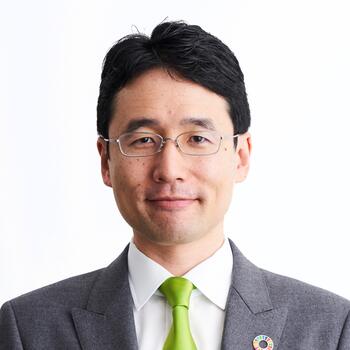
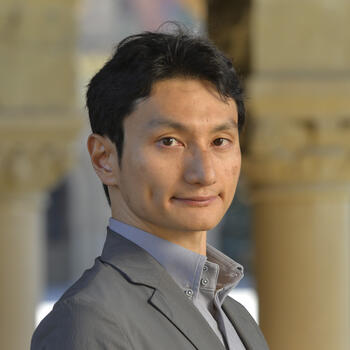
Headshot photo of Mitsuru Izumo
Mitsuru Izumo is a graduate of the University of Tokyo, having specialised in agricultural structural
management. In 2005, he established Euglena Co., Ltd. to harness the properties of microalgae
Euglena. Euglena Co., Ltd. became the world’s first biotechnology company that succeeded in the
outdoor mass cultivation of Euglena. Currently, Euglena Co., Ltd upholds “Sustainability First” as
their philosophy and has developed the manufacture and sale of foods and cosmetics as the
healthcare domain, the biofuel business, the bioinformatics business, and the social business in
Bangladesh by leveraging Euglena and other advanced technologies.


Image
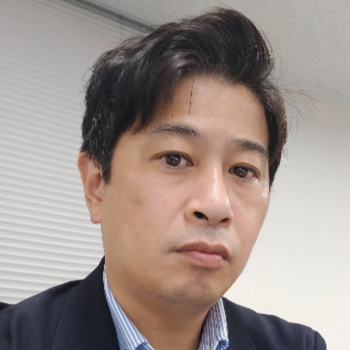
Headshot photo of Eiji Ohira
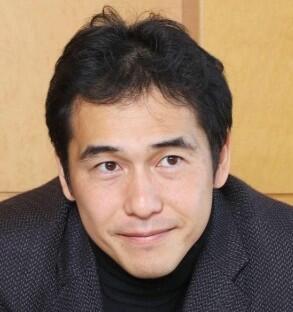
Eiji Ohira is the Director General of the New Energy and Industrial Technology Development Organization (NEDO)’s Fuel Cell and Hydrogen Technology Office In this capacity, he is responsible for the overall strategy, execution and coordination of NEDO’s research, development and demonstration project on fuel cell and hydrogen.

He has also coordinated fuel cell and hydrogen activities with international stakeholders, through International Energy Agency’s Technology Collaboration Program (IEA TCP: Advanced Fuel Cell & Hydrogen), and International Partnership for Hydrogen and Fuel Cells in the Economy (IPHE). 

He joined the NEDO in 1992, just after graduation from the Tokyo University of Science. He served as a visiting scholar at the Massachusetts Institute of Technology in 1997-1998.


Moderator

Image
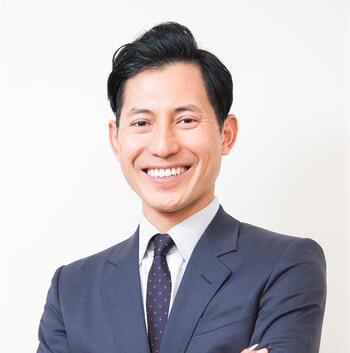
Headshot photo of Kate Hardin
Kate Hardin, Deloitte Executive Director for Energy and Industrials Research, has worked in the energy industry for 25 years.  She currently leads Deloitte research on the impact of the energy transition on the energy and industrial manufacturing sectors. Before that, Kate led integrated coverage of transportation decarbonization and the implications for the oil, gas, and power sectors.  Kate has also developed global energy research for institutional investors and has led analysis of Russian and European energy developments.  Kate recently served as an expert in residence at Yale’s Center for Business and Environment, and she is also a member of the Council on Foreign Relations.  


Image
Shorenstein APARC Winter 2022 Speaker Series Icon with text "New Frontiers: Technology, Politics, and Society in the Asia-Pacific"
This event is part of the 2022 Winter webinar series, New Frontiers: Technology, Politics, and Society in the Asia-Pacific, sponsored by the Walter H. Shorenstein Asia-Pacific Research Center.

Via Zoom Webinar
Register:  https://bit.ly/3LuNa94


Mitsuru Izumo <br>Founder and President, Euglena Co Ltd.<br><br>
Eiji Ohira <br>Director General of Fuel Cell and Hydrogen Technology Office, Japan New Energy and Industrial Technology Development Organization (NEDO) <br><br>
Kate Hardin <br>Executive Director, Deloitte Research Center for Energy & Industrials
Panel Discussions

This event will offer simultaneous translation between Japanese and English. 
当イベントは日本語と英語の同時通訳がついています。

This is a virtual event. Please click here to register and generate a link to the talk. 
The link will be unique to you; please save it and do not share with others.
当イベントはZoomウェビナーで行われます。ウェビナーに参加するためには、
こちらのリンクをクリックし、事前登録をして下さい。


Febuary 14, 4-5:30 p.m. California time/ February 15, 9-10:30 a.m. Japan time

This event is part of the 2022 Japan Program Winter webinar series, The Future of Social Tech: U.S.-Japan Partnership in Advancing Technology and Innovation with Social Impact


COVID-19 has changed the way we work. While remote work has become the norm, the pandemic has also highlighted the inequity in childcare, elderly care, and household work. Japanese workplaces feel a particularly acute need for adjustment, as lack of digitalization and persistent gender inequality continue to limit productivity gains and diversity in the workforce. Social entrepreneurs in Japan have started offering new technologies that address these problems and transform Japanese work environments, using matching algorithms, innovative apps, and other new technologies. How can these social technologies reshape the workplace? What principles do we need in using these technologies in practice, in order to unlock the keys to untapped human resource potentials and realize a more equitable and inclusive work environment in Japan, the United States, and elsewhere?  Fuhito Kojima, a renowned economist specializing in matching theory, will talk about market design from the perspective of regulation design and economics, and Eiko Nakazawa, an influential entrepreneur, will speak about her experiences founding education and childcare startups in the United States and Japan, moderated by Yasumasa Yamamoto, a leading expert on technology and business in Japan and the United States. 


Panelists

Image
Photo of Fuhito Kojima
Fuhito Kojima is a Professor of Economics at the University of Tokyo and Director of the University of Tokyo Market Design Center. He received a B.A. at University of Tokyo (2003) and PhD at Harvard (2008), both in economics and taught at Yale (2008-2009, as postdoc) and then Stanford (2009-2020, as professor) while spending one year at Columbia in his sabbatical year. His research involves game theory, with a particular focus on “market design,” a field where game-theoretic analysis is applied to study the design of various mechanisms and institutions. His recent works include matching mechanism designs with complex constraints, and he is working on improving medical residency match and daycare seat allocation in Japan based on his academic work. Outside of academia, he serves as an advisor for Keizai Doyu Kai as well as several private companies.


Image
Photo of Eiko Nakazawa
Eiko Nakazawa is the Founder and CEO of Dearest, Inc., a VC-Backed startup in the United States that makes high-quality learning, childcare, and parenting support accessible by helping employers subsidize those costs for their working families. She also advises and invests in early-stage startups, and has recently co-founded Ikura, Inc., an education x fintech company in Japan. Prior to founding Dearest, Nakazawa spent 11 years with Sony Corporation, where she led global marketing, turnaround, and new business launch initiatives. Nakazawa earned an M.S. in Management from Stanford Graduate School of Business.


Moderator

Image
Photo of Yasumasa Yamamoto
Yasumasa Yamamoto is a Visiting Professor at Kyoto University graduate school of management and has been a specialist in emerging technology such as fintech, blockchain, and deep learning. He was previously industry analyst at Google, senior specialist in quantitative analysis of secularized products, as well as derivatives at Bank of Tokyo Mitsubishi in New York. Yamamoto holds a M.S. from Harvard University and a masters degree from University of Tokyo.


Via Zoom Webinar
Register:  https://bit.ly/3odkWFT 


Fuhito Kojima <br>Professor of Economics at the University of Tokyo<br><br>
Eiko Nakazawa <br>Founder and CEO, Dearest Inc.<br><br>
Yasumasa Yamamoto <br>Visiting Professor at Kyoto University
Panel Discussions
-

This event will offer simultaneous translation between Japanese and English. 
当イベントは日本語と英語の同時通訳がついています。

This is a virtual event. Please click here to register and generate a link to the talk. 
The link will be unique to you; please save it and do not share with others.
当イベントはZoomウェビナーで行われます。ウェビナーに参加するためには、
こちらのリンクをクリックし、事前登録をして下さい。


February 7, 5-6:30 p.m. California time/ February 8, 10-11:30 a.m. Japan time

This event is part of the 2022 Japan Program Winter webinar series, The Future of Social Tech: U.S.-Japan Partnership in Advancing Technology and Innovation with Social Impact


Japan’s startup scene has become more exciting in recent years, but in the medical field, the failure to develop COVID-19 vaccines highlighted the shortcomings of Japan’s medical industry. What should Japan do to foster more impactful biotechnology entrepreneurship that would leverage vibrant medical research carried out at Japanese universities? The panel features two speakers who founded and grew their medical ventures in Japan's rapidly maturing startup ecosystem, both with deep connections to university research. 

Tadahisa Kagimoto founded his first company right after finishing his medical degree at Kyushu University, pioneering a pathway of commercializing biotechnology from Japanese university research. His second startup, Healios, founded in 2013 with the goal of becoming a pioneer in regenerative medicine utilizing iPS, was successfully listed on the Tokyo Stock Exchange in 2015 and has been growing since.

Shoko Takahashi was a PhD student in molecular bioscience at the University of Tokyo when she founded her company, Genequest, to offer home DNA testing. The firm was purchased by another biotech startup founded by a University of Tokyo graduate, Euglena, in 2017, and the company has partnered with a variety of pharmaceutical, food and beverage companies, and universities in its research. Their entrepreneurial journeys reveal Japan's changing startup ecosystem that has rapidly matured over the past decade and signal a need for further development in regulatory environments, human resource development, and university-industry collaboration in the biotechnology industry.


Panelists

Image
Photo portrait of Tadahisa Kagimoto
Hardy TS Kagimoto, MD is founder, Chairman and CEO of HEALIOS K.K., a Tokyo-based, clinical-stage world leader in regenerative medicine and cell therapy. 

After founding Healios in 2011, Dr. Kagimoto led the company’s listing on the Tokyo Stock Exchange in 2015 and has built the company to its current scale of more than 140 people across its Japan and US offices. Healios leverages the favorable Japanese regulatory framework for regenerative medicine to efficiently deliver results for patients and its stakeholders. It is currently running two pivotal clinical trials for ischemic stroke and acute respiratory distress syndrome using bone marrow-derived allogeneic multipotent adult progenitor cells. At the same time, Healios is developing best-in-class, next generation pipeline assets in immuno-oncology, ophthalmology, and organ buds utilizing its innovative, proprietary universal donor iPS cell platform.


Image
Photo of Shoko Takahashi
Shoko Takahashi founded the Japanese personal genome company Genequest Inc. in 2013 while a graduate student at the University of Tokyo. Genequest provides a web-based personal genetic service for consumers and collaborates with research institutions in a large-scale genome research project to maximize synergistic effects between research and personal genome services. She is filled with ambition to accelerate genetic research and contribute to human health all over the world. She graduated from the University of Tokyo with a Ph.D. in Molecular Bioscience in 2015, and Kyoto University with a Bachelor of Biochemistry Science in 2010. She has been awarded the Japan Venture Award and received the highest rating by the Japan Ministry of Economy. In 2015, she was commended by the Japan Minister of Education, Culture, Sports, Science and Technology as one of the researchers contributing major innovations to science technologies in Japan.

She received the 2018 Young Global Leaders award from the World Economic Forum and was selected for Newsweek's ‘100 respected Japanese in the world’ list.


Moderator

Image
Photo portrait of Kenji Kushida
Kenji E. Kushida is a Senior Fellow, Carnegie Endowment for International Peace. He previously was with the Japan Program at the Walter H. Shorenstein Asia-Pacific Research Center as a research scholar.

Kushida’s research and projects focused on the following streams : 1) how politics and regulations shape the development and diffusion of Information Technology such as AI; 2) institutional underpinnings of the Silicon Valley ecosystem, 2) Japan's transforming political economy, 3) Japan's startup ecosystem, 4) the role of foreign multinational firms in Japan, 4) Japan's Fukushima nuclear disaster. He spearheaded the Silicon Valley - New Japan project that brought together large Japanese firms and the Silicon Valley ecosystem.

He has published several books and numerous articles in each of these streams, including “The Politics of Commoditization in Global ICT Industries,” “Japan’s Startup Ecosystem,” "How Politics and Market Dynamics Trapped Innovations in Japan’s Domestic 'Galapagos' Telecommunications Sector," “Cloud Computing: From Scarcity to Abundance,” and others. His latest business book in Japanese is “The Algorithmic Revolution’s Disruption: a Silicon Valley Vantage on IoT, Fintech, Cloud, and AI” (Asahi Shimbun Shuppan 2016).


Via Zoom Webinar
Register:  https://bit.ly/3u1A10M


Tadahisa Kagimoto, MD. <br>Founder, Chairman, and CEO, Healios K.K.<br><br>
Shoko Takahashi <br>Founder and CEO, Genequest Inc.<br><br>
0
Former Research Scholar, Japan Program
kenji_kushida_2.jpg MA, PhD
Kenji E. Kushida was a research scholar with the Japan Program at the Walter H. Shorenstein Asia-Pacific Research Center from 2014 through January 2022. Prior to that at APARC, he was a Takahashi Research Associate in Japanese Studies (2011-14) and a Shorenstein Postdoctoral Fellow (2010-11).
 
Kushida’s research and projects are focused on the following streams: 1) how politics and regulations shape the development and diffusion of Information Technology such as AI; 2) institutional underpinnings of the Silicon Valley ecosystem, 2) Japan's transforming political economy, 3) Japan's startup ecosystem, 4) the role of foreign multinational firms in Japan, 4) Japan's Fukushima nuclear disaster. He spearheaded the Silicon Valley - New Japan project that brought together large Japanese firms and the Silicon Valley ecosystem.

He has published several books and numerous articles in each of these streams, including “The Politics of Commoditization in Global ICT Industries,” “Japan’s Startup Ecosystem,” "How Politics and Market Dynamics Trapped Innovations in Japan’s Domestic 'Galapagos' Telecommunications Sector," “Cloud Computing: From Scarcity to Abundance,” and others. His latest business book in Japanese is “The Algorithmic Revolution’s Disruption: a Silicon Valley Vantage on IoT, Fintech, Cloud, and AI” (Asahi Shimbun Shuppan 2016).

Kushida has appeared in media including The New York Times, Washington Post, Nihon Keizai Shimbun, Nikkei Business, Diamond Harvard Business Review, NHK, PBS NewsHour, and NPR. He is also a trustee of the Japan ICU Foundation, alumni of the Trilateral Commission David Rockefeller Fellows, and a member of the Mansfield Foundation Network for the Future. Kushida has written two general audience books in Japanese, entitled Biculturalism and the Japanese: Beyond English Linguistic Capabilities (Chuko Shinsho, 2006) and International Schools, an Introduction (Fusosha, 2008).

Kushida holds a PhD in political science from the University of California, Berkeley. He received his MA in East Asian Studies and BAs in economics and East Asian Studies with Honors, all from Stanford University.
Kenji Kushida <br>Senior Fellow, Carnegie Endowment for International Peace
Panel Discussions
Authors
News Type
News
Date
Paragraphs

Friction between machines and humans has existed since the beginning of the automated industry and machine-assisted work. It’s a trend that fuels the imaginations of pop culture and political debates alike as people voice worries about the roles increasingly sophisticated robots and technology are taking in society and workplaces.

But is this concern warranted? According to APARC’s Yong Suk Lee, the deputy director of the Korea Program and the SK Center Fellow at FSI, and Karen Eggleston, the deputy director of APARC and the director of the Asia Health Policy Program, perhaps not. A recent article published by the Stanford Institute for Human-Centered Artificial Intelligence (HAI) highlights Lee and Eggleston’s ongoing research into innovative uses of technology across industries, particularly in healthcare. Their findings indicate that the adoption of robotics ultimately does more to augment and adjust, rather than outrightly replace, the role of human labor in the workplace.

What will ultimately matter is whether there will be entirely new occupations, what economists call the ‘reinstatement effect.’ Simply saying that robots lead to permanent job reductions isn’t the end of the story.
Yong Suk Lee
Deputy Director of the Korea Program

[Subscribe to our newsletters to stay up-to-date with the latest from our researchers.]

Lee studies the impacts of AI and robotics across multiple industries, including manufacturing, retail banking, and nursing homes. A trend he sees across most sectors following the adoption of robotics or AI is a positive increase in productivity. This has impacts for both the short-term and long-term relationships between humans and their robot coworkers, or “co-bots.” While it is true that the introduction of automation and robots initially replaces a significant number of workers in sectors such as manufacturing, over time, that impact reverses and there are job gains in many cases.

“The impact of robots often evolves over time from replacing human workers to augmenting them,” Lee explains, “and productivity gains [can] create opportunities for existing and new occupations.” This happens in a variety of ways. In some cases, the use of robotics and automation in one area frees up time, labor, and resources to employ more people in other, higher-skilled areas. In another situation, increases in productivity brought on by automation allow for greater company growth than would not have been possible otherwise. This, in turn, spurs the need to expand the workforce.

Alternatively, supplementing the labor of a small workforce with robotics and AI can also spread limited resources much farther. Lee and Eggleston’s studies of the impacts of robots on nursing home care in Japan repeatedly show that the use of robots positively increases the quality of service that oftentimes-understaffed care facilities can provide to the elderly and infirm. This can range from monitoring the physical condition of patients and reliably delivering medications to providing mental and emotional support to elderly residents through the use of robotic humanoid companions. Such innovative use of tech fills critical gaps that a human-only workforce would struggle to meet in a staffing shortage like Japan faces.

Looking to the future, Lee shares this perspective: “When the automobile was invented, we suddenly had a new demand for drivers. Now we’ll have to see if [automation] creates demand for other new occupations.” It’s an area of innovation and research he, Dr. Eggleston, and other Stanford researchers will be closely watching with their human eyes in the years to come.

Read the original article by Stanford HAI here >>

Read More

A communications robot named Pepper by Softbank
Q&As

Robots May Be the Right Prescription for Struggling Nursing Homes

Karen Eggleston and Yong Suk Lee speak to the Oliver Wyman Forum on how robotics and advancing technologies are helping staff in Japanese nursing homes provide better and safer care to their patients.
Robots May Be the Right Prescription for Struggling Nursing Homes
Encina Courtyard
News

Call for Stanford Student Applications: APARC Hiring 2020-21 Research Assistants

To support Stanford students working in the area of contemporary Asia, the Shorenstein Asia-Pacific Center is offering research assistant positions for the fall, winter, and spring quarters of the 2020-21 academic year.
Call for Stanford Student Applications: APARC Hiring 2020-21 Research Assistants
Hero Image
A man with interacts with 'Emiew,' a humanoid robot.
A man with interacts with 'Emiew,' a humanoid robot made by Hitachi.
Koichi Kamoshida, Getty Images
All News button
1
Subtitle

Yong Suk Lee and Karen Eggleston’s ongoing research into the impact of robotics and AI in different industries indicates that integrating tech into labor markets adjusts, but doesn’t replace, the long-term roles of humans and robots.

Date Label
-

Japan faces a rapid population decrease and aging. Workers’ aging is negatively associated with labor productivity. For instance, a 10% increase in the fraction of workers aged 55 and above is associated with a 3% decrease in labor productivity. Kawaguchi will present his recent research that assesses the impact of population aging on labor productivity. He will also address whether the adoption of a new technology, such as purchases of industrial robot or information and communications technology (ICT) equipment, can mitigate the negative impact of worker’ aging on labor productivity and what impact, if any, it has on Japan moving forward in addressing its aging population, adoption of new technology, and increasing labor shortage.

SPEAKER

Image
Portrait of Daiji Kawaguchi

Daiji Kawaguchi is Professor of Economics at the University of Tokyo. Dr. Kawaguchi graduated from Waseda University (B.A., 1994), Hitotsubashi University, (M.A., 1996) and Michigan State University (Ph.D., 2002). In addition to his position at U of Tokyo, Kawaguchi is a Research Associate of Tokyo Center for Economic Research. Before joining University of Tokyo faculty in 2016, Kawaguchi was Assistant Professor of Economics at Osaka University (2002-03) and University of Tsukuba (2003-05), and Associate and full Professor at Hitotsubashi University (2005-2016).

Daiji Kawaguchi, Professor of Economics, University of Tokyo
Seminars
-

The demographics of Japan’s aging society has galvanized a wide range of corporate efforts, supported both directly and indirectly by the government, to aggressively develop artificial intelligence-driven technologies and IT systems to perform work for which labor shortages are accelerating. We are beginning to see concrete corporate offerings to address shortages of specific types of skilled and unskilled labor, as well as numerous efforts underway to develop systems to cope with sparsely populated, elderly geographic regions and the logistics surrounding eldercare more generally.

In this talk, based on a forthcoming book chapter, Kushida examines specific corporate cases and government strategies suggesting how Japan’s population aging and shrinking has led to three primary interrelated drivers of significance to shaping technological trajectories: 1) Demographics as market opportunity of an entirely unprecedented scale to serve the needs of a rapidly aging society; 2) demographic change creating an acute labor shortage; and 3) favorable political and regulatory dynamics for pursuing the development and diffusion of new technological trajectories to solve social and economic challenges caused by demographic change. A critical implication is that if technologies developed or deployed within Japan to solve domestic demographic problems are applicable elsewhere, then Japan’s demographic challenge can be an opportunity to cultivate competitive products and services in global markets.

SPEAKER

Image
kushida profile 9 2015 cropped 2

Kenji E. Kushida is a Japan Program Research Scholar at the Walter H. Shorenstein Asia-Pacific Research Center and an affiliated researcher at the Berkeley Roundtable on the International Economy. Kushida’s research interests are in the fields of comparative politics, political economy, and information technology. He has four streams of academic research and publication: political economy issues surrounding information technology such as Cloud Computing; institutional and governance structures of Japan’s Fukushima nuclear disaster; political strategies of foreign multinational corporations in Japan; and Japan’s political economic transformation since the 1990s. Kushida has written two general audience books in Japanese, entitled Biculturalism and the Japanese: Beyond English Linguistic Capabilities (Chuko Shinsho, 2006) and International Schools, an Introduction (Fusosha, 2008). Kushida holds a PhD in political science from the University of California, Berkeley. He received his MA in East Asian studies and BAs in economics and East Asian studies, all from Stanford University.

PARKING

Please note there is significant construction taking place on campus, which is greatly affecting parking availability and traffic patterns at the university. Please plan accordingly. Nearest parking garage is Structure 7, below the Graduate School of Business Knight School of Management.

0
Former Research Scholar, Japan Program
kenji_kushida_2.jpg MA, PhD
Kenji E. Kushida was a research scholar with the Japan Program at the Walter H. Shorenstein Asia-Pacific Research Center from 2014 through January 2022. Prior to that at APARC, he was a Takahashi Research Associate in Japanese Studies (2011-14) and a Shorenstein Postdoctoral Fellow (2010-11).
 
Kushida’s research and projects are focused on the following streams: 1) how politics and regulations shape the development and diffusion of Information Technology such as AI; 2) institutional underpinnings of the Silicon Valley ecosystem, 2) Japan's transforming political economy, 3) Japan's startup ecosystem, 4) the role of foreign multinational firms in Japan, 4) Japan's Fukushima nuclear disaster. He spearheaded the Silicon Valley - New Japan project that brought together large Japanese firms and the Silicon Valley ecosystem.

He has published several books and numerous articles in each of these streams, including “The Politics of Commoditization in Global ICT Industries,” “Japan’s Startup Ecosystem,” "How Politics and Market Dynamics Trapped Innovations in Japan’s Domestic 'Galapagos' Telecommunications Sector," “Cloud Computing: From Scarcity to Abundance,” and others. His latest business book in Japanese is “The Algorithmic Revolution’s Disruption: a Silicon Valley Vantage on IoT, Fintech, Cloud, and AI” (Asahi Shimbun Shuppan 2016).

Kushida has appeared in media including The New York Times, Washington Post, Nihon Keizai Shimbun, Nikkei Business, Diamond Harvard Business Review, NHK, PBS NewsHour, and NPR. He is also a trustee of the Japan ICU Foundation, alumni of the Trilateral Commission David Rockefeller Fellows, and a member of the Mansfield Foundation Network for the Future. Kushida has written two general audience books in Japanese, entitled Biculturalism and the Japanese: Beyond English Linguistic Capabilities (Chuko Shinsho, 2006) and International Schools, an Introduction (Fusosha, 2008).

Kushida holds a PhD in political science from the University of California, Berkeley. He received his MA in East Asian Studies and BAs in economics and East Asian Studies with Honors, all from Stanford University.
Research Scholar, Shorenstein APARC Japan Program
Seminars
-

This event is part of the Stanford Silicon Valley-New Japan Project Public Forum Series.


Consumption is a major driver of national economies, and scholars often study important differences across consumption patterns across countries, which influence many aspects of their societies and economies. Yet, the underlying business of logistics operations, and how they support countries’ respective retail industries, has as much, if not more impact than simply examining consumer behavior. In this public forum, Ryuichi Kakui, with deep expertise in eCommerce logistics, will explain how logistics are used in retail industries, comparing across the world’s three largest economies: the US, China, and Japan. He will introduce the concept of strategic logistics thinking and the “4C” framework and informs leading strategic logistics thinking. A conversation with Kenji Kushida, who examines how technologies and specific industry dynamics shape varying models of political economies around the world, will then link the area of logistics and retail to important systemic differences and underlying similarities across the world’s leading economies, which are pursuing contrasting models of social, economic, and political organization.


SPEAKERS

Image
kakui headshot

Ryoichi Kakui is the founder of E-Logit, the leading eCommerce logistics company in Japan. He has published 29 books related to logistics, Amazon, and “omnichannel” distribution, which have been published in Japan, the US, China, Taiwan, South Korea, and Vietnam. He is a frequent commentator on television, radio, newspapers, magazines, and other media. Educated in Sophia University in Japan with an MBA from Golden Gate University, he founded UKETORU in 2015, a app addressing the issue of re-delivery, which escalated to a social issue in Japan.

Image
kushida profile 9 2015 cropped

Kenji Kushida is a research scholar at the Japan Program at the Walter H. Shorenstein Asia-Pacific Research Center at Stanford University. One of this research themes examines how IT technologies shape political economies around the world, and how varying national political economic models shape the development trajectories of technologies. He leads the Silicon Valley – New Japan Project, a sustained platform for research and collaboration between Silicon Valley and the new and emerging aspects as Japan transforms itself.


PARKING

Please note there is significant construction taking place on campus, which is greatly affecting parking availability and traffic patterns at the university. Please plan accordingly. Open parking at Stanford University available starting 4:00pm unless otherwise marked. Nearest parking garage is Structure 7, below the Graduate School of Business Knight School of Management.

Seminars
Paragraphs

In recent years, "innovation" has become increasingly important for Japan. Developing innovative businesses that are separate from the traditional Japanese business sphere is becoming increasingly crucial for sustained economic growth. In this report, Asakura focuses on some emerging companies that have the potential to drive innovation, and provide some reflections on the Japanese entrepreneurial environment.

All Publications button
1
Publication Type
Working Papers
Publication Date
Paragraphs

Chapter 4 of this book "Services with Everything: The ICT-Enabled Digital Transformation of Services" was written by John Zysman, Stuart Feldman, Kenji E. Kushida, Jonathan Murray, and Niels Christian Nielsen. The book is edited by Dan Breznitz and John Zysman.


All Publications button
1
Publication Type
Books
Publication Date
Authors
Subscribe to Science and Technology