
Visions of Taiwan’s Future: Navigating Paths Through Democracy, Technology, and Culture
Visions of Taiwan’s Future: Navigating Paths Through Democracy, Technology, and Culture
Thursday, April 30, 20269:30 AM - 4:30 PM (Pacific)
Jen-Hsun Huang Engineering Center
475 Via Ortega
Stanford, CA 94305

Taiwan stands at the crossroads of some of the most pressing transformations of the twenty-first century. As democratic societies confront polarization and disinformation, as technological innovation and AI reshape global production and geopolitical competition, and as cultural industries become increasingly central to international visibility and influence, Taiwan offers a uniquely rich vantage point for thinking about how societies navigate uncertainty and change. Far from being shaped only by external pressures, Taiwan is also actively contributing to global conversations through its democratic experience, its pivotal role in high-tech and semiconductor industries, and its growing cultural presence in film, media, and storytelling.
This conference brings together scholars, practitioners, and cultural leaders to examine Taiwan’s evolving place in the world through three interconnected lenses: democratic resilience, technological transformation, and cultural production. Taken together, the panels ask a shared set of questions: What does democratic resilience look like under conditions of polarization, disinformation, and external pressure? How can Taiwan maintain its technological edge while navigating the opportunities and risks posed by AI, tariffs, and global economic restructuring? And in what ways are cultural production and global storytelling shaping how Taiwan is understood, represented, and remembered beyond its borders? By bringing these questions into conversation, the conference highlights how politics, industry, and culture are mutually constitutive domains through which Taiwan is responding to contemporary challenges and imagining its future.
Browse the conference agenda, speaker biographies, parking information, and media advisory using the tabs below. On mobile, toggle the dropdown menu to access these sections.
9:30-9:45 a.m.
Welcome Remarks
Kiyoteru Tsutsui
Director, Shorenstein APARC, Stanford University
Gi-Wook Shin
Director, Taiwan and Korea Programs, Shorenstein APARC, Stanford University
9:45-11:15 a.m.
Panel 1: Democratic Resilience in a Changing World
Taiwan is often hailed as a model of democracy in the Asia-Pacific, grounded in civic participation, open institutions, and vibrant civil society. Yet, like many democratic societies, such as Korea and Japan, it now faces challenges from political polarization, disinformation, and external pressures. This panel highlights how Taiwan is fostering institutional reform and social resilience at this critical time. Speakers will share research on combating misinformation, strengthening civic trust, and building adaptable democratic systems, offering insights for democracies worldwide.
Kai-Ping Huang
Associate Professor of Political Science, National Taiwan University
Kai-Shen Huang
Research Fellow, Institute for Democracy, Society, and Emerging Technology
Kharis Templeman
Research Fellow, Hoover Institution, Stanford University
Panel Moderator:
Larry Diamond
Mosbacher Senior Fellow in Global Democracy, Freeman Spogli Institute for International Studies
William L. Clayton Senior Fellow at the Hoover Institution
Stanford University
11:15-11:30 a.m.
Keynote
W. Brent Christensen
Director, American Institute in Taiwan, 2018-2021
11:30 a.m.-12:30 p.m.
Lunch Break
12:30-2:00 p.m.
Panel 2: Technological Challenges and the AI-Tariff Nexus
As a world leader in semiconductors and digital infrastructure, Taiwan plays a critical role in the rapidly evolving landscape of AI and international trade. At the intersection of Silicon Valley and Taiwan, the future of global tech is taking shape. This panel explores how Taiwan can sustain and expand its competitive edge amid rising automation, shifting AI regulations, and global supply chain realignment. Drawing connections to Silicon Valley’s innovation ecosystem, we will examine strategies for industrial upgrading, cross-border collaboration, and the future of work. The panelists will highlight policy frameworks that foster innovation and global leadership.
Jonathan Liao
Managing Director, Taiwan Employment Gold Card Office
Dominic Rizzo
CEO and Founder, ZeroRISC Inc.
Tony Wang
Managing Partner, 500 Global
Panel Moderator:
Steve Chen
Co-founder, YouTube, and Taiwan Gold Card Holder #1
2:00-2:40 p.m.
Boba Bliss Tasting/Presentation
Boba tea (珍珠奶茶) is one of Taiwan’s most iconic cultural exports. Since emerging in Taichung in the 1980s, it has grown into a global phenomenon that shapes beverage trends and youth culture across borders. This special event invites a representative from a boba chain in the United States to share how boba is adapted, marketed, and reimagined in different cultural settings. Through conversation and tea tasting, the event invites audiences not only to learn about how the “taste of Taiwan” travels, but also to sip, compare, and experience how it evolves across cultural contexts.
Nikki Pham
Co-Founder, Boba Bliss
2:40-3 pm
Afternoon Break
3-4:30 p.m.
Panel 3: From Taiwan to Hollywood: Voices in the Global Cultural Industry
Taiwan’s creative industries are gaining new ground on the world stage, from film and streaming platforms to literature and design. This panel explores how Taiwanese artists, producers, and storytellers craft narratives that blend tradition with modernity and reach global audiences. How are these cultural forms shaping perceptions of Taiwan? What role does cultural diplomacy play in fostering mutual understanding? By showcasing voices from the creative sector, the discussion highlights Taiwan’s growing influence in global storytelling and soft power diplomacy.
Brian Hu
Associate Professor; Area Head, Television, Film, and New Media
School of Theatre, Television, and Film, San Diego State University
Shih-Ching Tsou
Director, Left Handed Girl
Jane Wu
Director, Executive Producer
Panel Moderator:
Ruo-Fan Liu
Taiwan Program Postdoctoral Fellow 2024-26, Shorenstein APARC, Stanford University
4:30 p.m.
Closing Remarks
Karen Eggleston
Director, Asia Health Policy Program, Shorenstein APARC, Stanford University

Steve Chen is an Internet entrepreneur who co-founded YouTube. Born in Taiwan, Steve moved to the US when he was 8 years old. Steve grew up in Chicago and moved to Silicon Valley in 1999 to join PayPal. At PayPal, Steve met Chad Hurley, the co-founder of YouTube. In 2005, Steve left PayPal to create YouTube. YouTube quickly became one of the web's fastest-growing sites and was sold to Google for $1.65 billion. Steve was the first recipient of the Gold Card, a program launched in 2018 by Taiwan to attract foreign talent to move to the country. In 2019, after 20 years spent in Silicon Valley, Steve moved his family to Taiwan using the Gold Card. In Taiwan, Steve has collaborated with the government to foster a better ecosystem for local entrepreneurs to create startups.
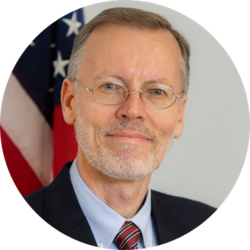
W. Brent Christensen is an adjunct professor in Brigham Young University’s Political Science Department. During 35 years in the U.S. Foreign Service, he was Director of the American Institute in Taiwan (AIT), Deputy Director of AIT, and Director of the State Department’s Office of Taiwan Coordination. He also served as U.S. representative to the International Civil Aviation Organization (ICAO). He has served three assignments at the U.S. Embassy in Beijing, as well as assignments at the Asia-Pacific Center for Security Studies and the U.S. missions in Hong Kong and South Africa. He received an M.A. in East Asian Studies from the George Washington University, a B.A. in Chinese from Brigham Young University, and a DMD from the Oregon Health and Science University. He has received a Presidential Meritorious Service Award, the State Department’s Charles E. Cobb Award, and honorary doctorates from Sun Yat-sen University and Kaohsiung Medical University.

Larry Diamond is the William L. Clayton Senior Fellow at the Hoover Institution, the Mosbacher Senior Fellow in Global Democracy at the Freeman Spogli Institute for International Studies (FSI), and a Bass University Fellow in Undergraduate Education at Stanford University. He is also a professor by courtesy of Political Science and Sociology at Stanford, where he lectures and teaches courses on democracy. At the Hoover Institution, he co-leads the Project on Taiwan in the Indo-Pacific Region and participates in the Project on the U.S., China, and the World. At FSI, he is a core faculty member of the Center on Democracy, Development and the Rule of Law, which he directed for six and a half years. He leads FSI’s Israel Studies Program and is a member of the Program on Arab Reform and Development. He also co-leads the Global Digital Policy Incubator, based at FSI’s Cyber Policy Center. He served for 32 years as founding co-editor of the Journal of Democracy.

Brian Hu is Associate Professor and Head of Television, Film, and New Media at San Diego State University. He is the author of the book Worldly Desires: Cosmopolitanism and Cinema in Hong Kong and Taiwan, and has published on Asian American media and Chinese-language cinemas in Screen, Film Quarterly, and other journals and anthologies. He is also the Artistic Director of Pacific Arts Movement, the presenter of the San Diego Asian Film Festival, which includes the largest annual showcase of Taiwan cinema in North America. He has also curated programs for the Criterion Channel and the UCLA Film and Television Archive, and is a programmer for the Palm Springs International Film Festival.

Kai-Ping Huang is an Associate Professor of Political Science at National Taiwan University. Her research interests include party systems, formal institutions, and democratization, with a focus on East and Southeast Asia. Her work has appeared in the Journal of Democracy, Democratization, Social Indicators Research, and several edited volumes.
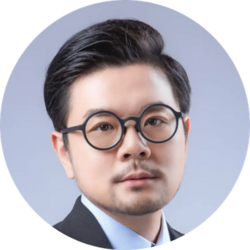
Kai-Shen Huang is the Director of the Democratic Governance Program at Taiwan’s Research Institute for Democracy, Society and Emerging Technology (DSET). He holds a D.Phil. in Anthropology from the University of Oxford and is trained in both law and social science. His research areas include the geopolitics of AI, digital governance, and Foreign Information Manipulation and Interference (FIMI). His work focuses on how emerging technologies impact democratic practices and institutions, particularly regarding China’s digital influence and AI diffusion strategies.
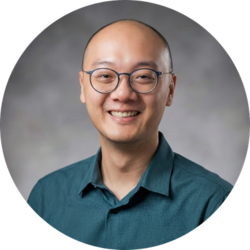
Jonathan Liao is the Managing Director of the International Talent Taiwan Office, a national-level service center initiated by the National Development Council of Taiwan to attract and retain global professionals. Under his leadership since 2020, the office has expanded with branches in Taipei, Taichung, and Kaohsiung, providing vital resources to professionals relocating to Taiwan. In addition to managing the Taiwan Employment Gold Card – a qualification-based visa program providing three years of residency and open work permits – the office demystifies immigration pathways, provides support on banking, schooling, and housing, and serves as a key bridge between government, academia, and enterprise to integrate overseas talent into Taiwan’s local ecosystem.
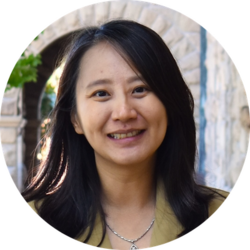
Ruo-Fan Liu is the inaugural Taiwan Program Postdoctoral Fellow at the Walter H. Shorenstein Asia-Pacific Research Center (APARC). She earned her Ph.D. in sociology from the University of Wisconsin-Madison. Her research explores how Taiwan's holistic admission reforms created uncertainties for students and how parents and teachers leveraged cultural and social capital to restore admissions advantages.

Nikki Pham is the Co-Founder of Boba Bliss, a family-run passion project she built from the ground up alongside her sister, Gigi, and her brother, Tony. Together, they set out to redefine the boba experience by treating it with love and passion. We value quality and authenticity, Nikki and her siblings made a bold move at the time when they started Boba Bliss with no powders, no artificial syrups, and no shortcuts, only stick with the natural ingredients and premium tea products.

Dominic Rizzo is the founder and CEO of ZeroRISC, which commercializes open-source silicon security and supply chain integrity management. He also chairs GlobalPlatform's Trusted Open Source Silicon Task Force, working to align open silicon with industry security standards. Previously, Dominic founded the OpenTitan project at Google in 2018 — the industry's first open-source silicon root of trust — and led it through its first successful silicon tapeout, demonstrating that transparent, production-grade chip security can be delivered outside proprietary black-box models. His technical work spans hardware root of trust architecture, embedded post-quantum cryptography, side-channel evaluation methodology, and open-source governance for silicon ecosystems. Dominic’s work centers on strengthening security “below the operating system” by making trusted foundations more transparent, verifiable, and broadly reusable. At zeroRISC, he focuses on pairing open silicon foundations with cloud-backed services that support trustworthy device management from design through deployment.

Kharis Templeman is a research fellow at the Hoover Institution and part of the Project on Taiwan in the Indo-Pacific. Templeman is a political scientist (Ph.D. 2012, Michigan) with research interests in Taiwan politics, democratization, elections and election management, party system development, dominant party systems, and politics and security issues in Pacific Asia, among other topics.

Shih-Ching Tsou is a Taiwanese-American writer, director, and producer based in New York, known for emotionally precise, culturally grounded storytelling that bridges intimate human experience with social observation. She co-directed the Independent Spirit Award–nominated Take Out with Sean Baker, and went on to collaborate closely with Baker as a producer on internationally acclaimed films including Starlet, Tangerine, The Florida Project, and Red Rocket, which premiered at major festivals such as SXSW, Sundance, and Cannes.
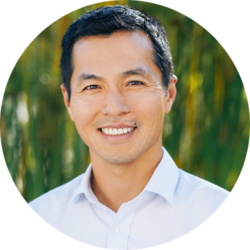
Tony Wang is the Managing Partner at 500 Global and has spent his career helping early-stage companies scale to become global businesses and beyond. Before Google became the massive global tech company it is today, Tony was Managing Counsel and a member of the executive management team charged with overseeing the Asia Pacific and Latin American regions. Tony then gained experience on the other side of the world when he became VP of Europe for Twitter. Just before joining 500, Tony was the Chief Operating Officer at Color, the leader in digital health applying software and machine learning to deliver precision health to large populations.

Jane Wu is an Emmy & Annie Award-winning and Peabody-nominated producer and director. Born in Taiwan and raised in Los Angeles, Jane found an early outlet in comic books, where she discovered a passion for storytelling and art. Her skills led her to the Otis Art Institute of Parsons School of Design, but upon graduating with a degree in Fashion, she was presented with an opportunity to work in animation. Starting as a character designer, she eventually directed and produced such animated series as Men in Black and Jackie Chan Adventures. Today, Janeʻs unique background has made her an in-demand collaborator, and she has built a formidable career in film and television that spans multiple genres. Inspired by her martial arts background, she has boarded action sequences for features such as Mulan, Into the Spiderverse, and multiple Marvel movies, including The Avengers and Shang Chi. Her series credits include Blue Eye Samurai, Game of Thrones, The Walking Dead, Interview with a Vampire, and House of the Dragon.
Click here for instructions on purchasing visitor parking. The closest visitor parking to the Huang Engineering Center can be found at the following:
- Via Ortega Garage (ParkMobile Parking Zone 7202)
- Roble Field Garage (ParkMobile Parking Zone 7210)
- Arillaga Outdoor Education & Recreation Center Lot (ParkMobile Parking Zone 7232)
Journalists interested in covering the conference should contact Shorenstein APARC’s Communications team at aparc-communications@stanford.edu to register. At the venue, they will be required to present a press credential from an established news organization. Freelance reporters should email a letter from the news organization for which they work. The press area is limited, and press seating is not guaranteed.