Society

FSI researchers work to understand continuity and change in societies as they confront their problems and opportunities. This includes the implications of migration and human trafficking. What happens to a society when young girls exit the sex trade? How do groups moving between locations impact societies, economies, self-identity and citizenship? What are the ethnic challenges faced by an increasingly diverse European Union? From a policy perspective, scholars also work to investigate the consequences of security-related measures for society and its values.

The Europe Center reflects much of FSI’s agenda of investigating societies, serving as a forum for experts to research the cultures, religions and people of Europe. The Center sponsors several seminars and lectures, as well as visiting scholars.

Societal research also addresses issues of demography and aging, such as the social and economic challenges of providing health care for an aging population. How do older adults make decisions, and what societal tools need to be in place to ensure the resulting decisions are well-informed? FSI regularly brings in international scholars to look at these issues. They discuss how adults care for their older parents in rural China as well as the economic aspects of aging populations in China and India.

Authors
News Type
News
Date
Paragraphs

Southeast Asia, home to over 640 million people across 10 countries, is one of the world’s most dynamic and fastest growing regions. APARC just concluded the year 2019 with a Center delegation visit to two Southeast Asian capital cities, Hanoi and Bangkok, where we spent an engaging week with stakeholders in the academic, policy, business, and Stanford alumni communities.

Led by APARC Director Gi-Wook Shin, the delegation included APARC Deputy Director and Asia Health Policy Program Director Karen Eggleston, Southeast Asia Program Director Donald Emmerson, and APARC Associate Director for Communications and External Relations Noa Ronkin. Visiting Scholar Andrew Kim joined the delegation in Bangkok.

With a focus on health policy, our first day in Hanoi included a visit to Thai Nguyen University, a meeting with government representatives at the Vietnam Ministry of Health, and a seminar on healthy aging and innovation jointly with Hanoi Medical University.
Image
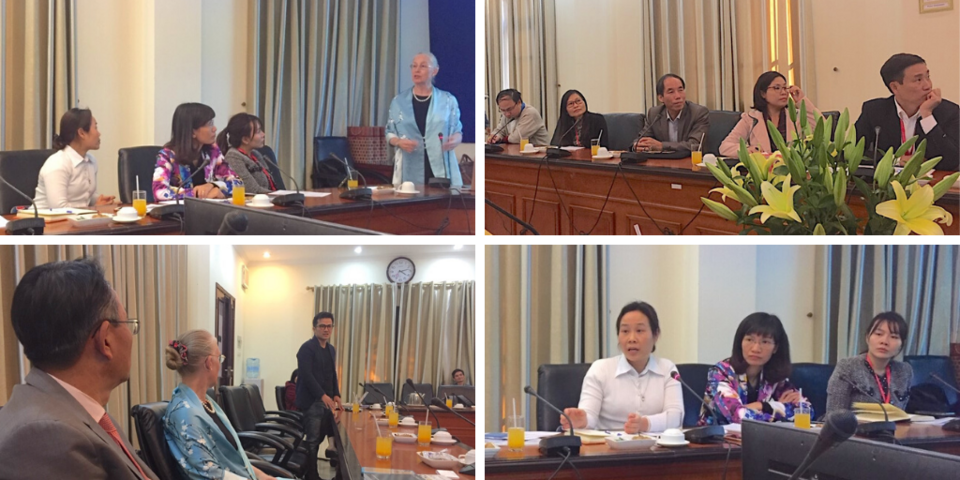
Collage of four images showing participants at a roundtable held at Hanoi Medical University with APARC delegation members

Karen Eggleston and participants at the roundtable held at Hanoi Medical University, December 9, 2019.

Throughout the day, Eggleston presented some of her collaborative research that is part of two projects involving international research teams: one that assesses public-private roles and institutional innovation for healthy aging and another that examines the economics of caring for patients with chronic diseases across diverse health systems in Asia and other parts of the world. We appreciated learning from our counterparts about the health care system and health care delivery in Vietnam.

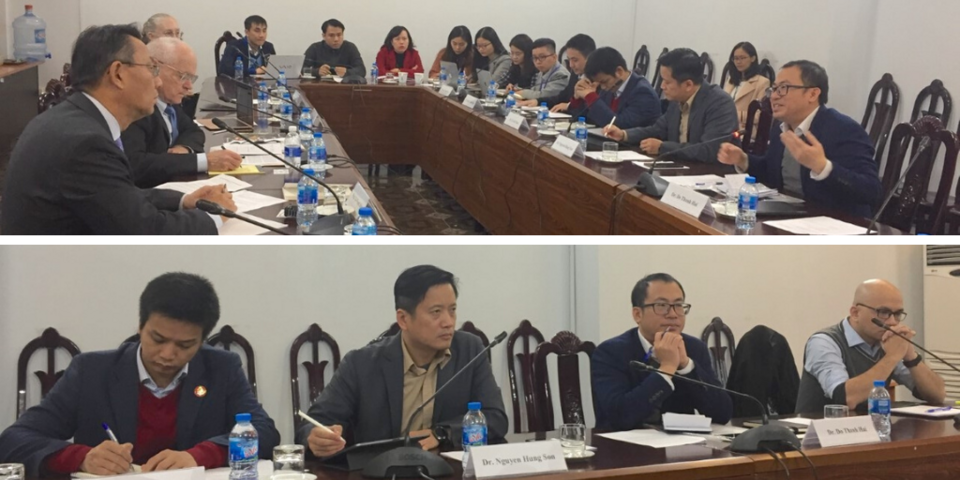
Shifting focus to international relations and regional security, day 2 in Hanoi opened with a roundtable, “The Rise of the Indo-Pacific and Vietnam-U.S. Relations,” held jointly with the East Sea Institute (ESI) of the Diplomatic Academy of Vietnam (DAV). Following a welcome by ESI Director General Nguyen Hung Son, the program continued with remarks by Shin, Emmerson, ESI Deputy Director General To Anh Tuan, and Assistant Director General Do Thanh Hai.
Image
Participants at a roundtable held at the Diplomatic Academy of Vietnam with APARC delegation members

Roundtable at the Diplomatic Academy of Vietnam, December 10, 2019.

The long-ranging conversation with DAV members included issues such as the future of the international order in Asia; the U.S. withdrawal from multilateralism; the concern about a lack of U.S. engagement in Southeast Asia, sparked by President Trump’s absence from the November 2019 summit of the Association of Southeast Asian Nations (ASEAN) at a time when China is bolstering its influence in the region and when ASEAN hopes to set a code of conduct with China regarding disputed waters in the South China Sea; the priorities for Vietnam as it assumes the role of ASEAN chair in 2020; and the challenges for the Vietnam-U.S. bilateral relationship amid the changing strategic environment in Southeast Asia.

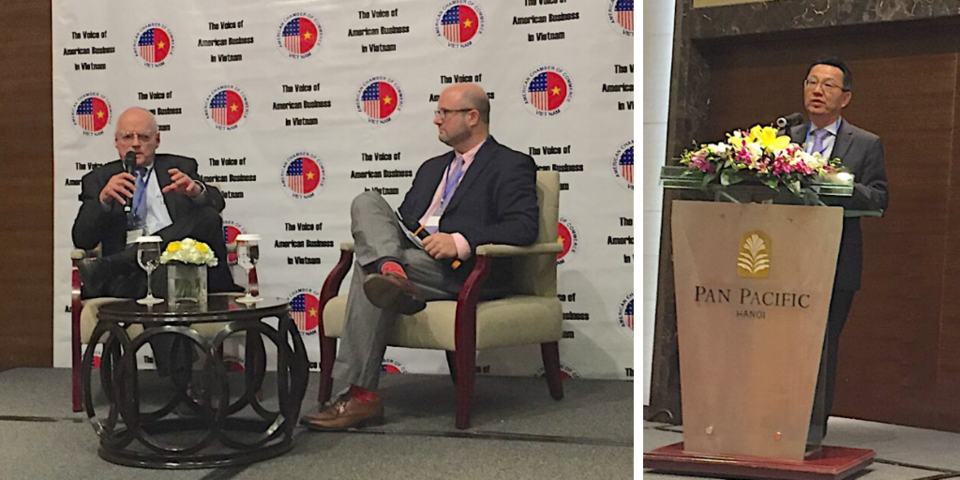
In the afternoon we were joined by members of the American Chamber of Commerce in Hanoi at an AmCham-hosted Lunch ‘n’ Learn session on Vietnam's challenges and opportunities amid the U.S.-China rivalry. The event featured Emmerson in conversation with AmCham Hanoi Executive Director Adam Sitkoff.
Image
Two men in conversation seated on stage and a man speaking at a podium

(Left) Donald Emmerson in conversation with Adam Sitkoff; (right) Gi-Wook Shin welcomes AmCham Hanoi members; December 10, 2019. 

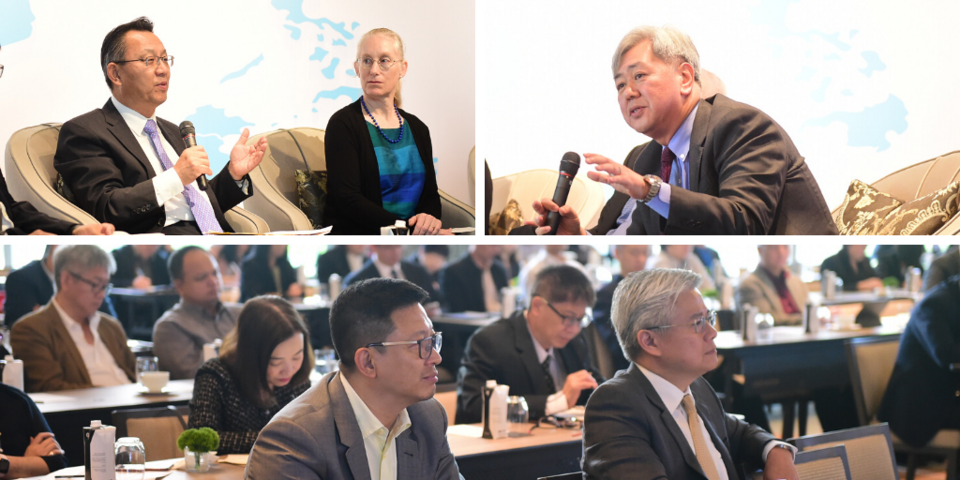
Moving to Bangkok, delegation members Shin, Eggleston, Emmerson, and Kim spoke on a panel for executives of the Charoen Pokphand Group (C.P. Group), one of Thailand’s largest private conglomerates, addressing some of the core issues that lie ahead for Southeast Asia in 2020 and beyond in the areas of geopolitics, innovation, and health.
Image
Participants at a panel discussion with APARC delegation hosted by the C.P. Group, Thailand

Top, from left to right: Gi-Wook Shin, Karen Eggleston, Andrew Kim; bottom: C.P. Group executive listening to the panel, December 12, 2019.

We also enjoyed a tour at True Digital Park, Thailand’s first startup and tech entrepreneur’s campus. Developed by the C.P. Group, True Digital Park aspires to be an open startup ecosystem that powers Thailand to become a global hub for digital innovation.

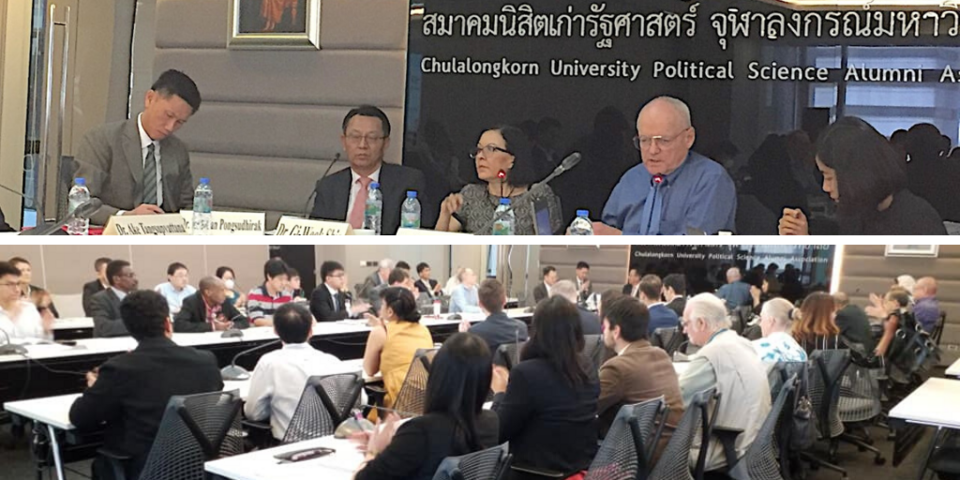
The following day, Shin and Emmerson participated in a public forum hosted by Chulalongkorn University’s Institute of Security and International Studies (ISIS Thailand), "Where Northeast Asia Meets Southeast Asia: The Great Powers, Global Disorder and Asia’s Future.” They were joined by ISIS Thailand Director Thitinan Pongsudhirak and Chulalongkorn University Faculty of Political Science Associate Dean for International Affairs and Graduate Studies Kasira Cheeppensook. The panel was moderated by Ms. Gwen Robinson, ISIS Thailand senior fellow and editor-at-large of the Nikkei Asian Review.
Image
Panelists and participants at a public forum held at Chulalongkorn University

ISIS Thailand forum participants and panelists, from left: Pngsukdhirak, Shin, Robinson, Emmerson, Cheeppensook; December 13, 2019.

As part of that discussion, Emmerson speculated that – driven by deepening Chinese economic and migrational involvement in Southeast Asia’s northern tier – Cambodia and Laos, less conceivably Myanmar, and still less conceivably Thailand could become incorporated de facto into an economically integrated “greater China” that could eventually reduce ASEAN to a more-or-less maritime membership in the region’s southern tier. Emmerson’s speculation was made in the context of his critique of ASEAN’s emphasis on its own “centrality” to the neglect of its lack of the proactivity that would serve as evidence of centrality and of a desire not to be rendered peripheral by the growing centrality-cum-proactivity of China. The event was covered by the Bangkok Post (although that report’s headline and quote of Emmerson are inaccurate, as neither the panel nor Emmerson predicted the “break-up of ASEAN.”)

Our delegation visit in Bangkok concluded with a buffet dinner reception and panel discussion jointly with the Stanford Club of Thailand.

Image
alumni event

Stanford and IvyPlus alumni listening to the panel, December 13, 2019.

Moderated by Mr. Suthichai Yoon, a veteran journalist and founder of digital media outlet Kafedam Group, the conversation focused on the changing geopolitics of Southeast Asia, innovation and health in the region, and the opportunities and challenges facing Thailand-U.S. relations. It was a pleasure to meet many new and old friends from the Stanford and IvyPlus alumni communities.

APARC would like to thank our partners and hosts in Hanoi and Bangkok for their hospitality, collaboration, and the stimulating discussions throughout our visit. We look forward to keeping in touch!

Hero Image
APARC delegation speaking to Stanford and IvyPlus alumni, Bangkok
All News button
1
-

This seminar will present empirical evidence about policies to promote healthy lifestyles in China from a professor and a policymaker from the PRC.

As a result of economic growth, urbanization, lifestyle change, and population aging, Noncommunicable Diseases (NCDs) have become China’s leading cause of death, accounting for 86.6% of annual deaths. Almost two-thirds of NCDs can be prevented by reducing unhealthy lifestyle choices such as tobacco use, physical inactivity, harmful use of alcohol, and unhealthy diets. In particular, dietary risk factors and insufficient physical activity increasingly contribute to the surging burden of obesity in China and globally.

In 2016, President Xi Jinping announced the “Healthy China 2030” Blueprint. Three years later, a corresponding action plan was released and encompassed 15 goals, including reducing obesity, increasing overall physical activity, and preventing NCDs. The presenters will discuss results of research on the determinants of healthy diet, physical activity, obesity, and noncommunicable diseases, and provide evidence for implementation of Healthy China 2030. Their research includes aspects on (1) unhealthy food and beverage marketing to children; (2) the link between green space, physical activity, and health outcomes; (3) a strategy to involve government and non-health sectors in the prevention and control of NCDs in China; and (4) preventive vaccinations and primary care management for individuals living with NCDs like diabetes.

Image
bai di
Juan Zhang is Associate Professor at School of Public Health, Peking Union Medical College (PUMC) & China Academy of Medical Science (CAMS). She conducts research on risk factors of noncommunicable disease (NCD), such as obesity, hypertension, diabetes, nutrition, physical activity, using policy, socio-ecological, and behavioral approaches. She currently is principal investigators to (1) assessing mass media (mainly television) food advertisement, (2) investigate underlying family environment, school policy and environment of preschool children overweight and obesity, (3) evaluate the implementation and impact of government-led programs to prevent and control NCD. Prior to joining PUMC, Dr. Zhang has had diverse working experience over 10 years across national government agency, WHO, academic institutions, and multinational pharmaceutical company.

Dr. Juan ZHANG holds a Ph.D. in Health Behavior from the Indiana University Bloomington. She has published in the areas of chronic disease epidemiology, economic cost and behavioral determinants of obesity, and public health program evaluation. She serves as members of several professional societies, like Committee of Diabetes Prevention and Control of Chinese Preventive Medicine Association (CPMA), Committee of NCD Disease Prevention and Control of CPMA, Committee of Health Communication of China Health Education Association, and Committee of Student Nutrition and Health, Chinese Student Nutrition and Health Promotion Federation.

Image
photo of xiangyuchen 4x6
Xiangyu Chen is a working staff from Non-communicable Disease (NCDs) Control and Prevention Department in Zhejiang Provincial Center for Disease Control and Prevention. He is a public health physician and his ongoing areas of research include development of risk prediction models using health check-up data, and cost-effectiveness evaluation for flu shots among the diabetes. He completed his MS in Epidemiology and BA in Preventive Medicine at Soochow University.

Juan Zhang Associate Professor, School of Public Health, Peking Union Medical College (PUMC) & China Academy of Medical Science (CAMS)
Xiangyu Chen Non-communicable Disease (NCDs) Control and Prevention Department, Zhejiang Provincial Center for Disease Control and Prevention
Seminars
Authors
News Type
News
Date
Paragraphs

The world is “graying” at an unprecedented rate. According to the UN’s World Population Prospects 2019, the number of persons over the age of 65 is growing the fastest and expected to more than double by 2050, then triple in another 50 years’ time.

Some Asian countries in particular, plagued by population aging, declining fertility, and gender imbalance, are facing a grim outlook for a demographic crisis. In Japan, one in five people is now 70 or older, birthrate has dropped to a historic level, and the population declined by more than a quarter of a million last year. Meanwhile, South Korea is aging more quickly than any other developed country: with seniors on the verge of making up 14% of the population, the country is on the cusp of becoming an “aged society.” The potential impact of population aging on the labor market and the fiscal pressures on the public systems of healthcare, pensions, and social protection schemes for older adults are some of the many problems that these and other countries must tackle.

Against this background, Shorenstein APARC recently held the third annual gathering of the Stanford Asia-Pacific Innovation project, a Center-led initiative that produces academic and policy-relevant research to promote innovation and entrepreneurship in East Asia. Held in Chuncheon, South Korea and organized jointly with Hallym University’s Institute for Communication Arts and Technology, this year’s conference focused on the intersection of aging, technological development, and innovation in the region.

Gi-Wook Shin stans at a podium

(Gi-Wook Shin)

APARC Director Gi-Wook Shin opened the two-day session, introducing the conference’s themes. “What policies can promote innovation and entrepreneurship in aging populations?” Shin asked. “What opportunities do new technologies offer for addressing challenges posed by East Asia’s demographic shifts, and what are the threats involved in the adoption of these new technologies?”

Joon-Shik Park, vice president of the Office of Vision and Cooperation at Hallym University,  the conference host, noted that “East Asian countries are the most important testbeds on issues related to aging and innovation,” and that sharing meaningful research and implications from the region “will provide invaluable insights for all the societies around us.”

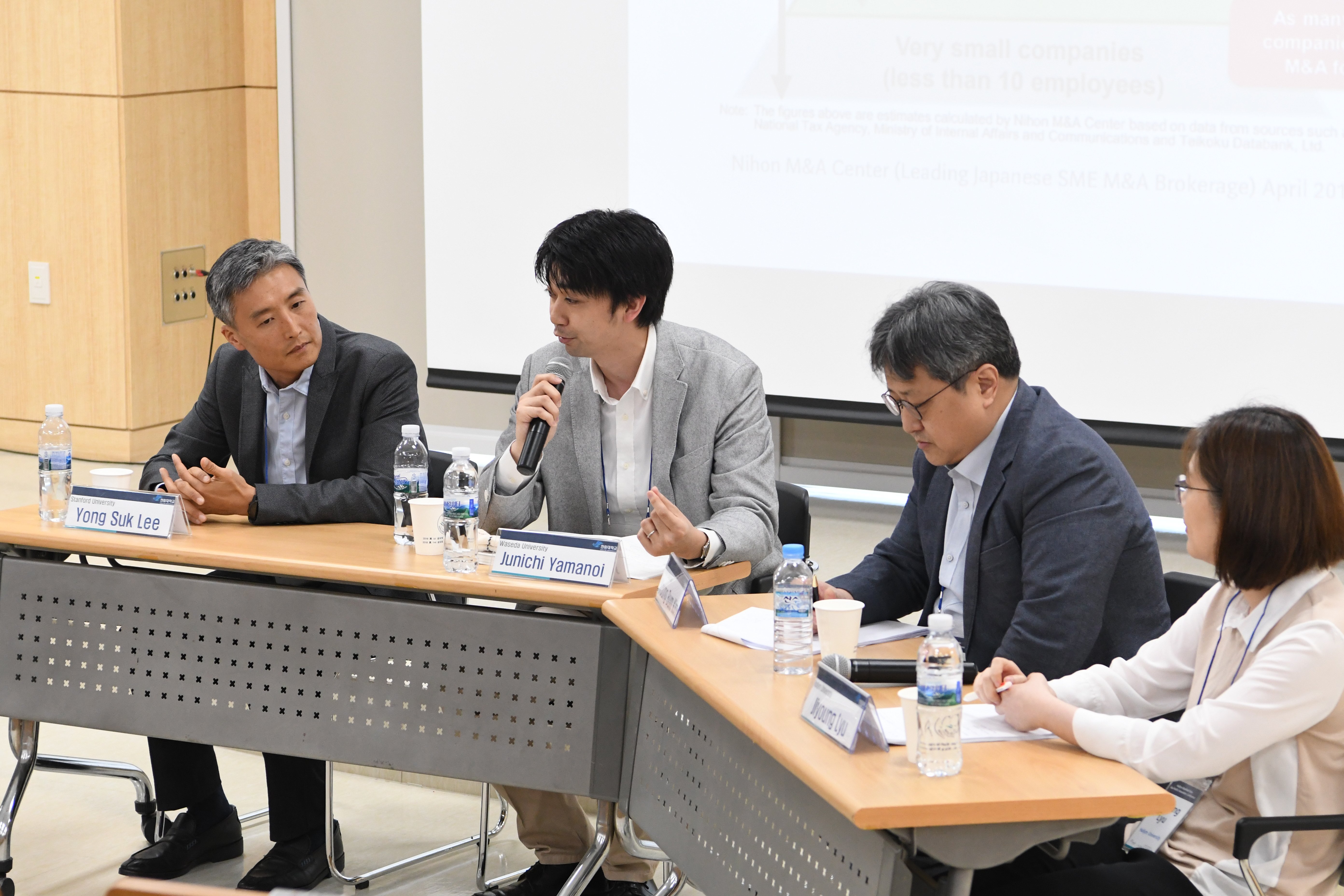
 Yong Suk Lee , Junichi Yamanoi , Young-Bum Kim, and Jiyoung Liu seated at a table

(From left to right, Yong Suk Lee , Junichi Yamanoi , Young-Bum Kim, and Jiyoung Liu)

Family Business Succession

Demographic forces and population aging at the macro level are altering family structures and assumptions at the micro level. For example, Junichi Yamanoi of Waseda University presented a study that examined how expectations around managerial succession at family firms had a significant impact on a firm’s long-term investments.

The study surveyed over 15,000 small and medium enterprises (SMEs) in the Tokyo metropolitan area. The participants were initially asked about their firm’s attributes, CEO demographics, and succession expectations. More than a year later (a time lag that eliminated reverse causality), a sampling of respondents was then asked about their current long-term investments (e.g., R&D, new product development, and internationalization activities).

Yamanoi and his coauthors found that, when a family business’ CEO was confident that a successor would follow, their firm was more likely to engage in long-term investment. Additionally, a CEO’s expectations that the successor would be someone other than their child resulted in an even greater likelihood of long-term investment.

As part of its policy propositions, the study recommends that government agencies and SME officers eager to increase investments by SMEs introduce external candidates to such firms. Moreover, family CEOs should be cautioned against investment decisions that are too short-term in orientation, as, due to inherent aversion to losses of socioemotional wealth for the family, they may unconsciously avoid long-term investments.

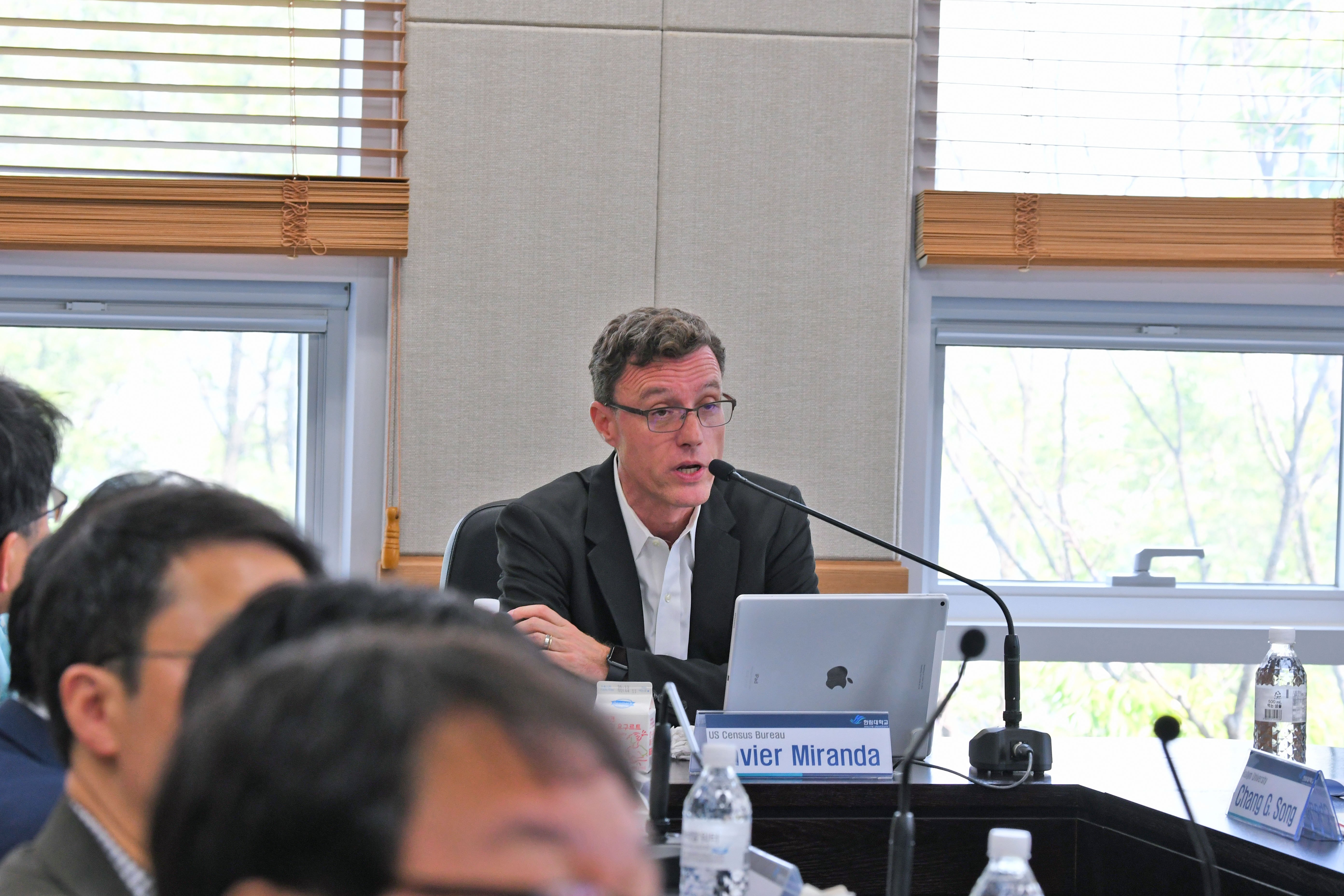
Javier Miranda presents at table

(Javier Miranda)

Rethinking Age and Entrepreneurship

At a luncheon keynote address, Javier Miranda, principal economist at the U.S. Census Bureau,  shared insights into the correlations between age and high-growth entrepreneurship, considering when in life people start firms and when they start the most successful firms.

Miranda acknowledged that youth is often perceived as being crucial to entrepreneurial success, referring to Mark Zuckerberg’s dictum, “Young people are just smarter.” Venture capitalist (VC) activity seems to support this notion, said Miranda, citing a sample of 35 VC-backed “unicorns” that resulted in a mean founder age of 31. He explained that VCs' high regard of young entrepreneurs may be attributed to a belief in young people's greater deductive reasoning, transformative thinking, and higher energy, optimism, and confidence.

But does the statistical evidence support such a view? It would seem not. Miranda’s data showed that the mean age for founders of any type of firm is 41.9. Furthermore, the mean age for founders of the most successful firms (those ready for Initial Public Offering market) was 45, and a founder at age 50 was approximately twice as likely to experience successful exit or high growth compared to a founder 20 years their junior.

In fact, dependent on the starting of a firm, the probability of a founder’s success peaked in the age range of 45-59. Pointing directly to entrepreneurs like Jobs and Bezos, Miranda conceded that even extremely talented people, who may be talented enough to succeed when young, peaked in middle age.

The results of Miranda’s study seem at odds with VC attraction to younger entrepreneurs. Experience, Miranda concluded, appeared to overwhelm any potential age advantage, but more research was needed to unpack the underlying predictors of entrepreneurial success over one’s life cycle.

Role of Technology in an Aging Populace

Day two of the conference focused on the promising role technology may play as populations age. APARC Research Scholar Kenji Kushida detailed both the current and impending problems Japan faces as its population both ages and shrinks in size, and the solutions possible through technological advancement like robotics, AI, and wearable devices.

For example, Japan’s demographic shift has had a double knock-on effect on agriculture, with the percentage of farm workers age 65 or older steadily rising over the last five years and the total cultivated agricultural land decreasing each passing year. Kushida described how ICT-enabled bulldozers allow farm owners to more precisely flatten the ground in rice paddies, resulting in both greater yields and cost savings as much as 40%.

Healthcare is another significant area of concern in Japan, as healthcare costs for people over 65 are four times that of younger people and medical costs as a proportion of GDP have been increasing sharply, especially in rural areas. Shortage of physicians and diagnostic technicians is another challenge. Kushida gave an example of a technology healthcare resource that enables clinics and hospitals to upload patient medical images which are then diagnosed by medical doctors affiliated with the tool's startup developer. This low-cost solution allows smaller, rural hospitals to tap into a larger network of physicians and specialists online.

While Japan’s technological trajectory has been driven primarily by the private sector, Kushida pointed out the important role played by government actors. Specifically, within the “Abenomics” reforms of Prime Minister Shinzo Abe, several key performance indicators include support for digitizing medical records, adoption of robotics in nursing care, and extending “healthy” life expectancy.

Edited volumes collecting the papers from the annual Stanford Asia-Pacific Innovation conferences are forthcoming. These will serve as valuable references for scholars and policymakers. The first conference was held at Stanford in 2017, and examined the industrial organization of businesses and innovation clusters and how such environments affect entrepreneurship. The second conference, held in September of 2018 in Beijing, analyzed the impact of public education and financial policies pursued by East Asian countries to promote entrepreneurship.

Presenters gathered on stage


Hero Image
Gi-Wook Shin standing at Podium at Innovation Conference
All News button
1
-

China possesses a large amount of historical demographic data showing that it has been a population giant in the world for at least two thousand years. Partly for this reason, a number of conclusions or suggestions about China’s past fertility regime have been widely accepted. Recent historical demographic investigations, however, have shown that many of these conclusions or suggestions are incorrect and need further consideration. This presentation reports these research findings and briefly examines China’s recent fertility changes. On the basis of that it makes some comments on major characteristics of China’s current fertility patterns and factors affecting fertility changes in the near future.

Image
zhongwei
Zhongwei Zhao graduated from University of Cambridge with a PhD in 1993. Since then he has worked at the East-West Center, Hawaii, University of New South Wales, Australian National University, and University of Cambridge. Since 2008, he has been a professor at the School of Demography at the ANU. Zhao has been doing research in the following research areas: Historical demography, Computer microsimulation, Fertility, Mortality, Changes in kinship structure and household composition, Famine demography, Inequality in population health, Environmental impacts on mortality changes, and Population changes in Asia. He has co-edited three books (including recent Routledge Handbook of Asian Demography) and published many articles and book chapters by leading demography journals and academic publishers.  

Zhao, Zhongwei Professor, The School of Demography at the Australian National University
Seminars
-

This seminar features two scholars discussing their research on health, retirement, and long-term care in China and Singapore. First Dr. Zhou discusses her co-authored study “Health Care Utilization at Retirement: Evidence from Urban China,” which explores the causal effect of retirement on health care utilization among urban workers using medical claims data and employing a regression discontinuity design based on mandatory retirement ages. The results show that retirement significantly increases outpatient care utilization, in part because of lower patient cost sharing and reduced opportunity cost of time after retirement.

Professor Chia will then discuss innovative policy responses in Singapore to finance the retirement and healthcare needs of its aging population. One component of her research uses actuarial modelling and simulations to explore the adequacy of the long-term care (LTC) insurance program in Singapore, also known as ElderShield, for reducing LTC cost. Dr. Chia will also discuss retirement adequacy, taking into consideration the unique housing finance mechanisms in Singapore and other social measures. Singapore also introduced healthcare policies targeted at specific cohorts and trust funds to enhance social protection.  The Pioneer Generation Fund of S$8 billion was earmarked to subsidize healthcare costs for the pioneer generation (cohorts aged 65 and above in 2014).  Simulation studies show that the adequacy of the pioneer generation fund depends on healthcare cost inflation and market performance of funds.  Most recently, a trust fund of S$6.1bn will be set up to prefund healthcare subsidies for the Merdeka Generation (those born in the 1950s).  Besides, a total of S$5.1 billion will go to a new LTC Support Fund that will help fund subsidies for long term care support measures.  This measure will improve the adequacy of the LTC Insurance.   Financing healthcare needs by setting aside funds, while innovative, is sustainable.  However, pre-funding social protection for subsequent cohorts can be challenging amidst an ageing populace and economic challenges.

Image
cnc pic 4x4
Dr Ngee-Choon Chia is an Associate Professor in the Department of Economics at the National University of Singapore (NUS).  She is concurrently Director of the Singapore Centre of Applied and Policy Research (SCAPE) and Co-director of the Next Age Institute at NUS.  She is the Co-editor of the Singapore Economic Review. Her research interests include pension economics, health economics and the fiscal impacts of ageing.  She has consulted for major international agencies such ADB, ADBI, IDRC and the World Bank.  She has also conducted collaborative research on social security with government agencies in Singapore.


Image
photo qin zhou 4x4
Dr. Qin Zhou is currently a visiting scholar in Stanford University. She serves as an Associate Professor in the University of International Business and Economics in Peking, China. Her research interests include Health Economics, Public Health, and Applied Econometrics. She is mainly focused on the study of Chinese health insurance and policy evaluation. She was awarded the "Australia-APEC Women in Research" fellowship and conducted a project entitled "Social Security Systems in Relation to Healthcare Utilization and Health Behaviors in Australia" in 2017. Her work at Stanford is to collaborate with Prof. Karen Eggleston to study the integration of urban-rural health insurance systems in China and other relative topics.

Philippines Conference Room
Encina Hall, 3rd Floor
616 Serra Mall, Stanford, CA 94305

Ngee-Choon Chia Associate Professor, National University of Singapore Department of Economics
Qin Zhou Associate Professor, University of International Business and Economics, PRC
Seminars
-

Improvements in medical treatment have clearly contributed to significant increases in medical spending, yet there is relatively little quantitative evidence on whether the rise in expenditure is “worth it” in the sense of producing health outcomes of commensurate value. This seminar will focus on empirical research assessing the net value of health care for patients with chronic disease, using the case of type 2 diabetes mellitus. Based on analysis of detailed longitudinal, patient-level data, the collaborating researchers from Hong Kong, Japan, Taiwan, the Netherlands, and the US describe patterns in resource use and quality outcomes as measured by clinical markers and predicted risk of complications and death. In most of the studied cases, increases in spending were accompanied with improvements in outcomes of commensurate or greater value, given a range of values for a quality-adjusted life year. The authors conclude with a discussion of what the results imply about productivity of medical care, quality adjustment of price indices for healthcare, and policies for healthy aging in Asia (based on a forthcoming book).

Philippines Conference Room Encina Hall, 3rd Floor 616 Serra Mall, Stanford, CA 94305
Jianchao Quan Hong Kong University
616 Serra StreetEncina Hall E301Stanford, CA94305-6055
0
toshiaki_iizuka.jpg Ph.D.

Toshiaki Iizuka is Professor at Graduate School of Public Policy and Graduate School of Economics, the University of Tokyo. Before joining the University of Tokyo in 2010, he taught at Vanderbilt University (2001-2005), Aoyama Gakuin University (2005-2009), and Keio University (2009-2010). He served as Dean of Graduate School of Public Policy, the University of Tokyo, between 2016 and 2018. He is a recipient of Abe Fellowship (2018-2019). 

His research interests are in the field of health economics and health policy. He has written a number of articles on incentive and information in the health care markets. His research articles have appeared in leading professional journals, including American Economic Review, RAND Journal of Economics, Journal of Health Economics, and Health Affairs, among others. Dr. Iizuka holds a PhD in Economics from the University of California, Los Angeles, an MIA from Columbia University, and an ME and BE from the University of Tokyo.
Visiting Scholar, Asia Health Policy Program at APARC
University of Tokyo

Shorenstein APARC
Stanford University
Encina Hall E301
Stanford, CA 94305-6055

(650) 723-9072 (650) 723-6530
0
Senior Fellow at the Freeman Spogli Institute for International Studies
Center Fellow at the Center for Health Policy and the Center for Primary Care and Outcomes Research
Faculty Research Fellow of the National Bureau of Economic Research
Faculty Affiliate at the Stanford Center on China's Economy and Institutions
karen-0320_cropprd.jpg PhD

Karen Eggleston is a Senior Fellow at the Freeman Spogli Institute for International Studies (FSI) at Stanford University and Director of the Stanford Asia Health Policy Program at the Shorenstein Asia-Pacific Research Center at FSI. She is also a Fellow with the Center for Innovation in Global Health at Stanford University School of Medicine, and a Faculty Research Fellow of the National Bureau of Economic Research (NBER). Her research focuses on government and market roles in the health sector and Asia health policy, especially in China, India, Japan, and Korea; healthcare productivity; and the economics of the demographic transition.

Eggleston earned her PhD in public policy from Harvard University and has MA degrees in economics and Asian studies from the University of Hawaii and a BA in Asian studies summa cum laude (valedictorian) from Dartmouth College. Eggleston studied in China for two years and was a Fulbright scholar in Korea. She served on the Strategic Technical Advisory Committee for the Asia Pacific Observatory on Health Systems and Policies and has been a consultant to the World Bank, the Asian Development Bank, and the WHO regarding health system reforms in the PRC.

Director of the Asia Health Policy Program, Shorenstein Asia-Pacific Research Center
Stanford Health Policy Associate
Faculty Fellow at the Stanford Center at Peking University, June and August of 2016
CV
Date Label
Stanford University and NBER
Seminars
-

This study focused on an important but often overlooked aspect of safety in medicine: physician safety. In China, patients may violently protest against doctors via disruptive behaviors when facing unsatisfying results, jeopardizing physicians’ security, affecting their diagnostic reasoning, and ultimately harming patient safety. We investigated the relationship between disruptive behaviors, government intervention, and protest results. Statistical analyses reveal that the ‘paying for peace’ mechanism can create distorted incentives for patients and encourage more riots. Efforts should be made to improve service quality and channel medical disputes into the legal framework.

Image
lingrui liu yale cropped
Lingrui Liu is an Associate Research Scientist at the Yale School of Public Health, Department of Health Policy and Management. Prior to joining the YSPH faculty in fall of 2018, she obtained an ScD from Harvard University (2018). Her research interests include health care organizations, quality improvement, patient safety, organizational design and culture, and implementation of evidence-based practices.

Lingrui Liu Associate Research Scientist, the Yale School of Public Health
Seminars
News Type
News
Date
Paragraphs

A new SIEPR policy brief examines the growing life expectancy gap between low-income and high-income Americans. Coauthored by Victor R. Fuchs and APARC Deputy Director Karen Eggleston, the brief shows that life expectancy in the U.S. can be increased if health policy shifts towards preventing the leading causes of death for young people. READ MORE>>

Hero Image
unequal steps flickr.cc / Jon Southcoasting
All News button
1
-

Using previously unexamined nationally representative data from the Philippines, this study employs detailed measures of children’s welfare and addresses biases related to endogeneity of parental migration to examine the wellbeing of left-behind children. The results are robust across several econometric methods (treatment effects, biprobit, PSM, PSM-IV). They suggest that migrants’ children have better educational outcomes and are less likely to work, but are more likely to be physically sick, which cognitive stress theory would attribute to parental migration as a stressor. Still, the positive impacts of parental migration, attributable to income effect, outweigh the negative effects attributable to parental absence. The results also show heterogeneity in the impacts of parental migration conditional on children’s gender.

Image
marjorie
Dr. Marjorie Pajaron is an Assistant Professor at the School of Economics, University of the Philippines. Prior to her appointment, she was a Postdoctoral Fellow at Stanford University’s Walter H. Shorenstein Asia-Pacific Research Center. She also served as a lecturer at the University of Hawai’i at Manoa Department of Economics where she also received her PhD in Economics. Her research lies at the intersection of applied microeconometrics, gender, health, migration, and development economics.

Walter H. Shorenstein
Asia-Pacific Research Center
616 Serra St C333
Stanford University
Stanford, CA 94305-6055

(650) 724-6459 (650) 723-6530
0
Asia Health Policy Postdoctoral Fellow in Developing Asia
PajaronMarjorie_WEB.jpg

Marjorie Pajaron joins the Walter H. Shorenstein Asia-Pacific Research Center during the 2012–13 academic year from the University of Hawai’i at Manoa Department of Economics where she served as a lecturer.

She took part for five years in the National Transfer Accounts project based in Honolulu. Her research focuses on the role of migrant remittances as a risk-coping mechanism, as well as the importance of bargaining power in the intra-household allocation of remittances in the Philippines.

Pajaron received a PhD in economics from the University of Hawai’i at Manoa.

Working Papers:

 “Remittances, Informal Loans, and Assets as Risk-Coping Mechanisms: Evidence from Agricultural Households in Rural Philippines.” October 2012. Revise and Resubmit, Journal of Development Economics.

“The Roles of Gender and Education on the Intra-household Allocations of Remittances of Filipino Migrant Workers.” June 2012.

“Are Motivations to Remit Altruism, Exchange, or Insurance? Evidence from the Philippines.” December 2011.

Assistant Professor at the School of Economics, University of the Philippines
Seminars
Subscribe to Society