Governance

FSI's research on the origins, character and consequences of government institutions spans continents and academic disciplines. The institute’s senior fellows and their colleagues across Stanford examine the principles of public administration and implementation. Their work focuses on how maternal health care is delivered in rural China, how public action can create wealth and eliminate poverty, and why U.S. immigration reform keeps stalling. 

FSI’s work includes comparative studies of how institutions help resolve policy and societal issues. Scholars aim to clearly define and make sense of the rule of law, examining how it is invoked and applied around the world. 

FSI researchers also investigate government services – trying to understand and measure how they work, whom they serve and how good they are. They assess energy services aimed at helping the poorest people around the world and explore public opinion on torture policies. The Children in Crisis project addresses how child health interventions interact with political reform. Specific research on governance, organizations and security capitalizes on FSI's longstanding interests and looks at how governance and organizational issues affect a nation’s ability to address security and international cooperation.

News Type
Commentary
Date
Paragraphs

Shorenstein Asia-Pacific Research Center (APARC) Director Gi-Wook Shin spoke with Yonhap News about the situation on the Korean Peninsula, following a visit to U.S. Pacific Command with a delegation of scholars from the Freeman Spogli Institute for International Studies.

While there, U.S. officials conveyed that the United States has the capability to strike North Korea should the president make that call.

U.S. officials said that North Korea had already moved into the “red zone,” and that the Trump administration has the view that it cannot miss a window of opportunity to stop the nuclear and missile program before it advances further.

Shin also said he believed that the Trump administration holds a view that the policy of “strategic patience” failed under the Obama administration, and that growing tensions on the Peninsula have compelled the Trump administration to consider – with greater plausibility – the option of a preemptive military strike.

Regional tensions have risen in the midst of impending political shifts in South Korea, where a new president will assume office following a snap election this May, and in China, where the Party Congress will meet to appoint new senior leadership of the Chinese Communist Party this fall.

Whoever becomes president in South Korea should place relations with North Korea at the top of the agenda and consider sending an envoy early on to meet its leader Kim Jong-un in-person, Shin said.

The Yonhap interview can be viewed in Korean, and a shorter version, in English. A related analysis piece is also available on MK News (in Korean).

Hero Image
north korea hydrogen bomb test
Korea Meteorological Administration (KMA) staff check a screen showing seismic waves from North Korea at the KMA center on Jan. 6, 2016, in Seoul, South Korea.
Chung Sung-Jun/Getty Images News
All News button
1
-

South Koreans will elect a new president on May 9 after months of political turmoil that led to the impeachment of their most recent president, Park Geun-hye. This panel will discuss Korea's politics and economics, and foreign policy under the new administration.

Panelists:

Daniel Sneider, Associate Director for Research, Shorenstein Asia-Pacific Center, Stanford University

Yong Suk Lee, Center Fellow, FSI; Deputy Director of the Korea Program, Shorenstein Asia-Pacific Research Center, Stanford University

Gi-Wook Shin, Professor of Sociology; Director, Shorenstein Asia-Pacific Research Center, Stanford University

Kathleen Stephens, William J. Perry Fellow, Shorenstein Asia-Pacific Research Center, Stanford University; former U.S. Ambassador to South Korea


-

One prominent feature of South Korea, as well as other countries in East Asia, is citizens’ strong preference to work for large conglomerates or the government, as opposed to startups or small and medium enterprises (SMEs). Relative to the United States, choosing entrepreneurship or working for a young firm are less desired in Korea, especially among highly skilled individuals. This talk will examine how beliefs about corruption and trust in institutions affect an individual’s occupational preferences. A main challenge of examining personal beliefs and their impact on occupational preference is their relation to a host of other individual characteristics such as willingness to accept risk, optimism, patience, education level and family background. Center Fellow Yong Suk Lee will discuss his research on this area, including his focus on the events surrounding the impeachment of South Korea's previous president, Park Geun Hye, and his surveys of South Koreans before the impeachment rulings by the constitutional court and after impeachment. He will talk about (1) whether the impeachment process changed beliefs in the rule of law and societal trust; and (2) whether and how any change in beliefs and trust affect occupational preference. 

 
Yong Suk Lee <i>Deputy Director of Korea Program, APARC; Center Fellow, FSI, Stanford University</i>
Seminars
News Type
Commentary
Date
Paragraphs

U.S. Secretary of State Rex Tillerson announced in Seoul “the policy of strategic patience has ended” and “all options were on the table” regarding the United States’ efforts to address the North Korean nuclear threat. Kathleen Stephens, the William J. Perry Fellow in Shorenstein APARC’s Korea Program, spoke on PBS NewsHour about Tillerson’s remarks, the viability of tougher sanctions against North Korea, and deployment of the U.S. ballistic missile defense system (THAAD) to South Korea.

Watch and read about the interview here.

Hero Image
north korea missile newspaper
A member of the public reads a newspaper report regarding a North Korea test-fired missile.
Chung Sung-Jun/Getty Images
All News button
1
-

South Korea's persistent economic growth combined with a democratic political system has transformed the country into a developed nation. While research has often highlighted the role of industrial policies, technological growth and international trade as imperative to Korea’s developmental success, this talk will instead focus on the role that human capital has played. Professor Ju-Ho Lee will discuss how the accumulation of human capital has aided Korea’s transformation and examine the policies, strategies and challenges that the country faces into the future.

Image
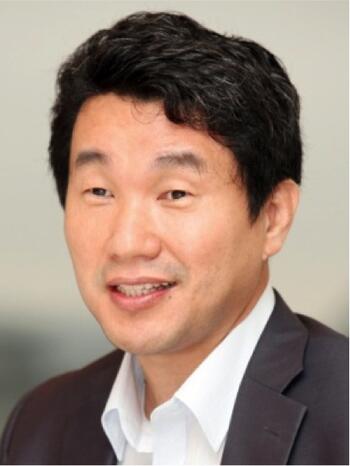
ju ho lee
Before returning to the KDI School of Public Policy and Management in 2013, Professor Lee served as Minister of Education, Science and Technology (2010-13) where he had previously served as Vice Minister (2009). He has been noted for his endeavor to reform education, and for active lawmaking as a member of the National Assembly (2004-08). Utilizing his nine years of experience as a policy maker, he actively resumed his academic research on human capital and innovation policies at KDI. Professor Lee's  recent research has covered a wide range of issues including the measurement of 21st century skills, changes in pedagogies, opening-up strategies in education reforms, and innovation ecosystems. Currently he is also working for the international community as a Commissioner of the International Commission on Financing the Global Educational Opportunities.

Professor Lee received his BA and MA from Seoul National University, and PhD from Cornell University, all in economics.

This lunch time keynote address is part of the ninth annual Koret Workshop, "Korea's Migrants: From Homogeneity to Diversity," and open to the general public.

This event is made possible through the generous support of the Koret Foundation.

Ju-Ho Lee <i>Professor, KDI School of Public Policy and Management; former Minister of Education, Science and Technology, South Korea </i>
Seminars
News Type
News
Date
Paragraphs

Emerging technologies, stemming from the heart of Silicon Valley and extending to Asia and beyond, have pushed the bounds of how stories are told by journalists and the way in which readers interact with them. The Shorenstein Journalism Award, an annual prize given by the Shorenstein Asia-Pacific Research Center (APARC), celebrates 15 years of recognizing distinguished journalists for their innovative and responsible journalism amid social and technological change.

The prize began with “the idea of a media award for a person who has the most significant impact on the relationship with Asia-Pacific nations in the United States,” according to Walter H. Shorenstein, who spoke about his twin interests of Asia and the press in a 2010 oral history project interview and was the benefactor after whom the center is named.

Shorenstein APARC and Harvard’s Shorenstein Center on Media, Politics and Public Policy jointly presented the award for six years. Shorenstein APARC has continued the initiative, and each year, brings the award winner to Stanford to talk with the broader campus community, and since 2011, has alternated between a recipient from the West, who has mainly addressed an American audience, and a recipient from Asia.

The prize seeks to inspire the next generation of U.S. journalists focused on Asia, as well as Asian journalists, who pave the way for press freedom in their countries.

Award winners have explored a multitude of topics over the years, from human rights in North Korea to the rise of democracy in Indonesia and from the U.S.-Japan alliance to gender equality in India. And this year adds an additional view on China; veteran journalist Ian Johnson will address religion and value systems in a panel discussion on May 1 with Xueguang Zhou, Stanford professor of sociology, and Orville Schell, director of the Asia Society's Center on U.S.-China Relations, moderated by Daniel C. Sneider, Shorenstein APARC associate director for research.

To mark the award’s tenure, Shorenstein APARC asked award alumni to answer the question, “What do you think the future holds for journalism in/about Asia?” Their responses are below.


Image
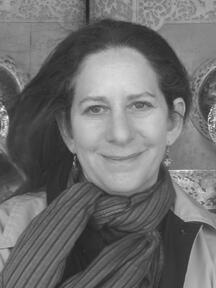
crossette 3x4 bw
Asia is big, with 60 percent of the world's people and a third of its land. The conditions in which journalists work go to the extremes, from the longstanding establishment press of Japan or India to the blanket repression of it in Laos or China. But if there is one word to describe Asian journalism of the future, it is Youth. Creative, energetic young people, armed with connectivity, pack Internet cafes and journalism classes, where they can find them. Their interests are broad, they are open-minded and well informed. Western reporters will benefit from their guidance as colleagues.

Barbara Crossette is the U.N. correspondent for The Nation and a columnist for India Abroad. She received the Shorenstein Journalism Award in 2010.


Image
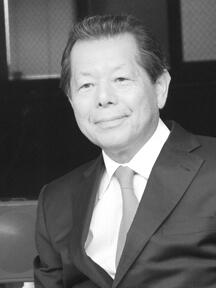
funabashi 3x4 bw

Journalism in Asia has had a long history of covering revolutions and wars. However, peace has reigned over Asia for near on 40 years. Yet, the peace and stability in Asia looks increasingly precarious. Asia too is not immune to populist nationalism. In this climate, Asia could yet again become the battleground for dislocation, revolution and war. Journalism, on top of reacting to potential crises, will be critical for proactively finding ways to prevent and defuse crises in the region.

Yoichi Funabashi is the chairman of the Rebuild Japan Initiative Foundation. He received the Shorenstein Journalism Award in 2015.


Image
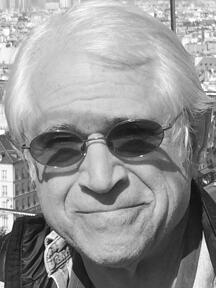
buruma 3x4 bw
The scope for independent journalism, checking the powers that be, is shrinking everywhere, not least in Asia. China's rise as a major political and commercial power will be a growing challenge to the freedom of the press. The best thing journalists writing about Asian affairs can do, especially those who are lucky enough to work for free and independent media, is to continue to write as honestly as they can, without bowing to political or commercial pressures. This very much includes pressures at home, in countries that still have liberal democratic institutions. Good journalism on Asia, or anywhere else, will continue to be produced as long as the critical spirit remains undaunted.

Ian Buruma is a writer and the Paul W. Williams Professor of Democracy, Human Rights, and Journalism at Bard College. He received the Shorenstein Journalism Award in 2008.


Image
mydans 3x4 bw
The frontier in the battle for press freedom in Southeast Asia has moved into cyberspace, where independent voices have presented a new challenge to government control of information. In Vietnam, Malaysia, Thailand, Singapore, Indonesia and newly open Myanmar, upstart websites and blogs have proliferated. But it hasn't taken long for those in charge to gain the upper hand, and following the example of China, all have found ways to bring these open forums under varying degrees of control, from censorship to harassment to prison terms. The flamboyant Philippines remains the exception, and the future there too has become uncertain.

Seth Mydans is a contributing writer for the New York Times. He received the Shorenstein Journalism Award in 2009.


Image
demick 3x4 bw
The United States tends to export its best and worst fashions elsewhere in the world. An example of the latter is President Trump’s tendency to denounce any media coverage he dislikes as “fake news.” The Chinese Communist Party has picked up on that trick, earlier this month using the “fake news” defense to deny a story that a human rights lawyer was tortured, a practice all too common in China. The implications are chilling for the Chinese domestic press and for foreign correspondents covering China. While our own president is denouncing us as “enemies of the people,” we can hardly expect the U.S. government to stand up for us when the intolerant regime in Beijing tries to muzzle our reporting.

Barbara Demick is the Los Angeles Times’ bureau chief in New York and was formerly bureau chief in Beijing and in Seoul. She is the author of Nothing to Envy: Ordinary Lives in North Korea and Logavina Street: Life and death in a Sarajevo Neighborhood. She received the Shorenstein Journalism Award in 2012.


Image
zaw 3x4 bw
In some parts of Asia, the space for freedom of expression has shrunk immensely and there are challenges for all of us covering sensitive issues in countries where journalists increasingly face the Computer Crime Act, censorship, tight space, intimidation and threats – moreover, they also continue to face authoritarian rulers’ unjustified clampdown and high-handed attitudes. Asia is complex – in some corners of our region, many diverse ethnic minorities live in conflict zones and in war without peace – for decades journalists travel there to report stories. But it is our job – isn’t it? Journalists here ought to tell stories and unearth many untold news to readers across Asia. While facing prison walls, threats and lawsuits, journalists also face media tycoons and cronies who want them to be a mouthpiece of commercial conglomerates – they must resist them. Commercial media kills independent journalism. Long before journalists in Asia realized that objectivity alone doesn’t work in Asia but courage, independent reporting and searching the truth are more important than ever before. Last but not least, Asia has the fastest growing economies in the world thus an independent media is needed to keep voices from Asia alive.

Aung Zaw is the founder and editor-in-chief of The Irrawaddy. He received the Shorenstein Journalism Award in 2013.


Image
schlesinger 3x4 bw
Donald Trump is challenging many long-held, American consensus policies – including those toward Asia. Trade, diplomacy and security relationships between the United States and Asia – and among Asian nations – are now all in flux. The challenge for journalists on both sides of the Pacific will be sorting out the noise, understanding the concrete actions and reactions, and explaining the implications for a global audience. That mission will be made more difficult – and more vital – by the growing hostility toward journalism from many of the leaders unleashing this transformation.

Jacob Schlesinger is a senior Washington correspondent for the Wall Street Journal. He received the Shorenstein Journalism Award in 2014.


Image
schell 3x4 bw
I am very pessimistic about the ability of thoughtful and informative journalism to survive anywhere in the world given the gale force winds of state propaganda, commercial market pressure and "fake news" that now buffet it. And no where is such reporting more urgently needed than in regard to Asia where China's different value and political pose a stark challenge. To keep a well-informed public, we may well have to finally recognize here in the United States that good and independent reporting cannot be entirely a purely commercial process any more than are our great universities.

Orville Schell is the Arthur Ross Director of the Center on U.S.-China Relations at the Asia Society in New York, and former dean of the School of Journalism at the University of California, Berkeley. He received the Shorenstein Journalism Award in 2003.


Image
pomfret 3x4
I am very optimistic about the future of journalism in Asia because I am optimistic about the future of Asia writ large. I am especially optimistic about the future of journalism in China. Despite the dark days that my Chinese colleagues face today, there is no shortage of well-trained, hungry reporters in China who will ultimately help push China in a more positive direction. I think this is, to use the Chinese Communist Party's verbiage, "the historical trend." Just think about the scoops to be had when China begins to open the vast archives of the Chinese Communist Party? Obviously, this won't happen tomorrow, but I am confident that this day is less far off than it sometimes seems.

John Pomfret was a foreign correspondent with the Washington Post for many years. He is the author of The Beautiful Country and the Middle Kingdom: America and China from 1776 to the Present. He received the Shorenstein Journalism Award in 2007.


Hero Image
journalism award headline
A pair of people read newspapers outside in Seoul, South Korea.
Chung Sung-Jun/Getty Images
All News button
1

The 9th Annual Koret Workshop

South Korea has long promoted a sense of ethnic unity but in recent years has seen an influx of ethnic and non-ethnic Koreans, making the country more diverse. The government has promoted multiculturalism to deal with such diversity; however, migrants, either permanent or temporary, continue to face discrimination. New approaches are needed to create better social cohesion. This ninth annual conference seeks to examine major issues related to recent migrants in Korea.

NOTE: During the workshop, a keynote address is open to the public. Please click here to register for the lunch time public event on April 21.

The Koret Workshop is made possible through the generous support of the Koret Foundation.

Stanford University

Workshops
News Type
News
Date
Paragraphs

The Shorenstein Asia-Pacific Research Center (APARC), in pursuit of training the next generation of scholars on contemporary Asia, has selected two postdoctoral fellows for the 2017-18 academic year. The fellows will begin their year of academic study and research at Stanford this fall.

Shorenstein APARC has for more than a decade sponsored numerous junior scholars who come to the university to work closely with Stanford faculty, develop their dissertations for publication, participate in workshops and seminars, and present their research to the broader community.

The 2017-18 cohort includes two Shorenstein Postdoctoral Fellows; they carry a broad range of interests from labor migration policy in China to regional institutions in East Asia. Their bios and research plans are listed below:


Image
hyun seung cho
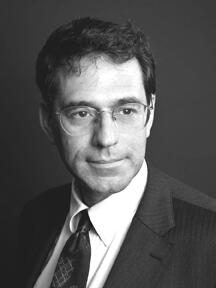
H. Seung Cho is completing his doctorate at Columbia University’s Department of Political Science. He researches U.S. and Chinese foreign policy toward East Asia’s regional institutions with a broader interest in U.S.-China relations, the political economy of East Asia and qualitative research methods. His dissertation probes the popular narrative that United States and China are competing over East Asia’s regional architecture, arguing that mutual misperception and security dilemma dynamics also play out in the politics of regional institution building. To explore this phenomenon, Seung has conducted extensive fieldwork in Beijing, Jakarta, Seoul and Washington, D.C. At Shorenstein APARC, Seung will be developing his dissertation into a book manuscript while looking to further examine the relationship between the politics of East Asia’s multilateral security institutions and their perceived lack of effectiveness. Previously, Seung was a predoctoral fellow at Peking University’s School of International Studies from 2014-16. Prior to starting his doctoral studies, he also served in South Korean military intelligence as part of the two-year national service. Seung holds a Bachelor of Science in government and economics and Master of Science in international relations from the London School of Economics and Political Science (LSE).


Image
samantha vortherms
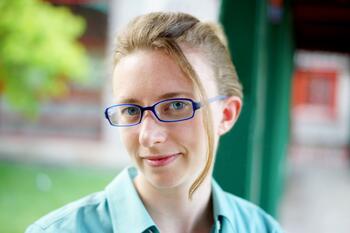
Samantha Vortherms is a doctoral candidate in the University of Wisconsin – Madison Department of Political Science. Her research focuses on comparative political economy, development, social welfare and research methodology. Her dissertation examines subnational variation in access to citizenship rights in China through the household registration system. Her research has been supported by the National Science Foundation, the U.S. Department of Education through the Fulbright-Hays Doctoral Dissertation Research Abroad and the Social Science Research Council's Dissertation Proposal Development Fellowship, among others. At Shorenstein APARC, Sam will work on converting her dissertation to a book manuscript and advance her post-dissertation project on the role of the firm in labor migration policies. Before going to Wisconsin, Sam received her Master of Arts in international relations at the University of Chicago, Artium Magister in public policy from University of Chicago's Harris School of Public Policy, and a Bachelor of Arts from the University of Richmond. From 2014-16, she was a visiting research fellow at the National School of Development's China Center for Health Economics Research at Peking University.

Hero Image
encina hall
All News button
1
Paragraphs

Scholars at Stanford's Shorenstein Asia-Pacific Research Center in the Freeman Spogli Institute for International Studies assess the strategic situation in East Asia to be unsettled, unstable, and drifting in ways unfavorable for American interests. These developments are worrisome to countries in the region, most of which want the United States to reduce uncertainty about American intentions by taking early and effective steps to clarify and solidify U.S. engagement. In the absence of such steps, they will seek to reduce uncertainty and protect their own interests in ways that reduce U.S. influence and ability to shape regional institutions. This 23-page report entitled “President Trump’s Asia Inbox” suggests specific steps to achieve American economic and security interests.

All Publications button
1
Publication Type
Policy Briefs
Publication Date
Journal Publisher
Shorenstein Asia-Pacific Research Center
Authors
Gi-Wook Shin
Kathleen Stephens
Subscribe to Governance