FSI scholars produce research aimed at creating a safer world and examing the consequences of security policies on institutions and society. They look at longstanding issues including nuclear nonproliferation and the conflicts between countries like North and South Korea. But their research also examines new and emerging areas that transcend traditional borders – the drug war in Mexico and expanding terrorism networks. FSI researchers look at the changing methods of warfare with a focus on biosecurity and nuclear risk. They tackle cybersecurity with an eye toward privacy concerns and explore the implications of new actors like hackers.
Along with the changing face of conflict, terrorism and crime, FSI researchers study food security. They tackle the global problems of hunger, poverty and environmental degradation by generating knowledge and policy-relevant solutions.
"The Controversy Over South Korean Wartime Operational Control: The Real Issues"
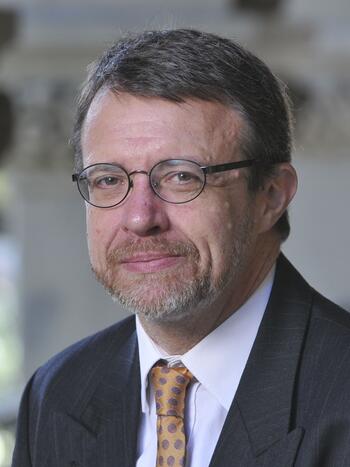
Speaker: Nam-soo Park, 2014-15 Visiting Scholar, Lieutenant General (Ret.)
South Korean Lt. Gen. (retired) Nam-soo Park will address the controversy in South Korea (ROK) over the indefinite, “conditions-based” postponement last year of Seoul’s planned reassumption of wartime operational control (opcon) over its own forces. Since the Korean War, the U.S. commander in South Korea has been assigned wartime operational control over most South Korean military units, but U.S. and Korean leaders agreed in 2007 that Seoul would resume wartime opcon over all its forces by 2012. That decision was based on progressives’ concerns that U.S. exercise of opcon over South Korean forces diminished Seoul’s sovereignty and disadvantaged it in negotiations with North Korea. Conservatives and some military leaders, however, pushed for postponement in the belief that ROK military forces were not adequately prepared for the change and that it might increase the likelihood of a further reduction in U.S. forces in South Korea. Lt. Gen. Park will share his views on this controversy over opcon change.
"The Use of Domestic and International Law: Against North Korean Subversion and Human Rights Violations"
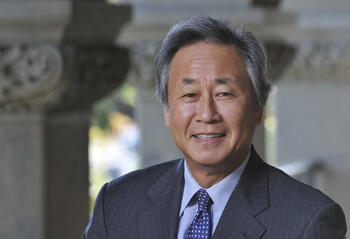
Speaker: Dong Hyuk Chin, 2014-15 Visiting Scholar from Kim & Chang Law Firm
Visiting scholar Dong Hyuk Chin will discuss issues of criminal law related to North Korea, including the application of the controversial National Security Law in South Korea in the case of individuals and organizations suspected of supporting Pyongyang, and the international community's consideration of the North Korean regime's human rights violations and crimes against humanity. Chin is a former South Korean prosecutor with experience handling cases involving the National Security Law; he also established comprehensive plans for national security-related administration while serving in the Public Security Affairs Division of the Ministry of Justice and District Prosecutor's Office. In his talk, he will review the South Korean Constitutional Court's recent dissolution of a political party accused of supporting North Korea; share his personal experience prosecuting a criminal case involving the National Security Law; and discuss the United Nation's Commission of Inquiry into North Korea's human rights situations and the UN General Assembly's referral of North Korean crimes against humanity to the International Criminal Court.
Shorenstein APARC616 Serra StreetEncina Hall E301Stanford, CA 94305-6055
(650) 723-6530
0
nampark@stanford.edu
nam-soo_park.jpg
Lieutenant General (Ret) Park, Nam-soo joins the Walter H. Shorenstein Asia-Pacific Research Center (Shorenstein APARC) during the 2014-2015 academic year. At Shorenstein APARC, General Park's research will focus on ROK-U.S. strategic responses to North Korean threats, the future of the ROK-U.S. alliance, and the establishment of peace on the Korean Peninsula.
As a career officer, General Park held varied military staff and field positions. His final assignment (2012-2013) was as superintendent of the Korea Military Academy (KMA), and he commanded the Capital Defense Command in 2011. Earlier, he was the director of Combat Readiness Inspection and the deputy chief of staff for Joint Operations with the Joint Chiefs of Staff (2010-2011). General Park also served as the director of Defense Reform Planning and Coordination, and later as the director of Management Reform at the Ministry of National Defense (2006-2008). After retirement, he served as a chair professor of Soegyung University in Seoul, and he is also a senior research fellow with the Korea Research Institute for Strategy (KRIS). He received a BA in literature from KMA and an MA in security assurance from Kyonggi University.
Shorenstein APARC616 Serra StreetEncina Hall, E301Stanford, CA 94305-6055
(650) 723-6530
0
donghyuk@stanford.edu
Visiting Scholar
dong-hyuk_chin.jpg
Dong Hyuk Chin joins the Walter H. Shorenstein Asia-Pacific Research Center during the 2014–15 academic year from the Kim & Chang Law Office in Korea. Chin is a senior attorney at Kim & Chang's Labor and Employment Group and White Collar Defense Practice Group. He served as a public prosecutor for 7 years, and has handled cases of the National Security Act and established comprehensive plans for a national security-related administration while in Public Security Affairs division of the Ministry of Justice and District Prosecutor’s Office.
Chin's research interests include the influence and meaning of criminal cases related to North Korean issues and the role of the jurists in preparation for the unification of Korea.
Chin graduated from the Judicial Research and Training Institute of the Supreme Court of Korea and holds a BA in law from the Seoul National University.
"'Critical Engagement': British Policy toward the DPRK" examines the United Kingdom's policy toward the Democratic People's Republic of Korea (DPRK). The policy known as "critical engagement" has been applied for over 14 years.
"UK efforts are not going to have the immediate result we all want. However, they do show...that it is possible to carry out engagement and hopefully reduce the chasm between DPRK thinking and the rest of the world," author Mike Cowin writes. He suggests that the British approach is similar to that advised by a Stanford research team in Tailored Engagement.
Cowin wrote an earlier policy paper on relations between the DPRK and the European Union in March 2015.
Mike Cowin is the 2014-15 Pantech Fellow in the Korea Program at the Walter H. Shorenstein Asia-Pacific Research Center. Before coming to Stanford, he served as the deputy head of mission at the British Embassy in Pyongyang, North Korea. He has also served in the British embassies in Seoul from 2003 to 2007, and in Tokyo from 1992 to 1997.
North Korea fired off short-range missiles last Tuesday close to the arrival of U.S. Secretary of Defense Ashton Carter to the region. Carter, who was on his inaugural trip to Asia as the newly confirmed Secretary of Defense, said the launch was a sign of the region’s continued tensions.
The United States consistently expresses concern over North Korea’s nuclear and missile capabilities, yet attempts to resume the Six-Party Talks, the negotiations to denuclearize North Korea which began in 2003, have been unsuccessful. The United Kingdom, although not an official participant in the Talks, has had diplomatic relations with North Korea since 2000, setting itself apart from many in the West, and from Japan which do not have formal diplomatic ties with the country.
Typically small-scale and led largely in collaboration with European NGOs, the Embassy’s initiatives span from humanitarian aid – providing water supplies and sewage systems – to exchanges – hosting visiting delegations of North Korean paralympic athletes and English teachers.
The Embassy also works to build a stronger understanding of modern Britain in North Korea. They have shown films such as Wallace and Grommit and Philomena at the Pyongyang International Film Festival, and supplemented reading materials in the Grand People’s Study House, a central library in Pyongyang.
Cowin says that it’s not easy to construct these exchanges, but if established, they provide small steps in the right direction, and help set the stage for critical engagement in the future. The United Kingdom’s approach shares commonalities with the suggestions made by a Stanford research team in Tailored Engagement, he says.
“The United Kingdom’s efforts are not going to have the immediate result we all want. However, they do show that the DPRK is not completely isolated from the Western world and that it is possible to carry out engagement,” he says.
Cowin is also the author of an earlier policy brief on relations between North Korea and the European Union.
Hero Image
Presenters on stage at the 13th annual Pyongyang International Film Festival in North Korea. | Mike Cowin
The attack on Mark Lippert, the American ambassador to South Korea, made headlines worldwide on Thursday. Since his arrival in Seoul last October, Lippert received high marks from the Korean people and the media for his accessibility to the public there. Lippert, a Stanford graduate, is a very close friend of President Obama, who has called him “brother,” and attended his ambassadorial swearing-in ceremony.
The Shorenstein Asia-Pacific Research Center asked David Straub to discuss the incident and its significance. The associate director of the Korea Program at Stanford, Straub served as a career diplomat at the U.S. embassy in Seoul from 1999 to 2002 and is the author of the forthcoming book about that period called Anti-Americanism in Democratizating South Korea.
What actually happened?
A South Korean extreme left-wing activist, Kim Ki-jong, slashed Ambassador Lippert with a kitchen knife Thursday morning at a public event in Seoul. Koreans at the event immediately wrestled the assailant to the floor, but not before he had inflicted several wounds on the ambassador: a long, deep gash on his cheek and cuts to his wrist and fingers. The ambassador was taken straightway to hospital, where surgeons repaired the damage in a three-hour operation. The prognosis is that he will regain the full use of his fingers in about six months, and that the scar on his face will be barely noticeable in one or two years. His doctors plan to remove the eighty stitches on his cheek on Monday, and, if all is well, release him from the hospital then. But it was a close call. Had the face wound extended only one inch farther down, it would have severed his carotid artery.
How is Ambassador Lippert doing?
He told his doctors on Friday that the facial wound was not bothering him particularly, but he did have some pain in his wrist and fingers. Doctors say he has some nerve damage there but the pain should ease soon. Ambassador Lippert’s response has been laudable. Consistent with the outstanding way he has comported himself in Korea since his arrival, he promptly tweeted on Thursday that he was “Doing well & in great spirits!” I am also aware that he was even responding to email wishes from some Stanford friends on Thursday.
Was Kim acting alone? How was it possible for him to perpetrate this attack?
Kim was the only person who attacked Ambassador Lippert, and he has stated that he acted alone. Kim was a member of the organization that hosted Ambassador Lippert, but had not been invited to the function. The incident is still being investigated but Korean press reports say that the U.S. embassy declined South Korean police protection some time ago. Korea is considered a relatively safe country for American diplomats. This will all be sorted out in coming days and weeks, and U.S. and South Korean authorities will determine if other security arrangements are needed for Ambassador Lippert. In any event, it does not appear that this was an egregious security or intelligence failure on anyone’s part. Ambassadors are public figures and it’s not possible to provide them with perfect protection.
What was the assailant’s motivation?
Kim said that he wanted to emphasize that the United States is responsible for preventing improved inter-Korean relations because it does such things as participate in the ongoing combined military exercises with South Korean forces. North Korea cites the annual exercises as a pretext for not talking with the South, claiming each year that they are a prelude to an invasion. But Kim is a sad sack figure even within South Korea’s anti-American far left, which is a very small but vocal minority. Kim has been arrested many times in the past for outrageous and violent behavior, such as throwing pieces of concrete at the Japanese ambassador in 2010. He heads his own little NGO, but the Korean left has mostly avoided him because of his bizarre behavior. He even set himself on fire in 2007 near the Blue House to protest an alleged attack on an associate. Although I have never met him, it is my impression that Kim is clearly mentally and emotionally unstable.
How have the Korean government and people responded?
From the people who wrestled the assailant to the ground, to the surgeons and the thousands of people who are wishing Ambassador Lippert well, South Koreans have responded with an outpouring of support. Ambassador Lippert has already conveyed his deep gratitude for that on Twitter. President Park, who is currently on an official visit to the Middle East, telephoned Ambassador Lippert on Thursday; so did Foreign Minister Yun Byung-se. President Obama also called the ambassador to wish him a speedy recovery. Unfortunately, North Korea’s reaction has been very different: its official media applauded the attack as “deserved punishment” for “a warmongering United States.”
There are press reports that South Koreans are worried that this attack could hurt U.S.-Korean relations.
There is indeed considerable concern being expressed in South Korea at the moment that the incident could hurt bilateral relations, but there is no reason at all to believe that will be the case. Top U.S. officials have already stated that the incident will only strengthen U.S.-Korean relations. I recall the reaction in Seoul to the mass shooting by Seung-hui Cho at Virginia Tech in 2007. Cho had grown up in the United States but remained a Korean citizen. Many South Koreans were very fearful that the U.S. government would punish South Koreans, such as by not issuing visas, and that Americans would attack South Koreans on the streets in the United States. Of course, nothing like that happened. Americans understood the tragedy for what it was: not a “Korean” but a fellow human being with severe mental illness and access to guns.
You say that Kim appears to have a mental disability. But there are press reports that he lectured for the South Korean unification ministry’s education institute as well as at a major university in Seoul. How could such a person get those positions?
I am curious and concerned about those reports. For me, the bigger question about that is not Kim’s particular policy views but how someone with such obvious behavioral and apparently mental issues could receive such positions. But he held those jobs several years ago, so perhaps his behavior has become worse in the meantime.
I understand that Kim has already been charged with attempted murder and that Korean authorities are considering whether to charge him under the National Security Law owing to frequent travel to North Korea and possible other links with the North Korean government.
Unless Korean authorities find evidence that Kim was working for North Korea, which I doubt was the case (but which should of course be investigated due to his numerous trips to the country), it would be unfortunate for U.S.-South Korean relations to charge him under the controversial National Security Law. The U.S. government has criticized that law for decades for the McCarthyite way South Korean governments have sometimes implemented it to suppress alleged “pro-North Korean” thinking. Some South Korean leaders are calling the incident “pro-North Korean terrorism” and the work of “pro-North Korean forces.” That seems to me to be unwisely elevating the violent behavior of one deranged person and ascribing to it a significance it does not deserve.
Ambassador Lippert’s Twitter handle is @mwlippert.
Hero Image
In 2009, President Barack Obama confers with Mark Lippert, the then-National Security Council chief of staff. Since Oct. 2014, Lippert has served as the U.S. ambassador to South Korea. | Flickr/White House - Pete Souza
The human rights situation in North Korea has gained considerable attention lately, due in part to an official report released by the United Nations last year. The landmark report condemned North Korea for systematic and widespread human rights violations.
Now for three weeks in March, the UN human rights council meets in Geneva for its regular session. North Korea’s human rights situation is a top agenda item, marked by a rare appearance by North Korean Foreign Minister Ri Su Young. In Dec. 2014, the UN General Assembly urged the Security Council to take up the situation of North Korea, including a possible referral of those responsible for prosecution in the International Criminal Court.
Looking beyond UN – U.S. – North Korea engagement, the European Union and its members have long-raised similar concerns. In a new policy brief “North Korean Human Rights: A Long Journey with Little Progress,” Mike Cowin details the human rights situation and institutions involved from a British perspective.
“The DPRK will need to make considerable efforts if it is to undermine more than a handful of the hundreds of testimonies of abuse that have been collected and brought to the world’s attention,” writes Cowin, a former deputy chief of mission at the British Embassy in Pyongyang.
Cowin is the Pantech Fellow in the Korea Program at the Walter H. Shorenstein Asia-Pacific Research Center. Before coming to Stanford, he also served in the embassies in Seoul from 2003 to 2007, and in Tokyo from 1992 to 1997.
The EU and North Korea have held seemingly incompatible positions for the past 11 years, and the March council meetings are unlikely to change that impasse. However, Cowin suggests that the EU should seek ways to have more impact.
“Perhaps the EU, which has often led the world on human rights, could find some way to talk with the DPRK, establishing a mutually acceptable way to restart engagement,” he writes.
Cowin says restarting engagement may take the form of quiet, long-term confidence building.
The Korea Program has published additional works focused on human rights in North Korea, including a paper that looks at living with disabilities in North Korea by Katharina Zellweger and an op-ed by Gi-Wook Shin calling for international consensus on the North Korea problem. Engaging North Korea is also a research focus of the Korea Program, which last year produced a policy paper on North-South Korean relations and the prospect for unification.
The thirteenth session of the Korea-U.S. West Coast Strategic Forum, held in Seoul on December 11, 2014, convened senior South Korean and American policymakers, scholars and regional experts to discuss North Korea policy and recent developments in the Korean peninsula. Hosted by the Korea Program at the Walter H. Shorenstein Asia-Pacific Research Center at Stanford University, the Forum is also supported by the Korea National Diplomatic Academy.
Last year was relatively quiet in inter-Korean relations, with no further North Korean military provocations against the South and no nuclear tests conducted. Then, on New Year’s Day this year, for the first time since he came to power on his father’s death, North Korean leader Kim Jong-un publicly expressed his willingness to hold an inter-Korean summit meeting “if the atmosphere and environment are ready." At the same time, he continued to emphasize the importance of his regime’s policies of “military first” and byeongjin, the simultaneous development of nuclear weapons and pursuit of economic growth. What are Kim’s real intentions? Can inter-Korean dialogue actually resume? Can the Six Party Talks to denuclearize the North be restarted after a six-year hiatus? Sook Kim, a former South Korean nuclear negotiator with North Korea, ambassador to the United Nations, and deputy director of the National Intelligence Service, will explore what the year 2015, the seventieth anniversary of Korea’s division, may hold for inter-Korean relations and the North Korean nuclear problem.
Philippines Conference Room
Encina Hall, 3rd floor
Stanford University
Sook Kim
<i>2014–15 Pantech Fellow; former ROK Ambassador to United Nations</i>
Sony Pictures Entertainment was set to release a satirical comedy, “The Interview,” in late 2014, but a cyberattack hit the organization that leaked corporate information, leading the company to initially pull the film and opening up a string of theories over who was behind the attack and how to respond.
Speculation began to mount as a clearer picture of the unprecedented hacking, both comprehensive and large in size, began to emerge. The breach is thought to be retribution for Sony’s production of the film, which carries a plot to assassinate North Korean leader Kim Jong-un.
Then, a threat was directed at movie theaters and moviegoers planning to screen and see “The Interview.” The message warned those against involvement ahead of the film’s Dec. 25 opening, indicating a “bitter fate” and alluding to the 9/11 attacks in the United States.
An unknown group, The Guardians of Peace “GOP,” claimed responsibility for the cyberattack. Media and those familiar with North Korea began to point blame on the country, which had already publicly condemned the film last June and has a history of cybercrime. Responding to accusations, top North Korean leadership rejected any involvement in the attack.
Image
The White House responded as Sony canceled the film’s New York premiere and said it would discontinue distribution. Following his year-end press conference, President Barack Obama condemned the hacking, citing the Federal Bureau of Investigation’s conclusion that North Korea was behind the attack. The President said the United States would respond “proportionally,” and on Jan. 2, signed an Executive Order that put into action a series of sanctions imposed by the Department of the Treasury.
David Straub, a Korea expert at Stanford University, answered questions about the Sony hacking and its policy implications for the United States and North-South Korean relations. Straub is the associate director of the Korea Program at the Walter H. Shorenstein Asia-Pacific Research Center. He formerly served as the State Department’s Korean affairs director.
What do we know about the Sony hacking? Who’s responsible?
Based on many types of evidence, including confidential information, U.S. government officials appear to be quite confident that North Korea did in fact conduct this operation. There’s still some disagreement in the media and among tech experts over who is responsible. They’ve cited a number of reasons but the main one is that the FBI’s official statement attributing the attack to North Korea provided evidence that they believe is far from conclusive. I myself am not a technical expert, but based upon my following North Korea for many years – the attack strikes me as being very likely to have been a North Korean operation. The FBI statement noted that the Sony attack is similar to an attack that the North Koreans conducted against South Korean banks and media outlets in March 2013. In that attack, many South Korean banks had their hard drives completely wiped clean. It was a hugely destructive attack and very similar to what happened to Sony.
Does North Korea’s response to the Sony hack coincide with past behavior?
In addition to the 2013 South Korean bank cyberattack, the North Koreans apparently sank a South Korean naval vessel in 2010, killing 46 sailors. In both instances, the North Koreans denied that they did it, expressed outrage over being accused, demanded that the South Koreans produce proof, said that they could prove that they didn’t do it, and then requested that the South Koreans conduct a joint investigation. These same demands are being made in response to the U.S. blaming Pyongyang for the Sony cyberattack. It couldn’t be more similar. More generally, the North Korean regime is very calculating. They know they can’t win an outright military confrontation with South Korea, much less the United States, so what they do is try to find a weak link and go after it in a way in which they have plausible deniability – a situation where it’s very difficult for the attacked party to prove who did it.
Describe North Korea’s hacking capabilities.
North Korea is a very secretive country, so it’s hard to be completely certain of their cyber capabilities. However, according to many accounts, the North Korean government has established professional hacking schools and units over the years, resulting in hundreds if not thousands of trained hackers. North Korea has engaged in a number of attacks in the past, the most prominent one was the attack on South Korean banks in March 2013. But also, a few years ago, North Korea conducted less sophisticated attacks on major U.S. government websites.
Why would they conduct an attack?
The North Koreans appear to have both the capability and the motivation to attack Sony. The nation’s entire political system rests on a cult of personality – now a cult of family, actually – that began with the founder of the regime, Kim Il-sung, and extends to his grandson today, leader Kim Jong-un, who has been in power since Dec. 2011. It’s the only thing holding the political system together at this point. The cult of personality is so strong that any direct criticism of the top leader is something that North Koreans will compete among each other to reject. From this standpoint, it seems very likely that they would feel they had to prevent the showing of a movie that features an assassination of Kim Jong-un. And, the hackers had plenty of time to prepare for and implement the attack because everyone knew well ahead of when the movie would be released.
The United States placed new financial sanctions on North Korea. What impact will the sanctions have?
President Obama made it clear that the U.S. government would respond at a time, in a place, and in a manner of its own choosing. Not all measures taken would be made public. So far, the first publically announced measure was the President’s Executive Order on Jan. 2 imposing additional sanctions on a number of North Korean agencies and officials. This in itself is unlikely to have major consequences because most of those entities were already sanctioned. But, the Executive Order states that the sanctions are being implemented not only because of the cyberattack against Sony, but more generally because of North Korea’s actions and policies, including its serious human rights abuses. So in a sense, the North Koreans got the United States to expand its reasons for sanctioning them.
President Obama addresses the Sony hacking, saying the United States will "respond proportionally," at his year-end press briefing on Dec. 19.
President Obama addresses the Sony hacking at his year-end press briefing on Dec. 19. Photo credit: WhiteHouse.gov
What other steps will the United States likely take?
President Obama left open the possibility that North Korea might be returned to the U.S. State Sponsors of Terrorism list, from which the nation was removed in 2008. I think it was a mistake to remove North Korea from that list in the first place. It was done to promote progress on the nuclear talks, which eventually failed, and ignored a number of terroristic actions that North Korea has committed in recent years. Another possibility, which is being pushed by Republicans in Congress, is to increase financial sanctions that mirror the type that were successfully implemented in Iran.
How will the U.S. response influence cybersecurity policy going forward?
The attack on Sony is a huge wakeup call to American businesses, and even to the U.S. government. It’s the first attack of this size on a company located in the United States. It got tremendous profile in the media and the President has been personally engaged in responding. Nearly everyone has heard about it, so U.S. companies are now going to be focused much more on cybersecurity because it has exposed some potential vulnerabilities – a “if North Korea can do it, presumably others can too” mentality. Moreover, if an attack can be executed on a film company, it could also be done to other businesses and even to elements of U.S. critical infrastructure.
How do you view North Korean leader Kim Jong-un’s possible offer to meet with South Korean leadership this year?
Kim Jong-un said that he was open to the possibility of a summit with South Korea in his annual New Year’s address, although he made no specific proposal. He made clear that the summit would be conditional on actions to be taken in advance by South Korea. Among these, Kim demanded ending U.S.-South Korean military exercises and halting the flow of propaganda-filled balloons sent over the border into the North by non-governmental activist groups in the South. Moreover, North Korea has a history of expanding its conditions later, without any warning. So, I think one has to be skeptical. The signal is unfortunately less likely to be a sincere effort toward real, sustained dialogue, and more likely to be a North Korean propaganda effort devised to confuse, divert and divide international public opinion. That said, South Korea has acted entirely appropriately in welcoming the signal and reiterating its own offer of high-level talks. Let’s hope for the best.
David Straub also participated in an interview with Public Radio International on Jan. 1 about the prospect for North-South talks, the audio can be accessed on the PRI website.
Hero Image
"The Interview," a Sony Pictures film starring actors Seth Rogen and James Franco about a fictional plot to assasinate North Korean leader Kim Jong-un, releases in theaters. | Reuters/Kevork Djansezian
A unified Korea is likely but it won’t come easily, said Stanford professor Gi-Wook Shin, in a recent interview with NK News. The most plausible scenario is reunification following a breakdown of the North Korean regime and eventual South Korean absorption of the North.
“Of course, I cannot predict the timing of such an occurrence, but it is likely that it will happen in the not-too-distant future,” said Shin, director of the Walter H. Shorenstein Asia-Pacific Research Center, in a Q&A among a panel of experts on inter-Korean relations.
In the event of unification, Shin says he is convinced it will be on South Korean terms. He said he doubts that the North Korean government, led by leader Kim Jong-Un and the ruling Worker’s Party of Korea, would find a role in South Korea’s democratic system.
Shin heads a multiyear research project focused on understanding the domestic and global implications of North Korea’s future. Earlier this year, he coauthored a policy brief assessing the situation and policy context on the Korean Peninsula. The report recommends steps that the South Korean government can take to engage North Korea toward the ultimate goal of Korean unification and a sustainable security environment in Northeast Asia.





 President Obama addresses the Sony hacking, saying the United States will "respond proportionally," at his year-end press briefing on Dec. 19.

