Society

FSI researchers work to understand continuity and change in societies as they confront their problems and opportunities. This includes the implications of migration and human trafficking. What happens to a society when young girls exit the sex trade? How do groups moving between locations impact societies, economies, self-identity and citizenship? What are the ethnic challenges faced by an increasingly diverse European Union? From a policy perspective, scholars also work to investigate the consequences of security-related measures for society and its values.

The Europe Center reflects much of FSI’s agenda of investigating societies, serving as a forum for experts to research the cultures, religions and people of Europe. The Center sponsors several seminars and lectures, as well as visiting scholars.

Societal research also addresses issues of demography and aging, such as the social and economic challenges of providing health care for an aging population. How do older adults make decisions, and what societal tools need to be in place to ensure the resulting decisions are well-informed? FSI regularly brings in international scholars to look at these issues. They discuss how adults care for their older parents in rural China as well as the economic aspects of aging populations in China and India.

Paragraphs

This paper examines how education policy generates residential sorting and changes residential land price inequality within a city. In 1974, Seoul shifted away from an exam based high school admission system, created high school districts and randomly allocated students to schools within each district. Furthermore, the city government relocated South Korea’s then most prestigious high school from the city center to the city periphery in order to reduce central city congestion. I examine how residential land prices change across school districts using a first differenced boundary discontinuity design. By focusing on the immediate years before and after the creation of school districts and using general functional forms in distance, I find that residential land prices increase by about 13% points more on average and by about 26% points across boundaries in the better school district. Furthermore, there is evidence of dynamic sorting whereby the increase in neighborhood income attracts other high schools to relocate in the following years.

All Publications button
1
Publication Type
Journal Articles
Publication Date
Journal Publisher
Journal of Housing Economics
Authors
Yong Suk Lee
-

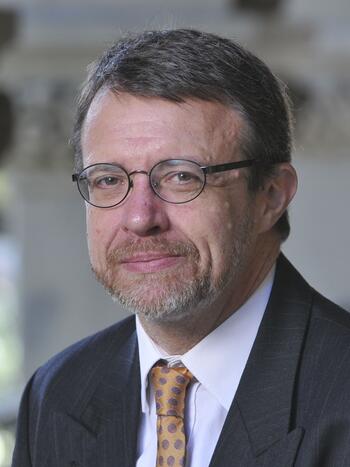
Professor Jaeho Yeom, president of the elite Korea University in Seoul and a Stanford Political Science PhD will examine the historical development, current changes, and future course of East Asian universities. Drawing on his own experience at Korea University, where his initiatives include the "pioneering intellectuals" program to encourage and support student creativity, President Yeom will examine many aspects of higher education, including shifts in educational methodologies, demographics, the pressures of globalization, and changes in government and private funding. 

Professor Jaeho Yeom earned a PhD in political science at Stanford University for his research on Japanese industrial policy for high technology. He has taught public administration at Korea University since 1990. He was Executive Vice President of Korea University before being appointed President in March 2015. President Yeom has also taught or conducted research in Japan, Australia, China, and the United Kingdom. He served as an expert member of the Korean Presidential Commission of Science and Technology Policy and a board member of the Korea Science and Engineering Foundation. He also served as president of The Korean Association for Policy Studies in 2007 and of The Korean Association for Contemporary Japanese Studies in 2008. Currently, he is chairperson of the Policy Advisory Committee of the Ministry of Foreign Affairs and Trade, member of Public Service Evaluation Committee, and Editor in Chief of Asian Research Policy. President Yeom is the author of numerous books and studies, including Future Strategy for Test, Research, and Evaluation of Food and Drug (2011, NIFDS).

Jaeho Yeom <i>President, Korea University</i>
Lectures
Paragraphs

"'Critical Engagement': British Policy toward the DPRK" examines the United Kingdom's policy toward the Democratic People's Republic of Korea (DPRK). The policy known as "critical engagement" has been applied for over 14 years. 

"UK efforts are not going to have the immediate result we all want. However, they do show...that it is possible to carry out engagement and hopefully reduce the chasm between DPRK thinking and the rest of the world," author Mike Cowin writes. He suggests that the British approach is similar to that advised by a Stanford research team in Tailored Engagement.

Cowin wrote an earlier policy paper on relations between the DPRK and the European Union in March 2015.

Mike Cowin is the 2014-15 Pantech Fellow in the Korea Program at the Walter H. Shorenstein Asia-Pacific Research Center. Before coming to Stanford, he served as the deputy head of mission at the British Embassy in Pyongyang, North Korea. He has also served in the British embassies in Seoul from 2003 to 2007, and in Tokyo from 1992 to 1997.

All Publications button
1
Publication Type
Policy Briefs
Publication Date
Authors
Mike Cowin
News Type
News
Date
Paragraphs

North Korea fired off short-range missiles last Tuesday close to the arrival of U.S. Secretary of Defense Ashton Carter to the region. Carter, who was on his inaugural trip to Asia as the newly confirmed Secretary of Defense, said the launch was a sign of the region’s continued tensions.

The United States consistently expresses concern over North Korea’s nuclear and missile capabilities, yet attempts to resume the Six-Party Talks, the negotiations to denuclearize North Korea which began in 2003, have been unsuccessful. The United Kingdom, although not an official participant in the Talks, has had diplomatic relations with North Korea since 2000, setting itself apart from many in the West, and from Japan which do not have formal diplomatic ties with the country. 

In a new policy brief, Mike Cowin, the 2014-15 Pantech Fellow at the Walter H. Shorenstein Asia-Pacific Research Center (APARC), discusses lesser-known channels of engagement between the United Kingdom and North Korea. 

Image

Cowin is the former deputy head of mission at the British Embassy Pyongyang, and implemented many of the programs he describes in the paper, "Critical Engagement": British Policy Towards the DPRK.

Typically small-scale and led largely in collaboration with European NGOs, the Embassy’s initiatives span from humanitarian aid – providing water supplies and sewage systems – to exchanges – hosting visiting delegations of North Korean paralympic athletes and English teachers.

The Embassy also works to build a stronger understanding of modern Britain in North Korea. They have shown films such as Wallace and Grommit and Philomena at the Pyongyang International Film Festival, and supplemented reading materials in the Grand People’s Study House, a central library in Pyongyang.

Cowin says that it’s not easy to construct these exchanges, but if established, they provide small steps in the right direction, and help set the stage for critical engagement in the future. The United Kingdom’s approach shares commonalities with the suggestions made by a Stanford research team in Tailored Engagement, he says.

“The United Kingdom’s efforts are not going to have the immediate result we all want. However, they do show that the DPRK is not completely isolated from the Western world and that it is possible to carry out engagement,” he says.

Cowin is also the author of an earlier policy brief on relations between North Korea and the European Union.

Hero Image
pyongyang international film festival
Presenters on stage at the 13th annual Pyongyang International Film Festival in North Korea.
Mike Cowin
All News button
1
News Type
News
Date
Paragraphs

Gi-Wook Shin, director of Stanford’s Shorenstein Asia-Pacific Research Center, presented the policy report Tailored Engagement at the Korea Foundation for Advanced Studies in late March. The event in Seoul coincided with the public release of the report in Korean.

Shin delivered a keynote lecture on the study which offers steps that South Korea can take to establish sustainable dialogue with North Korea. The report is an outcome of a longstanding research project seeking to understand the future domestic and global implications of North Korea’s situation.

Shin’s lecture was followed by remarks from Korea Program Associate Director David Straub and a panel discussion among four other experts. The panelists shared their observations on the current political climate in and around the Korean Peninsula.

Video from the event is available below:

Gi-Wook Shin’s lecture (in Korean)

David Straub’s remarks (in English)

Panel discussion (in Korean)

More than 320 people attended the event including students, policymakers and academics. The event marked the second occasion in Seoul where the Stanford team presented the report. In late 2014, they briefed the Special Committee on Inter-Korean Relations, Exchange and Cooperation of the South Korean National Assembly. An article about the briefing can be accessed here.

Shin is a professor of sociology, director of Shorenstein APARC, and a senior fellow at the Freeman Spogli Institute for International Studies. Straub is the associate director of the Korea Program at Shorenstein APARC.

Hero Image
profile shin Korea Foundation for Advanced Studies
All News button
1
Paragraphs

"North Korean Human Rights: A Long Journey with Little Progress" examines human rights in the Democratic People's Republic of Korea (DPRK, or North Korea) and the approaches that the European Union has taken to address the situation. In this paper, Mike Cowin provides perspective on EU-DPRK engagement; the two sides officially established diplomatic relations in May 2001. The EU and its members have continued to raise the human rights issue during bilateral meetings. But, North Korea says it will continue to refuse dialogue if the EU continues to sponsor resolutions against North Korea at the UN Human Rights Commission/Council. The EU has rejected this as a precondition. "The EU has had no incentive or justifiable reason to take the initiative to break out of this chicken-and-egg dilemma...The DPRK has also maintained its position. The gap between the two sides has therefore widened," he writes. Cowin suggests the EU could take additional steps to restart EU-DPRK engagement.

Mike Cowin is the 2014-15 Pantech Fellow in the Korea Program at the Walter H. Shorenstein Asia-Pacific Research Center. Before coming to Stanford, he served as the deputy head of mission at the British Embassy in Pyongyang, North Korea. He has also served in the British embassies in Seoul from 2003 to 2007, and in Tokyo from 1992 to 1997.

All Publications button
1
Publication Type
Policy Briefs
Publication Date
Journal Publisher
Shorenstein Asia-Pacific Research Center
Authors
Mike Cowin
Paragraphs

Global Talent seeks to examine the utility of skilled foreigners beyond their human capital value by focusing on their social capital potential, especially their role as transnational bridges between host and home countries. Gi-Wook Shin (Stanford University) and Joon Nak Choi (Hong Kong University of Science and Technology) build on an emerging stream of research that conceptualizes global labor mobility as a positive-sum game in which countries and businesses benefit from building ties across geographic space, rather than the zero-sum game implied by the "global war for talent" and "brain drain" metaphors.

"Advanced economies like Korea face a growing mismatch between low birth rates and increasing demand for skilled labor. Shin and Choi use original, comprehensive data and a global outlook to provide careful, accessible and persuasive analysis. Their prescriptions for Korea and other economies challenged by high-level labor shortages will amply reward readers of this landmark study."  —Mark Granovetter, Professor of Sociology, Stanford University

The book empirically demonstrates its thesis by examination of the case of Korea: a state archetypical of those that have been embracing economic globalization while facing a demographic crisis—and one where the dominant narrative on the recruitment of skilled foreigners is largely negative. It reveals the unique benefits that foreign students and professionals can provide to Korea, by enhancing Korean firms' competitiveness in the global marketplace and by generating new jobs for Korean citizens rather than taking them away. As this research and its key findings are relevant to other advanced societies that seek to utilize skilled foreigners for economic development, the arguments made in this book offer insights that extend well beyond the Korean experience.

Media coverage related to the research project:  

Dong-A Ilbo, January 27, 2016

Interiew with Arirang TV, March 10, 2016 (Upfront Ep101 - "Significance of attacting global talent," interview with Arirang)

All Publications button
1
Publication Type
Books
Publication Date
Journal Publisher
Stanford University Press
Authors
Gi-Wook Shin
News Type
Q&As
Date
Paragraphs

The attack on Mark Lippert, the American ambassador to South Korea, made headlines worldwide on Thursday. Since his arrival in Seoul last October, Lippert received high marks from the Korean people and the media for his accessibility to the public there. Lippert, a Stanford graduate, is a very close friend of President Obama, who has called him “brother,” and attended his ambassadorial swearing-in ceremony.

The Shorenstein Asia-Pacific Research Center asked David Straub to discuss the incident and its significance. The associate director of the Korea Program at Stanford, Straub served as a career diplomat at the U.S. embassy in Seoul from 1999 to 2002 and is the author of the forthcoming book about that period called Anti-Americanism in Democratizating South Korea.

What actually happened?

A South Korean extreme left-wing activist, Kim Ki-jong, slashed Ambassador Lippert with a kitchen knife Thursday morning at a public event in Seoul. Koreans at the event immediately wrestled the assailant to the floor, but not before he had inflicted several wounds on the ambassador: a long, deep gash on his cheek and cuts to his wrist and fingers. The ambassador was taken straightway to hospital, where surgeons repaired the damage in a three-hour operation. The prognosis is that he will regain the full use of his fingers in about six months, and that the scar on his face will be barely noticeable in one or two years. His doctors plan to remove the eighty stitches on his cheek on Monday, and, if all is well, release him from the hospital then. But it was a close call. Had the face wound extended only one inch farther down, it would have severed his carotid artery.

How is Ambassador Lippert doing?

He told his doctors on Friday that the facial wound was not bothering him particularly, but he did have some pain in his wrist and fingers. Doctors say he has some nerve damage there but the pain should ease soon. Ambassador Lippert’s response has been laudable. Consistent with the outstanding way he has comported himself in Korea since his arrival, he promptly tweeted on Thursday that he was “Doing well & in great spirits!” I am also aware that he was even responding to email wishes from some Stanford friends on Thursday.

Was Kim acting alone? How was it possible for him to perpetrate this attack?

Kim was the only person who attacked Ambassador Lippert, and he has stated that he acted alone.  Kim was a member of the organization that hosted Ambassador Lippert, but had not been invited to the function. The incident is still being investigated but Korean press reports say that the U.S. embassy declined South Korean police protection some time ago. Korea is considered a relatively safe country for American diplomats. This will all be sorted out in coming days and weeks, and U.S. and South Korean authorities will determine if other security arrangements are needed for Ambassador Lippert. In any event, it does not appear that this was an egregious security or intelligence failure on anyone’s part. Ambassadors are public figures and it’s not possible to provide them with perfect protection.

What was the assailant’s motivation?

Kim said that he wanted to emphasize that the United States is responsible for preventing improved inter-Korean relations because it does such things as participate in the ongoing combined military exercises with South Korean forces. North Korea cites the annual exercises as a pretext for not talking with the South, claiming each year that they are a prelude to an invasion. But Kim is a sad sack figure even within South Korea’s anti-American far left, which is a very small but vocal minority. Kim has been arrested many times in the past for outrageous and violent behavior, such as throwing pieces of concrete at the Japanese ambassador in 2010. He heads his own little NGO, but the Korean left has mostly avoided him because of his bizarre behavior. He even set himself on fire in 2007 near the Blue House to protest an alleged attack on an associate. Although I have never met him, it is my impression that Kim is clearly mentally and emotionally unstable.

How have the Korean government and people responded?

From the people who wrestled the assailant to the ground, to the surgeons and the thousands of people who are wishing Ambassador Lippert well, South Koreans have responded with an outpouring of support. Ambassador Lippert has already conveyed his deep gratitude for that on Twitter. President Park, who is currently on an official visit to the Middle East, telephoned Ambassador Lippert on Thursday; so did Foreign Minister Yun Byung-se. President Obama also called the ambassador to wish him a speedy recovery. Unfortunately, North Korea’s reaction has been very different: its official media applauded the attack as “deserved punishment” for “a warmongering United States.”

There are press reports that South Koreans are worried that this attack could hurt U.S.-Korean relations.

There is indeed considerable concern being expressed in South Korea at the moment that the incident could hurt bilateral relations, but there is no reason at all to believe that will be the case. Top U.S. officials have already stated that the incident will only strengthen U.S.-Korean relations. I recall the reaction in Seoul to the mass shooting by Seung-hui Cho at Virginia Tech in 2007. Cho had grown up in the United States but remained a Korean citizen. Many South Koreans were very fearful that the U.S. government would punish South Koreans, such as by not issuing visas, and that Americans would attack South Koreans on the streets in the United States. Of course, nothing like that happened. Americans understood the tragedy for what it was: not a “Korean” but a fellow human being with severe mental illness and access to guns.

You say that Kim appears to have a mental disability. But there are press reports that he lectured for the South Korean unification ministry’s education institute as well as at a major university in Seoul. How could such a person get those positions?

I am curious and concerned about those reports. For me, the bigger question about that is not Kim’s particular policy views but how someone with such obvious behavioral and apparently mental issues could receive such positions. But he held those jobs several years ago, so perhaps his behavior has become worse in the meantime.

I understand that Kim has already been charged with attempted murder and that Korean authorities are considering whether to charge him under the National Security Law owing to frequent travel to North Korea and possible other links with the North Korean government.

Unless Korean authorities find evidence that Kim was working for North Korea, which I doubt was the case (but which should of course be investigated due to his numerous trips to the country), it would be unfortunate for U.S.-South Korean relations to charge him under the controversial National Security Law. The U.S. government has criticized that law for decades for the McCarthyite way South Korean governments have sometimes implemented it to suppress alleged “pro-North Korean” thinking. Some South Korean leaders are calling the incident “pro-North Korean terrorism” and the work of “pro-North Korean forces.” That seems to me to be unwisely elevating the violent behavior of one deranged person and ascribing to it a significance it does not deserve.

Ambassador Lippert’s Twitter handle is @mwlippert.

Hero Image
obama lippert
In 2009, President Barack Obama confers with Mark Lippert, the then-National Security Council chief of staff. Since Oct. 2014, Lippert has served as the U.S. ambassador to South Korea.
Flickr/White House - Pete Souza
All News button
1
Authors
Gi-Wook Shin
News Type
Commentary
Date
Paragraphs

In a speech to a joint session of the U.S. Congress in May 2013, South Korean President Park Geun-hye contended, “Asia suffers from what I call ‘the Asian paradox,’ the disconnect between growing economic interdependence on the one hand, and backward political, security cooperation on the other.” This is, she noted, because “differences stemming from history are widening” and “how we manage this paradox” will determine the configuration of a new order in Asia.

Pessimists worry that colonial and wartime history problems will persist and that there is not much we can do about it. On the other hand, optimists believe that history issues will inevitably fade away over time as the wartime generation passes away and the countries of the region become increasingly integrated economically and culturally.

Only time can tell us which view is correct. But we cannot rely on time alone to heal these wounds and need to be cautious about unwarranted optimism regarding regional cooperation. We see the continuing power of “identity politics” in the nations of Northeast Asia, and recent transformations of historical memory show worrisome tendencies in South Korea, Japan and China. Certainly, Northeast Asian nations have been democratizing and/or promoting regionalism and globalization in recent decades, but none has uprooted or weakened the power of nationalism in the region. On the contrary, these changes may produce a crisis of national identity, strengthening nationalist sentiment in some quarters.

In Korea, nationalism has long guided the approach to the issue of historical injustice. Nationalism has produced master narratives of colonial history and offered a dominant framework for dealing with historical injustices such as comfort women and forced labor. It forces issues to be framed in a binary opposition—victims versus aggressors—and allows little room for gray areas, making it difficult to formulate a shared view of historical injustice. Ironically, the racism or nationalism that gave rise to historical injustice in the first place continues to inform victims’ approaches to reckoning with past wrongs. Disputes over the history of the ancient kingdom of Koguryŏ (Gaogouli in Chinese) reflect “irredentism” on the part of South Korea as well as China’s rising nationalism.

In Japan, uncertainties and anxieties created by the post-Cold War security environment and years of economic stagnation provided a fertile ground for easy and extreme answers in the form of nationalist politics. Nationalist scholars are making headway in producing textbooks to “make Japanese proud of themselves,” and nationalism is a prevailing theme in the military history museum attached to the Yasukuni Shrine, which Prime Ministers Koizumi and Abe visited during their tenure despite outcries from neighbours and against the concerns of many Japanese. The restoration of symbols such as the flag and national anthem are part of Japan’s quest to become a “normal nation.” If there is any difference between South Korea and Japan, it is that the left in South Korea—as opposed to the right in Japan—is at the forefront of nationalist politics of the history question.

In China, too, political leaders are promoting nationalism (or patriotism in their own words) to bolster social and political cohesion. Beijing needs a new unifying force to mobilize the nation in the face of the rapid (and disruptive) processes of socioeconomic modernization. In particular, in the post-Tiananmen era, the Chinese leadership appealed to nationalism to shore up its tainted legitimacy. China’s policy toward its minorities is based on the notion of a grand multi-ethnically unified China. History activists appeal to nationalist sentiments by commemorating Chinese suffering during the Japanese occupation, and nationalism is the force behind China’s territorial disputes with Japan and Southeast Asian neighbors as well as the straits relations.

Thus, despite increased intra-Asian trade, cultural exchange, and talks about an East Asian community, Korea, Japan, and China all still find politics of national identity appealing. After all, nationalism not only is about ideology but also thrives on narrowly defined “national interests.” Disputed territories always serve as symbols of national sovereignty that cannot be compromised. The mutual suspicion of Japan and China over the disputed Senkaku/Diaoyu islands and other territorial waters, and the Korean-Japanese tensions over Dokdo/Takeshima, are but two potent reminders.

History education reinforces nationalist sentiments in Northeast Asia. In both Japan and South Korea, the Ministry of Education requires that all textbooks undergo a strict screening process, and in China, the government plays an even stronger role in history textbook writings. In all three, nationalism is the guiding principle of official historical narratives, as they are obsessed with writing national history based on a single historical memory that stresses their struggles with outside aggression. In China, for instance, a new history textbook offers a significantly altered view of the wartime period in line with the Patriotic Education Campaign that began in the 1990s. Because history textbooks affect national identity, the politics of nationalism invariably influence their writing, which in turn promotes nationalist sentiments in the new generation.

Thus, the key challenge facing Northeast Asia is how to tame the power of nationalism while promoting vibrant civil society with global thinking as well as regional cooperation. Also, while some expect generational change and increasing people-to-people exchanges to heal wounds from the past, the picture seems mixed. In China and South Korea, surveys among the countries’ youth regularly register a highly negative view of Japan over history issues. It may be true that the passing of the war generations will end some of the vivid, bitter animosities. On the other hand, the importance that second and third generations attach to past issues and how they perceive them are not only a result of time, but also a reflection of the historical knowledge they acquire through education, museums, films and other media.

When issues of the past posed a stumbling block in ameliorating relations between China and Japan in the 1970s, Chinese leader Deng Xiaoping said, “Because our generation is not wise enough to resolve all of the pending questions, let’s leave the unsettled ones to next generation.” Contrary to his expectations, however, the two countries are stricken today with a worse situation involving history and territorial disputes, and the younger generation tends to be even more swayed by the fever of nationalism.

Now is a moment of danger and opportunity for Northeast Asia. The current impasse in regional relations demands a commitment to confront the corrosive nationalism fed by the unresolved issues of history. Disregarding or ignoring an unfortunate past means not only evasion of historical accountability but also a missed opportunity to learn from history. Germany’s failure to learn from its defeat in the First World War led to the rise of Nazism and another world war. The German experience should provide a valuable lesson for all, especially Japan, as they struggle to deal with the growing power of nationalism and identity politics.


This article was originally carried by the University of Nottingham's China Policy Institute Blog on 10 February and reposted with permission.

Hero Image
senkaku daioyu islands contrast brightness applied
A Japanese Coast Guard vessel passes by the Diaoyu/Senkaku Islands.
Flickr/Al Jazeera English (brightness/contrast applied)
All News button
1
Subscribe to Society