Society

FSI researchers work to understand continuity and change in societies as they confront their problems and opportunities. This includes the implications of migration and human trafficking. What happens to a society when young girls exit the sex trade? How do groups moving between locations impact societies, economies, self-identity and citizenship? What are the ethnic challenges faced by an increasingly diverse European Union? From a policy perspective, scholars also work to investigate the consequences of security-related measures for society and its values.

The Europe Center reflects much of FSI’s agenda of investigating societies, serving as a forum for experts to research the cultures, religions and people of Europe. The Center sponsors several seminars and lectures, as well as visiting scholars.

Societal research also addresses issues of demography and aging, such as the social and economic challenges of providing health care for an aging population. How do older adults make decisions, and what societal tools need to be in place to ensure the resulting decisions are well-informed? FSI regularly brings in international scholars to look at these issues. They discuss how adults care for their older parents in rural China as well as the economic aspects of aging populations in China and India.

News Type
News
Date
Paragraphs

The Asia Health Policy Program at Stanford’s Shorenstein Asia-Pacific Research Center, in collaboration with scholars from Stanford Health Policy's Center on Demography and Economics of Health and Aging, the Stanford Institute for Economic Policy Research, and the Next World Program, is soliciting papers for the third annual workshop on the economics of ageing titled Financing Longevity: The Economics of Pensions, Health Insurance, Long-term Care and Disability Insurance held at Stanford from April 24-25, 2017, and for a related special issue of the Journal of the Economics of Ageing.

The triumph of longevity can pose a challenge to the fiscal integrity of public and private pension systems and other social support programs disproportionately used by older adults. High-income countries offer lessons – frequently cautionary tales – for low- and middle-income countries about how to design social protection programs to be sustainable in the face of population ageing. Technological change and income inequality interact with population ageing to threaten the sustainability and perceived fairness of conventional financing for many social programs. Promoting longer working lives and savings for retirement are obvious policy priorities; but in many cases the fiscal challenges are even more acute for other social programs, such as insurance systems for medical care, long-term care, and disability. Reform of entitlement programs is also often politically difficult, further highlighting how important it is for developing countries putting in place comprehensive social security systems to take account of the macroeconomic implications of population ageing.

The objective of the workshop is to explore the economics of ageing from the perspective of sustainable financing for longer lives. The workshop will bring together researchers to present recent empirical and theoretical research on the economics of ageing with special (yet not exclusive) foci on the following topics:

  • Public and private roles in savings and retirement security
  • Living and working in an Age of Longevity: Lessons for Finance
  • Defined benefit, defined contribution, and innovations in design of pension programs
  • Intergenerational and equity implications of different financing mechanisms for pensions and social insurance
  • The impact of population aging on health insurance financing
  • Economic incentives of long-term care insurance and disability insurance systems
  • Precautionary savings and social protection system generosity
  • Elderly cognitive function and financial planning
  • Evaluation of policies aimed at increasing health and productivity of older adults
  • Population ageing and financing economic growth
  • Tax policies’ implications for capital deepening and investment in human capital
  • The relationship between population age structure and capital market returns
  • Evidence on policies designed to address disparities – gender, ethnic/racial, inter-regional, urban/rural – in old-age support
  • The political economy of reforming pension systems as well as health, long-term care and disability insurance programs


Submission for the workshop

Interested authors are invited to submit a 1-page abstract by Sept. 30, 2016, to Karen Eggleston at karene@stanford.edu. The authors of accepted abstracts will be notified by Oct. 15, 2016, and completed draft papers will be expected by April 1, 2017.

Economy-class travel and accommodation costs for one author of each accepted paper will be covered by the organizers.

Invited authors are expected to submit their paper to the Journal of the Economics of Ageing. A selection of these papers will (assuming successful completion of the review process) be published in a special issue.


Submission to the special issue

Authors (also those interested who are not attending the workshop) are invited to submit papers for the special issue in the Journal of the Economics of Ageing by Aug. 1, 2017. Submissions should be made online. Please select article type “SI Financing Longevity.”


About the Next World Program

The Next World Program is a joint initiative of Harvard University’s Program on the Global Demography of Aging, the WDA Forum, Stanford’s Asia Health Policy Program, and Fudan University’s Working Group on Comparative Ageing Societies. These institutions organize an annual workshop and a special issue in the Journal of the Economics of Ageing on an important economic theme related to ageing societies.


More information can be found in the PDF below.


Hero Image
Flickr/Vinoth Chandar Flickr/Vinoth Chandar
All News button
1
Paragraphs

No nation is free from the charge that it has a less-than-complete view of the past. History is not simply about recording past events—it is often contested, negotiated, and reshaped over time. The debate over the history of World War II in Asia remains surprisingly intense, and Divergent Memories examines the opinions of powerful individuals to pinpoint the sources of conflict: from Japanese colonialism in Korea and atrocities in China to the American decision to use atomic weapons against Japan.

Rather than labeling others' views as "distorted" or ignoring dissenting voices to create a monolithic historical account, Gi-Wook Shin and Daniel Sneider pursue a more fruitful approach: analyzing how historical memory has developed, been formulated, and even been challenged in each country. By identifying key factors responsible for these differences, Divergent Memories provides the tools for readers to both approach their own national histories with reflection and to be more understanding of others.


"A well-written investigation on the legacy of World War II in Asia, greatly contributes to the field of cultural and military history.”Mel Vasquez, H-War

"This book is an important counterweight to prevailing tendencies that promote uncritical nationalism and is thus an invaluable resource for this generation’s Asian and American youth to gain a critical understanding of their national histories...[T]he authors’ non-judgmental approach, coupled with persistence in pursuing the multiple interpretations and experiences of these traumatic events, provoke a reconsideration of our notions of justice, equality, and humanity within our nationalist thinking."—Grace Huang, Journal of American-East Asian Relations, Vol. 26.2


This book is part of the Studies of the Walter H. Shorenstein Asia-Pacific Research Center series at Stanford University Press.

All Publications button
1
Publication Type
Books
Publication Date
Journal Publisher
Stanford University Press
Authors
Gi-Wook Shin
Paragraphs

Scholars have long examined the relationship between nation-states and their "internal others," such as immigrants and ethno-racial minorities. Contested Embrace shifts the analytic focus to explore how a state relates to people it views as "external members" such as emigrants and diasporas. Specifically, Jaeeun Kim analyzes disputes over the belonging of Koreans in Japan and China, focusing on their contested relationship with the colonial and postcolonial states in the Korean peninsula.

Extending the constructivist approach to nationalisms and the culturalist view of the modern state to a transnational context, Contested Embrace illuminates the political and bureaucratic construction of ethno-national populations beyond the territorial boundary of the state. Through a comparative analysis of transborder membership politics in the colonial, Cold War, and post-Cold War periods, the book shows how the configuration of geopolitics, bureaucratic techniques, and actors' agency shapes the making, unmaking, and remaking of transborder ties. Kim demonstrates that being a "homeland" state or a member of the "transborder nation" is a precarious, arduous, and revocable political achievement.

This book is part of the Studies of the Walter H. Shorenstein Asia-Pacific Research Center series at Stanford University Press.

All Publications button
1
Publication Type
Books
Publication Date
Journal Publisher
Stanford University Press
Authors
Jaeeun Kim
-

Left-center parties in South Korea and Taiwan recently defeated their conservative opponents amid a surge in turnout by younger voters. What are the underlying causes of these developments? Do they signal the beginning of a political transformation in these vibrant democracies? Booseung Chang will discuss the role of growing voter anger over socio-economic disparities and the rise of new nationalisms in potentially changing the political party systems of South Korea and Taiwan, along with the implications for the United States.

Image
bchang5x5
Booseung Chang is the 2015-16 Shorenstein Postdoctoral Fellow at Stanford’s Shorenstein Asia-Pacific Research Center. His research focuses on domestic developments and foreign relations of Japan, South Korea, and Taiwan, as well as North Korean nuclear issues. Chang received a doctorate in international relations from Johns Hopkins University. Previously, he served as a South Korean foreign service officer for fifteen years.

Booseung Chang <i>2015-16 Shorenstein Postdoctoral Fellow</i>, Stanford University
Seminars
News Type
Commentary
Date
Paragraphs

In early May, North Korea held its first Workers’ Party Congress in over three decades. Kathleen Stephens, Stanford distinguished fellow and former ambassador to South Korea, told CNBC’s “Squawkbox” that the meeting was an effort by North Korea to demonstrate consolidated rule under Kim Jong-un. Stephens said she did not anticipate any major announcements at the meeting, but recognized that North Korea faced a “new challenge” in its ally China joining the bid for tougher U.N. sanctions against it in response to its latest nuclear and missile tests.

The interview can be viewed here.

Hero Image
squawkbox interview headline
All News button
1
-

South Korea has relied on its export-oriented development model to become an economic powerhouse, but has now reached the limits of this model. Indeed, Korea’s phenomenal growth has incubated the seeds of its own destruction. Learning from the Korean developmental experience, China has adopted key elements of the Korean development model and has become a potent competitor in electronics and the heavy industries. Meanwhile, the organizational and institutional legacies of late industrialization have constrained Korean efforts to move into technology entrepreneurship and the service sector. These strategic challenges are compounded by a demographic bomb, as social development has led to collapsing birthrates in Korea, much like other developed countries in Europe and Asia. Within the next few years, the Korean workforce will start diminishing in size and aging rapidly, straining the country’s resources and curtailing its growth. In this seminar, Joon Nak Choi, 2015-16 Koret Fellow at Stanford's Shorenstein Asia-Pacific Reserach Center, will discuss innovations in business strategy, educational policy and social structure that are directly relevant to these problems, and that would alleviate or perhaps even reverse Korea’s economic malaise.

Image
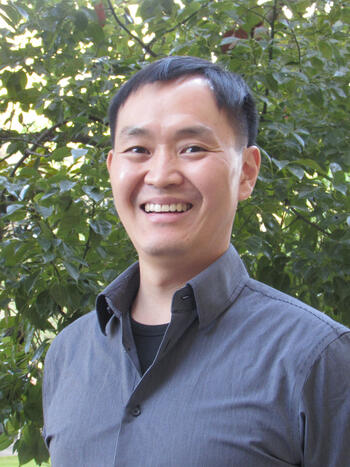
joon nak choi 7 cropped
A Stanford graduate and sociologist by training, Choi is an assistant professor of management at the School of Business and Management, Hong Kong University of Science and Technology. His research and teaching areas include economic development, social networks, organizational theory, and global and transnational sociology, within the Korean context. He coauthored Global Talent: Skilled Labor as Social Capital in Korea (Stanford University Press, 2015).

This public event is made possible through the generous support of the Koret Foundation.

Shorenstein APARC
Encina Hall
Stanford University
Stanford, CA 94305-6055

0
joon_nak_choi_7_cropped.jpg

Joon Nak Choi is the 2015-2016 Koret Fellow in the Korea Program at Stanford University's Walter H. Shorenstein Asia-Pacific Research Center (Shorenstein APARC). A sociologist by training, Choi is an assistant professor at Hong Kong University of Science and Technology. His research and teaching areas include economic development, social networks, organizational theory, and global and transnational sociology, within the Korean context.

Choi, a Stanford graduate, has worked jointly with professor Gi-Wook Shin to analyze the transnational bridges linking Asia and the United States. The research project explores how economic development links to foreign skilled workers and diaspora communities.

Most recently, Choi coauthored Global Talent: Skilled Labor as Social Capital in Korea with Shin, who is also the director of the Korea Program. From 2010-11, Choi developed the manuscript while he was a William Perry postdoctoral fellow at Shorenstein APARC.

During his fellowship, Choi will study the challenges of diversity in South Korea and teach a class for Stanford students. Choi’s research will buttress efforts to understand the shifting social and economic patterns in Korea, a now democratic nation seeking to join the ranks of the world’s most advanced countries.
 
Supported by the Koret Foundation, the Koret Fellowship brings leading professionals to Stanford to conduct research on contemporary Korean affairs with the broad aim of strengthening ties between the United States and Korea. The fellowship has expanded its focus to include social, cultural and educational issues in Korea, and aims to identify young promising scholars working on these areas.


2015-2016 Koret Fellow
Visiting Scholar
<i>2015-16 Koret Fellow, Shorenstein APARC, Stanford University</i>
Seminars
Paragraphs

This article examines how different organizational structures in disaster aid delivery affect house aid quality. We analyze three waves of survey data on fishermen and fishing villages in Aceh, Indonesia, following the 2004 tsunami. We categorize four organizational structures based on whether and to whom donors contract aid implementation. Compared to bilateral contracting between donors and implementers, donors that vertically integrate and do their own implementation offer the highest-quality housing as rated by village heads and have fewer counts of faults, such as leaky roofs and cracked walls, as reported by fishermen. However, they shade in quality as they lose dominance as the leading aid agency in a village. Domestic implementers and the government agency that was responsible for significant portions of aid delivery provide significantly lower-quality aid. We also examine how the imposition of shared ownership, the primary social agenda for boat aid agencies, affects boat aid quality. We find that village and fishing leaders steer poor-quality boats toward those whom shared ownership was imposed upon, often lower-status fishermen.

All Publications button
1
Publication Type
Journal Articles
Publication Date
Journal Publisher
Economic Development and Cultural Change
Authors
Yong Suk Lee
Number
4
News Type
Commentary
Date
Paragraphs

In the wake of this month’s G7 Summit in Japan, U.S. President Barack Obama has an opportunity to make a presidential visit to Hiroshima. Such a visit would reinforce his vision of a nuclear-free world and solidify an important legacy of his foreign policy, Shorenstein APARC Director Gi-Wook Shin and Associate Director for Research Daniel Sneider write in an editorial for The Diplomat. The co-authors argue that the visit be framed in a way that would contribute to historical reconciliation in Northeast Asia and not undermine progress made between Japan and South Korea. 

Sneider wrote in an earlier Toyo Keizei editorial that while the White House has not yet announced a decision, the momentum for such a visit exists. And while issues of divided historical memory cannot be ignored, the occasion would not include an apology. The editorial can be viewed online in English and Japanese.

Sneider also contributed to Public Radio International's podcast series "Whose Century Is It?" and two articles on the Huffington Post Japan website. The first article, written in Japanese, examines how the history of atomic bombings are taught in the United States, and the second article, written in English, explores the question of acceptability of President Obama's visit to Hiroshima by the Japanese people.

During the visit, Obama delivered a speech that outlined the threat of nuclear weapons and the need for a world free from them. Writing for Nippon.com, Sneider said the speech and overall visit was well-received by many, but also had its critics. "The best judgment of the impact of Obama's Hiroshima visit may be what follows in Northeast Asia, where the task of postwar reconciliation remains unfinished," he wrote. The editorial can be viewed online in English and Japanese.

Shin and Sneider lead a decade-long research project that examines historical reconciliation in Asia, and are co-authors of the forthcoming book, Divergent Memories, about elite opinion and wartime memory in Asia.

Hero Image
hiroshima visit
During a break in the G7 Ministerial Meetings in Japan, a delegation visits the Hiroshima Peace Memorial on April 11, 2016 with U.S. Secretary of State John Kerry.
Flickr/U.S. Department of State
All News button
1
Authors
Gi-Wook Shin
News Type
News
Date
Paragraphs

A variety of media outlets have recently highlighted Stanford research efforts focused on the value of global talent and diversity policy in South Korea led by Professor Gi-Wook Shin, director of the Walter H. Shorenstein Asia-Pacific Research Center (APARC).

On Arirang, Shin discussed why South Korea should seek to recruit and retain foreign skilled workers in a moderated conversation with Rennie Moon, an assistant professor at Yonsei University. Together, the scholars work on a research project that examines diversity programs and policies of universities and companies in South Korea.

Shin and Moon wrote an editorial for Conversation UK that recognizes Korea’s failure to embrace diversity and says the country’s ethnic nationalism is largely to blame. They call upon Korean universities and the government to work closely together to tackle diversity issues. A similar message was relayed in a Q&A conducted by Shorenstein APARC and on a podcast episode recorded for "Korea and the World." Shin and Moon also wrote an editorial for the East Asia Forum that broadens the analysis to include the challenges of attracting foreign talent across Northeast Asia. 

Shin also told Maeil Shinmun that South Korea needs concrete and strategic policies to compete globally in its recruitment of foreign skilled workers. One of his policy suggestions is to offer a 2-year visa period for foreign college graduates to encourage them to work and stay in South Korea.

Dong-a Ilbo also covered an event where Shin presented findings from his co-authored publication, Global Talent: Skilled Labor as Social Capital. He said South Korea must embrace the value of social capital and diasporas as seen in the United States example, or else the country risks losing global competitiveness. Shin leads a research project on this topic with Joon Nak Choi, 2015-16 Koret Fellow at Shorenstein APARC and an assistant professor at Hong Kong University of Science and Technology. An earlier Nikkei Asian Review editorial highlights some of their studies.

Related links will be added to this news item as they arrive.

Hero Image
gettyimages 187172376
Students prepare to take an exam at a high school in Seoul.
AFP/Getty Images - Jung Yeon-Je
All News button
1
Date Label
-

The 8th Annual Koret Workshop

South Korea has become an economic powerhouse, but faces multiple challenges. The conference will focus on four areas that South Korea needs to turn its attention to: 1) the higher education and development; 2) entrepreneurship and innovation; 3) global competitiveness; and 4) demographic changes and immigration policy.

During the conference, a keynote speech is open to the public. Please click here for more information about the public keynote.

The Koret Workshop is made possible through the generous support of the Koret Foundation.

Workshops
Subscribe to Society