Economic Affairs
Authors
News Type
Q&As
Date
Paragraphs

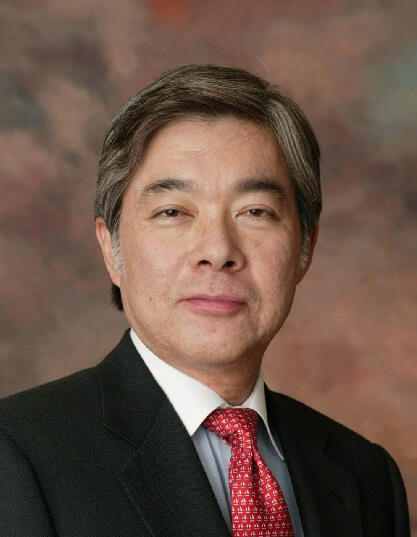
Though some signs point to Japan falling into recession, Stanford economist Takeo Hoshi disagrees and says it is premature to judge the effectiveness of Japan's new approach to its economy. Not enough time has passed for the reforms to produce results.

Despite a recent slowdown, time will tell if Japan has charted the right economic course after more than 15 years of deflation, says a Stanford economist.

The Stanford News Service recently interviewed economics professor Takeo Hoshi of Stanford's Walter H. Shorenstein Asia-Pacific Research Center about Japan's economy – the third largest in the world.

In the last two years, Japan undertook a new economic direction in adopting fiscal reforms known as "Abenomics," which refers to its principal advocate, Japanese Prime Minister Shinzō Abe. Abenomics consists of monetary policy, fiscal policy and economic growth strategies to encourage private investment. But new data suggest that Japan may have fallen into a recession, which adds to worries about the slowing global economy.

Is Japanese Prime Minister Shinzo Abe’s "Abenomics" working?

It is too early to tell. Abenomics is not failing – yet. It has three pillars or "arrows," as they are often called. The first arrow – monetary expansion – has succeeded. Japan is out of deflation, which had lasted more than 15 years. The inflation rate has not reached the target rate of 2 percent and is recently falling a little bit, but it is away from zero. The postponement of the consumption tax increase that was announced last week was a step back on the efforts to reduce the budget deficits, which is considered to be a part of the second arrow (flexible fiscal policy). However, some people in the government have started to argue that fiscal consolidation has never been a part of the second arrow. 

According to Abe, the government will implement a consumption tax rate hike in April 2017 – it will rise from 8 percent to 10 percent. This time, the law will not include an escape clause, which made the earlier one contingent on economic conditions. It was also announced that the government will develop a real plan to achieve a fiscal surplus by a certain date. These efforts may lead to a credible plan to reach fiscal sustainability. So, it is too early to say if this second arrow of Abenomics has failed.

The third arrow is the growth strategy. The original strategy announced in June 2013 lacked focus, but the revised version enacted in June 2014 offers 10 focus areas, some of which are quite sensible. The government has just begun on some of these economic reforms. It is way too early to tell if these efforts to restore growth in Japan will prove fruitful.

Will the Japanese recession have painful implications for the United States?

I would not say Japan is in recession now. Many people say that Japan is in recession because the first preliminary estimate of the third quarter real GDP growth came out negative. With the negative growth in the second quarter, Japan's economic condition satisfies a standard definition of recession (two consecutive quarters of negative growth). But the negative growth in the second quarter was inevitable because the demand was shifted from the second quarter to the first quarter in anticipation of the consumption tax hike on April 1. People shifted the timing of durable consumption goods purchase from the second quarter to the first quarter. So, the "true" negative growth has been observed only for a quarter. 

Even the negative growth in the third quarter may not really signal a serious trouble. First, the negative growth disappears if we exclude the change in inventory. In other words, the production was down from the second quarter but the demand – or sales – did not fall. Also, many people expect the second preliminary estimate for third quarter growth that will be published on Dec. 8 will be revised higher. 

Will this hurt the global economy?

If Japan was in recession, that would hurt the rest of the world, especially when the economies in Europe are weak and China is slowing down. But I don't think Japan is in recession – yet.

What would have been a better strategy than "Abenomics?"

Abenomics has been better than any other alternatives that have been tried in Japan. The Bank of Japan finally stopped its deflationary policy. Abenomics also showed some early promise in economic reforms, which were tried before only in piecemeal ways.

Assuming the Liberal Democratic Party retains power and Prime Minister Abe returns as the prime minister after the next election – which seems to be a safe assumption – the government will continue Abenomics with a renewed commitment to fiscal reform and growth, I hope.

What is the lesson for countries around the world?

Many people have prematurely declared the "failure" of Abenomics. I don't think their assessment is correct, but the government could have done better by implementing some easier economic reforms in the beginning – and calling attention to its early successes. This could have included, for example, reducing the barriers to start new businesses.

Clifton Parker is a writer for the Stanford News Service.

Hero Image
flickr dickthomasjohnson tokyo stock
An electronic board shows Japan's Nikkei prices and related indexes at the Tokyo Stock Exchange in Tokyo (image crop, brightness applied).
Flickr/Dick Thomas Johnson
All News button
1
News Type
Commentary
Date
Paragraphs


On Sept. 3, Japanese Prime Minister Shinzo Abe reshuffled his cabinet, bringing more than double the number of female ministers on board, in line with his pledge to revive the economy based in part on increased participation of women in business and politics.

Traditionally, Japan has provided tax and pension incentives for women to stay at home or work part-time; however, Mr. Abe seeks to change this and has laid out a plan in the “third arrow” of his administration’s economic policy.

Takeo Hoshi, an economist and director of the Japan Program at the Shorenstein Asia-Pacific Research Center, spoke with Deutsche Welle about the administration’s leadership shift and policy goals.

“Relying on women to work more is an excellent idea because the Japanese economy has underutilized women’s talents in the past,” he says.

The full article is available on Deutsche Welle online.

Hero Image
flickr global panorama japan pm shinzo abe 2013
Japanese Prime Minister Shinzo Abe seen arriving at the Asia-Pacific Economic Cooperation meeting in 2013.
Flickr/Global Panorama
All News button
1
-

A year has passed since the Japanese government embarked on the new economic policy package called “Abenomics” with three “arrows”: aggressive monetary easing, flexible fiscal policy, and a growth strategy. The package is designed to bring the Japanese economy out of 20 years of stagnation and 15 years of deflation, and put it on a sustainable growth path. How effective has the policy package been during the first year of the Abe administration?  Will it succeed in bringing sustainable growth to Japan?  Professor Takatoshi Ito, a prominent expert on the Japanese economy, tackles these questions.

Takatoshi Ito, Professor at Faculty of Economics and Dean of Graduate School of Public
Policy, University of Tokyo, has taught extensively both in the United States and Japan,
including at University of Minnesota, Hitotsubashi University, and Harvard University.
He held visiting professor positions at Harvard University (1986-87 and 1992-94), Stanford
University (as National Fellow; 1984-85); Columbia Business School (fall semester, 2009),
and Tun Ismail Ali Chair Professor at University of Malaya (summer semester, 2008). His
public sector experiences include Senior Advisor in the Research Department, IMF
(1994-97); Deputy Vice Minister for International Affaires at Ministry of Finance
(1999-2001); and a member of the Prime Minister’s Council of Economic and Fiscal
Policy (2006-08). He is an author of many books including The Japanese Economy (MIT
Press), The Political Economy of the Japanese Monetary Policy (MIT Press), and
Financial Policy and Central Banking in Japan (MIT Press), and more than 50
refereed academic journal articles on international finance and the Japanese economy,
including ones in American Economic Review and Econometrica. He has distinguished
academic and research appointments such as President of the Japanese Economic
Association in 2004; Fellow of Econometric Society, since 1992; Research Associate at
National Bureau of Economic Research since 1985; and Faculty Fellow, Centre for
Economic Policy Research, since 2006. His research interest includes capital flows and
currency crises, microstructures of the foreign exchange rates, and inflation targeting. He
contributes frequently op-ed columns and articles to Financial Times, Nihon Keizai Shinbun,
Mainichi Shinbun, and Toyo Keizai Weekly.

Philippines Conference Room

Takatoshi Ito Speaker University of Tokyo
Seminars
-

China's surprise declaration of an Air Defense Identification Zone (ADIZ) that extends out into the East China Sea, including disputed territories with both Japan and South Korea, and overlapping with an existing ADIZ set up by Japan has triggered a new round of tension and instability in Northeast and East Asia. The United States government has intervened rapidly, both rejecting the Chinese assertion and the rules it proclaimed for the zone, and seeking to mediate the diplomatic tensions that have arisen in the region. South Korea has now modified its own ADIZ to assert its territorial claims in the area. What does this latest crisis over territory and the projection of power in Northeast Asia portend for the future? What does it tell us about Chinese intentions and management of its relations with its neighbors? How can we assess the reactions of Japan, South Korea and the United States? And what might this mean for other areas of contention, most of all the South China Sea?

Philippines Conference Room

Donald K. Emmerson Panelist Stanford University
0
Former Thomas Rohlen Center Fellow at the Freeman Spogli Institute for International Studies
Former Assistant Professor of Political Science
phillip_lipscy_2018.jpg PhD

Phillip Y. Lipscy was the Thomas Rohlen Center Fellow at the Freeman Spogli Institute for International Studies and Assistant Professor of Political Science at Stanford University until August 2019. His fields of research include international and comparative political economy, international security, and the politics of East Asia, particularly Japan.

Lipscy’s book from Cambridge University Press, Renegotiating the World Order: Institutional Change in International Relations, examines how countries seek greater international influence by reforming or creating international organizations. His research addresses a wide range of substantive topics such as international cooperation, the politics of energy, the politics of financial crises, the use of secrecy in international policy making, and the effect of domestic politics on trade. He has also published extensively on Japanese politics and foreign policy.

Lipscy obtained his PhD in political science at Harvard University. He received his MA in international policy studies and BA in economics and political science at Stanford University. Lipscy has been affiliated with the Reischauer Institute of Japanese Studies and Weatherhead Center for International Affairs at Harvard University, the Institute of Social Science at the University of Tokyo, the Institute for Global and International Studies at George Washington University, the RAND Corporation, and the Institute for International Policy Studies.

For additional information such as C.V., publications, and working papers, please visit Phillip Lipscy's homepage.


Phillip Lipscy Panelist Stanford University
Daniel C. Sneider Panelist Stanford University
0
Former Henri H. and Tomoye Takahashi Senior Fellow in Japanese Studies at the Freeman Spogli Institute for International Studies
Former Professor, by courtesy, of Finance at the Graduate School of Business
takeo_hoshi_2018.jpg PhD

Takeo Hoshi was Henri and Tomoye Takahashi Senior Fellow at the Freeman Spogli Institute for International Studies (FSI), Professor of Finance (by courtesy) at the Graduate School of Business, and Director of the Japan Program at the Shorenstein Asia-Pacific Research Center (APARC), all at Stanford University. He served in these roles until August 2019.

Before he joined Stanford in 2012, he was Pacific Economic Cooperation Professor in International Economic Relations at the Graduate School of International Relations and Pacific Studies (IR/PS) at University of California, San Diego (UCSD), where he conducted research and taught since 1988.

Hoshi is also Visiting Scholar at Federal Reserve Bank of San Francisco, Research Associate at the National Bureau of Economic Research (NBER) and at the Tokyo Center for Economic Research (TCER), and Senior Fellow at the Asian Bureau of Finance and Economic Research (ABFER). His main research interest includes corporate finance, banking, monetary policy and the Japanese economy.

He received 2015 Japanese Bankers Academic Research Promotion Foundation Award, 2011 Reischauer International Education Award of Japan Society of San Diego and Tijuana, 2006 Enjoji Jiro Memorial Prize of Nihon Keizai Shimbun-sha, and 2005 Japan Economic Association-Nakahara Prize.  His book titled Corporate Financing and Governance in Japan: The Road to the Future (MIT Press, 2001) co-authored with Anil Kashyap (Booth School of Business, University of Chicago) received the Nikkei Award for the Best Economics Books in 2002.  Other publications include “Will the U.S. and Europe Avoid a Lost Decade?  Lessons from Japan’s Post Crisis Experience” (Joint with Anil K Kashyap), IMF Economic Review, 2015, “Japan’s Financial Regulatory Responses to the Global Financial Crisis” (Joint with Kimie Harada, Masami Imai, Satoshi Koibuchi, and Ayako Yasuda), Journal of Financial Economic Policy, 2015, “Defying Gravity: Can Japanese sovereign debt continue to increase without a crisis?” (Joint with Takatoshi Ito) Economic Policy, 2014, “Will the U.S. Bank Recapitalization Succeed? Eight Lessons from Japan” (with Anil Kashyap), Journal of Financial Economics, 2010, and “Zombie Lending and Depressed Restructuring in Japan” (Joint with Ricardo Caballero and Anil Kashyap), American Economic Review, December 2008.

Hoshi received his B.A. in Social Sciences from the University of Tokyo in 1983, and a Ph.D. in Economics from the Massachusetts Institute of Technology in 1988.

Former Director of the Japan Program at the Shorenstein Asia-Pacific Research Center
CV
Takeo Hoshi Moderator Stanford University
Panel Discussions
Paragraphs

This volume collects 22 articles by Masahiko Aoki, selected from writings published over the course of his 45-year academic career. These fascinating essays cover a range of issues, including mechanism design, comparative governance, corporate governance, institutions and institutional change, but are tied together by a focus on East Asia and a comparative institutional framework.

Specific topics include the early stages of mechanism design theory, comparative analysis of vertical, horizontal and modular industrial coordination and its applications, cooperative game-theoretic approaches to the diversity of corporate government structure, the endogenous nature of institutions, and comparative and historical analysis of institutions in Japan, China and Korea.

Students, professors and scholars with an interest in comparative institutional studies and East Asian studies will find this book a useful and illuminating resource.

All Publications button
1
Publication Type
Books
Publication Date
Journal Publisher
Edward Elgar Pub
Authors
Masahiko Aoki
Number
978 1 78254 839 3
-

Prime Minister Abe's economic policy, called Abenomics, places policies to open up Japan as a key component.  The government argues that reducing the barriers for international trade and capital flows will revitalize the Japanese economy and restore the growth in Japan.  At the core of the opening up policy are efforts to establish free trade agreements (FTAs) with major trading partners.  Japan joined the negotiation for TPP (Trans-Pacific Partnership), which includes the U.S., Japan's second largest trading partner, in July this year.  Japan has also started negotiation for RCEP (Regional Comprehensive Economic Partnership), which includes China, Japan's largest trading partner.  Will these efforts really succeed in making the Japanese economy more open?  Do they lead to the recovery of Japan from two decades of stagnation?  Experts from both sides of the Pacific discuss these issues.


Participants:

Glen S.

Image
Fukushima is Senior Fellow at the Center for American Progress, a prominent public policy think tank headquartered in Washington, D.C.  From 1990 to 2012, Mr. Fukushima was based in Tokyo as a senior executive with one European and four American multinational corporations: Vice President, AT&T Japan Ltd.; President, Arthur D. Little Japan; President & CEO, Cadence Design Systems Japan; President & CEO, NCR Japan; and President & CEO, Airbus Japan.  Before embarking on his business career in 1990, he was based in Washington, D.C. as Director for Japanese Affairs (1985-1988) and Deputy Assistant United States Trade Representative for Japan and China (1988-1990) at the Office of the United States Trade Representative (USTR), Executive Office of the President.  Mr. Fukushima served two terms as President of the American Chamber of Commerce in Japan, 1998-1999, and Vice President, 1993-1997.  A native of California, Mr. Fukushima was educated at Deep Springs College, Stanford University, Harvard University Graduate School of Arts and Sciences, Harvard Business School, and Harvard Law School. At Harvard, he was awarded a National Science Foundation Fellowship. He has studied and worked in Japan for over 25 years, including at Keio University, a daily newspaper, an international law firm, and as a Fulbright Fellow and a Japan Foundation Fellow at the Faculty of Law, University of Tokyo.


Image
Hideichi Okada joins the Walter H. Shorenstein Asia-Pacific Research Center (Shorenstein APARC) from September, 2013 until March, 2014 as Sasakawa Peace Fellow with the Japan Studies Program (JSP).  His research interests encompass energy policies and trade policies in the context of possible cooperation between Japan and the U.S. During his time at Shorenstein APARC, Okada will be working to launch New Dialogue Program for future cooperation on various areas between Japan and the U.S., and other Asia Pacific countries.  Okada served as Vice Minister for International Affairs, Ministry of Economy, Trade and Industry (METI) from 2010 to 2012, where he promoted international trade and investment, and expanded industrial cooperation with various countries. He also served as Director General of Trade Policy Bureau (2008-2010) and Director General of Commerce and Information Policy Bureau of METI (2007-2008). He worked for Prime Minister Junichiro Koizumi as his executive assistant, where he dealt with policies on economy, industry, energy, science and technology, and environment, and with public relations (2001-2006). He was a professor at GRIPS (2006-2007) and a visiting scholar at Harvard Law School and IR/PS, University of California, San Diego in 2007.  Okada was born in Tokyo in 1951. He received LL.M. degree from Harvard Law School (1981) and graduated from the University of Tokyo with a LL.B. (1976). Currently, he is Senior Advisor, NTT Data Institute of Management and Consulting.


Image
Phillip Lipscy is a center fellow at the Freeman Spogli Institute for International Studies and an assistant professor of political science at Stanford University. His fields of research include Japanese politics, U.S.-Japan relations, international and comparative political economy, international security, and regional cooperation in East and Southeast Asia.  Lipscy is an expert on bargaining over unbalanced representation in international organizations such as the United Nations Security Council, International Monetary Fund, and World Bank. His existing work addresses a wide range of topics such as the use of secrecy in international policy making, the effect of domestic politics on trade, and Japanese responses to the Asian Financial Crisis. His most recent research examines the political and economic factors that facilitate energy-efficient policymaking.  Lipscy obtained his PhD in political science at Harvard University. He received his MA in international policy studies and BA in economics and political science at Stanford University.  Lipscy has been affiliated with the Reischauer Institute of Japanese Studies and Weatherhead Center for International Affairs at Harvard University, the Institute for Global and International Studies at George Washington University, the RAND Corporation, and the Institute for International Policy Studies in Tokyo.


Image
Takeo Hoshi is the Henri and Tomoye Takahashi Senior Fellow at the Walter H. Shorenstein Asia-Pacific Research Center at Stanford University, and professor of finance (by courtesy), Stanford Graduate School of Business. Prior to joining S/APARC, he was Pacific Economic Cooperation Professor in International Economic Relations at the Graduate School of International Relations and Pacific Studies (IR/PS) at the University of California, San Diego (UCSD). Hoshi also serves on the Board of Directors at Union BanCal Corporation. He is also a research associate at the National Bureau of Economic Research (NBER) and at the Tokyo Center for Economic Research (TCER). His main research interests include the study of the financial aspects of the Japanese economy, especially corporate finance, banking, and monetary policy. He received numerous awards for his publications including Corporate Financing and Governance in Japan: The Road to the Future (MIT Press, 2001), co-authored with Anil Kashyap (Graduate School of Business, University of Chicago), and his other publications include, “Japanese Government Debt and Sustainability of Fiscal Policy” (with Takero Doi and Tatsuyoshi Okimoto), Journal of the Japanese and International Economies,2011; “Corporate Restructuring in Japan during the Lost Decade” (with Satoshi Koibuchi and Ulrike Schaede), Japan’s Bubble, Deflation, and Long-term Stagnation, MIT Press, 2011 (Koichi Hamada, Anil K Kashyap, and David E. Weinstein, eds.) He has been the editor-in-chief of the Journal of the Japanese and International Economies since 1999. Hoshi received his BA in social sciences from the University of Tokyo in 1983, and a PhD in economics from the Massachusetts Institute of Technology in 1988.

Philippines Conference Room

Glen S. Fukushima Senior Fellow, Center for American Progress; Former President, American Chamber of Commerce in Japan and Former Deputy Assistant U.S. Trade Representative for Japan and China Panelist

Shorenstein APARC
Encina Hall E317
616 Serra Street
Stanford, CA 94305-6055

(650) 725-2375 (650) 213-6374 (650) 723-6530
0
Sasakawa Peace Fellow
OKADA,_Hideichi_1_3x4.jpg

Hideichi Okada joins the Walter H. Shorenstein Asia-Pacific Research Center (Shorenstein APARC) from September, 2013 until March, 2014 as Sasakawa Peace Fellow with the Japan Studies Program (JSP).

His research interests encompass energy policies and trade policies in the context of possible cooperation between Japan and the U.S. During his time at Shorenstein APARC, Okada will be working to launch New Dialogue Program for future cooperation on various areas between Japan and the U.S., and other Asia Pacific countries.

Okada served as Vice Minister for International Affairs, Ministry of Economy, Trade and Industry (METI) from 2010 to 2012, where he promoted international trade and investment, and expanded industrial cooperation with various countries. He also served as Director General of Trade Policy Bureau (2008-2010) and Director General of Commerce and Information Policy Bureau of METI (2007-2008). He worked for Prime Minister Junichiro Koizumi as his executive assistant, where he dealt with policies on economy, industry, energy, science and technology, and environment, and with public relations (2001-2006). He was a professor at GRIPS (2006-2007) and a visiting scholar at Harvard Law School and IR/PS, University of California, San Diego in 2007.

Okada was born in Tokyo in 1951. He received LL.M. degree from Harvard Law School (1981) and graduated from the University of Tokyo with a LL.B. (1976). Currently, he is Senior Adviser, NTT Data Institute of Management and Consulting.

Hideichi Okada The Sasakawa Peace Fellow, Shorenstein APARC Panelist Stanford University
0
Former Thomas Rohlen Center Fellow at the Freeman Spogli Institute for International Studies
Former Assistant Professor of Political Science
phillip_lipscy_2018.jpg PhD

Phillip Y. Lipscy was the Thomas Rohlen Center Fellow at the Freeman Spogli Institute for International Studies and Assistant Professor of Political Science at Stanford University until August 2019. His fields of research include international and comparative political economy, international security, and the politics of East Asia, particularly Japan.

Lipscy’s book from Cambridge University Press, Renegotiating the World Order: Institutional Change in International Relations, examines how countries seek greater international influence by reforming or creating international organizations. His research addresses a wide range of substantive topics such as international cooperation, the politics of energy, the politics of financial crises, the use of secrecy in international policy making, and the effect of domestic politics on trade. He has also published extensively on Japanese politics and foreign policy.

Lipscy obtained his PhD in political science at Harvard University. He received his MA in international policy studies and BA in economics and political science at Stanford University. Lipscy has been affiliated with the Reischauer Institute of Japanese Studies and Weatherhead Center for International Affairs at Harvard University, the Institute of Social Science at the University of Tokyo, the Institute for Global and International Studies at George Washington University, the RAND Corporation, and the Institute for International Policy Studies.

For additional information such as C.V., publications, and working papers, please visit Phillip Lipscy's homepage.


Phillip Lipscy The Thomas Rohlen Center Fellow, FSI and Assistant Professor, Department of Political Science Panelist Stanford University
0
Former Henri H. and Tomoye Takahashi Senior Fellow in Japanese Studies at the Freeman Spogli Institute for International Studies
Former Professor, by courtesy, of Finance at the Graduate School of Business
takeo_hoshi_2018.jpg PhD

Takeo Hoshi was Henri and Tomoye Takahashi Senior Fellow at the Freeman Spogli Institute for International Studies (FSI), Professor of Finance (by courtesy) at the Graduate School of Business, and Director of the Japan Program at the Shorenstein Asia-Pacific Research Center (APARC), all at Stanford University. He served in these roles until August 2019.

Before he joined Stanford in 2012, he was Pacific Economic Cooperation Professor in International Economic Relations at the Graduate School of International Relations and Pacific Studies (IR/PS) at University of California, San Diego (UCSD), where he conducted research and taught since 1988.

Hoshi is also Visiting Scholar at Federal Reserve Bank of San Francisco, Research Associate at the National Bureau of Economic Research (NBER) and at the Tokyo Center for Economic Research (TCER), and Senior Fellow at the Asian Bureau of Finance and Economic Research (ABFER). His main research interest includes corporate finance, banking, monetary policy and the Japanese economy.

He received 2015 Japanese Bankers Academic Research Promotion Foundation Award, 2011 Reischauer International Education Award of Japan Society of San Diego and Tijuana, 2006 Enjoji Jiro Memorial Prize of Nihon Keizai Shimbun-sha, and 2005 Japan Economic Association-Nakahara Prize.  His book titled Corporate Financing and Governance in Japan: The Road to the Future (MIT Press, 2001) co-authored with Anil Kashyap (Booth School of Business, University of Chicago) received the Nikkei Award for the Best Economics Books in 2002.  Other publications include “Will the U.S. and Europe Avoid a Lost Decade?  Lessons from Japan’s Post Crisis Experience” (Joint with Anil K Kashyap), IMF Economic Review, 2015, “Japan’s Financial Regulatory Responses to the Global Financial Crisis” (Joint with Kimie Harada, Masami Imai, Satoshi Koibuchi, and Ayako Yasuda), Journal of Financial Economic Policy, 2015, “Defying Gravity: Can Japanese sovereign debt continue to increase without a crisis?” (Joint with Takatoshi Ito) Economic Policy, 2014, “Will the U.S. Bank Recapitalization Succeed? Eight Lessons from Japan” (with Anil Kashyap), Journal of Financial Economics, 2010, and “Zombie Lending and Depressed Restructuring in Japan” (Joint with Ricardo Caballero and Anil Kashyap), American Economic Review, December 2008.

Hoshi received his B.A. in Social Sciences from the University of Tokyo in 1983, and a Ph.D. in Economics from the Massachusetts Institute of Technology in 1988.

Former Director of the Japan Program at the Shorenstein Asia-Pacific Research Center
CV
Takeo Hoshi Henri H. and Tomoye Takahashi Senior Fellow in Japanese Studies at FSI; Professor, by courtesy, of Finance, Graduate School of Business and Director, Japan Studies Program, Shorenstein APARC Moderator Stanford University
Panel Discussions
Authors
Takeo Hoshi
News Type
Commentary
Date
Paragraphs
Prime Minister Shinzo Abe's plan for revitalizing the Japanese economy appears to offer something for everyone. Takeo Hoshi argues that before Mr. Abe makes any more announcements, he needs to focus his efforts on a few key priorities.
Hero Image
new2
Kokkai-gijido, Japanese Diet Building, Tokyo, Japan 2006
Flickr user Henry Stradford
All News button
1
Authors
Takeo Hoshi
News Type
Commentary
Date
Paragraphs

Policies seeking to end deflation, the most pressing issue for the Japanese economy, have been put into effect. In this issue of the NIRA Policy Review, Takeo Hoshi points out that deflation is a monetary phenomenon, and as such is a problem which can be solved by monetary policy.

Policies seeking to end deflation, the most pressing issue for the Japanese economy, have been put into effect.  In this issue of the NIRA Policy Review, Takeo Hoshi points out that deflation is a monetary phenomenon, and as such is a problem which can be solved by monetary policy.

Hero Image
cover
All News button
1
Subscribe to Economic Affairs