Health and Medicine

FSI’s researchers assess health and medicine through the lenses of economics, nutrition and politics. They’re studying and influencing public health policies of local and national governments and the roles that corporations and nongovernmental organizations play in providing health care around the world. Scholars look at how governance affects citizens’ health, how children’s health care access affects the aging process and how to improve children’s health in Guatemala and rural China. They want to know what it will take for people to cook more safely and breathe more easily in developing countries.

FSI professors investigate how lifestyles affect health. What good does gardening do for older Americans? What are the benefits of eating organic food or growing genetically modified rice in China? They study cost-effectiveness by examining programs like those aimed at preventing the spread of tuberculosis in Russian prisons. Policies that impact obesity and undernutrition are examined; as are the public health implications of limiting salt in processed foods and the role of smoking among men who work in Chinese factories. FSI health research looks at sweeping domestic policies like the Affordable Care Act and the role of foreign aid in affecting the price of HIV drugs in Africa.

Paragraphs

China’s national health reforms over the past two decades have brought the system closer to the modern, safe, reliable and accessible health system that is commensurate with China’s dramatic economic growth, improvement in living standards, and high hopes for the next generation. Celebrating a decade this year, China’s national health reforms of 2009 consolidated a system of social health insurance covering the entire population for basic health services, contributing to a surge in healthcare utilization while reducing out-of-pocket costs to patients – which declined from 56% to 28% of total health expenditures between 2003 and 2017. An expanded basic public health service package, funded by per capita government budget allocations that include a higher central government subsidy for lower income provinces, provides basic population health services to all Chinese. A higher percentage of Chinese accessed hospital admissions in 2017 than in the average high-income (OECD) country – a large increase from the turn of the 21st century.i A recent re-shuffle of the governance structure consolidates the purchaser role for social health insurance schemes under the newly created National Healthcare Security Administration, with most other health sector functions under the re-christened National Health Commission, among other changes. China’s world-leading technological prowess in multiple fields spanning digital commerce to artificial intelligence—and accompanying innovative business models such as WeDoctor that have not yet been fully integrated into the health system—hold promise for supporting higher quality and more convenient healthcare for China’s 1.4 billion.

Keywords: China; Health System

Published:   Healing-one-fifth-of-humanity

All Publications button
1
Publication Type
Working Papers
Publication Date
Journal Publisher
Asia Health Policy Program working paper # 56
Authors
Karen Eggleston
-

This seminar will present empirical evidence about policies to promote healthy lifestyles in China from a professor and a policymaker from the PRC.

As a result of economic growth, urbanization, lifestyle change, and population aging, Noncommunicable Diseases (NCDs) have become China’s leading cause of death, accounting for 86.6% of annual deaths. Almost two-thirds of NCDs can be prevented by reducing unhealthy lifestyle choices such as tobacco use, physical inactivity, harmful use of alcohol, and unhealthy diets. In particular, dietary risk factors and insufficient physical activity increasingly contribute to the surging burden of obesity in China and globally.

In 2016, President Xi Jinping announced the “Healthy China 2030” Blueprint. Three years later, a corresponding action plan was released and encompassed 15 goals, including reducing obesity, increasing overall physical activity, and preventing NCDs. The presenters will discuss results of research on the determinants of healthy diet, physical activity, obesity, and noncommunicable diseases, and provide evidence for implementation of Healthy China 2030. Their research includes aspects on (1) unhealthy food and beverage marketing to children; (2) the link between green space, physical activity, and health outcomes; (3) a strategy to involve government and non-health sectors in the prevention and control of NCDs in China; and (4) preventive vaccinations and primary care management for individuals living with NCDs like diabetes.

Image
bai di
Juan Zhang is Associate Professor at School of Public Health, Peking Union Medical College (PUMC) & China Academy of Medical Science (CAMS). She conducts research on risk factors of noncommunicable disease (NCD), such as obesity, hypertension, diabetes, nutrition, physical activity, using policy, socio-ecological, and behavioral approaches. She currently is principal investigators to (1) assessing mass media (mainly television) food advertisement, (2) investigate underlying family environment, school policy and environment of preschool children overweight and obesity, (3) evaluate the implementation and impact of government-led programs to prevent and control NCD. Prior to joining PUMC, Dr. Zhang has had diverse working experience over 10 years across national government agency, WHO, academic institutions, and multinational pharmaceutical company.

Dr. Juan ZHANG holds a Ph.D. in Health Behavior from the Indiana University Bloomington. She has published in the areas of chronic disease epidemiology, economic cost and behavioral determinants of obesity, and public health program evaluation. She serves as members of several professional societies, like Committee of Diabetes Prevention and Control of Chinese Preventive Medicine Association (CPMA), Committee of NCD Disease Prevention and Control of CPMA, Committee of Health Communication of China Health Education Association, and Committee of Student Nutrition and Health, Chinese Student Nutrition and Health Promotion Federation.

Image
photo of xiangyuchen 4x6
Xiangyu Chen is a working staff from Non-communicable Disease (NCDs) Control and Prevention Department in Zhejiang Provincial Center for Disease Control and Prevention. He is a public health physician and his ongoing areas of research include development of risk prediction models using health check-up data, and cost-effectiveness evaluation for flu shots among the diabetes. He completed his MS in Epidemiology and BA in Preventive Medicine at Soochow University.

Juan Zhang Associate Professor, School of Public Health, Peking Union Medical College (PUMC) & China Academy of Medical Science (CAMS)
Xiangyu Chen Non-communicable Disease (NCDs) Control and Prevention Department, Zhejiang Provincial Center for Disease Control and Prevention
Seminars
-

Co-sponsored by Asia Health Policy Program (AHPP) and Center for South Asia (CSA).

One-third of our time is dedicated to sleep, yet little is known about the levels and consequences of sleep deprivation, especially in the developing world. To begin to address this gap, we randomized treatments to increase sleep among 452 adults in urban India for a month each, measured their sleep objectively, and gathered fine-grained data on multiple outcomes.  We present five sets of results. First, individuals sleep little -- only 5.6 hours per night, despite spending 8 hours in bed -- and poorly. Second, sleep can be improved; providing devices, encouragement, (and for some) financial incentives, increased night sleep by over 30 minutes. Short naps in the afternoon also increased daily sleep significantly. Third, contrary to the expert predictions, increased night sleep did not increase earnings: while productivity did increase, especially due to naps, countervailing reductions in labor supply counterbalanced the productivity increases. Fourth, increased night sleep had no impacts on cognition, well-being, physical health, or decision-making. In contrast, naps had only suggestive on physical health but significantly improved elements of cognition and well-being. Finally, naps altered decision-making in meaningful ways, increasing savings by up to 14 percent, enhancing attention to non-salient incentives, and reducing present-bias. Taken together, we find strikingly low levels of sleep in an urban population in India and little evidence of increased night sleep impacting short-run economic outcomes but more noticeable short run economic impacts of naps. The results provide a possible explanation for the persistence of widespread sleep deprivation and the relatively high prevalence of afternoon naps in many developing countries.

Image
pennmedeth 011817 99 4x4

Dr. Heather Schofield is an Assistant Professor in the Perelman School of Medicine and The Wharton School. Dr. Schofield is an economist studying development, health, and behavioral economics. Two primary ongoing areas of research include the role of health human capital (nutrition, pain management, adequate sleep) in economic productivity, cognitive function, and decision-making and the role of financial and social incentives in promoting healthy behaviors. Dr. Schofield completed her Ph.D. in Business Economics, MS in Global Health and Population, and BA in Economics at Harvard University. 

<!-- /* Font Definitions */ @font-face {font-family:"Cambria Math"; panose-1:2 4 5 3 5 4 6 3 2 4; mso-font-charset:0; mso-generic-font-family:roman; mso-font-pitch:variable; mso-font-signature:3 0 0 0 1 0;} @font-face {font-family:DengXian; panose-1:2 1 6 0 3 1 1 1 1 1; mso-font-alt:等线; mso-font-charset:134; mso-generic-font-family:modern; mso-font-pitch:fixed; mso-font-signature:1 135135232 16 0 262144 0;} @font-face {font-family:Calibri; panose-1:2 15 5 2 2 2 4 3 2 4; mso-font-charset:0; mso-generic-font-family:swiss; mso-font-pitch:variable; mso-font-signature:-536859905 -1073732485 9 0 511 0;} @font-face {font-family:"\@DengXian"; panose-1:2 1 6 0 3 1 1 1 1 1; mso-font-charset:134; mso-generic-font-family:auto; mso-font-pitch:variable; mso-font-signature:-1610612033 953122042 22 0 262159 0;} /* Style Definitions */ p.MsoNormal, li.MsoNormal, div.MsoNormal {mso-style-unhide:no; mso-style-qformat:yes; mso-style-parent:""; margin:0in; margin-bottom:.0001pt; mso-pagination:widow-orphan; font-size:12.0pt; font-family:"Calibri",sans-serif; mso-ascii-font-family:Calibri; mso-ascii-theme-font:minor-latin; mso-fareast-font-family:DengXian; mso-fareast-theme-font:minor-fareast; mso-hansi-font-family:Calibri; mso-hansi-theme-font:minor-latin; mso-bidi-font-family:"Times New Roman"; mso-bidi-theme-font:minor-bidi;} p {mso-style-noshow:yes; mso-style-priority:99; mso-margin-top-alt:auto; margin-right:0in; mso-margin-bottom-alt:auto; margin-left:0in; mso-pagination:widow-orphan; font-size:12.0pt; font-family:"Times New Roman",serif; mso-fareast-font-family:"Times New Roman";} .MsoChpDefault {mso-style-type:export-only; mso-default-props:yes; font-family:"Calibri",sans-serif; mso-ascii-font-family:Calibri; mso-ascii-theme-font:minor-latin; mso-fareast-font-family:DengXian; mso-fareast-theme-font:minor-fareast; mso-hansi-font-family:Calibri; mso-hansi-theme-font:minor-latin; mso-bidi-font-family:"Times New Roman"; mso-bidi-theme-font:minor-bidi;} @page WordSection1 {size:8.5in 11.0in; margin:1.0in 1.0in 1.0in 1.0in; mso-header-margin:.5in; mso-footer-margin:.5in; mso-paper-source:0;} div.WordSection1 {page:WordSection1;} -->

Heather Schofield Assistant Professor, the Perelman School of Medicine and the Wharton School
Seminars
Authors
News Type
News
Date
Paragraphs

The world is “graying” at an unprecedented rate. According to the UN’s World Population Prospects 2019, the number of persons over the age of 65 is growing the fastest and expected to more than double by 2050, then triple in another 50 years’ time.

Some Asian countries in particular, plagued by population aging, declining fertility, and gender imbalance, are facing a grim outlook for a demographic crisis. In Japan, one in five people is now 70 or older, birthrate has dropped to a historic level, and the population declined by more than a quarter of a million last year. Meanwhile, South Korea is aging more quickly than any other developed country: with seniors on the verge of making up 14% of the population, the country is on the cusp of becoming an “aged society.” The potential impact of population aging on the labor market and the fiscal pressures on the public systems of healthcare, pensions, and social protection schemes for older adults are some of the many problems that these and other countries must tackle.

Against this background, Shorenstein APARC recently held the third annual gathering of the Stanford Asia-Pacific Innovation project, a Center-led initiative that produces academic and policy-relevant research to promote innovation and entrepreneurship in East Asia. Held in Chuncheon, South Korea and organized jointly with Hallym University’s Institute for Communication Arts and Technology, this year’s conference focused on the intersection of aging, technological development, and innovation in the region.

Gi-Wook Shin stans at a podium

(Gi-Wook Shin)

APARC Director Gi-Wook Shin opened the two-day session, introducing the conference’s themes. “What policies can promote innovation and entrepreneurship in aging populations?” Shin asked. “What opportunities do new technologies offer for addressing challenges posed by East Asia’s demographic shifts, and what are the threats involved in the adoption of these new technologies?”

Joon-Shik Park, vice president of the Office of Vision and Cooperation at Hallym University,  the conference host, noted that “East Asian countries are the most important testbeds on issues related to aging and innovation,” and that sharing meaningful research and implications from the region “will provide invaluable insights for all the societies around us.”
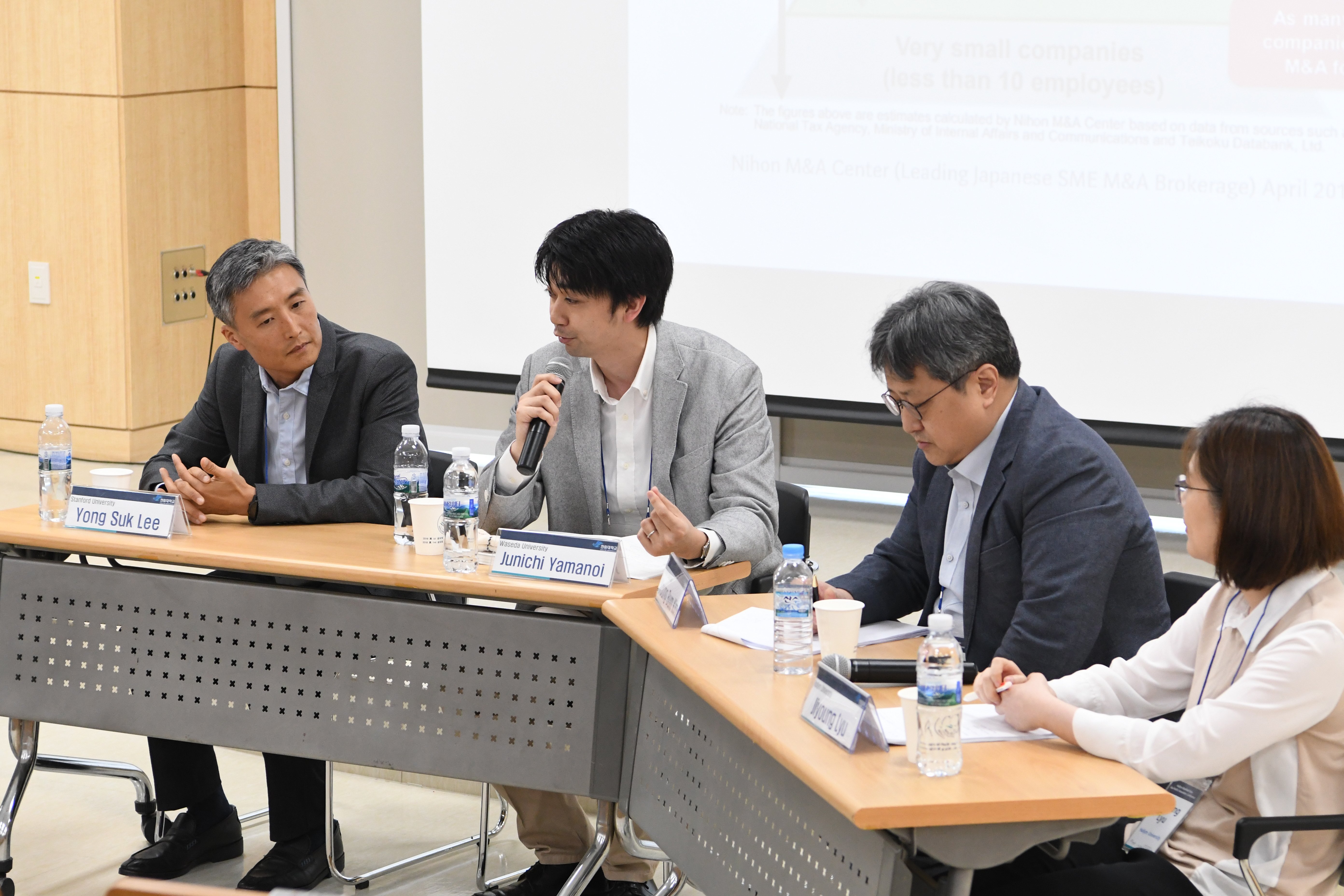
 Yong Suk Lee , Junichi Yamanoi , Young-Bum Kim, and Jiyoung Liu seated at a table

(From left to right, Yong Suk Lee , Junichi Yamanoi , Young-Bum Kim, and Jiyoung Liu)

Family Business Succession

Demographic forces and population aging at the macro level are altering family structures and assumptions at the micro level. For example, Junichi Yamanoi of Waseda University presented a study that examined how expectations around managerial succession at family firms had a significant impact on a firm’s long-term investments.

The study surveyed over 15,000 small and medium enterprises (SMEs) in the Tokyo metropolitan area. The participants were initially asked about their firm’s attributes, CEO demographics, and succession expectations. More than a year later (a time lag that eliminated reverse causality), a sampling of respondents was then asked about their current long-term investments (e.g., R&D, new product development, and internationalization activities).

Yamanoi and his coauthors found that, when a family business’ CEO was confident that a successor would follow, their firm was more likely to engage in long-term investment. Additionally, a CEO’s expectations that the successor would be someone other than their child resulted in an even greater likelihood of long-term investment.

As part of its policy propositions, the study recommends that government agencies and SME officers eager to increase investments by SMEs introduce external candidates to such firms. Moreover, family CEOs should be cautioned against investment decisions that are too short-term in orientation, as, due to inherent aversion to losses of socioemotional wealth for the family, they may unconsciously avoid long-term investments.

Javier Miranda presents at table

(Javier Miranda)

Rethinking Age and Entrepreneurship

At a luncheon keynote address, Javier Miranda, principal economist at the U.S. Census Bureau,  shared insights into the correlations between age and high-growth entrepreneurship, considering when in life people start firms and when they start the most successful firms.

Miranda acknowledged that youth is often perceived as being crucial to entrepreneurial success, referring to Mark Zuckerberg’s dictum, “Young people are just smarter.” Venture capitalist (VC) activity seems to support this notion, said Miranda, citing a sample of 35 VC-backed “unicorns” that resulted in a mean founder age of 31. He explained that VCs' high regard of young entrepreneurs may be attributed to a belief in young people's greater deductive reasoning, transformative thinking, and higher energy, optimism, and confidence.

But does the statistical evidence support such a view? It would seem not. Miranda’s data showed that the mean age for founders of any type of firm is 41.9. Furthermore, the mean age for founders of the most successful firms (those ready for Initial Public Offering market) was 45, and a founder at age 50 was approximately twice as likely to experience successful exit or high growth compared to a founder 20 years their junior.

In fact, dependent on the starting of a firm, the probability of a founder’s success peaked in the age range of 45-59. Pointing directly to entrepreneurs like Jobs and Bezos, Miranda conceded that even extremely talented people, who may be talented enough to succeed when young, peaked in middle age.

The results of Miranda’s study seem at odds with VC attraction to younger entrepreneurs. Experience, Miranda concluded, appeared to overwhelm any potential age advantage, but more research was needed to unpack the underlying predictors of entrepreneurial success over one’s life cycle.

Role of Technology in an Aging Populace

Day two of the conference focused on the promising role technology may play as populations age. APARC Research Scholar Kenji Kushida detailed both the current and impending problems Japan faces as its population both ages and shrinks in size, and the solutions possible through technological advancement like robotics, AI, and wearable devices.

For example, Japan’s demographic shift has had a double knock-on effect on agriculture, with the percentage of farm workers age 65 or older steadily rising over the last five years and the total cultivated agricultural land decreasing each passing year. Kushida described how ICT-enabled bulldozers allow farm owners to more precisely flatten the ground in rice paddies, resulting in both greater yields and cost savings as much as 40%.

Healthcare is another significant area of concern in Japan, as healthcare costs for people over 65 are four times that of younger people and medical costs as a proportion of GDP have been increasing sharply, especially in rural areas. Shortage of physicians and diagnostic technicians is another challenge. Kushida gave an example of a technology healthcare resource that enables clinics and hospitals to upload patient medical images which are then diagnosed by medical doctors affiliated with the tool's startup developer. This low-cost solution allows smaller, rural hospitals to tap into a larger network of physicians and specialists online.

While Japan’s technological trajectory has been driven primarily by the private sector, Kushida pointed out the important role played by government actors. Specifically, within the “Abenomics” reforms of Prime Minister Shinzo Abe, several key performance indicators include support for digitizing medical records, adoption of robotics in nursing care, and extending “healthy” life expectancy.

Edited volumes collecting the papers from the annual Stanford Asia-Pacific Innovation conferences are forthcoming. These will serve as valuable references for scholars and policymakers. The first conference was held at Stanford in 2017, and examined the industrial organization of businesses and innovation clusters and how such environments affect entrepreneurship. The second conference, held in September of 2018 in Beijing, analyzed the impact of public education and financial policies pursued by East Asian countries to promote entrepreneurship.

Presenters gathered on stage


Hero Image
Gi-Wook Shin standing at Podium at Innovation Conference
All News button
1
Authors
News Type
News
Date
Paragraphs

Type 2 diabetes has become a major public health problem in South Asia in recent decades. The region is now home to an estimated 84 million people suffering from diabetes—approximately one-fifth of the world’s 451 million adults with diabetes—a number that is expected to rise by 78% by 2045. Even more concerning, across South Asia the disease burden increasingly occurs in the most productive midlife period. Among Indians, for example, diabetes is estimated to occur on average 10 years earlier than their western counterparts, and almost half of Indian patients with type 2 diabetes are diagnosed before age 40.

How do South Asian health system influence diabetes care? What is the magnitude of the economic impact of diabetes in South Asia? And what can be done to mitigate that economic burden? These are some of the questions that a team of researchers, including Karen Eggleston, APARC’s deputy director and director of the Asia Health Policy Program, set out to answer in a new study published in the journal Current Diabetes Reports.

Eggleston co-authored the study with Kavita Singh of the Public Health Foundation of India and the Centre for Chronic Disease Control in New Delhi, and with M. Venkat Narayan, Professor of Medicine and Epidemiology and Director of the Global Diabetes Research Center at Emory University. They find that diabetes-related complications lead to enormous treatment costs, causing catastrophic medical spending and illness-induced poverty for many households.

The new study is related to a broader research project led by Eggleston, entitled Net Value in Diabetes Management, that compares health care use, medical spending, and clinical outcomes for patients with diabetes as a lens for understanding the economics of caring for patients with complicated chronic diseases across diverse health systems. This international collaborative research convenes teams of clinicians and health economists in ten countries (and growing) across Asia, as well as the United States and The Netherlands. Together, they analyze big data—detailed, longitudinal patient-level information for large samples from each country, including millions of records of clinical encounters, health-check-up, and medical spending—to compare the health care use and patient outcomes for adults with type 2 diabetes in their health systems.

In the new publication, Eggleston and her co-authors first introduce several unique features that characterize the type 2 diabetes epidemic in South Asia. These include a high risk of developing diabetes even at lower levels of body mass index than observed among western populations; a high prevalence of glucose intolerance, low levels of HDL cholesterol, and high levels of triglycerides; a relationship between impaired fetal nutrition, diabetes, and cardiovascular risk; and the likelihood of rapid urbanization impacting the diabetes burden of the wealthy and the underprivileged differently.

Furthermore, South Asian countries face difficult challenges in delivering diabetes care. The health sector in the region has little organized financing, leading to heavy out-of-pocket spending by patients. Limited availability and affordability of anti-diabetic drugs is a major driver of lower use of such medicines. These factors, combined with a general lack of health care professionals and infrastructural resources and low quality of healthcare governance, all contribute to poor health outcomes.

Eggleston and her co-authors assess the current literature on the economic impact of diabetes in South Asia. They show that, compared with the high prevalence of diabetes in South Asian countries, the total health spending as a percentage of GDP in the region has remained low and fairly constant (3-4% in most countries) over the last two decades, with less than 1% of GDP spent on healthcare by the government, and a miniscule 0.2% by pre-paid private insurance, resulting in a large proportion of out-of-pocket healthcare spending. The financial burden of diabetes and its complications can therefore have catastrophic implications for households that are often driven to sacrifice disastrous proportions of their income to cover treatment costs.

Diabetes causes premature mortality, high morbidity, and disability. To mitigate the economic and social welfare burden of the disease, the researchers conclude, policymakers in South Asia must take urgent action “to increase investment in evaluating cost-effective strategies to manage diabetes and preventative approaches.” The team offers a set of policy recommendations, including monitoring the economic burden of diabetes and the quality of care; focusing on the screening and prevention of diabetes and its risk factors; strengthening government health facilities and primary care services; expanding access to affordable, essential medicines, and more.


Hero Image
People receiving diabetes care in a rural clinic in India Trinity Care Foundation via Flickr (CC BY-NC-ND 2.0)
All News button
1
Authors
News Type
News
Date
Paragraphs

People today can generally expect to live longer and, in some parts of the world, healthier lives. The substantial increases in life expectancy underlying these global demographic shifts represent a human triumph over disease, hunger, and deprivation, but also pose difficult challenges across multiple sectors. Population aging will have dramatic effects on labor supply, patterns of work and retirement, family and social structures, healthcare services, savings, and, of course, pension systems and other social support programs used by older adults. Individuals, communities, and nations around the world must adapt quickly to the demographic reality facing us and design new approaches to financing the many needs that come with longer lives.

This imperative is the focus of a newly published special issue of The Journal of the Economics of Ageing, entitled Financing Longevity: The Economics of Pensions, Health and Long-term Care. The special issue collects articles originally written for and discussed at a conference that was dedicated to the same topic and held at Stanford in April 2017 to mark the tenth anniversary of APARC’s Asia Health Policy Program (AHPP). The conference convened top experts in health economics and policy to examine empirical and theoretical research on a range of problems pertinent to the economics of aging from the perspective of sustainable financing for long lives. The economics of the demographic transition is one of the research areas that Karen Eggleston, APARC’s deputy director and AHPP director, studies. She co-edited the special issue with Anita Mukherjee, a Stanford graduate now assistant professor in the Department of Risk and Insurance at the Wisconsin School of Business, University of Wisconsin-Madison.

The Financing Longevity conference was organized by The Next World Program, a Consortium composed of partners from Harvard University, Fudan University, Stanford University, and the World Demographic and Aging Forum, and was cosponsored by AHPP, the Stanford Institute for Economic Policy Research, and the Stanford Center on the Demography and Economics of Aging.

The contributions that originated from the conference and are collected in the Journal’s special issue cover comparative research on more than 30 European countries and 17 Latin American countries, as well as studies on Australia, the United States, India, China, and Japan. They analyze a variety of questions pertinent to financing longevity, including how pension structures may exacerbate existing social inequalities; how formal and informal insurance interact in securing long-term care needs; the ways in which the elderly cope with caregiving and cognitive decline; and what new approaches might help extend old-age financial security to those working outside the formal sector, which is a major concern in low-income countries.

Another challenge of utmost importance is the global pension crisis, caused due to committed payments that far exceed the saved resources. It is a problem that Eggleston and Mukherjee highlight in their introduction to the special issue. By 2050, they note, the pension gap facing the world’s eight largest pension systems is expected to reach nearly US $400 trillion. The problem cannot be ignored, as “the financial security of people leading longer lives is in serious jeopardy.” Indeed four of the eight research papers in the special issue shed light on pensions and inequality in income support for older adults. The other four research papers focus on health and its interaction with labor force participation, savings, and long-term care.

The issue also features two special contributions. The first is an interview with Olivia S. Mitchell, a professor at the University of Pennsylvania’s Wharton School and worldwide expert on pensions and ageing. Mitchell explains the areas offering the most promise and excitement in her field; discusses ways to encourage delayed retirement and spur more saving; and suggests several priority areas for future research. The latter include applying behavioral insights to questions about retirement planning, improving financial literacy, and advancing innovations to help people imagine themselves at older ages and save more for their future selves.

The second unique contribution is a perspective on the challenges of financing longevity in Japan, based on the keynote address delivered at the 2017 Stanford conference by Mr. Hirotaka Unami, then senior Director for policy planning and research of the Minister’s secretariat of the Japan Ministry of Finance and currently deputy director general with the Ministry’s Budget Bureau.

In Japan, decades of improving life expectancy and falling birth rates have produced a rapidly aging and now shrinking population. Data released by Japan’s Statistics Bureau ahead of Children's Day on May 5, 2019 reveal that Japan’s child population (those younger than 15) ranks lowest among countries with a total population exceeding 40 million. In his piece, Unami focuses on the difficult tradeoffs Japan faces in responding to the increase in oldest-old population (people aged 75 and over) and the overall population decline. Japan aspires to do so through policies that are designed to restore financial sustainability for the country’s social security system, including the medical care and long-term care insurance systems.

Unami argues that Japan must simultaneously pursue a combination of increased tax revenues, reduced benefit growth, and accelerated economic growth. He notes that these three-pronged efforts require action in five areas: review Japan’s pension policies; reduce the scope of insurance coverage in low-risk areas; increase the effectiveness of health service providers; increase a beneficiary’s burden according to their means; and enhance policies for preventive health care for the elderly.

The aging of our world’s population is a defining issue of our time and there is pressing need for research to inform policies intended to improve the financial well-being of present and future generations. The articles collected in the Financing Longevity special issue and the ongoing work by APARC’s Asia Health Policy Program point to multiple areas ripe for such future research.

View the complete special issue >>

Learn more about Dr. Karen Eggleston’s work in the area of innovation for healthy aging >>


Hero Image
Medical doctor chats with local residents while making housecalls
SCHWEDT, GERMANY: Medical doctor Amin Ballouz chats with local residents while making housecalls on April 30, 2013 in the village of Gartz an der Oder near Schwedt, Germany. Ballouz was born in Lebanon and moved to Germany as a child, and has had a general practitioner's practice in the small, east German town of Schwedt since 2010. Many of his patients are elderly and live in small villages in the region around Schwedt and Ballouz travels daily in one of his five Trabant cars to pay housecalls. Eastern Germany faces a chronic shortage of country doctors to serve rural communities.
Getty Images — Theo Heimann / Stringer
All News button
1
-

China possesses a large amount of historical demographic data showing that it has been a population giant in the world for at least two thousand years. Partly for this reason, a number of conclusions or suggestions about China’s past fertility regime have been widely accepted. Recent historical demographic investigations, however, have shown that many of these conclusions or suggestions are incorrect and need further consideration. This presentation reports these research findings and briefly examines China’s recent fertility changes. On the basis of that it makes some comments on major characteristics of China’s current fertility patterns and factors affecting fertility changes in the near future.

Image
zhongwei
Zhongwei Zhao graduated from University of Cambridge with a PhD in 1993. Since then he has worked at the East-West Center, Hawaii, University of New South Wales, Australian National University, and University of Cambridge. Since 2008, he has been a professor at the School of Demography at the ANU. Zhao has been doing research in the following research areas: Historical demography, Computer microsimulation, Fertility, Mortality, Changes in kinship structure and household composition, Famine demography, Inequality in population health, Environmental impacts on mortality changes, and Population changes in Asia. He has co-edited three books (including recent Routledge Handbook of Asian Demography) and published many articles and book chapters by leading demography journals and academic publishers.  

Zhao, Zhongwei Professor, The School of Demography at the Australian National University
Seminars
-

This event is co-sponsored by Shorenstein APARC's Asia Health Policy Program and the Center for South Asia

In this colloquium, Dr. Panday will first provide a brief overview of population health in Nepal and the country’s healthcare system. She will then discuss her research on community health, primary healthcare, and improving the health status of women and children in Nepal, focusing on the role of female community health volunteers in maternal health care provision.  Using participatory approaches (such as participatory video methods and policy workshops), the research team connected communities with policymakers, and is building upon that approach—in partnership with the local organisation PHASE Nepal—to improve utilisation of healthcare among marginalised populations in rural Nepal. 

Image
sarita panday 2019
Sarita Panday is the 2018-19 Developing Asia Health Policy Postdoctoral Fellow at Stanford’s Shorenstein Asia-Pacific Research Center  (APARC). She is also an honorary Research Fellow in the Department of Politics, the University of Sheffield, UK and earned a PhD in Public Health from the same University. She has combined degrees in Masters in Public Health & Masters in Health Management from Australia; and a Bachelor in Science in Nursing from Nepal. Dr. Panday received in Australian Leadership Award and has ten years of research experience focused on health policy in South Asia, primarily Nepal. 

616 Serra StreetEncina Hall E301Stanford, CA 94305-6055
0
sarita_panday.jpg Ph.D.

Sarita Panday joined the Walter H. Shorenstein Asia-Pacific Research Center (APARC) as the 2018-19 Developing Asia Health Policy Postdoctoral Fellow.  Panday completed her doctorate at the School of Health and Related Research at the University of Sheffield, which explores the role of female community health volunteers in maternal health service provision in Nepal. Her research interests include health service delivery, primary healthcare and human resources for health and global health.

During her fellowship at Shorenstein APARC, Panday examined the relationship between payment and performance of community health workers in South Asia. She will also recommend strategies for systems that incentivize workers to contribute to healthcare improvement in resource-poor communities. Panday completed a Masters in Public Health and Health Management from the University of New South Wales and a Bachelor of Science in Nursing at the BP Koirala Institute of Health Sciences. Besides research, she has worked in various parts of Nepal, including in remote conflict-laden areas.
2018-2019 Developing Asia Health Policy Postdoctoral Fellow
Seminars
-

This seminar features two scholars discussing their research on health, retirement, and long-term care in China and Singapore. First Dr. Zhou discusses her co-authored study “Health Care Utilization at Retirement: Evidence from Urban China,” which explores the causal effect of retirement on health care utilization among urban workers using medical claims data and employing a regression discontinuity design based on mandatory retirement ages. The results show that retirement significantly increases outpatient care utilization, in part because of lower patient cost sharing and reduced opportunity cost of time after retirement.

Professor Chia will then discuss innovative policy responses in Singapore to finance the retirement and healthcare needs of its aging population. One component of her research uses actuarial modelling and simulations to explore the adequacy of the long-term care (LTC) insurance program in Singapore, also known as ElderShield, for reducing LTC cost. Dr. Chia will also discuss retirement adequacy, taking into consideration the unique housing finance mechanisms in Singapore and other social measures. Singapore also introduced healthcare policies targeted at specific cohorts and trust funds to enhance social protection.  The Pioneer Generation Fund of S$8 billion was earmarked to subsidize healthcare costs for the pioneer generation (cohorts aged 65 and above in 2014).  Simulation studies show that the adequacy of the pioneer generation fund depends on healthcare cost inflation and market performance of funds.  Most recently, a trust fund of S$6.1bn will be set up to prefund healthcare subsidies for the Merdeka Generation (those born in the 1950s).  Besides, a total of S$5.1 billion will go to a new LTC Support Fund that will help fund subsidies for long term care support measures.  This measure will improve the adequacy of the LTC Insurance.   Financing healthcare needs by setting aside funds, while innovative, is sustainable.  However, pre-funding social protection for subsequent cohorts can be challenging amidst an ageing populace and economic challenges.

Image
cnc pic 4x4
Dr Ngee-Choon Chia is an Associate Professor in the Department of Economics at the National University of Singapore (NUS).  She is concurrently Director of the Singapore Centre of Applied and Policy Research (SCAPE) and Co-director of the Next Age Institute at NUS.  She is the Co-editor of the Singapore Economic Review. Her research interests include pension economics, health economics and the fiscal impacts of ageing.  She has consulted for major international agencies such ADB, ADBI, IDRC and the World Bank.  She has also conducted collaborative research on social security with government agencies in Singapore.


Image
photo qin zhou 4x4
Dr. Qin Zhou is currently a visiting scholar in Stanford University. She serves as an Associate Professor in the University of International Business and Economics in Peking, China. Her research interests include Health Economics, Public Health, and Applied Econometrics. She is mainly focused on the study of Chinese health insurance and policy evaluation. She was awarded the "Australia-APEC Women in Research" fellowship and conducted a project entitled "Social Security Systems in Relation to Healthcare Utilization and Health Behaviors in Australia" in 2017. Her work at Stanford is to collaborate with Prof. Karen Eggleston to study the integration of urban-rural health insurance systems in China and other relative topics.

Philippines Conference Room
Encina Hall, 3rd Floor
616 Serra Mall, Stanford, CA 94305

Ngee-Choon Chia Associate Professor, National University of Singapore Department of Economics
Qin Zhou Associate Professor, University of International Business and Economics, PRC
Seminars
News Type
News
Date
Paragraphs

Shorenstein APARC is pleased to announce the selection of two scholars as postdoctoral fellows for the 2019-20 academic year. They will begin their appointments at Stanford in the coming Autumn quarter.

The Center offers the Shorenstein Postdoctoral Fellowship on Contemporary Asia to recent doctoral graduates dedicated to research and writing on contemporary Asia, primarily in the areas of political, economic, or social change in the Asia-Pacific region, or international relations and international political economy in the region. The Center’s Asia Health Policy Program sponsors the Asia Health Policy Postdoctoral Fellowship, supporting young scholars who pursue original research on contemporary health or healthcare policy of high relevance to low- and middle-income countries in the Asia-Pacific region

Fellows develop their dissertations and other projects for publication, present their research, and participate in the intellectual life at the Center and at Stanford at large. Our postdoctoral fellows often go on to pursue careers at top universities and research organizations around the world and continue to contribute to APARC research and publications.

Meet our new postdoctoral scholars:


Image
Portrait of Radhika Jain
Radhika Jain
Asia Health Policy Postdoctoral Fellow

What are the conditions necessary to ensure the effectiveness of public health insurance programs?

Radhika Jain is completing her doctorate in the Department of Global Health at Harvard University. She studies the role of the private sector in the health system, frictions in health care markets, and the incidence of public health policy benefits.

Radhika’s dissertation examines the extent to which government subsidies for health care under insurance are captured by private hospitals instead of being passed through to patients, and whether accountability measures can help patients claim their entitlements. Radhika’s research has been supported by grants from the Weiss Family Fund and the Jameel Poverty Action Lab (JPAL). She has worked on impact evaluations of health programs in India and on the implementation of HIV programs across several countries in sub-Saharan Africa. She also held a doctoral fellowship at the Center for Global Development.

At Shorenstein APARC, Radhika will refine her dissertation research for publication in academic journals and start new work on the structure of health care markets in India and the impacts of measures to increase the effectiveness of public health insurance.  


Image
Portrait of Hannah June Kim
Hannah June Kim
Shorenstein Postdoctoral Fellow on Contemporary Asia

How does modernization influence cultural democratization in East Asia?

Hannah June Kim is completing her doctorate in the Department of Political Science at the University of California, Irvine. She researches public opinion, political behavior, theories of modernization, economic development, and democratic citizenship, focusing on East Asia.

Hannah’s dissertation examines how and why people view democracy in systematically different ways in six countries: China, Japan, Korea, Singapore, Taiwan, and Vietnam. Developing unique categories of democratic citizenship that measure the cognitive, affective, and behavioral patterns of individuals, she finds that state-led economic development limited the growth of cultural democratization among middle class groups in all three dimensions. The results imply that the classic causality between modernization and democratization may not be universally applicable to different cultural contexts.

At Shorenstein APARC, Hannah will work on developing her dissertation into a book manuscript and make progress on her next project that explores democratization and gender empowerment in East Asia. Hannah received an MA in International Studies from Korea University and a BA from UCLA. Her work has been published, or is forthcoming, in The Journal of Politics, PS: Political Science & Politics, and the Japanese Journal of Political Science.


Hero Image
encina hall
All News button
1
Subscribe to Health and Medicine