International Development

FSI researchers consider international development from a variety of angles. They analyze ideas such as how public action and good governance are cornerstones of economic prosperity in Mexico and how investments in high school education will improve China’s economy.

They are looking at novel technological interventions to improve rural livelihoods, like the development implications of solar power-generated crop growing in Northern Benin.

FSI academics also assess which political processes yield better access to public services, particularly in developing countries. With a focus on health care, researchers have studied the political incentives to embrace UNICEF’s child survival efforts and how a well-run anti-alcohol policy in Russia affected mortality rates.

FSI’s work on international development also includes training the next generation of leaders through pre- and post-doctoral fellowships as well as the Draper Hills Summer Fellows Program.

Authors
News Type
Q&As
Date
Paragraphs

U.S.-based donors and international organizations have long dominated the development sector, but their Asian peers are increasingly challenging Western hegemony in the field, argues APARC Postdoctoral Fellow in Contemporary Asia Mary-Collier Wilks.

Wilks is currently at work on a book project that examines variation in ‘aid chains,’ or the links through which programs travel from donors to international nongovernmental organizations (INGOs), and finally to implementing partners. Her ethnographic research examines two aid chains focused on the delivery of women’s health services in Cambodia. After completing her residency at APARC this summer, she will head to the University of North Carolina Wilmington to start a tenure track position at the Department of Sociology.

In the following Q&A, Wilks discusses her research and fellowship experience at Stanford. The interview was slightly edited for length and clarity.


Sign up for APARC newsletters to receive research and commentary updates from our scholars


Your research centers on meaning-making and power dynamics in international organizations. What drew you to this topic?

Before going to graduate school, I worked at a Cambodian NGO, Social Services of Cambodia, that implemented social welfare programs for women and children. While there, I observed conversations between the foreign director, local staff, donors, and beneficiaries, and noticed how these interactions shaped SSC’s work. I was particularly struck by how differently donors from various nations defined gender empowerment. These questions evolved into a desire to go to graduate school and study how donor differences impact international development programs in Southeast Asia.

East Asian nations are increasingly vying for influence and offering new, alternative models for development.
Mary-Collier Wilks

You are working on your first book. Can you tell us a bit about what to expect from it?

During my postdoctoral fellowship at APARC, I’m focusing on transforming my dissertation into a book. Learning to write a book is a difficult, unique, and rewarding process in and of itself! It’s still a work in progress, but the book argues that the global development sector is shifting. Donors and international organizations based in the United States, Europe, and Australia have long been dominant actors, producing prevailing global norms around “good development.” However, East Asian nations are increasingly vying for influence and offering new, alternative models for development. As a case study of these transformations, I conduct a multi-sited ethnography of two INGOs, one from the United States and the other from Japan, that implement development programs in Cambodia.

I see Cambodian practitioners render the above geopolitical transformations meaningful in their own lives by discussing two “development imaginaries” or narratives about the best way for society to develop, one “Asian” and the other “Western.” Consequently, I contend Cambodia is a case of a larger phenomenon in which Asian donors and development organizations are playing a more prominent role, challenging Western hegemony in the development sector and producing new development norms. This book is therefore trying to tell a dual story about the macro-level geopolitical transformations taking place in the development space in Cambodia, and Asia more generally, and the micro-level meanings, practices, and contradictions that these changes create in the lives of the people living through them.

Health screening in a Cambodia primary school
A team of health workers screens children in a primary school in Cambodia. | Global Partnership for Education/Natasha Graham via Flickr (CC BY-NC-ND 2).

You have mentioned your interest in how people encounter international development and foreign aid in their everyday lives. What are some aspects of those encounters that you find revealing about the dynamics of global development?

Cambodia is a nation where international donors have a lot of power. But, that’s never the whole story. Development is never just donor-driven. In my work, I try to center the ways Cambodian practitioners make sense of, adapt, or resist donor visions of their nation’s development.

For instance, during my fieldwork, I met an NGO director who I’ll call Rith and whose career trajectory can provide us with some insights. Rith was born in 1979, at the very end of the Khmer Rouge regime. In his twenties, he decided to become a monk to bring merit to his family. In the late 1990s, Rith started noticing the influx of foreign aid funding and the proliferating numbers of international and local NGOs in his country. In 2000, he decided to quit being a monk to open an NGO. He turned out to be a savvy fundraiser, securing funding for his NGO to implement multiple health, education, and economic empowerment projects. However, when I met him in 2019, Rith told me he thought “it might be time to change paths” because NGO funding from Western donors “is not like it was ten years ago.” Two years later, he became the co-CEO of a private construction and sourcing company that takes advantage of the numerous infrastructure development loans China provides to Cambodia.

You can therefore observe how the larger geopolitical changes Cambodia undergoes play out in a micro-way in Rith’s strategic career choices as he shifts from being a monk to an NGO director to a CEO.

I believe that projects that support a strong state and those that encourage the market and nonprofit actors could be synchronized for more effective aid.
Mary-Collier WIlks

What do you see as some of the biggest challenges to delivering aid via INGOs?

There are several answers to this question floating around in my data. One that immediately comes to mind is synchronization. Despite a shared aim of improving women’s health, INGOs from the United States and Japan implement very different kinds of programs in Cambodia. Japanese INGOs focus on strengthening government-provided maternal health services in Cambodia. In contrast, U.S. organizations are more likely to promote a diverse maternal and reproductive healthcare sector, including private providers and civil society advocacy. I’ve also found that INGOs that originate in the United States and Japan are unaware of each other’s distinctive projects. Often, U.S. INGO directors and donors don’t even know Japanese NGOs exist!

While they work with different stakeholders, I believe that projects that support a strong state and those that encourage the market and nonprofit actors could be synchronized for more effective aid. To start with, U.S.-based INGOs sometimes try to upgrade private clinics, provide education, and refer beneficiaries to women’s health services in the same regions where Japanese INGOs support public clinics. On a basic level, if you could just get the INGO directors from Japan and the U.S. organizations that are working in the same areas to sit down together, U.S. INGO health educators might be able to do things like referring to improved private and public clinics if they know which public clinics the Japanese INGO works with, or collaborate on healthcare provision training for private and public clinic doctors.  

Beyond your book project, what are you working on while at APARC? How has your time here advanced your research?

The main thing a postdoctoral fellowship affords is the privilege of time to read and write. Outside of the book project, I have been able to work on two other papers while here at Stanford. One article proposes to theorize the process of “script decoupling” and why INGOs might formally adopt the same global script but enact it very differently in implementation. The second paper investigates how the meanings of aid money in NGOs is shaped by the business cultures of donor and recipient nations. I plan to have both papers under review before I leave APARC at the end of July.

Being at APARC has provided me with numerous opportunities to discover insightful, new perspectives on my research projects and career prospects from my postdoctoral advisor, Kiyoteru Tsutsui, as well as various other faculty, fellows, and associates here. For instance, Kiyo is starting a Japanese studies lunch-and-learning session where fellows get to meet and discuss their research. I’m particularly interested in the policy-oriented lectures and learning how to articulate that side of my research since that’s something I wasn’t taught to do in graduate school. Overall, my time at Stanford has been invigorating for my research and writing process. I’ve enjoyed being part of the learning community at FSI and the university at large, and have greatly benefited from connecting with different scholars and working groups across campus.

Has the Covid-19 pandemic affected your ability to travel and do research? How have you adapted?

I was incredibly lucky because I completed my international fieldwork in the fall of 2019. So I was able to collect all the data I needed for my dissertation before the pandemic hit us hard. But, due to Covid, I was not able to do the follow-up field visits that I wanted to do in order to find out what happened when the two INGOs I studied completed their projects. Also, continuing connections in the field for new ideas and the next research project is important for an ethnographer. I have done what I could to catch up with Cambodian friends and practitioners over Zoom. Now that Cambodia has lifted its quarantine requirements, I may be able to return this summer. 

What is on the horizon for you? What's next?

As I have wanted to be a college professor since I was 19 (after I gave up my dream of being a pop singer), I’m extremely happy to share I was offered a tenure track position in the Department of Sociology at the University of North Carolina Wilmington! I’ll be starting there in the fall and continuing my research on international development and Southeast Asia.

Read More

Encina Commons, Stanford with text about APARC's 2022-23 predoctoral fellowship
News

APARC Invites 2022-23 Predoctoral Fellowship Applications

Up to three fellowships are available to Stanford Ph.D. candidates. Submissions are due by April 15, 2022.
APARC Invites 2022-23 Predoctoral Fellowship Applications
Hero Image
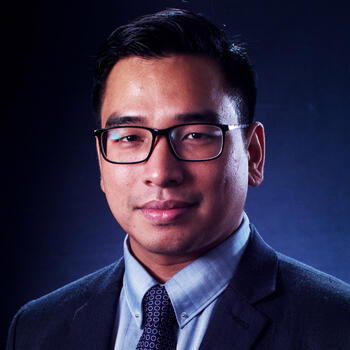
Portrait of Mary-Collier Wilks
All News button
1
Subtitle

Ethnographer and APARC Postdoctoral Fellow Mary-Collier Wilks unveils how distinct development narratives shape the dynamics of aid chains and international organizations’ delivery of services in Southeast Asia.

-

Register: bit.ly/3wpm8uB

Most studies on China’s relations with Southeast Asian states focus on China’s power and how such power has been used to achieve influence in the region. The emphasis is on intention and causation: how China willingly uses its power to coerce, coopt, or persuade others to behave in a certain way. Professor Han will acknowledge but go beyond this conventional approach to explore the unintended outcomes and ripple effects that are also associated with China’s presence in Southeast Asia. His talk will feature a typology for use in thinking about China’s regional presence and the various everyday forms that it takes. He will argue that we need to understand such nuance and complexity if we are to make sense of China’s relations with Southeast Asia and what they imply.

Image
Enze Han 042622
Enze Han is APARC's 2021-2022 Lee Kong Chian NUS-Stanford Fellow on Contemporary Southeast Asia for the spring quarter of 2022. Dr. Han is also an associate professor at the University of Hong Kong's Department of Politics and Public Administration. His research interests include ethnic politics in China, Southeast Asia’s relations with China, and the politics of state formation in the borderland area shared by China, Myanmar, and Thailand. His many publications include “Non-State Chinese Actors and Their Impact on Relations between China and Mainland Southeast Asia,” ISEAS Trends in Southeast Asia (2021); Asymmetrical Neighbours: Borderland State Building between China and Southeast Asia (2019); and Contestation and Adaptation: The Politics of National Identity in China (2013). Positions and affiliations prior to his professorship at UHK include the University of London (SOAS), Princeton University, the Institute for Advanced Study (Princeton), and the East Asia Institute (Seoul).  His 2010 doctorate in Political Science is from George Washington University.

Donald K. Emmerson

Via Zoom Webinar.

0
Visiting Scholar at APARC, 2021-2022
Lee Kong Chian NUS-Stanford Fellow on Contemporary Southeast Asia, 2021-2022
enze_han_4x4_.jpeg Ph.D.

Enze Han joined the Walter H. Shorenstein Asia-Pacific Research Center (APARC) as visiting scholar and 2021-2022 Lee Kong Chian NUS-Stanford Fellow on Contemporary Southeast Asia for the spring quarter of 2022. Dr. Han is currently Associate Professor at the University of Hong Kong's Department of Politics and Public Administration. While at APARC, Dr. Han conducted research on China's increasing connectivity with mainland Southeast Asia, and how such connectivity should be analyzed through the lens of international relations, development studies, and borderland studies.

2021-2022 Lee Kong Chian NUS-Stanford Fellow on Contemporary Southeast Asia
Seminars
-

Myanmar’s junta is more than a year old.  The vast majority of the country’s people oppose the junta and favor democracy.  But the devil is in the details.  Many in the opposition want some form of multi-ethnic federal democracy.  But levels of disagreement and distrust among different communities, including some of the Ethnic Armed Groups, are impeding a unified vision to push the military out of power and establish civilian rule.  This webinar will examine the choices and challenges faced by the opponents of the regime as they try to unite these communities against it on behalf of a better future for Myanmar.

Image
Nyantha Maw Lin 041922
Nyantha Maw Lin is an independent analyst with more than a decade of interdisciplinary experience in government affairs, public policy, and political risk assessment related to Myanmar. Prior to the February 2021 coup, he supported community and stakeholder engagement efforts in Myanmar’s Rakhine State and served on a voluntary panel of industry and civil society representatives who advised the government on initiatives to fight corruption. He also helped to lead several innovative non-profit entities based in Yangon engaged in philanthropy, business, and social-impact activity. In addition to convening multi-sectoral dialogues with government, the private sector, and civil society in Myanmar, Nyantha has also participated in semi-official conversations elsewhere in Southeast Asia. A former Eisenhower Fellow (2018), he earned his BA in Political Science/International Relations from Carleton College (2008).  

Image
Marciel 041922
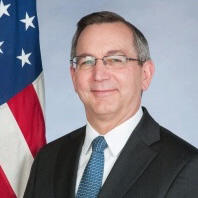
Scot Marciel has had a long career as an American diplomat serving in multiple countries, most recently as US Ambassador to Myanmar (2016-2020).  Earlier postings included as Ambassador to Indonesia (2010-2013) and concurrently as Ambassador for ASEAN affairs and Deputy Assistant Secretary of State for Southeast Asia (2007-2010).  He has also served in the Philippines and Vietnam.  His assignments at the State Department in Washington DC have included as Principal Deputy Assistant Secretary of State for East Asian Affairs and as Deputy Assistant Secretary of State of Southeast Asia.  Based on these experiences, he has been writing a book entitled “Imperfect Partners: The United States and Southeast Asia.”  He earned his MA at the Fletcher School of Law and Diplomacy (1983) and his BA in International Relations at the University of California at Davis (1981).

Donald K. Emmerson

 Via Zoom Webinar.

Nyantha Maw Lin Independent Analyst
1
Oksenberg-Rohlen Fellow
scot_marciel.jpg

Scot Marciel was the Oksenberg-Rohlen Fellow at the Freeman Spogli Institute for International Studies, affiliated with the Walter H. Shorenstein Asia-Pacific Research Center from 2022-2024. Previously, he was a 2020-22 Visiting Scholar and Visiting Practitioner Fellow on Southeast Asia at APARC.  A retired diplomat, Mr. Marciel served as U.S. Ambassador to Myanmar from March 2016 through May 2020, leading a mission of 500 employees during the difficult Rohingya crisis and a challenging time for both Myanmar’s democratic transition and the United States-Myanmar relationship.  Prior to serving in Myanmar, Ambassador Marciel served as Principal Deputy Assistant Secretary for East Asia and the Pacific at the State Department, where he oversaw U.S. relations with Southeast Asia.

From 2010 to 2013, Scot Marciel served as U.S. Ambassador to Indonesia, the world’s fourth most populous country.  He led a mission of some 1000 employees, expanding business ties, launching a new U.S.-Indonesia partnership, and rebuilding U.S.-Indonesian military-military relations.  Prior to that, he served concurrently as the first U.S. Ambassador for ASEAN Affairs and Deputy Assistant Secretary of State for Southeast Asia from 2007 to 2010.

Mr. Marciel is a career diplomat with 35 years of experience in Asia and around the world.  In addition to the assignments noted above, he has served at U.S. missions in Turkey, Hong Kong, Vietnam, Brazil and the Philippines.  At the State Department in Washington, he served as Director of the Office of Maritime Southeast Asia, Director of the Office of Mainland Southeast Asia, and Director of the Office of Southern European Affairs.  He also was Deputy Director of the Office of Monetary Affairs in the Bureau of Economic and Business Affairs.

Mr. Marciel earned an MA from the Fletcher School of Law and Diplomacy, and a BA in International Relations from the University of California at Davis.  He was born and raised in Fremont, California, and is married with two children.

Date Label
Visiting Practitioner Fellow on Southeast Asia, APARC, Stanford University
Panel Discussions
-

The digital transformation of Southeast Asia is in full swing.  In 2021, 8 of the 10 ASEAN countries had internet penetration rates higher than those for Asia (64%) and the world (66%).  But digital access is unevenly distributed between and within Southeast Asian countries.  How are the new technologies impacting the region?  Are they helping civil society or the surveillance state—free speech and economic growth or unaccountable concentrations of power and wealth?  Are Huawei and the Digital Silk Road creating a future with Chinese characteristics?  Who will write the rules of the digital road?  How are specific countries coping?  What is ASEAN’s role?  What should the US do?  Two leading experts, Huong Le Thu and Elina Noor, will discuss these and related questions.

Image
Huong Le Thu
Huong Le Thu is a co-author of Digital Southeast Asia, a just-published policy-focused study of the webinar topic.  A prolific and influential policy analyst of security and diplomacy in the region, she has written widely in journals and global media and for international think tanks including, as a non-resident fellow, the Center for Strategic and International Studies (Wash., DC).  She has held positions at the Australian National University, the ISEAS Yusof Ishak Institute, and the Institute of International Relations in Taipei. Her alma maters include National Chengchi University (Taiwan, PhD) and Jagiellonian University (Poland, Master’s).  She speaks five languages and has published in four.

Image
Elina Noor
Elina Noor has just launched a podcast, “Between the Binary: Tech and the Global South.”  It assesses technology’s intersections with history, gender, power, and economic growth through the underheard voices of guests from developing countries.  Cybersecurity has figured prominently in her many publications on Southeast Asia.  She is a member of the Global Commission on the Stability of Cyberspace and has held key positions at the Inouye Asia-Pacific Center for Security Studies (Hawaii), the Institute of Strategic and International Studies (Malaysia), and the Council for Security Cooperation in the Asia Pacific (CSCAP). Her higher degrees are from the London School of Economics and Political Science (LLM) and Georgetown University (MA).

Image
Winter2022_series_NewFrontiers
This event is part of the 2022 Winter webinar series, New Frontiers: Technology, Politics, and Society in the Asia-Pacific, sponsored by the Walter H. Shorenstein Asia-Pacific Research Center.

Via Zoom Webinar
Register: bit.ly/3LjVVTj

Huong Le Thu Senior Analyst, Australian Strategic Policy Institute, Canberra
Elina Noor Director, Political-Security Affairs, and Deputy Director, Asia Society Policy Institute, Washington, DC
Moderator: Moderator
0
Senior Fellow Emeritus at the Freeman Spogli Institute for International Studies
Affiliated Faculty, CDDRL
Affiliated Scholar, Abbasi Program in Islamic Studies
aparc_dke.jpg PhD

At Stanford, in addition to his work for the Southeast Asia Program and his affiliations with CDDRL and the Abbasi Program in Islamic Studies, Donald Emmerson has taught courses on Southeast Asia in East Asian Studies, International Policy Studies, and Political Science. He is active as an analyst of current policy issues involving Asia. In 2010 the National Bureau of Asian Research and the Woodrow Wilson International Center for Scholars awarded him a two-year Research Associateship given to “top scholars from across the United States” who “have successfully bridged the gap between the academy and policy.”

Emmerson’s research interests include Southeast Asia-China-US relations, the South China Sea, and the future of ASEAN. His publications, authored or edited, span more than a dozen books and monographs and some 200 articles, chapters, and shorter pieces.  Recent writings include The Deer and the Dragon: Southeast Asia and China in the 21st Century (ed., 2020); “‘No Sole Control’ in the South China Sea,” in Asia Policy  (2019); ASEAN @ 50, Southeast Asia @ Risk: What Should Be Done? (ed., 2018); “Singapore and Goliath?,” in Journal of Democracy (2018); “Mapping ASEAN’s Futures,” in Contemporary Southeast Asia (2017); and “ASEAN Between China and America: Is It Time to Try Horsing the Cow?,” in Trans-Regional and –National Studies of Southeast Asia (2017).

Earlier work includes “Sunnylands or Rancho Mirage? ASEAN and the South China Sea,” in YaleGlobal (2016); “The Spectrum of Comparisons: A Discussion,” in Pacific Affairs (2014); “Facts, Minds, and Formats: Scholarship and Political Change in Indonesia” in Indonesian Studies: The State of the Field (2013); “Is Indonesia Rising? It Depends” in Indonesia Rising (2012); “Southeast Asia: Minding the Gap between Democracy and Governance,” in Journal of Democracy (April 2012); “The Problem and Promise of Focality in World Affairs,” in Strategic Review (August 2011); An American Place at an Asian Table? Regionalism and Its Reasons (2011); Asian Regionalism and US Policy: The Case for Creative Adaptation (2010); “The Useful Diversity of ‘Islamism’” and “Islamism: Pros, Cons, and Contexts” in Islamism: Conflicting Perspectives on Political Islam (2009); “Crisis and Consensus: America and ASEAN in a New Global Context” in Refreshing U.S.-Thai Relations (2009); and Hard Choices: Security, Democracy, and Regionalism in Southeast Asia (edited, 2008).

Prior to moving to Stanford in 1999, Emmerson was a professor of political science at the University of Wisconsin-Madison, where he won a campus-wide teaching award. That same year he helped monitor voting in Indonesia and East Timor for the National Democratic Institute and the Carter Center. In the course of his career, he has taken part in numerous policy-related working groups focused on topics related to Southeast Asia; has testified before House and Senate committees on Asian affairs; and been a regular at gatherings such as the Asia Pacific Roundtable (Kuala Lumpur), the Bali Democracy Forum (Nusa Dua), and the Shangri-La Dialogue (Singapore). Places where he has held various visiting fellowships, including the Institute for Advanced Study and the Woodrow Wilson International Center for Scholars. 


Emmerson has a Ph.D. in political science from Yale and a BA in international affairs from Princeton. He is fluent in Indonesian, was fluent in French, and has lectured and written in both languages. He has lesser competence in Dutch, Javanese, and Russian. A former slam poet in English, he enjoys the spoken word and reads occasionally under a nom de plume with the Not Yet Dead Poets Society in Redwood City, CA. He and his wife Carolyn met in high school in Lebanon. They have two children. He was born in Tokyo, the son of U.S. Foreign Service Officer John K. Emmerson, who wrote the Japanese Thread among other books.

Selected Multimedia

Date Label
Director, Southeast Asia Program, Asia-Pacific Research Center, Stanford University
Seminars
News Type
News
Date
Paragraphs

The Shorenstein APARC Predoctoral Fellowship supports Stanford students working within a broad range of topics related to contemporary Asia. APARC is now accepting applications for the 2022-23 Predoctoral Fellowship. Up to three fellowships are available to Ph.D. candidates who have completed all fieldwork and are nearing the completion of their dissertation. Applications are due by April 15, 2022.

The Center will give priority to candidates who are prepared to finish their degree by the end of the 2022-23 academic year.

This opportunity is open to current Stanford students only.

APARC offers a stipend of $37,230 for the 2022-23 academic year, plus Stanford's Terminal Graduate Registration (TGR) fee for three quarters. We expect fellows to remain in residence at the Center throughout the year and to participate in Center activities.

Read More

Stanford
News

Call for Stanford Student Applications: APARC Hiring 2022 Summer Research Assistants

To support Stanford students working in the area of contemporary Asia, the Shorenstein Asia-Pacific Center is offering research assistant positions for summer 2022. The deadline for submitting applications and letters of recommendation is March 1, 2022. 
Call for Stanford Student Applications: APARC Hiring 2022 Summer Research Assistants
Stanford arch and text calling for nominations for APARC's 2022 Shorenstein Journalism Award.
News

2022 Shorenstein Journalism Award Open to Nomination Entries

Sponsored by Stanford University’s Shorenstein Asia-Pacific Research Center, the annual award recognizes outstanding journalists and journalism organizations for excellence in coverage of the Asia-Pacific region. News editors, publishers, scholars, and organizations focused on Asia research and analysis are invited to submit nominations for the 2022 award through February 15.
2022 Shorenstein Journalism Award Open to Nomination Entries
Kate Imy
Q&As

How Feminist Military History Sheds Light on Colonial Rule and Warfare

In this interview, Lee Kong Chian NUS-Stanford Fellow on Southeast Asia Kate Imy discusses her research into identity in the twentieth-century British imperial world and her current book project on the colonial roots of winning "hearts and minds" in war, specifically focusing on Malaya and Singapore.
How Feminist Military History Sheds Light on Colonial Rule and Warfare
Hero Image
Encina Commons, Stanford with text about APARC's 2022-23 predoctoral fellowship
All News button
1
Subtitle

Up to three fellowships are available to Stanford Ph.D. candidates. Submissions are due by April 15, 2022.

News Type
News
Date
Paragraphs

Shorenstein APARC invites highly motivated and dedicated undergraduate- and graduate-level students to join our team as paid research assistant interns for the duration of the summer 2022 quarter. The research assistants work with assigned APARC faculty members on projects focused on contemporary Asia, studying varied issues related to the politics, economies, populations, security, foreign policies, and international relations of the countries of the Asia-Pacific region.

All research assistant positions are open to current Stanford students only.

Apply Now
 

APARC is now accepting applications for our summer 2022 RA positions. The deadline for submitting applications and letters of recommendation is March 1, 2022

All summer research assistant positions will be on campus for eight weeks. The hourly pay rate is $17 for undergraduate students, $25 for graduate students.

Decisions regarding the options for telecommuting work will be made closer to the appointment start dates in accordance with the evolving COVID-19 situation and the University's recommendations.


Please follow these application guidelines

I. Prepare the following materials:

II. Fill out the online application form for summer 2022, including the above two attachments, and submit the complete form.

III. Arrange for a letter of recommendation from a faculty to be sent directly to Shorenstein APARC.
Please note: the faculty members should email their letters directly to Kristen Lee at kllee@stanford.edu.

We will consider only applications that include all supporting documents.

Read More

Stanford arch and text calling for nominations for APARC's 2022 Shorenstein Journalism Award.
News

2022 Shorenstein Journalism Award Open to Nomination Entries

Sponsored by Stanford University’s Shorenstein Asia-Pacific Research Center, the annual award recognizes outstanding journalists and journalism organizations for excellence in coverage of the Asia-Pacific region. News editors, publishers, scholars, and organizations focused on Asia research and analysis are invited to submit nominations for the 2022 award through February 15.
2022 Shorenstein Journalism Award Open to Nomination Entries
Kate Imy
Q&As

How Feminist Military History Sheds Light on Colonial Rule and Warfare

In this interview, Lee Kong Chian NUS-Stanford Fellow on Southeast Asia Kate Imy discusses her research into identity in the twentieth-century British imperial world and her current book project on the colonial roots of winning "hearts and minds" in war, specifically focusing on Malaya and Singapore.
How Feminist Military History Sheds Light on Colonial Rule and Warfare
Hero Image
Stanford Rod Searcey
All News button
1
Subtitle

To support Stanford students working in the area of contemporary Asia, the Shorenstein Asia-Pacific Center is offering research assistant positions for summer 2022. The deadline for submitting applications and letters of recommendation is March 1, 2022. 

Authors
News Type
News
Date
Paragraphs

The Walter H. Shorenstein Asia-Pacific Research Center (APARC) is pleased to invite applications for four types of fellowship in contemporary Asia studies for the 2022-23 academic year.

The Center offers postdoctoral fellowships that promote multidisciplinary research on contemporary Japan, contemporary Asia broadly defined, health or healthcare policy in the Asia-Pacific region, and a fellowship for experts on Southeast Asia. Learn more about each fellowship and its eligibility and specific application requirements:

Postdoctoral Fellowship on Contemporary Japan

Hosted by the Japan Program at APARC, the fellowship supports research on contemporary Japan in a broad range of disciplines including political science, economics, sociology, law, policy studies, and international relations. Appointments are for one year beginning in fall quarter 2022. The application deadline is January 3, 2022.
 

Shorenstein Postdoctoral Fellowship on Contemporary Asia

APARC offers two postdoctoral fellowship positions to junior scholars for research and writing on contemporary Asia. The primary research areas focus on political, economic, or social change in the Asia-Pacific region (including Northeast, Southeast, and South Asia), or international relations and international political economy in the region. Appointments are for one year beginning in fall quarter 2022. The application deadline is January 3, 2022.
 

Read More

Hero Image
Autumn scene on the Stanford campus with a call to apply for APARC's 2022-23 fellowships for Asia schoalrs
All News button
1
Subtitle

The Center offers fellowships for postdoctoral scholars specializing in contemporary Asia, Japan, and Asia health policy and for experts on Southeast Asia.

-

Co-sponsored by the Southeast Asia Program, Shorenstein Asia Pacific Research Center, Stanford University, with the Center for Southeast Asian Studies, University of Michigan

Shocking events obliterate context.  The coup in Myanmar on 1 February 2021 is a case in point.  Who could imagine the cruelty of the Burmese generals who on February 1st 2021 grabbed power and proceeded to retain it by arresting thousands and murdering hundreds of its local opponents?  Who expected that on February 2nd the country’s youth would launch a nonviolent Civil Disobedience Movement (CDM) and keep it going and growing against such massively intimidating odds?  In this webinar, two experts will provide the essential but all too often missing contexts—current and historical, domestic and foreign, political and socioeconomic—within which the crisis can be understood, its future projected, and its implications assessed.  To those ends, the on-the-ground knowledge, personal experience, and close observer’s insights of Burmese scholar Moe Thuzar will interact with the insights of American professor David Steinberg based on his Burmese experiences and scholarship dating back into the 20th century.

The webinar will consider in particular what the coup and its aftermath may imply for Southeast Asia and its relations with China.  Relevant in that regard is the involvement of all four panel members in a recent collection, The Deer and the Dragon: Southeast Asia and China in the 21st Century—Steinberg and Ciorciari as authors, Emmerson as editor, and ­­Thuzar as an analyst who is using the book in her own research. 

Image
David I Steinberg 4X4
David I. Steinberg is Distinguished Professor of Asian Studies Emeritus, Georgetown University, where he directed its Asian studies program (1997-2007). Other positions he has held include the presidency of the Mansfield Center for Pacific Affairs and Southeast Asia-related US foreign-policy posts as a member of the Senior Foreign Service. He has also represented The Asia Foundation in South Korea, Burma, Hong Kong, and Washington, D.C.  His 15 books and monographs include one translation, more than 150 articles, and several hundred op-eds.. Among these books are: Myanmar: The Dynamics of an Evolving Polity (ed., 2015); Burma/Myanmar: What Everyone Needs to Know (2013, 2nd edition); Modern China-Myanmar Relations: Dilemmas of Mutual Dependence (with Fan Hongwei, 2012); Turmoil in Burma: Contested Legitimacies in Myanmar (2006); Burma: The State of Myanmar (2001); and Burma’s Road to Development (1981). His expertise includes the two Koreas, about which he has written widely. Professor Steinberg was educated at the University of London’s School of Oriental and African Studies, Harvard University, Darmouth College, and Lingnan University in Canton (now Guangzhou), China.

Image
Moe Thuzar 4X4
Moe Thuzar joined the Institute of Southeast Asian Studies in Singapore in 2008. Her responsibilities there have included managing or co-managing its Myanmar Studies Programme, serving as a lead researcher in its ASEAN Studies Centre, and helping the Centre engage with Myanmar regarding its turn to chair ASEAN in 2014. She spent the 2019-2020 academic year as a Fox International Fellow at Yale University's MacMillan Center researching the socio-cultural underpinnings of Burma’s Cold War foreign policy for her National University of Singapore PhD. Earlier she worked for a decade at the ASEAN Secretariat, where she headed its Human Development Unit. Her many publications include, as co-author, the 2020 and 2019 editions of ISEAS’s widely read State of Southeast Asia: Survey Report. Other recent writing includes chapters and articles in ASEAN-EU Partnerships: The Untold Story (ed., 2020); the Journal of Southeast Asian Economies (2019); Southeast Asian Affairs (ed., 2019); Human Security Norms in East Asia (ed., 2019); and, as co-author, ASEAN’s Myanmar Dilemma (with Lex Rieffel, 2018). Earlier works include Myanmar: Life After Nargis (with Pavin Chachavalpongpun, 2009).

Co-moderated by John Ciorciari, Director, Weiser Diplomacy Center, University of Michigan, and Donald K. Emmerson, Director, Southeast Asia Program, Stanford University

Via Zoom Webinar
Register: https://bit.ly/3mdiwEY

David I. Steinberg Distinguished Professor of Asian Studies Emeritus, Georgetown University, Washington, DC
Moe Thuzar Fellow and Co-coordinator, Myanmar Studies Programme, ISEAS-Yusof Ishak Institute, Singapore
John Ciorciari Moderator Director, Weiser Diplomacy Center, University of Michigan
0
Senior Fellow Emeritus at the Freeman Spogli Institute for International Studies
Affiliated Faculty, CDDRL
Affiliated Scholar, Abbasi Program in Islamic Studies
aparc_dke.jpg PhD

At Stanford, in addition to his work for the Southeast Asia Program and his affiliations with CDDRL and the Abbasi Program in Islamic Studies, Donald Emmerson has taught courses on Southeast Asia in East Asian Studies, International Policy Studies, and Political Science. He is active as an analyst of current policy issues involving Asia. In 2010 the National Bureau of Asian Research and the Woodrow Wilson International Center for Scholars awarded him a two-year Research Associateship given to “top scholars from across the United States” who “have successfully bridged the gap between the academy and policy.”

Emmerson’s research interests include Southeast Asia-China-US relations, the South China Sea, and the future of ASEAN. His publications, authored or edited, span more than a dozen books and monographs and some 200 articles, chapters, and shorter pieces.  Recent writings include The Deer and the Dragon: Southeast Asia and China in the 21st Century (ed., 2020); “‘No Sole Control’ in the South China Sea,” in Asia Policy  (2019); ASEAN @ 50, Southeast Asia @ Risk: What Should Be Done? (ed., 2018); “Singapore and Goliath?,” in Journal of Democracy (2018); “Mapping ASEAN’s Futures,” in Contemporary Southeast Asia (2017); and “ASEAN Between China and America: Is It Time to Try Horsing the Cow?,” in Trans-Regional and –National Studies of Southeast Asia (2017).

Earlier work includes “Sunnylands or Rancho Mirage? ASEAN and the South China Sea,” in YaleGlobal (2016); “The Spectrum of Comparisons: A Discussion,” in Pacific Affairs (2014); “Facts, Minds, and Formats: Scholarship and Political Change in Indonesia” in Indonesian Studies: The State of the Field (2013); “Is Indonesia Rising? It Depends” in Indonesia Rising (2012); “Southeast Asia: Minding the Gap between Democracy and Governance,” in Journal of Democracy (April 2012); “The Problem and Promise of Focality in World Affairs,” in Strategic Review (August 2011); An American Place at an Asian Table? Regionalism and Its Reasons (2011); Asian Regionalism and US Policy: The Case for Creative Adaptation (2010); “The Useful Diversity of ‘Islamism’” and “Islamism: Pros, Cons, and Contexts” in Islamism: Conflicting Perspectives on Political Islam (2009); “Crisis and Consensus: America and ASEAN in a New Global Context” in Refreshing U.S.-Thai Relations (2009); and Hard Choices: Security, Democracy, and Regionalism in Southeast Asia (edited, 2008).

Prior to moving to Stanford in 1999, Emmerson was a professor of political science at the University of Wisconsin-Madison, where he won a campus-wide teaching award. That same year he helped monitor voting in Indonesia and East Timor for the National Democratic Institute and the Carter Center. In the course of his career, he has taken part in numerous policy-related working groups focused on topics related to Southeast Asia; has testified before House and Senate committees on Asian affairs; and been a regular at gatherings such as the Asia Pacific Roundtable (Kuala Lumpur), the Bali Democracy Forum (Nusa Dua), and the Shangri-La Dialogue (Singapore). Places where he has held various visiting fellowships, including the Institute for Advanced Study and the Woodrow Wilson International Center for Scholars. 


Emmerson has a Ph.D. in political science from Yale and a BA in international affairs from Princeton. He is fluent in Indonesian, was fluent in French, and has lectured and written in both languages. He has lesser competence in Dutch, Javanese, and Russian. A former slam poet in English, he enjoys the spoken word and reads occasionally under a nom de plume with the Not Yet Dead Poets Society in Redwood City, CA. He and his wife Carolyn met in high school in Lebanon. They have two children. He was born in Tokyo, the son of U.S. Foreign Service Officer John K. Emmerson, who wrote the Japanese Thread among other books.

Selected Multimedia

Date Label
Moderator Director, Southeast Asia Program, Stanford University
Seminars
-

Few American diplomats can match the years of experience in multiple Southeast Asian countries that Ambassador Scot Marciel has accumulated during his career in the US Foreign Service. The book he is writing at Stanford will interpret the region and its relations with the United States historically and now. Policy questions from the manuscript that the webinar will address include: Can America’s relations with Thailand be reinvigorated, and if so, how? Why have US-Vietnam relations prospered, and with what prospects going forward? Realistically, what can be expected from relations between the US and Indonesia? How should the recent coup in Myanmar be understood and how does it challenge US foreign policy? More broadly, in the near term, what priority ends and means should inform US engagement with Southeast Asia? In exploring answers to these and other questions, Amb. Marciel will interact with a second distinguished speaker, Catharin Dalpino, who is uniquely well qualified to discuss these matters based on her extensive experience in US policymaking positions, academic institutions, and nongovernmental organizations related to Southeast Asia.

Image
Scott Marciel
Scot Marciel is a career US Foreign Service Officer. He served as America’s Ambassador to Myanmar in 2016-2020 when thousands of ethnic Rohingya were killed, expelled, or emigrated from the country—a challenging time for its democratic transition and for US-Myanmar relations. Earlier assignments included tours as Ambassador to Indonesia, Ambassador for ASEAN Affairs, and Principal Deputy Assistant Secretary and Deputy Assistant Secretary of State for East Asian and Pacific Affairs. Prior to joining the Foreign Service, he worked as an editor of publications at the National Center for Export-Import Studies at Georgetown University. Ambassador Marciel’s more than 35 years of experience as a diplomat in Asia and around the world have also included assignments in Vietnam, the Philippines, and Hong Kong. His degrees are an MA from the Fletcher School of Law and Diplomacy and a BA in International Relations from the University of California, Davis.

Image
catharin dalphino
Catharin Dalpino’s remarkable career has encompassed academe, government, and NGOs. At Georgetown University she taught Southeast Asian Studies and launched and led the university’s Thai Studies Program. Other institutions in which she has lectured, researched, administered, or advised include The Asia Foundation, the Aspen Institute, the Atlantic Council, the Brookings Institution, the Carnegie Endowment for International Peace, George Washington University, and the Johns Hopkins School of Advanced International Studies. She was Deputy Assistant Secretary of State for Democracy in the State Department’s Bureau of Democracy, Human Rights, and Labor and has held positions at the World Bank and the United Nations in Geneva. The author of many articles and three books on US-Asian relations, she has testified on that topic before the Senate and the House of Representatives more than a dozen times. Her degrees are an MA from the University of California, Berkeley, and a BA from Barnard College.

Image
Donald K. Emmerson
Donald K. Emmerson, in addition to heading the Southeast Asia Program, is affiliated with Stanford’s Center on Democracy, Development, and the Rule of Law and its Abbasi Program in Islamic Studies. Recent writings relevant to US-Southeast Asia relations include articles in December 2020 in The Diplomat and East Asia Forum and an edited volume, The Deer and the Dragon: Southeast Asia and China in the 21st Century (2020). Before moving to Stanford in 1999, he taught at the University of Wisconsin-Madison where he headed its Center for Southeast Asian Studies.  He has held visiting positions at the Institute for Advanced Studies and the Australian National University, among other institutions. His degrees are from Yale (PhD) and Princeton (BA).

Via Zoom Webinar
Register: https://bit.ly/2Yz9ZB3

Scot Marciel Visiting Scholar and Practitioner Fellow, Shorenstein Asia-Pacific Research Center, Stanford University
Catherin Dalpino Professor Emeritus, Edmund A. Walsh School of Foreign Service, Georgetown University
0
Senior Fellow Emeritus at the Freeman Spogli Institute for International Studies
Affiliated Faculty, CDDRL
Affiliated Scholar, Abbasi Program in Islamic Studies
aparc_dke.jpg PhD

At Stanford, in addition to his work for the Southeast Asia Program and his affiliations with CDDRL and the Abbasi Program in Islamic Studies, Donald Emmerson has taught courses on Southeast Asia in East Asian Studies, International Policy Studies, and Political Science. He is active as an analyst of current policy issues involving Asia. In 2010 the National Bureau of Asian Research and the Woodrow Wilson International Center for Scholars awarded him a two-year Research Associateship given to “top scholars from across the United States” who “have successfully bridged the gap between the academy and policy.”

Emmerson’s research interests include Southeast Asia-China-US relations, the South China Sea, and the future of ASEAN. His publications, authored or edited, span more than a dozen books and monographs and some 200 articles, chapters, and shorter pieces.  Recent writings include The Deer and the Dragon: Southeast Asia and China in the 21st Century (ed., 2020); “‘No Sole Control’ in the South China Sea,” in Asia Policy  (2019); ASEAN @ 50, Southeast Asia @ Risk: What Should Be Done? (ed., 2018); “Singapore and Goliath?,” in Journal of Democracy (2018); “Mapping ASEAN’s Futures,” in Contemporary Southeast Asia (2017); and “ASEAN Between China and America: Is It Time to Try Horsing the Cow?,” in Trans-Regional and –National Studies of Southeast Asia (2017).

Earlier work includes “Sunnylands or Rancho Mirage? ASEAN and the South China Sea,” in YaleGlobal (2016); “The Spectrum of Comparisons: A Discussion,” in Pacific Affairs (2014); “Facts, Minds, and Formats: Scholarship and Political Change in Indonesia” in Indonesian Studies: The State of the Field (2013); “Is Indonesia Rising? It Depends” in Indonesia Rising (2012); “Southeast Asia: Minding the Gap between Democracy and Governance,” in Journal of Democracy (April 2012); “The Problem and Promise of Focality in World Affairs,” in Strategic Review (August 2011); An American Place at an Asian Table? Regionalism and Its Reasons (2011); Asian Regionalism and US Policy: The Case for Creative Adaptation (2010); “The Useful Diversity of ‘Islamism’” and “Islamism: Pros, Cons, and Contexts” in Islamism: Conflicting Perspectives on Political Islam (2009); “Crisis and Consensus: America and ASEAN in a New Global Context” in Refreshing U.S.-Thai Relations (2009); and Hard Choices: Security, Democracy, and Regionalism in Southeast Asia (edited, 2008).

Prior to moving to Stanford in 1999, Emmerson was a professor of political science at the University of Wisconsin-Madison, where he won a campus-wide teaching award. That same year he helped monitor voting in Indonesia and East Timor for the National Democratic Institute and the Carter Center. In the course of his career, he has taken part in numerous policy-related working groups focused on topics related to Southeast Asia; has testified before House and Senate committees on Asian affairs; and been a regular at gatherings such as the Asia Pacific Roundtable (Kuala Lumpur), the Bali Democracy Forum (Nusa Dua), and the Shangri-La Dialogue (Singapore). Places where he has held various visiting fellowships, including the Institute for Advanced Study and the Woodrow Wilson International Center for Scholars. 


Emmerson has a Ph.D. in political science from Yale and a BA in international affairs from Princeton. He is fluent in Indonesian, was fluent in French, and has lectured and written in both languages. He has lesser competence in Dutch, Javanese, and Russian. A former slam poet in English, he enjoys the spoken word and reads occasionally under a nom de plume with the Not Yet Dead Poets Society in Redwood City, CA. He and his wife Carolyn met in high school in Lebanon. They have two children. He was born in Tokyo, the son of U.S. Foreign Service Officer John K. Emmerson, who wrote the Japanese Thread among other books.

Selected Multimedia

Date Label
Donald K. Emmerson, Director, Southeast Asia Program, Shorenstein Asia-Pacific Research Center, Stanford University
Seminars
-

This event is part of Shorenstein APARC's winter webinar series "Asian Politics and Policy in a Time of Uncertainty."

In the 2010s, amid signs of rising illiberalism around the world, Indonesia seemed exceptional—an established democracy bucking the trend.  In 2019, however, at a conference in Canberra, experts on Indonesia from Australia, Asia, and the United States argued otherwise. Their variously skeptical views were recently published in a book alarmingly entitled Democracy in Indonesia: From Stagnation to Recession?  In this webinar, a co-editor of the volume will discuss its subtitle with an analyst of Indonesian politics who did not contribute to the book.

Panelists:

Image
Eve Warburton 4X4
Eve Warburton is a Postdoctoral Fellow in the Asia Research Institute at the National University of Singapore. Her research interests include democratic representation, identity, and the political economy of policymaking in young democracies, with a focus on Southeast Asia and especially Indonesia. In addition to Democracy in Indonesia (2020), her work has appeared in the Bulletin of Indonesian Economic Studies, Contemporary Southeast Asia, Democratization, Electoral Studies, Pacific Affairs, the Journal of East Asian Studies, and as chapters in several books. She is currently working on her first book manuscript, Reclaiming What's Ours: The Business and Politics of Resource Nationalism in Indonesia. She received her doctorate in international studies from the Australian National University’s Coral Bell School of Asia and Pacific Affairs in 2018.  Her master’s and undergraduate degrees are respectively from Columbia University and the University of Sydney.

Image
Tom Pepinsky 4X4
Tom Pepinsky is Tisch University Professor in the Department of Government at Cornell University and a Nonresident Senior Fellow at the Brookings Institution. His fields are comparative politics and international political economy, with a focus on emerging markets and a special interest in Southeast Asia. His work on Indonesia includes, as co-editor, Piety and Public Opinion: Understanding Indonesian Islam (2018). He has been published in the American Journal of Political Science, the Journal of Democracy, Perspectives on Politics, and World Politics, among other venues, including an online platform, New Mandala: New Perspectives on Southeast Asia. He is an active co-founder of the Southeast Asia Research Group (seareg.org), which showcases new research by young scholars on Southeast Asian politics, and he serves on the steering committee of the Association for Analytical Learning on Islam and Muslim Societies (aalims.org).  His PhD in political science is from Yale University.

Southeast Asia Program Director Don Emmerson, who has also worked on Indonesia, will moderate the discussion.

Via Zoom Webinar
Register: https://bit.ly/39mafJU

Eve Warburton Postdoctoral Fellow in the Asia Research Institute, the National University of Singapore.
Tom Pepinsky Tisch University Professor in the Department of Government, Cornell University and a Nonresident Senior Fellow, the Brookings Institution.
Seminars
Subscribe to International Development