International Development

FSI researchers consider international development from a variety of angles. They analyze ideas such as how public action and good governance are cornerstones of economic prosperity in Mexico and how investments in high school education will improve China’s economy.

They are looking at novel technological interventions to improve rural livelihoods, like the development implications of solar power-generated crop growing in Northern Benin.

FSI academics also assess which political processes yield better access to public services, particularly in developing countries. With a focus on health care, researchers have studied the political incentives to embrace UNICEF’s child survival efforts and how a well-run anti-alcohol policy in Russia affected mortality rates.

FSI’s work on international development also includes training the next generation of leaders through pre- and post-doctoral fellowships as well as the Draper Hills Summer Fellows Program.

-

Co-sponsored by the Japan Program and the Southeast Asia Program

When Yoshihide Suga recently took over as prime minister of Japan, he tellingly focused his first trip abroad on Southeast Asia. The region has long been crucial to Japan’s foreign policy, and Japan has long been a key external partner to ASEAN and its constitutive states and societies. Japan’s engagement in Southeast Asia has become even more important in the era of the “Free and Open Indo-Pacific,” as the region confronts new economic, political and security challenges against the backdrop of waxing Sino-American rivalry and now a global pandemic. This webinar will examine Japan’s role in Southeast Asia in the recent past and the going forward. Drawing on the findings of a collaborative research project involving scholars from Southeast Asia, Japan, and North America – to be published as an edited volume from the University of Michigan Press – the panel will discuss Japan’s engagement in key areas such as infrastructure investment, maritime security assistance, and multilateral diplomacy, as well as Southeast Asian responses to its initiatives. They will also discuss the important roles played by non-state actors in mediating Japanese ties to Southeast Asia, and review key elements of continuity and change likely to extend into the Suga administration and beyond.   

Panelists
Image
John D Ciociari 120820 crop 4X4
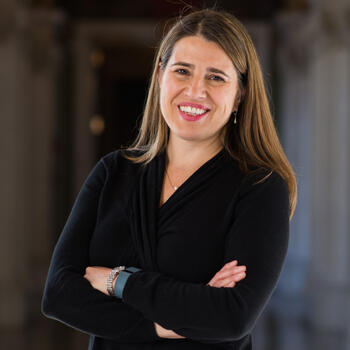
John Ciorciari is Associate Professor and Director of the Weiser Diplomacy Center and International Policy Center at the Gerald R. Ford School of Public Policy, University of Michigan. He is the author of Sovereignty Sharing in Fragile States (Stanford University Press, forthcoming 2021), The Limits of Alignment: Southeast Asia and the Great Powers since 1975 (Georgetown University Press, 2010), co-author of Hybrid Justice: The Extraordinary Chambers in the Courts of Cambodia (University of Michigan Press, 2014), and co-editor of The Courteous Power: Japan and Southeast Asia in the Indo-Pacific Era (University of Michigan Press, forthcoming 2021).


Image
chanlett-avery-emma-120820_crop_4x4
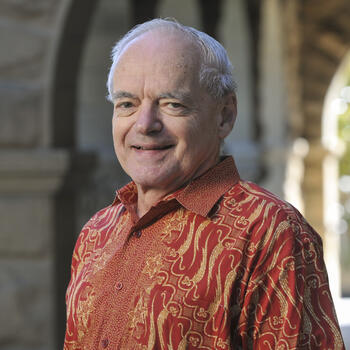
Emma Chanlett-Avery is a Specialist in Asian Affairs at the Congressional Research Service. She focuses on U.S. relations with Japan, the Korean Peninsula, Thailand, and Singapore. Ms. Chanlett-Avery joined CRS in 2003 through the Presidential Management Fellowship, with rotations in the State Department on the Korea Desk and at the Joint U.S. Military Advisory Group in Bangkok, Thailand. She also worked in the Office of Policy Planning as a Harold Rosenthal Fellow. She is a member of the Mansfield Foundation U.S. – Japan Network for the Future, Vice-Chair of the Board of Trustees of the Japan America Society of Washington, and the 2016 recipient of the Kato Prize. Ms. Chanlett-Avery received an MA in international security policy from the School of International and Public Affairs at Columbia University and her BA in Russian studies from Amherst College.

Image
don emmerson 2
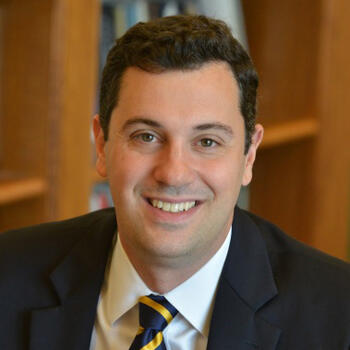
Donald K. Emmerson heads the Southeast Asia Program at Stanford University where he is also a faculty affiliate of the Center on Democracy, Development, and the Rule of Law and the Abbasi Program in Islamic Studies.  His new book is The Deer and the Dragon: Southeast Asia and China in the 21st Century (ed., August 2020).  Other recent publications include “Biden in Asia: America Together?,” East Asia Forum, 8 November 2020; “Donald Emmerson on Southeast Asia’s Approach to China” (interview, The Diplomat, Aug. 2020); “‘No Sole Control’ in the South China Sea,” Asia Policy (2019); ASEAN @ 50, Southeast Asia @ Risk: What Should Be Done? (ed., 2018); and “ASEAN Between China and America: Is It Time to Try Horsing the Cow?,” Trans-Regional and -National Studies of Southeast Asia (2017).  He has traveled and lectured widely in Southeast Asia, most recently in Singapore, Thailand, and Vietnam (Dec. 2019). Indonesia figured prominently in earlier fieldwork and writing. Before moving to Stanford in 1999, he taught political science at the University of Wisconsin-Madison.  He has held visiting positions at the Institute for Advanced Studies and the Australian National University, among other institutions.  His doctorate in political science is from Yale. 

Moderator

Image
Kiyoteru Tsutsui 120820 crop 4X4
Kiyoteru Tsutsui is Henri H. and Tomoye Takahashi Professor and Senior Fellow in Japanese Studies at the Walter H. Shorenstein Asia-Pacific Research Center at Stanford University, where he is also Director of the Japan Program, a Senior Fellow of the Freeman Spogli Institute for International Studies, and a Professor of Sociology. He is the author of Rights Make Might: Global Human Rights and Minority Social Movements in Japan (Oxford University Press, 2018), co-editor of Corporate Responsibility in a Globalizing World (Oxford University Press, 2016) and co-editor of The Courteous Power: Japan and Southeast Asia in the Indo-Pacific Era (University of Michigan Press, forthcoming 2021). 

Via Zoom Webinar.
Register: https://bit.ly/2HnCz3u

John Ciorciari Associate Professor and Director of the Weiser Diplomacy Center and International Policy Center, the Gerald R. Ford School of Public Policy, University of Michigan
Emma Chanlett-Avery Specialist in Asian Affairs, the Congressional Research Service
0
Senior Fellow Emeritus at the Freeman Spogli Institute for International Studies
Affiliated Faculty, CDDRL
Affiliated Scholar, Abbasi Program in Islamic Studies
aparc_dke.jpg PhD

At Stanford, in addition to his work for the Southeast Asia Program and his affiliations with CDDRL and the Abbasi Program in Islamic Studies, Donald Emmerson has taught courses on Southeast Asia in East Asian Studies, International Policy Studies, and Political Science. He is active as an analyst of current policy issues involving Asia. In 2010 the National Bureau of Asian Research and the Woodrow Wilson International Center for Scholars awarded him a two-year Research Associateship given to “top scholars from across the United States” who “have successfully bridged the gap between the academy and policy.”

Emmerson’s research interests include Southeast Asia-China-US relations, the South China Sea, and the future of ASEAN. His publications, authored or edited, span more than a dozen books and monographs and some 200 articles, chapters, and shorter pieces.  Recent writings include The Deer and the Dragon: Southeast Asia and China in the 21st Century (ed., 2020); “‘No Sole Control’ in the South China Sea,” in Asia Policy  (2019); ASEAN @ 50, Southeast Asia @ Risk: What Should Be Done? (ed., 2018); “Singapore and Goliath?,” in Journal of Democracy (2018); “Mapping ASEAN’s Futures,” in Contemporary Southeast Asia (2017); and “ASEAN Between China and America: Is It Time to Try Horsing the Cow?,” in Trans-Regional and –National Studies of Southeast Asia (2017).

Earlier work includes “Sunnylands or Rancho Mirage? ASEAN and the South China Sea,” in YaleGlobal (2016); “The Spectrum of Comparisons: A Discussion,” in Pacific Affairs (2014); “Facts, Minds, and Formats: Scholarship and Political Change in Indonesia” in Indonesian Studies: The State of the Field (2013); “Is Indonesia Rising? It Depends” in Indonesia Rising (2012); “Southeast Asia: Minding the Gap between Democracy and Governance,” in Journal of Democracy (April 2012); “The Problem and Promise of Focality in World Affairs,” in Strategic Review (August 2011); An American Place at an Asian Table? Regionalism and Its Reasons (2011); Asian Regionalism and US Policy: The Case for Creative Adaptation (2010); “The Useful Diversity of ‘Islamism’” and “Islamism: Pros, Cons, and Contexts” in Islamism: Conflicting Perspectives on Political Islam (2009); “Crisis and Consensus: America and ASEAN in a New Global Context” in Refreshing U.S.-Thai Relations (2009); and Hard Choices: Security, Democracy, and Regionalism in Southeast Asia (edited, 2008).

Prior to moving to Stanford in 1999, Emmerson was a professor of political science at the University of Wisconsin-Madison, where he won a campus-wide teaching award. That same year he helped monitor voting in Indonesia and East Timor for the National Democratic Institute and the Carter Center. In the course of his career, he has taken part in numerous policy-related working groups focused on topics related to Southeast Asia; has testified before House and Senate committees on Asian affairs; and been a regular at gatherings such as the Asia Pacific Roundtable (Kuala Lumpur), the Bali Democracy Forum (Nusa Dua), and the Shangri-La Dialogue (Singapore). Places where he has held various visiting fellowships, including the Institute for Advanced Study and the Woodrow Wilson International Center for Scholars. 


Emmerson has a Ph.D. in political science from Yale and a BA in international affairs from Princeton. He is fluent in Indonesian, was fluent in French, and has lectured and written in both languages. He has lesser competence in Dutch, Javanese, and Russian. A former slam poet in English, he enjoys the spoken word and reads occasionally under a nom de plume with the Not Yet Dead Poets Society in Redwood City, CA. He and his wife Carolyn met in high school in Lebanon. They have two children. He was born in Tokyo, the son of U.S. Foreign Service Officer John K. Emmerson, who wrote the Japanese Thread among other books.

Selected Multimedia

Date Label
Director, the Southeast Asia Program, Stanford University

Shorenstein APARC
Encina Hall
616 Jane Stanford way
Stanford, CA 94305-6055

(650) 723-2408
0
Senior Fellow at the Freeman Spogli Institute for International Studies
Professor of Sociology
Henri H. and Tomoye Takahashi Professor and Senior Fellow in Japanese Studies at the Shorenstein Asia-Pacific Research Center
Kiyo Tsutsui1_0.jpg PhD

Kiyoteru Tsutsui is the Henri H. and Tomoye Takahashi Professor and Senior Fellow in Japanese Studies at the Walter H. Shorenstein Asia-Pacific Research Center (APARC), the director of APARC and of the Japan Program at APARC, co-director of the Southeast Asia Program at APARC, executive director of the Inter-University Center for Japanese Language Studies, co-director of the Center for Human Rights and International Justice, senior fellow at the Freeman Spogli Institute for International Studies, and professor of sociology, all at Stanford University.

Prior to his appointment at Stanford in July 2020, Tsutsui was professor of sociology, director of the Center for Japanese Studies, and director of the Donia Human Rights Center at the University of Michigan, Ann Arbor.

Tsutsui’s research interests lie in political/comparative sociology, social movements, globalization, human rights, and Japanese society. More specifically, he has conducted (1) cross-national quantitative analyses on how human rights ideas and instruments have expanded globally and impacted local politics and (2) qualitative case studies of the impact of global human rights on Japanese politics. His current projects examine (a) changing conceptions of nationhood and minority rights in national constitutions and in practice, (b) populism and the future of democracy, (c) experimental surveys on public understanding about human rights, (d) campus policies and practices around human rights, (e) global expansion of corporate social responsibility and its impact on corporate behavior, and (f) Japan’s public diplomacy and perceptions about Japan in the world.

His research on the globalization of human rights and its impact on local politics has appeared in American Sociological Review, American Journal of Sociology, Social Forces, Social Problems, Journal of Peace Research, Journal of Conflict Resolution, and other social science journals. His book publications include Rights Make Might: Global Human Rights and Minority Social Movements in Japan (Oxford University Press 2018), and two co-edited volumes Corporate Social Responsibility in a Globalizing World (with Alwyn Lim, Cambridge University Press 2015) and The Courteous Power: Japan and Southeast Asia in the Indo-Pacific Era (with John Ciorciari, University of Michigan Press forthcoming). He has been a recipient of National Endowment for the Humanities Fellowship, National Science Foundation grants, the SSRC/CGP Abe Fellowship, Stanford Japan Studies Postdoctoral Fellowship, and other grants as well as awards from American Sociological Association sections on Global and Transnational Sociology (2010, 2013, 2019), Human Rights (2017, 2019), Asia and Asian America (2018, 2019), Collective Behavior and Social Movements (2018), and Political Sociology (2019). 

Tsutsui received his bachelor’s and master’s degrees from Kyoto University and earned an additional master’s degree and Ph.D. from Stanford’s sociology department in 2002.

Director, Shorenstein Asia-Pacific Research Center (APARC)
Director, Japan Program at Shorenstein APARC
Co-Director, Southeast Asia Program at Shorenstein APARC
Executive Director, Inter-University Center for Japanese Language Studies
Co-Director, Center for Human Rights and International Justice
CV
Date Label
Director, the Japan Program, Stanford University
Seminars
Authors
News Type
News
Date
Paragraphs

The Walter H. Shorenstein Asia-Pacific Research Center (APARC) invites applications for three types of postdoctoral fellowship in contemporary Asia studies for the 2021-22 academic year. Appointments for all three fellowship offerings are for one year beginning in fall quarter 2021.

APARC is committed to supporting junior scholars in the field of Asia studies to the greatest extent possible and that has become even more important during COVID-19, as graduate students are especially vulnerable to the adverse impacts of the pandemic, facing the loss of funding opportunities and access to field research.

The Center offers postdoctoral fellowships that promote multidisciplinary research on contemporary Japan, contemporary Korea, and contemporary Asia broadly defined. Learn more about each fellowship and its eligibility and specific application requirements:

Postdoctoral Fellowship on Contemporary Japan

The fellowship supports multidisciplinary research on contemporary Japan in a broad range of disciplines including political science, economics, sociology, law, policy studies, and international relations. The application deadline is January 4, 2021.

Korea Foundation-APARC Korea Program Postdoctoral Fellowship

The fellowship supports rising Korea scholars in the humanities and social sciences. The application deadline is January 20, 2021.

Shorenstein Postdoctoral Fellowship on Contemporary Asia

APARC offers two postdoctoral fellowship positions to junior scholars for research and writing on contemporary Asia. The primary research areas focus on political, economic, or social change in the Asia-Pacific region (including Northeast, Southeast, and South Asia), or international relations and international political economy in the region. The application deadline is January 4, 2021.

Read More

Hero Image
Encina Hall
All News button
1
Subtitle

The Center’s commitment to supporting young Asia scholars remains strong during the COVID-19 crisis.

Authors
Donald K. Emmerson
News Type
Commentary
Date
Paragraphs

As the U.S.-China competition heats up, other countries in the Asia-Pacific region are watching closely. But despite rhetoric about third parties “being forced to choose sides,” the countries of Southeast Asia have more agency than outside analysts often give them credit for. A new collection of essays on Southeast Asia’s approach to China, The Deer and the Dragon, highlights just that. Donald K. Emmerson, head of the Southeast Asia Program in the Walter H. Shorenstein Asia-Pacific Research Center at Stanford University, is the editor of and contributor to the book. He talks with The Diplomat about the China-Southeast Asia-U.S. triangle, including the South China Sea question, and the fallout from COVID-19.

This interview was conducted by Shannon Tiezzi for The Diplomat. The original article is available here.

[Sign up for our newsletters to receive updates like this directly in your inbox]


Many commentators (in the region and without) have raised questions recently on the future of the “ASEAN Way” amid China’s efforts to use its allies within ASEAN to cast “proxy vetoes on Beijing’s behalf” (as you put it in the opening chapter). Do you see ASEAN’s modus operandi evolving in the face of such challenges? Is serious consideration being given to calls for “ASEAN Minus” formulations or minilateral groupings?

A way is a path or a principle, not a codified rule. Beijing’s ability to stop an ASEAN member from saying or doing something that China doesn’t like is a function of what the would-be proxy expects to gain from compliance and suffer from defiance. The purpose of the “ASEAN Way” is intramural, harmonic, and cosmetic — to ensure that the members’ fealty to public consensus limits their discord and veils their friction. ASEAN’s inability to evolve from an intergovernmental to a supranational body is in part a consequence of its success in keeping itself intact at an anodyne level of least disagreement. Significant “ASEAN minus” innovations on matters of security such as the South China Sea are almost certainly not being considered.

The book rejects the idea that the states of Southeast Asia are passive objects of the U.S.-China tug of war. In what way can regional states shape the outcome of that contest – and their own destinies?

“Don’t force us to choose between China and the United States,” or words to that effect, have become an entrenched mantra in statements by more than a few Southeast Asian leaders. In its most damaging form, the plea falsely assigns equivalence to the two big powers and assigns to Southeast Asia a purely reactive position equidistant between them. Next-door China is an entirely plausible future regional hegemon. The threat from far-off America lies not in its presence but in what could happen in its absence.  Emphasizing what you want others not to do begs the question of what you yourself should be doing to ensure, increase, maintain, or restore your own strategic autonomy and the independent creativity and proactivity that it allows.

Relevant in this regard are developments in the South China Sea. Beijing’s former fluctuation between “smile” and “frown” diplomacy has given way to expansionary Chinese anger not only along the PRC’s southern coasts, from Hainan through Hong Kong to Taiwan, but in acts of harassment and intimidation in the EEZs [exclusive economic zones] of some ASEAN states as well. Rhetorical pushback by some of those states has helped to revive a dormant 2016 ruling by an international arbitral court, convened at Manila’s request, against Beijing’s claims and behavior in the South China Sea.

As if to follow the Philippine example, Vietnam might possibly decide to pursue legal redress against Beijing under international maritime law. If Vietnam does muster a case, China will punish it for its temerity, and years will elapse before a judgment is made. Merely having strategic autonomy does not assure its successful use. But recent evidence of agency by some governments in Southeast Asia does at least suggest that they have not yet succumbed to fatalist passivity in the face of Chinese coercion.

With that in mind, how have Southeast Asian states reacted to the United States’ new rejection of China’s “historic rights” in the South China Sea?

The question deserves context. Omitted on lists of China’s exports to the world is a vital if hard to measure item: self-censorship. Southeast Asia’s leaders have learned to avoid publicly criticizing China for reasons of practicality and fear. Why endanger actually or potentially beneficial economic relations? Why risk retaliation?

A recent case in point:  On July 14, 2020 U.S. Secretary of State Mike Pompeo issued a blistering rejection of China’s efforts. “The world,” he said, “will not allow Beijing to treat the South China Sea as its maritime empire.” Most of the governments in Southeast Asia probably hoped Pompeo was right, and officials in Hanoi, Manila, and Jakarta did make relevant remarks. They were circumspect, however, so as not to anger Beijing.  Vietnam’s foreign ministry “welcome[d]” the “positions” taken by “countries” on the South China Sea “issues” as “consistent with international law.” The Philippine defense secretary “strongly agree[d]” with “the international community” that there should be “a rules-based order” in the South China Sea.” Indonesia’s foreign minister reiterated her country’s defense of its EEZ as consonant with international law and the 2016 court ruling. Understandably, however, most Southeast Asian governments, even as they agreed with Washington’s position, preferred not to align themselves explicitly with the United States.

In your chapter on the South China Sea, you suggest that Southeast Asian claimants could push back against growing Chinese control in the South China Sea if regional states (for example, the Philippines and Vietnam) negotiate a resolution to their own maritime disputes. Has there been any movement toward this goal in Southeast Asian capitals? What obstacles stand in the way?

Little to nothing has been done. Nationalisms are the obstacle. The disputes over sovereignty are many and complex. They may never be resolved. Without having to agree on the ownership of land features, however, the locations and extents of particular maritime zones and the rights of access to and usage in them are in principle more amenable to agreement. With claimant-specific conflicts over sovereignty set aside to the extent possible, three approaches do come to mind: negotiation, arbitration, and application.

ASEAN countries whose claimed zones are superimposed could acknowledge and try to negotiate or arbitrate the claims’ locations. An example: Although the coastal EEZs claimed by Vietnam and the Philippines do not overlap with each other, they both overlap with the coastal EEZ claimed by Malaysia. The three countries could seek a compromise with regard to these zones while applying the 2016 arbitral decision and leaving open the possibility of further alterations, contingent upon feedback from other littoral states and possible future court rulings. Another possibility: One or more ASEAN states, in cooperation with each other or with nonpartisan outside bodies, could draw up, apply, and publicize new navigational and other maps of the South China Sea — representations of the 2016 arbitral decision on computer screens and paper charts usable at sea. The most promising aspect of the latest pushback against China is the resuscitation of the court’s ruling as a prospective guide to conduct. Last but not least, legality aside, a coalition of the willing could agree to, and seek broad international support for, a brief statement that no single country should control the South China Sea.

What is the state of China’s soft power (and, as you evocatively call it, the opposite of “repellent power”) in Southeast Asia?

At the end of each year, the ISEAS-Yusof Ishak Institute surveys the opinions of foreign policy elites in Southeast Asia. Confidence in China to “do the right thing” for “global peace security, prosperity and governance” was low in 2018 and still lower a year later. Among those who answered the question, the proportion who were “confident” or “very confident” that China would “do the right thing” shrank from 29 percent in 2018 to 16 percent in 2019. Those expressing such confidence in the United States actually grew a little, from 27 to 30 percent. And 60 percent in 2019 surely had Trump in mind when they agreed that a change of leadership in Washington would improve their confidence in the U.S. as a “strategic partner.” Also striking was the large proportion of respondents — 73 percent — who saw China as a “revisionist” power bent on turning their region into its “sphere of influence” (38 percent) or as “gradually” replacing America as “a regional leader” (35 percent). If there is an asset for Beijing in these results, it may not be enthusiasm for China’s soft power so much as resignation in light of its hard power.

What impact is the COVID-19 pandemic – which some analysts theorize could be a pivotal moment in the future of the world order – having on Southeast Asian countries’ relationships with China, the U.S., and each other?

Beijing has seized upon the pandemic as a chance to exercise soft power by donating or selling personal and protective equipment (PPE) to countries and organizations around the world. All 11 Southeast Asian countries have received gifts of Chinese PPE. These are humanitarian acts. But “mask-donor” diplomacy also serves to compensate for the damage done to China’s reputation by the coronavirus’ apparent origin in Wuhan.  Intentionally or not, gifts of Chinese PPE may also attenuate the bad press Beijing has received for its repressive-aggressive moves in Xinjiang, Hong Kong, and the South China Sea, and for the bluntly disparaging comments leveled by some of its “wolf-warrior” diplomats against criticisms of China. Chinese fans borrowed the lupine label from “Wolf Warrior 2,” a popular action film starring the People’s Liberation Army. Its tagline runs: “Even though a thousand miles away, anyone who affronts China will pay.”

Washington has provided some pandemic-related help to Southeast Asian states, but on a scale insufficient to compete with China’s vigorous self-promotion across the region. By comparison, America, largely preoccupied with its crisis-wracked self, has gone missing in Southeast Asia. And available data show that, ranked by its ability to overcome the virus at home, the United States is the worst-performing country in the world. How could one expect it to be able to lead that world?  Three-fifths of the Southeast Asian influentials surveyed by ISEAS were right to agree in 2019 that replacing Trump would improve America’s standing as a would-be strategic partner — and that was before the pandemic got underway.

As for the virus’s impact on relations among Southeast Asian states, Singapore and Vietnam have been helping some of their fellow ASEAN members, and Indonesia has donated equipment to Timor-Leste. But ASEAN has not launched its own collective campaign against the pandemic.

Finally: If COVID-19 does not abate and disappear reasonably soon, habits acquired during shutdowns could become a new normal. In-person consultations and negotiations could remain less common than they were before the virus struck and Zoom took over. A lasting reduction in physical travel will save time and energy. But it will sacrifice direct awareness of the ideas, demeanors, and local involvements of counterparts and partners in their home environments. That loss of context could impede the diplomacy that will be needed to recover, repair, and rethink the multilateral arrangements that will be called upon to sustain a future international order — redux or revamped — and protect it from wolf warriors and animus-driven cold warriors alike.


<< Pre-order The Deer and Dragon here >>

Read More

Cover of the book 'The Deer and the Dragon' on the background of a Southeast Asia map
News

New Book Analyzes the Dynamics of Inequality Between China and Southeast Asia

In a new volume, Donald Emmerson explores how the ASEAN nations are navigating complex political and policy issues with China during a time when political cohesion within ASEAN is fractured and China is increasingly assertive in its goals.
New Book Analyzes the Dynamics of Inequality Between China and Southeast Asia
Fiery Cross Reef, Spratly Islands
Commentary

Strategy in the South China Sea

Donald K. Emmerson analyzes China’s tactics in the South China Sea and how the countries of Southeast Asia are reacting to the tensions in the disputed waterway.
Strategy in the South China Sea
Hero Image
Leaders from the ASEAN league gather onstage at the 33rd ASEAN Summit in 2018 in Singapore.
Getty Images
All News button
1
Subtitle

In an interview with The Diplomat, Donald Emmerson discusses how factors like the South China Sea, U.S.-China competition, and how COVID-19 are affecting relations between Southeast Asia, China, and the United States.

Shorenstein APARC
Encina Hall
616 Jane Stanford way
Stanford, CA 94305-6055

(650) 723-2408
0
Senior Fellow at the Freeman Spogli Institute for International Studies
Professor of Sociology
Henri H. and Tomoye Takahashi Professor and Senior Fellow in Japanese Studies at the Shorenstein Asia-Pacific Research Center
Kiyo Tsutsui1_0.jpg PhD

Kiyoteru Tsutsui is the Henri H. and Tomoye Takahashi Professor and Senior Fellow in Japanese Studies at the Walter H. Shorenstein Asia-Pacific Research Center (APARC), the director of APARC and of the Japan Program at APARC, co-director of the Southeast Asia Program at APARC, executive director of the Inter-University Center for Japanese Language Studies, co-director of the Center for Human Rights and International Justice, senior fellow at the Freeman Spogli Institute for International Studies, and professor of sociology, all at Stanford University.

Prior to his appointment at Stanford in July 2020, Tsutsui was professor of sociology, director of the Center for Japanese Studies, and director of the Donia Human Rights Center at the University of Michigan, Ann Arbor.

Tsutsui’s research interests lie in political/comparative sociology, social movements, globalization, human rights, and Japanese society. More specifically, he has conducted (1) cross-national quantitative analyses on how human rights ideas and instruments have expanded globally and impacted local politics and (2) qualitative case studies of the impact of global human rights on Japanese politics. His current projects examine (a) changing conceptions of nationhood and minority rights in national constitutions and in practice, (b) populism and the future of democracy, (c) experimental surveys on public understanding about human rights, (d) campus policies and practices around human rights, (e) global expansion of corporate social responsibility and its impact on corporate behavior, and (f) Japan’s public diplomacy and perceptions about Japan in the world.

His research on the globalization of human rights and its impact on local politics has appeared in American Sociological Review, American Journal of Sociology, Social Forces, Social Problems, Journal of Peace Research, Journal of Conflict Resolution, and other social science journals. His book publications include Rights Make Might: Global Human Rights and Minority Social Movements in Japan (Oxford University Press 2018), and two co-edited volumes Corporate Social Responsibility in a Globalizing World (with Alwyn Lim, Cambridge University Press 2015) and The Courteous Power: Japan and Southeast Asia in the Indo-Pacific Era (with John Ciorciari, University of Michigan Press forthcoming). He has been a recipient of National Endowment for the Humanities Fellowship, National Science Foundation grants, the SSRC/CGP Abe Fellowship, Stanford Japan Studies Postdoctoral Fellowship, and other grants as well as awards from American Sociological Association sections on Global and Transnational Sociology (2010, 2013, 2019), Human Rights (2017, 2019), Asia and Asian America (2018, 2019), Collective Behavior and Social Movements (2018), and Political Sociology (2019). 

Tsutsui received his bachelor’s and master’s degrees from Kyoto University and earned an additional master’s degree and Ph.D. from Stanford’s sociology department in 2002.

Director, Shorenstein Asia-Pacific Research Center (APARC)
Director, Japan Program at Shorenstein APARC
Co-Director, Southeast Asia Program at Shorenstein APARC
Executive Director, Inter-University Center for Japanese Language Studies
Co-Director, Center for Human Rights and International Justice
CV
Date Label
1
Oksenberg-Rohlen Fellow
scot_marciel.jpg

Scot Marciel was the Oksenberg-Rohlen Fellow at the Freeman Spogli Institute for International Studies, affiliated with the Walter H. Shorenstein Asia-Pacific Research Center from 2022-2024. Previously, he was a 2020-22 Visiting Scholar and Visiting Practitioner Fellow on Southeast Asia at APARC.  A retired diplomat, Mr. Marciel served as U.S. Ambassador to Myanmar from March 2016 through May 2020, leading a mission of 500 employees during the difficult Rohingya crisis and a challenging time for both Myanmar’s democratic transition and the United States-Myanmar relationship.  Prior to serving in Myanmar, Ambassador Marciel served as Principal Deputy Assistant Secretary for East Asia and the Pacific at the State Department, where he oversaw U.S. relations with Southeast Asia.

From 2010 to 2013, Scot Marciel served as U.S. Ambassador to Indonesia, the world’s fourth most populous country.  He led a mission of some 1000 employees, expanding business ties, launching a new U.S.-Indonesia partnership, and rebuilding U.S.-Indonesian military-military relations.  Prior to that, he served concurrently as the first U.S. Ambassador for ASEAN Affairs and Deputy Assistant Secretary of State for Southeast Asia from 2007 to 2010.

Mr. Marciel is a career diplomat with 35 years of experience in Asia and around the world.  In addition to the assignments noted above, he has served at U.S. missions in Turkey, Hong Kong, Vietnam, Brazil and the Philippines.  At the State Department in Washington, he served as Director of the Office of Maritime Southeast Asia, Director of the Office of Mainland Southeast Asia, and Director of the Office of Southern European Affairs.  He also was Deputy Director of the Office of Monetary Affairs in the Bureau of Economic and Business Affairs.

Mr. Marciel earned an MA from the Fletcher School of Law and Diplomacy, and a BA in International Relations from the University of California at Davis.  He was born and raised in Fremont, California, and is married with two children.

Date Label
Authors
News Type
News
Date
Paragraphs

The Walter H. Shorenstein Asia-Pacific Research Center (APARC) condemns the systemic nature and brutal expression of racism in the United States, and we stand in full support of protestors and civil rights organizations in their calls for social justice, equal access to basic rights, and accountability. Beyond reaffirming our commitment to these values, we recognize the imperative to do better as an institution and the urgent need to take concrete action to build a more inclusive community here at our Stanford home. We have joined our colleagues at the Freeman Spogli Institute for International Studies in developing specific steps towards that goal. But we also want to take initial, immediate action in moving from protest to progress.

That’s why we are announcing today a new diversity grant to support Stanford students from underrepresented minorities with an interest in studying issues related to contemporary Asia. The field of Asian studies suffers from an extreme paucity of students, scholars, and experts who self-identify as Black/African American or as affiliated with other underrepresented minority groups. “The path towards a more diverse and inclusive field isn’t easy or straightforward, but we must get on it,” says APARC Director and FSI Senior Fellow Gi-Wook Shin. “We believe that we can tackle the existing disparity if relevant stakeholders across institutes of higher learning all work together. APARC is looking to start this change at Stanford.”

Lowering Barriers to Diversity in Asian Studies

The purpose of the APARC Diversity Grant is to encourage Stanford students from underrepresented minorities (URM) to engage in study and research of topics related to contemporary Asia and U.S.-Asia relations, including economic, health, foreign policy, social, political, and security issues. We follow the University’s definition of the URM category as encompassing “all U.S. citizens and permanent residents who have self-identified as American Indian/Alaska Native, Black/African American, Hispanic/Latino, Native Hawaiian/Other Pacific Islander.” This grant opportunity is open to current Stanford undergraduate and graduate students in the URM category from any major or discipline. “This is just a small step to start lowering disciplinary, cultural, and funding barriers that hinder broader student participation in Asian studies,” notes Shin.

APARC will award a maximum of $10,000 per grant to support a wide range of research expenses such as travel to/from research sites, academic conferences, and workshops (dependent on COVID-19 restrictions); conference registration fees; professional development training programs; purchase of physical and digital books or other required materials; and access to relevant online resources. APARC will review grant applications for projects taking place in winter/spring 2021 on a rolling basis starting on September 1, 2020. Reviews of the second round of applications, for projects taking place in summer/fall 2021, will begin on April 1, 2021.

Examples of research topics, in addition to those that Asia scholars typically study, could include China’s growing activities in Africa; understanding the evolving relations between Asian Americans and African Americans in the United States; and comparative examinations of issues such as the treatment of minorities in Asia and the United States or policies that promote anti-discriminatory practices in schools, the workplace, and other settings in Asian countries and the United States.

Application Guidelines

  • Complete the application form and submit it along with these three (3) attachments:
    • A statement (no more than three pages) describing the proposed research activity or project;
    • A current CV;
    • An itemized budget request explaining research expense needs.
  • Arrange for a letter of recommendation from a faculty to be sent directly to APARC. Please note: the faculty members should email their letters directly to Kristen Lee at kllee@stanford.edu.

We will consider only applications that include all supporting documents.

Read More

Hero Image
A look at the front of Encina Hall, Stanford
All News button
1
Subtitle

To encourage Stanford students from underrepresented minorities to engage in study and research of topics related to contemporary Asia, the Shorenstein Asia-Pacific Research Center is offering a new Diversity Grant opportunity. Application reviews begin on September 1, 2020.

-

This event is via Zoom Webinar. Please register in advance for the webinar by using the link below.

REGISTRATION LINKhttps://bit.ly/3cCbcfU

Since March, a series of escalations have heightened tensions in the South China Sea. From the sinking of a Vietnamese fishing boat to an ongoing standoff with the Malaysian navy, China has been accused of taking advantage of the COVID-19 pandemic to further its control of the South China Sea. Beijing’s actions on the water are not all that different than what it was doing just a few months ago. But having them continue amid a global health crisis has sparked a new level of outrage. And the nationalistic response from Chinese authorities has only added fuel to the fire. These developments highlight the new normal in the South China Sea, which will continue long after COVID-19 fades.

Image
poling headshot


Gregory B. Poling is Senior Fellow for Southeast Asia and Director of the Asia Maritime Transparency Initiative at CSIS. His research interests include the South China Sea disputes, democratization in Southeast Asia, and Asian multilateralism. Mr. Poling’s writings have been featured in Foreign Affairs, the Wall Street JournalNikkei Asian Review, and Foreign Policy, among others. He has authored or coauthored multiple works including The Thickening Web of Asian Security Cooperation (RAND Corporation, 2019), Building a More Robust U.S.-Philippines Alliance (CSIS, August 2015), and A New Era in U.S.-Vietnam Relations (CSIS, June 2014). Mr. Poling received an M.A. in international affairs from American University and a B.A. in history and philosophy from St. Mary’s College of Maryland.

Via Zoom Webinar

Register at https://bit.ly/3cCbcfU

Gregory B. Poling Senior Fellow for Southeast Asia and Director, Asia Maritime Transparency Initiative, Center for Strategic and International Studies
Panel Discussions
News Type
News
Date
Paragraphs

To support Stanford students working in the area of contemporary Asia, the Shorenstein Asia-Pacific Research Center is offering up to ten research assistant internships for summer 2020 and up to three predoctoral fellowships for the 2020-21 academic year. The Center will review applications starting April 15 and expects to fill the positions by April 30, 2020. 

Amid the fallout of the COVID-19 pandemic, students are facing summer internship cancelations and hiring freezes. They are left wondering about the long-term implications of the current crisis for their academic careers and their access to future jobs and valuable work experience.

At Shorenstein APARC, we want to do all we can to support Stanford students. That’s why we are announcing new internship and fellowship opportunities for current students working in the area of contemporary Asia: research assistant internships for the summer quarter of 2020 and predoctoral fellowships for the 2020-21 academic year.

The summer internships are all remote: research assistants will work as telecommuters. Regarding the predoctoral fellowships, we hope we can all have a normal 2020-21 academic year, in which case we expect the fellows to be in residence, but we will reassess the evolving COVID-19 situation closer to the appointment start dates and shift to flexible, online options as needed.

APARC will review applications for both opportunities on a rolling basis starting April 15, 2020. The Center will select up to ten research assistants and up to three predoctoral fellows by April 30, 2020.

Read on to learn more about these offerings and the application requirements, and follow the guidelines below to submit your candidacy.

Summer 2020 APARC Research Assistant Internships

Shorenstein APARC is seeking highly motivated and dedicated undergraduate and graduate students to join our team as paid research assistant interns for the summer quarter of 2020. Research assistants will work with assigned APARC faculty members on projects focused on contemporary Asia, studying varied issues related to the politics, economies, populations, security, foreign policies, and international relations of the countries of the Asia-Pacific region.

All positions will be for eight weeks starting late June or early July 2020. The hourly pay rate is $17 for undergraduate students, $25 for graduate students.

Research assistant positions are open to current Stanford students only. Undergraduate- and graduate-level students are eligible to apply.

Apply Now

  • Complete the application form and submit it along with these two (2) required attachments:
    • CV;
    • A cover letter (up to 1 page).
  • Arrange for a letter of recommendation from a faculty to be sent directly to APARC. Please note: the faculty members should email their letters directly to Kristen Lee at kllee@stanford.edu.

We will consider only complete applications that include all the abovementioned supporting documents.  

2020-21 Shorenstein APARC Predoctoral Fellowships

APARC is inviting applications from current Stanford students for the 2020-21 Shorenstein APARC Predoctoral Fellowship. The fellowship supports predoctoral students working within a broad range of topics related to contemporary Asia. 

Up to three fellowships are available to Ph.D. candidates who have completed all fieldwork and are nearing the completion of their dissertation. The Center will give priority to candidates who are prepared to finish their degree by the end of the 2020-21 academic year.

Shorenstein APARC offers a stipend of $36,075 for the 2020-21 academic year, plus Stanford's Terminal Graduate Registration (TGR) fee for three quarters. We expect fellows to remain in residence at the Center throughout the year and to participate in Center activities.

Apply Now

  • Complete the application form and submit it along with these three (3) required attachments:
    • CV;
    • A cover letter including a brief description of your dissertation (up to 5 double-spaced pages);
    • A copy of your transcripts. Transcripts should cover all graduate work and include evidence of recently-completed work.
  • Arrange for two (2) letters of recommendation from members of your dissertation committee to be sent directly to Shorenstein APARC. Please note: the faculty/advisors should email their letters directly to Kristen Lee at kllee@stanford.edu.

We will consider only complete applications that include all the abovementioned supporting documents. 

Hero Image
Architectural detail on Stanford colonnade with palm trees in the background L.A. Cicero
All News button
1
-

Richard Heydarian in conversation with Don Emmerson

In this seminar, scholar/journalist Richard Heydarian will discuss the principal arguments and ideas in his just-published book on the Indo-Pacific.  He will do so in conversation with Southeast Asia Program director Don Emmerson.  Propositions to be discussed will include:  The 21st century will not belong to China. There will be no Pax Sinica in the Indo-Pacific. China’s bid for primacy will fail due to its overbearing hubris abroad and its massive challenges at home.  Its effort to create a “neo-tributary” system in East Asia will not succeed, as evidenced by pushback regarding the Belt and Road Initiative and the South China Sea.  Neither China nor America will dominate the Indo-Pacific.  More likely to develop there is “an uneasy, fluid network of interlocking alliances, partnerships, and rivalries” in which middle powers such as Japan will figure prominently in efforts to address urgent and visceral challenges such as global warming and information war.  Most needed in the longer run will be a coalition of powers able jointly to “hold the line against the coming anarchy that will sweep the Indo-Pacific mega-region” if nothing is done to rescue it from the political, socioeconomic, environmental, and technological risks and dangers that lie ahead.  Copies of his latest book, from which these arguments are drawn, will be available for sale.

Image
heydarian
Richard Javad Heydarian’s latest book is The Indo-Pacific: Trump, China, and the New Struggle for Global Mastery (2020). Earlier publications include Asia’s New Battlefield (2015), How Capitalism Failed the Arab World (2014), and articles and interviews in many outlets including The Atlantic, The Economist, Foreign Affairs, The New York Times, The Guardian, The Wall Street Journal, and The Washington Post. He has interviewed heads of state and senior policy-makers across the Indo-Pacific, and has taught political science at Ateneo de Manila University and De La Salle University in the Philippines, and most recently was a visiting research Fellow at National Chengchi University in Taiwan. He is an opinion contributor to South China Morning Post, The Straits Times, and Nikkei Asian Review, and is a columnist at the Philippine Daily Inquirer and television host at GMA Network.


Richard Javad Heydarian Independent Scholar, Author, and Columnist for Philippines Daily Inquiries
Panel Discussions
-

In the eyes of China’s neo-authoritarian reformers, Singapore, despite being a tiny city-state, long exemplified a state of affairs for which the PRC should strive: resilient authoritarianism alongside but unweakened by liberalizing steps conducive to economic growth.  On behalf of Beijing’s effort to learn from Singapore, tens of thousands of officials visited the city-state and thousands of articles and books were written about it. Today, however, Xi Jiinping has derided foreign templates and relegated adopting the “Singapore model” to a path not taken by China’s current hard-line leadership and unavailable for authoritarian reformers to pursue. Although the demotion was triggered by Xi’s anti-reformism and China’s rise, Singapore’s loss of “model” character was also path-dependent. Chinese academics studying Singapore had long misunderstood fundamental institutional differences between the two countries that went back to the city-state’s colonial past and China’s Stalinist-Maoist revolution. Efforts to model reforms on the Singaporean “state-party” ran into the prerogatives of the Chinese party-state. Proposals to strengthen market forces, impose limited legal constraints on the party, and introduce semi-competitive elections were seen as threatening the institutional foundations of the CPC. Moreover, despite a (partial) revival of Confucianism in China that imitated the city-state’s attraction to “Asian values,” Singapore’s neo-liberal “pragmatism” and multi-racialism contradicted the CPC’s self-portrayal as an engine of Marxist socialism embodying the Han-Chinese nation.

Image
mark thompson 0120
Mark R. Thompson heads the Southeast Asia Research Centre at the City University of Hong Kong. He is president of the Hong Kong Political Science Association (HKPSA) and a former president of the Asian Political and International Studies Association (2013-14). A comparativist specializing in Southeast Asian politics, his publications include China’s “Singapore Model” and Authoritarian Learning, ed. with Stephan Ortmann (forthcoming 2020); Authoritarian Modernism in East Asia (2019); The Routledge Handbook of the Contemporary Philippines, ed. with Eric Batalla (2018); Dynasties and Female Political Leaders in Asia, ed. with Claudia Derichs (2014); Democratic Revolutions: Asia and Eastern Europe (2004); and The Anti-Marcos Struggle (1995).

Shorenstein APARC
Stanford University
Encina Hall E301
Stanford, CA 94305-6055

(650) 725-6459 (650) 723-6530
0
MarkThompson[1].JPG PhD

Professor Thompson builds on Barrington Moore's insight that there are different "paths to the modern" world. Thompson's manuscript explores alternatives to the familiar South Korean-and Taiwan-based model of "late democratization." According to that model, political pluralism follows a formative period of economic growth during which labor is demobilized and big business, religious leaders, and professionals depend upon and are co-opted by the state.

Thompson argues that even when these preconditions are in place, democratization need not follow. Singapore is an illuminating case in point. The autocratic growth model pays insufficient attention to politics, including the sometimes crucial role of student activists in challenging developmental authoritarianism and triggering a democratic transition, as in Indonesia. As political actors, students (rather than a progressive bourgeoisie) may fill the oppositional vacuum created by the preconditions that characterized predemocratic South Korean and Taiwan.

In his critique of Northeast Asian-style, post-authoritarian "late democratization" and its emphasis on economic growth as the driver of political change, Professor Thompson uses evidence drawn from paired comparisons of Vietnam with China, Hong Kong with Singapore, and between South Korea and Taiwan on the one hand and other major Southeast Asian cases on the other.

Mark R. Thompson is a professor of political science at the University of Erlangen-Nuremberg in Germany.  A Chicago native, he took his first degree in religious studies at Brown University followed by postgraduate work at Cambridge University and the University of the Philippines.  Fascinated by Philippine people power, he wrote his dissertation at Yale University on the anti-Marcos struggle (Yale University Press, 1996). After moving to Germany, he witnessed popular uprisings in East Germany and Eastern Europe, inspiring him to conceptualize democratic revolutions in essays later published as a book (Routledge, 2004).  He is in residence at Stanford as Lee Kong Chian Distinguished Fellow in Southeast Asian Studies from February through April 2009.

Lee Kong Chian NUS-Stanford Distinguished Fellow on Southeast Asia
Head and Professor of Politics, Department of Asian and International Studies, City University of Hong Kong
Seminars
Subscribe to International Development