International Development

FSI researchers consider international development from a variety of angles. They analyze ideas such as how public action and good governance are cornerstones of economic prosperity in Mexico and how investments in high school education will improve China’s economy.

They are looking at novel technological interventions to improve rural livelihoods, like the development implications of solar power-generated crop growing in Northern Benin.

FSI academics also assess which political processes yield better access to public services, particularly in developing countries. With a focus on health care, researchers have studied the political incentives to embrace UNICEF’s child survival efforts and how a well-run anti-alcohol policy in Russia affected mortality rates.

FSI’s work on international development also includes training the next generation of leaders through pre- and post-doctoral fellowships as well as the Draper Hills Summer Fellows Program.

-
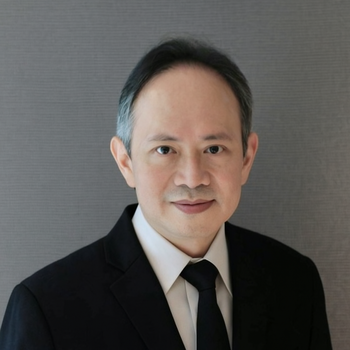
Portrait of Dr. Suriya Chindawongse, Ambassador of Thailand to the United States.

Stanford’s Walter H. Shorenstein Asia-Pacific Research Center welcomes Dr. Suriya Chindawongse, Ambassador of the Kingdom of Thailand to the United States, for a timely and forward-looking discussion titled “From Tech to Tariffs to Transactional Crime: ASEAN’s Strategy for Political Resilience and Economic Renewal.”

In an era marked by rapid technological disruption, geopolitical competition, and increasingly complex transnational threats, ASEAN faces both urgent challenges and historic opportunities. Ambassador Chindawongse will explore how Southeast Asian nations are navigating shifting trade dynamics, digital transformation, and emerging security risks—from supply-chain vulnerabilities to cybercrime and cross-border illicit networks. He will also highlight ASEAN’s collective efforts to strengthen regional frameworks, deepen economic integration, and preserve strategic autonomy amid global uncertainty.

This talk offers students, scholars, and policymakers an opportunity to gain insight into the region’s evolving priorities and the role of U.S.–ASEAN cooperation in shaping a resilient and innovative future.

Speaker:

His Excellency Dr. Suriya Chindawongse, Ambassador of Thailand to the United States of America - Royal Thai Embassy, Washington, D.C.


Image
headshot photo of His Excellency, Dr. Suriya Chindawongse

Dr. Suriya Chindawongse is a seasoned Thai diplomat and scholar, currently serving as the Ambassador of Thailand to the United States since June 2024. 
He holds a B.A., summa cum laude, in International Affairs, Economics & Business (minor in Mathematics) from Lafayette College, and both an M.A.L.D. (1990) and a Ph.D. (1993) from the Fletcher School at Tufts University. Beginning his career at Citibank in Bangkok, he transitioned to the Thai Ministry of Foreign Affairs in 1993. 
Dr. Chindawongse has held significant roles, including Director-General of the Department of ASEAN Affairs, Ambassador to Singapore (2020–21), and Ambassador and Permanent Representative of Thailand to the United Nations (2021–24), where he chaired the UN Sixth (Legal) Committee.

His Excellency Dr. Suriya Chindawongse, Ambassador of Thailand to the United States of America
Seminars
Date Label
Authors
News Type
News
Date
Paragraphs

The Walter H. Shorenstein Asia-Pacific Research Center (APARC) is pleased to invite applications for a suite of fellowships in contemporary Asia studies to begin in fall quarter 2026.

The Center offers postdoctoral fellowships that promote multidisciplinary research on Asia health policy, contemporary Japan, and contemporary Asia broadly defined, as well as postdoctoral fellowships and visiting scholar positions with the Stanford Next Asia Policy Lab and a visiting fellow position on contemporary Taiwan. Learn more about each opportunity and its specific application requirements:

2026-27 Asia Health Policy Program Postdoctoral Fellowship


Hosted by the Asia Health Policy Program at APARC, the fellowship is awarded to one recent PhD recipient undertaking original research on contemporary health or healthcare policy of high relevance to countries in the Asia-Pacific region, especially developing countries. Appointments are for one year beginning in fall quarter 2026. The application deadline is December 1, 2025.

2026-27 Japan Program Postdoctoral Fellowship


Hosted by the Japan Program at APARC, the fellowship supports research on contemporary Japan in a broad range of disciplines, including political science, economics, sociology, law, policy studies, and international relations. Appointments are for one year beginning in fall quarter 2026. The application deadline is December 1, 2025.  

2026-27 Shorenstein Postdoctoral Fellowship on Contemporary Asia


APARC offers two postdoctoral fellowship positions to junior scholars for research and writing on contemporary Asia. The primary research areas focus on political, economic, or social change in the Asia-Pacific region (including Northeast, Southeast, and South Asia), or international relations and international political economy in the region. Appointments are for one year beginning in fall quarter 2026. The application deadline is December 1, 2025. 
 

2026-27 Taiwan Program Visiting Fellowship


Hosted by the Taiwan Program at APARC, the fellowship is awarded to one mid-career to senior-level expert with extensive experience studying contemporary Taiwan. The fellowship research focus is on issues related to how Taiwan can meet the challenges and opportunities of economic, social, technological, environmental, and institutional adaptation in the coming decades, using a variety of disciplines, including the social sciences, public policy, and business. The application deadline is March 1, 2026.  
 

Read More

2025 Incoming Fellows
News

APARC Names 2025 Incoming Fellows

The Center’s new cohort of seven scholars pursues research spanning diverse topics across contemporary Asian studies.
APARC Names 2025 Incoming Fellows
Hero Image
Colonade at Stanford Main Quad with text: call for applications for APARC's 2026-28 fellowships.
All News button
1
Subtitle

The center offers multiple fellowships in Asian studies to begin in fall quarter 2026. These include a postdoctoral fellowship on political, economic, or social change in the Asia-Pacific region, postdoctoral fellowships focused on Asia health policy and contemporary Japan, postdoctoral fellowships and visiting fellow positions with the Stanford Next Asia Policy Lab, and a visiting fellow position on contemporary Taiwan.

Date Label
1
Visiting Scholar at APARC
Lee Kong Chian NUS-Stanford Fellow on Southeast Asia, Fall 2025
gavin_shatkin.jpg Ph.D.

Gavin Shatkin joined the Walter H. Shorenstein Asia-Pacific Research Center (APARC) as Visiting Scholar, Lee Kong Chian NUS-Stanford Fellow on Southeast Asia for the fall quarter of 2025. He is a Professor of Public Policy and Architecture at Northeastern University and an urban planner who works on the political economy of urbanization and urban planning and policy in Southeast Asia.  His recent research has addressed: the role of state actors in the emergence across Asia of very large, developer-built ‘urban real estate megaprojects’; the implications of climate change induced flood risk for questions of property rights in coastal cities; and the geopolitical dynamics shaping the ‘infrastructure turn’ in urban policy in large Southeast Asian cities.  His articles have been published in the International Journal of Urban and Regional Research, Urban StudiesAnnals of the Association American Geographers, and numerous other journals in urban studies, planning, geography, and Asian studies.  His most recent book is Cities for Profit: The Real Estate Turn in Asia’s Urban Politics (Cornell, 2017). 

While at APARC, Gavin primarily focused on a book manuscript examining the implications of Cold War political legacies for contemporary urban development and planning in Southeast Asia.  The book focuses on three megalopolises—Jakarta, Bangkok, and Metro Manila—that were the capital cities of nations that saw the consolidation (with American support) of authoritarian regimes during the period of Southeast Asia’s ‘hot Cold War’ during the 1960s and 1970s.  The book examines the legacies of Cold War era law, policy, and political discourse in three areas: property rights and land management; the production of knowledge about urbanization; and definitions of urban citizenship and belonging.

Date Label
0
Visiting Scholar at APARC, 2024-2026
WIRJAWAN Yasmin.jpg Ed.D.
Yasmin Wirjawan joins the Walter H. Shorenstein Asia-Pacific Research Center (APARC) as a visiting scholar from 2024 to 2026. Her research focuses on women and youths’ economic participation and resilience to climate change in Southeast Asia. She also serves as Independent Commissioner of TBS Energi Utama, Advisor to Ancora Group and Sweef Capital, and heads the Ancora Foundation. She has over 20 years of experience serving on corporate and nonprofit boards in the finance, technology, and education sectors. 
Wirjawan holds a Doctor of Education in Leadership and Innovation and a Master of Science in Management and Systems from New York University. She also earned a Master of Science in Finance from Brandeis University.  
Date Label
Authors
News Type
News
Date
Paragraphs

As nations grapple with an increasingly competitive global talent landscape, a new study, published in the journal World Development, suggests that countries should rethink their approach to developing, attracting, and retaining talent. To address the need for a more complete understanding of cross-national variation in talent development strategy, the study proposes Talent Portfolio Theory (TPT), a novel approach to studying and improving human resource development.

The researchers, Stanford sociologist Gi-Wook Shin, the William J. Perry Professor of Contemporary Korea and the director of APARC and the Korea Program, and Haley Gordon, a PhD candidate at Stanford’s Department of Sociology, draw on the principles of Modern Portfolio Theory, a well-established framework in financial investment literature, to propose a new framework for talent development.

The new framework, TPT, views a nation’s talent strategy much like an investment portfolio, emphasizing the importance of diversification, risk management, and rebalancing. Shin and Grodon examine Japan and Singapore as case studies to illustrate how the TPT approach can help scholars, policymakers, and businesses better understand and optimize talent development strategies.

The study is part of the Talent Flows and Development research track of the Stanford Next Asia Policy Lab (SNAPL). Housed at APARC and directed by Shin, SNAPL is a new initiative committed to addressing emergent social, cultural, economic, and political challenges in Asia-Pacific nations through interdisciplinary, policy-relevant, and comparative research.

Talent Portfolio Theory enables a holistic understanding of a nation’s talent development. TPT also allows us to see the evolution of talent development strategy in terms of rebalancing a talent portfolio over time.
Gi-Wook Shin and Haley Gordon

A Fresh Perspective on Talent Development

Talent development has long been a priority for nations aiming to boost economic growth and compete globally. Traditionally, countries have focused on building human capital — developing skills and education among citizens — and social capital — strengthening networks and relationships that facilitate cooperation and innovation. Existing strategies, however, often overlook the interconnected nature of various talent flows, including the movement of domestic talent, international talent, and diaspora engagement.

Just like financial theory evaluates a given investment (and its risk and return qualities) by how it impacts a portfolio’s overall performance rather than in isolation, TPT treats talent as a portfolio composed of four key elements, known as the “four Bs”: brain train (domestic talent development), brain gain (attracting foreign talent), brain circulation (movement of talent between home and abroad), and brain linkage (engagement with diaspora communities).

“In the study of national talent development, it is imperative to consider both the human and social capital facets of talent, as a country has multiple layers of talent available for use – domestic, diasporic, and foreign – each with different human and social capital potentials,” write Shin and Gordon. They propose TPT as “a better framework for illustrating and comparing different experiences and impacts of talent development at the national level, which is also key in offering policy prescriptions for human resource strategies.”

Talent Portfolio Theory allows for a comparison between Singapore and Japan, [...] explaining how timely rebalancing to maintain diversification enabled the former to sustain success while the latter stagnated, succumbing to risk.
Gi-Wook Shin and Haley Gordon

Insights from Japan and Singapore

Using Japan and Singapore as case studies, the authors demonstrate how countries can apply TPT to manage their talent portfolios. Japan's economic growth relied on two tiers of human capital: top-level scientists and engineers who adapted and integrated foreign technologies for domestic use, and skilled workers who grasped the fundamentals of these adapted technologies and carried out the manufacturing processes. With limited prospects for brain gain, circulation, or linkage, Japan developed these two layers of its workforce by relying on brain train, cultivating domestic talent for its industrial development.

In the early 1990s, however, Japan’s economy ran into trouble. Its system of brain train was well-suited for driving incremental innovation, but it became restrictive in the rapidly evolving landscape of the early 21st century, which demanded more disruptive innovation. “The Japanese model of human resource development necessitated a robust supply of domestic manpower which now became increasingly difficult to sustain, and a shrinking working-age population also meant labor shortage and reduced productivity,” say Shin and Gordon. “In the language of TPT, Japan urgently needed to diversify its talent portfolio beyond its reliance on brain train to address new risks.”

Recognizing the risks of a skewed talent portfolio, Japan began to rebalance its talent portfolio in the 2010s but has struggled with demographic decline and a slow pivot toward international talent. Despite efforts to internationalize higher education and attract foreign talent, Japan’s diversification of its talent portfolio has been stagnant and was hard hit by the COVID-19 pandemic.

In contrast, Singapore’s approach showcases the benefits of a well-balanced talent portfolio. The city-state’s aggressive pursuit of foreign talent (brain gain) and robust engagement with its diaspora (brain linkage) have made it a leader in global talent strategy. Singapore’s government has continually adjusted its policies, actively rebalancing its talent portfolio to maintain a competitive edge.

Singapore started rebalancing its talent portfolio in the 1990s, not only enhancing its efforts toward brain train but also expanding brain gain by internationalizing higher education and actively promoting a “work-migration” path. In tandem with its brain gain initiatives, Singapore also turned to its diaspora, fostering brain circulation and establishing stronger brain linkages. Through concerted efforts by the government and industry, Singapore has successfully produced and attracted creative talent that allowed it to remain globally competitive.

“Talent Portfolio Theory enables a holistic understanding of the various components of Singapore’s talent strategy and its evolution over time, from the country’s focus on brain train during its catch-up phase to its rebalancing with a successful brain gain, in addition to more recent forays into brain circulation and brain linkage,” Shin and Gordon explain.

Countries must enact sociocultural policies that ensure global competitiveness in the new talent market by emphasizing openness, tolerance, and diversity in order to gain the best and brightest brains.
Gi-Wook Shin and Haley Gordon

Toward Fostering Cultural Diversity

TPT offers a powerful framework for crafting more resilient and adaptive talent strategies. As the global competition for skilled workers intensifies, understanding the dynamics of talent portfolios can help countries mitigate risks, capitalize on opportunities, and avoid the pitfalls of overly narrow approaches to human resource development. For instance, countries experiencing demographic decline, like Japan, can look to Singapore’s model of timely rebalancing as a guide for policy adjustment. Businesses also stand to benefit from TPT. The framework encourages companies to look beyond the availability of local talent and consider the broader talent ecosystem, including international talent flows and diaspora engagement.

Shin and Gordon emphasize that structural and sociocultural factors often limit policy options for building and rebalancing talent portfolios. Japan and Singapore illustrate that developed countries with abundant domestic opportunities are better positioned to retain talent and attract brain gain, whereas developing countries often experience talent outflows, favoring brain circulation or linkage (as seen in China and India). Additionally, while ethnically homogenous countries like Japan may prefer to rely on domestic and diasporic talent, multiethnic countries like Singapore can better attract foreign talent and engage in brain gain.

The contrasting experiences of Japan and Singapore underscore the critical importance of fostering cultural diversity to attract foreign talent. Singapore’s success with brain gain, compared to Japan’s more mixed outcomes, largely stems from its multicultural environment, shaped by policies that protect minority rights and actively promote respect for diverse ethnic groups. To remain competitive in the global talent market, countries must prioritize sociocultural policies that cultivate openness, tolerance, and diversity. By embracing these values, nations can attract the best and brightest minds, ensuring their place in a rapidly evolving global economy.

Read More

Stanford building with palm trees and architectural details on the foreground and text "Call for Applications: Fall 2025 Fellowships" and APARC logo.
News

Stanford’s Asia-Pacific Research Center Invites Applications for Fall 2025 Asia Studies Fellowships

The Center offers multiple fellowships for Asia researchers to begin in Autumn quarter 2025. These include postdoctoral fellowships on Asia-focused health policy, contemporary Japan, and the Asia-Pacific region, postdoctoral fellowships and visiting scholar positions with the Stanford Next Asia Policy Lab, a visiting scholar position on contemporary Taiwan, and fellowships for experts on Southeast Asia.
Stanford’s Asia-Pacific Research Center Invites Applications for Fall 2025 Asia Studies Fellowships
Hero Image
College students wait in line to attend an information session at the Mynavi Shushoku MEGA EXPO in Tokyo, Japan.
College students wait in line to attend an information session at the Mynavi Shushoku MEGA EXPO at the Tokyo Big Sight, a two-day career fair, on March 8, 2015, in Tokyo, Japan.
Chris McGrath/Getty Images
All News button
1
Subtitle

Stanford researchers Gi-Wook Shin and Haley Gordon propose a novel framework for cross-national understanding of human resource development and a roadmap for countries to improve their talent development strategies.

Date Label
Paragraphs

Highlights 

  • Talent Portfolio Theory is a new framework for studying human resource development.
  • Talent portfolios use brain train, brain gain, brain circulation, and brain linkage.
  • National talent strategies involve portfolio diversification and rebalancing.
  • Talent Portfolio Theory allows cross-national comparison of talent strategy over time.
  •  While Japan stagnated, Singapore sustained growth by rebalancing its talent portfolio.


In this article, the researchers propose Talent Portfolio Theory (TPT) as a new framework for studying human resource development. Drawing insights from Modern Portfolio Theory in financial investment, TPT views a nation’s talent development as creating a “talent portfolio” composed of four “B”s: brain train, brain gain, brain circulation, and brain linkage. TPT attends to how a talent portfolio, like a financial one, is diversified to minimize risk, and how diversification can be maintained via rebalancing. As such, TPT provides a framework that captures the overall picture of a country’s talent strategy and offers a lens through which to understand how a country changes or “rebalances” its talent portfolio over time. It also provides a tool for examining cross-national variation in talent development strategy.

The authors illustrate the utility of TPT with the cases of Japan and Singapore. While human resource development was crucial to the economic rise of both countries, TPT demonstrates that Japan’s and Singapore’s approaches to constructing and rebalancing their talent portfolios took different routes with diverging outcomes. They conclude with discussions of theoretical and policy implications of this new approach for the study and implementation of talent development.

This study is part of the Talent Flows and Development research track of the Stanford Next Asia Policy Lab.

All Publications button
1
Publication Type
Journal Articles
Publication Date
Subtitle

Insights from Financial Theory, Illustrations from the Asia-Pacific

Journal Publisher
World Development
Authors
Authors
News Type
News
Date
Paragraphs

The Walter H. Shorenstein Asia-Pacific Research Center (APARC) is pleased to invite applications for a host of fellowships in contemporary Asia studies to begin in Autumn quarter 2025.

The Center offers postdoctoral fellowships that promote multidisciplinary research on Asia-focused health policy, contemporary Japan, and contemporary Asia broadly defined, postdoctoral fellowships and visiting scholar positions with the Stanford Next Asia Policy Lab, and a fellowship for experts on Southeast Asia. Learn more about each opportunity and its eligibility and specific application requirements:

Asia Health Policy Program Postdoctoral Fellowship

Hosted by the Asia Health Policy Program at APARC, the fellowship is awarded to one recent PhD undertaking original research on contemporary health or healthcare policy of high relevance to countries in the Asia-Pacific region, especially developing countries. Appointments are for one year beginning in Autumn quarter 2025. The application deadline is December 1, 2024.

Japan Program Postdoctoral Fellowship

Hosted by the Japan Program at APARC, the fellowship supports research on contemporary Japan in a broad range of disciplines including political science, economics, sociology, law, policy studies, and international relations. Appointments are for one year beginning in Autumn quarter 2025. The application deadline is December 1, 2024.  

Shorenstein Postdoctoral Fellowship on Contemporary Asia

APARC offers two postdoctoral fellowship positions to junior scholars for research and writing on contemporary Asia. The primary research areas focus on political, economic, or social change in the Asia-Pacific region (including Northeast, Southeast, and South Asia), or international relations and international political economy in the region. Appointments are for one year beginning in Autumn quarter 2025. The application deadline is December 1, 2024. 
 

Read More

Gerhard Hoffstaedter, Lee Kong Chian NUS-Stanford Fellow
Q&As

Refugee Placemaking in Malaysia: A Conversation with Dr. Gerhard Hoffstaedter

Anthropologist Gerhard Hoffstaedter, APARC's Lee Kong Chian NUS-Stanford Fellow on Southeast Asia, discusses his research into the experiences of refugees in Malaysia and their interactions with international institutions.
Refugee Placemaking in Malaysia: A Conversation with Dr. Gerhard Hoffstaedter
2024 Incoming Fellows at Shorenstein APARC
News

APARC Names 2024 Incoming Fellows

The Center’s new cohort of nine scholars pursues research spanning diverse topics across contemporary Asia studies.
APARC Names 2024 Incoming Fellows
Hero Image
Stanford building with palm trees and architectural details on the foreground and text "Call for Applications: Fall 2025 Fellowships" and APARC logo.
All News button
1
Subtitle

The Center offers multiple fellowships for Asia researchers to begin in Autumn quarter 2025. These include postdoctoral fellowships on Asia-focused health policy, contemporary Japan, and the Asia-Pacific region, postdoctoral fellowships and visiting scholar positions with the Stanford Next Asia Policy Lab, a visiting scholar position on contemporary Taiwan, and fellowships for experts on Southeast Asia.

Date Label
Authors
News Type
News
Date
Paragraphs

This announcement was updated on October 6, 2023, to reflect the addition of two new fellowship offerings focused on contemporary Taiwan.


The Walter H. Shorenstein Asia-Pacific Research Center (APARC) is pleased to invite applications for a suite of fellowships in contemporary Asia studies to begin fall quarter 2024.

The Center offers postdoctoral fellowships that promote multidisciplinary research on Asia-focused health policy; contemporary Japan; contemporary Asia broadly defined; postdoctoral fellowships and visiting scholar positions as part of the new Stanford Next Asia Policy Lab; and a fellowship for experts on Southeast Asia. Learn more about each opportunity and its eligibility and specific application requirements:

Asia Health Policy Postdoctoral Fellowship

Hosted by the Asia Health Policy Program at APARC, the fellowship is awarded annually to one recent PhD undertaking original research on contemporary health or healthcare policy of high relevance to countries in the Asia-Pacific region, especially developing countries. Appointments are for one year beginning in fall quarter 2024. The application deadline is December 1, 2023.

Postdoctoral Fellowship on Contemporary Japan

Hosted by the Japan Program at APARC, the fellowship supports research on contemporary Japan in a broad range of disciplines including political science, economics, sociology, law, policy studies, and international relations. Appointments are for one year beginning in fall quarter 2024. The application deadline is December 1, 2023.  
 

Shorenstein Postdoctoral Fellowship on Contemporary Asia

APARC offers two postdoctoral fellowship positions to junior scholars for research and writing on contemporary Asia. The primary research areas focus on political, economic, or social change in the Asia-Pacific region (including Northeast, Southeast, and South Asia), or international relations and international political economy in the region. Appointments are for one year beginning in fall quarter 2024. The application deadline is December 1, 2023.  
 

Read More

Solar panel array
Commentary

The High Stakes of Indonesia’s $20 Billion Just Energy Transition Partnership

Last November, the U.S. and its partners promised to supercharge the country’s green energy transition, but their efforts are already facing obstacles.
The High Stakes of Indonesia’s $20 Billion Just Energy Transition Partnership
Hero Image
Stanford architectural columns with text "Call for Applications: Fall 2024 Fellowships" and APARC logo.
All News button
1
Subtitle

The Center offers a suite of fellowships for Asia researchers to begin in fall quarter 2024. These include postdoctoral fellowships on Asia-focused health policy, contemporary Japan, and the Asia-Pacific region, postdoctoral fellowships and visiting scholar positions with the Stanford Next Asia Policy Lab, and fellowships for experts on Southeast Asia.

Authors
News Type
News
Date
Paragraphs

In a workshop hosted jointly by the Center on Democracy, Development and the Rule of Law and the Southeast Asia Program of the Walter H. Shorenstein Asia-Pacific Research Center on March 9, 2023, scholars discussed the setbacks and prospects for democracy in Southeast Asia. The workshop included Stanford affiliates, visiting scholars at the Freeman Spogli Institute for International Studies (FSI), and political scientists from several universities and research institutions in Japan, whose visit to Stanford was funded by the Japanese Society for the Promotion of Science.

Democracies in Southeast Asia face challenges found among other democracies around the globe, including pervasive corruption, political polarization, and the spread of disinformation on social media.


These issues were prominent in the workshop presentations and discussions. At one point, APARC visiting scholar Gita Wirwajan used the opportunity to urge Stanford, being in Silicon Valley, to speak louder against the information-degrading effects of social media.

Scholars also discussed the other distinctive and challenging conditions in which democracy, development, and the rule of law must take root in Southeast Asia, including monarchial traditions, religious diversity, and proximity to China. Such topics ranged widely, from Islamic Law in the Indonesian province of Aceh through China-funded infrastructure in Myanmar to the Mindanao conflict in the Philippines.

Waseda University Associate Professor and CDDRL Visiting Scholar Marisa Kellam co-chaired the workshop’s panels and roundtables with APARC’s Southeast Asia Program Director and CDDRL Affiliated Faculty Donald Emmerson. On the panels, Kana Inata (Tokyo Metropolitan University) and Ruosui Zhang (Waseda University) presented papers for discussion by Michael Bennon and Francis Fukuyama (both Stanford). The roundtables featured papers or remarks by Lisandro Claudio (UC Berkeley), Reza Idria (Ar-Raniry State Islamic University), Yuko Kasuya (Keio University), Aya Watanabe (Institute of Developing Economies), and Gita Wirwajan (Ancora Group). Several Stanford students in the Masters of International Policy program attended the workshop and took part in the discussion, and we were pleased to welcome representatives from the Consulate General of both Indonesia and the Philippines as well.

Perspectives from Indonesia and the Philippines


The morning roundtable offered the two Indonesian scholars’ perspectives on democracy, development, and the rule of law in Indonesia. Idria, while acknowledging that Aceh in democratic Indonesia is almost a state inside a state, situated the province within larger socioeconomic and religious contexts. Wirjawan argued that Indonesia’s democracy needs to become meritocratic, which he linked to the need for improved education.

The afternoon roundtable on the Philippines focused on Bongbong Marcos’s victory in the 2022 Philippine presidential election. According to Claudio, Bongbong’s opponent had run on a good governance platform that failed to persuade voters accustomed to the dynastic personalism of Philippine politics. Kasuya augmented Claudio’s account with reference to the disinformation circulating through social media and the disintegration of political parties and other accountability institutions during Rodrigo Duterte’s presidency. Watanabe’s scope included previous Philippine presidents, specifically their efforts to obtain legislative approval of the settlements negotiated to end the Mindanao insurgency.

Understanding Global Trends


In addition to the roundtable discussions on Indonesia and the Philippines, panel presentations at the workshop used Southeast Asian cases to understand global trends. Zhang’s research on the changing fate of the China-invested Myitsone dam project in Myanmar demonstrated that a developing country undergoing semi-democratic political change would not necessarily kowtow to Beijing. Inata compared the power of monarchs and described how monarchies have contributed to autocratization in Southeast Asia.

For Prof. Emmerson, the workshop’s value reflected the crucial and generous role played by Prof. Kellam in organizing the event; the scope and quality of its findings and interpretations; its coverage of an important region that lacks the attention Northeast Asia receives; and the all too rare collaboration that the workshop achieved between differently specialized components of Stanford University.

Hero Image
From Left to Right: Yuko Kasuya, Lisandro Claudio, Donald Emmerson, Aya Watanabe, Marisa Kellam, Ruosui Zhang, Reza Idria, Francis Fukuyama, Michael Bennon, and Kana Inata.
From left to right: Yuko Kasuya, Lisandro Claudio, Donald Emmerson, Aya Watanabe, Marisa Kellam, Ruosui Zhang, Reza Idria, Francis Fukuyama, Michael Bennon, and Kana Inata.
All News button
1
Subtitle

Scholars from Asia joined faculty and researchers from Stanford University’s Freeman Spogli Institute (FSI) to present research and reflections on various topics and cases from the Southeast Asia region, including the monarchy in politics, peace-making in the Philippines, Chinese infrastructure investments in Myanmar, illiberalism in the Philippines, and Islamic law in Indonesia.

Authors
News Type
Commentary
Date
Paragraphs

Although Japan’s approach to economic diplomacy under the Fukuda Doctrine initially was subject to criticism because of its stance on non-interference in domestic affairs, now some are in retrospect lauding the approach, according to Kiyoteru Tsutsui, deputy director at Shorenstein APARC and director of the Japan Program, and co-editor of the recent book The Courteous Power: Japan and Southeast Asia in the Indo-Pacific Era. This reevaluation comes after consideration of relatively unsuccessful attempts by the United States to “push” democracy onto Southeast Asian countries. 

The better approach is to focus on advancing the rule of law, which the Japanese have done by investing resources in establishing legal infrastructure in the region, Tsutsui tells Shorenstein APARC Visiting Scholar Gita Wirjawan, host of the popular Endgame video podcast. “Liberal democracy in the sense of the rule of law is a good sort of marketing ploy to sell to Southeast Asian countries because that leads to economic benefits, which is critical to making liberal democracy attractive,” he says.


Sign up for APARC newsletters to receive our scholars' analysis >

Tsutsui joined Wirjawan for an Endgame conversation about Japan’s approaches to foreign direct investment (FDI) in Southeast Asia and other topics. One issue that both scholars agreed upon is the difficulty in getting Americans to focus on Southeast Asia, which has been long recognized as a critical region by the Japanese. Part of the problem is proximity, of course, but the region also tends to be overshadowed in American eyes by East Asian countries. 

The conversation also turned to the demographic issue Japan and other Asian countries are facing as populations age and economic growth stagnates. Tsutsui pointed out that, before 1945, the Japanese Empire saw itself as multi-ethnic; it was only after WWII that the nation was perceived as homogenous, a viewpoint bolstered by Japan’s great economic success in the 1960s and 70s. Now, however, Tsutsui says there is no choice: “Japan has to become more heterogenous,” and even conservative voices acknowledge that women need a larger role in the labor force and that immigrant labor will be essential to combat the demographic crisis.

This discussion with Tsutsui is part of an "Endgame" interview series Wirjawan is recording with Stanford experts during his residency at APARC.

Read More

Scot Marciel speaking with Gita Wirjawan
Commentary

Video Interview: Scot Marciel Examines Southeast Asia’s Geopolitical Evolution

Ambassador Marciel, the Oksenberg-Rohlen Fellow at APARC, joined Visiting Scholar Gita Wirjawan, host of the video podcast Endgame, to discuss the transformations Southeast Asian nations are undergoing and their implications for U.S. policy.
Video Interview: Scot Marciel Examines Southeast Asia’s Geopolitical Evolution
Hero Image
Stanford sociologist Kiyoteru Tsutsui discusses Japan on the "Endgame" podcast
All News button
1
Subtitle

Kiyoteru Tsutsui, the Henri H. and Tomoye Takahashi Professor and Senior Fellow in Japanese Studies at Shorenstein APARC, joined Visiting Scholar Gita Wirjawan, host of “Endgame,” a video podcast, to discuss a range of topics, including his work on human rights, the demographic problem in Japan, global democratic decline, and Japan’s approach to Southeast Asia as a projector of soft power.

Subscribe to International Development