


Assessing Scenarios for Major Change in North Korea
-
Major change seems virtually certain to occur eventually in North Korea. The regime, already under great stress from the collapse of its economy and continuing international isolation, is being further tested by the apparently serious medical condition of top leader Kim Jong Il. North Korea’s neighbors, the PRC and South Korea, are concerned about the possibility of instability in North Korea resulting from the succession issue and other issues. The United States fears that chaos in North Korea could endanger the security of nuclear materials and technology that North Korea possesses. ROK General (RET) Byung Kwan Kim will analyze patterns of possible change in North Korea and how its neighbors and the United States are likely to respond.
General (RET) Byung Kwan Kim is the inaugural Koret Fellow for 2008-09 academic year. He was the Deputy Commander of the ROK-US Combined Forces Command and the Commander of the Ground Component Command.
The Koret Fellowship was established with generous support from the Koret Foundation to bring leading professionals in Asia and the United States to Stanford to study United States-Korea relations. Fellows conduct their own research on the bilateral relationship, with an emphasis on contemporary relations, with the broad aim of fostering greater understanding and closer ties between the two countries.
This event is supported by a generous grant from the Koret Foundation.
Philippines Conference Room
Byung Kwan Kim
Shorenstein APARC
Stanford University
Encina Hall E301
Stanford, CA 94305-6055
0
bkkim@stanford.edu
Koret Fellow, 2008-09
General (retired) Byung Kwan Kim is the inaugural Koret Fellow for 2008-09 academic year. He was the Deputy Commander of ROK-US Combined Forces Command and the Commander of Ground Component Command.
Koret Fellowship was established by the generous support from Koret Foundation to bring leading professionals in Asia and the United States to Stanford to study United States-Korea relations. The fellows will conduct their own research on the bilateral relationship, with an emphasis on contemporary relations with the broad aim of fostering greater understanding and closer ties between the two countries.
Seminars
Enhancing South Korea's Security: The U.S. Alliance and Beyond
Two decades ago, South Korea appeared on the path to greatly increased security. The Cold War was ending, fundamentally improving South Korea’s regional security environment. While retaining an alliance with the United States, South Korea was able to normalize relations with all of its neighbors except North Korea. It outpaced North Korea economically, technologically, politically, diplomatically, and militarily. Enjoying a dynamic democracy and firmly committed to the free market, South Korea seemed destined to grow only stronger vis-à-vis North Korea as the leading Korean state and to be well-positioned to preserve its security and integrity against much larger neighbors.
Today, however, South Korea unexpectedly faces a new constellation of significant threats to its security from both traditional and non-traditional sources.
- North Korea has developed and tested a nuclear device and has continued to improve the capabilities of its long-range ballistic missiles. Despite economic collapse, North Korea still fields one of the world’s largest conventional militaries. The North Korean regime continues to monopolize information to the North Korean people, clouding the prospects for North-South reconciliation.
- China’s rise presents not only opportunities but also challenges for South Korean security. Russia’s resurgence is a very recent phenomenon that has not been explored in depth. Despite converging attitudes and interests in many respects, historical grievances continue to limit security and diplomatic cooperation between South Korea and Japan.
- The United States is focused on combating terrorism and managing the rise of China, while South Korean public opinion is divided about North Korea and the alliance with the United States.
- Global developments—financial crises, economic recession, energy shortages, pollution, and climate change—are also testing South Korea. The ROK has one of the world’s lowest birth rates; the resulting dearth of young people and the aging of society will have major implications for South Korea’s long-term security.
This closed workshop will examine the above issues from the viewpoint of enhancing South Korea’s security in coming decades.
This workshop is supported by the generous grant from Koret Foundation.
Bechtel Conference Center
Byung Kwan Kim
Shorenstein APARC
Stanford University
Encina Hall E301
Stanford, CA 94305-6055
0
bkkim@stanford.edu
Koret Fellow, 2008-09
General (retired) Byung Kwan Kim is the inaugural Koret Fellow for 2008-09 academic year. He was the Deputy Commander of ROK-US Combined Forces Command and the Commander of Ground Component Command.
Koret Fellowship was established by the generous support from Koret Foundation to bring leading professionals in Asia and the United States to Stanford to study United States-Korea relations. The fellows will conduct their own research on the bilateral relationship, with an emphasis on contemporary relations with the broad aim of fostering greater understanding and closer ties between the two countries.
Gi-Wook Shin
Shorenstein APARC
Encina Hall E301
616 Jane Stanford Way
Stanford, CA 94305-6055
0
gwshin@stanford.edu
Senior Fellow at the Freeman Spogli Institute for International Studies
Professor of Sociology
William J. Perry Professor of Contemporary Korea
Professor, by Courtesy, of East Asian Languages & Cultures
Gi-Wook Shin is the William J. Perry Professor of Contemporary Korea in the Department of Sociology, senior fellow at the Freeman Spogli Institute for International Studies, and the founding director of the Korea Program at the Walter H. Shorenstein Asia-Pacific Research Center (APARC) since 2001, all at Stanford University. In May 2024, Shin also launched the Taiwan Program at APARC. He served as director of APARC for two decades (2005-2025). As a historical-comparative and political sociologist, his research has concentrated on social movements, nationalism, development, democracy, migration, and international relations.
In Summer 2023, Shin launched the Stanford Next Asia Policy Lab (SNAPL), which is a new research initiative committed to addressing emergent social, cultural, economic, and political challenges in Asia. Across four research themes– “Talent Flows and Development,” “Nationalism and Racism,” “U.S.-Asia Relations,” and “Democratic Crisis and Reform”–the lab brings scholars and students to produce interdisciplinary, problem-oriented, policy-relevant, and comparative studies and publications. Shin’s latest book, The Four Talent Giants, a comparative study of talent strategies of Japan, Australia, China, and India to be published by Stanford University Press in the summer of 2025, is an outcome of SNAPL.
Shin is also the author/editor of twenty-seven books and numerous articles. His books include The Four Talent Giants: National Strategies for Human Resource Development Across Japan, Australia, China, and India (2025); Korean Democracy in Crisis: The Threat of Illiberalism, Populism, and Polarization (2022); The North Korean Conundrum: Balancing Human Rights and Nuclear Security (2021); Superficial Korea (2017); Divergent Memories: Opinion Leaders and the Asia-Pacific War (2016); Global Talent: Skilled Labor as Social Capital in Korea (2015); Criminality, Collaboration, and Reconciliation: Europe and Asia Confronts the Memory of World War II (2014); New Challenges for Maturing Democracies in Korea and Taiwan (2014); History Textbooks and the Wars in Asia: Divided Memories (2011); South Korean Social Movements: From Democracy to Civil Society (2011); One Alliance, Two Lenses: U.S.-Korea Relations in a New Era (2010); Cross Currents: Regionalism and Nationalism in Northeast Asia (2007); and Ethnic Nationalism in Korea: Genealogy, Politics, and Legacy (2006). Due to the wide popularity of his publications, many have been translated and distributed to Korean audiences. His articles have appeared in academic and policy journals, including American Journal of Sociology, World Development, Comparative Studies in Society and History, Political Science Quarterly, Journal of Asian Studies, Comparative Education, International Sociology, Nations and Nationalism, Pacific Affairs, Asian Survey, Journal of Democracy, and Foreign Affairs.
Shin is not only the recipient of numerous grants and fellowships, but also continues to actively raise funds for Korean/Asian studies at Stanford. He gives frequent lectures and seminars on topics ranging from Korean nationalism and politics to Korea's foreign relations, historical reconciliation in Northeast Asia, and talent strategies. He serves on councils and advisory boards in the United States and South Korea and promotes policy dialogue between the two allies. He regularly writes op-eds and gives interviews to the media in both Korean and English.
Before joining Stanford in 2001, Shin taught at the University of Iowa (1991-94) and the University of California, Los Angeles (1994-2001). After receiving his BA from Yonsei University in Korea, he was awarded his MA and PhD from the University of Washington in 1991.
Stanford Next Asia Policy Lab (SNAPL)
Explore SNAPLDirector, Korea Program at the Walter H. Shorenstein Asia-Pacific Research Center (APARC)
Director, Stanford Next Asia Policy Lab at APARC
Hide publication sections
Off
David Straub
No longer in residence.
0
Associate Director of the Korea Program
David Straub was named associate director of the Korea Program at the Walter H. Shorenstein Asia-Pacific Research Center (Shorenstein APARC) on July 1, 2008. Prior to that he was a 2007–08 Pantech Fellow at the Center. Straub is the author of the book, Anti-Americanism in Democratizing South Korea, published in 2015.
An educator and commentator on current Northeast Asian affairs, Straub retired in 2006 from his role as a U.S. Department of State senior foreign service officer after a 30-year career focused on Northeast Asian affairs. He worked over 12 years on Korean affairs, first arriving in Seoul in 1979.
Straub served as head of the political section at the U.S. embassy in Seoul from 1999 to 2002 during popular protests against the United States, and he played a key working-level role in the Six-Party Talks on North Korea's nuclear program as the State Department's Korea country desk director from 2002 to 2004. He also served eight years at the U.S. embassy in Japan. His final assignment was as the State Department's Japan country desk director from 2004 to 2006, when he was co-leader of the U.S. delegation to talks with Japan on the realignment of the U.S.-Japan alliance and of U.S. military bases in Japan.
After leaving the Department of State, Straub taught U.S.-Korean relations at the Johns Hopkins University's School of Advanced International Studies in the fall of 2006 and at the Graduate School of International Studies of Seoul National University in spring 2007. He has published a number of papers on U.S.-Korean relations. His foreign languages are Korean, Japanese, and German.
Benjamin Self
Takahashi Fellow in Japanese Studies,APARC
Panelist
Don Keyser
Shorenstein APARC
Stanford University
Encina Hall E301
Stanford, CA 94305-6055
0
dkeyser@stanford.edu
Pantech Fellow, 2008-09
Donald W. Keyser retired from the U.S. Department of State in September 2004 after a 32-year career. He had been a member of the Senior Foreign Service since 1990, and held Washington-based ambassadorial-level assignments 1998-2004. Throughout his career he focused on U.S. policy toward East Asia, particularly China, Taiwan, Hong Kong, Japan and the Korean Peninsula. Fluent in Chinese and professionally conversant in Japanese, Russian and French, he served three tours at the American Embassy in Beijing, two tours at the American Embassy in Tokyo, and almost a dozen years in relevant domestic assignments. In the course of his career, Keyser logged extensive domestic and foreign experience in senior management operations, conflict resolution, intelligence operations and analysis, and law enforcement programs and operations. A Russian language major in college and a Soviet/Russian area studies specialist through M.A. work, Keyser served 1998-99 as Special Negotiator and Ambassador for Regional Conflicts in the Former USSR. He sought to develop policy initiatives and strategies to resolve three principal conflicts, leading the U.S. delegation in negotiations with four national leaders and three separatist leaders in the Caucasus region.
Keyser earned his B.A. degree, Summa Cum Laude, with a dual major in Political Science and Russian Area Studies, from the University of Maryland. He pursued graduate studies at The George Washington University, Washington, D.C., from 1965-67 (Russian area and language focus) and 1970-72 (Chinese area and language focus). He attended the National War College, Fort McNair, Washington (1988-89), earning a certificate equivalent to an M.S., Military Science; and the National Defense University Capstone Program (summer 1995) for flag-rank military officers and civilians.
Jong Seok Lee
Shorenstein APARC
Stanford University
Encina Hall E301
Stanford, CA 94305-6055
0
leejong@sejong.org
Visiting Scholar, 2008-09
Dr. Jong Seok Lee was the Minister of Unification, and the Chairman of the Standing Committee of the National Security Council in Korea. He is currently a Senior Fellow at Sejong Institute in Korea. He has published books on North Korea-China relations, contemporary North Korea, and Korea unification.
Alexandre Y. Mansourov
The National Committee on North Korea
Panelist
Jae Ho Chung
Professor, Department of International Studies, Seoul National University
Panelist
Kyung-Tae Lee
President, Korea Institute for International Economic Policy
Panelist
Ji-Chul Ryu
Senior Fellow, Korea Energy Economics Institute
Panelist
Seong-Ho Shin
Professor, Graduate School of International Studies, Seoul National University
Panelist
Daniel C. Sneider
Associate Director of Research, APARC
Panelist
Michael H. Armacost
Shorenstein Distinguished Fellow, APARC
Commentator
Thomas Fingar
Payne Distinguished Lecturer, FSI
Keynote Speaker
Charles L. "Jack" Pritchard
President, Korea Economics Institute, Washington D.C.
Commentator
T. J. Pempel
Department of Political Science, University of California, Berkeley
Commentator
Conferences
Health Care System and Policy in Korea: Politics and Democratization
-
Korea introduced three major health-care reforms: in financing (1999), pharmaceuticals (2000), and provider payment (2001). In these three reforms, new government policies merged more than 350 health insurance societies into a single payer, separated drug prescribing by physicians from dispensing by pharmacists, and attempted to introduce a new prospective payment system. The change of government, the president’s keen interest in health policy, and democratization in public policy process toward a more pluralist context opened a policy window for reform. Civic groups played an active role in the policy process by shaping the proposals for reform —a major change from the previous policy process that was dominated by government bureaucrats. However, more pluralistic policy process also allowed key interest groups to intervene at critical points in implementation (sometimes in support, sometimes in opposition), with smaller political costs than previously.
Strong support by the rural population and labor unions contributed to the financing reform. In the pharmaceutical reform, which was a big threat to physician income, the president and civic groups succeeded in quickly setting the reform agenda; the medical profession was unable to block the adoption of the reform but their strikes influenced the content of the reform during implementation. Physician strikes also helped them block the implementation of the payment reform. Future reform efforts in Korea will need to consider the political management of vested interest groups and the design of strategies for both scope and sequencing of policy reforms.
Soonman Kwon is Professor of Health Economics and Policy, and Director of the BK (Brain Korea) Center for Aging and Health Policy in Seoul National University, South Korea. After he received his Ph.D. from the Wharton School of the University of Pennsylvania, he was assistant professor of public policy at the University of Southern California in 1993-96. Prof. Kwon has held visiting positions at Harvard School of Public Health (Fulbright Scholar and Tekemi Fellow), London School of Economics (Chevening Scholar), Univ. of Trier of Germany (DAAD Scholar), and Univ of Toronto. He is on the editorial boards of Social Science and Medicine (Elsevier), Health Economics Policy and Law (Cambridge U Press), and Health Systems in Transition (HiT, European Observatory). He has occasionally worked as a short-term consultant of WHO, ILO, and GTZ (German Technical Cooperation) on health financing and policy in China, Cambodia, Lao PDR, Malaysia, Mongolia, Pakistan, Philippines, and Vietnam. He has also been a consultant of Korean government for the evaluation of its development aid programs in North Korea, Ecuador, Fiji, Mexico and Peru.
Philippines Conference Room
Soonman Kwon
Professor
Speaker
Seoul National University
Seminars
Korea and the Next American Presidency (Audio)
Related Multimedia
Korea and the Next American Presidency
-
In addition to Iraq, Afghanistan, Pakistan, the financial crisis, and the housing crisis (as if that were not enough!), the next American president will have his hands full with matters on the Korean peninsula. What will be the future of Six Party talks? What is the status of the leadership in Pyongyang? How do changes in leadership in Washington (and potentially in Pyongyang) affect outcomes? What are the prospects for US-ROK relations? And what of the KORUS FTA? Victor Cha, former director of Asian affairs at the White House, will lead a discussion on these issues.
Professor Cha is director of Asian Studies and holds the D.S. Song Chair in the Department of Government and School of Foreign Service at Georgetown University. He left the White House in May 2007 after serving since 2004 as Director for Asian Affairs at the National Security Council. At the White House, he was responsible primarily for Japan, the Korean peninsula, Australia/New Zealand and Pacific Island nation affairs. Dr. Cha was also the Deputy Head of Delegation for the United States at the Six Party Talks in Beijing, and received two Outstanding Service commendations during his tenure at the NSC.
He is the award-winning author of Alignment Despite Antagonism: The United States-Korea-Japan Security Triangle (Stanford University Press) (winner of the 2000 Ohira Book Prize) and co-author of Nuclear North Korea: A Debate on Engagement Strategies (Columbia University Press, 2004). He has written articles on international relations and East Asia in journals including Foreign Affairs, International Security, Political Science Quarterly, Survival, International Studies Quarterly, and Asian Survey. Professor Cha is a former John M. Olin National Security Fellow at Harvard University, two-time Fulbright Scholar, and Hoover National Fellow, CISAC Fellow, and William J. Perry Fellow at Stanford University.
Image
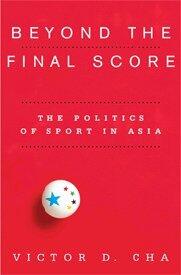
His new book Beyond the Final Score: The Politics of Sport in Asia (Columbia University Press, 2008) looks at the politics of sports and the Beijing Olympics. Cha holds a BA and Ph.D. from Columbia University, MA from University of Oxford.
This event is sponsored by the Pantech Group in Korea.
Philippines Conference Room
Victor D. Cha
Director of Asian Studies
Speaker
Georgetown University
Seminars
Domestic Politics of U.S.-ROK Relations
-
This talk will examine the phenomenon of anti-Americanism in the Republic of Korea (South Korea). Contrary to widespread perception, the speaker argues that anti-Americanism in South Korea has a deep-rooted history, the expression of which was suppressed during decades of authoritarian rule. Anti-Americanism in South Korea involves a sophisticated ideology, constituting a kind of belief system. Kim will trace the history of such anti-Americanism from 1945 until the present.
Hakjoon Kim is a Distinguished Practitioner at Center for East Asian Studies at Stanford. He is Chairman of the Dong-A Ilbo, one of South Korea's largest and most influential newspapers with a circulation of over two million. He has served as President of the University of Inchon, the Korean Political Science Association, and the Korean Federation of Teachers' Associations. He was a scholar at the Alexander-von-Humboldt Foundation in Germany and a guest scholar at the Woodrow Wilson International Center for Scholars in Washington, D.C. He received his B.A. from Seoul National Univeristy, M.A. from Kent State Universiy, and Ph.D. from University of Pittsburgh.
This event is supported by the generous grant from Academy of Korean Studies in Korea.
Philippines Conference Room
Hakjoon Kim
No longer in residence.
0
Distinguished Practitioner, 2008-09
Hakjoon Kim was a Distinguished Practitioner at Center for East Asian Studies at Stanford. He is chairman of the Dong-A Ilbo, one of South Korea's largest and most influential newspapers with a circulation of over two million. He has served as president of the University of Inchon, the Korean Political Science Association, and the Korean Federation of Teachers' Associations. He was a scholar at the Alexander-von-Humboldt Foundation in Germany and a guest scholar at the Woodrow Wilson International Center for Scholars in Washington, D.C.
Seminars