Red Stage, or Bringing the Authoritarian Streak Out
The Korea Program is part of the Walter H. Shorenstein Asia-Pacific Research Center.
Hye Sung Kim joins the Walter H. Shorenstein Asia-Pacific Research Center (Shorenstein APARC) during the 2017–18 academic year from MBC (Munhwa Broadcasting Corporation), one of the leading South Korean TV and radio network companies. During her career as a reporter at MBC, she reported from Baghdad in 2004 on the war in Iraq, and also covered North Korean issues in a weekly news magazine program Unification Observatory in 2013-14.
Kim's research interests focus mainly on inter-Korean relations and the interactions between the powerful nations surrounding the Korean peninsula. During her research period at Shorenstein APARC, Kim will study this subject with a view as a journalist.
Kim received a BA in Aesthetics with minor in International Relations from the Seoul National University.
Emerging technologies, stemming from the heart of Silicon Valley and extending to Asia and beyond, have pushed the bounds of how stories are told by journalists and the way in which readers interact with them. The Shorenstein Journalism Award, an annual prize given by the Shorenstein Asia-Pacific Research Center (APARC), celebrates 15 years of recognizing distinguished journalists for their innovative and responsible journalism amid social and technological change.
The prize began with “the idea of a media award for a person who has the most significant impact on the relationship with Asia-Pacific nations in the United States,” according to Walter H. Shorenstein, who spoke about his twin interests of Asia and the press in a 2010 oral history project interview and was the benefactor after whom the center is named.
Shorenstein APARC and Harvard’s Shorenstein Center on Media, Politics and Public Policy jointly presented the award for six years. Shorenstein APARC has continued the initiative, and each year, brings the award winner to Stanford to talk with the broader campus community, and since 2011, has alternated between a recipient from the West, who has mainly addressed an American audience, and a recipient from Asia.
The prize seeks to inspire the next generation of U.S. journalists focused on Asia, as well as Asian journalists, who pave the way for press freedom in their countries.
Award winners have explored a multitude of topics over the years, from human rights in North Korea to the rise of democracy in Indonesia and from the U.S.-Japan alliance to gender equality in India. And this year adds an additional view on China; veteran journalist Ian Johnson will address religion and value systems in a panel discussion on May 1 with Xueguang Zhou, Stanford professor of sociology, and Orville Schell, director of the Asia Society's Center on U.S.-China Relations, moderated by Daniel C. Sneider, Shorenstein APARC associate director for research.
To mark the award’s tenure, Shorenstein APARC asked award alumni to answer the question, “What do you think the future holds for journalism in/about Asia?” Their responses are below.
Barbara Crossette is the U.N. correspondent for The Nation and a columnist for India Abroad. She received the Shorenstein Journalism Award in 2010.
Journalism in Asia has had a long history of covering revolutions and wars. However, peace has reigned over Asia for near on 40 years. Yet, the peace and stability in Asia looks increasingly precarious. Asia too is not immune to populist nationalism. In this climate, Asia could yet again become the battleground for dislocation, revolution and war. Journalism, on top of reacting to potential crises, will be critical for proactively finding ways to prevent and defuse crises in the region.
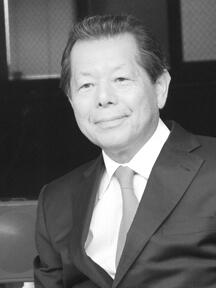
Yoichi Funabashi is the chairman of the Rebuild Japan Initiative Foundation. He received the Shorenstein Journalism Award in 2015.
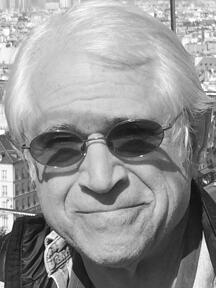
Ian Buruma is a writer and the Paul W. Williams Professor of Democracy, Human Rights, and Journalism at Bard College. He received the Shorenstein Journalism Award in 2008.
Seth Mydans is a contributing writer for the New York Times. He received the Shorenstein Journalism Award in 2009.
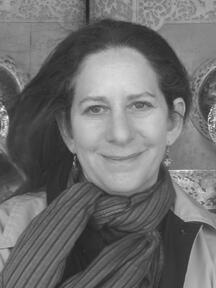
Barbara Demick is the Los Angeles Times’ bureau chief in New York and was formerly bureau chief in Beijing and in Seoul. She is the author of Nothing to Envy: Ordinary Lives in North Korea and Logavina Street: Life and death in a Sarajevo Neighborhood. She received the Shorenstein Journalism Award in 2012.
Aung Zaw is the founder and editor-in-chief of The Irrawaddy. He received the Shorenstein Journalism Award in 2013.
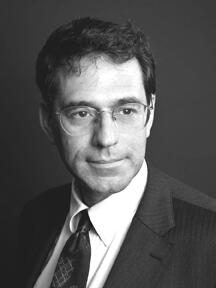
Jacob Schlesinger is a senior Washington correspondent for the Wall Street Journal. He received the Shorenstein Journalism Award in 2014.
Orville Schell is the Arthur Ross Director of the Center on U.S.-China Relations at the Asia Society in New York, and former dean of the School of Journalism at the University of California, Berkeley. He received the Shorenstein Journalism Award in 2003.
John Pomfret was a foreign correspondent with the Washington Post for many years. He is the author of The Beautiful Country and the Middle Kingdom: America and China from 1776 to the Present. He received the Shorenstein Journalism Award in 2007.
Japan and South Korea face serious demographic crises. Japan has the oldest population in the world and South Korea is one of the most rapidly aging. Together they top the list in terms of proportion of elderly by 2050, with 40.1% and 35.9% respectively being 65 and over, according to a U.S. Census Bureau forecast. Both nations are seeing shrinking working-age populations, with their birthrates among the lowest in the world. This puts them at great risk as they struggle to find new engines of economic growth.
Some experts argue that Japan and South Korea should encourage immigration. The former head of Tokyo's Immigration Bureau, Hidenori Sakanaka, said that "we need an immigration revolution to bring in 10 million people in the next 50 years, otherwise the Japanese economy will collapse." Jongryn Mo, a professor at Yonsei University in Seoul has written a book, "Strong Immigration Nation," urging a similar policy for South Korea.
Japan and South Korea are already supplementing their shrinking workforce with foreign labor, mostly unskilled migrant workers from China and Southeast Asia doing jobs that locals shun.
But it is time to attract more skilled workers. In Japan, only 18.4% of foreign workers were technicians or professionals in 2015, while the figure in Korea is just 7.8% this year. Skilled foreign workers can fill many jobs from staffing hospitals to working as technicians in middle-tier companies and software engineers in large ones.
The challenge, however, is that both countries remain exclusionary, closed societies despite a substantial rise in the numbers of foreigners. Politicians fear losing votes from workers worried about foreigners taking their jobs.
According to a recent report by the French business school INSEAD, Japan and South Korea are ranked 53rd and 61st, respectively in their level of tolerance for immigrants. Most foreign skilled workers have little intention to settle down in Japan or South Korea on a permanent basis, although unskilled ones might be more willing to stay.
Maria, a Guatemalan professional, decided to leave South Korea after working for six years in the overseas marketing department of a large Korean corporation. "Some Koreans complain that foreigners leave after a few years, but we leave because we're never included in the first place. Korean companies pay a lot to bring foreigners here. And then they don't even ask these people about their opinion."
Srey, a Cambodian student studying in Japan, said, "The Japanese are very helpful and very friendly, but at the same time they look at me as a 'gaijin' no matter how good I am at Japanese or able to speak to them. I am not planning to work in Japan."
Bridging strategy
South Korea and Japan need to find a more creative strategy in utilizing foreign talent. In particular, they should pay close attention to their transnational networks rather than pushing for permanent migration. Not only should both countries focus on the knowledge and skills of foreign labor talent, but also the social networks they can possess.
This calls for a particular type of social capital: transnational bridging. A person who has social ties in more than one place can serve as a bridge between those different places. Such bridging can be performed within a city or a country or across borders, but the latter is becoming more important with globalization. By bridging distant networks, people can connect disparate cultures, build trust and facilitate cross-national cooperation that are essential in business transactions. Many Indian and Chinese entrepreneurs and engineers working in Silicon Valley are active in transnational bridging with their home country.
Transnational bridging can be a good new strategy for South Korea and Japan in attracting foreign skilled labor since they can offer valuable experiences and networks as advanced economies, if not permanent places to live. They can help foreign talent to build social ties while studying and working and encourage them to serve as a bridge between South Korea and Japan and their next destination once they leave in what could be called "brain linkage."
They can still contribute to South Korea or Japan even after they depart. Maria said she was willing to do business involving both South Korea and her home country. Srey is also eager to do business with Japan after graduating, even though he will not work in the country.
South Korea and Japan should adopt a policy of "Study-Work-Bridge" rather than the "Study-Work-Migration" pathway commonly encouraged by settler societies. This new policy framework would establish programs providing systematic networking opportunities for skilled foreigners while in Japan or South Korea. It would upgrade the quality of campus life for foreign students and work environments for foreign professionals so they leave with positive experiences.
Most importantly, it would provide institutional support to help maintain transnational networks between foreigners and South Koreans and Japanese.
In Japan, a Study-Work framework has already begun to take shape. Among foreign students seeking employment in Japan in 2013, approximately 24% found jobs. According to the country's ministry of justice, 10,696 of 11,698 foreign students are successful in applying for a change of visa status after graduating from college. This is very encouraging. Still, foreign students feel that Japanese companies are reluctant to embrace their full potential and largely expect them to assimilate, often leading them to stay in Japan only for a short time.
In South Korea, with a shorter history of foreign student intake, a Study-Work framework has yet to emerge. While 64.3% of South Korean companies say they need and want to hire foreign students, only a very small portion of foreign students work in South Korean companies after graduation, perhaps as low as 1%. South Korea's immigration laws for foreign students have eased slightly in recent years, but there is an urgent need to develop solid, institutionalized support for responding to the substantial demand by foreign students who wish to find employment after their studies.
Challenges ahead
Both countries are moving in the right direction, but until they are ready to embrace a more comprehensive migration policy down the road, they should develop the "bridging" component of a Study-Work-Bridge framework as an interim strategy. That means considering how foreign skilled labor can contribute to their economies even if they stay only temporarily.
This non-migration-bridging concept can be also appealing to foreign workers who like to move on after gaining valuable experiences and networks. By activating the social networks they have left behind, foreigners can later become powerful "transnational bridges." With economic globalization, such linkages will be all the more important.
Research shows that science and engineering majors may have more to contribute as human capital, but business and social science majors are more inclined to play a bridging role. Universities and corporations should establish diversity offices, as seen in the U.S. and elsewhere, to promote a culture of tolerance and non-discrimination.
The challenges associated with aging, depopulation and a shrinking workforce are expected to intensify in the coming years. Yet foreign talent is readily at hand for both countries. They need to look no further than the skilled foreigners who already have connections with South Korea or Japan either through schooling or employment and to continue to cultivate such connections through a Study-Work-Bridge approach.
Gi-Wook Shin is director of the Walter H. Shorenstein Asia-Pacific Research Center at Stanford University and co-author of Global Talent: Skilled Labor as Social Capital in Korea. Rennie J. Moon is an associate professor at the Underwood International College at Yonsei University in Seoul.
This article was originally carried by Nikkei Asian Review on Aug. 31 and reposted with permission.
Alliances serve an important purpose in international relations, but the attention given by each country to each other is rarely equal. This kind of asymmetry is apparent in the U.S.-South Korea alliance; however, South Korea as the weaker ally can work to garner greater attention from the United States by leveraging the news media, according to Stanford professor Gi-Wook Shin and Yonsei University professor Rennie Moon.
Their co-authored editorial can be viewed on the AIIA blog. More on the subject can be found in an extended journal article by Shin, Moon and Hilary Izatt in the Australian Journal of International Affairs, and the Stanford University Press book One Alliance, Two Lenses: U.S.-Korea Relations in a New Era.
In the wake of this month’s G7 Summit in Japan, U.S. President Barack Obama has an opportunity to make a presidential visit to Hiroshima. Such a visit would reinforce his vision of a nuclear-free world and solidify an important legacy of his foreign policy, Shorenstein APARC Director Gi-Wook Shin and Associate Director for Research Daniel Sneider write in an editorial for The Diplomat. The co-authors argue that the visit be framed in a way that would contribute to historical reconciliation in Northeast Asia and not undermine progress made between Japan and South Korea.
Sneider wrote in an earlier Toyo Keizei editorial that while the White House has not yet announced a decision, the momentum for such a visit exists. And while issues of divided historical memory cannot be ignored, the occasion would not include an apology. The editorial can be viewed online in English and Japanese.
Sneider also contributed to Public Radio International's podcast series "Whose Century Is It?" and two articles on the Huffington Post Japan website. The first article, written in Japanese, examines how the history of atomic bombings are taught in the United States, and the second article, written in English, explores the question of acceptability of President Obama's visit to Hiroshima by the Japanese people.
During the visit, Obama delivered a speech that outlined the threat of nuclear weapons and the need for a world free from them. Writing for Nippon.com, Sneider said the speech and overall visit was well-received by many, but also had its critics. "The best judgment of the impact of Obama's Hiroshima visit may be what follows in Northeast Asia, where the task of postwar reconciliation remains unfinished," he wrote. The editorial can be viewed online in English and Japanese.
Shin and Sneider lead a decade-long research project that examines historical reconciliation in Asia, and are co-authors of the forthcoming book, Divergent Memories, about elite opinion and wartime memory in Asia.
From atomic bombs to harsh military occupations in the World War II period, the past is very much the present in the Asia Pacific region.
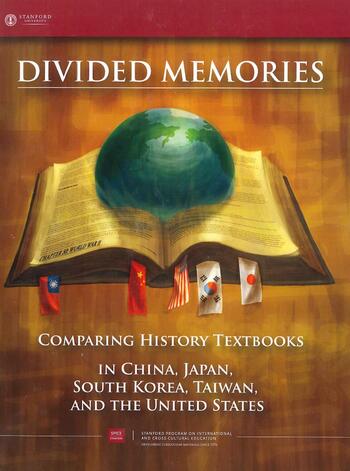
Stanford scholars are striving to help heal these wounds from yesteryear. Helping old enemies better understand each other today is the aim of the Divided Memories and Reconciliation project, a multi-year comparative study of the formation of historical memory regarding the wartime period in countries such as China, Japan, South Korea, Taiwan and the United States.
Left unattended, misguided wartime narratives may exacerbate current disputes to the point of armed conflict, said Daniel Sneider, associate director of research at Stanford's Shorenstein Asia-Pacific Research Center. He leads the Divided Memories project along with Gi-Wook Shin, a Stanford sociology professor and the Shorenstein center director.
Sneider points out the critical importance of textbooks and what is taught in schools – especially given the rise of nationalism among youth in China, Japan, Taiwan and South Korea.
"Dialogue among youth of the different nations is needed, along with an appreciation for the diversity of views and the complexity of history," he said.
Shin said, "Each nation in northeast Asia and even the U.S. has selective or divided memories of the past, and does not really understand the views of the other side."
Education and history
Launched in 2006, the Divided Memories project has published research findings, issued recommendations and convened conferences. In the early days, the researchers examined high school history textbooks in China, Japan, Korea, Taiwan and America.
"Formal education is a powerful force in shaping our historical understandings," Sneider noted. "We wanted to look at the textbooks that have the most impact and usage."
A 2014 book, Confronting Memories of World War II: European and Asian Legacies, which was co-edited by Shin, Sneider and Daniel Chirot, a sociologist with the University of Washington, compared successful European WWII reconciliations with lagging Asian efforts. Another book, Divided Lenses, published earlier this year, examined the impact of dramatic film and other forms of popular culture on wartime memory. A new book is due out this summer, Divergent Memories: Opinion Leaders and the Asia-Pacific War, which focuses on leaders in politics, the media and academia in Japan, China, South Korea and the U.S.
The Divided Memories project aims to generate discussions and collaborations among those who create "historical memories" – educators, policymakers and government leaders. One report that grew out of such dialogues included suggestions for reconciliation:
History is reflected in today's geopolitics, as noted in the revived disputes by these nations over rival claims to islands in the South China Sea and elsewhere. Without resolution, these disagreements can flare up into military conflicts, Sneider wrote.
"The question of history taps into sensitive and deeply rooted issues of national identity," he noted.
Whether recounting Japanese atrocities in China, China's exaggerated account of its Communist fighters' role in World War II, or the U.S. decision to drop atomic bombs on Japan, no nation is immune to re-creating the past to further its own interests today, Sneider wrote.
For example, Divided Memories research on Chinese textbooks shows how the Chinese government in recent decades embarked on a "patriotic education" campaign to indoctrinate young people by exaggerating its role in Japan's WWII defeat. This narrative suits the nationalistic desires of a Chinese government no longer exclusively motivated by communist ideology, Sneider said.
One project of APARC and its Japan Program that was also an outgrowth of Divided Memories involved Stanford scholars urging Japanese Prime Minister Shinzo Abe to show "clear, heartfelt remorse" in a 2015 speech on the 70th anniversary of the end of WWII. A 15-page report featured hypothetical statements suggesting what Abe might say to make amends for Japanese actions in China and Korea.
"While we cannot claim to have directly influenced the prime minister, his statement did go further in the direction of an expression of remorse over the war and the need to continue to look clearly and honestly at the past than many expected," said Sneider.
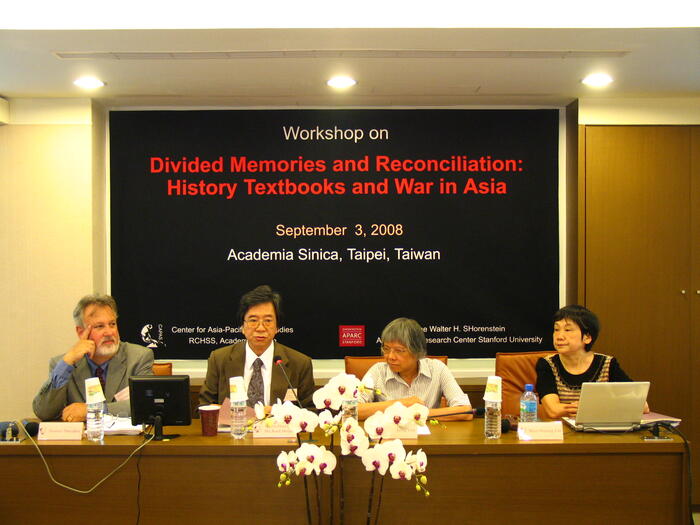
A workshop on history textbooks co-hosted by Shorenstein APARC and Academia Sinica's Center for Asia-Pacific Area Studies takes places in Taipei, Sept. 3, 2008.
Generations and grievances
Consciousness-raising on other fronts, however, is getting results, thanks to Stanford's Divided Memories project. A 2015 landmark agreement between Japan and South Korea over the WWII "comfort women" dispute was reached due to extensive U.S. involvement. Comfort women were women and girls who were forced into sexual slavery by the Imperial Japanese Army in occupied territories before and during World War II.
In an article, Sneider explained how the U.S. perceived that the dysfunctional relationship between South Korea and Japan over this issue, among others, threatened to undermine American strategic interests in Asia.
Shin highlights the importance of U.S. involvement. "The U.S. is not just an outsider to historical and territorial disputes in the region," he said. "From a geopolitical perspective, the U.S. has done a wonderful job in reviving the devastated region into a prosperous one after 1945, but from a historical reconciliation perspective, the U.S. has done a poor job."
He suggests that America should "play a constructive role in promoting historical reconciliation" among the countries involved. And so, the Divided Memories project has included the United States in its efforts.
According to Sneider, Divided Memories is unique among all reconciliation projects for its emphasis on the inclusion of the U.S.; comparative analyses across countries; and real-world policy impacts. As part of the Shorenstein research center, it is housed within Stanford's Freeman Spogli Institute for International Studies.
"This project reflects what Stanford, our center and the Freeman Spogli Institute are all about – true interdisciplinary research and engagement," Sneider said.
Clifton Parker is a writer for the Stanford News Service.
Divided Lenses: Screen Memories of War in East Asia is the first attempt to explore how the tumultuous years between 1931 and 1953 have been recreated and renegotiated in cinema. This period saw traumatic conflicts such as the Sino-Japanese War, the Pacific War, and the Korean War, and pivotal events such as the Rape of Nanjing, Pearl Harbor, the Battle of Iwo Jima, and the bombings of Hiroshima and Nagasaki, all of which left a lasting imprint on East Asia and the world. By bringing together a variety of specialists in the cinemas of East Asia and offering divergent yet complementary perspectives, the book explores how the legacies of war have been reimagined through the lens of film.
This turbulent era opened with the Mukden Incident of 1931, which signaled a new page in Japanese militaristic aggression in East Asia, and culminated with the Korean War (1950–1953), a protracted conflict that broke out in the wake of Japan's post–World War II withdrawal from Korea. Divided Lenses explores how the intervening decades have continued to shape politics and popular culture throughout East Asia and the world. Essays in part I examine historical trends at work in various "national" cinemas, including China, Taiwan, Japan, Korea, and the United States. Those in part 2 focus on specific themes such as comfort women in Chinese film, the Nanjing Massacre, or nationalism, and how they have been depicted or renegotiated in contemporary films. Of particular interest are contributions drawing from other forms of screen culture, such as television and video games.
This book is an outcome of the conference, Divided Lenses: Film and War Memory in Asia, that the Shorenstein Asia-Pacific Research Center hosted in December 2008, part of the Divided Memories and Reconciliation research project.
Joon Nak Choi is the 2015-2016 Koret Fellow in the Korea Program at Stanford's Shorenstein Asia-Pacific Research Center (APARC). A Stanford graduate and sociologist by training, Choi is an assistant professor at Hong Kong University of Science and Technology. His research and teaching areas include economic development, social networks, organizational theory, and global and transnational sociology, within the Korean context. He recently coauthored Global Talent: Skilled Labor as Social Capital in Korea which he developed the manuscript from 2010-11 while he was a William Perry postdoctoral fellow at APARC.
This event is made possible through the generous support of the Koret Foundation.
Shorenstein APARC
Encina Hall
Stanford University
Stanford, CA 94305-6055
Joon Nak Choi is the 2015-2016 Koret Fellow in the Korea Program at Stanford University's Walter H. Shorenstein Asia-Pacific Research Center (Shorenstein APARC). A sociologist by training, Choi is an assistant professor at Hong Kong University of Science and Technology. His research and teaching areas include economic development, social networks, organizational theory, and global and transnational sociology, within the Korean context.
Choi, a Stanford graduate, has worked jointly with professor Gi-Wook Shin to analyze the transnational bridges linking Asia and the United States. The research project explores how economic development links to foreign skilled workers and diaspora communities.
Most recently, Choi coauthored Global Talent: Skilled Labor as Social Capital in Korea with Shin, who is also the director of the Korea Program. From 2010-11, Choi developed the manuscript while he was a William Perry postdoctoral fellow at Shorenstein APARC.