Nuclear Energy
-

It has been five years since the 2011 Great Tohoku Earthquake and Tsunami and associated nuclear meltdown at the Fukushima Daiichi nuclear power plant. Three experts will re-examine the impact of these events on Japan and the world. What was the ultimate legacy of the disaster? What was the impact on political discourse, nuclear policy, disaster response, society, and culture? What lessons have we learned?


Panelists


Image
Daniel Aldrich is Professor of Political Science, Public Policy and Urban Affairs and is the Co-Director of the Masters Program in Security and Resilience at Northeastern University. He has published four books, single-authoring Site Fights (Cornell University Press, 2008) and Building Resilience (University of Chicago Press, 2012) which won the Japan NPO Research Association Award for Outstanding Book; both were translated into Japanese and the latter into Chinese as well.  He co-authored and co-edited the books Resilience and Recovery in Asian Disasters (Springer Publishers, 2014) and Healthy, Resilient and Sustainable Communities after Disasters (Institute of Medicine / National Academy of Sciences, 2015).  He has also published more than thirty peer reviewed articles in journals such as Social Science and Medicine, Public Administration Review, British Journal of Political Science, Natural Hazards and the Journal of Asian Studies along with 20 book chapters and OpEds in the New York Times, CNN, the Washington Post, and the Asahi Shinbun. Aldrich is Chair of the American Political Science Association’s Working Group on Disasters and Crises and sits on the editorial board of several journals.  He has won, among other awards, two Fulbright fellowships, an Abe Fellowship, an American Association for the Advancement of Science (AAAS) Science and Technology fellowship, the Kinley Trust Fellowship, and the Pi Sigma Alpha Best Professor Award (2011).
 

Takahashi Research Associate in Japanese Studies,
Shorenstein APARC
Kenji E. Kushida is the Japan Program Research Associate at the Walter H. Shorenstein Asia-Pacific Research Center and an affiliated researcher at the Berkeley Roundtable on the International Economy. Kushida’s research interests are in the fields of comparative politics, political economy, and information technology. He has four streams of academic research and publication: political economy issues surrounding information technology such as Cloud Computing; institutional and governance structures of Japan’s Fukushima nuclear disaster; political strategies of foreign multinational corporations in Japan; and Japan’s political economic transformation since the 1990s. Kushida has written two general audience books in Japanese, entitled Biculturalism and the Japanese: Beyond English Linguistic Capabilities (Chuko Shinsho, 2006) and International Schools, an Introduction (Fusosha, 2008). Kushida holds a PhD in political science from the University of California, Berkeley. His received his MA in East Asian studies and BAs in economics and East Asian studies, all from Stanford University.


Image
Kyoko Sato is the STS Associate Director and lecturer. Her research explores how cultural meanings, politics, and institutional frameworks intersect in the development of technology. She is currently completing a book manuscript, The Making of Genetically Modified Food: Culture, Politics and Policy in France, Japan and the United States, and conducting a comparative study that examines cultural politics of nuclear energy after World War II and the effect of the 2011 Fukushima disaster in Japan and the United States. Her fields of teaching include the politics and culture of food, environmental politics, globalization, social theory, and methods of social sciences. Dr. Sato received her PhD in sociology from Princeton University, MA in journalism from New York University, and BA in English from the University of Tokyo. She was a postdoctoral associate at the Institute for the Social Sciences at Cornell University and taught as a lecturer in the Committee on Degrees in Social Studies and in the Department of Sociology at Harvard University. Before entering the academia, Dr. Sato worked as a reporter for The Japan Times, an English-language daily in Tokyo.

Daniel Aldrich, Professor of Political Science, Public Policy and Urban Affairs and Co-Director of the Masters Program in Security and Resilience- Northeastern University
Kenji Kushida, Shorenstein Asia-Pacific Research Center Japan Program Research Associate- Stanford University
Kyoko Sato, The Program in Science, Technology, and Society Associate Director- Stanford University
Panel Discussions
-

Stanford-Sasakawa Peace Foundation New Channels Dialogue 2014

Energy Challenge and Opportunities for the United States and Japan


February 13, 2014

Bechtel Conference Center, Encina Hall, Stanford University

Sponsored and Organized by Sasakawa Peace Foundation (SPF) and Shorenstein Asia-Pacific Research Center (S-APARC) in Association with U.S.-Japan Council


Japan Studies Program at Shorenstein APARC, Stanford University has launched a three-year project from 2013 to create new channels of dialogue between experts and leaders of younger generations from the United States, mostly from the West Coast, and Japan under a name of "New Channels: Reinvigorating U.S.-Japan Relations," with the goal of reinvigorating the bilateral relationship through the dialogue on 21st century challenges faced by both nations, with a grant received from the Sasakawa Peace Foundation.

The dialogue would be structured to examine the new challenges of the 21st century, in particular, economic growth and employment creation; innovation and entrepreneurship; energy; and East Asian regionalism, including regional security issues, with the aim of developing mutual understanding and constructing a new relationship for cooperation in dealing with 21st century challenges through the dialogue between scholars, entrepreneurs, and policy makers from the two countries. We are hoping that this multi-year initiative will generate a network of trans-Pacific expertise as a vital supplement to existing avenue of communications.

Given the recent dramatic changes in energy environments in both countries, such as shale gas developments in the U.S, and after Fukushima challenges in Japan, this year, as an inaugural year, we will be examining energy issues. Panel discussions open to the public, with the title of "Energy Challenges and Opportunities for the U.S. and Japan," will be held on February 13th, followed by a dialogue among invited participants on 14th, at Stanford University with the participation of policy makers, business leaders, scholars, and experts from both countries.

In the panel discussions we will examine following issues:

  1. Discovery of shale gas deposits in various parts of the world has drastically changed the geopolitics of energy.
  2. New technologies for energy production have been creating various challenges to the existing system of energy supply.
  3. As emerging economies grow rapidly, they will demand increasing amount of energy. They face a challenge of creating a sustainable and secure energy supply system.
  4. After the Fukushima Daiichi nuclear disaster, the call for enhancing safety of nuclear power plants has intensified. While public’s trust in nuclear technology wanes, increasing number of nuclear power plants are built in emerging countries. Nuclear energy policy has become politically contentious.
  5. Use of information technology, such as smart grid, is likely to change the ways energy is supplied and distributed.
  6. The world has not found an effective international framework for slowing the global warming and securing reliable energy supply to support economic growth.

We are very pleased that we were able to invite quite impressive participants, policy makers, business leaders, scholars and experts from the two countries, who would appear as panelists in the panel discussions on February 13th.

We expect that through this panel discussion we would be able to define the challenges we are facing, indicate the pathways we should proceed to, and identify the areas for cooperation.

On the following day, February 14th, we will have the dialogue closed to the public discussing issues and possible cooperation between the U.S. and Japan on energy among invited participants.

We hope to publish a summary of conference presentations and the dialogue discussion after the conference.

Bechtel Conference Center

Conferences
News Type
News
Date
Paragraphs
How are the Japanese people reacting to the news of the continuing contamination leak and what does it mean for Japan's energy policy? In an interview with PBS NewsHour on August 8, Kenji E. Kushida speaks about what the government may do to stop the flow.
Hero Image
logo
Unit 4 of TEPCO's Fukushima Daiichi Nuclear Power Station (02813334)
Flickr user IAEA Imagebank
All News button
1
Paragraphs

We consider the vulnerability of nuclear power plants to a disaster like the one that occurred at Fukushima Daiichi. Examination of Japanese nuclear plants affected by the earthquake and tsunami on March 11, 2011 shows that three variables were crucial at the early stages of the crisis: plant elevation, sea wall elevation, and location and status of backup generators. Higher elevations for these variables, or waterproof protection of backup generators, could have mitigated or prevented the disaster. We collected information on these variables, along with historical data on run-up heights, for 89 coastal nuclear power plants in the world. The data shows that 1. Japanese plants were relatively unprotected against potential inundation in international comparison, but there was considerable variation for power plants within and outside of Japan; 2. Older power plants and plants owned by the largest utility companies appear to have been particularly unprotected.

All Publications button
1
Publication Type
Journal Articles
Publication Date
Journal Publisher
Environmental Science & Technology
Authors
Phillip Lipscy
Kenji E. Kushida
Paragraphs

The Fukushima nuclear disaster was a critical juncture in the world’s relationship with nuclear energy, as well as Japan’s postwar political economy, society, and national psyche. The DPJ, and particularly Prime Minister Kan, were later widely criticized for mismanaging the disaster, contributing to the party’s loss of power. This paper closely examines the crisis as it unfolded, assessing the degree to which the government’s chaotic response can be attributed to the DPJ’s political leadership. It finds that the DPJ inherited a difficult hand when coming to power in 2009, with deep structural problems developed under the long LDP rule. Existing procedures and organizations were drastically inadequate, information and communications problems plagued decision-making and coordination. Kan’s leadership was, on balance, beneficial, taking control where the locus of responsibility and decision-making was ambiguous and solving several information and communication problems. This paper is one of the first readily accessible English language analyses examining this critical juncture, including a broadly readable account of primary government decision-makers as the disaster unfolded.

All Publications button
1
Publication Type
Journal Articles
Publication Date
Journal Publisher
Japanese Political Economy
Authors
Kenji E. Kushida
Paragraphs

This paper analyzes the causes, responses, and consequences of the Fukushima nuclear power plant accident (March 2011) by comparing these with Three Mile Island (March 1979) and Chernobyl (April 1986). We identify three generic modes of organizational coordination: modular, vertical, and horizontal. By relying on comparative institutional analysis, we compare the modes' performance characteristics in terms of short-term and long-term coordination, preparedness for shocks, and responsiveness to shocks. We derive general lessons, including the identification of three shortcomings of integrated Japanese electric utilities: (1) decision instability that can lead to system failure after a large shock, (2) poor incentives to innovate, and (3) the lack of defense-in-depth strategies for accidents. Our suggested policy response is to introduce an independent Nuclear Safety Commission, and an Independent System Operator to coordinate buyers and sellers on publicly owned transmission grids. Without an independent safety regulator, or a very well established “safety culture,” profit-maximizing behavior by an entrenched electricity monopoly will not necessarily lead to a social optimum with regard to nuclear power plant safety. All countries considering continued operation or expansion of their nuclear power industries must strive to establish independent, competent, and respected safety regulators, or prepare for nuclear power plant accidents.

All Publications button
1
Publication Type
Journal Articles
Publication Date
Journal Publisher
Energy Policy
Authors
Masahiko Aoki
0
Former Henri H. and Tomoye Takahashi Senior Fellow in Japanese Studies at the Freeman Spogli Institute for International Studies
Former Professor, by courtesy, of Finance at the Graduate School of Business
takeo_hoshi_2018.jpg PhD

Takeo Hoshi was Henri and Tomoye Takahashi Senior Fellow at the Freeman Spogli Institute for International Studies (FSI), Professor of Finance (by courtesy) at the Graduate School of Business, and Director of the Japan Program at the Shorenstein Asia-Pacific Research Center (APARC), all at Stanford University. He served in these roles until August 2019.

Before he joined Stanford in 2012, he was Pacific Economic Cooperation Professor in International Economic Relations at the Graduate School of International Relations and Pacific Studies (IR/PS) at University of California, San Diego (UCSD), where he conducted research and taught since 1988.

Hoshi is also Visiting Scholar at Federal Reserve Bank of San Francisco, Research Associate at the National Bureau of Economic Research (NBER) and at the Tokyo Center for Economic Research (TCER), and Senior Fellow at the Asian Bureau of Finance and Economic Research (ABFER). His main research interest includes corporate finance, banking, monetary policy and the Japanese economy.

He received 2015 Japanese Bankers Academic Research Promotion Foundation Award, 2011 Reischauer International Education Award of Japan Society of San Diego and Tijuana, 2006 Enjoji Jiro Memorial Prize of Nihon Keizai Shimbun-sha, and 2005 Japan Economic Association-Nakahara Prize.  His book titled Corporate Financing and Governance in Japan: The Road to the Future (MIT Press, 2001) co-authored with Anil Kashyap (Booth School of Business, University of Chicago) received the Nikkei Award for the Best Economics Books in 2002.  Other publications include “Will the U.S. and Europe Avoid a Lost Decade?  Lessons from Japan’s Post Crisis Experience” (Joint with Anil K Kashyap), IMF Economic Review, 2015, “Japan’s Financial Regulatory Responses to the Global Financial Crisis” (Joint with Kimie Harada, Masami Imai, Satoshi Koibuchi, and Ayako Yasuda), Journal of Financial Economic Policy, 2015, “Defying Gravity: Can Japanese sovereign debt continue to increase without a crisis?” (Joint with Takatoshi Ito) Economic Policy, 2014, “Will the U.S. Bank Recapitalization Succeed? Eight Lessons from Japan” (with Anil Kashyap), Journal of Financial Economics, 2010, and “Zombie Lending and Depressed Restructuring in Japan” (Joint with Ricardo Caballero and Anil Kashyap), American Economic Review, December 2008.

Hoshi received his B.A. in Social Sciences from the University of Tokyo in 1983, and a Ph.D. in Economics from the Massachusetts Institute of Technology in 1988.

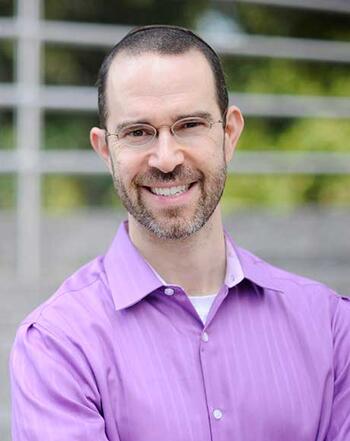
Former Director of the Japan Program at the Shorenstein Asia-Pacific Research Center
CV
Authors
Phillip Lipscy
Kenji E. Kushida
News Type
Commentary
Date
Paragraphs

As the East Coast cleans up from super-storm Sandy, Phillip Lipscy and Kenji E. Kushida point to important lessons from Japan's Fukushima nuclear disaster. They say more must be done to safeguard U.S. nuclear plants from natural disasters.

Hero Image
HurricaneSandy LOGO
Cars sit half-submerged in a flooded parking lot after super-storm Sandy tears through Long Island.
Flickr user CasualCapture
All News button
1
-

Over a year and a half has passed since the Fukushima Nuclear Disaster that began with the earthquake and tsunami disaster that hit Japan’s Tohoku region on March 11, 2011. Much has been written about the Fukushima nuclear disaster, but a cohesive, objective, readable English language narrative of what exactly transpired as the disaster unfolded has yet to widely circulated. An understanding of how events unfolded in the Fukushima disaster is critical to deriving valuable lessons about nuclear power governance, politics, and societal preparedness. As countries such as China, India, and Brazil move to build new nuclear reactors to serve the energy needs of ever increasing numbers of ever-wealthier populations, lessons from Japan’s experience will only increase in significance.

The talk focuses on a narrative of the chaotic political and corporate responses as events developed rapidly at the Fukushima Dai-Ichi nuclear power plant. It also puts the Fukushima Dai-Ichi plant in comparative perspective among the three other nuclear power plants hit by the tsunami. Many of the details are likely to come as a surprise even to a well-informed audience: the absence of the power operator’s president and chairman for almost a full day as the crisis unfolded; chaos magnified by the emergency nuclear response headquarters set up in the Prime Minister’s office initially unable to receive cell phone signals or faxes; the dozens of emergency backup battery trucks arriving at the plant only to discover they could not connect to the reactors in crisis, and the like. The talk is based on the following report:  “Japan’s Fukushima Nuclear Disaster: Narrative, Analysis, and Recommendations".

Kenji Kushida is the Takahashi Research Associate in Japanese Studies at the Walter H. Shorenstein Asia-Pacific Research Center. He holds a PhD in political science from the University of California, Berkeley, and was a graduate research associate at the Berkeley Roundtable on the International Economy. Kushida has an MA in East Asian studies and BAs in economics and East Asian studies, all from Stanford University.

Kushida’s research interests are in the fields of comparative politics, political economy, and information technology. He focuses mainly on Japan with comparisons to Korea, China, and the United States. He has four streams of academic research and publication: institutional and governance structures of Japan’s Fukushima nuclear disaster; political economy issues surrounding information technology; political strategies of foreign multinational corporations in Japan; and Japan’s political economic transformation since the 1990s.

Philippines Conference Room

0
Former Research Scholar, Japan Program
kenji_kushida_2.jpg MA, PhD
Kenji E. Kushida was a research scholar with the Japan Program at the Walter H. Shorenstein Asia-Pacific Research Center from 2014 through January 2022. Prior to that at APARC, he was a Takahashi Research Associate in Japanese Studies (2011-14) and a Shorenstein Postdoctoral Fellow (2010-11).
 
Kushida’s research and projects are focused on the following streams: 1) how politics and regulations shape the development and diffusion of Information Technology such as AI; 2) institutional underpinnings of the Silicon Valley ecosystem, 2) Japan's transforming political economy, 3) Japan's startup ecosystem, 4) the role of foreign multinational firms in Japan, 4) Japan's Fukushima nuclear disaster. He spearheaded the Silicon Valley - New Japan project that brought together large Japanese firms and the Silicon Valley ecosystem.

He has published several books and numerous articles in each of these streams, including “The Politics of Commoditization in Global ICT Industries,” “Japan’s Startup Ecosystem,” "How Politics and Market Dynamics Trapped Innovations in Japan’s Domestic 'Galapagos' Telecommunications Sector," “Cloud Computing: From Scarcity to Abundance,” and others. His latest business book in Japanese is “The Algorithmic Revolution’s Disruption: a Silicon Valley Vantage on IoT, Fintech, Cloud, and AI” (Asahi Shimbun Shuppan 2016).

Kushida has appeared in media including The New York Times, Washington Post, Nihon Keizai Shimbun, Nikkei Business, Diamond Harvard Business Review, NHK, PBS NewsHour, and NPR. He is also a trustee of the Japan ICU Foundation, alumni of the Trilateral Commission David Rockefeller Fellows, and a member of the Mansfield Foundation Network for the Future. Kushida has written two general audience books in Japanese, entitled Biculturalism and the Japanese: Beyond English Linguistic Capabilities (Chuko Shinsho, 2006) and International Schools, an Introduction (Fusosha, 2008).

Kushida holds a PhD in political science from the University of California, Berkeley. He received his MA in East Asian Studies and BAs in economics and East Asian Studies with Honors, all from Stanford University.
Kenji E. Kushida Takahashi Research Associate in Japanese Studies Speaker Walter H. Shorenstein Asia-Pacific Research Center
Seminars
Subscribe to Nuclear Energy