Innovation
Paragraphs
Cover of the book 'Shifting Gears in Innovation Policy' on the background of an embossed map of Asia.

In the six Asian countries focused on in this book—China, India, Japan, Singapore, South Korea, and Taiwan—high economic growth has been achieved in many industrial sectors, the catch-up phase of growth has ended or is about to end, and technological frontiers have been reached in many industries. These countries can no longer rely on importing or imitating new technology from abroad and expanding imports, and instead have to develop their own innovations to maintain growth. The policy tools they often used to advance "innovation," for the most traditional industrial policies of identifying promising industries and promoting them, will no longer be effective. And indeed, governments in Asia have recently put forward new policies, such as China's push for mass entrepreneurship and innovation.

Domestic conditions in Asian economies have also started to change. Many countries are facing rapidly aging populations and low birth rates: Japan’s population, declining for several years, is the first population decline not caused by war or disease in the modern world; South Korea’s labor force started to shrink in 2018 as well; China’s huge population will start to age, even as a large part of the population remains poor.

Facing these challenges, today Asia is at a turning point. East Asia as a whole has greater real economic output than North America, South and Southeast Asia possess enormous economic potential due to size and resources, and countries within Asia are becoming more connected in both trade and diplomacy. It is at this juncture that the authors of Shifting Gears examine and reassess Asia’s innovation and focus on national innovation strategies and regional cluster policies that can promote entrepreneurship and innovation in the larger Asia-Pacific. Chapters explore how institutions and policies affect incentives for innovation and entrepreneurship; whether Asia's innovation systems are substantially different from those of other countries, and in which ways, and whether there are any promising strategies for promoting innovation.

Desk, examination, or review copies can be requested through Stanford University Press.

Front Matter and Introduction
Download pdf
All Publications button
1
Publication Type
Books
Publication Date
Subtitle

Strategies from Asia

Authors
Takeo Hoshi
Book Publisher
Shorenstein APARC
Authors
News Type
News
Date
Paragraphs

Friction between machines and humans has existed since the beginning of the automated industry and machine-assisted work. It’s a trend that fuels the imaginations of pop culture and political debates alike as people voice worries about the roles increasingly sophisticated robots and technology are taking in society and workplaces.

But is this concern warranted? According to APARC’s Yong Suk Lee, the deputy director of the Korea Program and the SK Center Fellow at FSI, and Karen Eggleston, the deputy director of APARC and the director of the Asia Health Policy Program, perhaps not. A recent article published by the Stanford Institute for Human-Centered Artificial Intelligence (HAI) highlights Lee and Eggleston’s ongoing research into innovative uses of technology across industries, particularly in healthcare. Their findings indicate that the adoption of robotics ultimately does more to augment and adjust, rather than outrightly replace, the role of human labor in the workplace.

What will ultimately matter is whether there will be entirely new occupations, what economists call the ‘reinstatement effect.’ Simply saying that robots lead to permanent job reductions isn’t the end of the story.
Yong Suk Lee
Deputy Director of the Korea Program

[Subscribe to our newsletters to stay up-to-date with the latest from our researchers.]

Lee studies the impacts of AI and robotics across multiple industries, including manufacturing, retail banking, and nursing homes. A trend he sees across most sectors following the adoption of robotics or AI is a positive increase in productivity. This has impacts for both the short-term and long-term relationships between humans and their robot coworkers, or “co-bots.” While it is true that the introduction of automation and robots initially replaces a significant number of workers in sectors such as manufacturing, over time, that impact reverses and there are job gains in many cases.

“The impact of robots often evolves over time from replacing human workers to augmenting them,” Lee explains, “and productivity gains [can] create opportunities for existing and new occupations.” This happens in a variety of ways. In some cases, the use of robotics and automation in one area frees up time, labor, and resources to employ more people in other, higher-skilled areas. In another situation, increases in productivity brought on by automation allow for greater company growth than would not have been possible otherwise. This, in turn, spurs the need to expand the workforce.

Alternatively, supplementing the labor of a small workforce with robotics and AI can also spread limited resources much farther. Lee and Eggleston’s studies of the impacts of robots on nursing home care in Japan repeatedly show that the use of robots positively increases the quality of service that oftentimes-understaffed care facilities can provide to the elderly and infirm. This can range from monitoring the physical condition of patients and reliably delivering medications to providing mental and emotional support to elderly residents through the use of robotic humanoid companions. Such innovative use of tech fills critical gaps that a human-only workforce would struggle to meet in a staffing shortage like Japan faces.

Looking to the future, Lee shares this perspective: “When the automobile was invented, we suddenly had a new demand for drivers. Now we’ll have to see if [automation] creates demand for other new occupations.” It’s an area of innovation and research he, Dr. Eggleston, and other Stanford researchers will be closely watching with their human eyes in the years to come.

Read the original article by Stanford HAI here >>

Read More

A communications robot named Pepper by Softbank
Q&As

Robots May Be the Right Prescription for Struggling Nursing Homes

Karen Eggleston and Yong Suk Lee speak to the Oliver Wyman Forum on how robotics and advancing technologies are helping staff in Japanese nursing homes provide better and safer care to their patients.
Robots May Be the Right Prescription for Struggling Nursing Homes
Encina Courtyard
News

Call for Stanford Student Applications: APARC Hiring 2020-21 Research Assistants

To support Stanford students working in the area of contemporary Asia, the Shorenstein Asia-Pacific Center is offering research assistant positions for the fall, winter, and spring quarters of the 2020-21 academic year.
Call for Stanford Student Applications: APARC Hiring 2020-21 Research Assistants
Hero Image
A man with interacts with 'Emiew,' a humanoid robot.
A man with interacts with 'Emiew,' a humanoid robot made by Hitachi.
Koichi Kamoshida, Getty Images
All News button
1
Subtitle

Yong Suk Lee and Karen Eggleston’s ongoing research into the impact of robotics and AI in different industries indicates that integrating tech into labor markets adjusts, but doesn’t replace, the long-term roles of humans and robots.

Date Label
-

This event is available through livestream only. Please register in advance for the webinar by using the link below.

REGISTRATION LINKhttps://bit.ly/2ziVGY2


Japan's startup ecosystem has matured dramatically over the past decade, with greater societal legitimacy, business success, and government support than most observers would have expected 20 years ago. Despite the challenging times ahead with the global pandemic, Japan's startup ecosystem is still poised to inject flexibility and innovation in a system often criticized as too rigid. This panel brings together scholars who have studied and participated in the ecosystem, and one of the key government officials pushing policy supporting the startup ecosystem. 

PANELISTS

Image
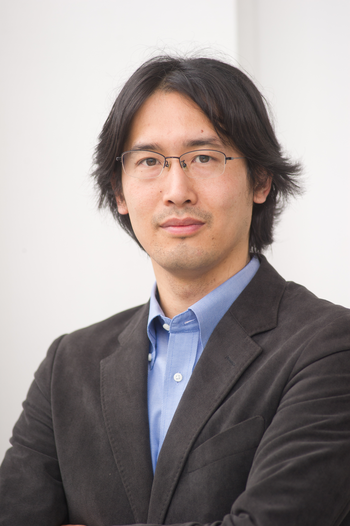
Headshot of Masahiro Kotosaka
Masahiro Kotosaka, Associate Professor, Keio University
 
Masahiro Kotosaka is an Associate Professor at Keio University and advisor to several global start-up companies. Before moving to Keio, he was a faculty at Ritsumeikan, a junior faculty at University of Oxford, and was a consultant at McKinsey & Company (Frankfurt/Tokyo). As a practitioner, he worked for sixteen client organizations across nine industries and nine countries, and spent four years running three profitable IT/Retail businesses before joining McKinsey. He graduated from University of Oxford with D.Phil. (PhD) in Management Studies and MSc in Management Research with Distinction.

Image
ishii headshot 2

Yoshiaki Ishii, Director of Science, Technology and Innovation, Cabinet Office, Government of Japan

Since getting his start at the government's Small and Middle Enterprise Agency, Dr. Yoshiaki Ishii has shaped his career almost exclusively around supporting young companies and enhancing innovation. Now, he is the director of the Cabinet Office and responsible for determining how to execute the government's mission of supporting deep tech start-ups and creating an innovation ecosystem. Previously, he served as director of the New Business Policy Office, Economic and Industrial Policy Bureau, METI. He has demonstrated expertise in Small and Medium-sized Enterprises (SME), and Venture Business Policy, Industrial Organisation, and Innovation Policy. Dr. Ishii earned his PhD from Waseda University, in 2012, after completing an MBA at Aoyama Gakuin, in 2000.

Image
Portrait of Kenji Kushida
Kenji Kushida, Research Scholar, Shorenstein APARC Japan Program (Moderator)
 
Kenji E. Kushida is a Japan Program Research Scholar at the Walter H. Shorenstein Asia-Pacific Research Center and an affiliated researcher at the Berkeley Roundtable on the International Economy. Kushida’s research interests are in the fields of comparative politics, political economy, and information technology. He has four streams of academic research and publication: political economy issues surrounding information technology such as Cloud Computing; institutional and governance structures of Japan’s Fukushima nuclear disaster; political strategies of foreign multinational corporations in Japan; and Japan’s political economic transformation since the 1990s. Kushida has written two general audience books in Japanese, entitled Biculturalism and the Japanese: Beyond English Linguistic Capabilities (Chuko Shinsho, 2006) and International Schools, an Introduction (Fusosha, 2008). Kushida holds a PhD in political science from the University of California, Berkeley. He received his MA in East Asian studies and BAs in economics and East Asian studies, all from Stanford University.

Virtual Webinar Via Zoom.

Registration Link: https://bit.ly/2ziVGY2

Yoshiaki Ishii, Government of Japan
Masahiro Kotosaka, Keio University
Kenji Kushida, Stanford University
Seminars
-

Many observers, and many investors, believe that young people are especially likely to produce the most successful new firms. Integrating administrative data on​ firms, workers, and owners, we study startups systematically in the U.S. and find​ that successfull entrepreneurs are middle-aged, not young. The mean age at​ founding for the 1-in-1,000 fastest growing new ventures is 45.0. The findings are​ similar when considering high-technology sectors, entrepreneurial hubs, and​ successful firm exits. Prior experience in the specific industry predicts much greater​ rates of entrepreneurial success. These findings strongly reject common hypotheses​ that emphasize youth as a key trait of successful entrepreneurs.

Speaker:

Image
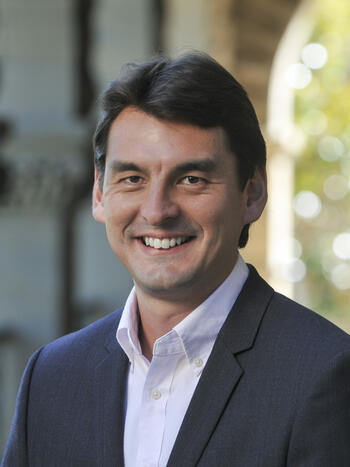
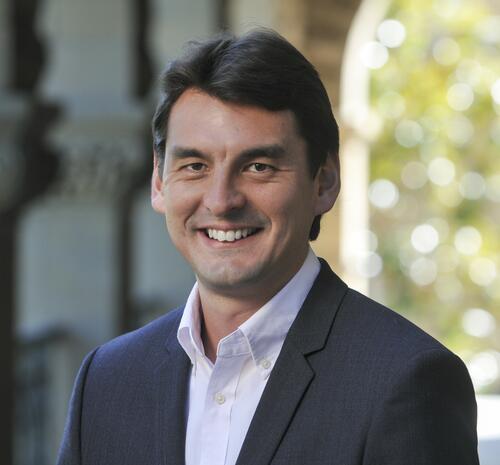
dsc 0355 javier miranda

Javier Miranda, Principal Economist, Economy-Wide Statistics Division, US Census Bureau

Bio:

Javier Miranda is Principal Economist at the U.S. Census Bureau where he began his career in 1998. Javier received his Ph.D. in Economics from American University in 2004. Previous to joining the Census Javier was a research consultant at the World Bank and the Urban Institute. Javier has published papers in the areas of industrial organization, technological change, job creation, entrepreneurship and firm financing. Among his publications are articles in the American Economic Review, Journal of Economic Literature, American Economic Journal Macroeconomics, Review of Economic and Statistics, IMF Review, World Bank Economic Review, Journal of Business Valuation and Economic Loss, NBER Macroeconomics Annual, and multiple books and chapters.  Javier received the Director's Award for Innovation (2007) and the U.S. Department of Commerce Bronze Medal (2011). His contributions to data infrastructure are notable. Javier Miranda is responsible for the development of the Longitudinal Business Database and the Business Dynamics Statistics and is the Synthetic Longitudinal Business Database v3. Together with the USPTO Javier has led the development the Business Dynamics Statistics of Innovative Firms a longitudinal database of firms, patents, and inventors. Javier Miranda is also President of the Board of SEM an adult education and job readiness program designed to address the root causes of poverty, illiteracy, and violence in Washington DC.

Advisory on Novel Coronavirus (COVID-19)

In accordance with university guidelines, if you (or a spouse/housemate) have returned from travel to mainland China or South Korea in the last 14 days, we ask that you DO NOT come to campus until 14 days have passed since your return date and you remain symptom-free. For more information and updates, please refer to the Stanford Environmental Health & Safety website: https://ehs.stanford.edu/news/novel-coronavirus-covid-19.


Javier Miranda, Principal Economist, Economy-Wide Statistics Division, US Census Bureau
Seminars
-

The demographics of Japan’s aging society has galvanized a wide range of corporate efforts, supported both directly and indirectly by the government, to aggressively develop artificial intelligence-driven technologies and IT systems to perform work for which labor shortages are accelerating. We are beginning to see concrete corporate offerings to address shortages of specific types of skilled and unskilled labor, as well as numerous efforts underway to develop systems to cope with sparsely populated, elderly geographic regions and the logistics surrounding eldercare more generally.

In this talk, based on a forthcoming book chapter, Kushida examines specific corporate cases and government strategies suggesting how Japan’s population aging and shrinking has led to three primary interrelated drivers of significance to shaping technological trajectories: 1) Demographics as market opportunity of an entirely unprecedented scale to serve the needs of a rapidly aging society; 2) demographic change creating an acute labor shortage; and 3) favorable political and regulatory dynamics for pursuing the development and diffusion of new technological trajectories to solve social and economic challenges caused by demographic change. A critical implication is that if technologies developed or deployed within Japan to solve domestic demographic problems are applicable elsewhere, then Japan’s demographic challenge can be an opportunity to cultivate competitive products and services in global markets.

SPEAKER

Image
kushida profile 9 2015 cropped 2

Kenji E. Kushida is a Japan Program Research Scholar at the Walter H. Shorenstein Asia-Pacific Research Center and an affiliated researcher at the Berkeley Roundtable on the International Economy. Kushida’s research interests are in the fields of comparative politics, political economy, and information technology. He has four streams of academic research and publication: political economy issues surrounding information technology such as Cloud Computing; institutional and governance structures of Japan’s Fukushima nuclear disaster; political strategies of foreign multinational corporations in Japan; and Japan’s political economic transformation since the 1990s. Kushida has written two general audience books in Japanese, entitled Biculturalism and the Japanese: Beyond English Linguistic Capabilities (Chuko Shinsho, 2006) and International Schools, an Introduction (Fusosha, 2008). Kushida holds a PhD in political science from the University of California, Berkeley. He received his MA in East Asian studies and BAs in economics and East Asian studies, all from Stanford University.

PARKING

Please note there is significant construction taking place on campus, which is greatly affecting parking availability and traffic patterns at the university. Please plan accordingly. Nearest parking garage is Structure 7, below the Graduate School of Business Knight School of Management.

0
Former Research Scholar, Japan Program
kenji_kushida_2.jpg MA, PhD
Kenji E. Kushida was a research scholar with the Japan Program at the Walter H. Shorenstein Asia-Pacific Research Center from 2014 through January 2022. Prior to that at APARC, he was a Takahashi Research Associate in Japanese Studies (2011-14) and a Shorenstein Postdoctoral Fellow (2010-11).
 
Kushida’s research and projects are focused on the following streams: 1) how politics and regulations shape the development and diffusion of Information Technology such as AI; 2) institutional underpinnings of the Silicon Valley ecosystem, 2) Japan's transforming political economy, 3) Japan's startup ecosystem, 4) the role of foreign multinational firms in Japan, 4) Japan's Fukushima nuclear disaster. He spearheaded the Silicon Valley - New Japan project that brought together large Japanese firms and the Silicon Valley ecosystem.

He has published several books and numerous articles in each of these streams, including “The Politics of Commoditization in Global ICT Industries,” “Japan’s Startup Ecosystem,” "How Politics and Market Dynamics Trapped Innovations in Japan’s Domestic 'Galapagos' Telecommunications Sector," “Cloud Computing: From Scarcity to Abundance,” and others. His latest business book in Japanese is “The Algorithmic Revolution’s Disruption: a Silicon Valley Vantage on IoT, Fintech, Cloud, and AI” (Asahi Shimbun Shuppan 2016).

Kushida has appeared in media including The New York Times, Washington Post, Nihon Keizai Shimbun, Nikkei Business, Diamond Harvard Business Review, NHK, PBS NewsHour, and NPR. He is also a trustee of the Japan ICU Foundation, alumni of the Trilateral Commission David Rockefeller Fellows, and a member of the Mansfield Foundation Network for the Future. Kushida has written two general audience books in Japanese, entitled Biculturalism and the Japanese: Beyond English Linguistic Capabilities (Chuko Shinsho, 2006) and International Schools, an Introduction (Fusosha, 2008).

Kushida holds a PhD in political science from the University of California, Berkeley. He received his MA in East Asian Studies and BAs in economics and East Asian Studies with Honors, all from Stanford University.
Research Scholar, Shorenstein APARC Japan Program
Seminars
-

This event is part of the Stanford Silicon Valley-New Japan Project Public Forum Series.


Consumption is a major driver of national economies, and scholars often study important differences across consumption patterns across countries, which influence many aspects of their societies and economies. Yet, the underlying business of logistics operations, and how they support countries’ respective retail industries, has as much, if not more impact than simply examining consumer behavior. In this public forum, Ryuichi Kakui, with deep expertise in eCommerce logistics, will explain how logistics are used in retail industries, comparing across the world’s three largest economies: the US, China, and Japan. He will introduce the concept of strategic logistics thinking and the “4C” framework and informs leading strategic logistics thinking. A conversation with Kenji Kushida, who examines how technologies and specific industry dynamics shape varying models of political economies around the world, will then link the area of logistics and retail to important systemic differences and underlying similarities across the world’s leading economies, which are pursuing contrasting models of social, economic, and political organization.


SPEAKERS

Image
kakui headshot

Ryoichi Kakui is the founder of E-Logit, the leading eCommerce logistics company in Japan. He has published 29 books related to logistics, Amazon, and “omnichannel” distribution, which have been published in Japan, the US, China, Taiwan, South Korea, and Vietnam. He is a frequent commentator on television, radio, newspapers, magazines, and other media. Educated in Sophia University in Japan with an MBA from Golden Gate University, he founded UKETORU in 2015, a app addressing the issue of re-delivery, which escalated to a social issue in Japan.

Image
kushida profile 9 2015 cropped

Kenji Kushida is a research scholar at the Japan Program at the Walter H. Shorenstein Asia-Pacific Research Center at Stanford University. One of this research themes examines how IT technologies shape political economies around the world, and how varying national political economic models shape the development trajectories of technologies. He leads the Silicon Valley – New Japan Project, a sustained platform for research and collaboration between Silicon Valley and the new and emerging aspects as Japan transforms itself.


PARKING

Please note there is significant construction taking place on campus, which is greatly affecting parking availability and traffic patterns at the university. Please plan accordingly. Open parking at Stanford University available starting 4:00pm unless otherwise marked. Nearest parking garage is Structure 7, below the Graduate School of Business Knight School of Management.

Seminars
Paragraphs

In recent years, "innovation" has become increasingly important for Japan. Developing innovative businesses that are separate from the traditional Japanese business sphere is becoming increasingly crucial for sustained economic growth. In this report, Asakura focuses on some emerging companies that have the potential to drive innovation, and provide some reflections on the Japanese entrepreneurial environment.

All Publications button
1
Publication Type
Working Papers
Publication Date
Paragraphs

Chapter 4 of this book "Services with Everything: The ICT-Enabled Digital Transformation of Services" was written by John Zysman, Stuart Feldman, Kenji E. Kushida, Jonathan Murray, and Niels Christian Nielsen. The book is edited by Dan Breznitz and John Zysman.


All Publications button
1
Publication Type
Books
Publication Date
Authors
Paragraphs

Kenji Kushida's new book chapter, "Blockchain, a Silicon Valley Vantage on its Potential and Challenges" was published in new book, "The Future of Blockchain: How it will impact finance, industry, and society edited by Yuri Okina, Noriyuki Yanagawa, and Naoyuki Iwashita.

The book is an investigation of the potential and challenges of adopting a disruptive technology such as blockchain. Experts on blockchain applications explain the concept of blockchain, how it is being utilized in a variety of areas, and its wide-range impact on economy, industry, business and society, based on cases in Japan and overseas.


All Publications button
1
Publication Type
Books
Publication Date
Authors
Kenji E. Kushida
Paragraphs

This report provides an overview of the Silicon Valley ecosystem. It draws upon existing scholarship and original insights to derive a picture that is only partially well-known in Japan. Characteristics such as the critical role of large firms for the startup firm ecosystem, the role of Japanese firms in creating the US firms’ “open innovation” paradigm, and the severe lack of local government coordination in providing public transportation creating opportunities for disruptive startups such as Uber, are all aspects of Silicon Valley that are not well-known in Japan. This report also delves into industry-university ties in the crucial research universities of Stanford and University of California Berkeley, highlighting the multifaceted and bidirectional interactions between universities and industry that are often not captured by the common “technology licensing office”-centered view. In the final section, this report briefly reviews a representative set of challenges often cited by large Japanese firms attempting to make use of the Silicon Valley ecosystem, concluding by suggesting areas for further research.

All Publications button
1
Publication Type
Working Papers
Publication Date
Authors
Kenji E. Kushida
Subscribe to Innovation